
Key Takeaways & Executive Findings
- •• A novel morphing nose cone (MNC) driven by a biomimetic 4-3R1U&3R parallel mechanism is proposed, inspired by the cicada abdomen, enabling extension, contraction, and bending. • The parallel mechanism's configuration is synthesized using screw theory, confirming full-cycle degrees of freedom and structural viability. • A scaled-down prototype demonstrates an extension ratio of 36.7% and a bending angle of 21.7%, exceeding expectations with stable extension and reasonable error. • The MNC can actively adapt its shape to flight conditions, enhancing aerodynamic performance and multi-mission capabilities of aircraft.
Abstract
Aircraft have received much attention because of their capability to adapt to various flight environments and complex missions. The nose cone is one of the key elements in optimising the aerodynamic shape of aircraft. A morphing nose cone (MNC) driven by a biomimetic 4-3R1U&3R parallel mechanism is proposed in this study. Based on screw theory, the parallel mechanism’s configuration is determined, and the structure’s full-cycle degrees of freedom are concurrently confirmed. Examples in the paper demonstrate the viability of the structure by configuration synthesis, and diagrams also show the chains. This MNC is modelled after the structural design of the cicada’s abdomen and can be extended, contracted and bent. It can actively adjust its shape in response to change in the flight environments, thereby aerodynamic performance and enhancing the aircraft’s multi-mission capabilities. A scaled-down prototype is created to verify the deformation capacity of the MNC meeting the engineering requirements. Results show that the extension ratio is 36.7%, and the bending angle is 21.7°, which is better than expected. The relative error value is within a reasonable range and the extension process is incredibly stable. This research proposes new perspectives for the design of MNCs.
1. Introduction
Traditional spaceplanes predominantly adhere to a fixed aircraft configuration, and the leading nations in this domain include the United States and Germany. The United States has achieved remarkable advancements in spacecraft technology through the successful launch of Lockheed Research’s hypersonic technology vehicle and the Falcon Program [1]. Similarly, Germany has provided notable contributions to the field through its advanced spaceplane design, known as the Sanger Plan. These innovations aim to address the inherent challenges associated with conventional single-stage orbit entry technology [2]. However, fixed-shape aircraft do not possess universal adaptability to all flight conditions. At supersonic velocities, the shock waves generated by these aircraft augment aerodynamic drag and the thermal load [3]. Morphing aircraft have emerged as a viable solution to address this challenge, and they have been extensively studied and evaluated from all performance aspects. These aircraft can dynamically modify the configuration of critical components, such as wings and nose cones, to optimise their functionality [4]. By adapting to prevailing flight conditions, these aircraft can effectively achieve substantial reduction in drag and enhance cooling effects. Such an innovative approach not only enhances the aircraft’s adaptability but also serves as a valuable theoretical and technical reference for the design of future morphing aircraft and morphing-wing UAVs [5].
The design of wing structures exemplifies an application of deformable technology. The aerodynamic profile of an aircraft can be precisely customised and optimised for various flight phases by continuously improving the wing shape through in-plane, out-of-plane and movable surface deformations [6–10]. This adjustment not only optimises performance but also enhances efficiency under different flight conditions, thereby reducing costs [11]. The design proposed by Yang et al. [12] utilises shape memory alloy (SMA) wire actuators to drive the wing tail, and has the potential to enhance aerodynamic efficiency by reducing noise and delaying flow separation. These advantages have led to the growing popularity of SMA actuators in deformable aircraft applications. Cao et al. [13] proposed a curved deformable wing design on the basis of a deformable truss structure. This deformable wing is easy to manufacture and implement in engineering applications and exhibits multi-cavity freedom characteristics. Moreover, the design demonstrates sufficient load-bearing capacity to meet practical requirements. Li et al. [14] designed a flexible, curved-wing leading edge.
Loading authentic research manuscript (Pages 1–5)...
Hui Yang, Zhonghao Huang, Yan Wang, Yongsheng Zhao, Yanpu Yao, Shangling Qiao (2025). Synthesis of and Experiment on a Morphing Nose Cone Driven by a Biomimetic 4-3R1U&3R Parallel Mechanism. Chinese Journal of Mechanical Engineering. https://doi.org/10.1186/s10033-025-01308-5
Research & Educational Purpose Only:The translations, structured abstracts, analytical annotations, and data reports provided by SinoTechIntel are intended exclusively for academic research, internal corporate R&D, and educational benchmarking. They do not constitute formal engineering, chemical safety, legal, or professional advice.
Copyright & Intellectual Property Notice: Original copyright of the underlying source articles and experimental data remains with the respective authors, institutions, and original publishing journals. SinoTechIntel claims intellectual property only over its proprietary translations, analytical syntheses, and AEO structured enhancements in accordance with international fair use and academic citation principles.
Frequently Asked Questions
What is the main innovation of this paper?
The paper proposes a morphing nose cone (MNC) driven by a biomimetic 4-3R1U&3R parallel mechanism, inspired by the cicada abdomen, which can extend, contract, and bend to adapt to different flight conditions.
How is the parallel mechanism designed?
The configuration is determined using screw theory, and the full-cycle degrees of freedom are confirmed. The design is validated through configuration synthesis and prototype experiments.
What are the key experimental results?
The scaled-down prototype achieves an extension ratio of 36.7% and a bending angle of 21.7%, which are better than expected, with stable extension and reasonable error.
What are the potential applications of this MNC?
The MNC can be used in morphing aircraft to actively adjust the nose cone shape, enhancing aerodynamic performance and multi-mission capabilities.
How does the MNC improve aircraft performance?
By adapting the nose cone shape to flight conditions, the MNC reduces drag and thermal load, improving overall aerodynamic efficiency and adaptability.
Related Technical Papers & Translations
Direct Repair of the Crystal Structure and Coating Surface of Spent LiFePO4 Materials Enables Superfast Li-Ion Migration
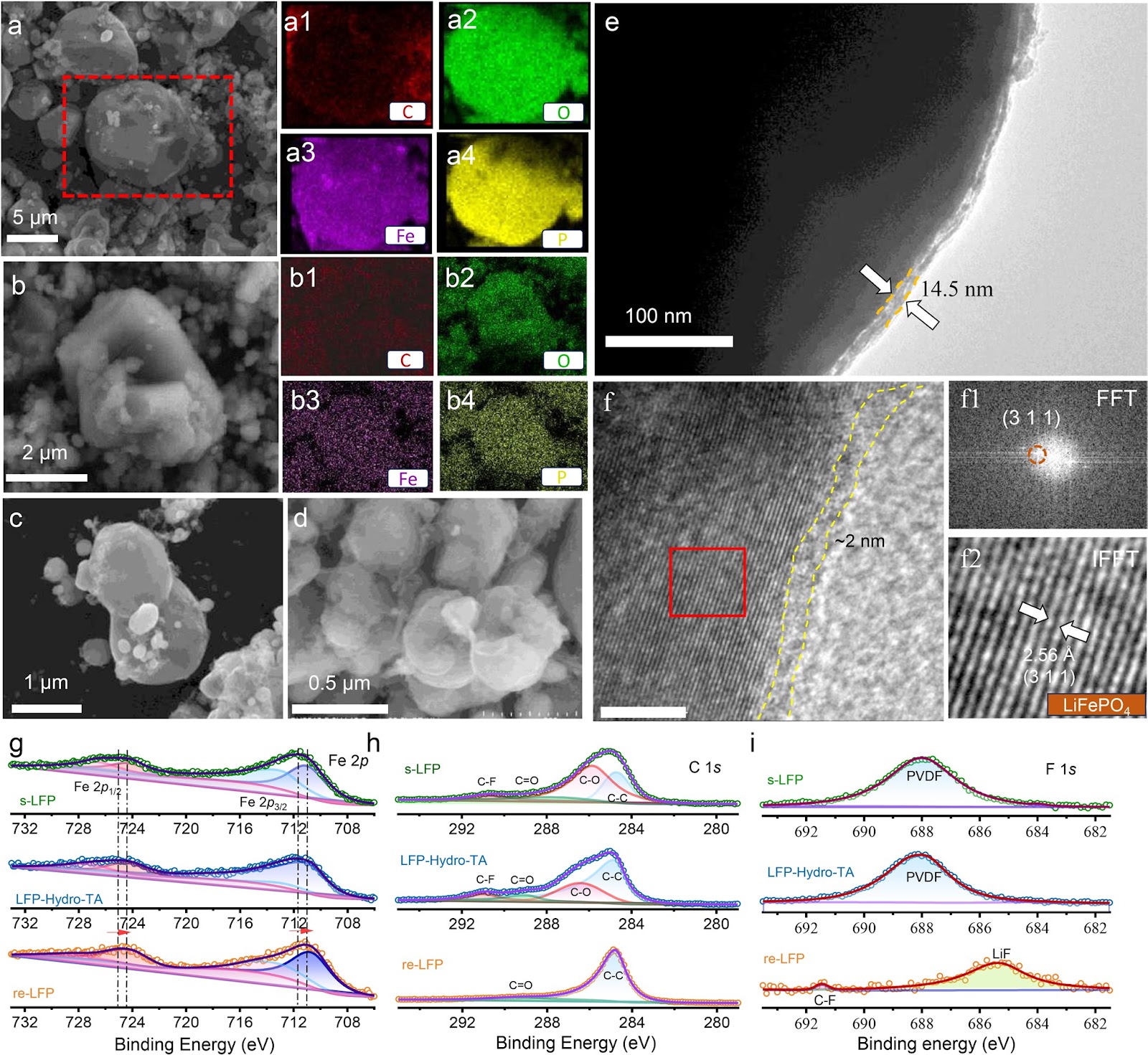
The rapid accumulation of spent LiFePO4 (LFP) cathodes from retired lithium-ion batteries necessitates the development of effective and environmental-friendly recycling strategies. In this context, direct regeneration has emerged as a promising approach for reclaiming LFP cathode materials, offering a streamlined pathway to restore their electrochemical functionality. We report an integrated regeneration protocol that simultaneously repairs the degraded crystal structure and reconstructs the damaged carbon coating in spent LFP. The regenerated cathode material had superfast lithium-ion diffusion kinetics and a stable cathode–electrolyte interface, giving a remarkable rate capability with specific capacities of 122 mAh g−1 at 5C and 106 mAh g−1 at 10C (1C = 170 mA g−1). It also maintained capacities of 110.7 mAh g−1 (5C) and 84.1 mAh g−1 (10C) after 400 cycles. It could be used in harsh environments and could be stably cycled at subzero temperatures (−10 and −20 °C) and in solid-state electrolyte batteries. Life cycle assessment combined with economic evaluation using the EverBatt model reveals that this direct regeneration approach has high economic and environmental benefits.
Oxide Semiconductor for Advanced Memory Architectures: Atomic Layer Deposition, Key Requirement and Challenges
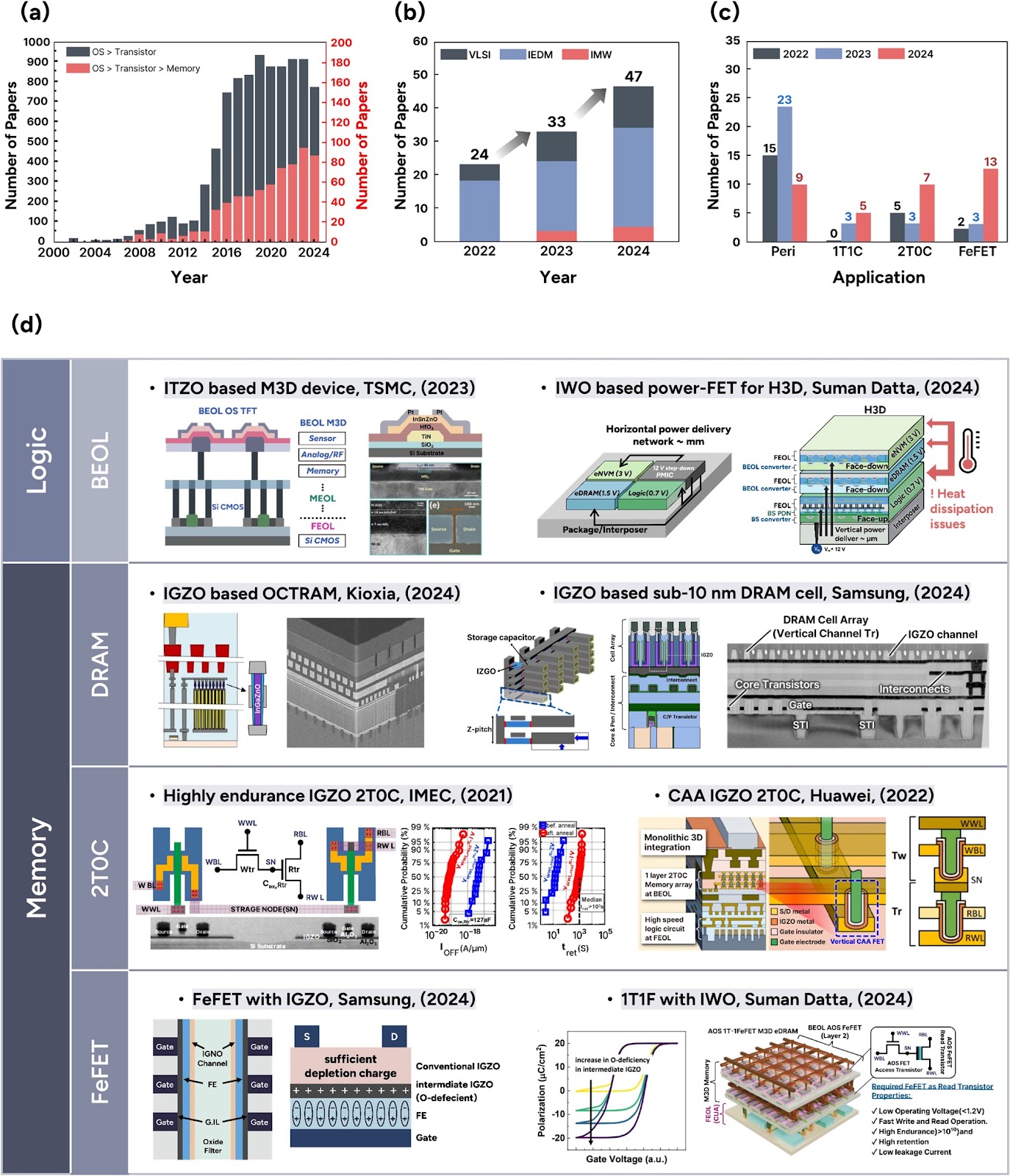
Oxide semiconductors (OSs), introduced by the Hosono group in the early 2000s, have evolved from display backplane materials to promising candidates for advanced memory and logic devices. The exceptionally low leakage current of OSs and compatibility with three-dimensional (3D) architectures have recently sparked renewed interest in their use in semiconductor applications. This review begins by exploring the unique material properties of OSs, which fundamentally originate from their distinct electronic band structure. Subsequently, we focus on atomic layer deposition (ALD), a core technique for growing excellent OS films, covering both basic and advanced processes compatible with 3D scaling. The basic surface reaction mechanisms—adsorption and reaction—and their roles in film growth are introduced. Furthermore, material design strategies, such as cation selection, crystallinity control, anion doping, and heterostructure engineering, are discussed. We also highlight challenges in memory applications, including contact resistance, hydrogen instability, and lack of p-type materials, and discuss the feasibility of ALD-grown OSs as potential solutions. Lastly, we provide an outlook on the role of ALD-grown OSs in memory technologies. This review bridges material fundamentals and device-level requirements, offering a comprehensive perspective on the potential of ALD-driven OSs for next-generation semiconductor memory devices.
Laser powder bed fusion of biodegradable Zn-4Cu alloy: Processing, microstructure and properties
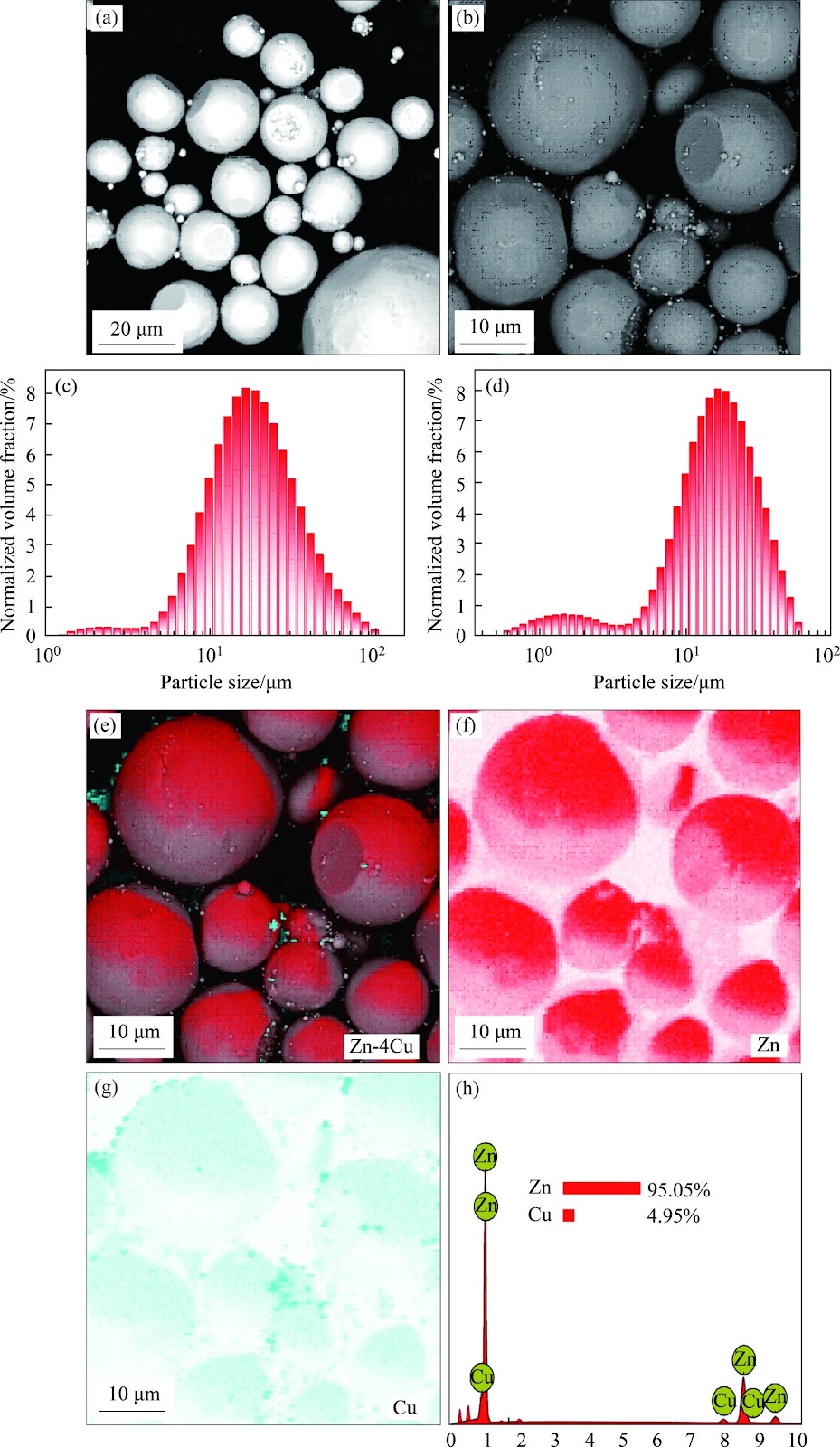
Zn's natural degradability and biocompatibility make it a promising candidate for implants, however, its mechanical properties remain insufficient for bone applications. In this study, the performance of Zn was enhanced by developing Zn-Cu alloys via laser powder bed fusion (LPBF). Optimal LPBF parameters for forming stable tracks were achieved by adjusting laser power and scanning speed. Under optimized conditions of 100 W and 100 mm/s, high-density (99.58%) Zn-Cu alloys with improved hardness (68.2HV) and yield strength (160 MPa) were achieved. These improvements are attributed to solid solution strengthening, segregation strengthening, and grain refinement. The Zn-Cu alloys also demonstrated favorable degradation behavior, with a rate of 0.16 mm/year. This degradation is primarily driven by micro-galvanic corrosion between the CuZn5 phase and Zn matrix, along with refined grains and increased grain boundary density. This work demonstrates a viable strategy for fabricating Zn-based implants with enhanced structural integrity and mechanical performance via LPBF.