
AbstractEnglish Translation
During cardiovascular interventional surgeries, catheters contact vascular tissues, causing friction, collisions, and compression that may damage tissue. Surface engineering is essential to modify catheter surfaces. Effective coatings require high adhesion strength to prevent peeling from the inner surface, while the outer surface must provide excellent lubricity and biocompatibility. In this study, layer-by-layer (LbL) technique was employed to introduce catechol-modified chitosan (CC) and dopamine-modified oxidized hyaluronic acid (DOHA), forming a nanoscale, superhydrophilic, strongly adhesive, and biocompatible coating on cardiovascular catheters. Tight binding of CC and DOHA results from electrostatic interactions, chemical reactions, and catechol group enrichment, yielding an adhesion strength of up to 1 MPa. These CC/DOHA multilayers greatly enhance lubrication of the TPU substrate, reducing the coefficient of friction (COF) by up to 95% compared with the uncoated state. After a 30-min friction test, the COF of the CC/DOHA16 coating only slightly increased from 0.032 to 0.044, demonstrating excellent stability. Evaluations revealed a reduction in vascular intima damage from grade 5 without coating to grade 3, confirming the coating's effectiveness in minimizing friction-induced damage.
Executive Findings & Technical Breakthroughs
- •• • Ultrathin CC/DOHA coatings of approximately 150 nm were prepared on TPU via LbL deposition, achieving an adhesion strength of 1 MPa at the TPU-coating interface, addressing the critical bottleneck of coating delamination in clinical catheters. • • The CC/DOHA16 coating reduced the coefficient of friction by up to 95% compared to uncoated TPU, lowering friction force from 0.5 N to 0.03 N, which is essential for minimizing vascular trauma during interventional procedures. • • After a 30-minute friction test, the COF of the CC/DOHA16 coating increased only marginally from 0.032 to 0.044, demonstrating excellent lubrication stability under prolonged mechanical stress, a key requirement for long-duration surgeries. • • The hydrophilic coating reduced vascular intima damage from grade 5 (uncoated) to grade 3, as per the damage evaluation system, confirming its clinical efficacy in reducing friction-induced tissue injury.
Abstract
During cardiovascular interventional surgeries, catheters contact vascular tissues, causing friction, collisions, and compression that may damage tissue. Surface engineering is essential to modify catheter surfaces. Effective coatings require high adhesion strength to prevent peeling from the inner surface, while the outer surface must provide excellent lubricity and biocompatibility. In this study, layer-by-layer (LbL) technique was employed to introduce catechol-modified chitosan (CC) and dopamine-modified oxidized hyaluronic acid (DOHA), forming a nanoscale, superhydrophilic, strongly adhesive, and biocompatible coating on cardiovascular catheters. Tight binding of CC and DOHA results from electrostatic interactions, chemical reactions, and catechol group enrichment, yielding an adhesion strength of up to 1 MPa. These CC/DOHA multilayers greatly enhance lubrication of the TPU substrate, reducing the coefficient of friction (COF) by up to 95% compared with the uncoated state. After a 30-min friction test, the COF of the CC/DOHA16 coating only slightly increased from 0.032 to 0.044, demonstrating excellent stability. Evaluations revealed a reduction in vascular intima damage from grade 5 without coating to grade 3, confirming the coating's effectiveness in minimizing friction-induced damage.
1. Introduction
Vascular interventional catheters, typically made of hydrophobic polymers such as polytetrafluoroethylene, polyethylene, polyamide, nylon, and polyvinyl chloride, generate significant frictional resistance when navigating the complex vascular system. This mechanical contact can scratch vascular tissue, leading to intimal damage, thrombosis, and other serious complications. Conventional hydrogel coatings, while providing lubrication, suffer from poor adhesion and stability, often delaminating from the catheter surface. Coating fragments, ranging from 15 to 200 μm in diameter, can cause vascular embolism, myocardial infarction, or stroke. To mitigate these risks, coating thickness must be kept below 15 μm, yet achieving robust adhesion at such thin dimensions remains a formidable challenge.
This study addresses the bottleneck by employing a layer-by-layer (LbL) assembly of catechol-modified chitosan (CC) and dopamine-modified oxidized hyaluronic acid (DOHA), inspired by marine mussel adhesion proteins. The synergistic effects of electrostatic interactions, Schiff base reactions, and catechol group enrichment yield an adhesion strength of 1 MPa, while maintaining an ultrathin coating of approximately 150 nm. This approach not only ensures durable attachment to the catheter surface but also provides superhydrophilicity and excellent lubricity, reducing the coefficient of friction by up to 95%. The coating's stability over a 30-minute friction test and its ability to reduce vascular intima damage from grade 5 to grade 3 underscore its potential for clinical translation in cardiovascular interventions.
Loading authentic research manuscript (Pages 1–5)...
LIN Chengxiong, YUAN Huilu, WANG Chengyong (2026). Study of Lubricating Nanocoatings for Cardiovascular Catheters Based on Molecular Self-Assembly and Schiff Base Reactions. SinoTechIntel Verified Research. https://doi.org/10.26599/FRICT.2025.9441201
Research & Educational Purpose Only:The translations, structured abstracts, analytical annotations, and data reports provided by SinoTechIntel are intended exclusively for academic research, corporate R&D benchmarking, and educational evaluation under international fair use principles.
Copyright Ownership: Source copyright remains with original Chinese academic publishers and authors. SinoTechIntel claims editorial rights over its original English translations and structural index enhancements.
Frequently Asked Questions
What is the failure mechanism of the CC/DOHA coating under prolonged mechanical stress, and how does the 30-minute friction test data support its long-term durability?
The CC/DOHA coating's durability under mechanical stress is attributed to the strong covalent and electrostatic crosslinking between CC and DOHA, which prevents delamination. In the 30-minute friction test, the COF of the CC/DOHA16 coating increased only from 0.032 to 0.044, indicating minimal wear and stable lubrication. This suggests that the coating maintains its integrity under continuous shear, which is critical for procedures lasting over 30 minutes.
How does the adhesion strength of 1 MPa compare to existing commercial catheter coatings, and what are the implications for coating thickness and flexibility?
The adhesion strength of 1 MPa is significantly higher than typical hydrogel coatings, which often suffer from weak interfacial bonding. This strong adhesion allows for an ultrathin coating of approximately 150 nm, well below the 15 μm threshold to avoid embolism risk. The thin coating also preserves catheter flexibility, which is essential for navigating tortuous vasculature.
What is the cost-effectiveness of the LbL deposition process compared to conventional coating methods, and are the raw materials (CC and DOHA) commercially scalable?
The LbL process is solution-based and can be easily scaled up using dip-coating or spray-coating techniques. Chitosan and hyaluronic acid are commercially available at low cost, and their chemical modification (catechol and dopamine conjugation) is straightforward. The process does not require expensive equipment, making it cost-competitive with existing methods. However, precise control of layer thickness and uniformity may require optimization for large-scale manufacturing.
How does the coating's biocompatibility and hemocompatibility perform in vivo, and are there any potential cytotoxic effects from the catechol groups?
The study did not report in vivo data, but the use of natural polymers (chitosan and hyaluronic acid) and catechol groups, which are inspired by mussel adhesive proteins, suggests good biocompatibility. Catechol groups can be cytotoxic at high concentrations, but the coating is ultrathin and the catechol content is controlled. Further in vitro cytotoxicity and hemolysis tests are necessary to confirm safety before clinical use.
What is the mechanism behind the reduction in vascular intima damage from grade 5 to grade 3, and does the coating also reduce thrombogenicity?
The reduction in vascular intima damage is attributed to the superhydrophilic nature of the coating, which forms a hydration layer that reduces friction and shear stress on the tissue. The lower COF (0.032) minimizes mechanical trauma. While the study did not directly assess thrombogenicity, the hydrophilic surface is known to reduce protein adsorption and platelet adhesion, potentially lowering thrombosis risk. However, specific hemocompatibility tests are required to confirm this.
Related Literature in This Field

Study on the effect of diketone lubricant on the tribological properties of angular contact ball bearings with skidding behavior
Skidding in angular contact ball bearings significantly increases friction, wear, and temperature, adversely affecting bearing performance and service life. Despite its critical impact, systematic investigations of lubrication behavior under skidding conditions remain scarce, with conventional lubricants often failing to provide stable low-friction operation. To address this gap, this study first calculated critical skidding parameters using a quasi-static model. Subsequently, experimental parameters for bearings with and without skidding were selected to evaluate tribological behaviors under three lubricants: base oil, commercial lubricant, and a diketone-based lubricant (PAO = 14 (20%)). Results demonstrate that under skidding conditions, the diketone lubricant achieved the lowest coefficient of friction (COF) of 0.0008 and temperature rise of 2.8 °C. Furthermore, diketone-lubricated bearings exhibited excellent anti-wear performance and an extremely short running-in period. The superior tribological performance is attributed to the synergistic effect of diketone molecular adsorption and chelation with iron atoms, which reduces friction and temperature rise. These findings highlight the potential of diketone lubricants to enhance bearing performance and durability under extreme operating conditions.

Steady Shear Rheological Response of Ferrofluids Containing Hydrophilic Fumed Silica under Magnetic Fields
This study investigates the steady shear rheological behavior of water-based ferrofluids composited with hydrophilic fumed silica under different magnetic field strengths, with particular attention paid to avoiding gelation that reduces fluidity. Seven composite ferrofluid samples were prepared and characterized. By adjusting the silica particle size and volume fraction, their effects on viscosity and yield stress were explored. As a result, pronounced shear-thinning behavior is observed in this dispersion, with their flow curves under different magnetic field strengths effectively scaled by the Mason number. A higher silica concentration or larger particle size increases the critical Mason number, showing that field-induced structures become more stable. In contrast, only high silica concentrations significantly enhance shear thinning, as reflected by a larger flow index, whereas particle size has little influence. Yield stress analysis further shows that macroscopic models capture normalized Bingham yield stress, while microscopic models better predict normalized static yield stress. Overall, this work demonstrates that hydrophilic fumed silica offers a simple and effective route for tuning the magnetorheology of water-based ferrofluids without inducing gelation, ensuring controllable rheology and good fluidity.
Slippery Liquid-Infused Porous Surface with Layered Double Hydroxides for Enhanced Corrosion and Wear Resistance of TC4 Alloys
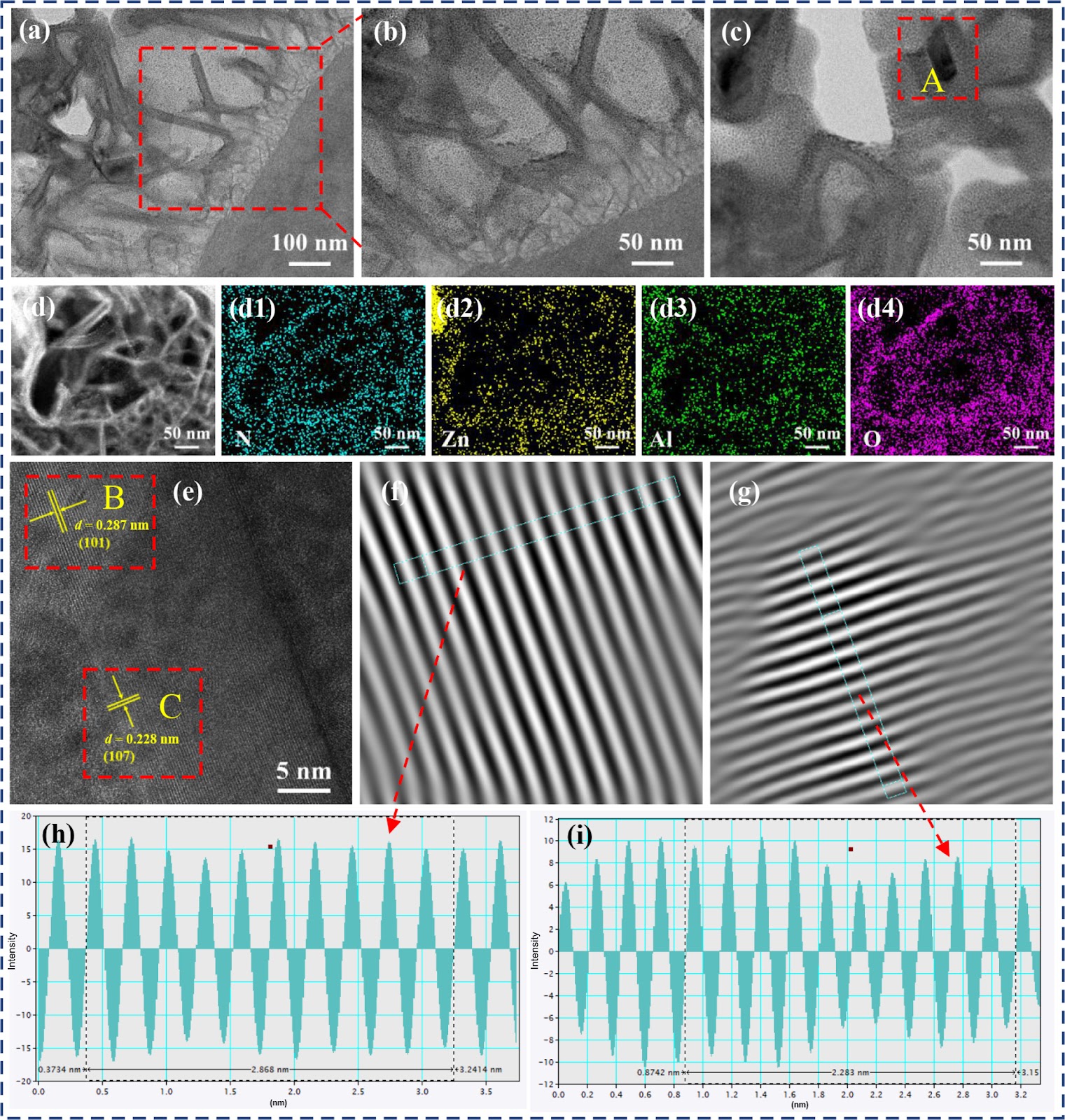
Titanium alloys, particularly TC4 (Ti–6Al–4V), suffer from poor tribological performance and susceptibility to pitting corrosion, limiting their application in marine and biomedical fields. Layered double hydroxide (LDH) coatings offer potential protection but are hindered by the dense oxide layer on titanium alloys. In this study, a ZnAl LDH coating was fabricated on TC4 via in situ growth, followed by molybdate anion intercalation through ion exchange. A biomimetic slippery liquid-infused porous surface (SLIPS) was then created by UV-grafting polydimethylsiloxane (PDMS) onto the nanoporous LDH structure. The resulting surface exhibited excellent hydrophobicity, corrosion resistance, and wear resistance. Electrochemical tests (Tafel polarization and electrochemical impedance spectroscopy) demonstrated superior corrosion protection, with a low corrosion current density of 2.34×10⁻⁷ A/cm2. The infused silicone oil and ZnAl LDH nanosheets synergistically improved wear performance compared to bare TC4. This work provides insights into controllable in situ fabrication of LDH coatings and offers a novel strategy for broadening TC4 alloy applications in metal protection.
Molecular Dynamics Simulations Addressing Atomic-Scale Core Issues in Chemical Mechanical Polishing and Post-CMP Cleaning: A Concise Review
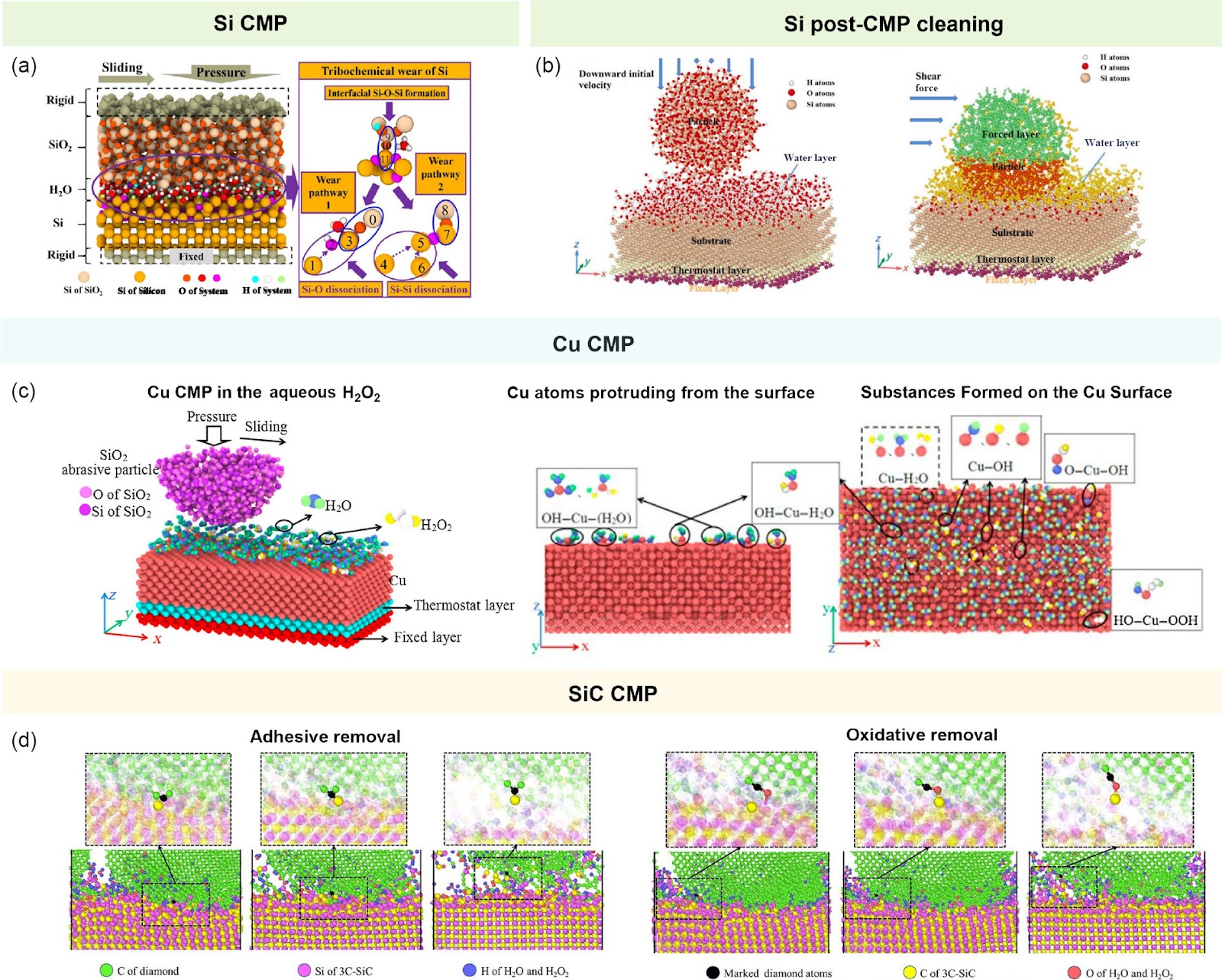
Chemical mechanical polishing (CMP) and post-CMP cleaning are critical steps in semiconductor manufacturing, requiring atomic-scale flatness and complete removal of contaminants. This review examines the use of molecular dynamics (MD) simulations to elucidate atomic-scale mechanisms underlying these processes, focusing on four major MD methodologies: classical MD, reactive force field MD (ReaxFF), tight-binding quantum chemical MD (TB-QC MD), and ab initio MD (AIMD). Classical MD provides a foundation for simulating large-scale systems but lacks accuracy for modeling chemical reactions. ReaxFF allows real-time bond breaking and formation simulations during CMP. TB-QC MD combines quantum accuracy with classical efficiency, enabling exploration of chemical reaction effects on friction and material removal. AIMD directly calculates atomic interactions for precise depictions of chemical processes, albeit with high computational cost. MD simulations act as a 'computational microscope', enhancing CMP and postcleaning processes by quantifying interactions, material removal pathways, and contaminant desorption. Future research should address multiscale modeling challenges, improve AIMD efficiency, and develop accurate potential functions to propel semiconductor manufacturing toward greater precision and efficiency.