Key Takeaways & Executive Findings
- •• Single-phase stability in high-entropy perovskite ceramics is achieved only for RE = La, Nd, and Sm, with a centrosymmetric cubic structure (Pm¯3m). • The Nd-substituted compound exhibits enhanced photoactivity in the 200–1000 nm range, while cationic disorder increases Urbach energy and reduces the indirect bandgap. • Unexpected relaxor ferroelectric behavior is observed despite the centrosymmetric structure, attributed to polar nanoregions (PNRs) coexisting with non-polar regions. • The slim polarization loops and relaxor characteristics make these RE-modified high-entropy ceramics promising for high-energy storage applications.
Abstract
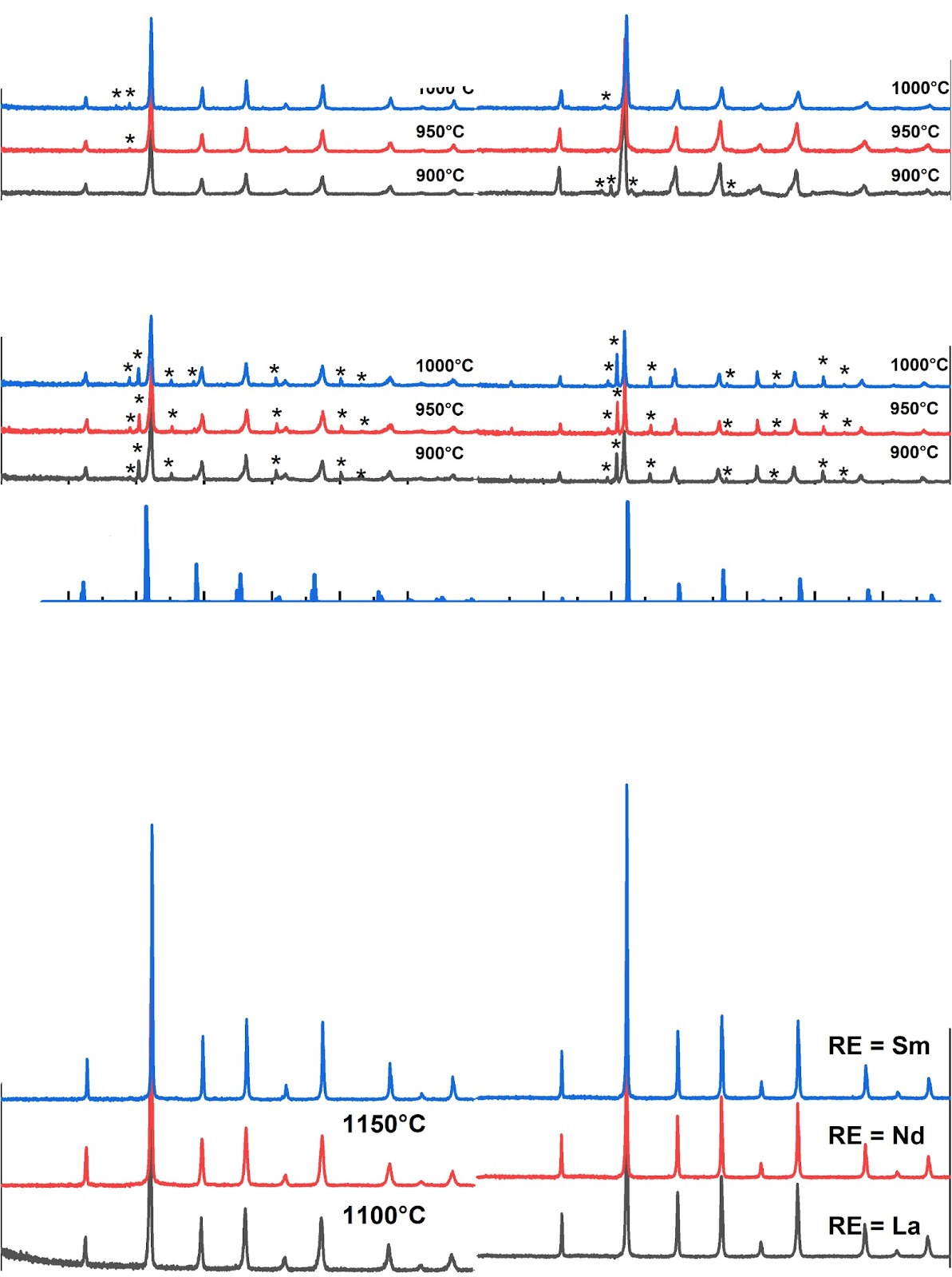
A high-entropy matrix with highly polarizable elements sharing a rare-earth element at the same crystallographic site was designed using the chemical formula Ba1/5Pb1/5Sr1/5RE1/5K1/5TiO3 (BPSREKTO), where rare-earth (RE) = La, Nb, Sm, Gd, Dy, Ho, Y, and Lu. Single-phase stability was observed only in the BPSREKTO with RE = La, Nd, and Sm high-entropy compounds. The crystal structure, optical properties, and ferroelectric nature of the single-phase ceramic compounds were investigated. Elemental and structural analyses revealed that all the cations were homogeneously distributed in a global centrosymmetric cubic structure (S.G. Pm¯3m). Optical absorption showed that the RE = Nd compound is more photoactive in the 200–1000 nm wavelength range, unlike the RE = La, Sm high-entropy compounds. The introduction of RE elements in high-entropy ceramic (HEC) systems affects the indirect bandgap of BPSREKTO with RE = La, Nd, and Sm. It was also found that cationic disorder increases the Urbach energy, leading to a decrease in the indirect energy bandgap in the HEC compound compared to the homologue BaTiO3/SrTiO3 single-phase. The dielectric spectra show a broad peak in the dielectric constant and dielectric loss, which are shifted in temperatures with increasing frequencies due to a relaxor ferroelectric transition typical of the diffuse phase transitions. This relaxor behavior was unexpected, because the global crystal structure was centrosymmetric, implying an increase in the number of polar nanoregions (PNRs). These PNRs coexisting with non-polar regions (NPRs) were observed using piezo-force microscopy. Furthermore, the slim polarization loop confirmed the relaxor behavior of BPSREKTO with RE = La, Nd, and Sm. These ferroelectric features make these RE-modified HEC materials good candidates for high-energy storage applications.
1. Introduction
There has been extensive research activity around high-entropy ceramic (HEC) compounds since Rost et al. [1] synthesized entropy-stabilized rock-salt ceramic compounds for the first time in 2015. Two years later, the high-entropy approach was extended toward more complex ceramics [2–4]. This approximation has opened a new research area for finding, enhancing, and improving the physical properties of known ceramic matrices. Furthermore, the design of simple phases is based on thermodynamic principles. In solid-state physics, the solubility and stability of simple phases from their liquid phase depend on the Gibbs free energy (ΔG). Two important parameters govern the formation kinetics of the existing phases: the enthalpy of formation ΔHmix and entropy of configuration ΔSconf. It has been found that minimizing ΔHmix and increasing ΔSconf in equimolar ratios at specific sites in the crystal lattice leads to simple phases in alloys [5]. This situation in ceramics can become more complicated because of the nature of interactions between metallic and non-metallic elements, even when there is a wide composition range of single-phase solid solutions at high temperatures [6].
A significant advantage that can be achieved by increasing the configurational entropy is the possibility of introducing cations that solubilize very poorly under conventional doping strategies, resulting in unexpected properties and fascinating functional performance in multicomponent material systems.
In particular, the ABO3 perovskite structure contains a twelve-fold coordinated A cation sublattice and a six-fold-coordinated B cation sublattice shared with the oxygen anion sublattice. Thus, owing to their distinct and highly tunable chemistry, which allows for individual or simultaneous tailoring, it is possible to attain unique physical properties using the high-entropy approach. A significant number of studies have recently focused on perovskite structures with a Goldschmit tolerance factor (t) of approximately 1, especially, scaling towards high-entropy dielectric/ferroelectric compounds. First, to explore the stability of entropic phases in perovskite structures, Jiang et al. [3] and Tang et al. [7] substituted various cations at the B-site of the perovskite structure and found a large number of combinations where the single-phase stability was driven by the Goldschmit tolerance factor as well as the valency difference of the cations involved. Phases with tetragonal and cubic structures are stable under normal conditions in a large combination of compounds at the A- or B-sites of the perovskite crystal structure [8–10]. Regardless of their overall crystalline structure, in most of these compounds, the dielectric behaviors indicate relaxor ferroelectric behaviors at room temperature with excellent dielectric constant (ε′) and dielectric loss (tanδ). More recently, rare-earth (RE) elements have been dissolved in high-entropy perovskites with t ≈ 1 and formula Sr0.25Ca0.25Ba0.25RE0.25TiO3 with RE = Nd, Sm, G
Loading authentic research manuscript (Pages 1–5)...
C. Herbert-Galarza, A. Durán (2025). Structural stability, optical and dielectric properties of the (Ba1/5Pb1/5Sr1/5RE1/5K1/5)TiO3 high-entropy ceramic. Int. Journal of Minerals, Metallurgy and Materials (矿物冶金与材料学报). https://doi.org/10.1007/s12613-025-3169-8
Research & Educational Purpose Only:The translations, structured abstracts, analytical annotations, and data reports provided by SinoTechIntel are intended exclusively for academic research, internal corporate R&D, and educational benchmarking. They do not constitute formal engineering, chemical safety, legal, or professional advice.
Copyright & Intellectual Property Notice: Original copyright of the underlying source articles and experimental data remains with the respective authors, institutions, and original publishing journals. SinoTechIntel claims intellectual property only over its proprietary translations, analytical syntheses, and AEO structured enhancements in accordance with international fair use and academic citation principles.
Frequently Asked Questions
What are high-entropy ceramics (HECs)?
High-entropy ceramics are a class of materials that stabilize single-phase structures by maximizing configurational entropy through the equimolar incorporation of multiple cations into a crystal lattice, often leading to enhanced or unexpected physical properties.
Which rare-earth elements resulted in single-phase stability in the BPSREKTO system?
Single-phase stability was achieved only for rare-earth elements La, Nd, and Sm in the (Ba1/5Pb1/5Sr1/5RE1/5K1/5)TiO3 high-entropy ceramic.
What is the significance of the observed relaxor ferroelectric behavior?
The relaxor ferroelectric behavior, indicated by broad dielectric peaks and slim polarization loops, is significant because it occurs despite a centrosymmetric cubic structure, suggesting the presence of polar nanoregions that enhance energy storage capabilities.
How does the introduction of rare-earth elements affect the optical properties?
The introduction of rare-earth elements influences the indirect bandgap and Urbach energy, with the Nd-substituted compound showing enhanced photoactivity in the 200–1000 nm range, while cationic disorder generally reduces the bandgap.
What are the potential applications of these high-entropy ceramics?
Due to their relaxor ferroelectric features and slim polarization loops, these RE-modified high-entropy ceramics are promising candidates for high-energy storage applications, such as capacitors and energy storage devices.
Related Technical Papers & Translations
Direct Repair of the Crystal Structure and Coating Surface of Spent LiFePO4 Materials Enables Superfast Li-Ion Migration
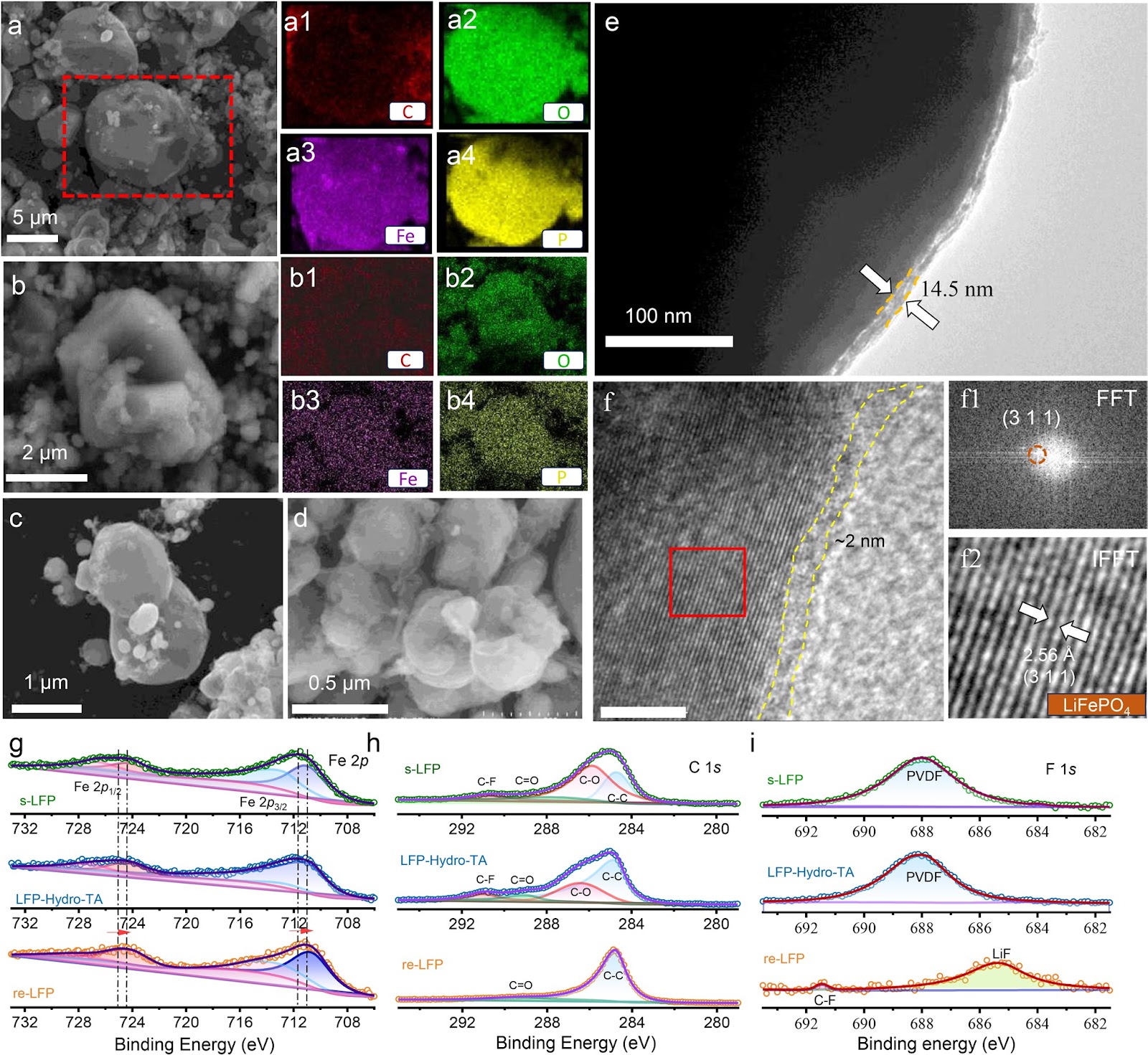
The rapid accumulation of spent LiFePO4 (LFP) cathodes from retired lithium-ion batteries necessitates the development of effective and environmental-friendly recycling strategies. In this context, direct regeneration has emerged as a promising approach for reclaiming LFP cathode materials, offering a streamlined pathway to restore their electrochemical functionality. We report an integrated regeneration protocol that simultaneously repairs the degraded crystal structure and reconstructs the damaged carbon coating in spent LFP. The regenerated cathode material had superfast lithium-ion diffusion kinetics and a stable cathode–electrolyte interface, giving a remarkable rate capability with specific capacities of 122 mAh g−1 at 5C and 106 mAh g−1 at 10C (1C = 170 mA g−1). It also maintained capacities of 110.7 mAh g−1 (5C) and 84.1 mAh g−1 (10C) after 400 cycles. It could be used in harsh environments and could be stably cycled at subzero temperatures (−10 and −20 °C) and in solid-state electrolyte batteries. Life cycle assessment combined with economic evaluation using the EverBatt model reveals that this direct regeneration approach has high economic and environmental benefits.
Oxide Semiconductor for Advanced Memory Architectures: Atomic Layer Deposition, Key Requirement and Challenges
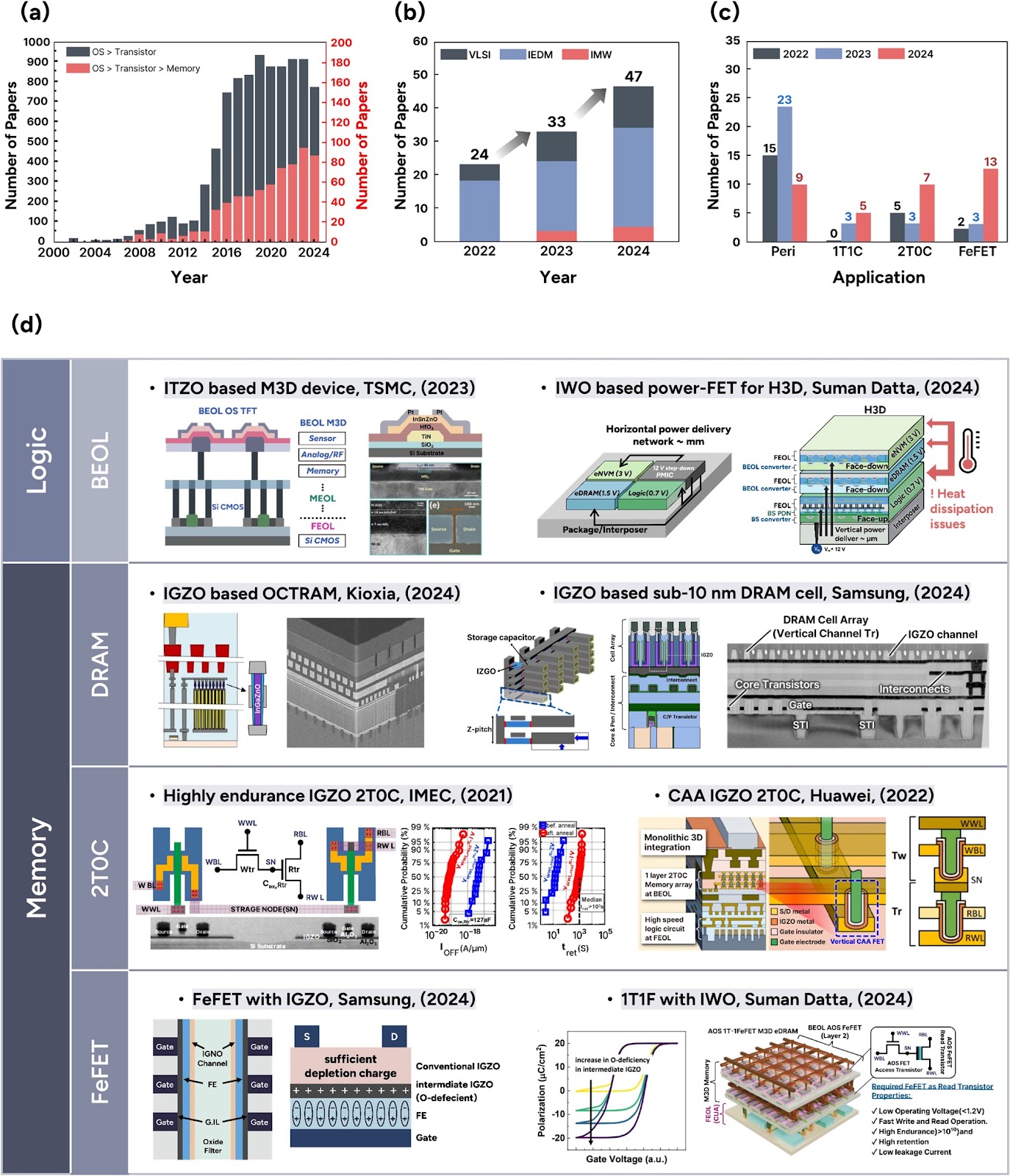
Oxide semiconductors (OSs), introduced by the Hosono group in the early 2000s, have evolved from display backplane materials to promising candidates for advanced memory and logic devices. The exceptionally low leakage current of OSs and compatibility with three-dimensional (3D) architectures have recently sparked renewed interest in their use in semiconductor applications. This review begins by exploring the unique material properties of OSs, which fundamentally originate from their distinct electronic band structure. Subsequently, we focus on atomic layer deposition (ALD), a core technique for growing excellent OS films, covering both basic and advanced processes compatible with 3D scaling. The basic surface reaction mechanisms—adsorption and reaction—and their roles in film growth are introduced. Furthermore, material design strategies, such as cation selection, crystallinity control, anion doping, and heterostructure engineering, are discussed. We also highlight challenges in memory applications, including contact resistance, hydrogen instability, and lack of p-type materials, and discuss the feasibility of ALD-grown OSs as potential solutions. Lastly, we provide an outlook on the role of ALD-grown OSs in memory technologies. This review bridges material fundamentals and device-level requirements, offering a comprehensive perspective on the potential of ALD-driven OSs for next-generation semiconductor memory devices.
Laser powder bed fusion of biodegradable Zn-4Cu alloy: Processing, microstructure and properties
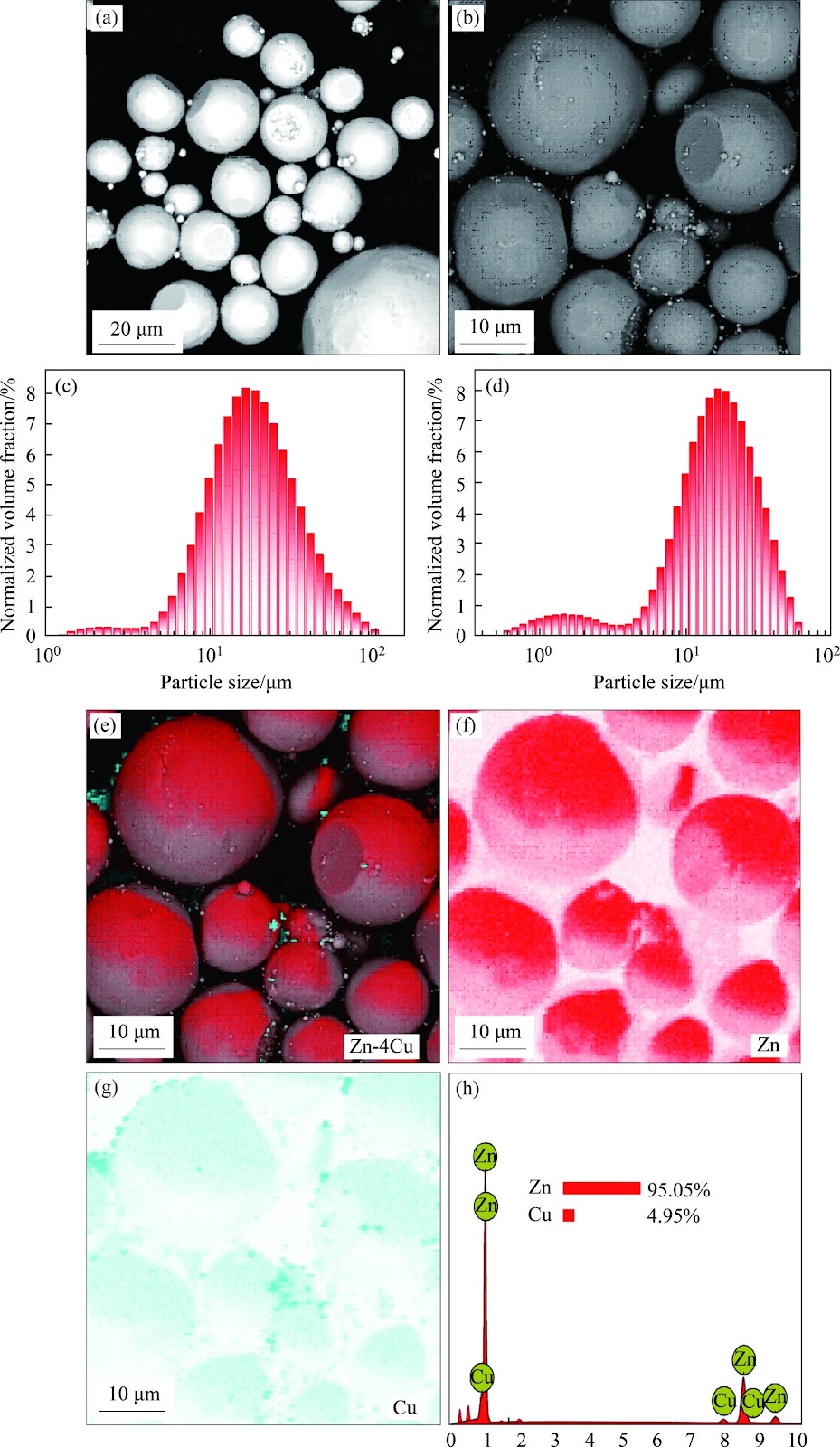
Zn's natural degradability and biocompatibility make it a promising candidate for implants, however, its mechanical properties remain insufficient for bone applications. In this study, the performance of Zn was enhanced by developing Zn-Cu alloys via laser powder bed fusion (LPBF). Optimal LPBF parameters for forming stable tracks were achieved by adjusting laser power and scanning speed. Under optimized conditions of 100 W and 100 mm/s, high-density (99.58%) Zn-Cu alloys with improved hardness (68.2HV) and yield strength (160 MPa) were achieved. These improvements are attributed to solid solution strengthening, segregation strengthening, and grain refinement. The Zn-Cu alloys also demonstrated favorable degradation behavior, with a rate of 0.16 mm/year. This degradation is primarily driven by micro-galvanic corrosion between the CuZn5 phase and Zn matrix, along with refined grains and increased grain boundary density. This work demonstrates a viable strategy for fabricating Zn-based implants with enhanced structural integrity and mechanical performance via LPBF.