Key Takeaways & Executive Findings
- •• This review provides comprehensive structural design strategies for the manufacturing of smart textiles, covering fibers, yarns, and fabrics and offers professional guidance for product development in this field. • The fundamental performance criteria for sports-oriented smart textiles have been provided, highlighting the key attributes required for their optimal functionality in athletic applications. • This review systematically introduces the diverse roles of smart textiles in specific sports scenarios and the stringent requirements they must meet to perform effectively in these environments. • Smart textiles maintain comfort and accuracy in sports, serving as inexpensive and efficient information-gathering terminals, and developing multifunctional, cost-effective textile-based systems is a pressing need for the future of intelligent sports.
Abstract
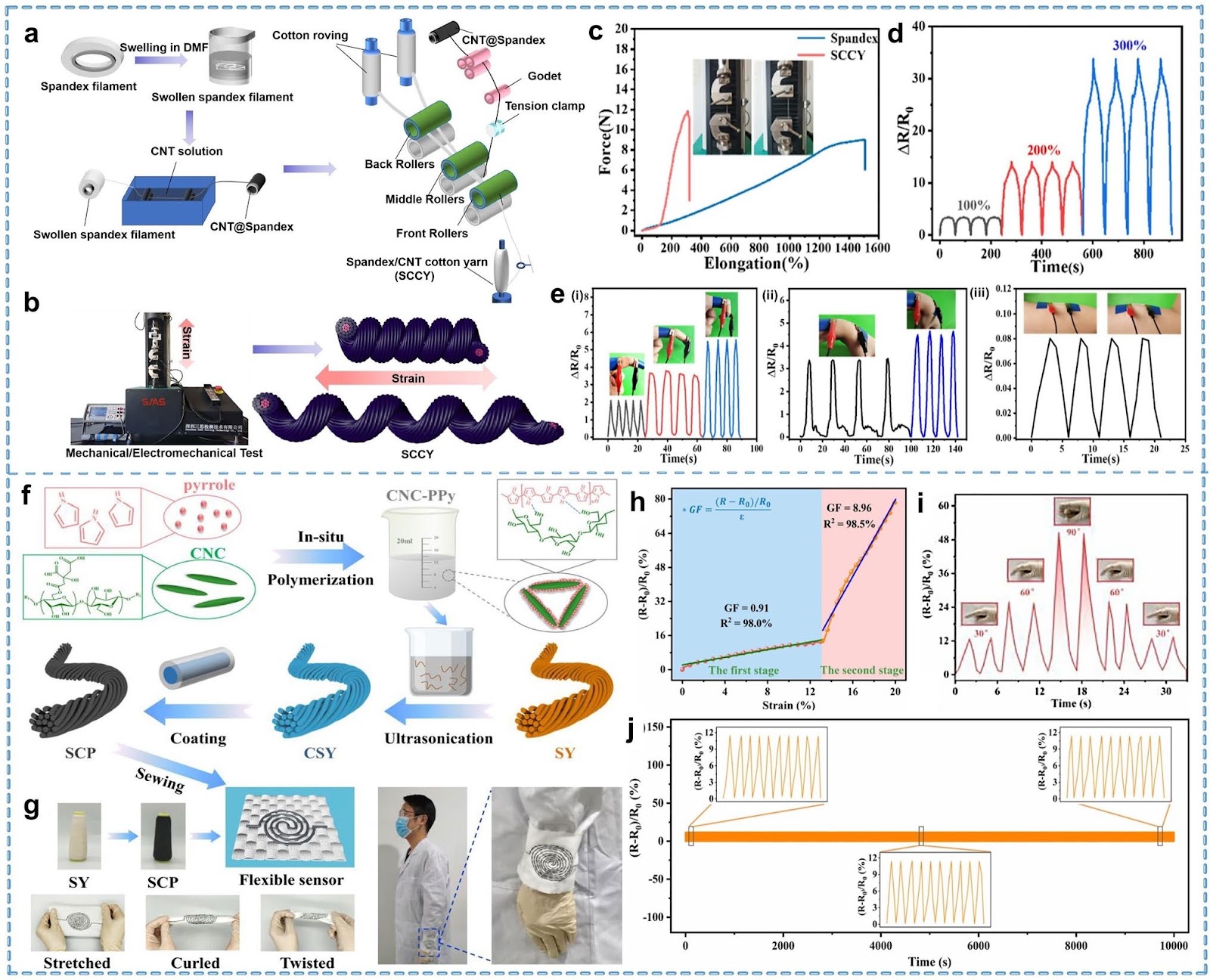
Advances in wearable electronics and information technology drive sports data collection and analysis toward real-time visualization and precision. The growing pursuit of athleticism and healthy life makes it appealing for individuals to track their real-time health and exercise data seamlessly. While numerous devices enable sports and health monitoring, maintaining comfort over long periods remains a considerable challenge, especially in high-intensity and sweaty sports scenarios. Textiles, with their breathability, deformability, and moisture-wicking abilities, ensure exceptional comfort during prolonged wear, making them ideal for wearable platforms. This review summarized the progress of research on textile-based sports monitoring devices. First, the design principles and fabrication methods of smart textiles were introduced systematically. Textiles undergo a distinctive fiber–yarn–fabric or fiber–fabric manufacturing process that allows for the regulation of performance and the integration of functional elements at every step. Then, the performance requirements for precise sports data collection of smart textiles, including main vital signs, joint movement, and data transmission, were discussed. Lastly, the applications of smart textiles in various sports scenarios are demonstrated. Additionally, the review provides an in-depth analysis of the emerging challenges, strategies, and opportunities for the research and development of sports-oriented smart textiles. Smart textiles not only maintain comfort and accuracy in sports, but also serve as inexpensive and efficient information-gathering terminals. Therefore, developing multifunctional, cost-effective textile-based systems for personalized sports and healthcare is a pressing need for the future of intelligent sports.
1. Introduction
Since the remarkable development of Internet of Things (IoT) technology, significant attention has been paid to wearable devices capable of monitoring human health, providing early warnings of bodily function issues, acquiring exercise data, and facilitating human–computer interaction [1–6], etc. Early efforts in this field focus on monitoring simple activities and vital signs, including step counts, distance, or heartbeat, which have been successfully integrated into smartphones or other devices. However, these features do not cover the needs of professional sports analysis. Current commercial sensors for sports analysis utilize diverse sensing technologies to collect physiological and kinematic data. These include IMUs (inertial measurement units: accelerometers, gyroscopes) for kinematic measurements (e.g., acceleration, posture), epidermal electrodes for monitoring bioelectric signals (e.g., electrocardiogram (ECG), electromyogram (EMG) signals), photoplethysmography (PPG) optical sensors for tracking heart rate and blood oxygen levels, and GPS modules for recording movement trajectories. These devices typically incorporate chemical batteries and wireless communication technologies for data transmission [7–11]. Constructed by rigid electronic components and chemical batteries, these sensors were larger, unbendable, and highly inappropriate for wearing during sports. Furthermore, extensive data collection posed significant disruptions to sports activities and compromised wearability.
Aiming toward high deformability during movements as an alternative to rigid inertial sensors, various flexible materials were used to fabricate wearable sensors, such as polymer films [12, 13], elastomers [14, 15], hydrogels [16, 17], and aerogels [18]. Polymer films and elastomers are adaptable and highly applicable because the dense structure and poor breathability cause discomfort during wear, especially during heavy sweating during exercise [19, 20]. Hydrogels possess a range of favorable characteristics, including hydrophilicity, skin-friendliness, and the ability to adjust their mechanical properties. Meanwhile, aerog...
Loading authentic research manuscript (Pages 1–5)...
Ziao Xu, Chentian Zhang, Faqiang Wang, Jianyong Yu, Gang Yang, Roman A. Surmenev, Zhaoling Li, Bin Ding (2025). Smart Textiles for Personalized Sports and Healthcare. Nano-Micro Letters. https://doi.org/10.1007/s40820-025-01749-6
Research & Educational Purpose Only:The translations, structured abstracts, analytical annotations, and data reports provided by SinoTechIntel are intended exclusively for academic research, internal corporate R&D, and educational benchmarking. They do not constitute formal engineering, chemical safety, legal, or professional advice.
Copyright & Intellectual Property Notice: Original copyright of the underlying source articles and experimental data remains with the respective authors, institutions, and original publishing journals. SinoTechIntel claims intellectual property only over its proprietary translations, analytical syntheses, and AEO structured enhancements in accordance with international fair use and academic citation principles.
Frequently Asked Questions
What are smart textiles for sports and healthcare?
Smart textiles are fabrics integrated with electronic components and sensors that can monitor physiological and kinematic data, providing real-time health and exercise tracking while maintaining comfort and breathability during prolonged wear.
How do smart textiles maintain comfort during high-intensity sports?
Smart textiles utilize breathable, deformable, and moisture-wicking materials that allow air circulation and sweat evaporation, ensuring comfort even during intense physical activity.
What types of data can smart textiles monitor?
Smart textiles can monitor vital signs such as heart rate, blood oxygen levels, and body temperature, as well as joint movement and posture, enabling comprehensive sports performance analysis.
What are the key challenges in developing smart textiles for sports?
Challenges include maintaining sensor accuracy during movement, ensuring durability and washability, integrating power sources, and achieving cost-effectiveness for widespread adoption.
What is the future outlook for smart textiles in personalized healthcare?
The future involves developing multifunctional, cost-effective textile-based systems that seamlessly integrate into daily life, enabling continuous health monitoring and personalized feedback for improved athletic performance and well-being.
Related Technical Papers & Translations
Direct Repair of the Crystal Structure and Coating Surface of Spent LiFePO4 Materials Enables Superfast Li-Ion Migration
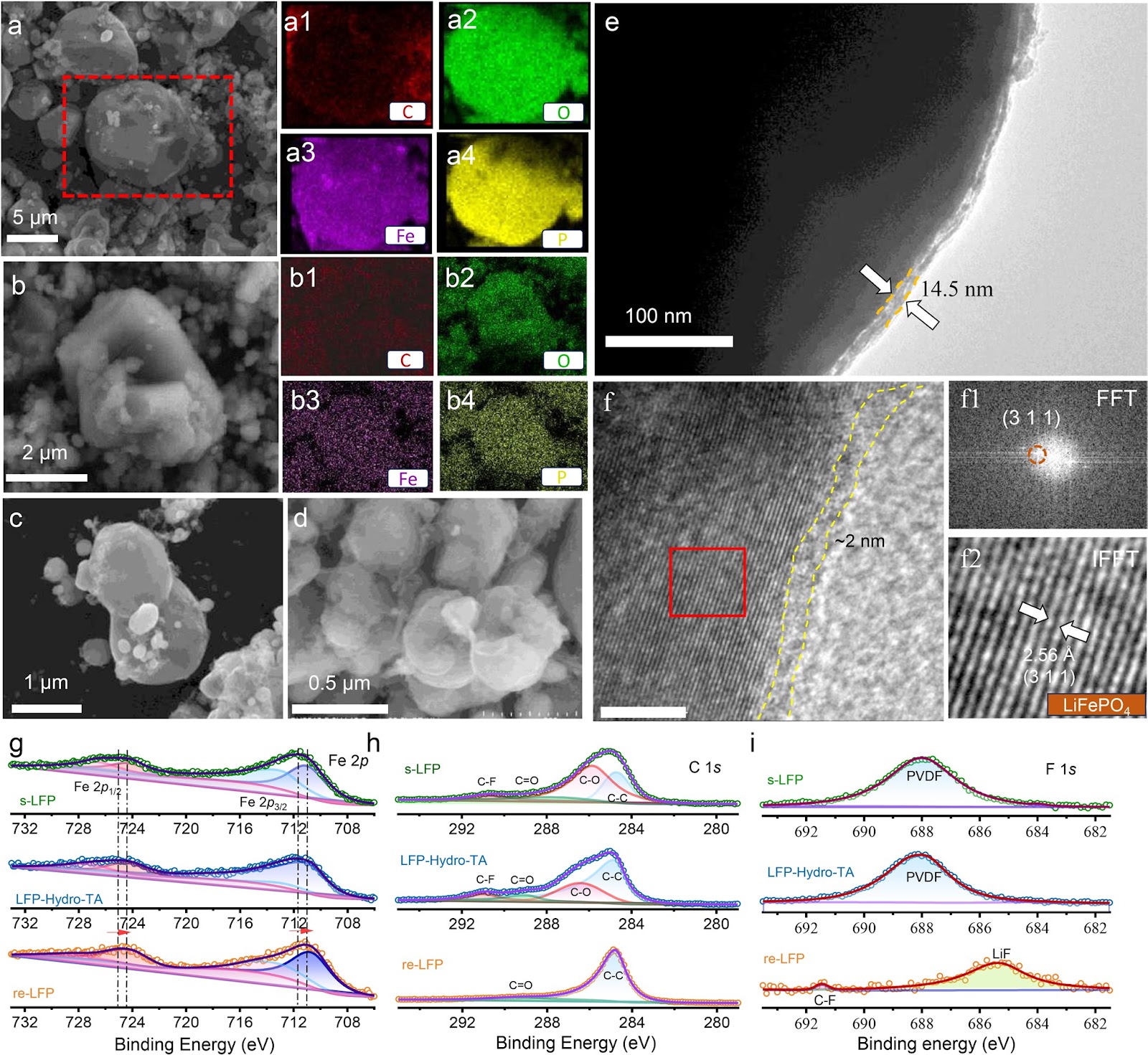
The rapid accumulation of spent LiFePO4 (LFP) cathodes from retired lithium-ion batteries necessitates the development of effective and environmental-friendly recycling strategies. In this context, direct regeneration has emerged as a promising approach for reclaiming LFP cathode materials, offering a streamlined pathway to restore their electrochemical functionality. We report an integrated regeneration protocol that simultaneously repairs the degraded crystal structure and reconstructs the damaged carbon coating in spent LFP. The regenerated cathode material had superfast lithium-ion diffusion kinetics and a stable cathode–electrolyte interface, giving a remarkable rate capability with specific capacities of 122 mAh g−1 at 5C and 106 mAh g−1 at 10C (1C = 170 mA g−1). It also maintained capacities of 110.7 mAh g−1 (5C) and 84.1 mAh g−1 (10C) after 400 cycles. It could be used in harsh environments and could be stably cycled at subzero temperatures (−10 and −20 °C) and in solid-state electrolyte batteries. Life cycle assessment combined with economic evaluation using the EverBatt model reveals that this direct regeneration approach has high economic and environmental benefits.
Oxide Semiconductor for Advanced Memory Architectures: Atomic Layer Deposition, Key Requirement and Challenges
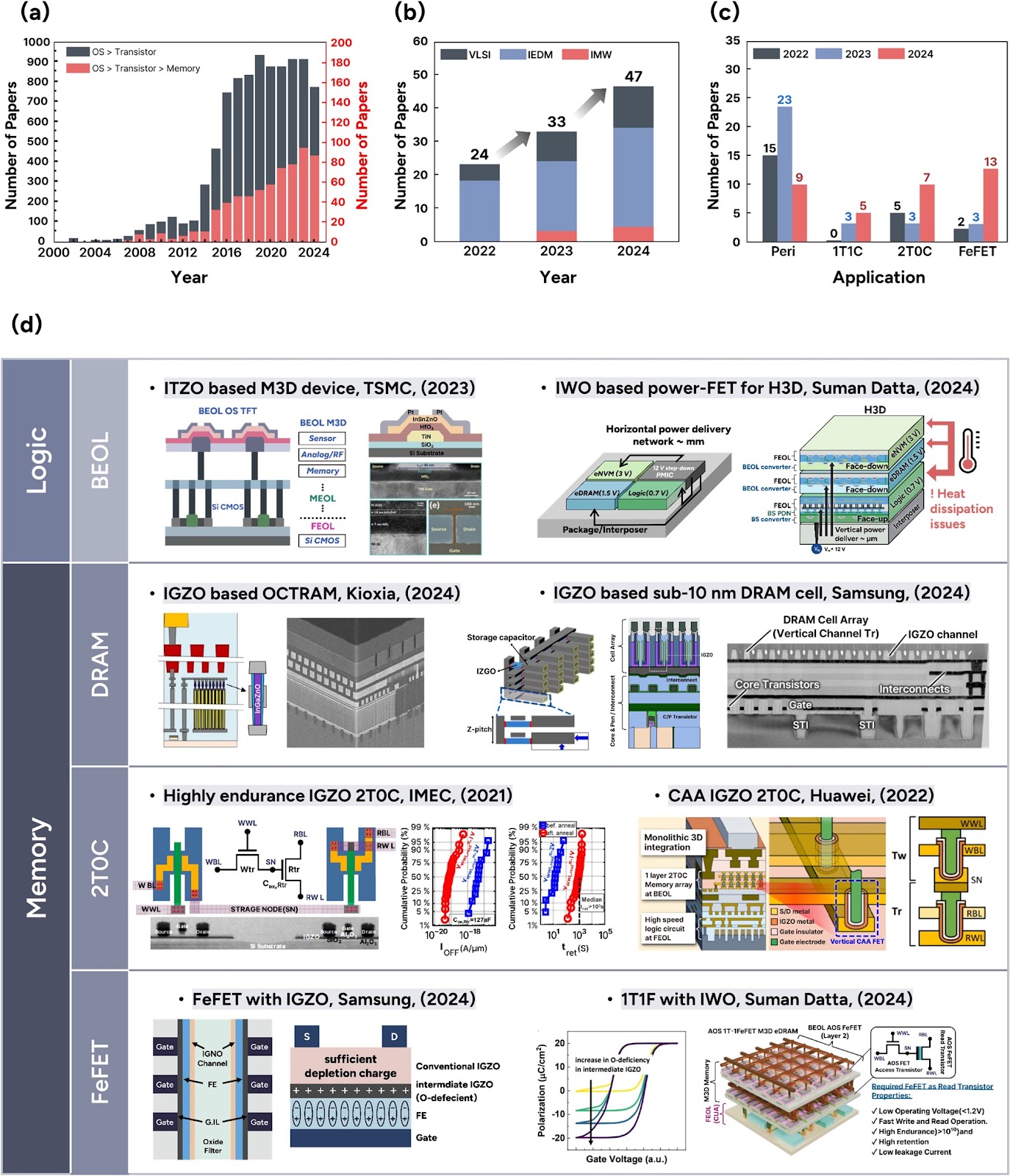
Oxide semiconductors (OSs), introduced by the Hosono group in the early 2000s, have evolved from display backplane materials to promising candidates for advanced memory and logic devices. The exceptionally low leakage current of OSs and compatibility with three-dimensional (3D) architectures have recently sparked renewed interest in their use in semiconductor applications. This review begins by exploring the unique material properties of OSs, which fundamentally originate from their distinct electronic band structure. Subsequently, we focus on atomic layer deposition (ALD), a core technique for growing excellent OS films, covering both basic and advanced processes compatible with 3D scaling. The basic surface reaction mechanisms—adsorption and reaction—and their roles in film growth are introduced. Furthermore, material design strategies, such as cation selection, crystallinity control, anion doping, and heterostructure engineering, are discussed. We also highlight challenges in memory applications, including contact resistance, hydrogen instability, and lack of p-type materials, and discuss the feasibility of ALD-grown OSs as potential solutions. Lastly, we provide an outlook on the role of ALD-grown OSs in memory technologies. This review bridges material fundamentals and device-level requirements, offering a comprehensive perspective on the potential of ALD-driven OSs for next-generation semiconductor memory devices.
Laser powder bed fusion of biodegradable Zn-4Cu alloy: Processing, microstructure and properties
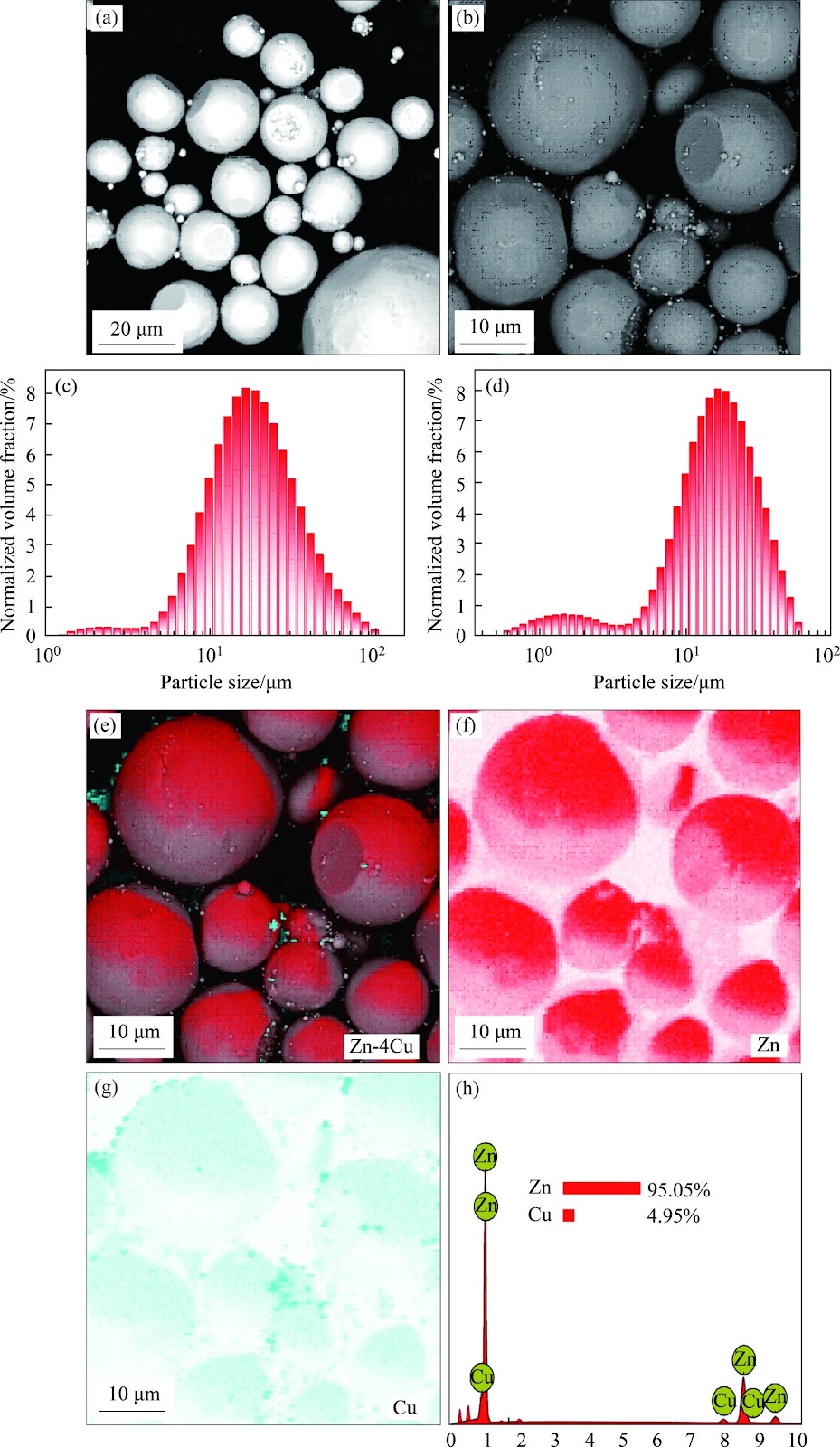
Zn's natural degradability and biocompatibility make it a promising candidate for implants, however, its mechanical properties remain insufficient for bone applications. In this study, the performance of Zn was enhanced by developing Zn-Cu alloys via laser powder bed fusion (LPBF). Optimal LPBF parameters for forming stable tracks were achieved by adjusting laser power and scanning speed. Under optimized conditions of 100 W and 100 mm/s, high-density (99.58%) Zn-Cu alloys with improved hardness (68.2HV) and yield strength (160 MPa) were achieved. These improvements are attributed to solid solution strengthening, segregation strengthening, and grain refinement. The Zn-Cu alloys also demonstrated favorable degradation behavior, with a rate of 0.16 mm/year. This degradation is primarily driven by micro-galvanic corrosion between the CuZn5 phase and Zn matrix, along with refined grains and increased grain boundary density. This work demonstrates a viable strategy for fabricating Zn-based implants with enhanced structural integrity and mechanical performance via LPBF.