Key Takeaways & Executive Findings
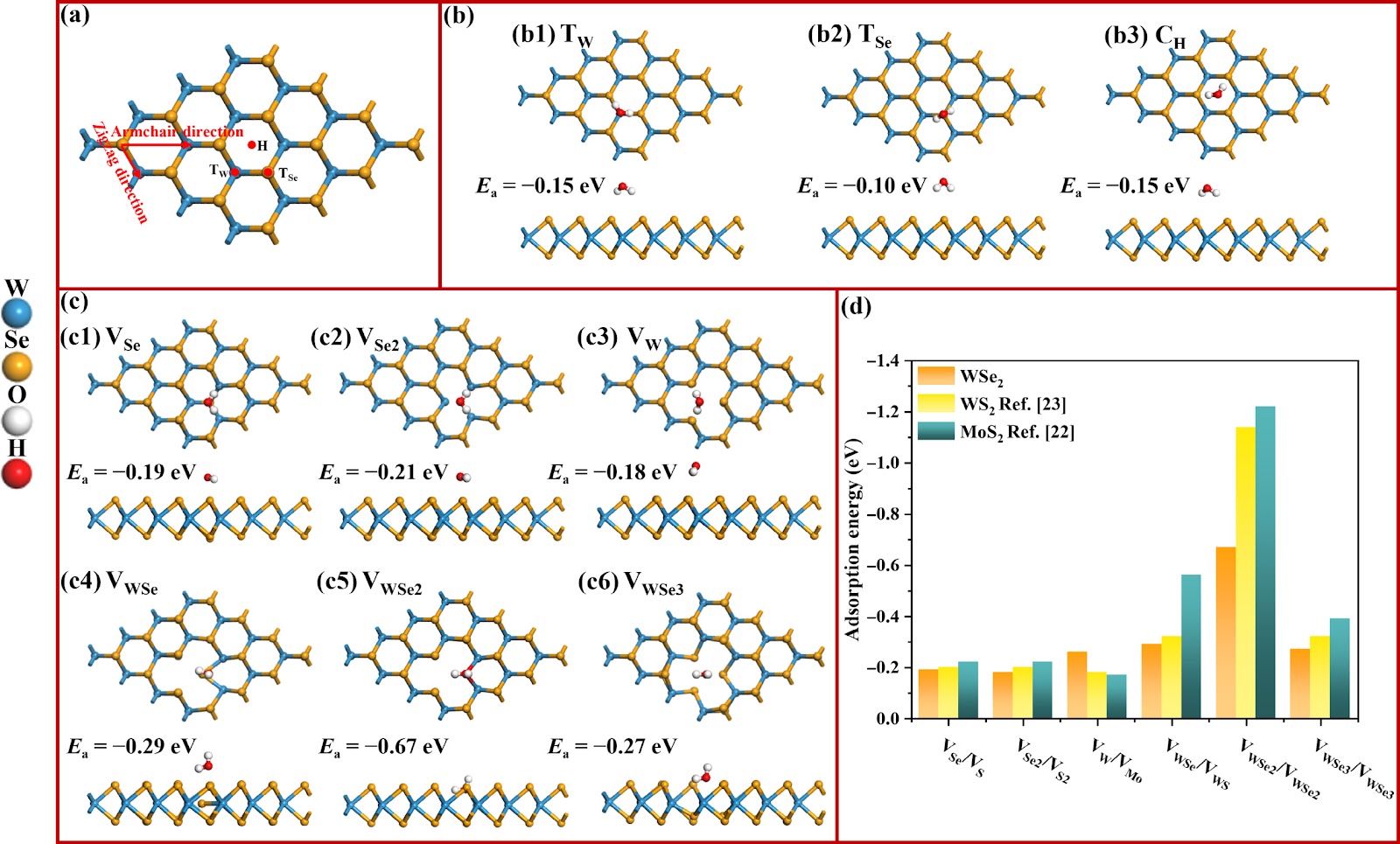
- •• • DFT calculations reveal that water forms O–H···Se hydrogen bonds with WSe2 at bond lengths of 3.02–3.25 Å, which are significantly longer (weaker) than O–H···S bonds with WS2 (2.80–2.98 Å), leading to a 35% lower interlayer sliding energy barrier for WSe2 under humid conditions. • • Selenium doping of WS2 (W–S–Se coating) achieves an 18% reduction in coefficient of friction and a 78% decrease in wear rate at 40% relative humidity compared to pristine WS2, demonstrating a viable strategy to mitigate moisture-induced degradation. • • The improved tribological performance is attributed to weakened interfacial hydrogen bonding, which reduces the energy penalty for interlayer shear, as confirmed by DFT and sliding friction experiments. • • The W–S–Se coating forms a reoriented, crystalline transfer layer with insignificant oxidation, indicating that the lubricious mechanism is preserved even in humid air, offering a robust solution for solid lubrication in ambient environments.
Abstract
The degradation of the tribological performance of WS2 in humid environments represents a persistent scientific and practical challenge, limiting its application scope despite its excellent lubricity in inert atmospheres. While the superior moisture tolerance of WSe2 has been recognized, the fundamental atomic-scale mechanisms governing this difference remain inadequately understood. This work addresses this critical knowledge gap by revealing that this disparity originates from the distinct hydrogen bond strengths formed at the material–water interface. Through integrated density functional theory (DFT) calculations and experimental validation, we quantitatively demonstrate that water molecules form significantly weaker O–H···Se hydrogen bonds with WSe2 (bond lengths: 3.02–3.25 Å) compared to O–H···S bonds with WS2 (2.80–2.98 Å). This fundamental difference manifests functionally as a 35% lower interlayer sliding energy barrier for WSe2 under humid conditions, providing the first atomistic explanation for its sustained lubricity. Leveraging this mechanistic insight, we propose and validate a novel materials design strategy: selectively doping the WS2 lattice with selenium to engineer its interfacial chemistry. The developed W–S–Se coating exhibits remarkable performance, achieving an 18% reduction in the coefficient of friction and a 78% decrease in the wear rate at 40% RH compared to pristine WS2. Extensive characterization confirms the formation of a reoriented, crystalline transfer layer with insignificant oxidation. This study establishes a new paradigm for solid lubricant design, shifting the focus from conventional microstructure optimization toward direct atomic-level engineering of interfacial water interactions, opening avenues for developing advanced lubricants operable across diverse environmental conditions.
1. Introduction
Transition metal dichalcogenides (TMDs) such as WS2 and MoS2 are widely used as solid lubricants in aerospace and nuclear industries due to their low friction in vacuum and dry environments. However, their tribological performance severely degrades in humid air, with the coefficient of friction of WS2 increasing from 0.04 in dry nitrogen to 0.10–0.15 at 60% relative humidity. This moisture sensitivity has long been attributed to oxidation and water adsorption, but the atomic-scale mechanisms remain poorly understood, hindering the rational design of moisture-tolerant coatings.
This study identifies the root cause: the strength of hydrogen bonds formed between water molecules and the chalcogen atoms. Water forms stronger O–H···S bonds with WS2 than O–H···Se bonds with WSe2, resulting in a higher energy barrier for interlayer sliding in humid conditions. By selectively doping WS2 with selenium, the interfacial chemistry is engineered to weaken these hydrogen bonds, thereby preserving lubricity. The developed W–S–Se coating demonstrates a significant reduction in friction and wear at 40% RH, offering a new paradigm for designing solid lubricants that operate reliably in ambient environments.
Loading authentic research manuscript (Pages 1–5)...
Yuqian Huang, Bin Zhang, Zhiwei Wang, Zaixiu Yang, Zhenwei Niu, Kaixiong Gao, Junyan Zhang, Goksel Hizli, Kürşat Kazmanlı, Ahmet T. Alpas (2026). Selenium-doped WS2 for improved humid-air lubricity via weakened interfacial hydrogen bonding. SinoTechIntel Verified Research. https://doi.org/10.26599/FRICT.2026.9441261
Research & Educational Purpose Only:The translations, structured abstracts, analytical annotations, and data reports provided by SinoTechIntel are intended exclusively for academic research, internal corporate R&D, and educational benchmarking. They do not constitute formal engineering, chemical safety, legal, or professional advice.
Copyright & Intellectual Property Notice: Original copyright of the underlying source articles and experimental data remains with the respective authors, institutions, and original publishing journals. SinoTechIntel claims intellectual property only over its proprietary translations, analytical syntheses, and AEO structured enhancements in accordance with international fair use and academic citation principles.
Frequently Asked Questions
What is the fundamental mechanism by which selenium doping improves the lubricity of WS2 in humid air?
DFT calculations show that water forms weaker O–H···Se hydrogen bonds (bond lengths 3.02–3.25 Å) with WSe2 compared to O–H···S bonds (2.80–2.98 Å) with WS2. This weaker interaction reduces the interlayer sliding energy barrier by 35% under humid conditions, facilitating easier shear and lower friction.
How does the W–S–Se coating perform in terms of friction and wear compared to pristine WS2 at 40% RH?
The W–S–Se coating achieves an 18% reduction in coefficient of friction and a 78% decrease in wear rate relative to pristine WS2 at 40% RH, as measured in sliding friction experiments.
What is the role of the transfer layer in the tribological performance of the W–S–Se coating?
Characterization confirms the formation of a reoriented, crystalline transfer layer with insignificant oxidation. This layer maintains the low-shear characteristics of the TMD structure, contributing to the sustained low friction and wear resistance.
Are the DFT predictions experimentally validated, and what is the significance of the bond length differences?
Yes, the DFT predictions are validated by sliding friction experiments. The longer O–H···Se bonds indicate weaker hydrogen bonding, which correlates with a lower energy barrier for interlayer sliding and thus better lubricity in humid conditions.
What are the potential limitations or scalability challenges of selenium doping for industrial applications?
While the study demonstrates promising results, scalability depends on the availability and cost of selenium precursors and the ability to control doping uniformity in large-scale deposition processes. Further research is needed to optimize doping levels and assess long-term durability under varying humidity and load conditions.
Related Chinese Research & Cross-Citations
Novel surface engineering design enabled surface multifunctionalisation of metastable Ti–15–3 β-titanium alloy
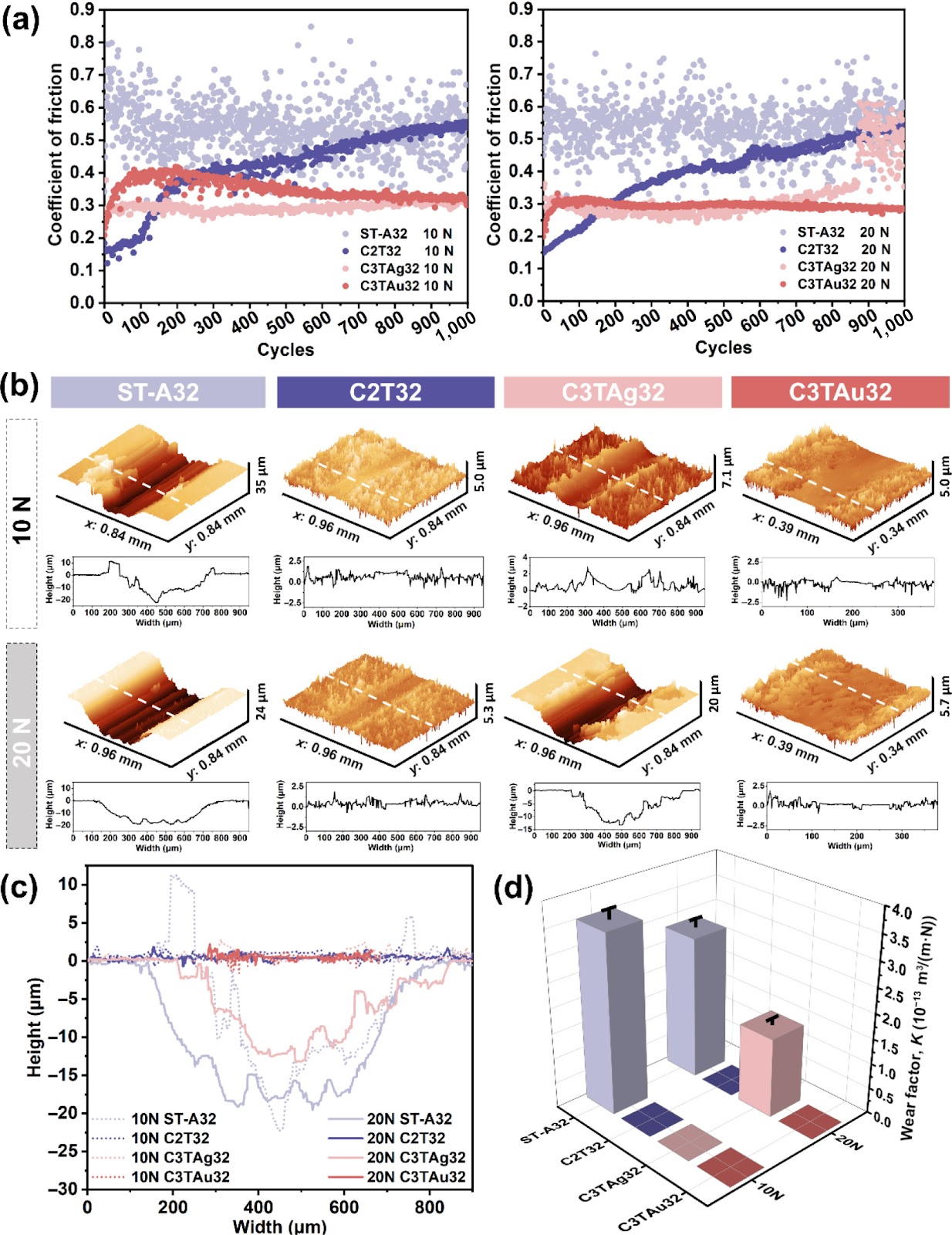
The growing demand for high-performance and long-service components in challenging applications has driven the development of high-strength metastable β-titanium alloys with multifunctional surfaces. This study introduces a novel surface engineering strategy, integrated bulk heat treatment with surface functionalisation (IBTSF), which combines bulk aging treatment with catalytic ceramic conversion treatment (C3T) incorporating Ag or Au. This approach simultaneously imparts surface multifunctionalities—high hardness, desirable tribological properties, and high antibacterial efficacy—while enhancing bulk mechanical properties. Using the metastable β-titanium alloy Ti–15V–3Al–3Cr–3Sn (Ti–15–3) as a representative, C3T was catalysed with either Au or Ag. Under a 20 N load, Au-catalysed C3T achieved near-zero wear and a low, stable coefficient of friction (COF) of ~0.3, attributed to the formation of a lubricating tribo-film. In contrast, Ag-catalysed C3T maintained stable tribological performance up to 10 N while delivering high antibacterial efficacies of 99.878% and 99.999% against E. coli and S. aureus within 3–6 h of contact, respectively, through passive Ag-ion release. Both treatments enhanced bulk tensile strength by approximately 50%, from 872±39 to 1,280±40 MPa. This combination of exceptional wear resistance, potent antibacterial activity, and improved mechanical strength offers a promising pathway to surface multifunctionalising metastable alloys for long-service, high-reliability applications.
Mechanistic Investigation of Friction-Induced Vibration and Noise Behaviors of Lightweight Brake Material
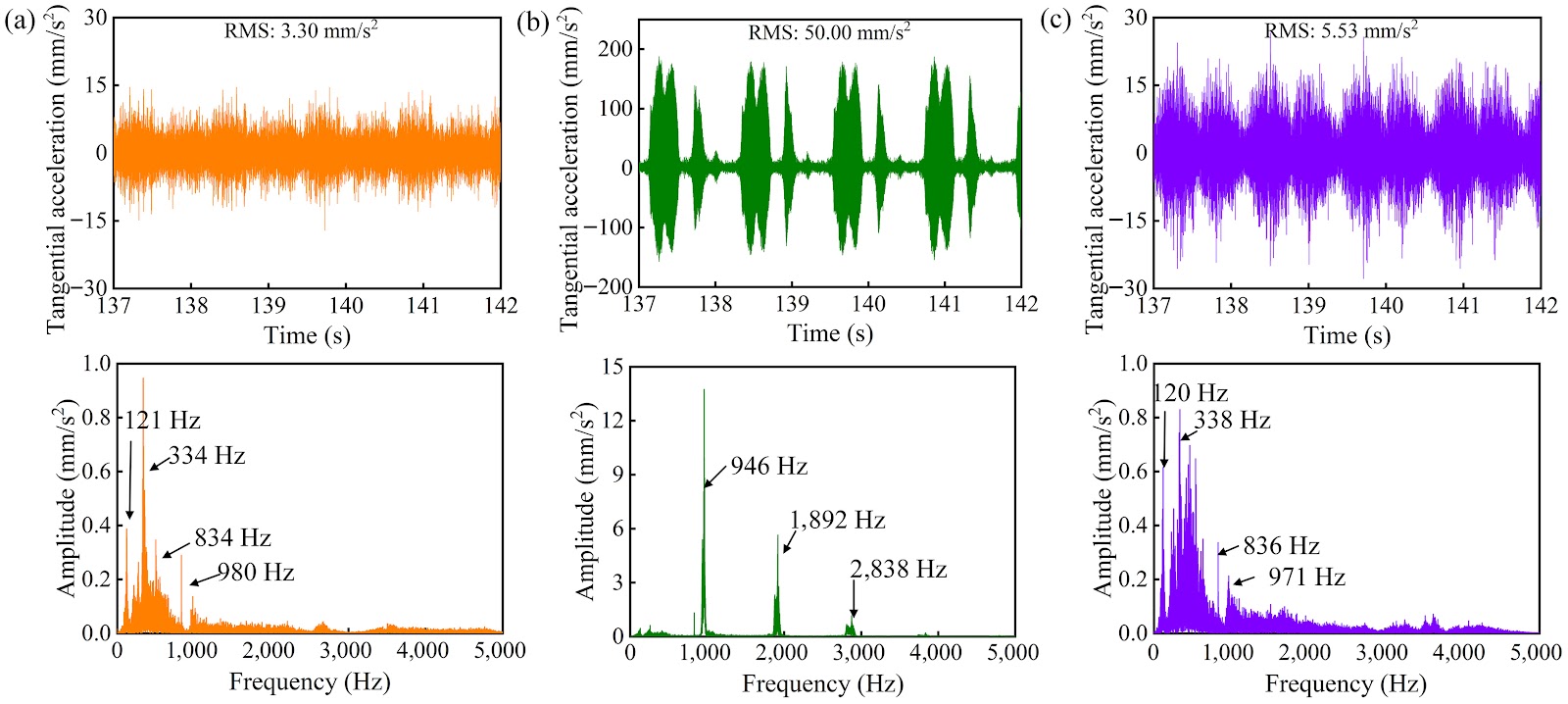
The vibration and noise issues of lightweight friction pairs in suburban train braking systems have become a critical bottleneck restricting their engineering application. This study investigated lightweight friction pairs composed of three representative synthetic brake pads and an aluminum matrix composite brake disc. Utilizing tribological tests, interfacial wear analysis, and dynamic modeling, the study investigated the impact of interfacial wear and contact behaviors on vibration and noise and elucidated the mechanisms by which pad material properties influence these responses. The experimental findings revealed that the pad material properties significantly affect the wear behavior and friction-induced vibration and noise responses of lightweight friction pairs. The pad enriched with lubricating phases (Pad A) readily established stable lubricating films, while the highly plastic pad (Pad C) effectively captured wear debris to build the third-body layers that cushioned loads. Both reduced friction fluctuations and contact stiffness, thereby attenuating vibration and noise. Conversely, the high-hardness pad (Pad B) failed to form continuous lubricating films, leading to intensified friction, higher contact stiffness, and pronounced vibration and noise. Numerical simulations further confirmed that the friction coefficient and normal contact stiffness synergistically regulated system stability, directly affecting the vibration and noise responses. Systems characterized by high friction and large contact stiffness (Pad B) were particularly susceptible to modal coupling, resulting in dynamic instability and elevated vibration and noise levels. Therefore, optimizing the pad material properties and regulating the behavior of wear debris to facilitate the stable formation of lubricating films or third-body layers can effectively suppress friction coefficient fluctuations, reduce normal contact stiffness, and enhance interfacial stability, thereby mitigating vibration and noise. The findings provide a theoretical foundation and engineering guidance for optimizing the design of low-noise lightweight braking systems and selecting appropriate friction materials.

Investigating Dry Ski–Snow Friction: Mechanisms and Temperature Dependence
The gliding of skis on snow involves multiple coexisting mechanisms, including dry friction, lubrication by frictional meltwater, and capillary suction, complicating the isolation of individual contributions. This study focuses exclusively on dry friction, employing a linear tribometer with a flat slider at -8 °C under conditions where no frictional meltwater was previously observed. To eliminate the influence of the quasi-liquid layer (QLL), experiments were also conducted below -30 °C using dry ice, ensuring dry friction as the sole active mechanism. Additionally, frictional behavior representative of cross-country skiing was investigated. Results show that the friction coefficient decreased with increasing speed at temperatures below -30 °C, but increased with speed at -8 °C. Increasing pressure reduced the friction coefficient at both temperatures. Comparison with theoretical models indicates that the primary friction mechanism is the tearing out of grains below -30 °C, and the shearing off of grain tips (abrasion) at -8 °C. The findings demonstrate that friction under all investigated conditions can be explained by these mechanisms, along with mechanical and thermal effects and granular lubrication, without invoking the QLL. While the QLL is often considered crucial for ice friction, its role in snow friction appears far less significant.

Study on the effect of diketone lubricant on the tribological properties of angular contact ball bearings with skidding behavior
Skidding in angular contact ball bearings significantly increases friction, wear, and temperature, adversely affecting bearing performance and service life. Despite its critical impact, systematic investigations of lubrication behavior under skidding conditions remain scarce, with conventional lubricants often failing to provide stable low-friction operation. To address this gap, this study first calculated critical skidding parameters using a quasi-static model. Subsequently, experimental parameters for bearings with and without skidding were selected to evaluate tribological behaviors under three lubricants: base oil, commercial lubricant, and a diketone-based lubricant (PAO = 14 (20%)). Results demonstrate that under skidding conditions, the diketone lubricant achieved the lowest coefficient of friction (COF) of 0.0008 and temperature rise of 2.8 °C. Furthermore, diketone-lubricated bearings exhibited excellent anti-wear performance and an extremely short running-in period. The superior tribological performance is attributed to the synergistic effect of diketone molecular adsorption and chelation with iron atoms, which reduces friction and temperature rise. These findings highlight the potential of diketone lubricants to enhance bearing performance and durability under extreme operating conditions.

Steady Shear Rheological Response of Ferrofluids Containing Hydrophilic Fumed Silica under Magnetic Fields
This study investigates the steady shear rheological behavior of water-based ferrofluids composited with hydrophilic fumed silica under different magnetic field strengths, with particular attention paid to avoiding gelation that reduces fluidity. Seven composite ferrofluid samples were prepared and characterized. By adjusting the silica particle size and volume fraction, their effects on viscosity and yield stress were explored. As a result, pronounced shear-thinning behavior is observed in this dispersion, with their flow curves under different magnetic field strengths effectively scaled by the Mason number. A higher silica concentration or larger particle size increases the critical Mason number, showing that field-induced structures become more stable. In contrast, only high silica concentrations significantly enhance shear thinning, as reflected by a larger flow index, whereas particle size has little influence. Yield stress analysis further shows that macroscopic models capture normalized Bingham yield stress, while microscopic models better predict normalized static yield stress. Overall, this work demonstrates that hydrophilic fumed silica offers a simple and effective route for tuning the magnetorheology of water-based ferrofluids without inducing gelation, ensuring controllable rheology and good fluidity.
Slippery Liquid-Infused Porous Surface with Layered Double Hydroxides for Enhanced Corrosion and Wear Resistance of TC4 Alloys
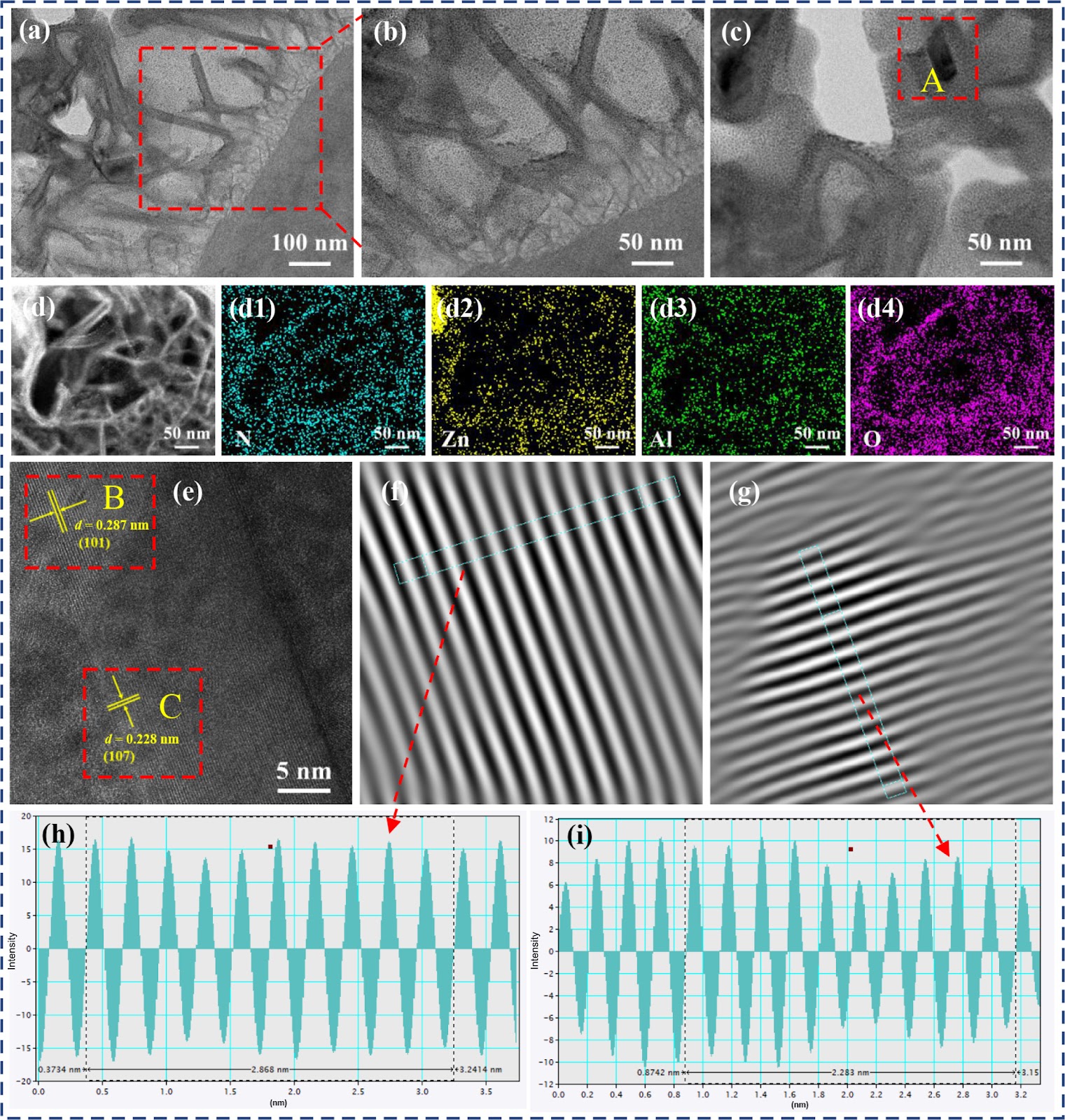
Titanium alloys, particularly TC4 (Ti–6Al–4V), suffer from poor wear performance and susceptibility to pitting corrosion, limiting their application in marine and biomedical fields. Layered double hydroxide (LDH) coatings offer potential protection, but the dense oxide layer on titanium alloys hinders LDH growth. In this study, a ZnAl LDH coating was fabricated on TC4 via an in situ growth method, followed by ion exchange to incorporate molybdate anions. A biomimetic slippery liquid-infused porous surface (SLIPS) was then prepared by UV-grafting polydimethylsiloxane (PDMS) onto the nanoporous LDH structure. The resulting surface exhibited excellent hydrophobicity, corrosion resistance, and wear resistance. Electrochemical tests (Tafel polarization and electrochemical impedance spectroscopy) demonstrated superior corrosion protection, with a corrosion current density as low as 2.34×10⁻⁷ A/cm2, significantly lower than bare TC4. The infused silicone oil and ZnAl LDH nanosheets contributed to improved wear performance. This work provides insights into controllable in situ fabrication of LDH coatings and offers a new strategy for enhancing the durability of TC4 alloys in demanding environments.