Key Takeaways & Executive Findings
- •• Spectrally selective daytime radiative cooling (SSDRC) materials achieve superior cooling performance by emitting predominantly within the atmospheric transmission window while suppressing non-ATW thermal radiation absorption. • The review systematically categorizes SSDRC materials into fibrous materials, membranes, and particle coatings, detailing their fabrication principles and operational mechanisms. • SSDRC materials demonstrate significant potential in personal thermal management, outdoor building cooling, and energy harvesting, offering eco-friendly and passive cooling solutions. • Future development of SSDRC materials faces challenges such as scalability, durability, and cost-effectiveness, which must be addressed for widespread practical implementation.
Abstract
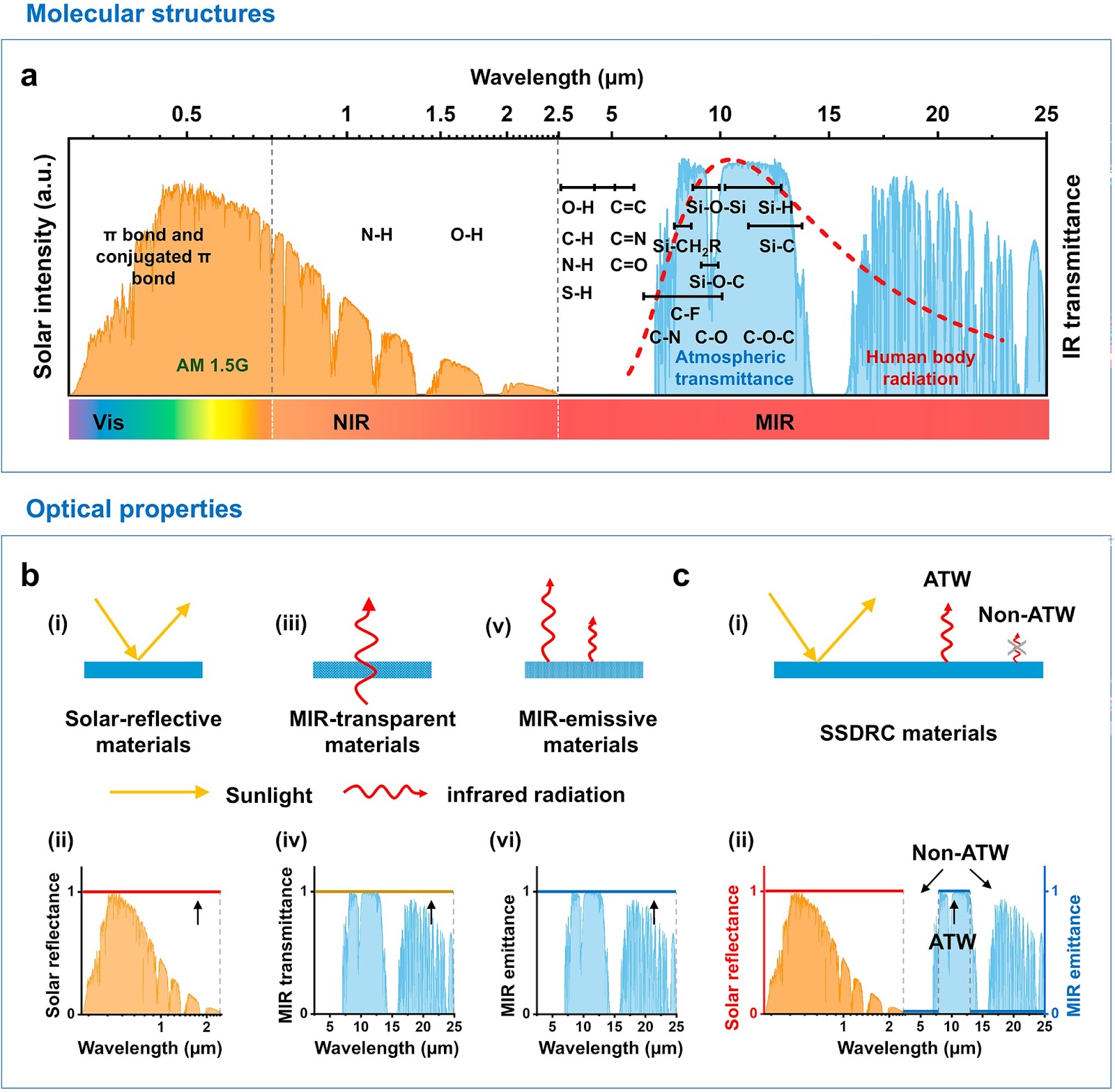
Daytime radiative cooling is an eco-friendly and passive cooling technology that operates without external energy input. Materials designed for this purpose are engineered to possess high reflectivity in the solar spectrum and high emissivity within the atmospheric transmission window. Unlike broadband-emissive daytime radiative cooling materials, spectrally selective daytime radiative cooling (SSDRC) materials exhibit predominant mid-infrared emission in the atmospheric transmission window. This selective mid-infrared emission suppresses thermal radiation absorption beyond the atmospheric transmission window range, thereby improving the net cooling power of daytime radiative cooling. This review elucidates the fundamental characteristics of SSDRC materials, including their molecular structures, micro- and nanostructures, optical properties, and thermodynamic principles. It also provides a comprehensive overview of the design and fabrication of SSDRC materials in three typical forms, i.e., fibrous materials, membranes, and particle coatings, highlighting their respective cooling mechanisms and performance. Furthermore, the practical applications of SSDRC in personal thermal management, outdoor building cooling, and energy harvesting are summarized. Finally, the challenges and prospects are discussed to guide researchers in advancing SSDRC materials.
1. Introduction
Human activities and technological advancements have culminated in persistent global warming, a challenge that is anticipated to intensify in the coming decade [1]. The quest for effective cooling solutions has emerged as a critical global priority among sustainability experts. Traditional cooling technologies, predominantly air conditioning systems, not only consume substantial electricity, thereby contributing to heightened greenhouse gas emissions, but also exacerbate global warming due to the use of refrigerants. Consequently, there is an urgent need to identify innovative green cooling technologies.
Daytime radiative cooling (DRC) is emerging as a passive cooling technique without any energy consumption [2–4]. This approach facilitates the dissipation of thermal radiation from objects into the universe via the atmospheric transmission window (ATW) while simultaneously rejecting solar irradiation to reduce photothermal load [5–7]. Heat escapes from surfaces as thermal radiation into the cold vacuum of space, resulting in a spontaneous temperature drop.
A diverse array of materials, including polymers [8–10], ceramic particles [11–13], photonic crystals [14–17], metamaterials [18–20], and fibrous materials [10, 21–23], have been reported for DRC applications. These materials usually present broadband-emissive characteristics due to their non-selective emissivity within the mid-infrared (MIR) wavelength range. Hence, the high non-ATW emissivity of MIR broadband-emissive materials results in the absorption of excessive thermal radiation from the surrounding environment, which affects their daytime radiative cooling. Spectrally selective daytime radiative cooling (SSDRC) materials are characterized by their dominant emission in the ATW wavelength bands while exhibiting low emission in the non-ATW ranges [24, 25]. Notably, SSDRC materials have three typical spectrum properties: (1) high reflectivity in the solar wavelength range to minimize sunlight absorption and mitigate photothermal effect; (2) high emissivity in the ATW range to facilitate thermal radiation dissipation into outer space; and (3) low emissivity in the non-ATW wavelength ranges to reduce thermal radiation absorption from the surrounding environment. In recent years, numerous reviews have summarized the principles [5, 26], materials [27–29], fabrication methods [2, 30, 31], and practical applications [28, 30] of DRC materials, offering valuable insights.
Loading authentic research manuscript (Pages 1–5)...
An-Quan Xie, Hui Qiu, Wangkai Jiang, Yu Wang, Shichao Niu, Ke-Qin Zhang, Ghim Wei Ho, Xiao-Qiao Wang (2025). Recent Advances in Spectrally Selective Daytime Radiative Cooling Materials. Nano-Micro Letters. https://doi.org/10.1007/s40820-025-01771-8
Research & Educational Purpose Only:The translations, structured abstracts, analytical annotations, and data reports provided by SinoTechIntel are intended exclusively for academic research, internal corporate R&D, and educational benchmarking. They do not constitute formal engineering, chemical safety, legal, or professional advice.
Copyright & Intellectual Property Notice: Original copyright of the underlying source articles and experimental data remains with the respective authors, institutions, and original publishing journals. SinoTechIntel claims intellectual property only over its proprietary translations, analytical syntheses, and AEO structured enhancements in accordance with international fair use and academic citation principles.
Frequently Asked Questions
What is spectrally selective daytime radiative cooling (SSDRC)?
SSDRC is an advanced passive cooling technology that uses materials with high solar reflectivity and high emissivity specifically within the atmospheric transmission window (ATW), while suppressing emission outside this range. This selectivity enhances net cooling power by reducing thermal radiation absorption from the environment.
What are the typical forms of SSDRC materials?
SSDRC materials are typically fabricated in three forms: fibrous materials, membranes, and particle coatings. Each form has distinct structural and optical properties that influence its cooling performance and application suitability.
What are the main applications of SSDRC materials?
SSDRC materials are primarily applied in personal thermal management (e.g., cooling textiles), outdoor building cooling (e.g., roof coatings), and energy harvesting (e.g., thermoelectric generators). These applications leverage passive cooling to reduce energy consumption and improve thermal comfort.
How do SSDRC materials differ from broadband-emissive radiative cooling materials?
Broadband-emissive materials emit across the entire mid-infrared spectrum, including non-ATW ranges, which can absorb excess environmental thermal radiation. SSDRC materials selectively emit only within the ATW, minimizing unwanted absorption and thereby achieving higher net cooling power.
What are the current challenges in SSDRC material development?
Key challenges include scalability of fabrication, long-term durability, cost-effectiveness, and integration into practical systems. Future research aims to address these issues to enable widespread adoption of SSDRC technology.
Related Technical Papers & Translations
Direct Repair of the Crystal Structure and Coating Surface of Spent LiFePO4 Materials Enables Superfast Li-Ion Migration
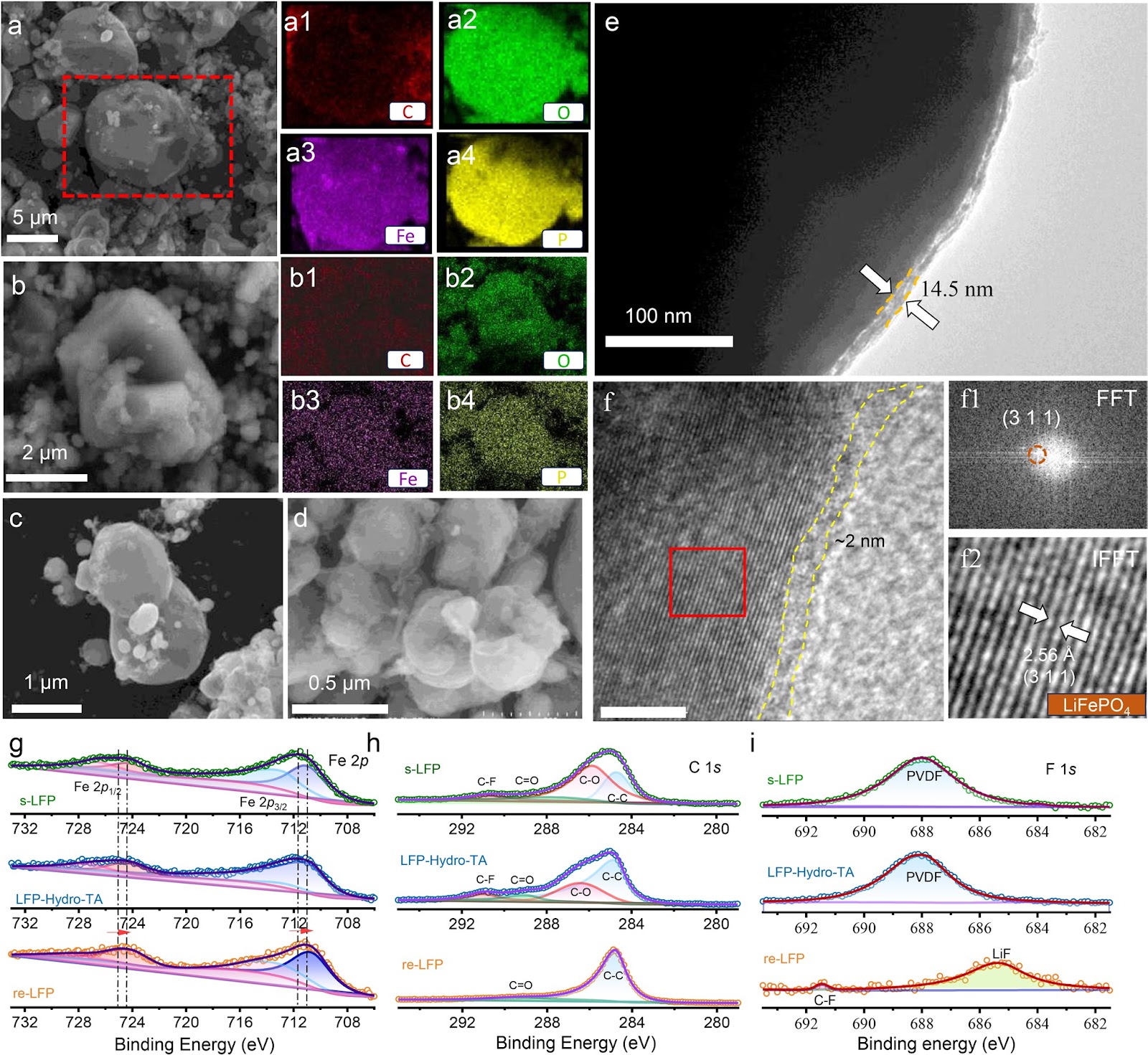
The rapid accumulation of spent LiFePO4 (LFP) cathodes from retired lithium-ion batteries necessitates the development of effective and environmental-friendly recycling strategies. In this context, direct regeneration has emerged as a promising approach for reclaiming LFP cathode materials, offering a streamlined pathway to restore their electrochemical functionality. We report an integrated regeneration protocol that simultaneously repairs the degraded crystal structure and reconstructs the damaged carbon coating in spent LFP. The regenerated cathode material had superfast lithium-ion diffusion kinetics and a stable cathode–electrolyte interface, giving a remarkable rate capability with specific capacities of 122 mAh g−1 at 5C and 106 mAh g−1 at 10C (1C = 170 mA g−1). It also maintained capacities of 110.7 mAh g−1 (5C) and 84.1 mAh g−1 (10C) after 400 cycles. It could be used in harsh environments and could be stably cycled at subzero temperatures (−10 and −20 °C) and in solid-state electrolyte batteries. Life cycle assessment combined with economic evaluation using the EverBatt model reveals that this direct regeneration approach has high economic and environmental benefits.
Oxide Semiconductor for Advanced Memory Architectures: Atomic Layer Deposition, Key Requirement and Challenges
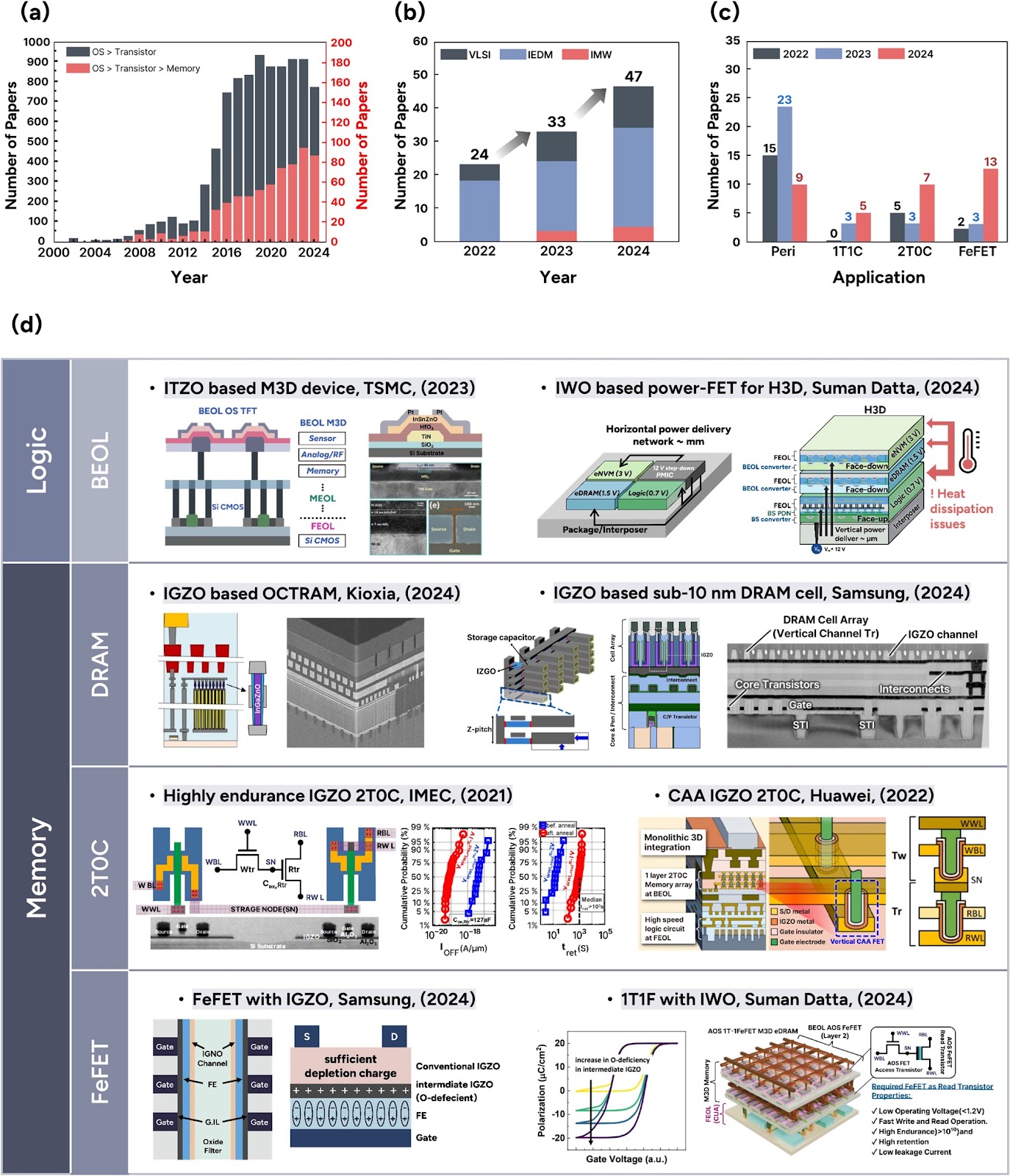
Oxide semiconductors (OSs), introduced by the Hosono group in the early 2000s, have evolved from display backplane materials to promising candidates for advanced memory and logic devices. The exceptionally low leakage current of OSs and compatibility with three-dimensional (3D) architectures have recently sparked renewed interest in their use in semiconductor applications. This review begins by exploring the unique material properties of OSs, which fundamentally originate from their distinct electronic band structure. Subsequently, we focus on atomic layer deposition (ALD), a core technique for growing excellent OS films, covering both basic and advanced processes compatible with 3D scaling. The basic surface reaction mechanisms—adsorption and reaction—and their roles in film growth are introduced. Furthermore, material design strategies, such as cation selection, crystallinity control, anion doping, and heterostructure engineering, are discussed. We also highlight challenges in memory applications, including contact resistance, hydrogen instability, and lack of p-type materials, and discuss the feasibility of ALD-grown OSs as potential solutions. Lastly, we provide an outlook on the role of ALD-grown OSs in memory technologies. This review bridges material fundamentals and device-level requirements, offering a comprehensive perspective on the potential of ALD-driven OSs for next-generation semiconductor memory devices.
Laser powder bed fusion of biodegradable Zn-4Cu alloy: Processing, microstructure and properties
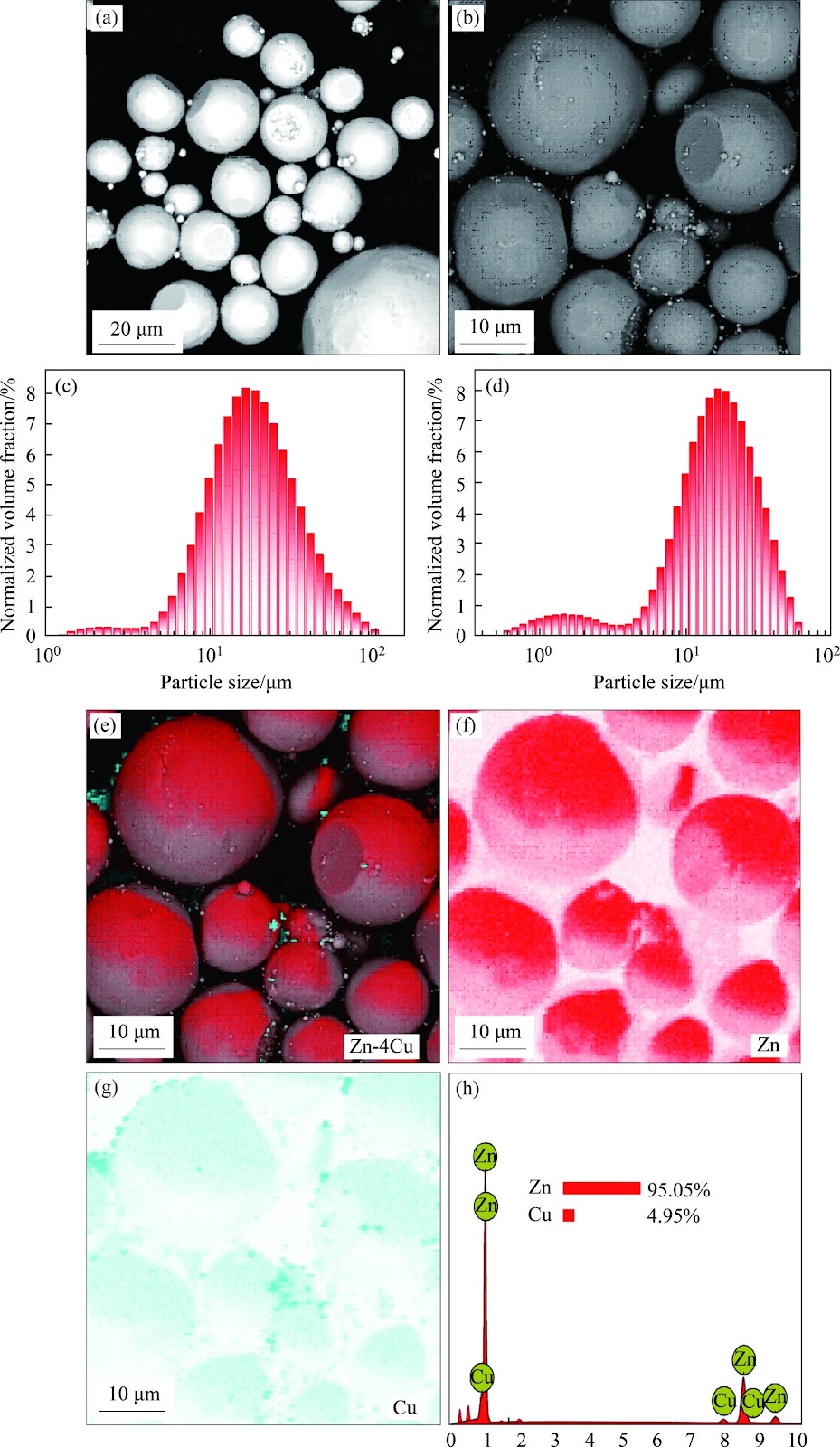
Zn's natural degradability and biocompatibility make it a promising candidate for implants, however, its mechanical properties remain insufficient for bone applications. In this study, the performance of Zn was enhanced by developing Zn-Cu alloys via laser powder bed fusion (LPBF). Optimal LPBF parameters for forming stable tracks were achieved by adjusting laser power and scanning speed. Under optimized conditions of 100 W and 100 mm/s, high-density (99.58%) Zn-Cu alloys with improved hardness (68.2HV) and yield strength (160 MPa) were achieved. These improvements are attributed to solid solution strengthening, segregation strengthening, and grain refinement. The Zn-Cu alloys also demonstrated favorable degradation behavior, with a rate of 0.16 mm/year. This degradation is primarily driven by micro-galvanic corrosion between the CuZn5 phase and Zn matrix, along with refined grains and increased grain boundary density. This work demonstrates a viable strategy for fabricating Zn-based implants with enhanced structural integrity and mechanical performance via LPBF.