Key Takeaways & Executive Findings
- •• Annealing at 900 °C yields the best plasticity for 50-µm-thick stainless steel-copper composites, producing micro cups with uniform wall thickness and minimal wrinkling. • The surface morphological finite element model, which incorporates material inhomogeneity and surface morphology, shows the closest agreement with experimental results compared to basic and Voronoi models. • Increasing annealing temperature reduces the drawing force during micro deep drawing due to the decrease in material strength. • The findings provide critical guidance for optimizing annealing and process parameters to enhance the quality of micro metallic components for miniaturized industrial applications.
Abstract
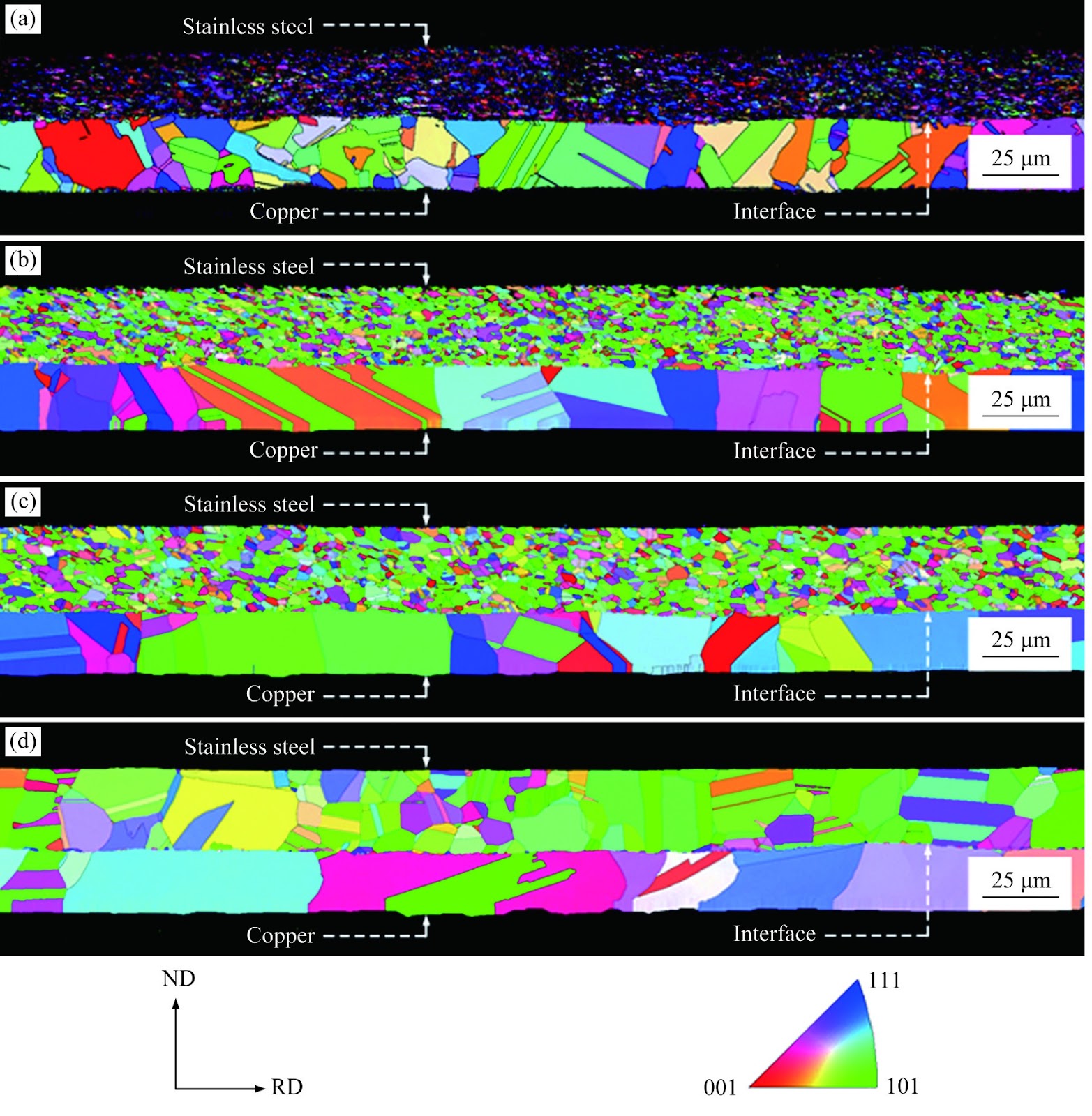
In the present study, two-layered stainless steel-copper composites with a thickness of 50 µm were initially subjected to annealing at 800, 900 and 1000 ℃ for 5 min, respectively, to achieve diverse microstructural features. Then the influence of annealing temperature on the formability of stainless steel-copper composites and the quality of micro composite cups manufactured by micro deep drawing (MDD) were investigated, and the underlying mechanism was analyzed. Three finite element (FE) models, including basic FE model, Voronoi FE model and surface morphological FE model, were developed to analyze the forming performance of stainless steel-copper composites during MDD. The results show that the stainless steel-copper composites annealed at 900 ℃ possess the best plasticity owing to the homogeneous and refined microstructure in both stainless steel and copper matrixes, and the micro composite cup with specimen annealed at 900 ℃ exhibits a uniform wall thickness as well as high surface quality with the fewest wrinkles. The results obtained from the surface morphological FE model considering material inhomogeneity and surface morphology of the composites are the closest to the experimental results compared to the basic and Voronoi FE model. During MDD process, the drawing forces decrease with increasing annealing temperature as a consequence of the strength reduction.
1. Introduction
Microforming technology is emerging as a promising technology with great potential in the 21st century owing to the ongoing miniaturization trend in the fields of micro-electromechanical systems (MEMS) [1], optical [2], medical [3], biosensors [4], aerospace [5] and environmental monitoring [6]. Micro deep drawing (MDD) serves as a foundational microforming technique that finds widespread applications in the fabrication of box or cup-like micro metallic parts with hollow and thin-walled characteristics [7, 8]. During past decade, MDD has drawn worldwide attention owing to its advantages of low costs, less pollution, high precision and mass production [9−11].
The investigation on MDD has witnessed a remarkable surge over the past few years. LUO et al [12] established an advanced finite element (FE) model that incorporates surface roughness and material inhomogeneity to comprehensively investigate the MDD of SUS304 foils. It was reported that the numerical simulation outcomes exhibited excellent concordance with the experimental results regarding the maximum drawing force and the cup mouth diameter. The research results indicated that the micro-friction and micro-contact had significant effect on the surface finish of SUS304 cups in MDD [13], and the optimal hydraulic pressure for producing high-quality cups in micro-hydromechanical deep drawing should be identified with respect to tool geometry and size effects [14, 15]. In addition, LUO et al [16] assessed the effects of the gap between the blank holder and die on MDD of SUS304 cups through numerical simulation and experiments, and found that a narrow blank holder-die gap was preferred for reducing the non-uniformity of wall thickness distribution and improving the dimensional accuracy of the outer surface of the formed cups without increasing the risk of fracture.
Loading authentic research manuscript (Pages 1–5)...
QI Yan-yang, MA Xiao-guang, JIANG Zheng-yi, MA Li-nan, WANG Zhi-hua, ZHOU Cun-long, HASAN Mahadi, DOBRZAŃSKI Leszek A., ZHAO Jing-wei (2025). Numerical and experimental investigation on the formability of stainless steel-copper composites during micro deep drawing. Journal of Central South University. https://doi.org/10.1007/s11771-025-5927-1
Research & Educational Purpose Only:The translations, structured abstracts, analytical annotations, and data reports provided by SinoTechIntel are intended exclusively for academic research, internal corporate R&D, and educational benchmarking. They do not constitute formal engineering, chemical safety, legal, or professional advice.
Copyright & Intellectual Property Notice: Original copyright of the underlying source articles and experimental data remains with the respective authors, institutions, and original publishing journals. SinoTechIntel claims intellectual property only over its proprietary translations, analytical syntheses, and AEO structured enhancements in accordance with international fair use and academic citation principles.
Frequently Asked Questions
What annealing temperature optimizes the formability of stainless steel-copper composites in micro deep drawing?
The study found that annealing at 900 °C for 5 minutes provides the best plasticity, resulting in micro composite cups with uniform wall thickness and the fewest wrinkles compared to annealing at 800 °C and 1000 °C.
Which finite element model best predicts the formability of these composites?
The surface morphological FE model, which accounts for material inhomogeneity and surface morphology, produces results closest to experimental data, outperforming the basic FE model and the Voronoi FE model.
How does annealing temperature affect the drawing force in micro deep drawing?
As the annealing temperature increases, the drawing forces decrease because the material strength is reduced at higher annealing temperatures.
What are the potential applications of micro deep drawing technology?
Micro deep drawing is used to fabricate hollow, thin-walled micro metallic parts for diverse fields such as micro-electromechanical systems (MEMS), optical devices, medical instruments, biosensors, aerospace components, and environmental monitoring equipment.
What material system is investigated in this study?
Two-layered stainless steel-copper composites with a total thickness of 50 µm are studied, with emphasis on the effects of annealing on their micro deep drawing formability and final cup quality.
Related Technical Papers & Translations
Design and optimization of a high-efficiency distillation process for cellulosic fuel ethanol integrated with thermal coupling and molecular sieve adsorption
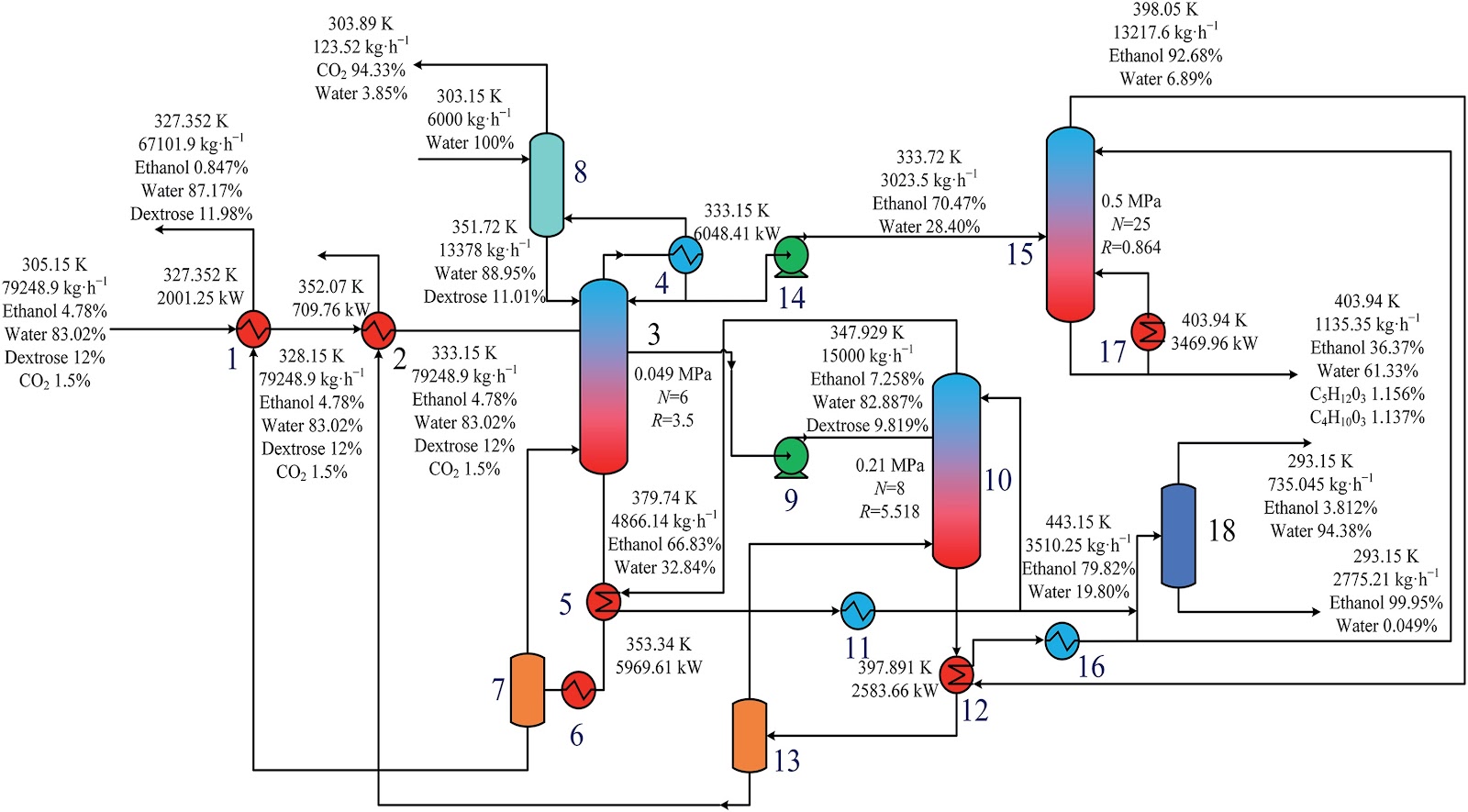
To address the challenges of high energy consumption and prominent costs in the traditional three-columns distillation process for cellulosic fuel ethanol, a distillation—molecular sieve coupling separation process is proposed. This process integrates a three-column (crude distillation column, first distillation column, second distillation column) system with a 3A molecular sieve adsorption deep dehydration unit. A thermal coupling network is constructed via differential pressure design (steam from medium/high-pressure columns as mutual heat sources, reboiler liquid waste heat for feed preheating), and molecular sieve adsorption conditions are optimized. The study first performs a thermodynamic consistency test on the ethanol—water system, determines optimal non-random two-liquid (NRTL) model binary interaction parameters via experimental data regression for Aspen Plus simulation. Aiming at minimum total annual cost (TAC), Aspen Plus is used to optimize process parameters (theoretical tray number, feed location, reflux ratio, side-draw position, etc.). Economic analysis shows this process reduces CO2 emission costs by 27.56%, TAC by 15.58% (to 5.123 × 10⁶ USD·a-1), and increases ethanol purity to >99.6%, providing an effective solution for green, efficient separation.
A cohesion loss model for determining residual strength of deep bedded sandstone
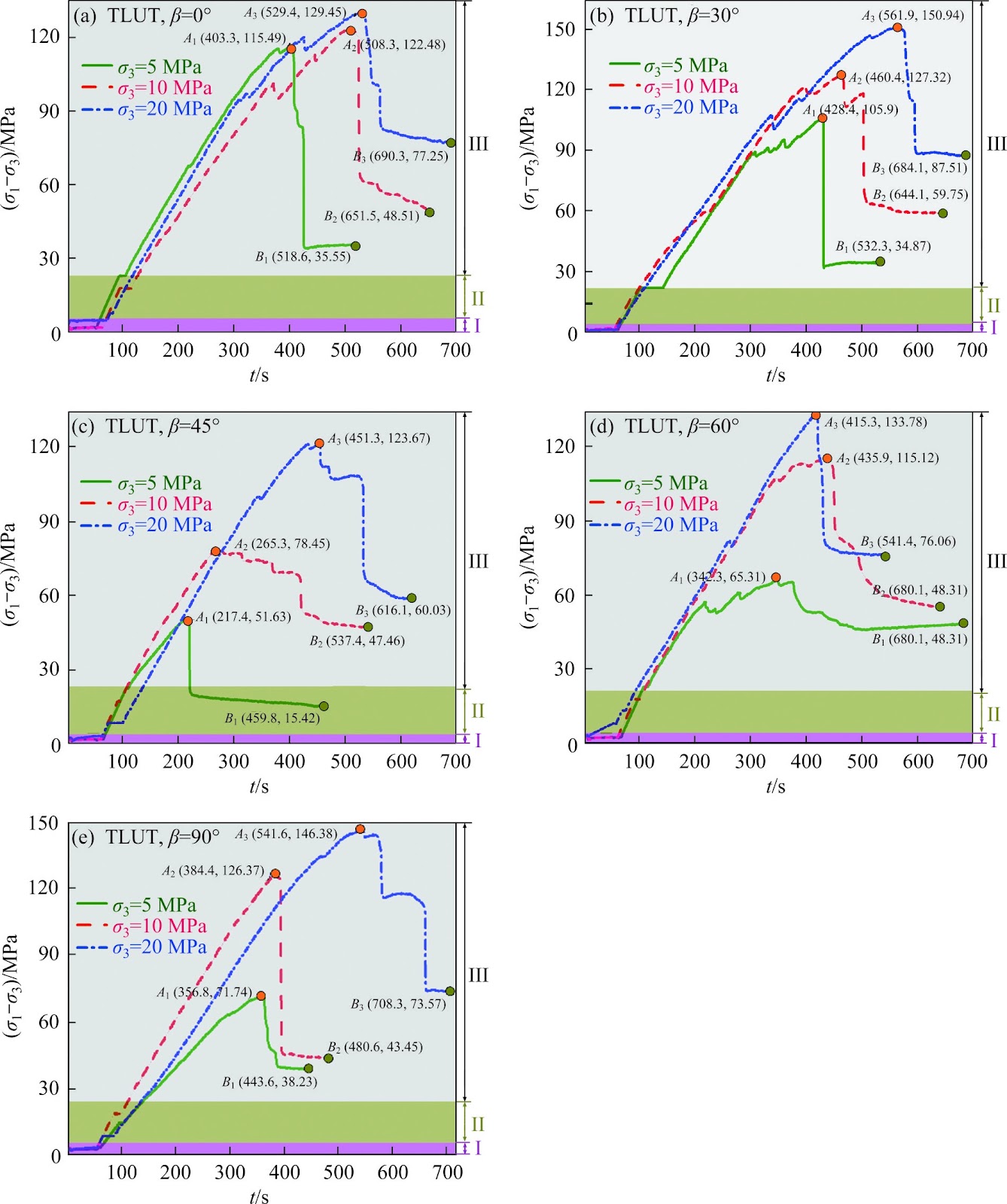
Rock residual strength, as an important input parameter, plays an indispensable role in proposing the reasonable and scientific scheme about stope design, underground tunnel excavation and stability evaluation of deep chambers. Therefore, previous residual strength models of rocks established were reviewed. And corresponding related problems were stated. Subsequently, starting from the effects of bedding and whole life-cycle evolution process, series of triaxial mechanical tests of deep bedded s
Federated model with contrastive learning and adaptive control variates for human activity recognition
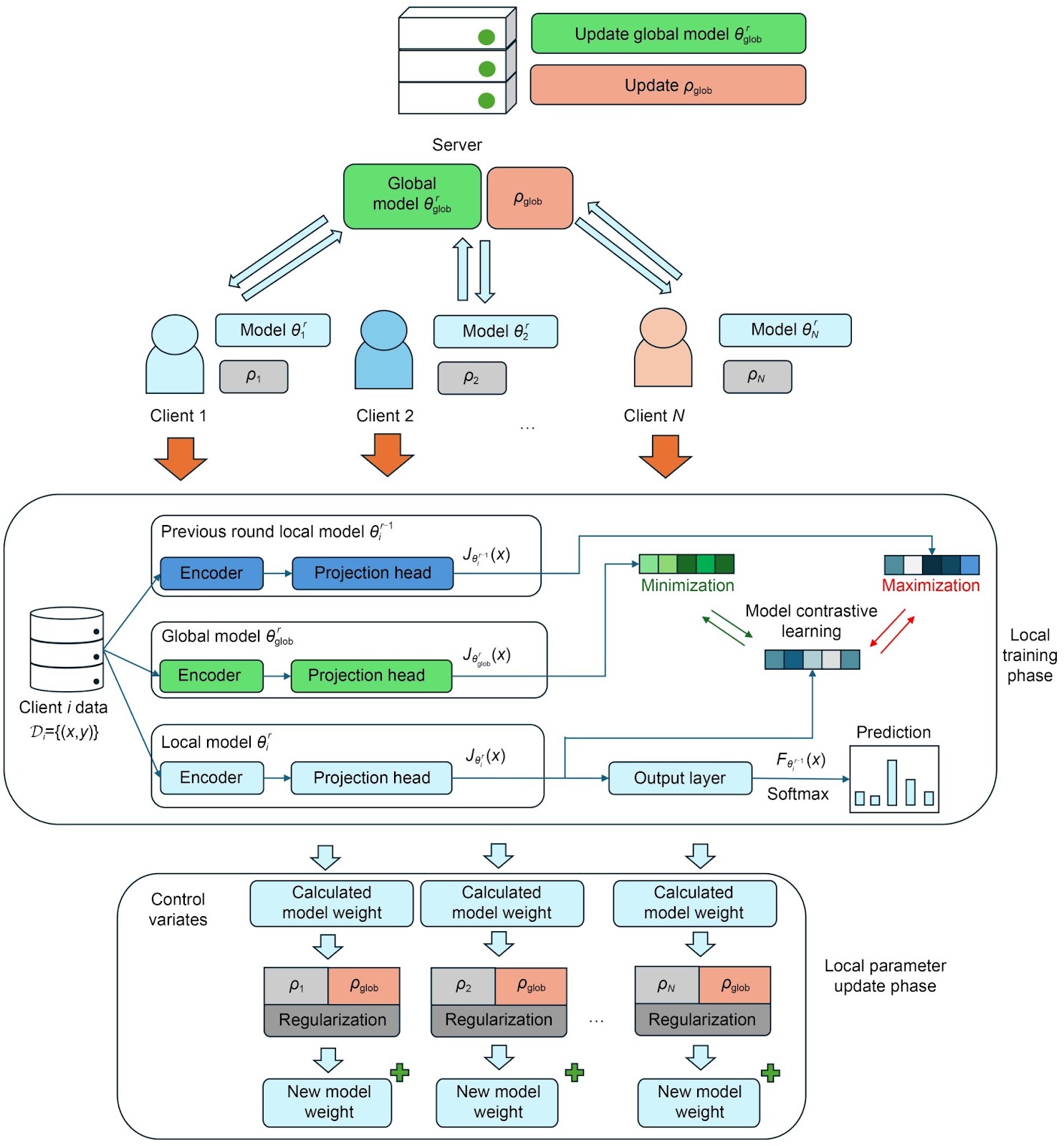
Recent attention to privacy issues demands a communication-safe method for training human activity recognition (HAR) models on client activity data. Federated learning (FL) has become a compelling technique to facilitate model training between the server and clients while preserving data privacy. However, classical FL methods often assume independent and identically distributed (IID) data among clients. This assumption does not hold true in practical scenarios. Human activity in real-world scena