Key Takeaways & Executive Findings
- •• Nanocrystalline Al–Cr–Cu–Fe–Ni HEA synthesized via high-energy attritor ball milling exhibits a single-phase BCC structure with a lattice parameter of 0.289 nm. • The alloy achieves rapid hydrogen absorption of 2.1 wt% within 3 minutes and desorption of 1.6 wt% in 6 minutes at 300°C and 50 atm, demonstrating excellent kinetics. • Exceptional cyclic stability is observed, with only 0.2 wt% capacity loss over 25 cycles, indicating high reversibility. • The combination of rapid kinetics and stable cycling makes this HEA a promising candidate for practical solid-state hydrogen storage applications.
Abstract
The hydrogen storage mechanism of a single-phase nanocrystalline mechanically alloyed Al–Cr–Cu–Fe–Ni high-entropy alloy (HEA) was investigated in this study. The alloys were synthesized from the elemental powders using high-energy attritor ball mill with hexane as the process control agent. The material obtained after 40 h of milling was nanocrystalline and exhibited body-centered cubic (BCC) phase with a lattice parameter of 0.289 nm. The nanocrystalline Al–Cr–Cu–Fe–Ni HEA demonstrated remarkable hydrogen storage capacity at 300°C and 50 atm hydrogen pressure, absorbing 2.1wt% of hydrogen within 3 min and desorbing approximately 1.6wt% of hydrogen in 6 min. These rapid absorption and desorption processes highlighted the efficiency of the alloy for hydrogen uptake and release. Additionally, the alloy exhibited good cyclic stability, with a loss of only 0.2wt% of its hydrogen capacity across 25 cycles. The exceptional cycle stability and rapid kinetics of hydrogen storage and release make the nanocrystalline Al–Cr–Cu–Fe–Ni HEA a viable choice for hydrogen storage applications.
1. Introduction
The Sixth Assessment Report (AR6) from the Intergovernmental Panel on Climate Change highlights the remarkable shifts in the Earth’s climate caused by human-induced global warming, which has now reached 1.1°C above pre-industrial levels [1]. CO2 levels are at their highest point in two million years, glaciers are retreating at the fastest rate in two thousand years, and the past decade was the warmest in 125000 years. Further, sea levels are rising at the fastest rate in 3000 years, ocean acidity is at a 26000-year high, and the oceans are warming rapidly. Ecosystems and human populations are significantly affected by climate change, and the risk increases with rising temperatures [2]. The primary driver of global warming is the overuse of fossil fuels; CO2 emissions increased from 11 billion tonnes in 1960 to an estimated 36.6 billion tonnes last year [3–5]. Therefore, pollution-free renewable fuels are urgently needed. Although hydrogen is an abundant and renewable energy source, it is difficult to store and transport because of its flammability [6]. Solid-state storage, which is safer and less expensive, is a viable substitute for high-pressure cryogenic techniques [7–8].
Despite advances in hydrogen storage using metal hydrides, complex hydrides, metal-organic frameworks (MOFs), and carbon nanostructures, issues such as difficult synthesis, low reversibility, and poor cyclability persist [8]. Dai et al. [9] demonstrated enhanced hydrogen storage performance in MgH2 doped with 2.5wt% [email protected]. The composite absorbed 5.18wt % H2 at 423 K within 200 s and released hydrogen at a reduced temperature of 585 K, with a lower activation energy of 41.9 kJ/mol H2 due to in situ formed Mg2Ni/Mg2NiH4 and Zn/MgZn2 phases. Therefore, high-capacity, economical, safe, and reliable hydrogen storage may be made possible by combining metal hydrides with metals [10–11].
High-entropy alloys (HEAs), which consist of five or more principal elements in nearly equal proportions, represent a fascinating class of metallic materials that have recently garnered considerable attention owing to their potential for hydrogen storage applications [12–13]. The four primary factors associated with HEAs that determine efficient hydrogen storage are high entropy, sluggish diffusion, severe lattice distortion, and the cocktail effect [14]. A significant space is created for hydrogen storage because of the high-entropy effect, which enables the creation of a solid-solution phase [15–16]. Grain formation is facilitated by the slow diffusion effect, which improves the kinetics of hydrogen absorption and desorption [17]. Larger interstitial sites are produced by the extreme lattice distortion effect, which enhances the hydrogen storage capacity [18]. Finally, the physical and chemical characteristics of HEAs are influenced by the cocktail effect, which results from the combination of these three factors. Wu et al. [19] reported that HEAs are considerably superior to conventional metallic materials in terms of their mechanical and functional properties, particularly in extreme application environments. The idea of hydrogen storage in HEAs, Co–Fe–Mn–Ti–V–Zr alloy, was first presented in 2010 [20], which paved the way for further investigations into alloy composition optimization, especially for alloys that efficiently store hydrogen at ambient temperatures. The C14 Laves phase structure, which is advantageous for hydrogen storage because of its effective hydrogen absorption capacity, was demonstrated to be one of the first HEA hydrogen storage successes. At room temperature, the reversible hydrogen capacity of this alloy reached up to 1.6wt% [21]. The quick absorption and desorption kinetics, primarily...
Loading authentic research manuscript (Pages 1–5)...
Yogesh Kumar Yadav, Mohammad Abu Shaz, Thakur Prasad Yadav (2025). Notable hydrogen storage properties in nanocrystalline Al–Cr–Cu–Fe–Ni high entropy alloy. Int. Journal of Minerals, Metallurgy and Materials (矿物冶金与材料学报). https://doi.org/10.1007/s12613-025-3266-8
Research & Educational Purpose Only:The translations, structured abstracts, analytical annotations, and data reports provided by SinoTechIntel are intended exclusively for academic research, internal corporate R&D, and educational benchmarking. They do not constitute formal engineering, chemical safety, legal, or professional advice.
Copyright & Intellectual Property Notice: Original copyright of the underlying source articles and experimental data remains with the respective authors, institutions, and original publishing journals. SinoTechIntel claims intellectual property only over its proprietary translations, analytical syntheses, and AEO structured enhancements in accordance with international fair use and academic citation principles.
Frequently Asked Questions
What is the hydrogen storage capacity of the Al-Cr-Cu-Fe-Ni high entropy alloy?
The nanocrystalline Al-Cr-Cu-Fe-Ni HEA absorbs 2.1 wt% hydrogen at 300°C and 50 atm within 3 minutes, and desorbs approximately 1.6 wt% in 6 minutes.
How was the Al-Cr-Cu-Fe-Ni high entropy alloy synthesized?
The alloy was synthesized from elemental powders using a high-energy attritor ball mill with hexane as the process control agent, resulting in a nanocrystalline BCC phase after 40 hours of milling.
What is the cyclic stability of the Al-Cr-Cu-Fe-Ni HEA?
The alloy exhibits excellent cyclic stability, with only a 0.2 wt% loss in hydrogen capacity over 25 cycles.
Why are high entropy alloys promising for hydrogen storage?
HEAs offer high entropy, sluggish diffusion, severe lattice distortion, and the cocktail effect, which create larger interstitial sites and improve hydrogen storage kinetics and capacity.
What is the significance of the BCC phase in this HEA?
The BCC phase provides a favorable lattice structure with interstitial sites that facilitate efficient hydrogen absorption and desorption, contributing to the alloy's rapid kinetics.
Related Technical Papers & Translations
Direct Repair of the Crystal Structure and Coating Surface of Spent LiFePO4 Materials Enables Superfast Li-Ion Migration
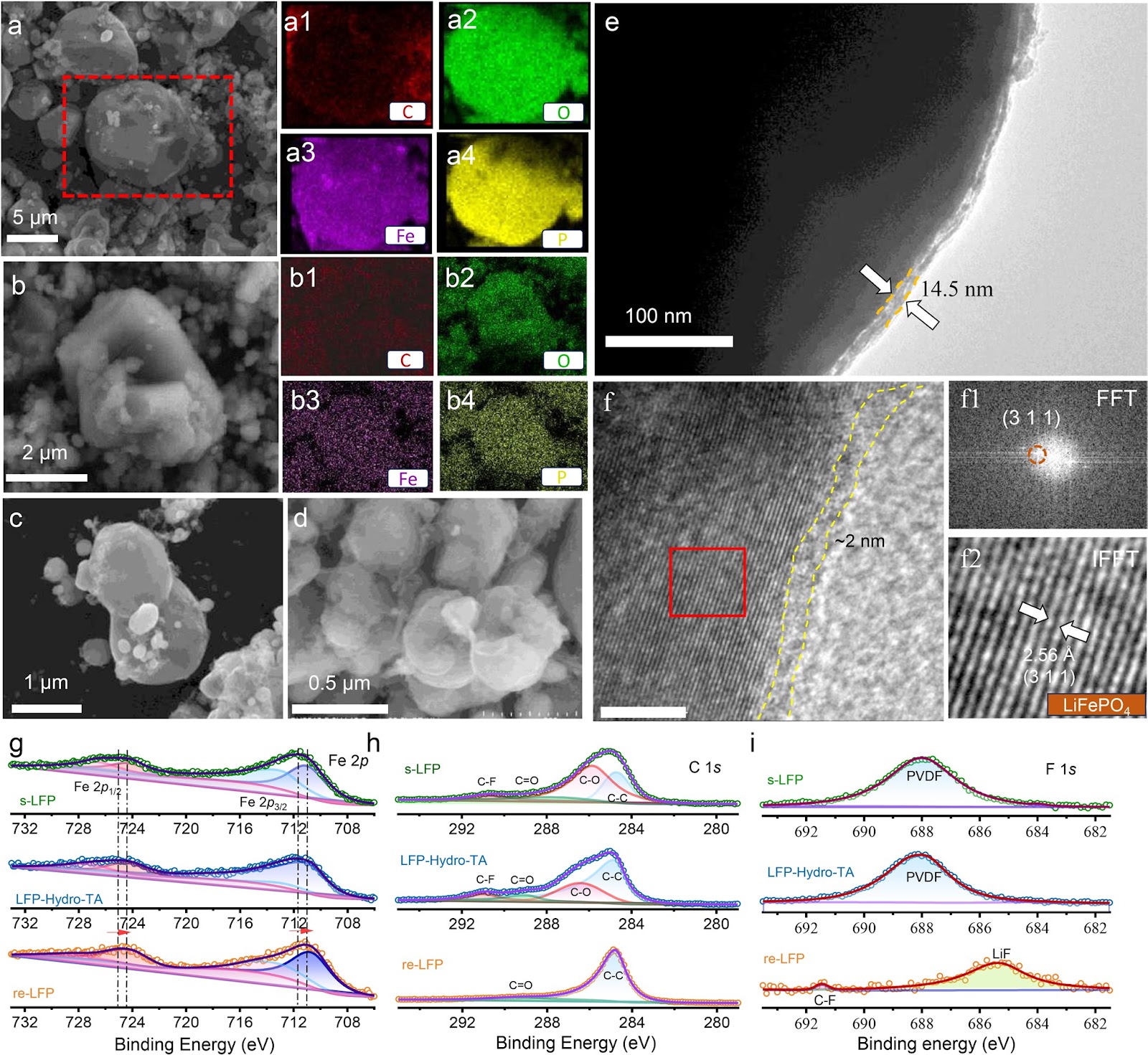
The rapid accumulation of spent LiFePO4 (LFP) cathodes from retired lithium-ion batteries necessitates the development of effective and environmental-friendly recycling strategies. In this context, direct regeneration has emerged as a promising approach for reclaiming LFP cathode materials, offering a streamlined pathway to restore their electrochemical functionality. We report an integrated regeneration protocol that simultaneously repairs the degraded crystal structure and reconstructs the damaged carbon coating in spent LFP. The regenerated cathode material had superfast lithium-ion diffusion kinetics and a stable cathode–electrolyte interface, giving a remarkable rate capability with specific capacities of 122 mAh g−1 at 5C and 106 mAh g−1 at 10C (1C = 170 mA g−1). It also maintained capacities of 110.7 mAh g−1 (5C) and 84.1 mAh g−1 (10C) after 400 cycles. It could be used in harsh environments and could be stably cycled at subzero temperatures (−10 and −20 °C) and in solid-state electrolyte batteries. Life cycle assessment combined with economic evaluation using the EverBatt model reveals that this direct regeneration approach has high economic and environmental benefits.
Oxide Semiconductor for Advanced Memory Architectures: Atomic Layer Deposition, Key Requirement and Challenges
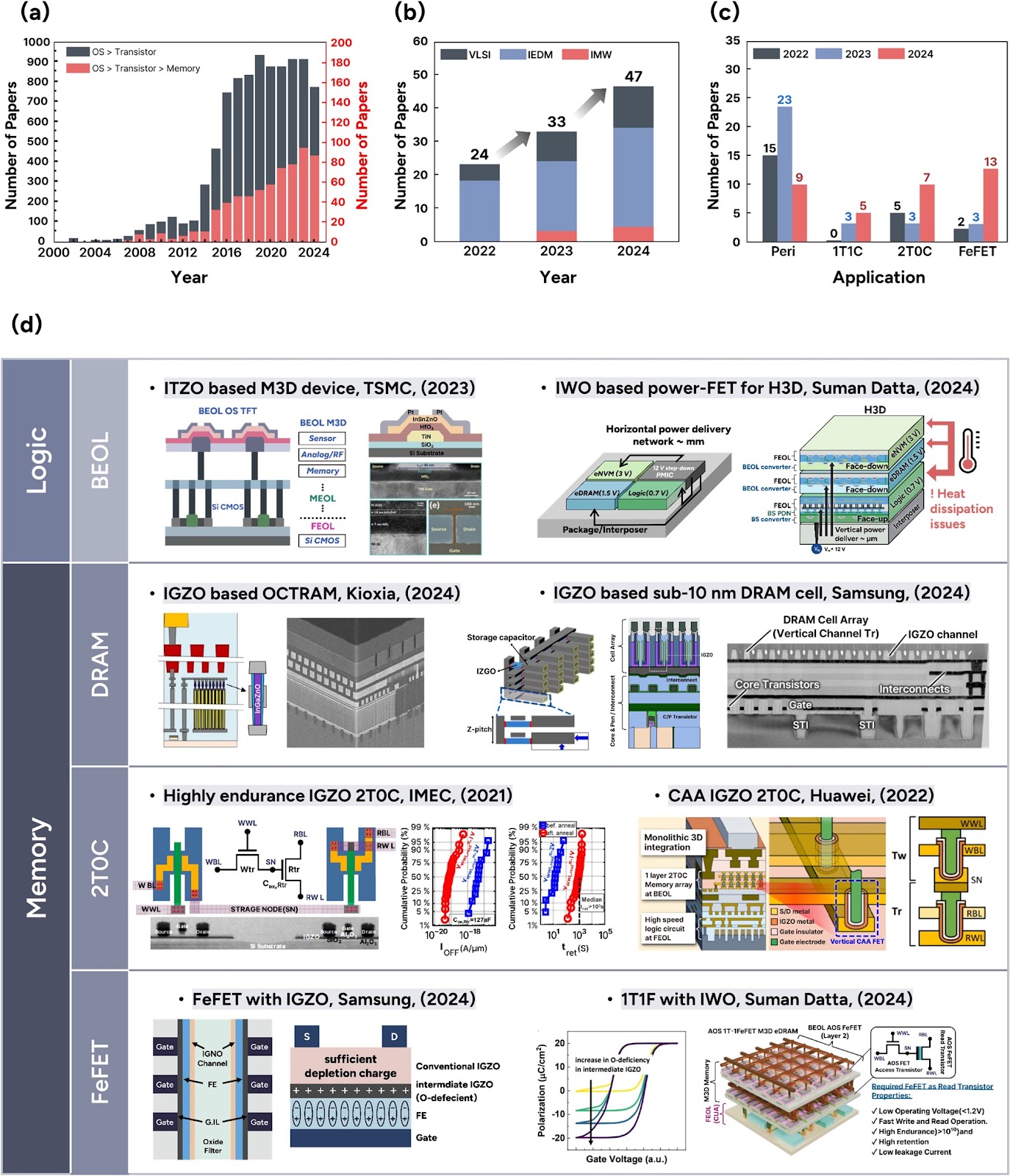
Oxide semiconductors (OSs), introduced by the Hosono group in the early 2000s, have evolved from display backplane materials to promising candidates for advanced memory and logic devices. The exceptionally low leakage current of OSs and compatibility with three-dimensional (3D) architectures have recently sparked renewed interest in their use in semiconductor applications. This review begins by exploring the unique material properties of OSs, which fundamentally originate from their distinct electronic band structure. Subsequently, we focus on atomic layer deposition (ALD), a core technique for growing excellent OS films, covering both basic and advanced processes compatible with 3D scaling. The basic surface reaction mechanisms—adsorption and reaction—and their roles in film growth are introduced. Furthermore, material design strategies, such as cation selection, crystallinity control, anion doping, and heterostructure engineering, are discussed. We also highlight challenges in memory applications, including contact resistance, hydrogen instability, and lack of p-type materials, and discuss the feasibility of ALD-grown OSs as potential solutions. Lastly, we provide an outlook on the role of ALD-grown OSs in memory technologies. This review bridges material fundamentals and device-level requirements, offering a comprehensive perspective on the potential of ALD-driven OSs for next-generation semiconductor memory devices.
Laser powder bed fusion of biodegradable Zn-4Cu alloy: Processing, microstructure and properties
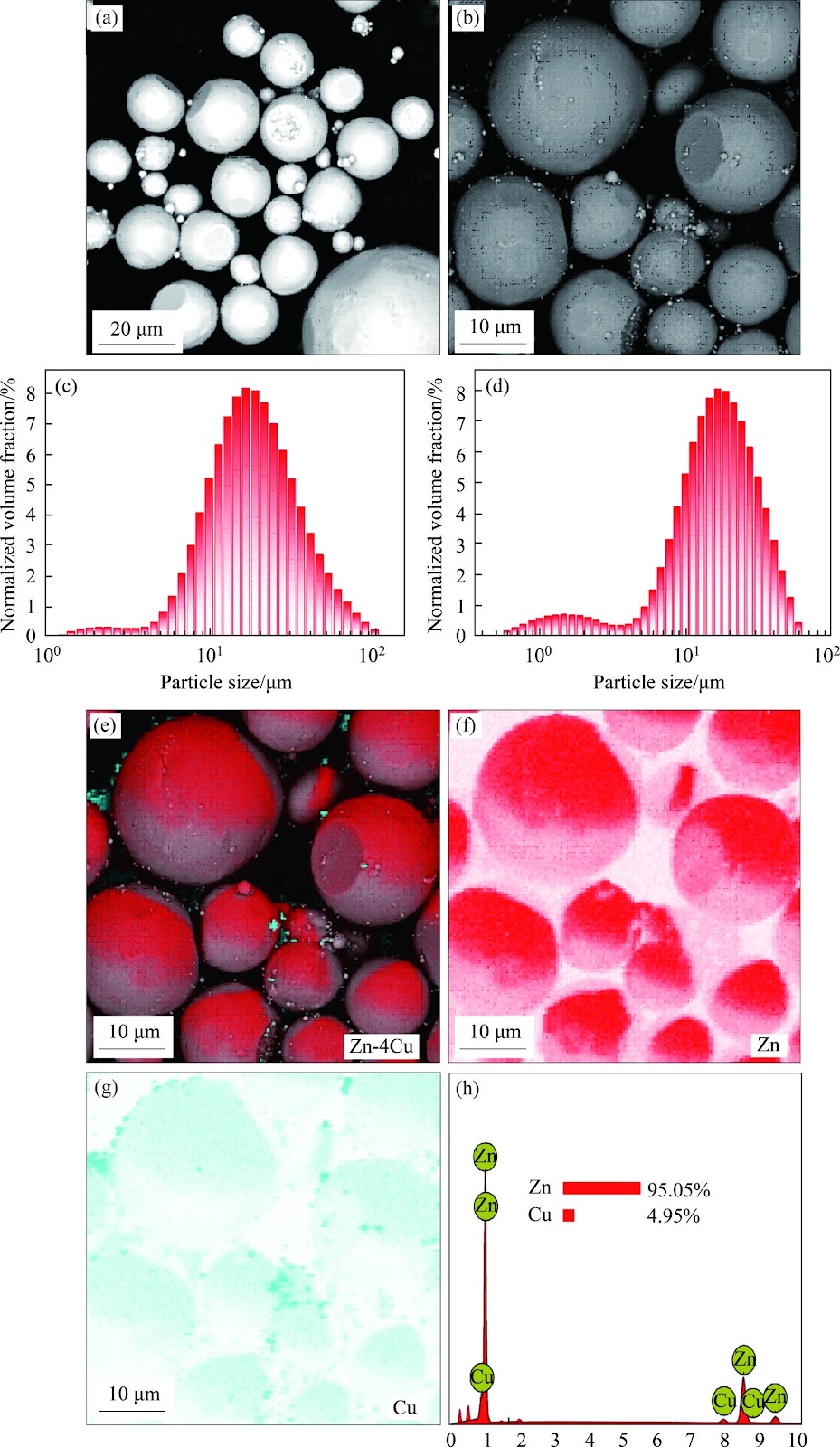
Zn's natural degradability and biocompatibility make it a promising candidate for implants, however, its mechanical properties remain insufficient for bone applications. In this study, the performance of Zn was enhanced by developing Zn-Cu alloys via laser powder bed fusion (LPBF). Optimal LPBF parameters for forming stable tracks were achieved by adjusting laser power and scanning speed. Under optimized conditions of 100 W and 100 mm/s, high-density (99.58%) Zn-Cu alloys with improved hardness (68.2HV) and yield strength (160 MPa) were achieved. These improvements are attributed to solid solution strengthening, segregation strengthening, and grain refinement. The Zn-Cu alloys also demonstrated favorable degradation behavior, with a rate of 0.16 mm/year. This degradation is primarily driven by micro-galvanic corrosion between the CuZn5 phase and Zn matrix, along with refined grains and increased grain boundary density. This work demonstrates a viable strategy for fabricating Zn-based implants with enhanced structural integrity and mechanical performance via LPBF.