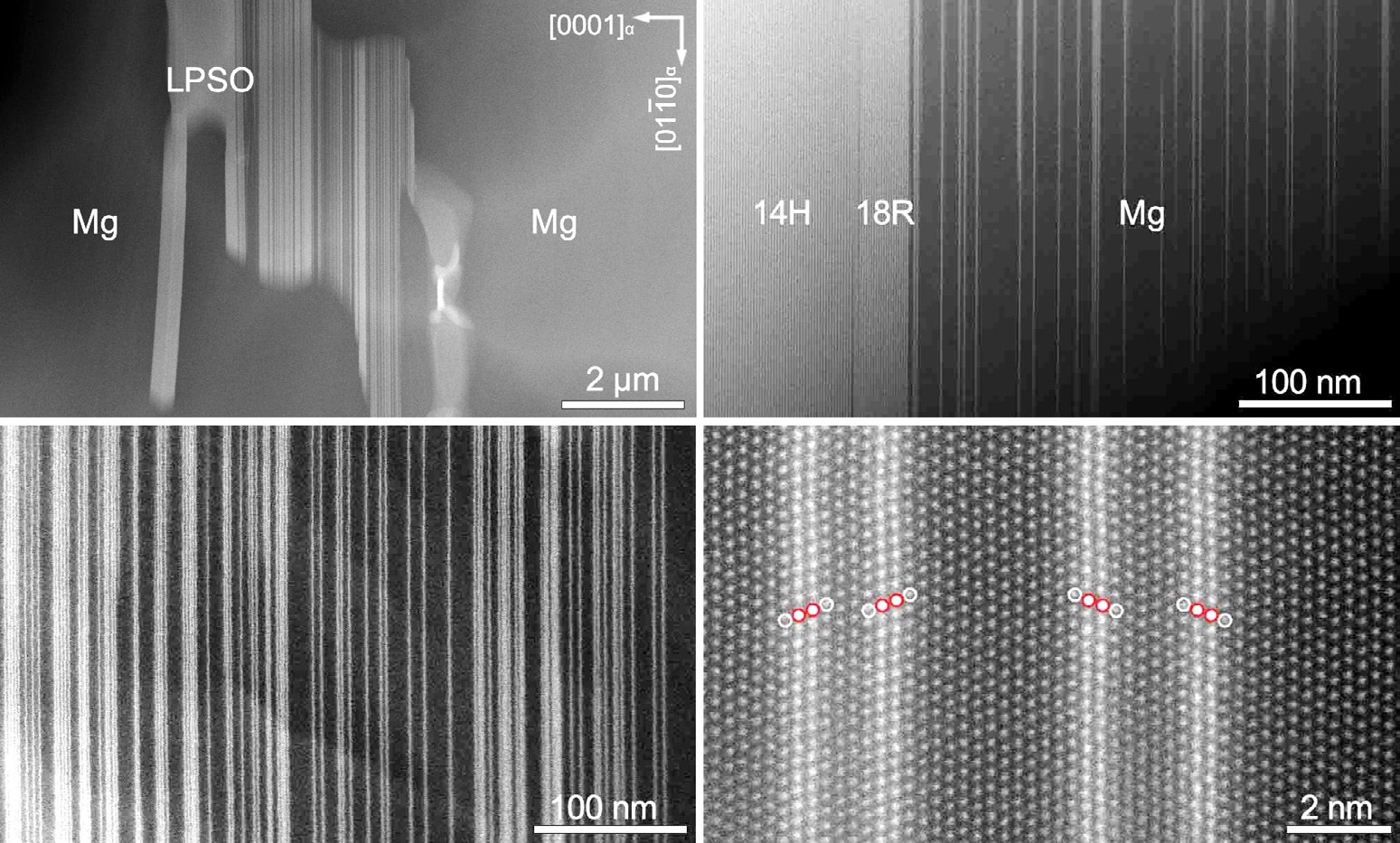
Key Takeaways & Executive Findings
- •• Discovery of new LPSO poly-types (20H, 60R, 66H) in Mg97Zn1Y1.6Ca0.4 alloy, expanding the known LPSO family. • Ca addition refines LPSO structures, potentially improving mechanical properties and corrosion resistance. • Detailed interface analysis reveals dislocation arrays and formation of 60R1 segment, enhancing understanding of LPSO growth mechanisms. • Identification of superstructure 116L via ordered F4 stacking faults in 18R, providing insights into complex stacking sequences.
Abstract
In this study, a comprehensive analysis of microstructural features, morphology, crystal structures, and interface structures of long-period stacking ordered (LPSO) structures in a non-equilibrium Mg97Zn1Y1.6Ca0.4 alloy cast in a steel mold was carried out. The addition of Ca element plays an important role in the refinement of LPSO structure. The result reveals new poly-types including 20H F2F2F4, 60R (F2F3 3)3, and 66H F2F3 3F2(F6)4 featuring a 6-Mg structure, alongside the prevalent 18R and 14H LPSO structures. The incoherent interface between 20H and the Mg matrix is split into two dislocation arrays, leading to the formation of a segment of 60R1. Moreover, the superstructure 116L, designated as (F2)18F4, is formed through the ordered distribution of F4 stacking faults in 18R.
1. Introduction
Conventional magnesium alloys often encounter challenges such as poor corrosion resistance, thermal stability, and inferior mechanical properties at high temperatures [1, 2]. To address these limitations, various strategies have been employed, including chemical composition modification [3, 4], homogenization [5, 6], precipitation hardening [7, 8], texture modification [9-11], and grain refinement [12]. Recently, numerous investigations have been conducted focusing on Mg-M-RE alloys (where M comprises Al, Co, Ni, Cu, Zn, and Ga; and RE includes Y, Gd, Tb, Dy, Ho, Er, and Tm) due to their exceptional mechanical properties [13-15] and unique structural features [16, 17]. For instance, the Mg97Zn1Y2 alloy, synthesized through rapid solidification powder metallurgy, demonstrated an impressive tensile yield strength exceeding 600 MPa at room temperature and an elongation of about 5% [13, 14]. Subsequent Mg-M-RE alloys have exhibited tensile yield strengths ranging from 297 to 377 MPa [18-20]. The outstanding mechanical properties of Mg-M-RE alloys primarily originate from both grain refinement and the presence of long-period stacking ordered (LPSO) structures [13-15]. The formation of LPSO structures involves the periodic introduction of AB′C′A blocks into the hexagonal close-packed structure, with the prime-annotated letters indicating layers enriched with M/RE elements [21, 22]. These LPSO structures can exhibit both hexagonal (H) and rhombohedral (R) Bravais lattices, depending on their stacking sequence.
To comprehend the varied configurations of LPSO structures, explore their formation mechanisms, and establish inherent connections with the mechanical properties of magnesium alloys, extensive analytical studies have been undertaken, emphasizing their microstructure [23-30]. In this regard, various LPSO structures have been identified in different magnesium alloys [31-34]. In Mg-Zn-Y alloys, configurations such as 10H, 18R, 14H, and 24R have been observed, wherein 1, 2, 3, and 4 layers of magnesium atoms interspersed between every two neighboring AB′C′A blocks [18-22, 29, 35]. In Mg-Co-Y alloys, structures such as 15R, 12H, and 21R have been identified, featuring 2, 3, and 4 layers of magnesium atoms between every two neighboring AB′C blocks [32]. Moreover, Jin et al. [33, 34] discovered six additional LPSO structures, including 72R, 29H, 102R, 192R, 51R, and 60H, in a Mg92Co2Y6 alloy. These structures incorporate both AB′C′A and AB′C blocks [33]. Furthermore, an ultra-long 654R structure, derived from an ordered arrangement of 15R and 12H components, has been identified in a Mg88Co5Y7 alloy [34].
In Mg97Zn1Y2 alloys, the diameters of Mg, Zn, and Y atoms adhere to the sequence rZn(0.133 nm)
Loading authentic research manuscript (Pages 1–5)...
Qian-qian Jin, Zi-hui Tang, Wen-long Xiao, Xiu-yu Qu, Xu-hao Han, Lin Mei, Xiao-hong Shao, Xiu-liang Ma (2025). New poly-types of LPSO structures in a non-equilibrium Mg97Zn1Y1.6Ca0.4 alloy. China Foundry. https://doi.org/10.1007/s41230-024-4036-3
Research & Educational Purpose Only:The translations, structured abstracts, analytical annotations, and data reports provided by SinoTechIntel are intended exclusively for academic research, internal corporate R&D, and educational benchmarking. They do not constitute formal engineering, chemical safety, legal, or professional advice.
Copyright & Intellectual Property Notice: Original copyright of the underlying source articles and experimental data remains with the respective authors, institutions, and original publishing journals. SinoTechIntel claims intellectual property only over its proprietary translations, analytical syntheses, and AEO structured enhancements in accordance with international fair use and academic citation principles.
Frequently Asked Questions
What are LPSO structures in magnesium alloys?
LPSO (Long-Period Stacking Ordered) structures are unique crystal phases in magnesium alloys that enhance mechanical properties. They consist of periodic stacking faults with enriched solute layers, forming hexagonal or rhombohedral lattices.
How does calcium addition affect LPSO structures?
Calcium addition refines LPSO structures, potentially improving mechanical properties and corrosion resistance. It may substitute for Y atoms, altering the stacking sequences and leading to new poly-types.
What new LPSO poly-types were discovered in this study?
The study identified new poly-types: 20H, 60R, and 66H, featuring a 6-Mg structure, alongside known 18R and 14H. A superstructure 116L was also found.
What is the significance of the interface analysis?
The interface analysis revealed that the incoherent interface between 20H and the Mg matrix splits into two dislocation arrays, leading to the formation of a 60R1 segment, providing insights into LPSO growth mechanisms.
What techniques were used in this research?
The research employed transmission electron microscopy (TEM) to analyze microstructural features, morphology, crystal structures, and interface structures of LPSO phases.
Related Technical Papers & Translations
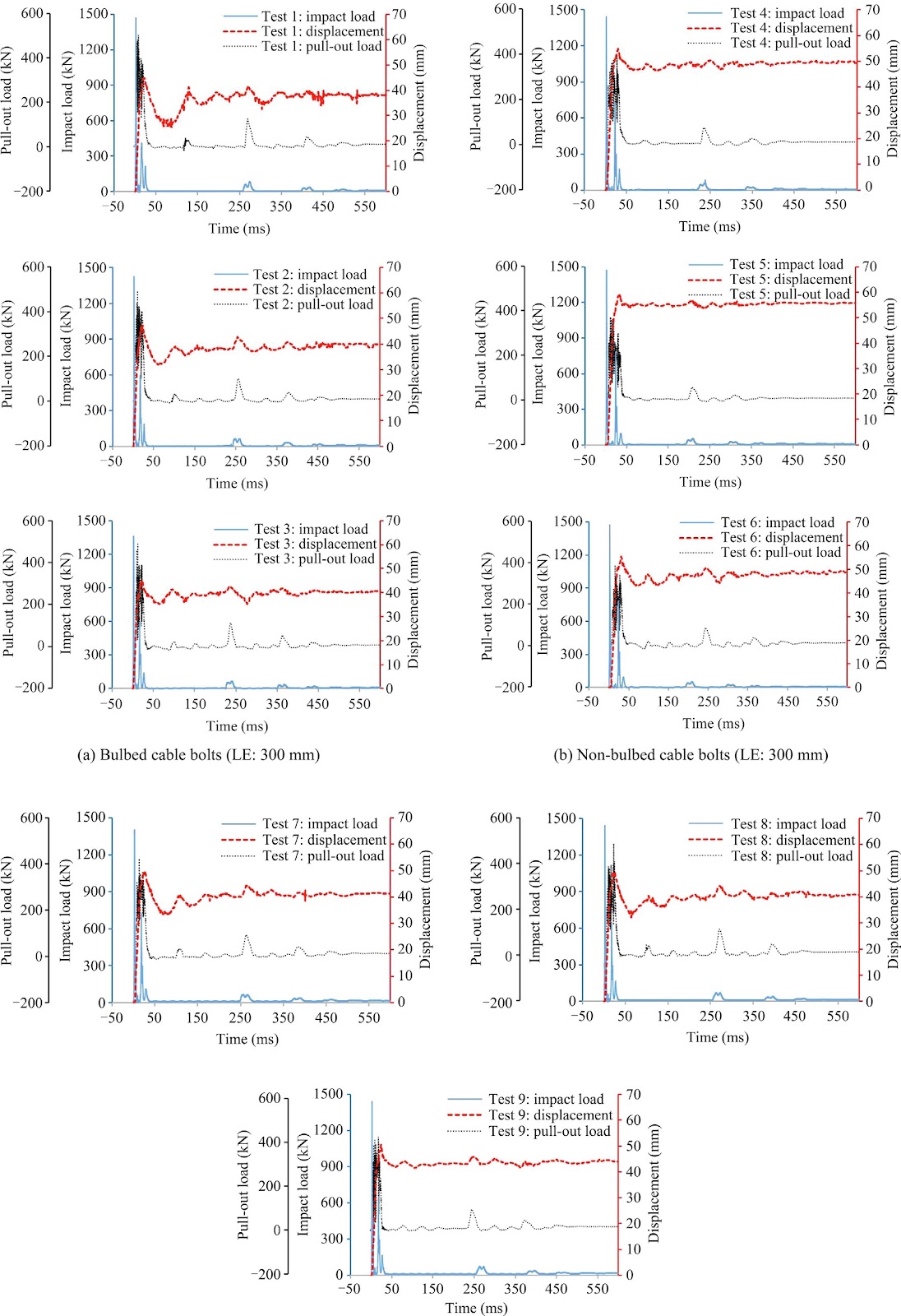
Pull-out capacity and energy absorption of cable bolts under impact loading
This study investigates the performance of high-strength cable bolts under impact loading conditions representative of rock bursts in underground environments. Although widely used, the dynamic behaviour of these cable bolts has received limited experimental attention, and their effectiveness in seismically active zones remains a subject of ongoing debate. To address this gap, a reverse pull-out test machine integrated with a drop hammer rig was employed. Tests were conducted on 70-t SUMO bulbed and non-bulbed cable bolts with encapsulation lengths of 300 and 450 mm, subjected to an impact energy of 14.52 kJ. Results indicate that non-bulbed cables, despite showing lower initial peak loads (average 218 vs. 328 kN for bulbed cables at 300 mm encapsulation), demonstrated superior energy absorption (average 11.26 vs. 8.75 kJ) and displacement capacity (average 48.40 vs. 36.25 mm). Increasing the encapsulation length for bulbed cables led to a reduction in initial peak load but improved displacement and energy absorption. The dominant failure mechanism was debonding at the cable-grout interface, characterised by frictional sliding and cable rotation. These findings provide new insights into the energy dissipation mechanisms of cables and support the development of more resilient ground support systems for dynamically active conditions.
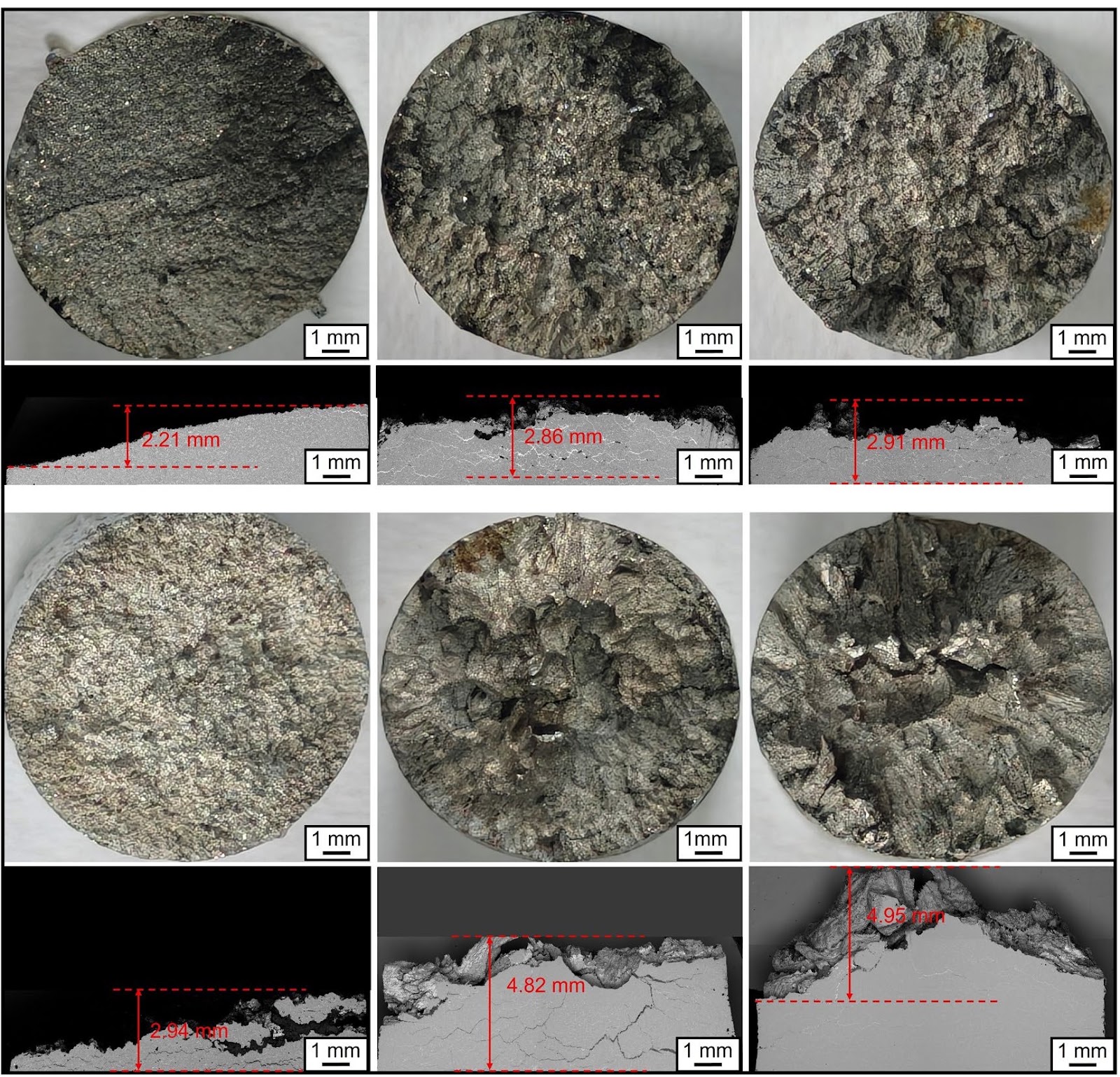
Effect of eutectic content on microstructure and mechanical properties of Al-Zn-Mg-Cu alloys
The 7xxx series aluminum alloys have emerged as a particularly promising class of lightweight structural materials. However, the inherent strength of these materials is primarily influenced by the content and type of alloying elements added during the manufacturing process, as well as casting defects. The present study investigated the effects of eutectics formed by solute atoms (Zn, Mg, and Cu), with equal mass ratios (Zn/Mg=2, Mg/Cu=3) but varying overall contents, on the liquid film thickness, crack propagation depth, and the mechanical properties of the Al-Zn-Mg-Cu alloy after heat treatment. The results from gravity casting indicate that the intergranular liquid film thickness increases with the increase of eutectic content. A thick intergranular liquid film in the casting can accommodate greater strain during grain contraction, thereby preventing liquid film rupture and subsequent hot tearing. Concurrently, during the solution treatment at 475 °C, the residual eutectic fraction in the Al-7Zn-3.5Mg-1.18Cu alloy diminishes from 9.1% at 10 h to 0.35% at 40 h. At 165 °C, the Al-6Zn-3.0Mg-1.0Cu alloy exhibits the optimal mechanical properties, with a peak aging tensile strength of 510 MPa and an elongation of 6.4%. The incorporation of lower concentrations of solute atoms (Zn, Mg, and Cu) serves to reduce the barrier to dislocation precipitation, thereby enhancing alloy plasticity. However, when the proportion of alloying elements exceeds the solubility limit of the α-Al matrix at specific heat treatment temperatures, coarse residual phases remain intergranular, thereby significantly impairing the mechanical properties of the alloy. This study provides a reference for the optimal addition level of the main strengthening elements in Al‑Zn‑Mg‑Cu alloys.
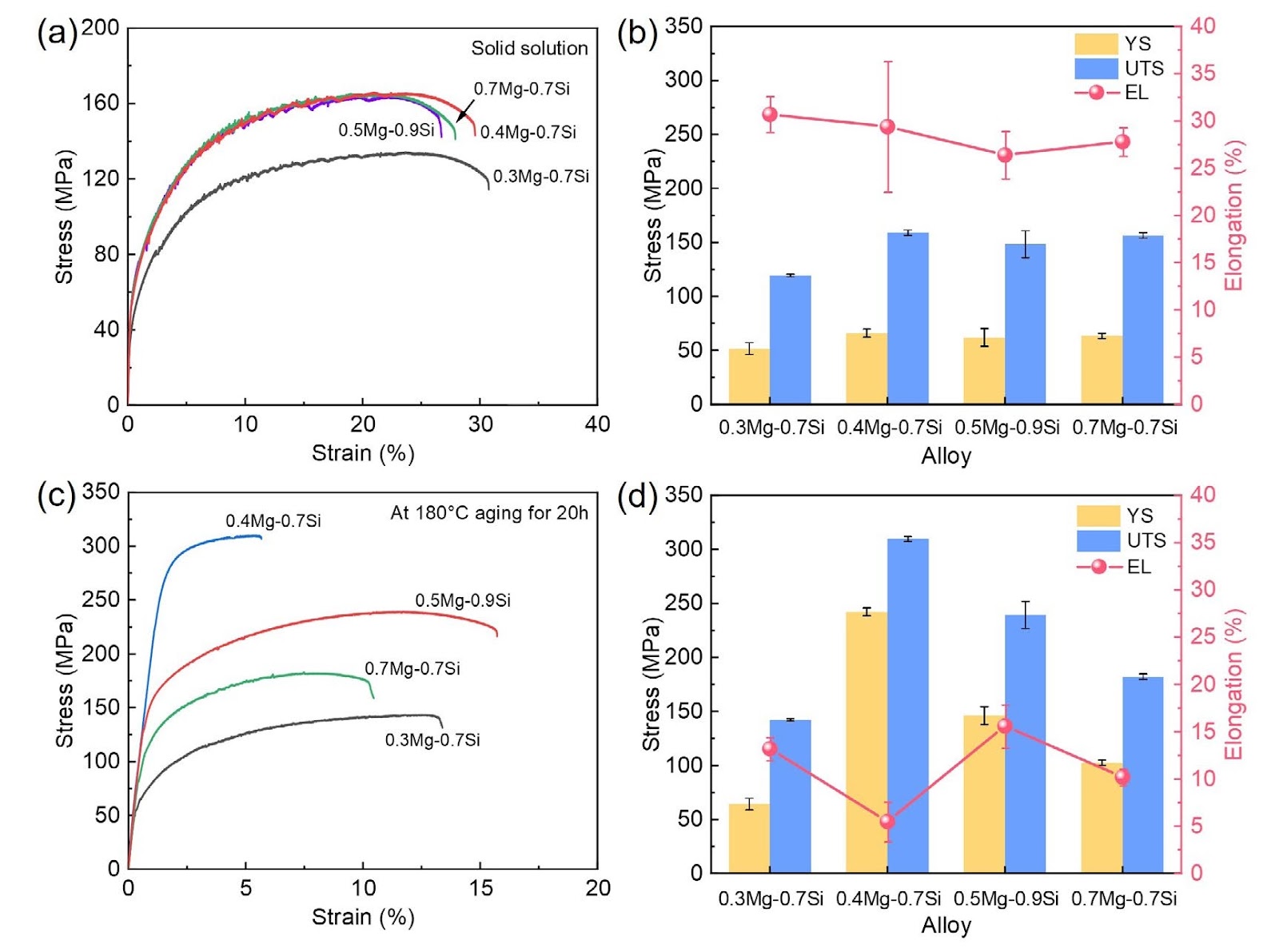
Achieving optimal strength-conductivity balance in cast Al-2.3Fe-Mg-Si alloys via Mg/Si ratio regulation
The Al-2.3Fe eutectic alloy is regarded as a promising substitute for Cu conductors in automotive motors owing to its excellent castability and low resistivity. However, its application is restricted by the mutually exclusive relationship between electrical conductivity and mechanical strength. The microstructure and mechanical properties of Al-2.3Fe alloy were modified through Mg/Si alloying combined with T6 heat treatment in this work, leading to the development of a high-performance cast Al-2.3Fe-Mg-Si alloy. In the Al-2.3Fe-0.40Mg-0.72Si (Mg/Si=0.56) alloy subjected to T6 treatment, an electrical conductivity of (52.5±0.6)% IACS is achieved, while the ultimate tensile strength is significantly enhanced to 309.5±5.6 MPa. The addition of Mg and Si brings about marked changes in the solidification process of the Al-2.3Fe alloy, resulting in considerable variations in both the morphology of the second phase and its phase constitution. The aging behavior of the alloy is governed by second phase and solid solubility. Through optimization of the Mg/Si ratio, the aging response can be effectively enhanced. At the ratio of Mg/Si=0.56, a balance is achieved between solid solubility and precipitation, while simultaneously minimizing the detrimental impact on electrical conductivity and reaching the best mechanical properties and electrical conductivity in peak-aged Al-2.3Fe-xMg-ySi alloy. This work providing valuable insights for developing advanced conductor materials.