Key Takeaways & Executive Findings
- •• HMPT effectively separates iron and enriches rare earths from Bayan Obo refractory ores, with tailings containing 9.15wt% REO, 5.31wt% monazite, and 23.52wt% fluorite. • Closed-circuit flotation achieved a REO grade of 60.27wt% with 73% recovery, demonstrating the feasibility of rare-earth recovery from HMPT-treated tailings. • Monazite remains stable during HMPT, while bastnaesite transforms into Ce7O12 and CeF3, increasing collector consumption but not significantly affecting flotation performance. • The integration of HMPT, magnetic separation, and flotation offers a promising strategy for comprehensive recovery of iron, rare earths, and fluorite from Bayan Obo ores.
Abstract
Hydrogen-based mineral phase transformation (HMPT) technology has demonstrated its effectiveness in separating iron and enriching rare earths from Bayan Obo refractory ores. However, further research is needed to clarify the phase composition and floatability of rare earths obtained after HMPT owing to the associated phase transformations. This study explored the mineralogical characteristics and separation behavior of rare earths in HMPT-treated iron tailings. Process mineralogy studies conducted via BGRIMM process mineralogy analysis and X-ray diffraction revealed that the main valuable minerals in the tailings included rare-earth oxides (9.15wt%), monazite (5.31wt%), and fluorite (23.52wt%). The study also examined the impact of mineral liberation and gangue mineral intergrowth on flotation performance. Flotation tests achieved a rare-earth oxide (REO) grade of 74.12wt% with a recovery of 34.17% in open-circuit flotation, whereas closed-circuit flotation resulted in a REO grade of 60.27wt% with a recovery of 73%. Transmission electron microscopy and scanning electron microscopy coupled with energy-dispersive spectroscopy revealed that monazite remained stable during the HMPT process, while bastnaesite was transformed into Ce7O12 and CeF3, leading to increased collector consumption. Nonetheless, the HMPT process did not significantly affect the flotation performance of rare earths. The enrichment of fluorite in the tailings highlighted its further recovery potential. The integration of HMPT with magnetic separation and flotation presents an efficient strategy for recovering rare earths, iron, and fluorite from Bayan Obo ores.
1. Introduction
The Bayan Obo region is a world-class polymetallic deposit rich in iron, rare earths, and fluorite. Despite its abundant mineral resources, comprehensive recovery remains challenging owing to the ore's complex composition and the limitations of current recovery technologies [1–3]. As mineral resources become increasingly scarce, the recovery of low-grade and refractory deposits has gained critical importance [4–6]. Accordingly, the rare-earth and fluorite resources at Bayan Obo, recognized as vital strategic materials, have attracted significant attention [7–10].
Flotation is an effective method for recovering valuable metals from ores and has also been widely applied to mineral-type rare-earth ores [11–14]. In the 1950s, flotation was employed for the large-scale development of the Mountain Pass rare-earth mine in the United States. A significant breakthrough occurred in the early 1990s at the Bayan Obo deposit, where the successful application of hydroxamic acid collectors in rare-earth flotation enabled the production of high-grade rare-earth concentrates. This advancement established China as the world's largest producer and consumer of rare-earth elements, as the nation contributed approximately 54% of the global output [15–19]. The Baotou Steel (Group) Corporation's concentrator implemented a process flow of “weak magnetic–strong magnetic–continuous flotation”, facilitating the comprehensive utilization of iron and rare-earth resources. However, this method achieves relatively low utilization rates for rare earths and fluorite, with rare-earth concentrate recovery limited to approximately 50%, and approximately 20% of fluorite resources remain uncommercialized and underutilized.
The Bayan Obo deposit, a world-renowned polymetallic resource, has long faced challenges in resource utilization owing to its complex mineral composition, intricate mineral associations, and similar beneficiation properties. Conventional beneficiation techniques, such as magnetic separation and flotation, often lead to the unintended recovery of non-target minerals, thereby reducing the quality of target concentrates and hindering the recovery of other valuable minerals. To address these challenges, researchers have explored mineral phase transformation techniques to improve recovery efficiency. For example, Zhou et al. [20] investigated the carbothermal reduction method for processing Bayan Obo ore. This process involved roasting a mixture of coal and CaO at temperatures between 1100 and 1200°C, converting refractory iron into metallic iron. This transformation enabled the effective separation of iron and rare earths via magnetic separation.
Loading authentic research manuscript (Pages 1–5)...
Jilai Ning, Peng Gao, Yang Wang, Zihao Li, Shuai Yuan, Yongsheng Sun, Wenbo Li, Zhidong Tang (2025). Mineralogical characterization and flotation properties of rare earths in refractory iron tailings subjected to hydrogen-based mineral phase transformation. Int. Journal of Minerals, Metallurgy and Materials (矿物冶金与材料学报). https://doi.org/10.1007/s12613-024-3053-y
Research & Educational Purpose Only:The translations, structured abstracts, analytical annotations, and data reports provided by SinoTechIntel are intended exclusively for academic research, internal corporate R&D, and educational benchmarking. They do not constitute formal engineering, chemical safety, legal, or professional advice.
Copyright & Intellectual Property Notice: Original copyright of the underlying source articles and experimental data remains with the respective authors, institutions, and original publishing journals. SinoTechIntel claims intellectual property only over its proprietary translations, analytical syntheses, and AEO structured enhancements in accordance with international fair use and academic citation principles.
Frequently Asked Questions
What is hydrogen-based mineral phase transformation (HMPT) and how does it apply to rare earth recovery?
HMPT is a technology that uses hydrogen to induce phase transformations in minerals, enabling the separation of iron and enrichment of rare earths from refractory ores. In this study, HMPT was applied to Bayan Obo iron tailings, resulting in tailings with significant rare-earth content (9.15wt% REO) that could be further processed by flotation.
What are the main valuable minerals in the HMPT-treated iron tailings?
The main valuable minerals identified were rare-earth oxides (9.15wt%), monazite (5.31wt%), and fluorite (23.52wt%). These minerals are targets for recovery through flotation and other beneficiation processes.
How effective is flotation in recovering rare earths from HMPT-treated tailings?
Flotation tests showed that open-circuit flotation achieved a rare-earth oxide (REO) grade of 74.12wt% with a recovery of 34.17%, while closed-circuit flotation achieved a REO grade of 60.27wt% with a recovery of 73%. This demonstrates that flotation is effective, though recovery rates vary with circuit configuration.
What happens to bastnaesite during HMPT and how does it affect flotation?
During HMPT, bastnaesite is transformed into Ce7O12 and CeF3, which increases collector consumption during flotation. However, this transformation does not significantly affect the overall flotation performance of rare earths, as monazite remains stable and contributes to recovery.
What is the significance of fluorite enrichment in the tailings?
The enrichment of fluorite (23.52wt%) in the tailings highlights its potential for further recovery. This is important because fluorite is a strategic mineral, and its recovery alongside rare earths and iron can improve the economic viability of processing Bayan Obo ores.
Related Technical Papers & Translations
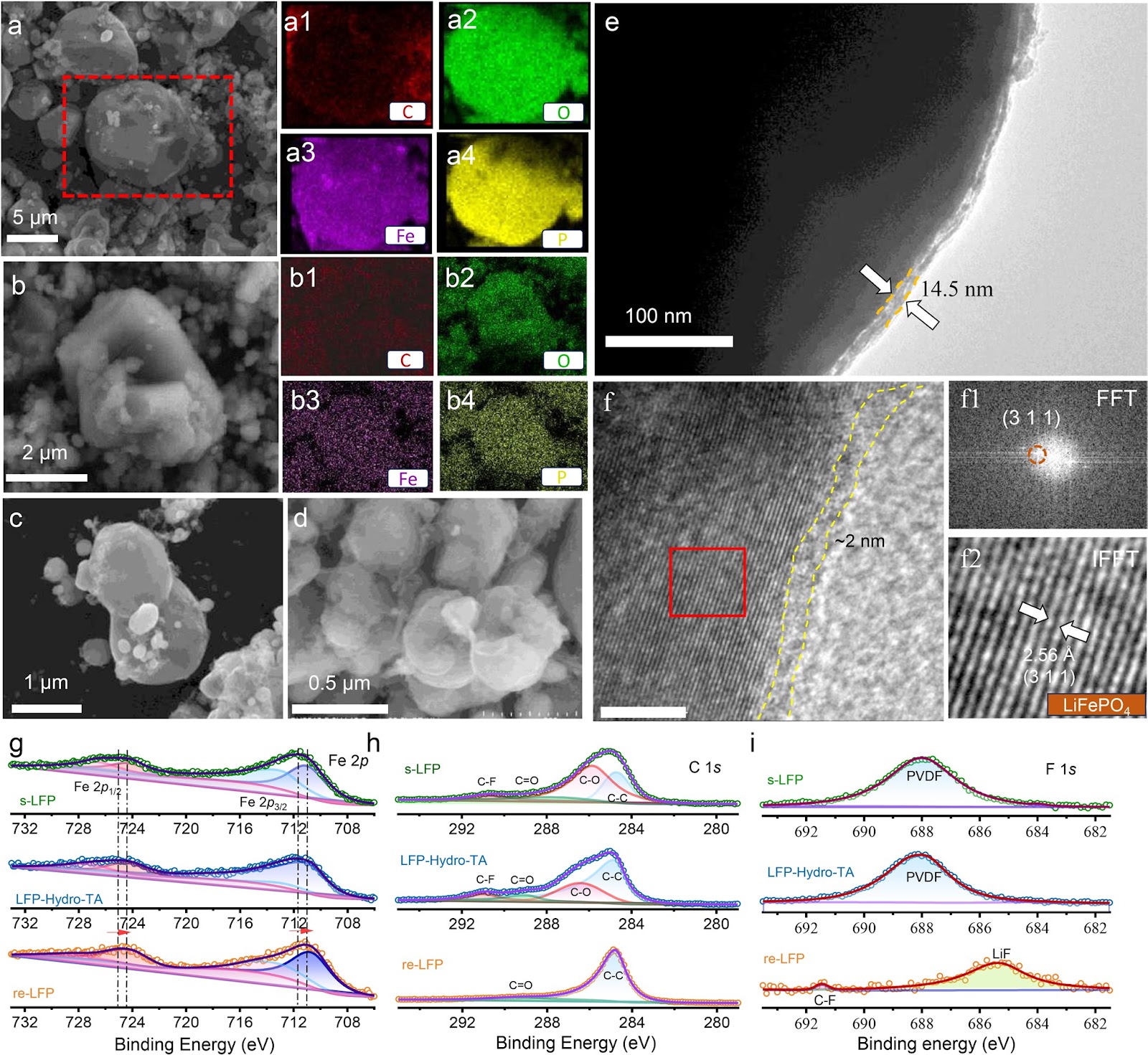
Direct Repair of the Crystal Structure and Coating Surface of Spent LiFePO4 Materials Enables Superfast Li-Ion Migration
The rapid accumulation of spent LiFePO4 (LFP) cathodes from retired lithium-ion batteries necessitates the development of effective and environmental-friendly recycling strategies. In this context, direct regeneration has emerged as a promising approach for reclaiming LFP cathode materials, offering a streamlined pathway to restore their electrochemical functionality. We report an integrated regeneration protocol that simultaneously repairs the degraded crystal structure and reconstructs the damaged carbon coating in spent LFP. The regenerated cathode material had superfast lithium-ion diffusion kinetics and a stable cathode–electrolyte interface, giving a remarkable rate capability with specific capacities of 122 mAh g−1 at 5C and 106 mAh g−1 at 10C (1C = 170 mA g−1). It also maintained capacities of 110.7 mAh g−1 (5C) and 84.1 mAh g−1 (10C) after 400 cycles. It could be used in harsh environments and could be stably cycled at subzero temperatures (−10 and −20 °C) and in solid-state electrolyte batteries. Life cycle assessment combined with economic evaluation using the EverBatt model reveals that this direct regeneration approach has high economic and environmental benefits.
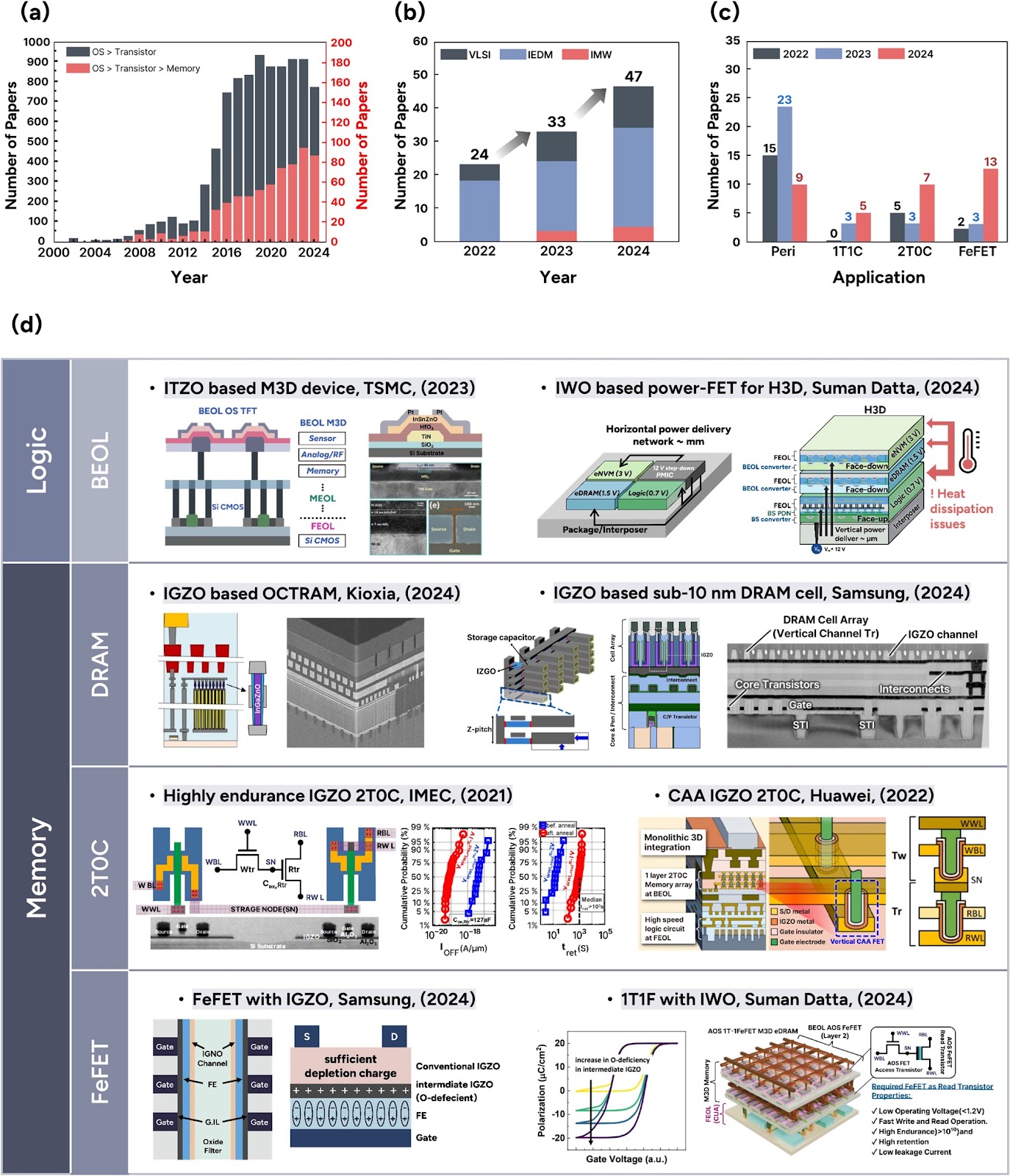
Oxide Semiconductor for Advanced Memory Architectures: Atomic Layer Deposition, Key Requirement and Challenges
Oxide semiconductors (OSs), introduced by the Hosono group in the early 2000s, have evolved from display backplane materials to promising candidates for advanced memory and logic devices. The exceptionally low leakage current of OSs and compatibility with three-dimensional (3D) architectures have recently sparked renewed interest in their use in semiconductor applications. This review begins by exploring the unique material properties of OSs, which fundamentally originate from their distinct electronic band structure. Subsequently, we focus on atomic layer deposition (ALD), a core technique for growing excellent OS films, covering both basic and advanced processes compatible with 3D scaling. The basic surface reaction mechanisms—adsorption and reaction—and their roles in film growth are introduced. Furthermore, material design strategies, such as cation selection, crystallinity control, anion doping, and heterostructure engineering, are discussed. We also highlight challenges in memory applications, including contact resistance, hydrogen instability, and lack of p-type materials, and discuss the feasibility of ALD-grown OSs as potential solutions. Lastly, we provide an outlook on the role of ALD-grown OSs in memory technologies. This review bridges material fundamentals and device-level requirements, offering a comprehensive perspective on the potential of ALD-driven OSs for next-generation semiconductor memory devices.
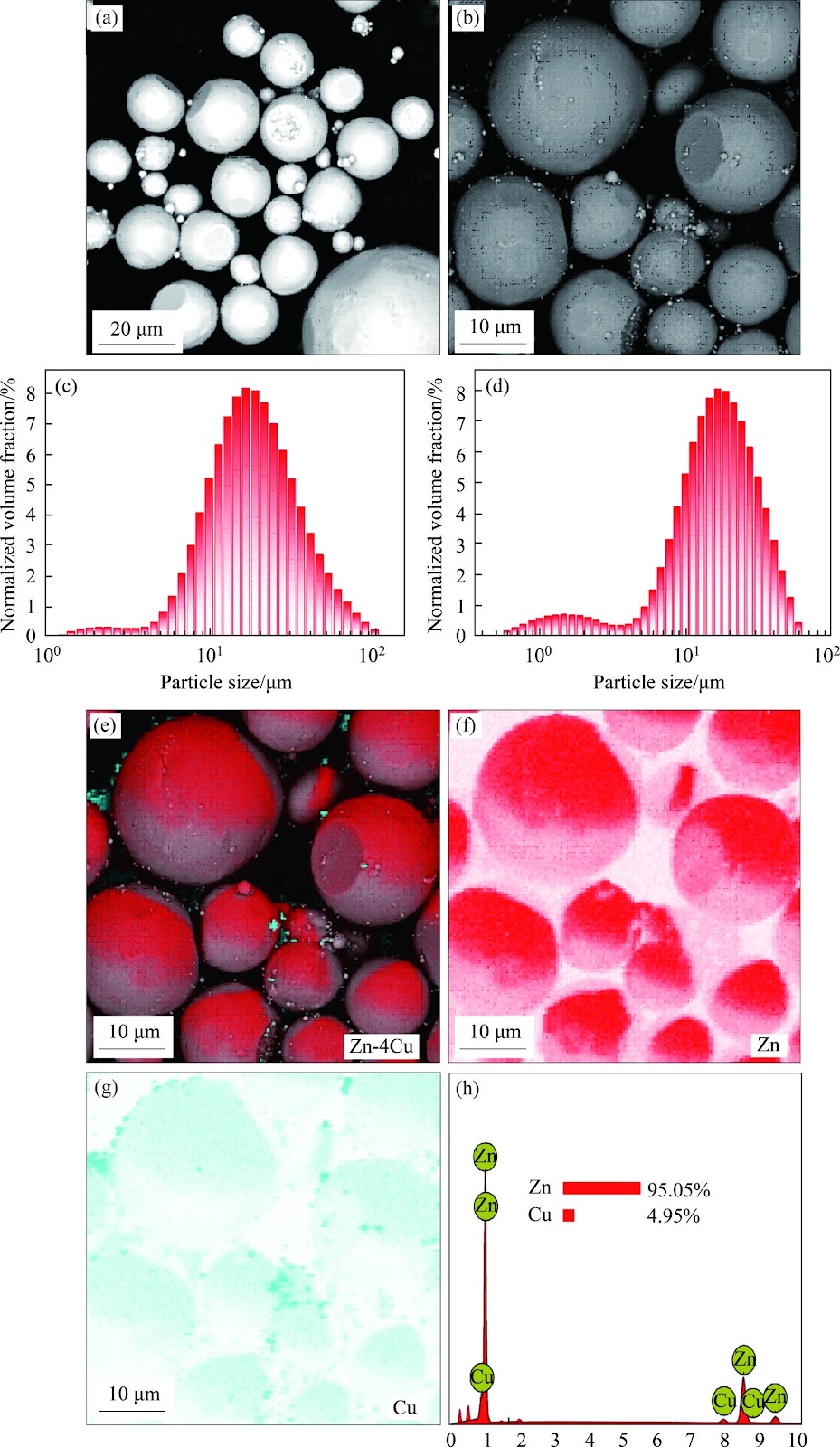
Laser powder bed fusion of biodegradable Zn-4Cu alloy: Processing, microstructure and properties
Zn's natural degradability and biocompatibility make it a promising candidate for implants, however, its mechanical properties remain insufficient for bone applications. In this study, the performance of Zn was enhanced by developing Zn-Cu alloys via laser powder bed fusion (LPBF). Optimal LPBF parameters for forming stable tracks were achieved by adjusting laser power and scanning speed. Under optimized conditions of 100 W and 100 mm/s, high-density (99.58%) Zn-Cu alloys with improved hardness (68.2HV) and yield strength (160 MPa) were achieved. These improvements are attributed to solid solution strengthening, segregation strengthening, and grain refinement. The Zn-Cu alloys also demonstrated favorable degradation behavior, with a rate of 0.16 mm/year. This degradation is primarily driven by micro-galvanic corrosion between the CuZn5 phase and Zn matrix, along with refined grains and increased grain boundary density. This work demonstrates a viable strategy for fabricating Zn-based implants with enhanced structural integrity and mechanical performance via LPBF.