Key Takeaways & Executive Findings
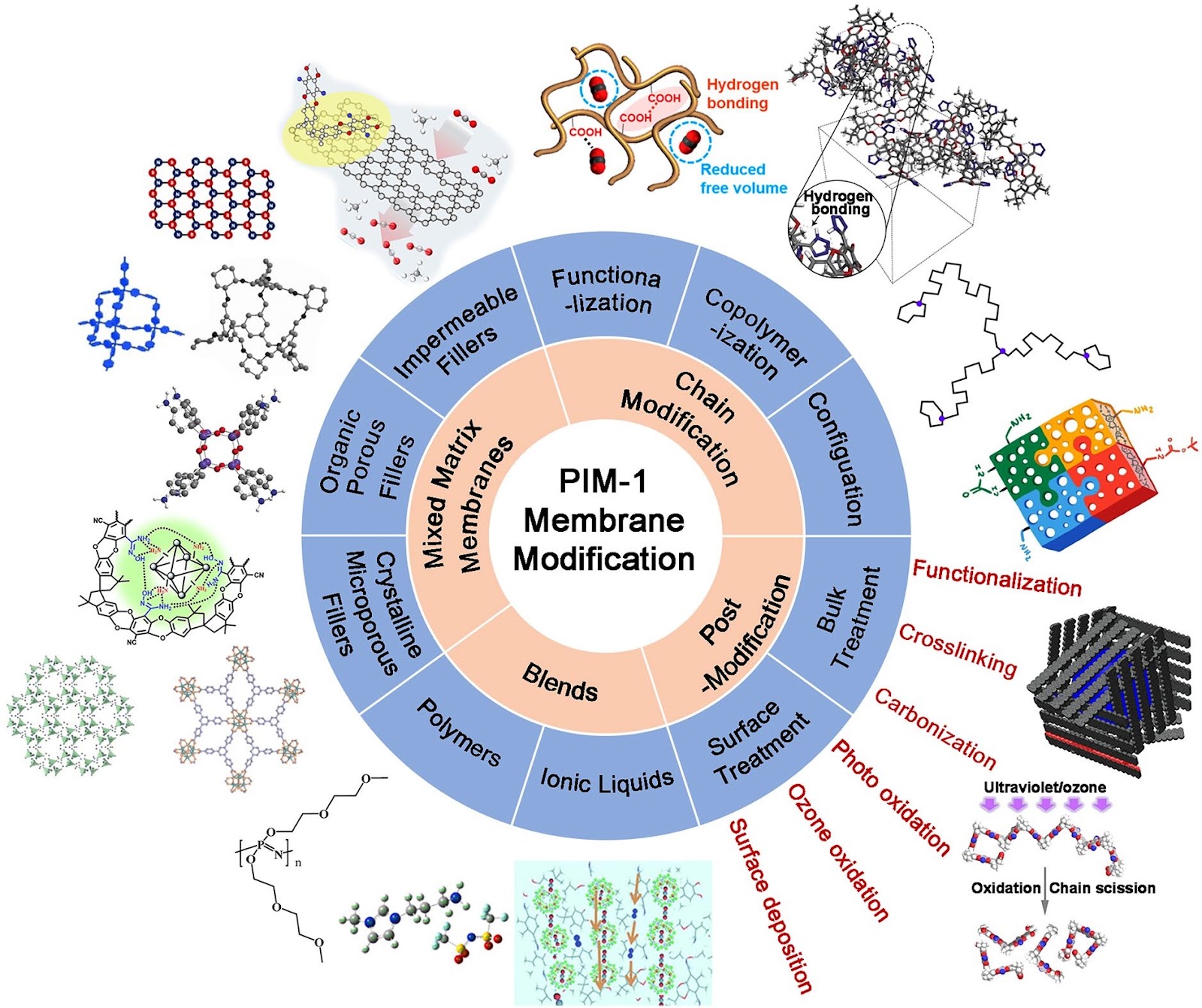
- •• Critical review of PIM-1-based membranes for selective CO2 separation, highlighting their high permeability but challenges in selectivity, physical aging, and plasticisation. • Comprehensive meta-analysis comparing state-of-the-art modification strategies, including chain modification, post-modification, blending, and filler addition. • Discussion of PIM-1 thin film composite membranes and their potential for industrial gas separation, emphasizing the need for higher technology readiness. • Guidance for future design and optimisation of PIM-based membranes to overcome current limitations and enhance practical applicability.
Abstract
Polymers of intrinsic microporosity (PIMs) have received considerable attention for making high-performance membranes for carbon dioxide separation over the last two decades, owing to their highly permeable porous structures. However, challenges regarding its relatively low selectivity, physical aging, and plasticisation impede relevant industrial adoptions for gas separation. To address these issues, several strategies including chain modification, post-modification, blending with other polymers, and the addition of fillers, have been developed and explored. PIM-1 is the most investigated PIMs, and hence here we review the state-of-the-arts of the modification strategies of PIM-1 critically and discuss the progress achieved for addressing the aforementioned challenges via meta-analysis. Additionally, the development of PIM-1-based thin film composite membranes is commented as well, shedding light on their potential in industrial gas separation. We hope that the review can be a timely snapshot of the relevant state-of-the-arts of PIMs guiding future design and optimisation of PIMs-based membranes for enhanced performance towards a higher technology readiness level for practical applications.
1. Introduction
Polymers of intrinsic microporosity (PIMs) refer to a relatively new class of porous materials. The synthesis of these organic nanoporous materials, classified as microporous as their pore diameters are smaller than 2 nm, was first disclosed in a patent in 2003 [1] and later reported in the literature in 2004 [2]. The macromolecular backbone of the PIMs is composed of fused rings that prohibit large-scale conformational changes and incorporates sites of contortion, such as spiro-centres, giving rise to a randomly twisted structure that cannot efficiently fill space in the solid state [1]. Therefore, the fractional free volume in PIMs is high, and free volume elements are effectively interconnected, behaving like micropores. The bottleneck or gates interconnecting micropores behave as sieves for gas molecules with different sizes and shapes. Such interconnected microporosity is analogous to the framework structure of ordered molecular sieves such as zeolites. Additionally, such high free volume endows PIMs with a large accessible internal surface area (700–900 m2 g−1), giving rise to high sorption capacity for many molecules. The high adsorption capacity also contributes towards the fast transport of molecules, considering PIM-1 membranes follow the solution-diffusion model. Consequently, PIMs offer remarkable combinations of permeability and selectivity with higher values than most traditional synthetic polymeric membranes [3–5].
PIMs-based membranes are reported for various gas separation applications, including air separation [6], hydrogen recovery [7, 8], and other more challenging scenarios such as separation of ethylene (C2H4)/ethane (C2H6) and corrosive fluorinated gases [9]. Owing to their appropriate pore size and preferential adsorption towards carbon dioxide (CO2), PIMs membranes have been extensively investigated for selective CO2 separation. In 2005, the first gas permeation data of a prototype PIMs, PIM-1 membrane was reported, revealing a CO2 permeability of 2300 barrer, along with reasonable selectivity of 25 for CO2/nitrogen (N2) [10], which surpassed the upper bound established by Robeson in 1991 [11] and led to the revision of the upper bounds of performance in 2008 [3]. In following years, other PIMs with enhanced separation performance have been developed and have led to two more recent upper bounds [4, 5]. To date, over 600 publications have been published on CO2 separation using PIM-based membranes, with 80% of these published in the last decade. The exceptional high permeability (up to 50,000 barrer for CO2 [5]) and reasonably good selectivity makes PIMs membranes one of the most competitive candidates for their use in carbon capture and storage to achieve the net zero goals set by different governments [12].
Loading authentic research manuscript (Pages 1–5)...
Boya Qiu, Yong Gao, Patricia Gorgojo, Xiaolei Fan (2025). Membranes of Polymer of Intrinsic Microporosity PIM-1 for Gas Separation: Modification Strategies and Meta-Analysis. Nano-Micro Letters. https://doi.org/10.1007/s40820-024-01610-2
Research & Educational Purpose Only:The translations, structured abstracts, analytical annotations, and data reports provided by SinoTechIntel are intended exclusively for academic research, internal corporate R&D, and educational benchmarking. They do not constitute formal engineering, chemical safety, legal, or professional advice.
Copyright & Intellectual Property Notice: Original copyright of the underlying source articles and experimental data remains with the respective authors, institutions, and original publishing journals. SinoTechIntel claims intellectual property only over its proprietary translations, analytical syntheses, and AEO structured enhancements in accordance with international fair use and academic citation principles.
Frequently Asked Questions
What are polymers of intrinsic microporosity (PIMs)?
PIMs are a class of porous organic polymers with interconnected micropores (<2 nm) due to their rigid, contorted macromolecular backbones. They exhibit high free volume and surface area, making them promising for gas separation membranes.
Why is PIM-1 significant in gas separation?
PIM-1 is the most studied PIM due to its exceptionally high CO2 permeability (up to 50,000 barrer) and reasonable selectivity, surpassing Robeson's upper bound. However, it faces challenges like low selectivity, physical aging, and plasticisation.
What modification strategies are reviewed for PIM-1 membranes?
The review covers chain modification, post-modification, blending with other polymers, and addition of fillers. These strategies aim to improve selectivity, reduce aging, and mitigate plasticisation.
What is the role of meta-analysis in this review?
Meta-analysis is used to systematically compare the performance of different modification strategies across published studies, providing quantitative insights into their effectiveness and guiding future research.
What are the prospects for PIM-1 thin film composite membranes?
Thin film composite membranes based on PIM-1 show potential for industrial gas separation due to their high permeance and selectivity, but further development is needed to achieve higher technology readiness levels.
Related Technical Papers & Translations
Direct Repair of the Crystal Structure and Coating Surface of Spent LiFePO4 Materials Enables Superfast Li-Ion Migration
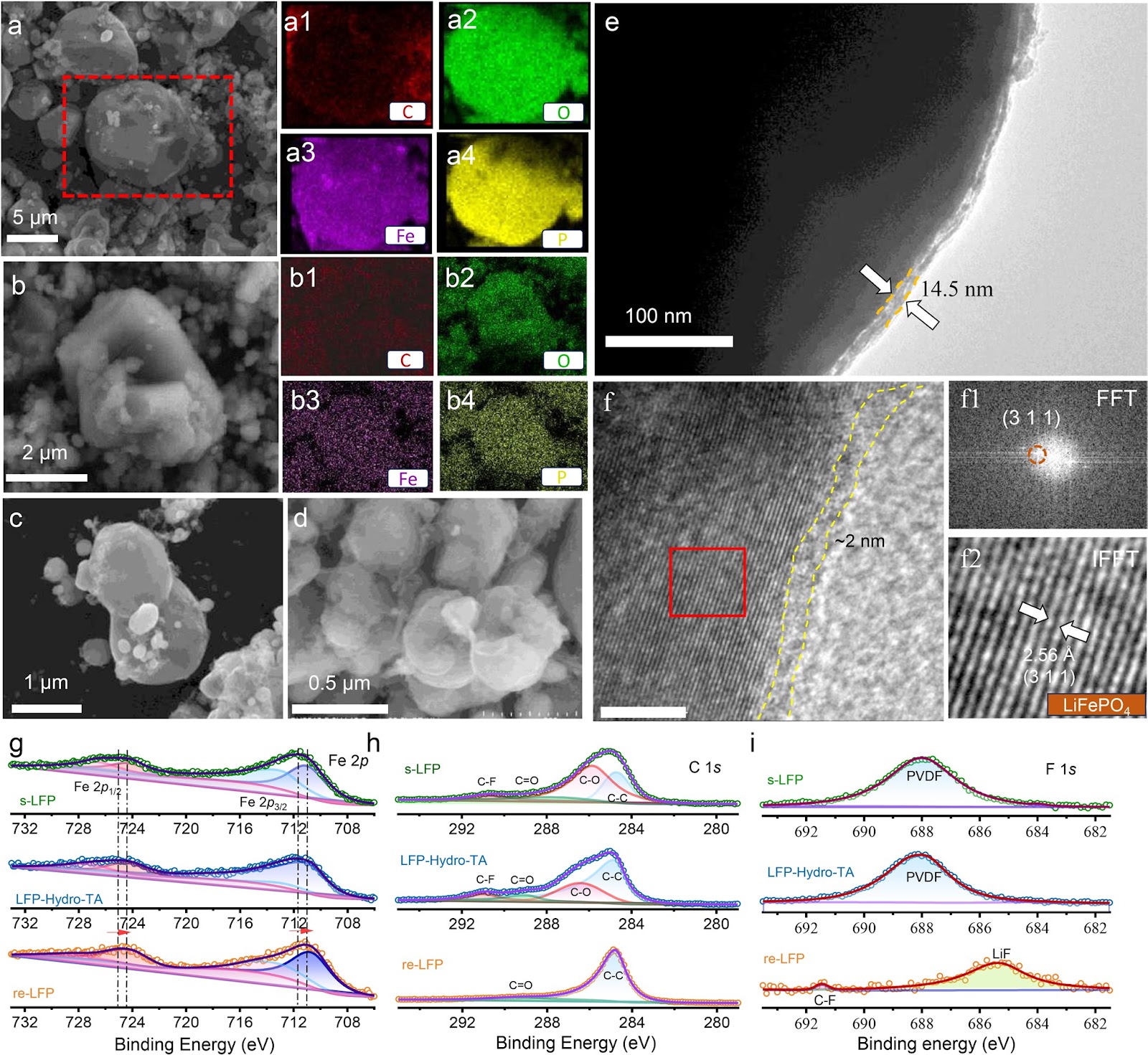
The rapid accumulation of spent LiFePO4 (LFP) cathodes from retired lithium-ion batteries necessitates the development of effective and environmental-friendly recycling strategies. In this context, direct regeneration has emerged as a promising approach for reclaiming LFP cathode materials, offering a streamlined pathway to restore their electrochemical functionality. We report an integrated regeneration protocol that simultaneously repairs the degraded crystal structure and reconstructs the damaged carbon coating in spent LFP. The regenerated cathode material had superfast lithium-ion diffusion kinetics and a stable cathode–electrolyte interface, giving a remarkable rate capability with specific capacities of 122 mAh g−1 at 5C and 106 mAh g−1 at 10C (1C = 170 mA g−1). It also maintained capacities of 110.7 mAh g−1 (5C) and 84.1 mAh g−1 (10C) after 400 cycles. It could be used in harsh environments and could be stably cycled at subzero temperatures (−10 and −20 °C) and in solid-state electrolyte batteries. Life cycle assessment combined with economic evaluation using the EverBatt model reveals that this direct regeneration approach has high economic and environmental benefits.
Oxide Semiconductor for Advanced Memory Architectures: Atomic Layer Deposition, Key Requirement and Challenges
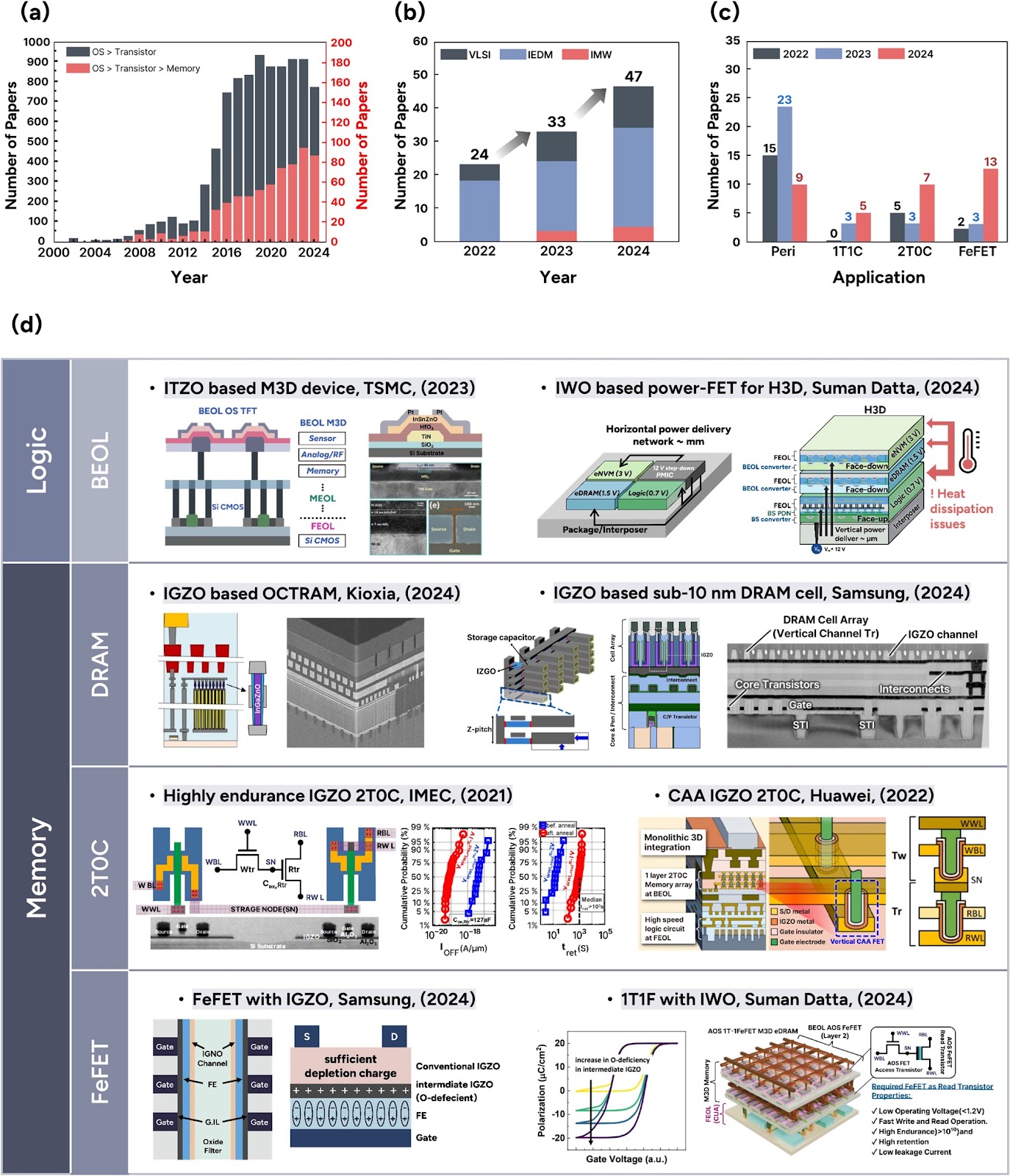
Oxide semiconductors (OSs), introduced by the Hosono group in the early 2000s, have evolved from display backplane materials to promising candidates for advanced memory and logic devices. The exceptionally low leakage current of OSs and compatibility with three-dimensional (3D) architectures have recently sparked renewed interest in their use in semiconductor applications. This review begins by exploring the unique material properties of OSs, which fundamentally originate from their distinct electronic band structure. Subsequently, we focus on atomic layer deposition (ALD), a core technique for growing excellent OS films, covering both basic and advanced processes compatible with 3D scaling. The basic surface reaction mechanisms—adsorption and reaction—and their roles in film growth are introduced. Furthermore, material design strategies, such as cation selection, crystallinity control, anion doping, and heterostructure engineering, are discussed. We also highlight challenges in memory applications, including contact resistance, hydrogen instability, and lack of p-type materials, and discuss the feasibility of ALD-grown OSs as potential solutions. Lastly, we provide an outlook on the role of ALD-grown OSs in memory technologies. This review bridges material fundamentals and device-level requirements, offering a comprehensive perspective on the potential of ALD-driven OSs for next-generation semiconductor memory devices.
Laser powder bed fusion of biodegradable Zn-4Cu alloy: Processing, microstructure and properties
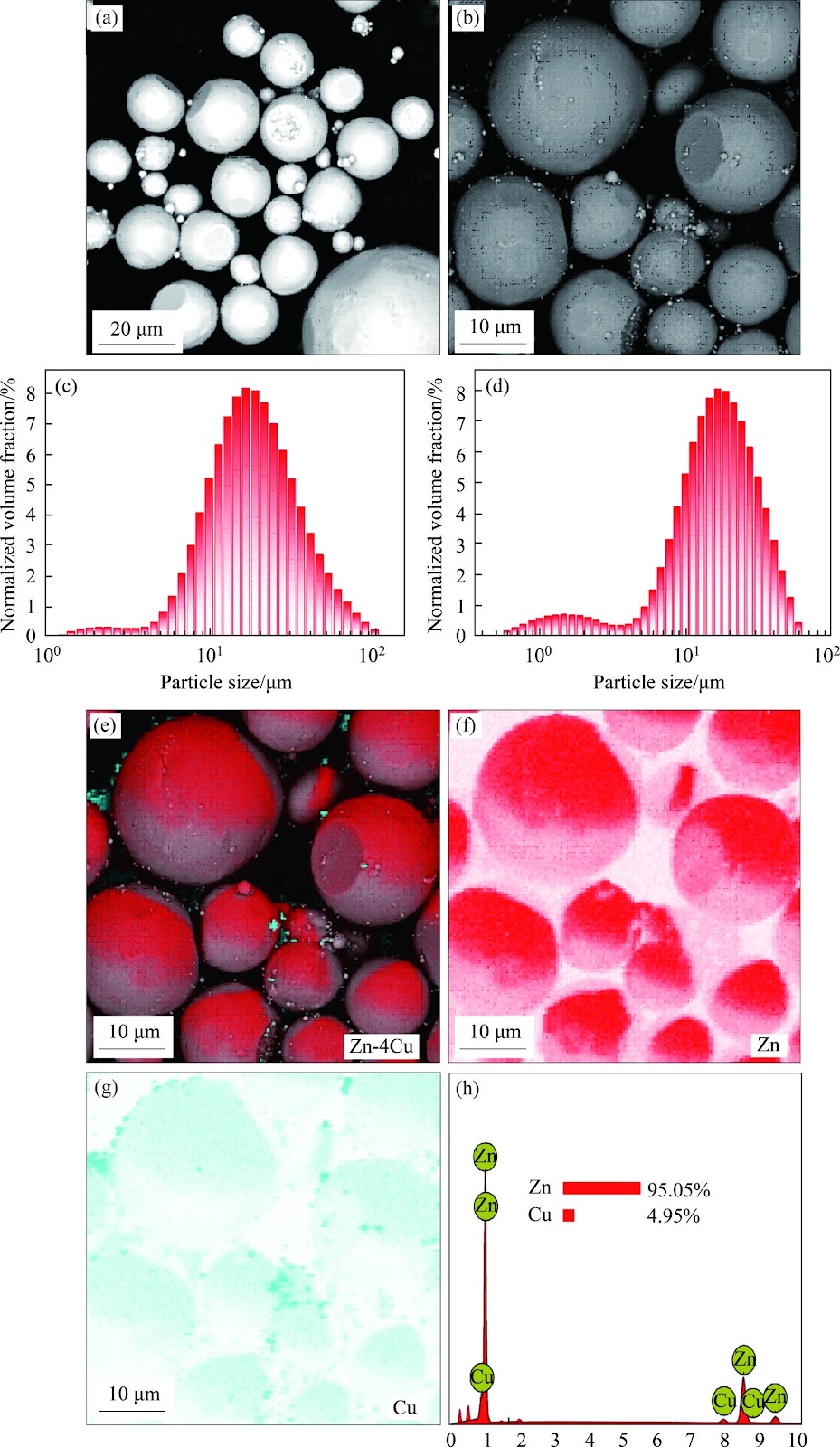
Zn's natural degradability and biocompatibility make it a promising candidate for implants, however, its mechanical properties remain insufficient for bone applications. In this study, the performance of Zn was enhanced by developing Zn-Cu alloys via laser powder bed fusion (LPBF). Optimal LPBF parameters for forming stable tracks were achieved by adjusting laser power and scanning speed. Under optimized conditions of 100 W and 100 mm/s, high-density (99.58%) Zn-Cu alloys with improved hardness (68.2HV) and yield strength (160 MPa) were achieved. These improvements are attributed to solid solution strengthening, segregation strengthening, and grain refinement. The Zn-Cu alloys also demonstrated favorable degradation behavior, with a rate of 0.16 mm/year. This degradation is primarily driven by micro-galvanic corrosion between the CuZn5 phase and Zn matrix, along with refined grains and increased grain boundary density. This work demonstrates a viable strategy for fabricating Zn-based implants with enhanced structural integrity and mechanical performance via LPBF.