Key Takeaways & Executive Findings
- •• Innovative room-temperature synthesis of pure green FAPbBr3 nanocrystals using aromatic amine ligands (PEA or 3-F-PEA) yields high-quality crystals with uniform size and reduced long-chain ligands. • Ligand engineering effectively suppresses thermal quenching in organic-inorganic hybrid FAPbBr3 nanocrystals, preserving over 90% of room-temperature photoluminescence at 380 K. • The resulting FAPbBr3-based light-emitting diodes achieve a peak external quantum efficiency of 21.9% at room temperature and maintain less than 10% efficiency loss at 343 K. • This work provides a novel strategy for developing thermostable perovskite nanocrystals, advancing their practical application in displays and lighting.
Abstract
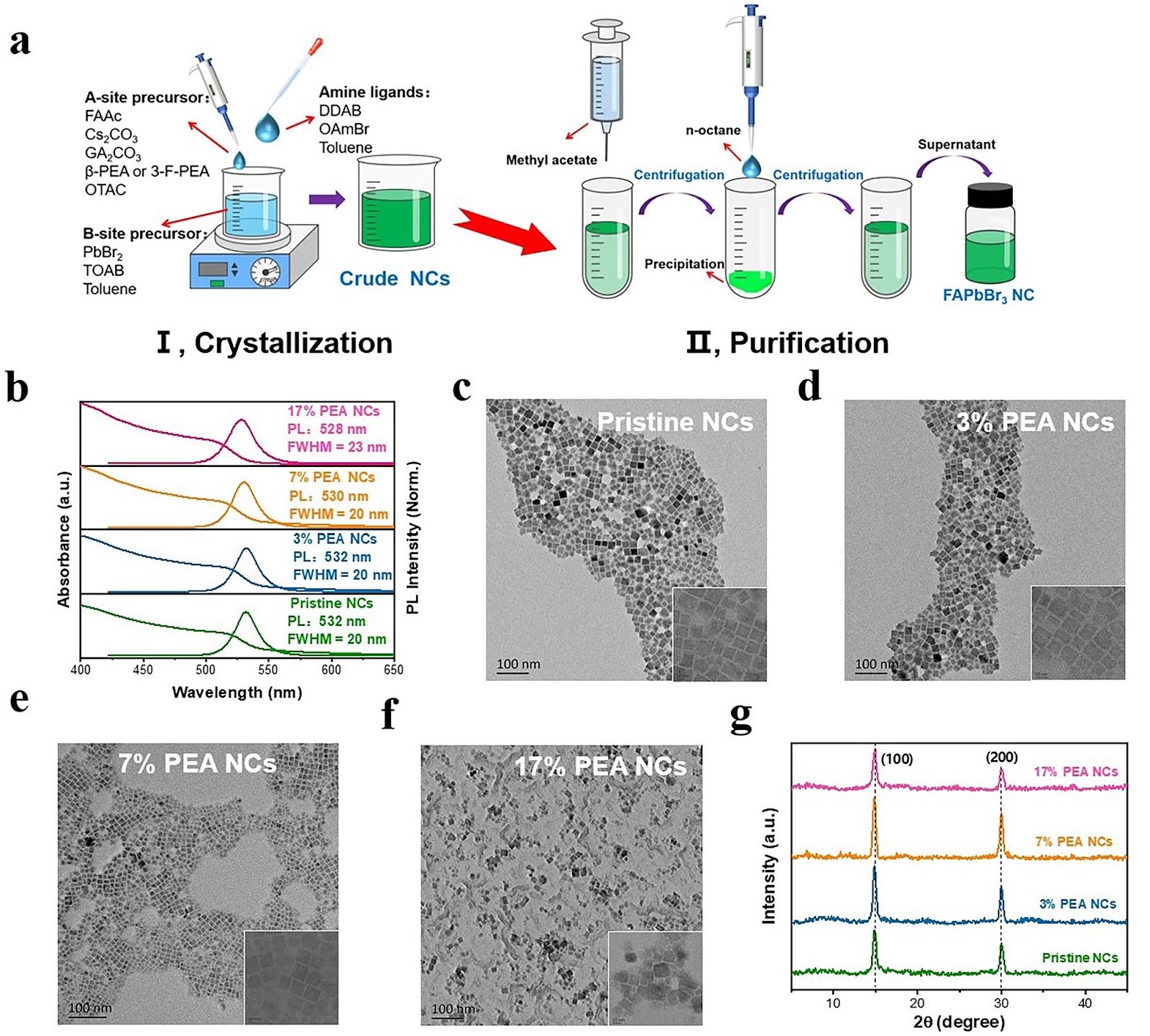
Formamidinium lead bromide (FAPbBr3) perovskite nanocrystals (NCs) are promising for display and lighting due to their ultra-pure green emission. However, the thermal quenching will exacerbate their performance degradation in practical applications, which is a common issue for halide perovskites. Here, we reported the heat-resistant FAPbBr3 NCs prepared by a ligand-engineered room-temperature synthesis strategy. An aromatic amine, specifically β-phenylethylamine (PEA) or 3-fluorophenylethylamine (3-F-PEA), was incorporated as the short-chain ligand to expedite the crystallization rate and control the size distribution of FAPbBr3 NCs. Employing this ligand engineering approach, we synthesized high quality FAPbBr3 NCs with uniform grain size and reduced long-chain alkyl ligands, resulting in substantially suppressed thermal quenching and enhanced carrier transportation in the perovskite NCs films. Most notably, more than 90% of the room temperature PL intensity in the 3-F-PEA modified FAPbBr3 NCs film was preserved at 380 K. Consequently, we fabricated ultra-pure green EL devices with a room temperature external quantum efficiency (EQE) as high as 21.9% at the luminance of above 1,000 cd m−2, and demonstrated less than 10% loss in EQE at 343 K. This study introduces a novel room temperature method to synthesize efficient FAPbBr3 NCs with exceptional thermal stability, paving the way for advanced optoelectronic device applications.
1. Introduction
Lead halide perovskite nanocrystals (NCs) have emerged as a promising class of semiconductor materials for light-emitting applications, owing to their easily tunable optical bandgaps for wide color gamut, narrow emission spectra for excellent color purity, and strong quantum confinement for high photoluminescence quantum yields (PLQYs) [1–6]. The development of perovskite light-emitting diodes (PeLEDs) with perovskite NCs as the emissive layers (EMLs) has been notably swift. Impressively, the external quantum efficiency (EQE) of the blue, green and red PeLEDs based on perovskite NCs have successfully surpassed 20% [7–11], rivaling the performance of other solution processed light-emitting diodes (LEDs) [12–15]. In contrast to traditional inorganic semiconductor NCs such as CdSe [16–18] and InP [19–21], which necessitate high-temperature synthesis in an inert gas atmosphere, perovskite NCs can be synthesized in large quantities by cost-effective methods at room temperature, even under ambient air without the protection of inert gas [22–25].
Despite notable advancements in perovskite NCs, they still suffer from the thermal quenching of luminescence, which probably attributed to the thermal destruction of crystal lattice and non-radiative recombination aided by thermal effects [26, 27]. Addressing the issue of thermal quenching in the soft ionic semiconductors of perovskites remains a big challenge. Among the perovskite NCs, all-inorganic CsPbX3 NCs have garnered significant attention for their decent thermal stability, particularly compared to their organic–inorganic perovskite counterparts [28–32]. Liu et al. have made a significant breakthrough in suppressing thermal quenching effect in the CsPbBr3 NCs which synthesized by a hot injection method with a fluoride post-treatment, enabling a nearly temperature-independent emission efficiency in the range of room temperature to 373 K [33]. Impressively, they demonstrated that a peak EQE of 19.3% at 303 K was achieved in the PeLEDs based on fluoride-treated CsPbBr3 NCs, and the efficiency only dropped by 23% at 343 K. However, the emission peak of CsPbBr3 NCs typically falls below 520 nm [33–35], which restricts their ability to produce the green primary color as defined by the Rec. 2020 standard. In contrast, the FAPbBr3 NCs are proficient at sustaining...
Loading authentic research manuscript (Pages 1–5)...
Kaiwang Chen, Qing Du, Qiufen Cao, Chao Du, Shangwei Feng, Yutong Pan, Yue Liang, Lei Wang, Jiangshan Chen, Dongge Ma (2024). Ligand Engineering Achieves Suppression of Temperature Quenching in Pure Green Perovskite Nanocrystals for Efficient and Thermostable Electroluminescence. Nano-Micro Letters. https://doi.org/10.1007/s40820-024-01564-5
Research & Educational Purpose Only:The translations, structured abstracts, analytical annotations, and data reports provided by SinoTechIntel are intended exclusively for academic research, internal corporate R&D, and educational benchmarking. They do not constitute formal engineering, chemical safety, legal, or professional advice.
Copyright & Intellectual Property Notice: Original copyright of the underlying source articles and experimental data remains with the respective authors, institutions, and original publishing journals. SinoTechIntel claims intellectual property only over its proprietary translations, analytical syntheses, and AEO structured enhancements in accordance with international fair use and academic citation principles.
Frequently Asked Questions
What is the main achievement of this paper?
The paper reports a ligand engineering strategy to synthesize pure green FAPbBr3 perovskite nanocrystals at room temperature, which effectively suppresses thermal quenching and achieves efficient and thermostable electroluminescence with an EQE of 21.9% and less than 10% loss at 343 K.
How does ligand engineering improve thermal stability?
By incorporating short-chain aromatic amine ligands (PEA or 3-F-PEA), the crystallization rate is expedited and size distribution is controlled, resulting in uniform grains and reduced long-chain alkyl ligands. This enhances carrier transport and suppresses thermal quenching, preserving over 90% of PL intensity at 380 K.
What are the key performance metrics of the fabricated LEDs?
The FAPbBr3-based LEDs achieve a room temperature external quantum efficiency (EQE) of 21.9% at a luminance above 1,000 cd m−2, and demonstrate less than 10% loss in EQE at 343 K.
Why is FAPbBr3 preferred over CsPbBr3 for green emission?
FAPbBr3 nanocrystals can achieve ultra-pure green emission that meets the Rec. 2020 standard, whereas CsPbBr3 typically emits below 520 nm, which is not suitable for the required green primary color.
What is the significance of room-temperature synthesis?
Room-temperature synthesis is cost-effective and can be performed under ambient air without inert gas protection, making it scalable and practical for industrial applications compared to high-temperature methods.
Related Technical Papers & Translations
Direct Repair of the Crystal Structure and Coating Surface of Spent LiFePO4 Materials Enables Superfast Li-Ion Migration
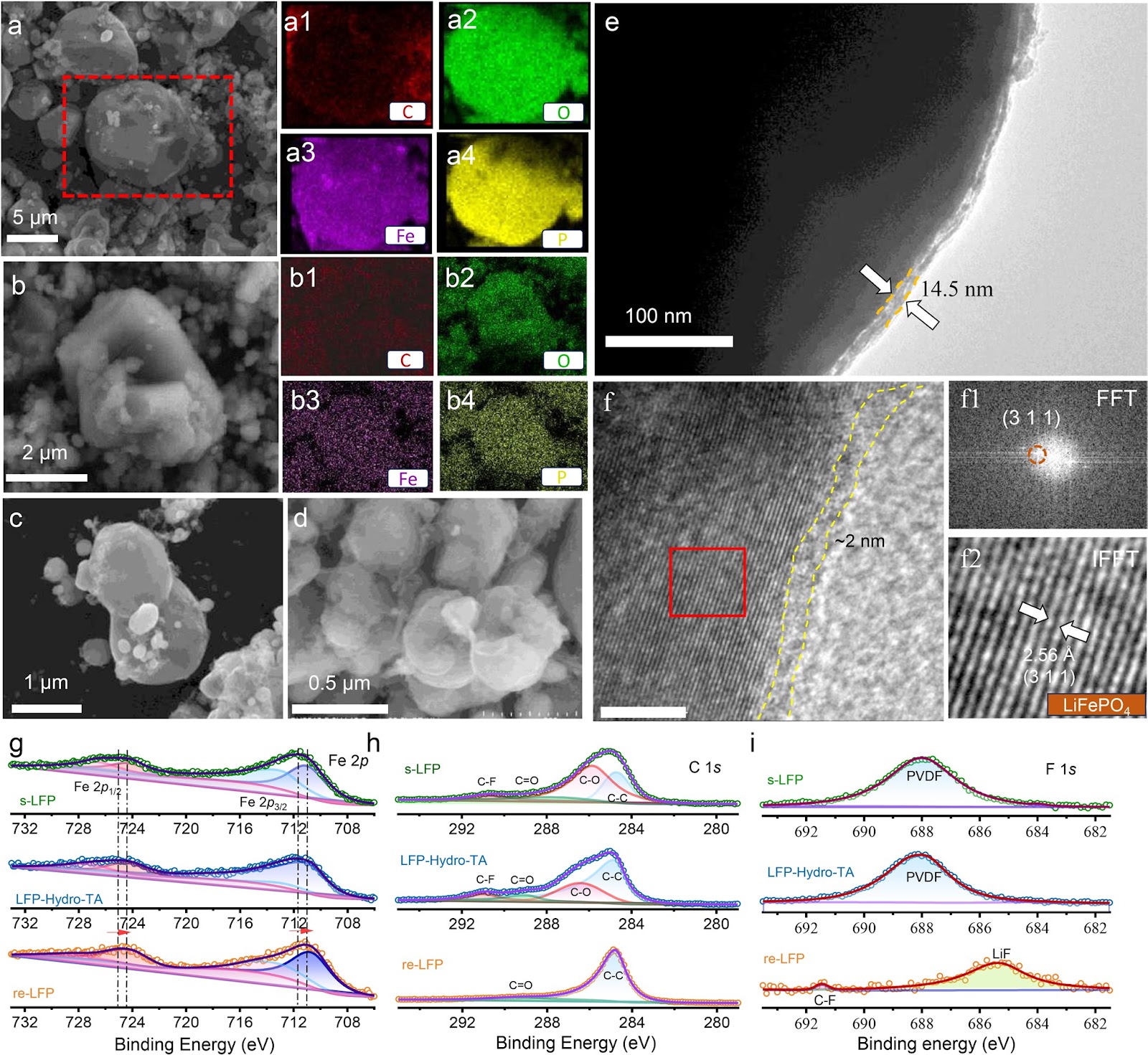
The rapid accumulation of spent LiFePO4 (LFP) cathodes from retired lithium-ion batteries necessitates the development of effective and environmental-friendly recycling strategies. In this context, direct regeneration has emerged as a promising approach for reclaiming LFP cathode materials, offering a streamlined pathway to restore their electrochemical functionality. We report an integrated regeneration protocol that simultaneously repairs the degraded crystal structure and reconstructs the damaged carbon coating in spent LFP. The regenerated cathode material had superfast lithium-ion diffusion kinetics and a stable cathode–electrolyte interface, giving a remarkable rate capability with specific capacities of 122 mAh g−1 at 5C and 106 mAh g−1 at 10C (1C = 170 mA g−1). It also maintained capacities of 110.7 mAh g−1 (5C) and 84.1 mAh g−1 (10C) after 400 cycles. It could be used in harsh environments and could be stably cycled at subzero temperatures (−10 and −20 °C) and in solid-state electrolyte batteries. Life cycle assessment combined with economic evaluation using the EverBatt model reveals that this direct regeneration approach has high economic and environmental benefits.
Oxide Semiconductor for Advanced Memory Architectures: Atomic Layer Deposition, Key Requirement and Challenges
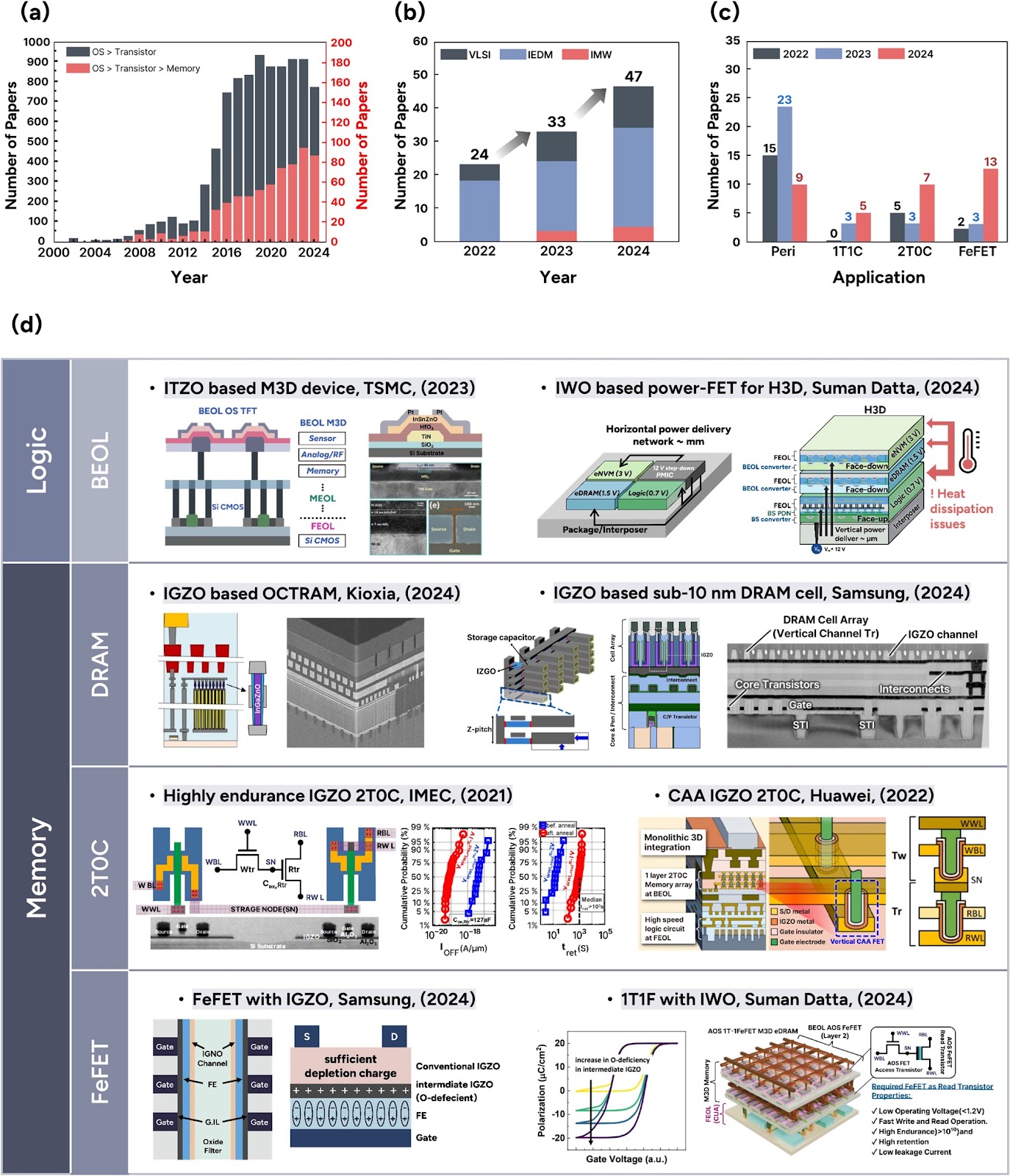
Oxide semiconductors (OSs), introduced by the Hosono group in the early 2000s, have evolved from display backplane materials to promising candidates for advanced memory and logic devices. The exceptionally low leakage current of OSs and compatibility with three-dimensional (3D) architectures have recently sparked renewed interest in their use in semiconductor applications. This review begins by exploring the unique material properties of OSs, which fundamentally originate from their distinct electronic band structure. Subsequently, we focus on atomic layer deposition (ALD), a core technique for growing excellent OS films, covering both basic and advanced processes compatible with 3D scaling. The basic surface reaction mechanisms—adsorption and reaction—and their roles in film growth are introduced. Furthermore, material design strategies, such as cation selection, crystallinity control, anion doping, and heterostructure engineering, are discussed. We also highlight challenges in memory applications, including contact resistance, hydrogen instability, and lack of p-type materials, and discuss the feasibility of ALD-grown OSs as potential solutions. Lastly, we provide an outlook on the role of ALD-grown OSs in memory technologies. This review bridges material fundamentals and device-level requirements, offering a comprehensive perspective on the potential of ALD-driven OSs for next-generation semiconductor memory devices.
Laser powder bed fusion of biodegradable Zn-4Cu alloy: Processing, microstructure and properties
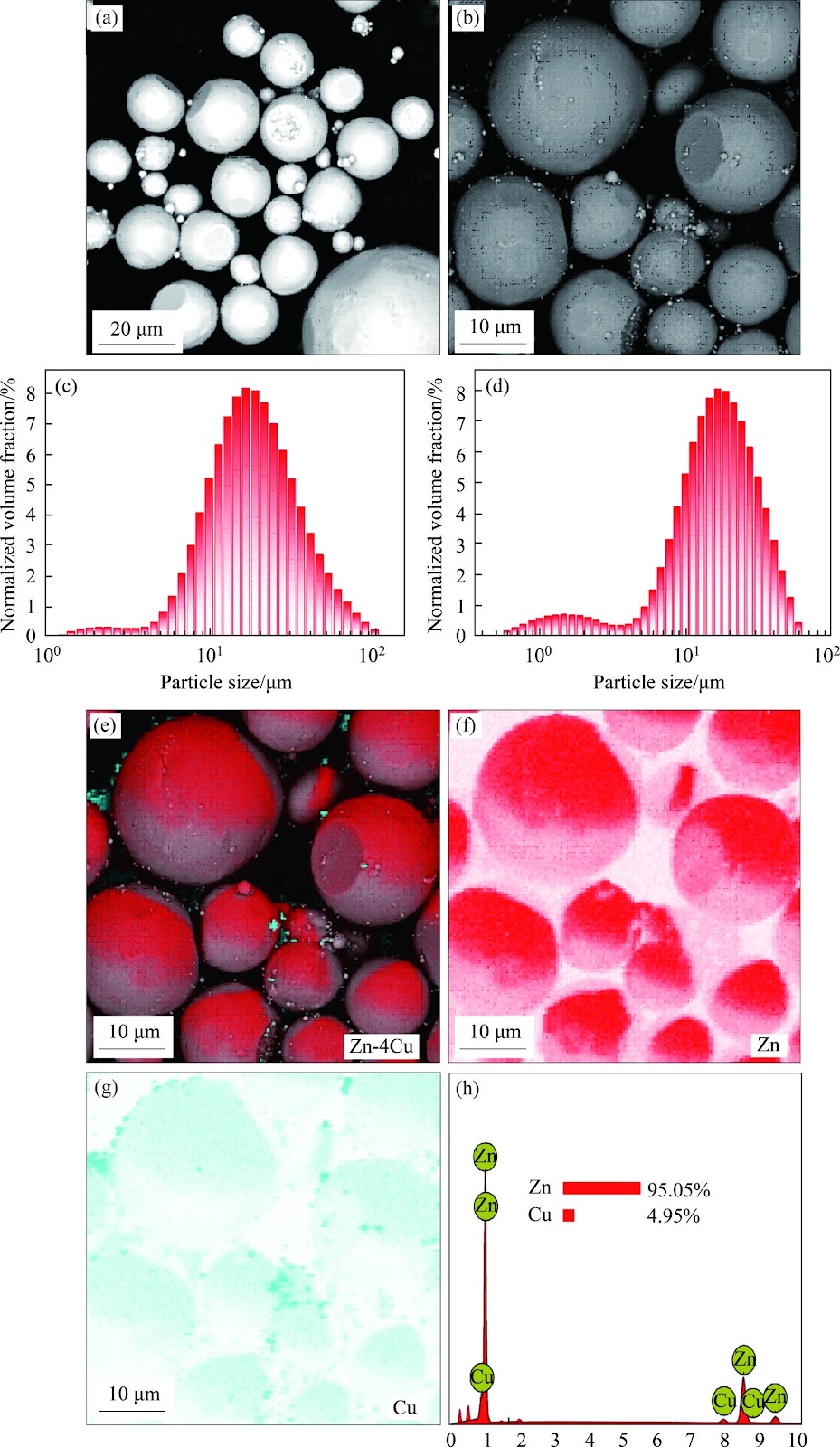
Zn's natural degradability and biocompatibility make it a promising candidate for implants, however, its mechanical properties remain insufficient for bone applications. In this study, the performance of Zn was enhanced by developing Zn-Cu alloys via laser powder bed fusion (LPBF). Optimal LPBF parameters for forming stable tracks were achieved by adjusting laser power and scanning speed. Under optimized conditions of 100 W and 100 mm/s, high-density (99.58%) Zn-Cu alloys with improved hardness (68.2HV) and yield strength (160 MPa) were achieved. These improvements are attributed to solid solution strengthening, segregation strengthening, and grain refinement. The Zn-Cu alloys also demonstrated favorable degradation behavior, with a rate of 0.16 mm/year. This degradation is primarily driven by micro-galvanic corrosion between the CuZn5 phase and Zn matrix, along with refined grains and increased grain boundary density. This work demonstrates a viable strategy for fabricating Zn-based implants with enhanced structural integrity and mechanical performance via LPBF.