Key Takeaways & Executive Findings
- •• Hydrogen reduction of Nchwaning manganese ore at 800–900°C effectively converts Fe2O3 to metallic iron and Mn2O3 to MnO, enabling a sustainable ferromanganese production route. • The HAlMan process can reduce CO2 emissions by approximately 1.5 tonnes per tonne of ferromanganese produced, offering a significant environmental benefit. • Kinetic analysis using a second-order reaction model yields apparent activation energies of 29.79 kJ/mol for dried ore and 61.71 kJ/mol for pre-calcined ore, indicating temperature-dependent reduction kinetics. • The rate-limiting step is identified as the chemical reaction at the gas–solid interface, providing critical insights for process optimization in industrial applications.
Abstract
Replacing solid carbon with hydrogen gas in ferromanganese production presents a forward-thinking, sustainable solution to reducing the ferro-alloy industry’s carbon emissions. The HAlMan process, a groundbreaking and eco-friendly method, has been meticulously researched and scaled up from laboratory experiments to pilot tests, aiming to drastically cut CO2 emissions associated with ferromanganese production. This innovative process could potentially reduce CO2 emissions by about 1.5 tonnes for every tonne of ferromanganese produced. In this study, a lab-scale vertical thermogravimetric furnace was used to carry out the pre-reduction of Nchwaning manganese ore, where direct reduction occurred with H2 gas under controlled isothermal conditions at 700, 800, and 900°C. The results indicated that higher pre-reduction temperatures (800 and 900°C) effectively converted Fe2O3 to metallic iron and Mn2O3 to MnO. By continuously monitoring the mass changes during the reduction, both the rate and extent of reduction were assessed. A second-order reaction model was applied to validate the experimental outcomes of H2 reduction at various temperatures, showing apparent activation energies of 29.79 kJ/mol for dried ore and 61.71 kJ/mol for pre-calcined ore. The reduction kinetics displayed a strong dependence on temperature, with higher temperatures leading to quicker and more complete reductions. The kinetics analysis suggested that the chemical reaction at the gas–solid interface between hydrogen and the manganese ore is likely the rate-limiting step in this process.
1. Introduction
Manganese ferro-alloy is primarily produced by reducing manganese ores with carbon in a submerged arc furnace (SAF). In this procedure, metallurgical coke plays a dual role, acting as both the main source of energy and the reducing agent, with approximately 0.3 to 0.5 tonnes of coke required per tonne of the final alloy. This approach is highly demanding in terms of energy, requiring between 2000 and 3000 kWh for each tonne of metal, and results in the emission of 1 to 1.4 tonnes of CO2 for every tonne of metal produced [1–2]. Aligned with the Paris Agreement, there is a goal to decrease CO2 emissions by 45% by 2030, with a vision of achieving net-zero emissions by 2050 [3]. The Norwegian industrial sector have mapped out a plan, targeting the “integration of economic growth with attaining zero emissions by 2050” as a strategic pathway to fulfill their environmental objectives [4]. As a result, the development of novel sustainable manganese production processes is critical for mitigating future greenhouse gas emissions.
Studies have shown that manganese ores can be transformed into MnO using just H2 and CO gases. Research has explored how factors such as temperature, gas mixture, mineral properties, and particle size influence the reduction method. Additionally, it has been observed that adding H2 to the CO gas mixture improves the effectiveness of the reduction [5]. In the investigation conducted by Bruijn and his team (1980), particle sizes in the range of 0.0675 and 0.1275 mm were investigated. The team utilised both a shrinking-core model and a cracking-core model to study the two-step reduction of MnO2 to MnO using H2, with the intermediate formation of Mn3O4. The cracking-core model matched the data well, though it did not fully explain equilibrium conversions less than one [6]. Despite the variability in manganese ore compositions, research consistently reveals two to three separate phases in the reduction process across a range of ore samples [7]. For instance, when Mamatwan ore was reduced with graphite at temperatures between 1523 and 1623 K (1250 to 1350°C), three distinct reaction stages were noted for particles smaller than 300 µm. In contrast, at lower temperatures of 1373 to 1473 K (1100 to 1200°C), only two reaction stages were observed [7–8]. Ngoy et al. (2020) utilised a thermogravimetric (TG) furnace for non-isothermal testing to explore how hydrogen impacts the pre-reduction of Nchwaning and Comilog ores when combined with CO gas. The study involved treating the ores with CO/CO2 gas mixtures that included varying amounts of hydrogen. The results revealed that incorporating hydrogen into the CO/CO2 mix enhanced the reduction rate by 20 to 30 percent [5]. Barner and Mantell (1968) examined the reduction of synthetic MnO2 under varying partial pressures of H2 at temperatures between 200 and 500°C. Their research covered particles...
Loading authentic research manuscript (Pages 1–5)...
Alok Sarkar, Trygve Lindahl Schanche, Maria Wallin, Jafar Safarian (2025). Kinetics study on the H2 reduction of Nchwaning manganese ore at elevated temperatures. Int. Journal of Minerals, Metallurgy and Materials (矿物冶金与材料学报). https://doi.org/10.1007/s12613-025-3094-x
Research & Educational Purpose Only:The translations, structured abstracts, analytical annotations, and data reports provided by SinoTechIntel are intended exclusively for academic research, internal corporate R&D, and educational benchmarking. They do not constitute formal engineering, chemical safety, legal, or professional advice.
Copyright & Intellectual Property Notice: Original copyright of the underlying source articles and experimental data remains with the respective authors, institutions, and original publishing journals. SinoTechIntel claims intellectual property only over its proprietary translations, analytical syntheses, and AEO structured enhancements in accordance with international fair use and academic citation principles.
Frequently Asked Questions
What is the HAlMan process?
The HAlMan process is an innovative, eco-friendly method for ferromanganese production that replaces solid carbon with hydrogen gas as the reducing agent. It has been scaled up from laboratory to pilot tests and can potentially reduce CO2 emissions by about 1.5 tonnes per tonne of ferromanganese produced.
What temperatures were used in the H2 reduction experiments?
The pre-reduction of Nchwaning manganese ore was carried out under controlled isothermal conditions at 700, 800, and 900°C using a lab-scale vertical thermogravimetric furnace.
What are the apparent activation energies for the reduction?
The apparent activation energies were found to be 29.79 kJ/mol for dried ore and 61.71 kJ/mol for pre-calcined ore, based on a second-order reaction model.
What is the rate-limiting step in the H2 reduction of manganese ore?
The kinetics analysis suggests that the chemical reaction at the gas–solid interface between hydrogen and the manganese ore is likely the rate-limiting step in the process.
How does temperature affect the reduction kinetics?
The reduction kinetics display a strong dependence on temperature, with higher temperatures leading to quicker and more complete reductions.
Related Technical Papers & Translations
Direct Repair of the Crystal Structure and Coating Surface of Spent LiFePO4 Materials Enables Superfast Li-Ion Migration
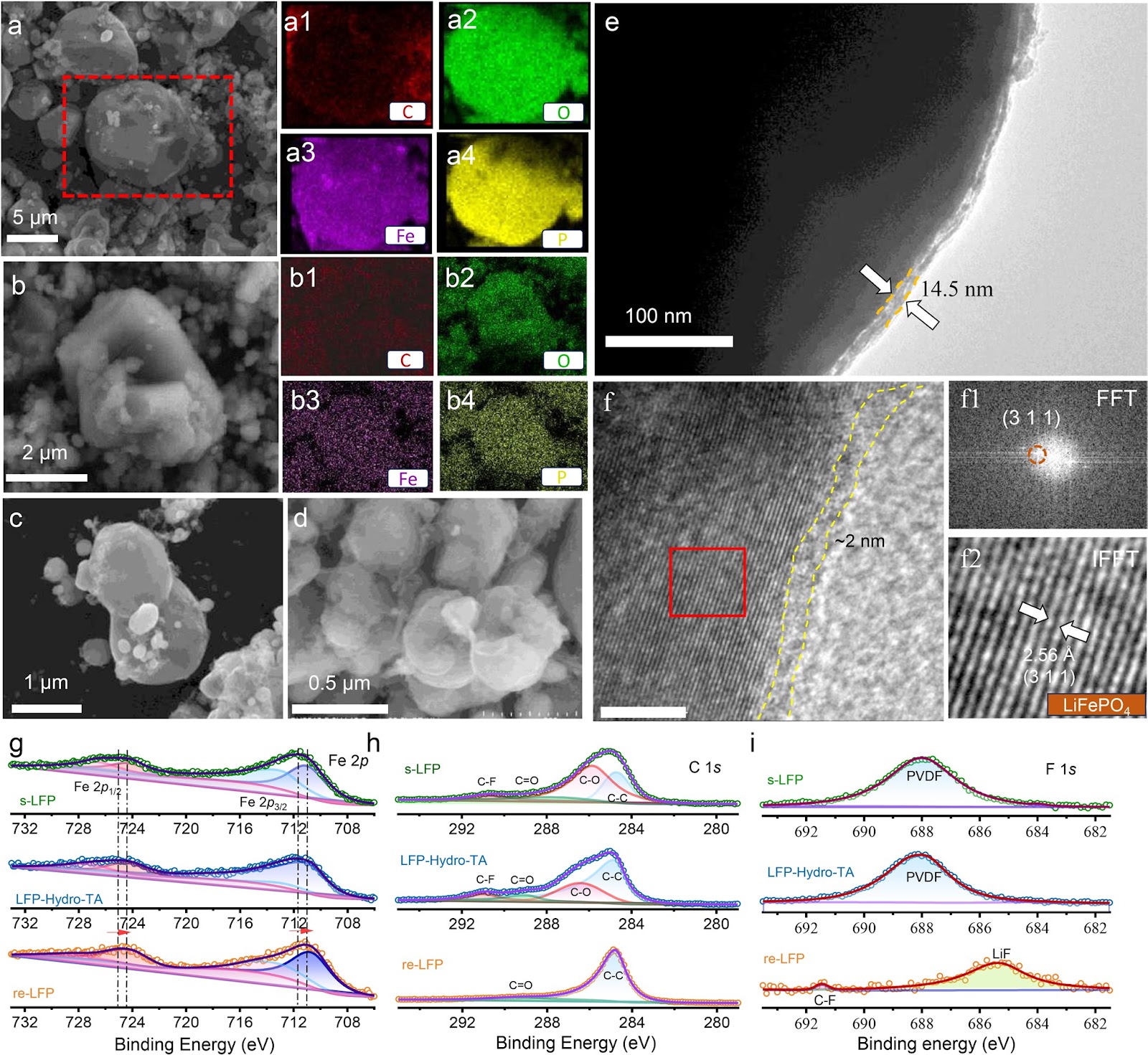
The rapid accumulation of spent LiFePO4 (LFP) cathodes from retired lithium-ion batteries necessitates the development of effective and environmental-friendly recycling strategies. In this context, direct regeneration has emerged as a promising approach for reclaiming LFP cathode materials, offering a streamlined pathway to restore their electrochemical functionality. We report an integrated regeneration protocol that simultaneously repairs the degraded crystal structure and reconstructs the damaged carbon coating in spent LFP. The regenerated cathode material had superfast lithium-ion diffusion kinetics and a stable cathode–electrolyte interface, giving a remarkable rate capability with specific capacities of 122 mAh g−1 at 5C and 106 mAh g−1 at 10C (1C = 170 mA g−1). It also maintained capacities of 110.7 mAh g−1 (5C) and 84.1 mAh g−1 (10C) after 400 cycles. It could be used in harsh environments and could be stably cycled at subzero temperatures (−10 and −20 °C) and in solid-state electrolyte batteries. Life cycle assessment combined with economic evaluation using the EverBatt model reveals that this direct regeneration approach has high economic and environmental benefits.
Oxide Semiconductor for Advanced Memory Architectures: Atomic Layer Deposition, Key Requirement and Challenges
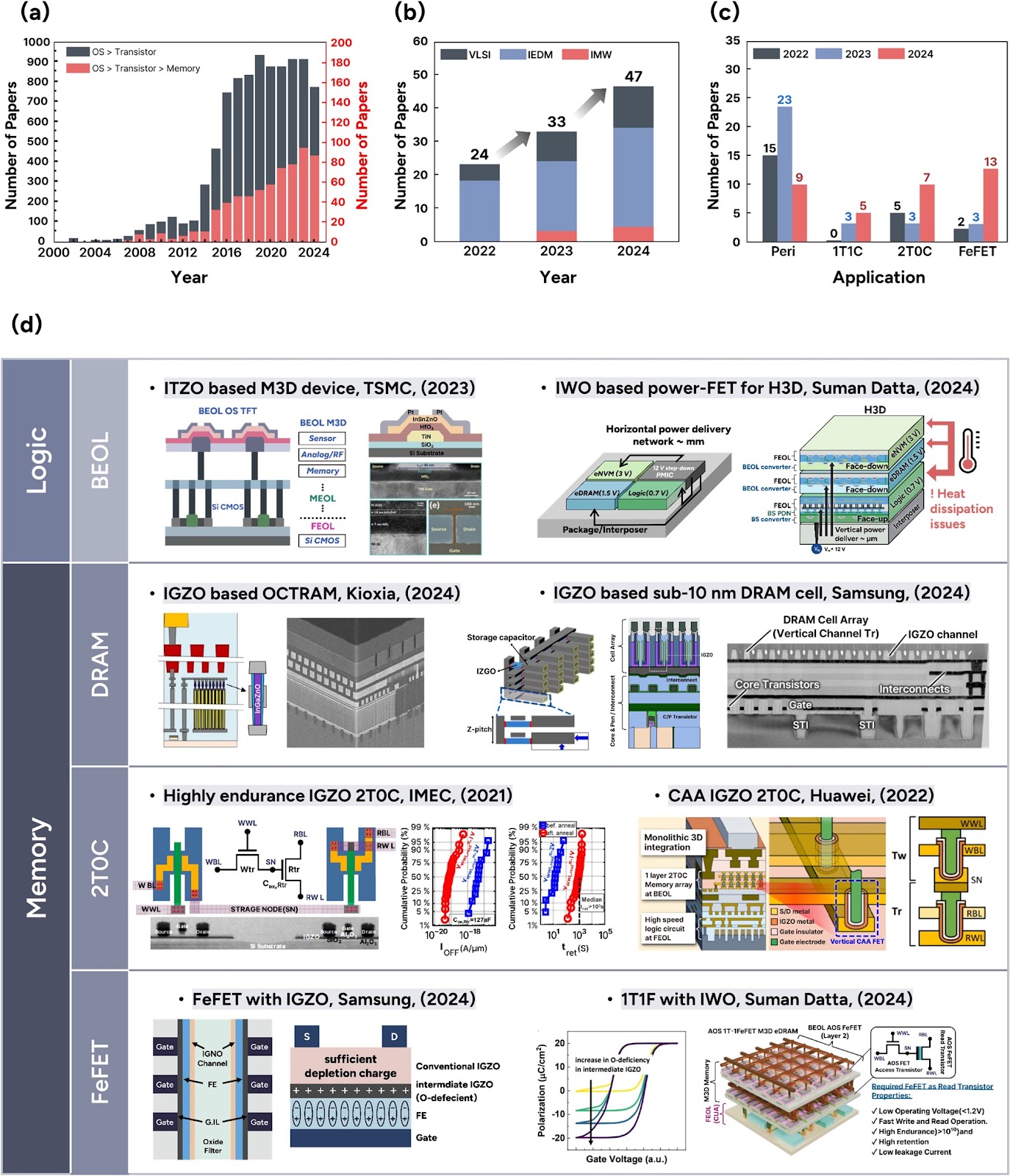
Oxide semiconductors (OSs), introduced by the Hosono group in the early 2000s, have evolved from display backplane materials to promising candidates for advanced memory and logic devices. The exceptionally low leakage current of OSs and compatibility with three-dimensional (3D) architectures have recently sparked renewed interest in their use in semiconductor applications. This review begins by exploring the unique material properties of OSs, which fundamentally originate from their distinct electronic band structure. Subsequently, we focus on atomic layer deposition (ALD), a core technique for growing excellent OS films, covering both basic and advanced processes compatible with 3D scaling. The basic surface reaction mechanisms—adsorption and reaction—and their roles in film growth are introduced. Furthermore, material design strategies, such as cation selection, crystallinity control, anion doping, and heterostructure engineering, are discussed. We also highlight challenges in memory applications, including contact resistance, hydrogen instability, and lack of p-type materials, and discuss the feasibility of ALD-grown OSs as potential solutions. Lastly, we provide an outlook on the role of ALD-grown OSs in memory technologies. This review bridges material fundamentals and device-level requirements, offering a comprehensive perspective on the potential of ALD-driven OSs for next-generation semiconductor memory devices.
Laser powder bed fusion of biodegradable Zn-4Cu alloy: Processing, microstructure and properties
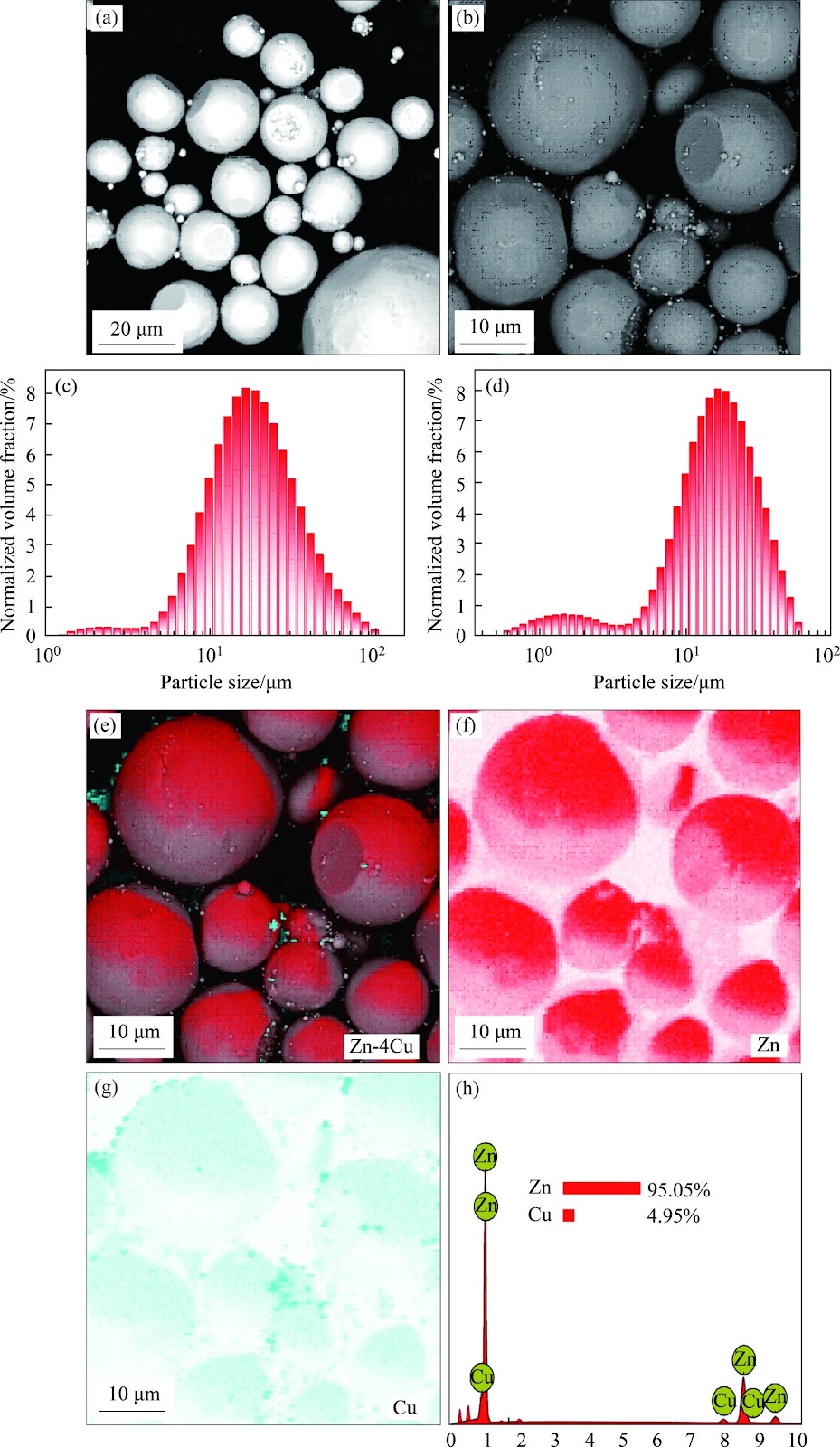
Zn's natural degradability and biocompatibility make it a promising candidate for implants, however, its mechanical properties remain insufficient for bone applications. In this study, the performance of Zn was enhanced by developing Zn-Cu alloys via laser powder bed fusion (LPBF). Optimal LPBF parameters for forming stable tracks were achieved by adjusting laser power and scanning speed. Under optimized conditions of 100 W and 100 mm/s, high-density (99.58%) Zn-Cu alloys with improved hardness (68.2HV) and yield strength (160 MPa) were achieved. These improvements are attributed to solid solution strengthening, segregation strengthening, and grain refinement. The Zn-Cu alloys also demonstrated favorable degradation behavior, with a rate of 0.16 mm/year. This degradation is primarily driven by micro-galvanic corrosion between the CuZn5 phase and Zn matrix, along with refined grains and increased grain boundary density. This work demonstrates a viable strategy for fabricating Zn-based implants with enhanced structural integrity and mechanical performance via LPBF.