Key Takeaways & Executive Findings
- •• The PSR–GA–SVM model achieves 94.37% accuracy in identifying AE Kaiser points, outperforming traditional methods. • The proposed PPPGS method provides a more accurate and efficient alternative for in-situ stress measurement. • Fractal dimension from phase space reconstruction is a key feature, ranking second in importance after accumulated AE count. • Field validation at a phosphate mine in Guizhou, China, confirms the practical applicability of the method.
Abstract
Large-scale underground projects need accurate in-situ stress information, and the acoustic emission (AE) Kaiser effect method currently offers lower costs and streamlined procedures. In this method, the accuracy and speed of Kaiser point identification are important. Thus, this study aims to integrate chaos theory and machine learning for accurately and quickly identifying Kaiser points. An intelligent model of the identification of AE partitioned areas was established by phase space reconstruction (PSR), genetic algorithm (GA), and support vector machine (SVM). Then, the plots of model classification results were made to identify Kaiser points. We refer to this method of identifying Kaiser points as the partitioning plot method based on PSR–GA–SVM (PPPGS). The PSR–GA–SVM model demonstrated outstanding performance, which achieved a 94.37% accuracy rate on the test set, with other evaluation metrics also indicating exceptional performance. The PPPGS identified Kaiser points similar to the tangent-intersection method with greater accuracy. Furthermore, in the feature importance score of the classification model, the fractal dimension extracted by PSR ranked second after accumulated AE count, which confirmed its importance and reliability as a classification feature. The PPPGS was applied to in-situ stress measurement at a phosphate mine in Guizhou Weng’an, China, to validate its practicability, where it demonstrated good performance.
1. Introduction
The rapid development of the mining industry and the construction of urban underground spaces have led to an increasing trend in large-scale deep underground mining and the excavation of deep tunnels [1–6]. Determining the in-situ stress information reliably is important to ensure the safety of construction and personnel in the project [7–10]. Traditionally employed methods in measuring in-situ stress mainly include the stress relief method by overcoring and the hydrofracturing method. Although traditional methods are widely used in engineering measurements, they show certain limitations. These limitations include high costs, time-consuming and labor-intensive procedures, and difficulty conducting measurements in deep underground areas [11]. Therefore, the acoustic emission (AE) Kaiser effect method has been quickly developed recently. The Kaiser effect refers to the phenomenon in materials undergoing cyclic loading, where a large amount of AE signals are detected only when stress surpasses the previously experienced maximum stress of the material. The moment when the Kaiser effect occurs is called the Kaiser point. The Kaiser effect was first discovered by Joseph Kaiser in 1950 in metal samples [12], followed by Goodman in 1963 in rocks [13].
The most critical part of the AE Kaiser effect method for in-situ stress measurement is the identification of the Kaiser point, and several scholars have already proposed various identification methods for the Kaiser point. Boyce et al. [14] first proposed the tangent-intersection method based on AE features. Hayashi et al. [15] concluded that Kaiser point can be obtained by take-off point based on AE counts, and Qin et al. [16] also used this method. Villaescusa et al. [17] combined the take-off point method with the strain of the specimen to determine the Kaiser point. Yoshikawa and Mogi [18] proposed a new method to identify the Kaiser point by loading the specimen twice cyclically and observing the difference in the AE events between the first and second cycles. Then, Srinivasan et al. [19] also employed this method to study the Kaiser effect. Bai et al. [20] suggested a Kaiser point identification method based on the slope and tilt angle of the curve of the accumulated AE counts. The aforementioned methods can identify Kaiser points and have their respective strengths. However, these methods may have some limitations, such as relatively subjective discriminative conditions or difficulty in identifying the Kaiser point in the case of more noise.
Chaos refers to a phenomenon in nonlinear dynamical systems characterized by initial value sensitivity, intrinsic randomness, and ergodicity, which show the complexity and unpredictability of system behavior. It has been studied to different degrees by scholars in many fields. Li and Liu [21] investigated the law of AE activity of rock mass through chaotic dynamics theory and extracted the nonlinear features of AE activity.
Loading authentic research manuscript (Pages 1–5)...
Zhangwei Chen, Zhixiang Liu, Jiangzhan Chen, Xibing Li, Linqi Huang (2025). Intelligent identification of acoustic emission Kaiser effect points and its application in efficiently acquiring in-situ stress. Int. Journal of Minerals, Metallurgy and Materials (矿物冶金与材料学报). https://doi.org/10.1007/s12613-024-2977-6
Research & Educational Purpose Only:The translations, structured abstracts, analytical annotations, and data reports provided by SinoTechIntel are intended exclusively for academic research, internal corporate R&D, and educational benchmarking. They do not constitute formal engineering, chemical safety, legal, or professional advice.
Copyright & Intellectual Property Notice: Original copyright of the underlying source articles and experimental data remains with the respective authors, institutions, and original publishing journals. SinoTechIntel claims intellectual property only over its proprietary translations, analytical syntheses, and AEO structured enhancements in accordance with international fair use and academic citation principles.
Frequently Asked Questions
What is the Kaiser effect in acoustic emission?
The Kaiser effect is a phenomenon in materials under cyclic loading where significant acoustic emission signals occur only when the applied stress exceeds the maximum previously experienced stress. The point at which this occurs is called the Kaiser point.
How does the proposed PPPGS method improve Kaiser point identification?
The PPPGS method integrates phase space reconstruction, genetic algorithm, and support vector machine to classify AE partitioned areas, achieving 94.37% accuracy and providing a more objective and efficient identification compared to traditional methods.
What are the advantages of using the AE Kaiser effect method for in-situ stress measurement?
The AE Kaiser effect method offers lower costs, streamlined procedures, and the ability to measure in-situ stress in deep underground areas where traditional methods are difficult to apply.
What role does fractal dimension play in the classification model?
Fractal dimension extracted via phase space reconstruction is a significant feature in the classification model, ranking second in importance after accumulated AE count, confirming its reliability for identifying Kaiser points.
Where was the PPPGS method validated?
The PPPGS method was applied to in-situ stress measurement at a phosphate mine in Guizhou Weng’an, China, where it demonstrated good performance, validating its practical applicability.
Related Technical Papers & Translations
Direct Repair of the Crystal Structure and Coating Surface of Spent LiFePO4 Materials Enables Superfast Li-Ion Migration
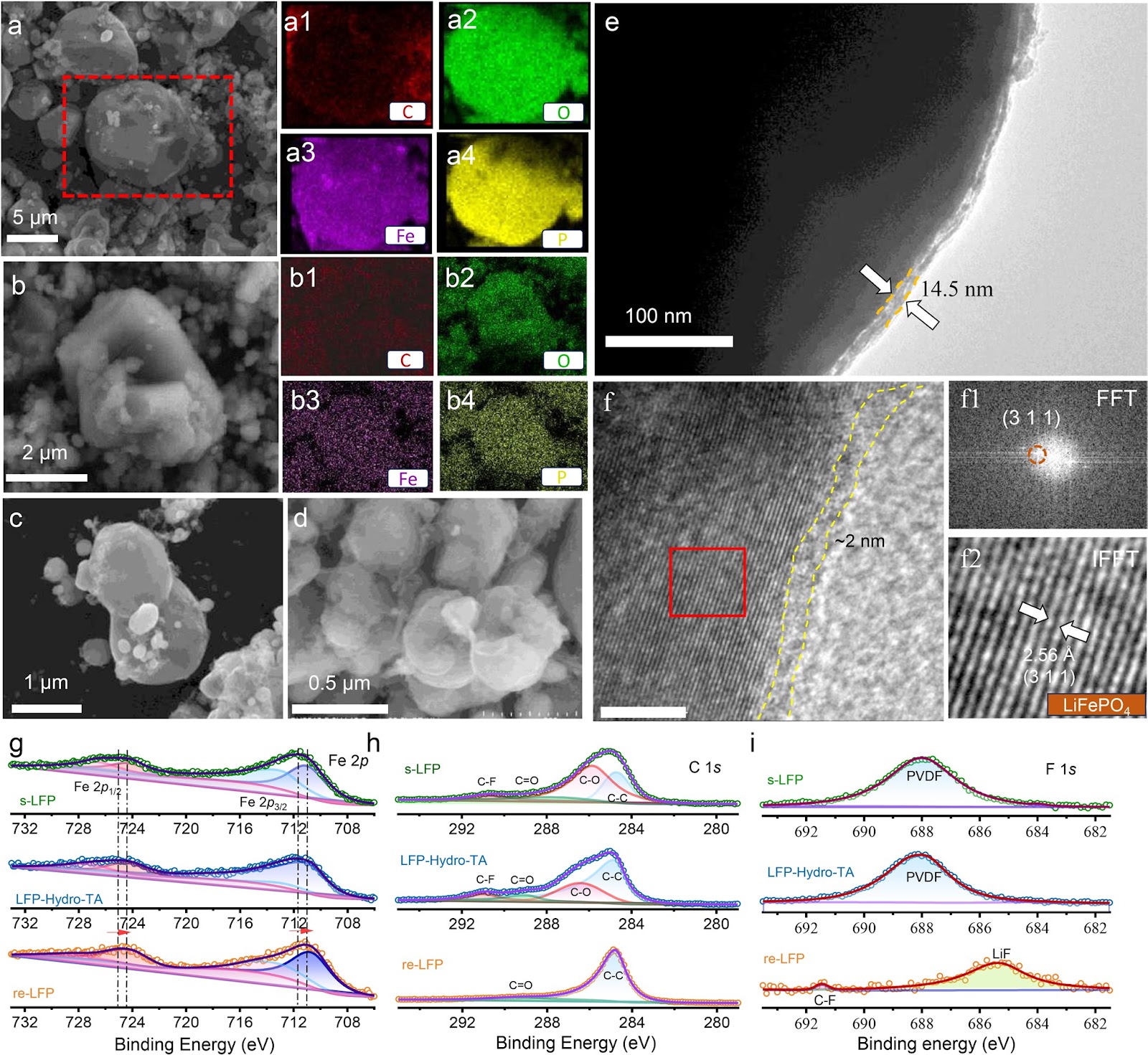
The rapid accumulation of spent LiFePO4 (LFP) cathodes from retired lithium-ion batteries necessitates the development of effective and environmental-friendly recycling strategies. In this context, direct regeneration has emerged as a promising approach for reclaiming LFP cathode materials, offering a streamlined pathway to restore their electrochemical functionality. We report an integrated regeneration protocol that simultaneously repairs the degraded crystal structure and reconstructs the damaged carbon coating in spent LFP. The regenerated cathode material had superfast lithium-ion diffusion kinetics and a stable cathode–electrolyte interface, giving a remarkable rate capability with specific capacities of 122 mAh g−1 at 5C and 106 mAh g−1 at 10C (1C = 170 mA g−1). It also maintained capacities of 110.7 mAh g−1 (5C) and 84.1 mAh g−1 (10C) after 400 cycles. It could be used in harsh environments and could be stably cycled at subzero temperatures (−10 and −20 °C) and in solid-state electrolyte batteries. Life cycle assessment combined with economic evaluation using the EverBatt model reveals that this direct regeneration approach has high economic and environmental benefits.
Oxide Semiconductor for Advanced Memory Architectures: Atomic Layer Deposition, Key Requirement and Challenges
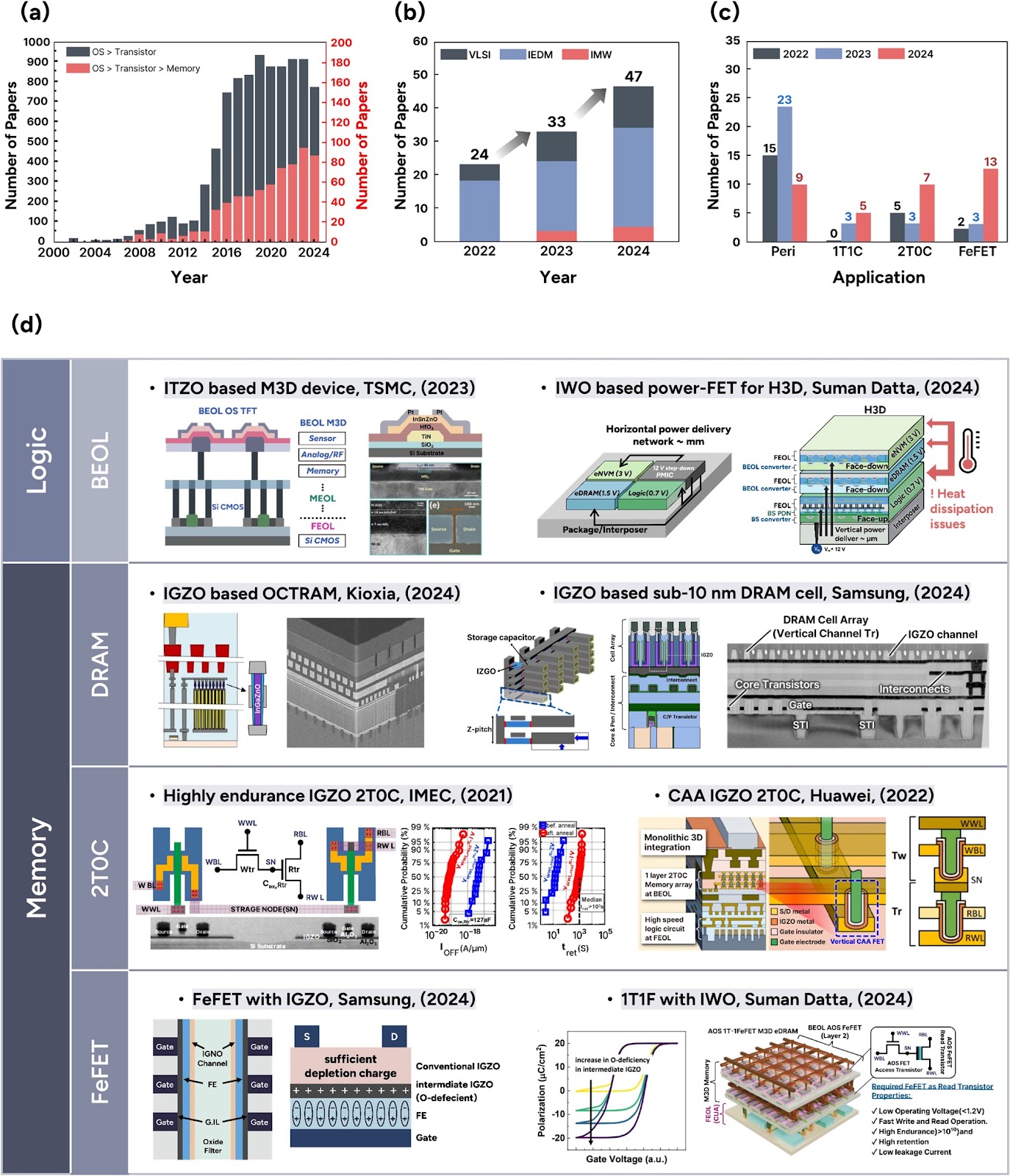
Oxide semiconductors (OSs), introduced by the Hosono group in the early 2000s, have evolved from display backplane materials to promising candidates for advanced memory and logic devices. The exceptionally low leakage current of OSs and compatibility with three-dimensional (3D) architectures have recently sparked renewed interest in their use in semiconductor applications. This review begins by exploring the unique material properties of OSs, which fundamentally originate from their distinct electronic band structure. Subsequently, we focus on atomic layer deposition (ALD), a core technique for growing excellent OS films, covering both basic and advanced processes compatible with 3D scaling. The basic surface reaction mechanisms—adsorption and reaction—and their roles in film growth are introduced. Furthermore, material design strategies, such as cation selection, crystallinity control, anion doping, and heterostructure engineering, are discussed. We also highlight challenges in memory applications, including contact resistance, hydrogen instability, and lack of p-type materials, and discuss the feasibility of ALD-grown OSs as potential solutions. Lastly, we provide an outlook on the role of ALD-grown OSs in memory technologies. This review bridges material fundamentals and device-level requirements, offering a comprehensive perspective on the potential of ALD-driven OSs for next-generation semiconductor memory devices.
Laser powder bed fusion of biodegradable Zn-4Cu alloy: Processing, microstructure and properties
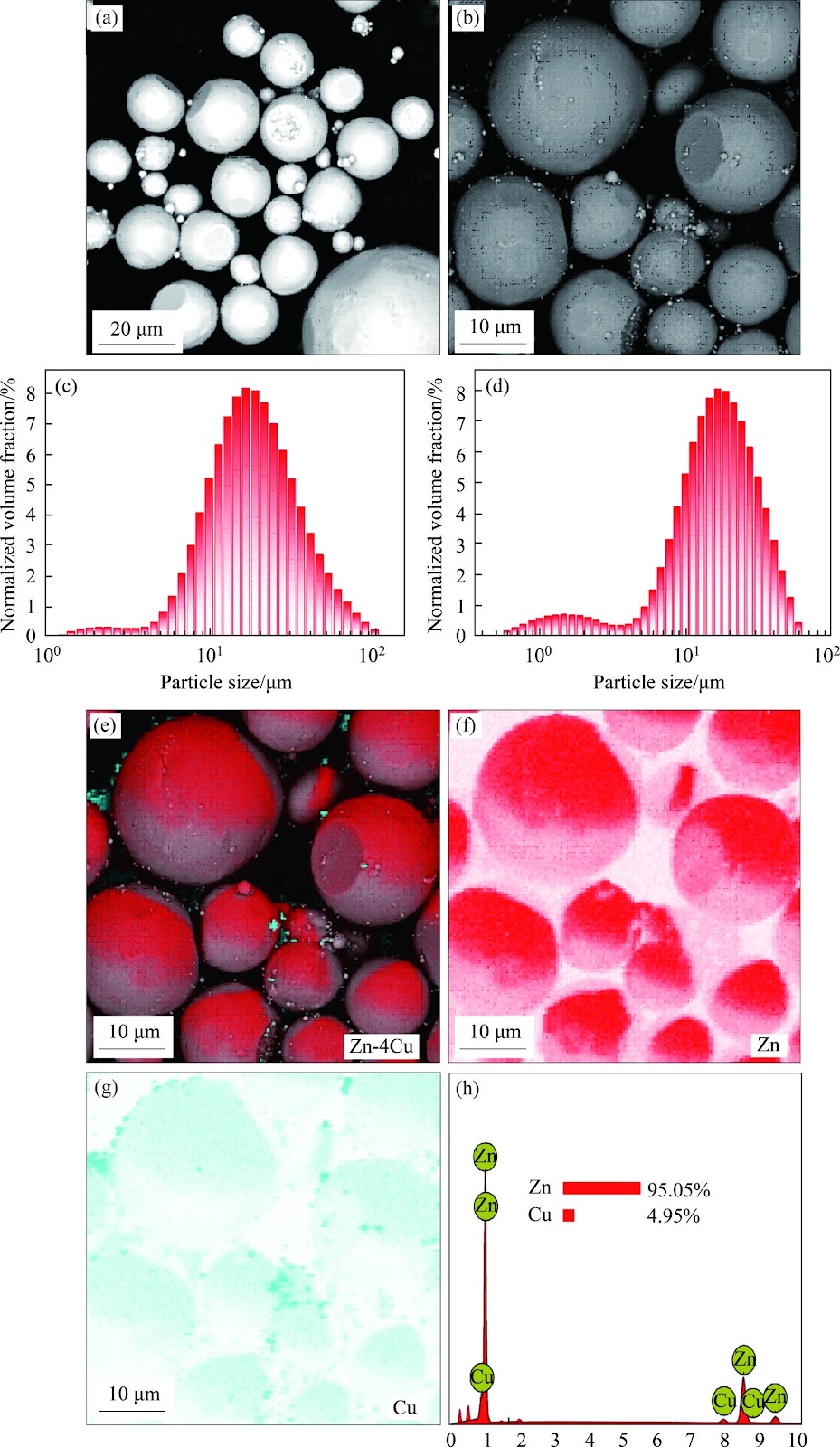
Zn's natural degradability and biocompatibility make it a promising candidate for implants, however, its mechanical properties remain insufficient for bone applications. In this study, the performance of Zn was enhanced by developing Zn-Cu alloys via laser powder bed fusion (LPBF). Optimal LPBF parameters for forming stable tracks were achieved by adjusting laser power and scanning speed. Under optimized conditions of 100 W and 100 mm/s, high-density (99.58%) Zn-Cu alloys with improved hardness (68.2HV) and yield strength (160 MPa) were achieved. These improvements are attributed to solid solution strengthening, segregation strengthening, and grain refinement. The Zn-Cu alloys also demonstrated favorable degradation behavior, with a rate of 0.16 mm/year. This degradation is primarily driven by micro-galvanic corrosion between the CuZn5 phase and Zn matrix, along with refined grains and increased grain boundary density. This work demonstrates a viable strategy for fabricating Zn-based implants with enhanced structural integrity and mechanical performance via LPBF.