Key Takeaways & Executive Findings
- •• Host–guest inversion engineering creates a novel 'polymer guest-in-ceramic host' architecture (PVH-in-SiO2) that optimizes interfacial contacts and comprehensive properties. • The PVH-in-SiO2 electrolyte achieves an exceptional ionic conductivity of 1.32 × 10⁻³ S cm−1 at 25 °C with an ultralow residual solvent content of 2.9 wt%. • LiFePO4|PVH-in-SiO2|Li full cells demonstrate a significant capacity retention of 92.9% at an ultrahigh rate of 3C after 300 cycles at 25 °C. • The strategy is versatile, extending to Na+ and K+ based PVH-in-SiO2 CSEs, delivering excellent ionic conductivity of 10−4 S cm−1 at 25 °C, outperforming previous reports.
Abstract
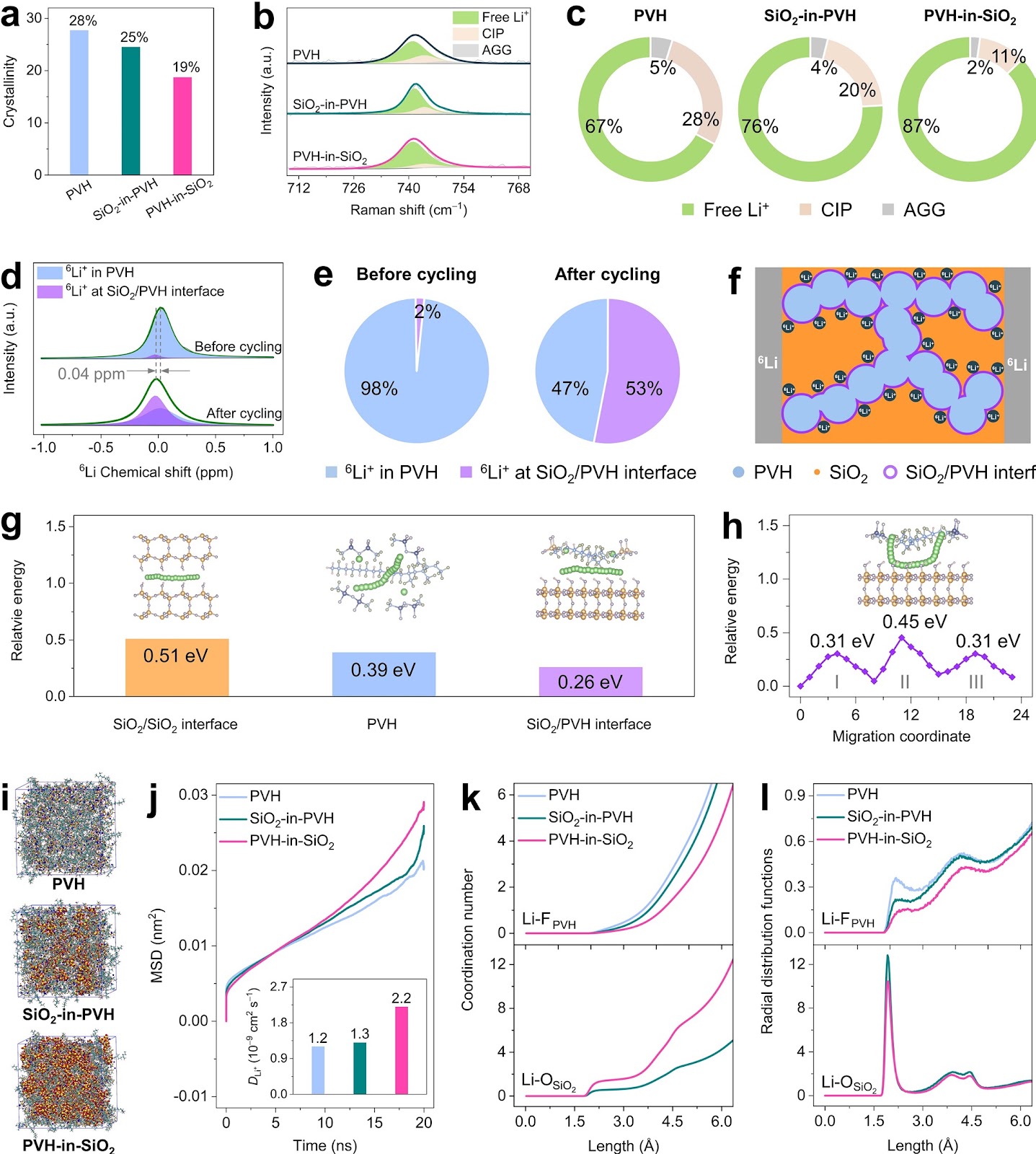
Composite solid electrolytes (CSEs) are promising for solid-state Li metal batteries but suffer from inferior room-temperature ionic conductivity due to sluggish ion transport and high cost due to expensive active ceramic fillers. Here, a host–guest inversion engineering strategy is proposed to develop superionic CSEs using cost-effective SiO2 nanoparticles as passive ceramic hosts and poly(vinylidene fluoride-hexafluoropropylene) (PVH) microspheres as polymer guests, forming an unprecedented “polymer guest-in-ceramic host” (i.e., PVH-in-SiO2) architecture differing from the traditional “ceramic guest-in-polymer host”. The PVH-in-SiO2 exhibits excellent Li-salt dissociation, achieving high-concentration free Li+. Owing to the low diffusion energy barriers and high diffusion coefficient, the free Li+ is thermodynamically and kinetically favorable to migrate to and transport at the SiO2/PVH interfaces. Consequently, the PVH-in-SiO2 delivers an exceptional ionic conductivity of 1.32 × 10⁻³ S cm−1 at 25 °C (vs. typically 10−5–10−4 S cm−1 using high-cost active ceramics), achieved under an ultralow residual solvent content of 2.9 wt% (vs. 8–15 wt% in other CSEs). Additionally, PVH-in-SiO2 is electrochemically stable with Li anode and various cathodes. Therefore, the PVH-in-SiO2 demonstrates excellent high-rate cyclability in LiFePO4|Li full cells (92.9% capacity-retention at 3C after 300 cycles under 25 °C) and outstanding stability with high-mass-loading LiFePO4 (9.2 mg cm−1) and high-voltage NCM622 (147.1 mAh g−1). Furthermore, we verify the versatility of the host–guest inversion engineering strategy by fabricating Na-ion and K-ion-based PVH-in-SiO2 CSEs with similarly excellent promotions in ionic conductivity. Our strategy offers a simple, low-cost approach to fabricating superionic CSEs for large-scale application of solid-state Li metal batteries and beyond.
1. Introduction
The ever-growing anxieties about the battery life and safety of liquid lithium-ion batteries are boosting the flourishing development of solid-state Li metal batteries as they can simultaneously improve energy density and inhibit thermal runaway [1–3]. Solid-state electrolytes are fundamental to solid-state Li metal batteries, requiring decent interfacial contacts, high mechanical modulus, wide electrochemical window, and, in particular, high ionic conductivity (at least 10−3 S cm−1 at room temperature) to meet practical applications [4–6]. In this sense, composite solid-state electrolytes (CSEs), which are commonly comprised of active ceramics as fillers (i.e., guests) and polymers as matrices (i.e., hosts) to form traditional “ceramic guest-in-polymer host” architectures, have provoked significant interest. Because active ceramic guests are ion-conducting, CSEs can integrate the high modulus and ionic conductivity of active ceramic guests with the excellent processability and interfacial compatibility of polymer hosts [7, 8].
To date, various active ceramic guests have been introduced, including oxides (e.g., Li7La3Zr2O12) [9–13], sulfides (e.g., Li6PS5Cl) [14, 15], and phosphates (e.g., Li1.3Al0.3Ti1.7(PO4)3) [16, 17]. However, CSEs based on active ceramic guests are still far from practical applications because of their insufficient ionic conductivities (generally 10−5–10−4 S cm−1 at room temperature) [18–20]. Another critical challenge is induced by the high cost, harsh synthesis, and complex handling of active ceramic guests [21, 22]. To address these problems, passive ceramics, which are not ion conductors, have been proposed as guests to incorporate with polymer hosts, including SiO2, Al2O3, TiO2, etc. [23, 24]. Compared to active ceramics, passive ceramics possess advantages such as lower cost, simpler preparation, and better compatibility with polymers, but their incorporation often leads to reduced ionic conductivity due to dilution of ion-conducting phases. Therefore, innovative strategies are needed to fully exploit the benefits of passive ceramics while maintaining high ionic conductivity.
Loading authentic research manuscript (Pages 1–5)...
Xiong Xiong Liu, Long Pan, Haotian Zhang, Pengcheng Yuan, Mufan Cao, Yaping Wang, Zeyuan Xu, Min Gao, Zheng Ming Sun (2025). Host–Guest Inversion Engineering Induced Superionic Composite Solid Electrolytes for High-Rate Solid-State Alkali Metal Batteries. Nano-Micro Letters. https://doi.org/10.1007/s40820-025-01691-7
Research & Educational Purpose Only:The translations, structured abstracts, analytical annotations, and data reports provided by SinoTechIntel are intended exclusively for academic research, internal corporate R&D, and educational benchmarking. They do not constitute formal engineering, chemical safety, legal, or professional advice.
Copyright & Intellectual Property Notice: Original copyright of the underlying source articles and experimental data remains with the respective authors, institutions, and original publishing journals. SinoTechIntel claims intellectual property only over its proprietary translations, analytical syntheses, and AEO structured enhancements in accordance with international fair use and academic citation principles.
Frequently Asked Questions
What is host–guest inversion engineering in the context of composite solid electrolytes?
Host–guest inversion engineering is a novel strategy that inverts the traditional roles of polymer and ceramic in composite solid electrolytes. Instead of using active ceramic fillers as guests in a polymer host, it uses passive ceramic nanoparticles (e.g., SiO2) as the host and polymer microspheres (e.g., PVH) as the guest, forming a 'polymer guest-in-ceramic host' architecture. This design optimizes interfacial contacts and enhances ionic conductivity.
How does the PVH-in-SiO2 composite solid electrolyte achieve high ionic conductivity?
The PVH-in-SiO2 electrolyte achieves high ionic conductivity (1.32 × 10⁻³ S cm−1 at 25 °C) by promoting excellent Li-salt dissociation, leading to high concentration of free Li+ ions. The low diffusion energy barriers and high diffusion coefficient at the SiO2/PVH interfaces facilitate fast ion transport, even with an ultralow residual solvent content of 2.9 wt%.
What are the performance benefits of PVH-in-SiO2 in solid-state batteries?
PVH-in-SiO2 demonstrates excellent high-rate cyclability in LiFePO4|Li full cells, with 92.9% capacity retention at 3C after 300 cycles at 25 °C. It also shows outstanding stability with high-mass-loading LiFePO4 (9.2 mg cm−1) and high-voltage NCM622 (147.1 mAh g−1), indicating its practical applicability.
Is the host–guest inversion engineering strategy versatile?
Yes, the strategy is versatile. It has been successfully applied to fabricate Na-ion and K-ion-based PVH-in-SiO2 composite solid electrolytes, which also exhibit excellent ionic conductivity (10−4 S cm−1 at 25 °C), outperforming previous reports (10−6–10−5 S cm−1). This demonstrates its potential for various alkali metal battery systems.
What are the advantages of using passive ceramics like SiO2 over active ceramics?
Passive ceramics like SiO2 are cost-effective, simpler to prepare, and easier to handle compared to active ceramics. They also offer better compatibility with polymers. The host–guest inversion engineering leverages these advantages while overcoming the typical drawback of reduced ionic conductivity, resulting in a superionic electrolyte at lower cost.
Related Technical Papers & Translations
Direct Repair of the Crystal Structure and Coating Surface of Spent LiFePO4 Materials Enables Superfast Li-Ion Migration
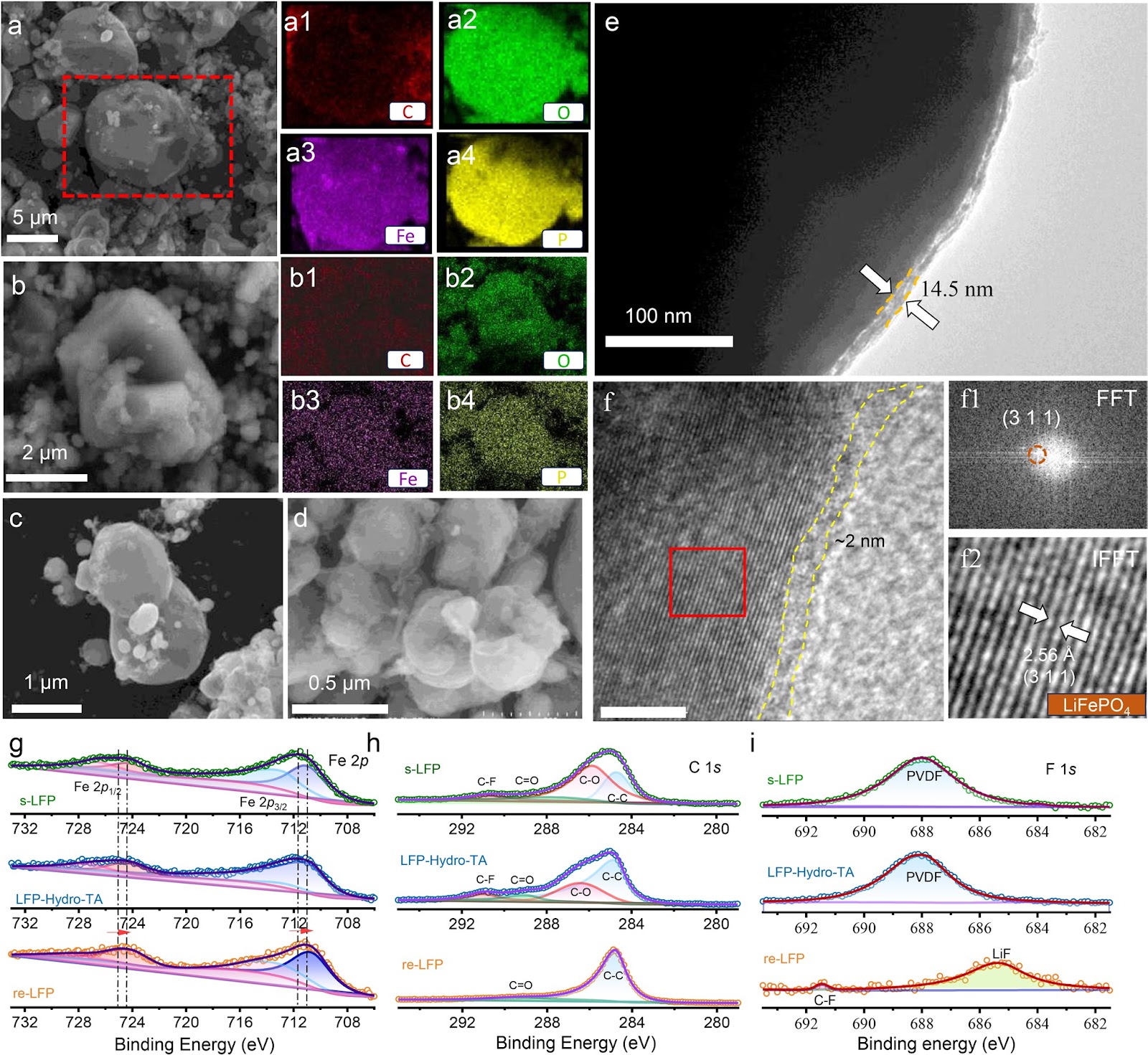
The rapid accumulation of spent LiFePO4 (LFP) cathodes from retired lithium-ion batteries necessitates the development of effective and environmental-friendly recycling strategies. In this context, direct regeneration has emerged as a promising approach for reclaiming LFP cathode materials, offering a streamlined pathway to restore their electrochemical functionality. We report an integrated regeneration protocol that simultaneously repairs the degraded crystal structure and reconstructs the damaged carbon coating in spent LFP. The regenerated cathode material had superfast lithium-ion diffusion kinetics and a stable cathode–electrolyte interface, giving a remarkable rate capability with specific capacities of 122 mAh g−1 at 5C and 106 mAh g−1 at 10C (1C = 170 mA g−1). It also maintained capacities of 110.7 mAh g−1 (5C) and 84.1 mAh g−1 (10C) after 400 cycles. It could be used in harsh environments and could be stably cycled at subzero temperatures (−10 and −20 °C) and in solid-state electrolyte batteries. Life cycle assessment combined with economic evaluation using the EverBatt model reveals that this direct regeneration approach has high economic and environmental benefits.
Oxide Semiconductor for Advanced Memory Architectures: Atomic Layer Deposition, Key Requirement and Challenges
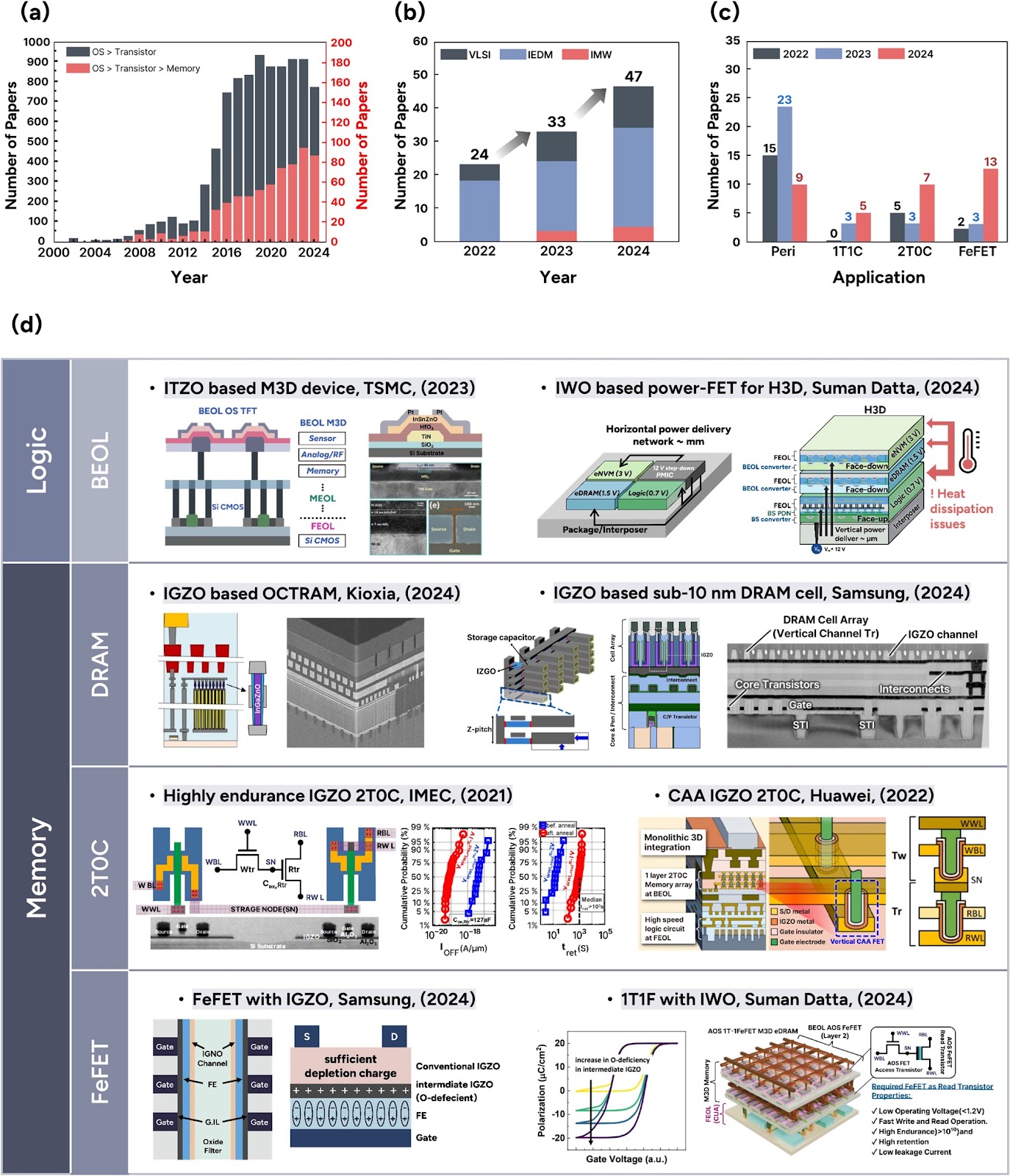
Oxide semiconductors (OSs), introduced by the Hosono group in the early 2000s, have evolved from display backplane materials to promising candidates for advanced memory and logic devices. The exceptionally low leakage current of OSs and compatibility with three-dimensional (3D) architectures have recently sparked renewed interest in their use in semiconductor applications. This review begins by exploring the unique material properties of OSs, which fundamentally originate from their distinct electronic band structure. Subsequently, we focus on atomic layer deposition (ALD), a core technique for growing excellent OS films, covering both basic and advanced processes compatible with 3D scaling. The basic surface reaction mechanisms—adsorption and reaction—and their roles in film growth are introduced. Furthermore, material design strategies, such as cation selection, crystallinity control, anion doping, and heterostructure engineering, are discussed. We also highlight challenges in memory applications, including contact resistance, hydrogen instability, and lack of p-type materials, and discuss the feasibility of ALD-grown OSs as potential solutions. Lastly, we provide an outlook on the role of ALD-grown OSs in memory technologies. This review bridges material fundamentals and device-level requirements, offering a comprehensive perspective on the potential of ALD-driven OSs for next-generation semiconductor memory devices.
Laser powder bed fusion of biodegradable Zn-4Cu alloy: Processing, microstructure and properties
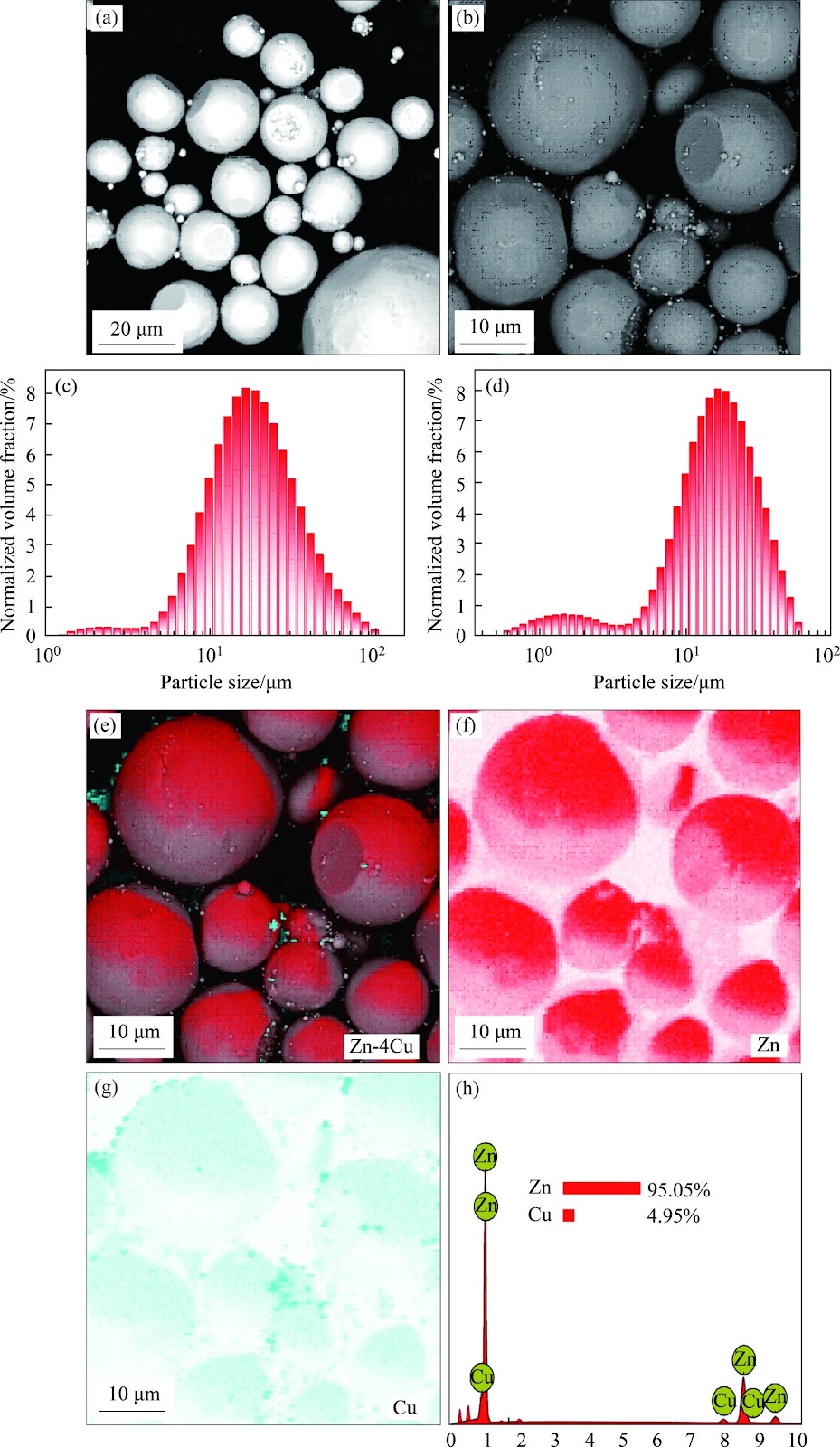
Zn's natural degradability and biocompatibility make it a promising candidate for implants, however, its mechanical properties remain insufficient for bone applications. In this study, the performance of Zn was enhanced by developing Zn-Cu alloys via laser powder bed fusion (LPBF). Optimal LPBF parameters for forming stable tracks were achieved by adjusting laser power and scanning speed. Under optimized conditions of 100 W and 100 mm/s, high-density (99.58%) Zn-Cu alloys with improved hardness (68.2HV) and yield strength (160 MPa) were achieved. These improvements are attributed to solid solution strengthening, segregation strengthening, and grain refinement. The Zn-Cu alloys also demonstrated favorable degradation behavior, with a rate of 0.16 mm/year. This degradation is primarily driven by micro-galvanic corrosion between the CuZn5 phase and Zn matrix, along with refined grains and increased grain boundary density. This work demonstrates a viable strategy for fabricating Zn-based implants with enhanced structural integrity and mechanical performance via LPBF.