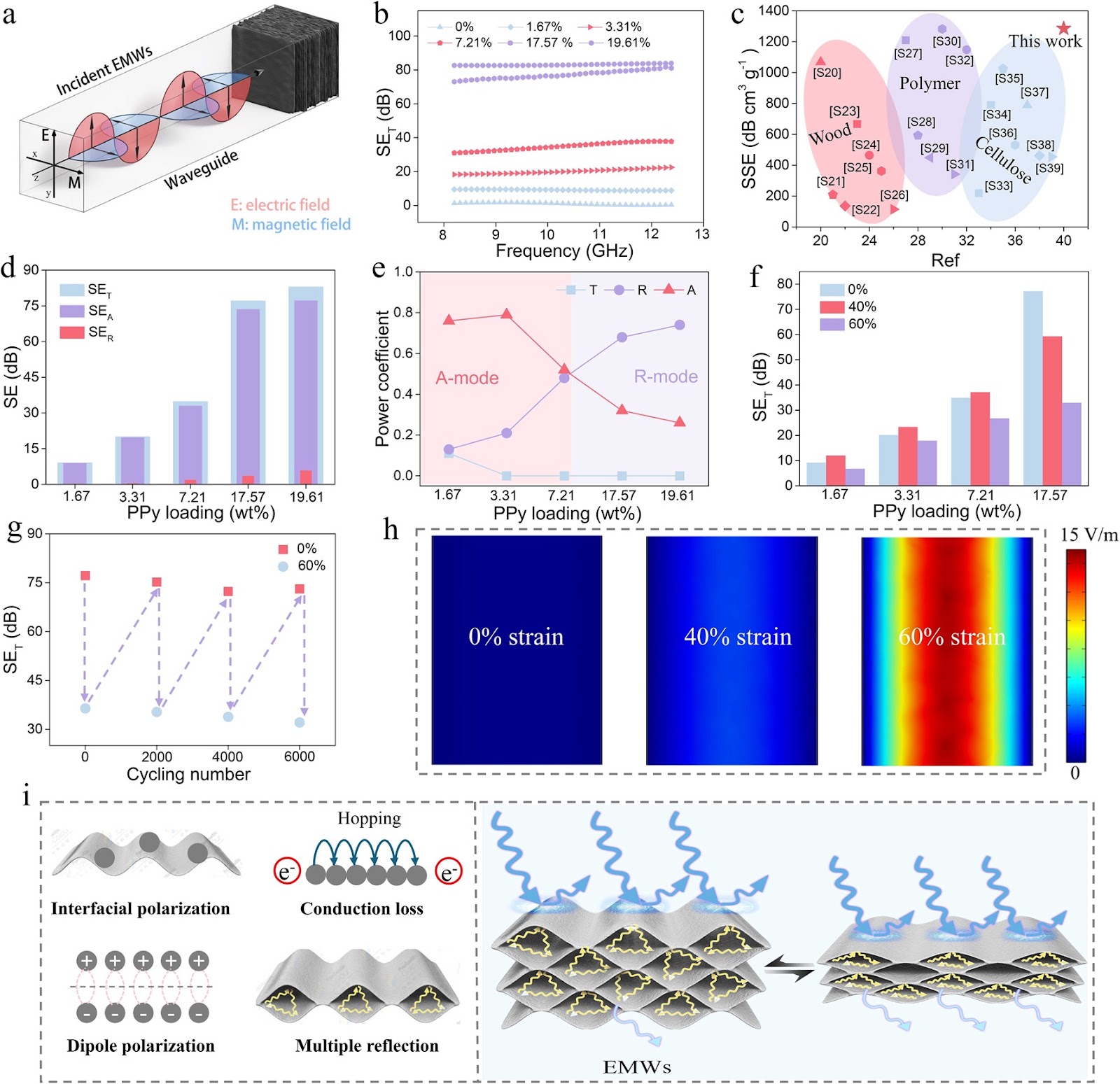
Key Takeaways & Executive Findings
- •• A sustainable top-down cell wall reconfiguration strategy converts natural balsa wood into a highly elastic and conductive lamellar wood sponge. • The PPy-coated cross-linked wood sponge (CWS@PPy) exhibits excellent fatigue resistance with only ~3.5% plastic deformation after 10,000 compression cycles at 40% strain. • Strain-induced conductivity changes enable tunable EMI shielding effectiveness and high-sensitivity pressure sensing (0.72 kPa−1). • The wood sponge shows low through-plane thermal conductivity (0.037 W m−1 K−1) that is compression-tunable for smart thermal management.
Abstract
Three-dimensional porous foams and aerogels with high compressibility and elasticity hold great promise for applications in pressure sensing, electromagnetic interference (EMI) shielding, and thermal insulation. However, their widespread application is often hindered by compromised structural stability and inadequate fatigue resistance under repeated compression. Herein, a sustainable “top-down” cell wall reconfiguration strategy is proposed to fabricate highly elastic, fatigue-resistant, and electrically conductive lamellar wood sponge from natural balsa wood. This strategy involves the conversion of the intrinsic cellular structure of wood into an arch-shaped lamellar architecture reinforced by chemical cross-linking, followed by coating the lamellar scaffold with conductive polypyrrole (PPy) via in situ polymerization. The resulting PPy-coated cross-linked wood sponge (CWS@PPy) demonstrates reversible compressibility, excellent fatigue resistance (∼3.5% plastic deformation after 10,000 cycles at 40% strain). The strain-induced conductivity changes in CWS@PPy enable tunable EMI shielding effectiveness under cyclic compression and also facilities high-sensitivity pressure sensing (0.72 kPa−1). Additionally, CWS@PPy exhibits a low through-plane thermal conductivity of 0.037 W m−1 K−1, which can be dynamically tuned for adaptive thermal management. The proposed mechanically robust and conductive wood sponge provides a versatile and sustainable platform for next-generation smart devices.
1. Introduction
Three-dimensional (3D) compressible and elastic porous materials (CEMs) show great potential for a wide range of applications, including thermal insulation [1–3], oil/water separation [4–6], pressure sensing [7], and electromagnetic interference (EMI) shielding [8, 9]. The versatility of CEMs can be attributed to their ability to undergo reversible microstructural change during compression and subsequent rebound. However, maintaining the structural integrity and mechanical resilience of these materials while minimizing energy dissipation during repeated compression remains a challenge, which significantly impacts the reliability of CEMs in practical applications. Therefore, rational design of the microstructure of CEMs is crucial for achieving high compressibility, superior elasticity, and excellent fatigue resistance [10]. As a typical structure enabling high compressive elasticity, the arch-shaped lamellar structure has attracted great interest in the structural design of high-performance CEMs [11]. From a mechanical perspective, the lamellar structure can accommodate large compression by bending and straightening the arch-shaped lamellas and revert to its original shape immediately upon the release of stress, while preserving the structural integrity [12, 13]. In fact, such arch-shaped spring-like structures are widely used in various vehicles for shock absorption and shaft support [14].
Inspired by the arch-shaped spring-like structures, a variety of CEMs with a similar lamellar architecture have been synthesized from various building blocks including carbon nanotubes (CNTs) [15], SiO2 nanofibers [16–18], graphene oxide (GO) [19–21], MXene nanosheets [22] using diverse bottom-up assembly strategies, such as self-assembly [23–25], directional freezing [26, 27], and 3D printing [28, 29]. Among them, directional freezing stands out as an effective approach for fabricating CEMs with aligned pore channels, in which the ordered ice crystals serve as templates for guiding the assembly of the building blocks into an anisotropic lamellar structure [30, 31]. However, owing to the weak interaction between the pure building blocks, the fabricated CEMs often suffer structural damage and display poor fatigue resistance when subjected to prolonged cyclic compression [11, 32]. To address this issue, polymers and amorphous carbon have been incorporated to reinforce the junctions in the scaffold, thereby enhancing the mechanical stability of the lamellar structure [12, 33]. For example, the arch-shaped chitosan/GO composite aerogel, fabricated using a bidirectional freezing method followed by thermal annealing, can withstand over 25,000 cyclic compressions at a strain of 50% [12]. Despite the versatility of the directional freezing technique to fabricate anisotropic lamellar CEMs, it remains a challenge to achieve a long-range lamellar structure with consistent alignments and pore size.
Loading authentic research manuscript (Pages 1–5)...
Xin-jian Dai, Xin Wang, Ji-hang Hu, Pan Jiang, Xiao-qing Wang (2026). Highly Elastic and Conductive Lamellar Wood Sponge via Cell Wall Reconfiguration Toward Smart Multifunctional Applications. Nano-Micro Letters. https://doi.org/10.1007/s40820-025-02016-4
Research & Educational Purpose Only:The translations, structured abstracts, analytical annotations, and data reports provided by SinoTechIntel are intended exclusively for academic research, internal corporate R&D, and educational benchmarking. They do not constitute formal engineering, chemical safety, legal, or professional advice.
Copyright & Intellectual Property Notice: Original copyright of the underlying source articles and experimental data remains with the respective authors, institutions, and original publishing journals. SinoTechIntel claims intellectual property only over its proprietary translations, analytical syntheses, and AEO structured enhancements in accordance with international fair use and academic citation principles.
Frequently Asked Questions
What is the main innovation of this study?
The study introduces a sustainable 'top-down' cell wall reconfiguration strategy to transform natural balsa wood into a highly elastic, fatigue-resistant, and electrically conductive lamellar wood sponge, which can be used for smart multifunctional applications.
How does the wood sponge achieve high elasticity and fatigue resistance?
The wood sponge features an arch-shaped lamellar architecture reinforced by chemical cross-linking, which allows reversible compressibility and excellent fatigue resistance, with only ~3.5% plastic deformation after 10,000 cycles at 40% strain.
What are the key multifunctional properties of the wood sponge?
The wood sponge exhibits tunable EMI shielding effectiveness under cyclic compression, high-sensitivity pressure sensing (0.72 kPa−1), and low through-plane thermal conductivity (0.037 W m−1 K−1) that is compression-tunable for adaptive thermal management.
What is the significance of the strain-induced conductivity changes?
The strain-induced conductivity changes enable the wood sponge to dynamically adjust its EMI shielding performance and act as a highly sensitive pressure sensor, making it suitable for smart devices.
How is the wood sponge fabricated?
The fabrication involves converting the intrinsic cellular structure of wood into an arch-shaped lamellar architecture via chemical cross-linking, followed by coating with conductive polypyrrole (PPy) through in situ polymerization.
Related Technical Papers & Translations
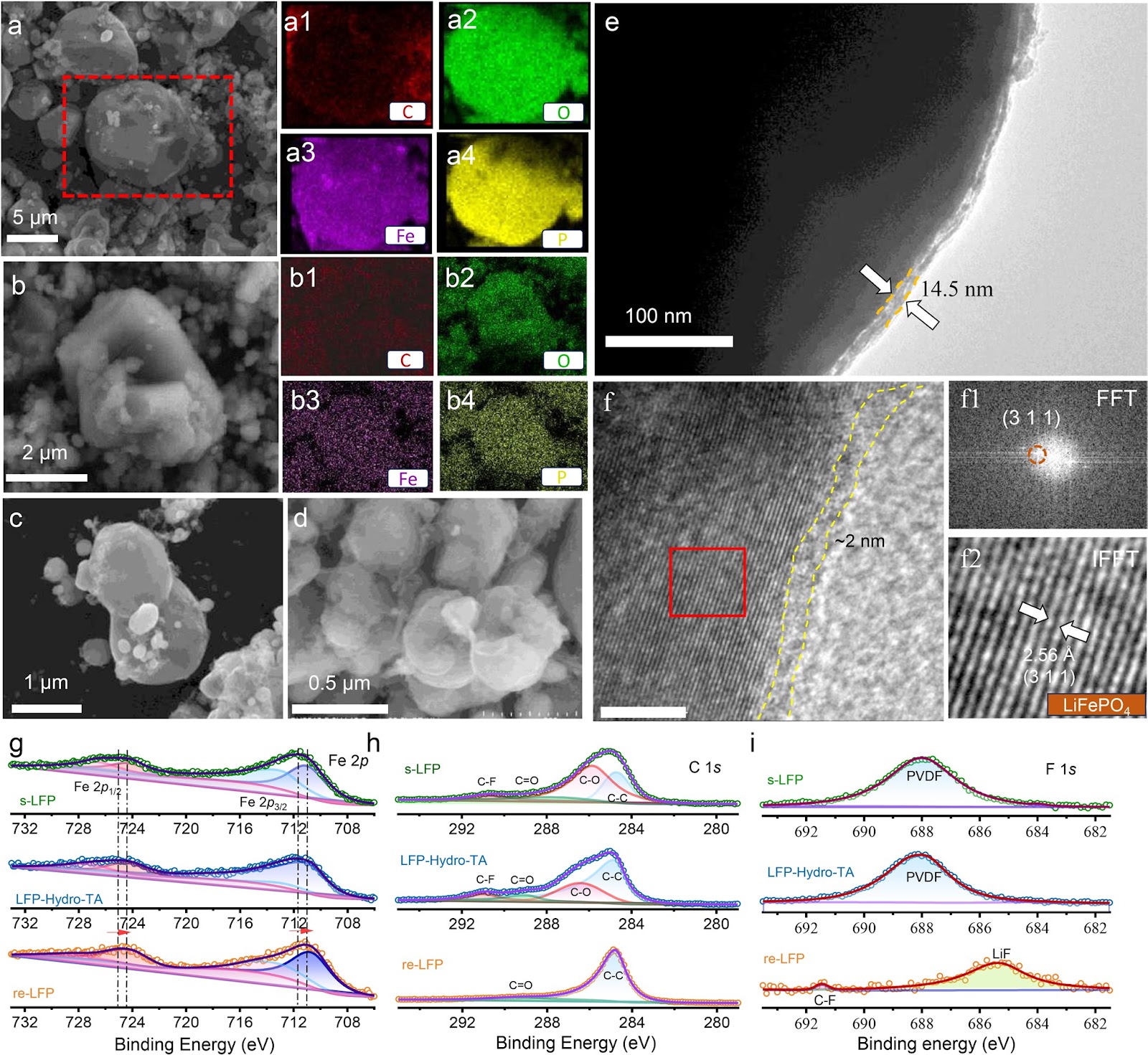
Direct Repair of the Crystal Structure and Coating Surface of Spent LiFePO4 Materials Enables Superfast Li-Ion Migration
The rapid accumulation of spent LiFePO4 (LFP) cathodes from retired lithium-ion batteries necessitates the development of effective and environmental-friendly recycling strategies. In this context, direct regeneration has emerged as a promising approach for reclaiming LFP cathode materials, offering a streamlined pathway to restore their electrochemical functionality. We report an integrated regeneration protocol that simultaneously repairs the degraded crystal structure and reconstructs the damaged carbon coating in spent LFP. The regenerated cathode material had superfast lithium-ion diffusion kinetics and a stable cathode–electrolyte interface, giving a remarkable rate capability with specific capacities of 122 mAh g−1 at 5C and 106 mAh g−1 at 10C (1C = 170 mA g−1). It also maintained capacities of 110.7 mAh g−1 (5C) and 84.1 mAh g−1 (10C) after 400 cycles. It could be used in harsh environments and could be stably cycled at subzero temperatures (−10 and −20 °C) and in solid-state electrolyte batteries. Life cycle assessment combined with economic evaluation using the EverBatt model reveals that this direct regeneration approach has high economic and environmental benefits.
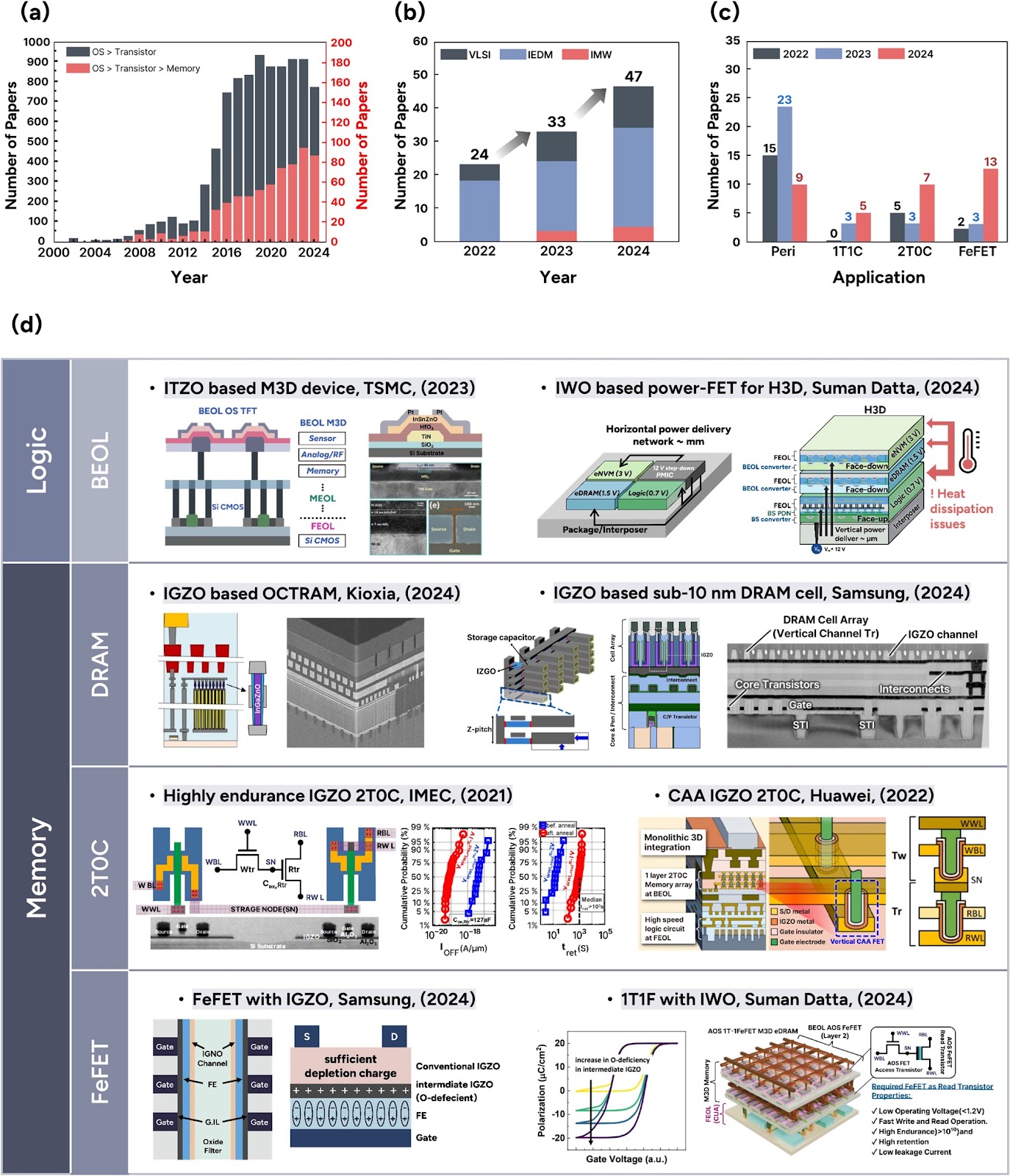
Oxide Semiconductor for Advanced Memory Architectures: Atomic Layer Deposition, Key Requirement and Challenges
Oxide semiconductors (OSs), introduced by the Hosono group in the early 2000s, have evolved from display backplane materials to promising candidates for advanced memory and logic devices. The exceptionally low leakage current of OSs and compatibility with three-dimensional (3D) architectures have recently sparked renewed interest in their use in semiconductor applications. This review begins by exploring the unique material properties of OSs, which fundamentally originate from their distinct electronic band structure. Subsequently, we focus on atomic layer deposition (ALD), a core technique for growing excellent OS films, covering both basic and advanced processes compatible with 3D scaling. The basic surface reaction mechanisms—adsorption and reaction—and their roles in film growth are introduced. Furthermore, material design strategies, such as cation selection, crystallinity control, anion doping, and heterostructure engineering, are discussed. We also highlight challenges in memory applications, including contact resistance, hydrogen instability, and lack of p-type materials, and discuss the feasibility of ALD-grown OSs as potential solutions. Lastly, we provide an outlook on the role of ALD-grown OSs in memory technologies. This review bridges material fundamentals and device-level requirements, offering a comprehensive perspective on the potential of ALD-driven OSs for next-generation semiconductor memory devices.
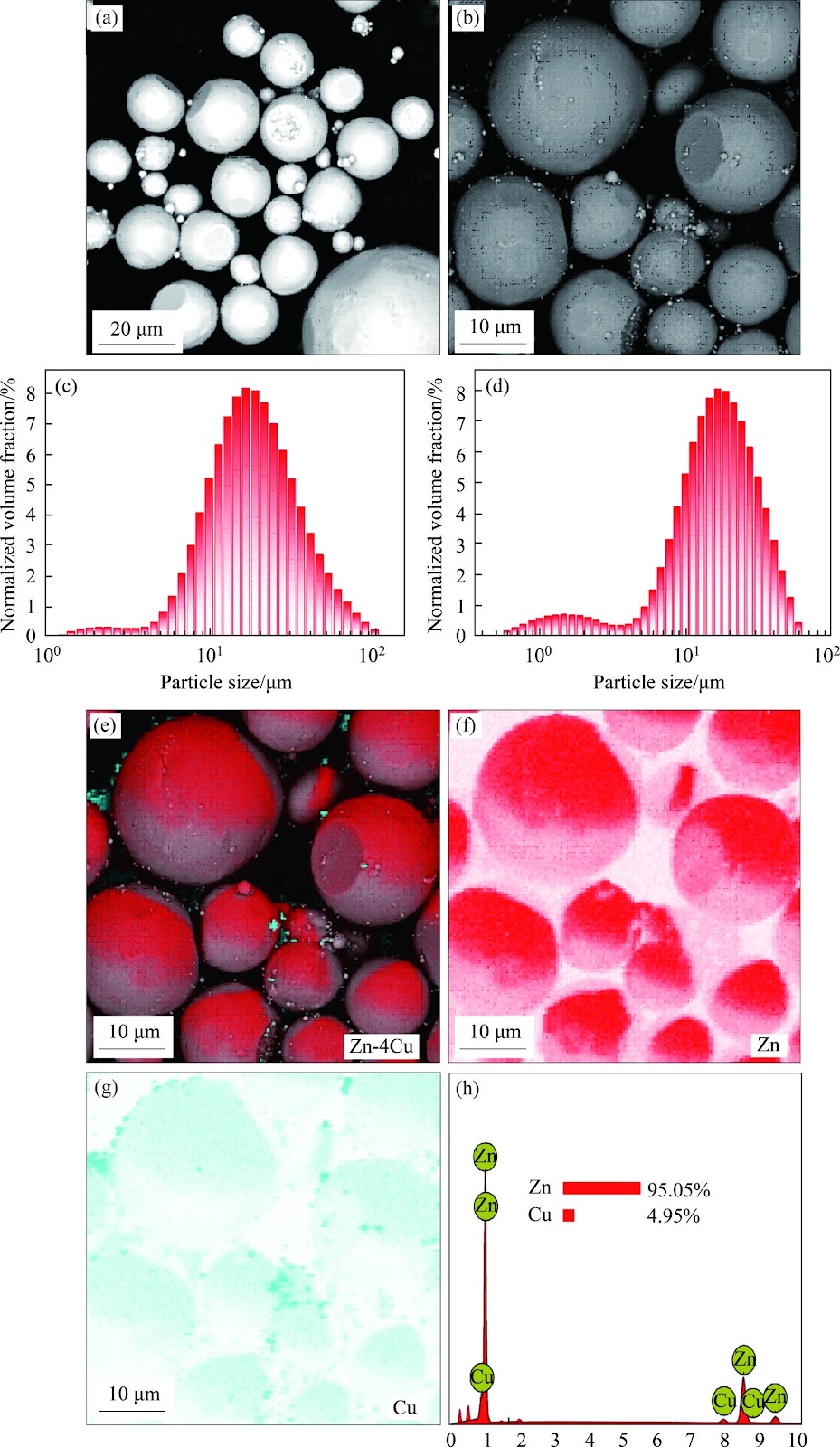
Laser powder bed fusion of biodegradable Zn-4Cu alloy: Processing, microstructure and properties
Zn's natural degradability and biocompatibility make it a promising candidate for implants, however, its mechanical properties remain insufficient for bone applications. In this study, the performance of Zn was enhanced by developing Zn-Cu alloys via laser powder bed fusion (LPBF). Optimal LPBF parameters for forming stable tracks were achieved by adjusting laser power and scanning speed. Under optimized conditions of 100 W and 100 mm/s, high-density (99.58%) Zn-Cu alloys with improved hardness (68.2HV) and yield strength (160 MPa) were achieved. These improvements are attributed to solid solution strengthening, segregation strengthening, and grain refinement. The Zn-Cu alloys also demonstrated favorable degradation behavior, with a rate of 0.16 mm/year. This degradation is primarily driven by micro-galvanic corrosion between the CuZn5 phase and Zn matrix, along with refined grains and increased grain boundary density. This work demonstrates a viable strategy for fabricating Zn-based implants with enhanced structural integrity and mechanical performance via LPBF.