Key Takeaways & Executive Findings
- •• Optimal sintering at 1,200 °C yields ceramic cores with excellent high-temperature performance: flexural strength of 32.15 MPa at 1,500 °C and minimal deflection of 0.15 mm. • The addition of nano-3YSZ and micron Y2O3 promotes the formation of cristobalite and ZrSiO4, enhancing creep resistance and high-temperature strength. • Increasing sintering temperature improves room-temperature flexural strength and shrinkage but reduces open porosity and high-temperature deflection. • Stereolithography 3D printing enables fabrication of complex-shaped ceramic cores without molds, offering a promising route for advanced hollow turbine blades.
Abstract
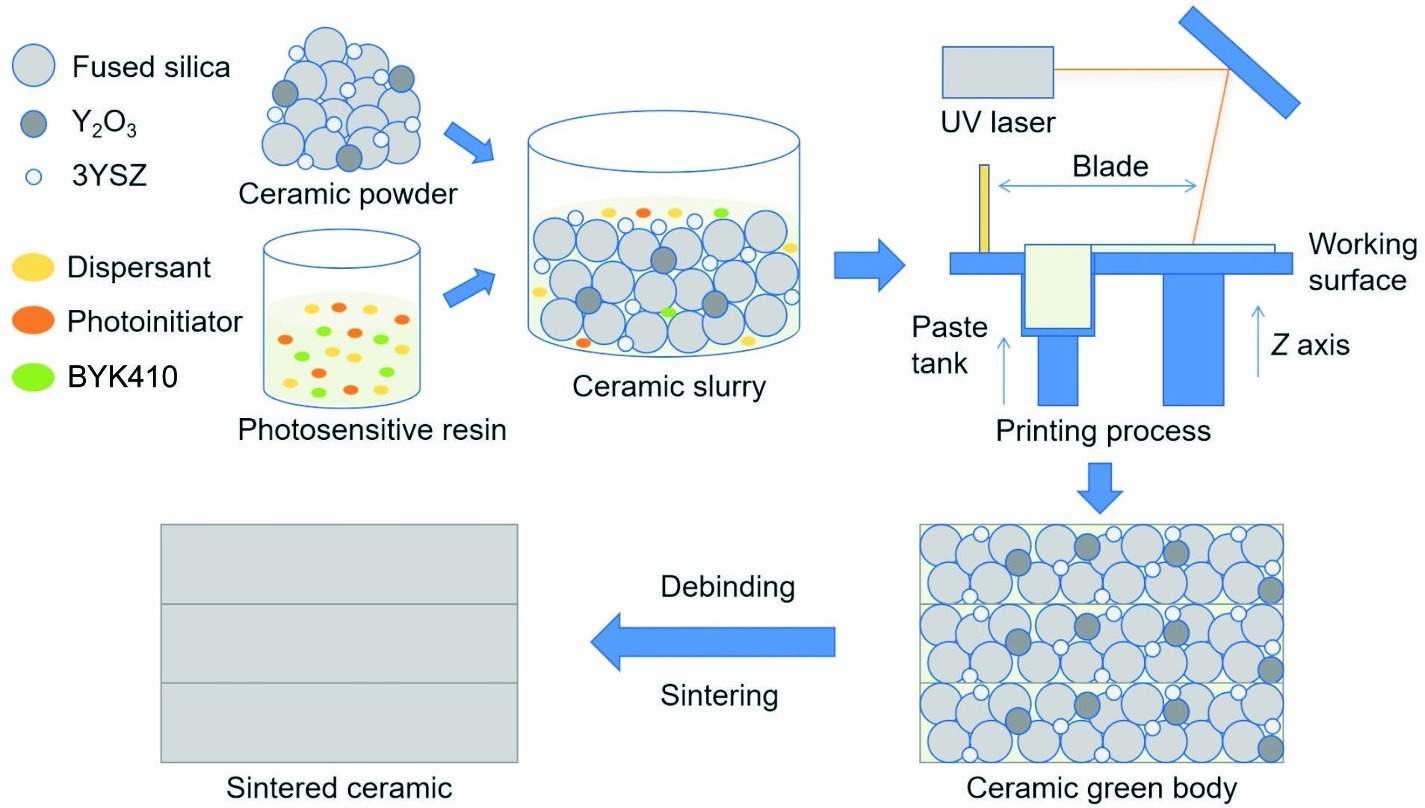
Ceramic cores are key to forming a cooling structure within the hollow blade cavities. The use of stereolithography (SL) 3D printing technology eliminates the need for moulds, facilitating the preparation of complex-shaped ceramic cores. In this study, silica-based ceramic cores incorporating nano-3YSZ (3mol.% yttria stabilised zirconia) and micron-sized Y2O3 were prepared via SL 3D printing ceramic technology to promote the formation of cristobalite and ZrSiO4, thereby improving the high-temperature properties. The flexural strength at 25 °C and 1,500 °C, deflection at 1,500 °C, shrinkage rate, and porosity of the core samples sintered at different temperatures (1,170 °C, 1,185 °C, 1,200 °C, 1,215 °C, and 1,230 °C) were tested and investigated. The mechanism underlying the high temperature performance of the cores was elucidated through analysis of cross-sectional morphology, element distribution, and phase constitution of the samples. As the sintering temperature increases, the shrinkage and flexural strength at 25 °C of the core rise, while the open porosity and deflection at 1,500 °C decrease. When the sintering temperature reaches 1,200 °C or higher, the 1,500 °C flexural strength can be measured, which increases as the sintering temperature rises. The core exhibits excellent creep resistance when sintered at temperatures of 1,200 °C and above. Considering the comprehensive performance requirements for the core, the sintering temperature of 1,200 °C was selected. At the sintering temperature of 1,200 °C, the core exhibits shrinkage rates of 3.76% (X), 3.38% (Y), and 3.95% (Z), alongside a flexural strength of 9.01 MPa at 25 °C and 32.15 MPa at 1,500 °C, and an open porosity of 26.39%. The deflection of the core at 1,500 °C is 0.15 mm, which helps to maintain the dimensional stability of the ceramic core during casting. XRD results indicate that samples fractured after 25 °C flexural strength test still contain amorphous quartz glass, alongside substantial quantities of yttria stabilized zirconia and Y2O3. Samples fractured after 1,500 °C flexural strength test exhibit significant crystallisation of amorphous quartz glass into cristobalite, with silica and 3YSZ combining to form ZrSiO4. Y2O3 as a network modifier of the glass network destroys the bridging oxygen in the silica-oxygen bond, thereby reducing the energy required for glass crystallisation and promoting the crystallisation reaction of quartz glass to form cristobalite. In addition, nano-3YSZ combines with SiO2 at high temperatures to form ZrSiO4. Since cristobalite and ZrSiO4 are crystals, both of them have strong creep resistance, thus improving the high temperature flexural strength and deformation resistance of the ceramic cores.
1. Introduction
Aero-engines are the core components that provide power source for aerospace, and their future focuses on improving the thrust-to-weight ratio [1]. Therefore, hollow turbine blades that determine the important performance of engines have become a top priority in research and development [2]. The ceramic core is the key to forming a complex cooling structure within the hollow turbine blade cavity [3]. It is usually required that the ceramic core has a low and stable shrinkage [4], a room temperature flexural strength of over 8 MPa [5], and an open porosity of over 20% to remove the core [6]. Since the ceramic core needs to be kept in molten metal at approximately 1,500 °C for 30 min during casting [7], the ceramic core needs to have excellent high-temperature properties, including the smallest possible deflection and appropriate high-temperature flexural strength [8].
At present, the internal cooling structure of hollow blades has developed from single counter flow air cooling to double wall ultra air cooling [9]. For the development of this new type of blades with complex structures, traditional core preparation methods such as gel injection molding, thermal injection molding require to prepare multiple sets of molds in advance [10], resulting in a long development and production cycle [11]. Therefore, an efficient ceramic core preparation method is urgently needed.
In recent years, additive manufacturing technology [12] (also known as 3D printing technology) has developed rapidly and has been applied to the production of various complex shaped parts [13]. 3D printing technology has the advantages of rapid forming, unrestricted moulding shapes, less material waste, and high dimensional accuracy of finished products [14]. At present, the most widely used 3D printing technology for ceramic materials is photopolymerization 3D printing ceramic technology [15], mainly including stereolithography.
Loading authentic research manuscript (Pages 1–5)...
Yue-ting Ma, Rui-long Yu, Ying-wei Zhou, Peng-wei Wang, Ren-xiao Zou, Tian-jiao Gao, Ming Kang (2025). High-temperature performance of silica ceramic cores with additives prepared by stereolithography 3D printing. China Foundry. https://doi.org/10.1007/s41230-025-4184-0
Research & Educational Purpose Only:The translations, structured abstracts, analytical annotations, and data reports provided by SinoTechIntel are intended exclusively for academic research, internal corporate R&D, and educational benchmarking. They do not constitute formal engineering, chemical safety, legal, or professional advice.
Copyright & Intellectual Property Notice: Original copyright of the underlying source articles and experimental data remains with the respective authors, institutions, and original publishing journals. SinoTechIntel claims intellectual property only over its proprietary translations, analytical syntheses, and AEO structured enhancements in accordance with international fair use and academic citation principles.
Frequently Asked Questions
What is the optimal sintering temperature for silica ceramic cores prepared by stereolithography 3D printing?
The optimal sintering temperature is 1,200 °C, as it provides a balance of high flexural strength (32.15 MPa at 1,500 °C), low deflection (0.15 mm), and adequate open porosity (26.39%) for core removal.
How do nano-3YSZ and Y2O3 additives improve the high-temperature performance of ceramic cores?
These additives promote the formation of cristobalite and ZrSiO4 during sintering. Cristobalite and ZrSiO4 are crystalline phases with strong creep resistance, which enhance the high-temperature flexural strength and deformation resistance of the cores.
What are the key advantages of using stereolithography 3D printing for ceramic cores?
Stereolithography 3D printing eliminates the need for molds, enabling rapid fabrication of complex-shaped ceramic cores with high dimensional accuracy and minimal material waste, which is crucial for advanced hollow turbine blades.
How does sintering temperature affect the properties of the ceramic cores?
As sintering temperature increases, shrinkage and room-temperature flexural strength increase, while open porosity and high-temperature deflection decrease. At temperatures above 1,200 °C, the high-temperature flexural strength becomes measurable and increases with temperature.
What is the significance of the deflection at 1,500 °C for ceramic cores?
Low deflection at 1,500 °C is critical for maintaining dimensional stability during casting. The cores sintered at 1,200 °C exhibit a deflection of only 0.15 mm, ensuring the accuracy of the cooling channels in the final blade.
Related Technical Papers & Translations
Pull-out capacity and energy absorption of cable bolts under impact loading
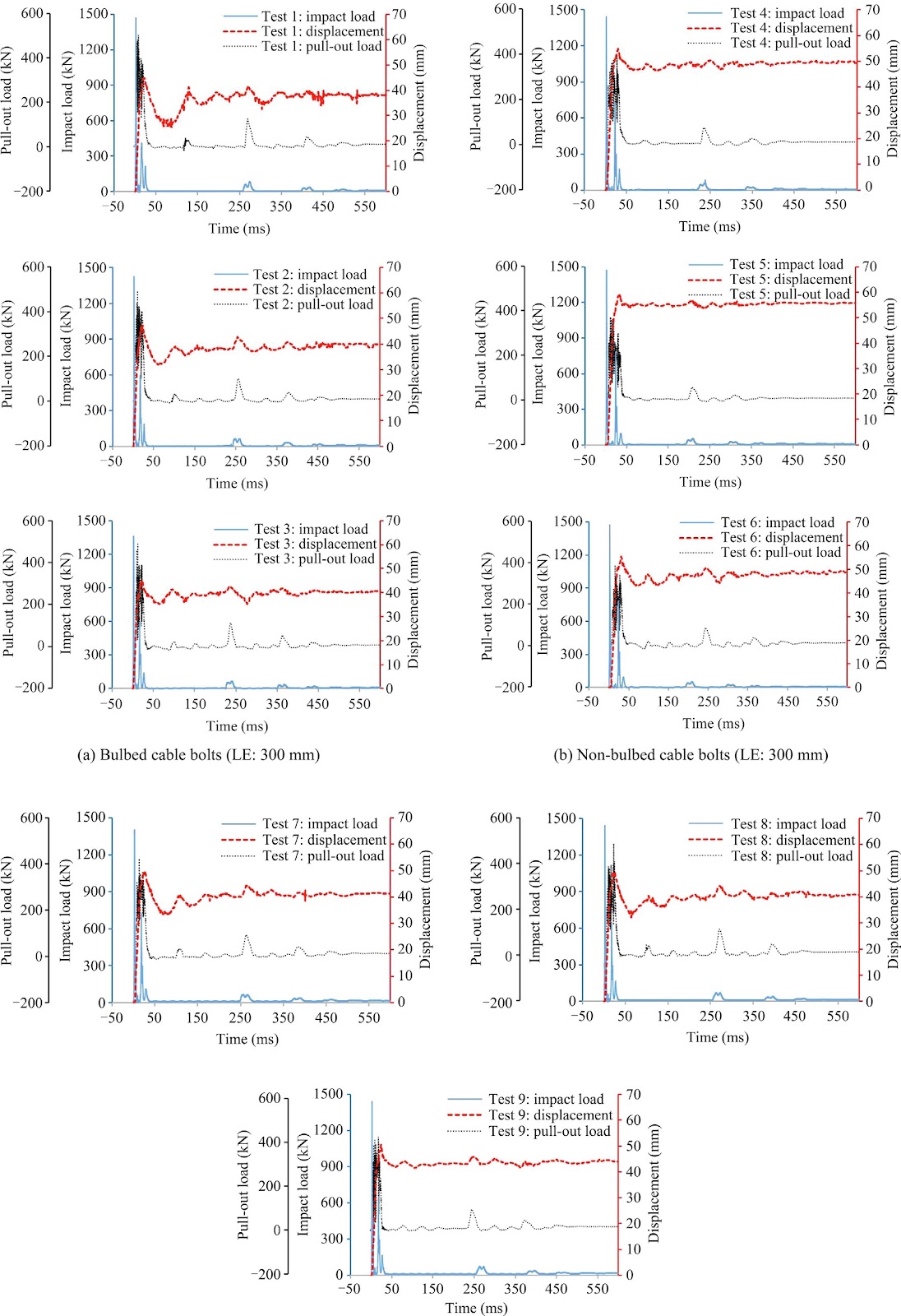
This study investigates the performance of high-strength cable bolts under impact loading conditions representative of rock bursts in underground environments. Although widely used, the dynamic behaviour of these cable bolts has received limited experimental attention, and their effectiveness in seismically active zones remains a subject of ongoing debate. To address this gap, a reverse pull-out test machine integrated with a drop hammer rig was employed. Tests were conducted on 70-t SUMO bulbed and non-bulbed cable bolts with encapsulation lengths of 300 and 450 mm, subjected to an impact energy of 14.52 kJ. Results indicate that non-bulbed cables, despite showing lower initial peak loads (average 218 vs. 328 kN for bulbed cables at 300 mm encapsulation), demonstrated superior energy absorption (average 11.26 vs. 8.75 kJ) and displacement capacity (average 48.40 vs. 36.25 mm). Increasing the encapsulation length for bulbed cables led to a reduction in initial peak load but improved displacement and energy absorption. The dominant failure mechanism was debonding at the cable-grout interface, characterised by frictional sliding and cable rotation. These findings provide new insights into the energy dissipation mechanisms of cables and support the development of more resilient ground support systems for dynamically active conditions.
Effect of eutectic content on microstructure and mechanical properties of Al-Zn-Mg-Cu alloys
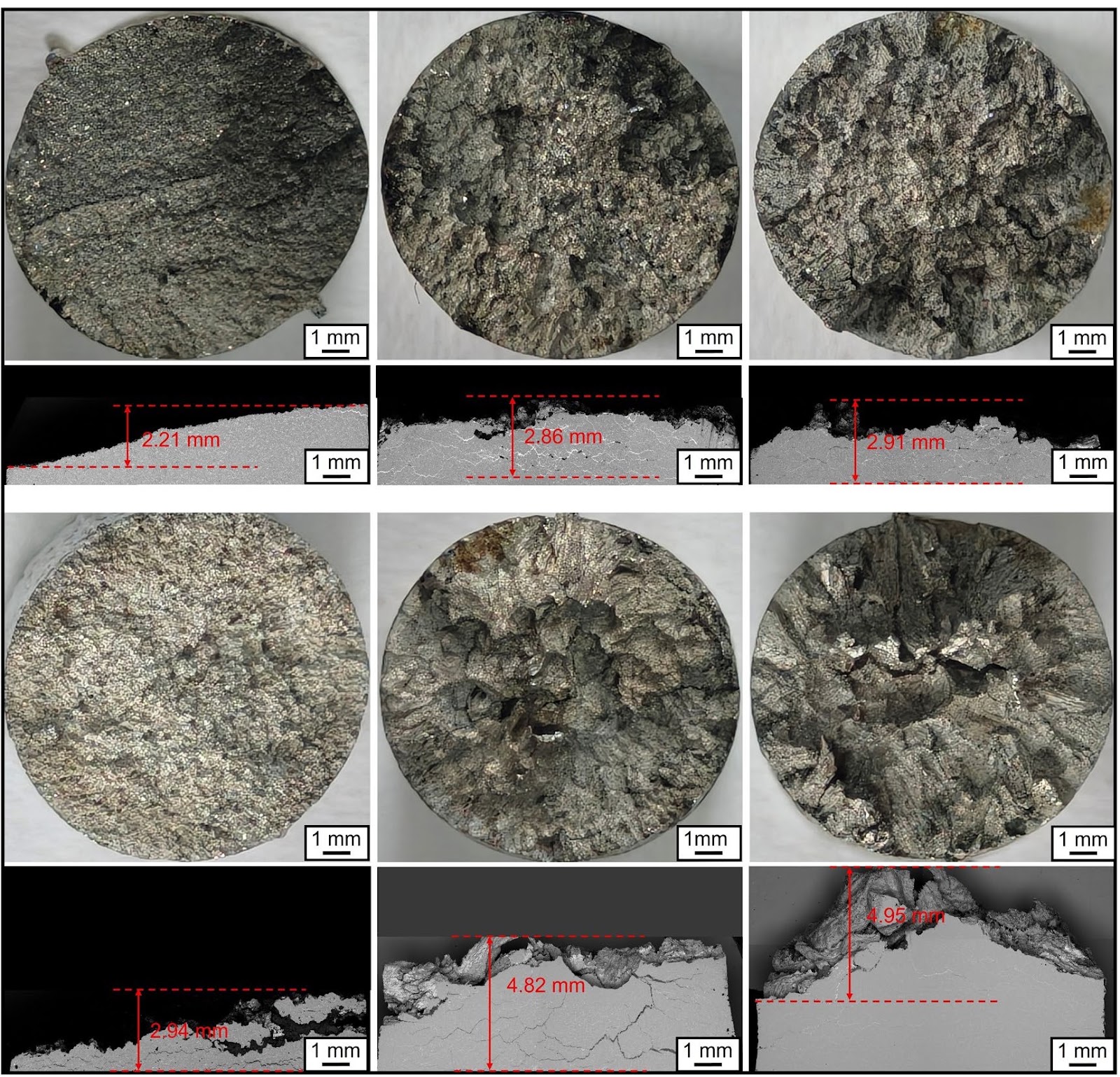
The 7xxx series aluminum alloys have emerged as a particularly promising class of lightweight structural materials. However, the inherent strength of these materials is primarily influenced by the content and type of alloying elements added during the manufacturing process, as well as casting defects. The present study investigated the effects of eutectics formed by solute atoms (Zn, Mg, and Cu), with equal mass ratios (Zn/Mg=2, Mg/Cu=3) but varying overall contents, on the liquid film thickness, crack propagation depth, and the mechanical properties of the Al-Zn-Mg-Cu alloy after heat treatment. The results from gravity casting indicate that the intergranular liquid film thickness increases with the increase of eutectic content. A thick intergranular liquid film in the casting can accommodate greater strain during grain contraction, thereby preventing liquid film rupture and subsequent hot tearing. Concurrently, during the solution treatment at 475 °C, the residual eutectic fraction in the Al-7Zn-3.5Mg-1.18Cu alloy diminishes from 9.1% at 10 h to 0.35% at 40 h. At 165 °C, the Al-6Zn-3.0Mg-1.0Cu alloy exhibits the optimal mechanical properties, with a peak aging tensile strength of 510 MPa and an elongation of 6.4%. The incorporation of lower concentrations of solute atoms (Zn, Mg, and Cu) serves to reduce the barrier to dislocation precipitation, thereby enhancing alloy plasticity. However, when the proportion of alloying elements exceeds the solubility limit of the α-Al matrix at specific heat treatment temperatures, coarse residual phases remain intergranular, thereby significantly impairing the mechanical properties of the alloy. This study provides a reference for the optimal addition level of the main strengthening elements in Al‑Zn‑Mg‑Cu alloys.
Achieving optimal strength-conductivity balance in cast Al-2.3Fe-Mg-Si alloys via Mg/Si ratio regulation
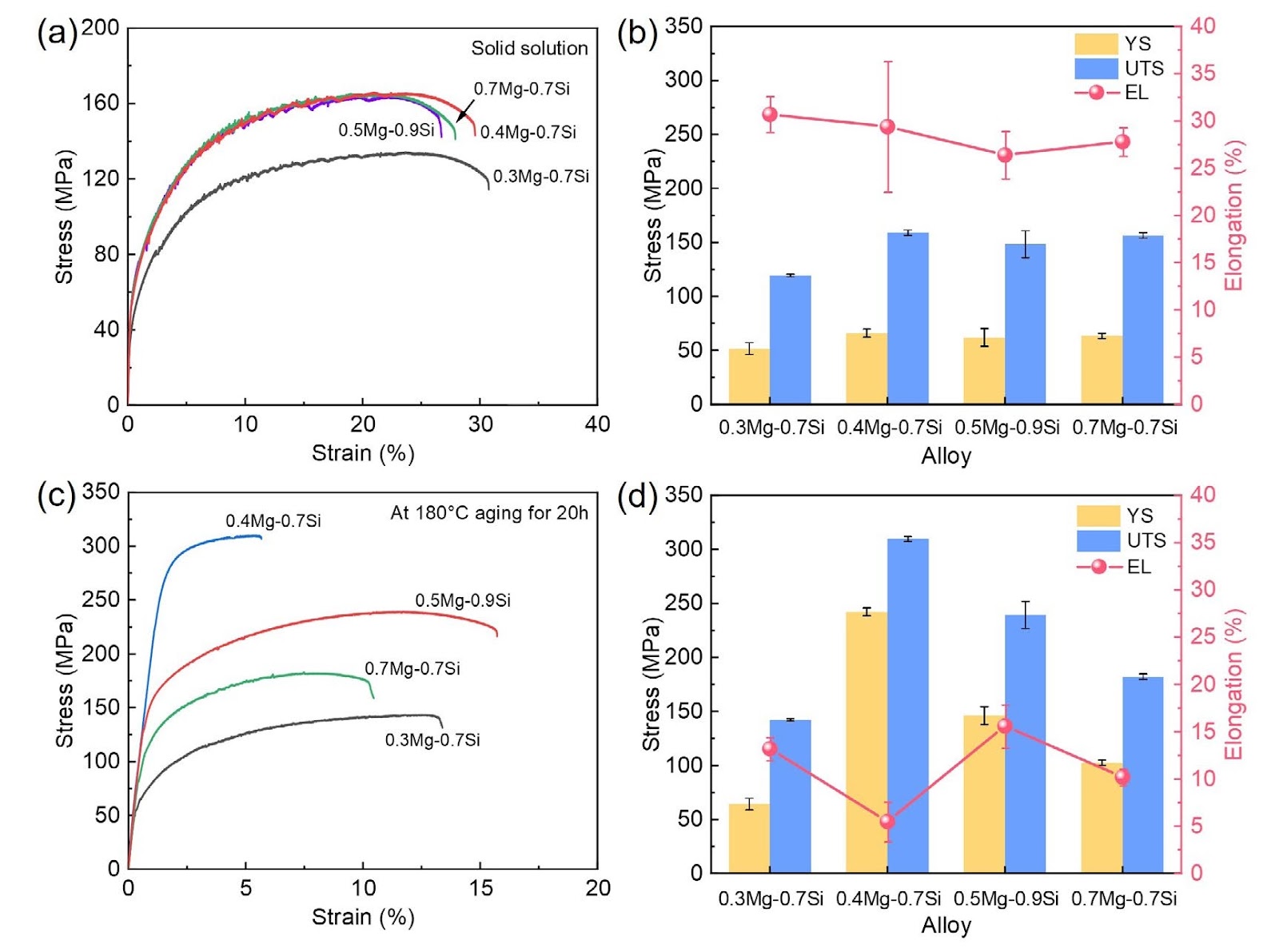
The Al-2.3Fe eutectic alloy is regarded as a promising substitute for Cu conductors in automotive motors owing to its excellent castability and low resistivity. However, its application is restricted by the mutually exclusive relationship between electrical conductivity and mechanical strength. The microstructure and mechanical properties of Al-2.3Fe alloy were modified through Mg/Si alloying combined with T6 heat treatment in this work, leading to the development of a high-performance cast Al-2.3Fe-Mg-Si alloy. In the Al-2.3Fe-0.40Mg-0.72Si (Mg/Si=0.56) alloy subjected to T6 treatment, an electrical conductivity of (52.5±0.6)% IACS is achieved, while the ultimate tensile strength is significantly enhanced to 309.5±5.6 MPa. The addition of Mg and Si brings about marked changes in the solidification process of the Al-2.3Fe alloy, resulting in considerable variations in both the morphology of the second phase and its phase constitution. The aging behavior of the alloy is governed by second phase and solid solubility. Through optimization of the Mg/Si ratio, the aging response can be effectively enhanced. At the ratio of Mg/Si=0.56, a balance is achieved between solid solubility and precipitation, while simultaneously minimizing the detrimental impact on electrical conductivity and reaching the best mechanical properties and electrical conductivity in peak-aged Al-2.3Fe-xMg-ySi alloy. This work providing valuable insights for developing advanced conductor materials.