Key Takeaways & Executive Findings
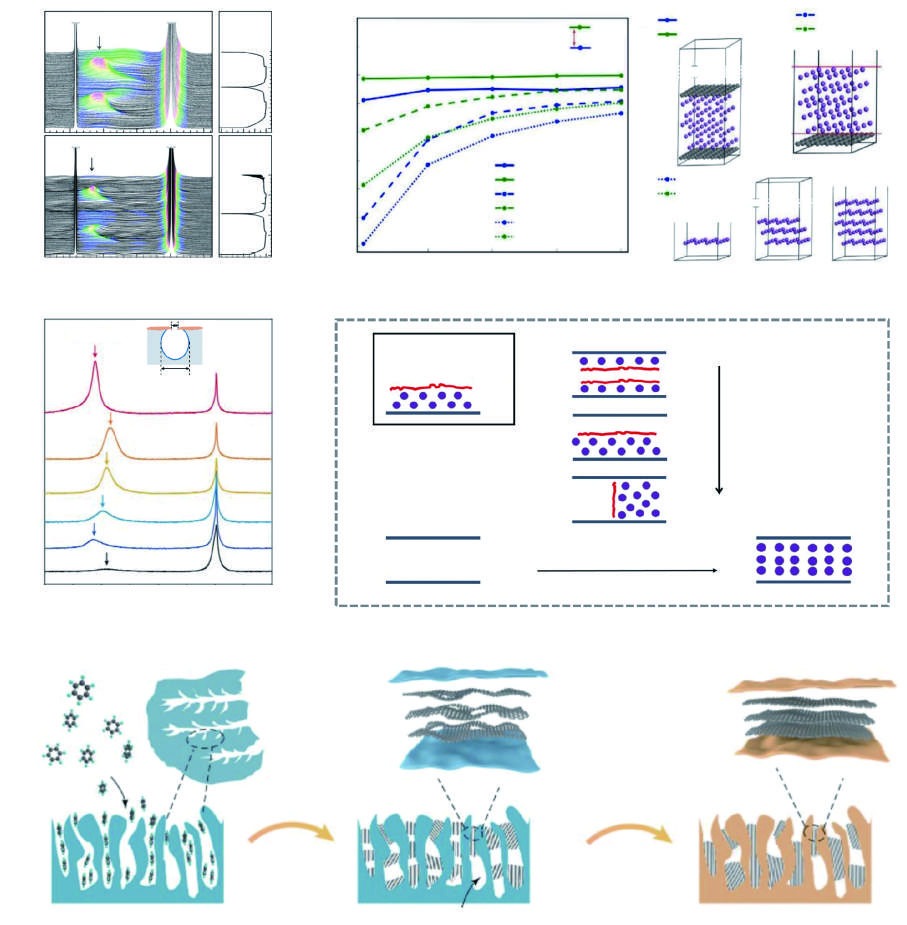
- •• Amorphous carbon anodes face a trade-off between high plateau capacity and high plateau potential, leading to sodium metal deposition and safety risks during fast charging. • The plateau sodium storage kinetics are governed by four elementary steps: liquid-phase diffusion, interfacial transport, charge transfer, and solid-state diffusion, with the rate-limiting step being the desolvation process at the electrode–electrolyte interface. • Strategies to enhance plateau kinetics include optimizing the solid electrolyte interphase (SEI) composition and structure, and engineering the carbon microstructure (e.g., pore size, surface chemistry, and graphitic ordering) to lower desolvation energy and improve sodium ion transport. • Achieving high energy density and fast charging simultaneously requires a balance between extending the low-potential plateau and maintaining a sufficiently high plateau potential to avoid sodium plating, which can be addressed by rational design of carbon materials and electrolyte formulations.
Abstract
Sodium-ion batteries (SIBs) have become the preferred next-generation non-resource-limited high-efficiency energy storage system due to their excellent fast-charging capability, low-temperature performance, and the abundance and low cost of sodium resources. Amorphous carbon materials, as key anode materials for the practical application of SIBs, possess advantages such as high initial Coulombic efficiency, low sodium insertion plateau, and good stability. However, current amorphous carbon anodes suffer from sluggish plateau sodium storage kinetics and the inability to simultaneously achieve high plateau capacity and high plateau potential, making it difficult to comprehensively balance fast-charging performance, energy density, and safety, which severely hinders the industrialization of SIBs. This review focuses on the key bottlenecks restricting the development of carbon anodes for SIBs, analyzes the kinetic behavior of each elementary step in the plateau sodium storage of amorphous carbon, and summarizes the research progress on constructing high-energy-density and fast-charging SIBs from two aspects: electrode–electrolyte interface and microstructure regulation of amorphous carbon. It also discusses the key factors affecting plateau sodium storage kinetics and plateau potential. Finally, it provides a brief commentary and outlook on the development direction and key challenges of carbon anodes for SIBs, aiming to promote the development of practical carbon anode materials for SIBs.
1. Introduction
Achieving the goals of 'carbon peak' and 'carbon neutrality' has become an important proposition of our time. Developing clean and efficient electrochemical energy storage systems and improving the absorption and storage capacity of renewable energy are crucial for the green and low-carbon transformation of energy. In addition, the transportation sector is currently the fastest-growing area of carbon emissions and has become the second-largest source of carbon emissions globally. Promoting the transformation of the transportation industry to new energy vehicles is an important support for achieving the 'dual carbon' goals. However, the market space for new energy vehicles is far from expectations. Despite the continuous iteration and updating of electrode materials and battery integration technologies in recent years, such as CATL's CTP module-less technology and BYD's 'blade battery', the energy density of lithium-ion batteries has been continuously improved, significantly alleviating 'range anxiety', but the fast-charging problem has not been properly solved. Compared with traditional fuel vehicles, new energy vehicles take a long time to charge, typically requiring 4-8 hours for a full charge. Moreover, fast charging can easily cause serious safety issues, becoming a core obstacle for users to choose new energy vehicles and severely limiting their future market expansion.
To address users' 'fast-charging anxiety', the United States Advanced Battery Consortium (USABC) has set a stage goal for fast charging of power batteries: reaching 80% state of charge within 15 minutes, with a battery pack power density of 300 kW. However, the best power density of commercially available power batteries currently only reaches 145 kW, still far from the stage goal. Therefore, developing a new generation of high-energy-density and fast-charging energy storage technology is key to solving the large-scale application problem of the current electric vehicle industry.
Loading authentic research manuscript (Pages 1–5)...
Jinghong Li, Yibo Zhang, Yiran Jia, Chenxu Yang, Yue Chu, Jun Zhang, Ying Tao, Quanhong Yang (2024). High-Energy-Density and Fast-Charging Sodium-Ion Battery Carbon Anodes: Progress and Challenges. New Carbon Materials. https://doi.org/10.1016/S1872-5805_N
Research & Educational Purpose Only:The translations, structured abstracts, analytical annotations, and data reports provided by SinoTechIntel are intended exclusively for academic research, internal corporate R&D, and educational benchmarking. They do not constitute formal engineering, chemical safety, legal, or professional advice.
Copyright & Intellectual Property Notice: Original copyright of the underlying source articles and experimental data remains with the respective authors, institutions, and original publishing journals. SinoTechIntel claims intellectual property only over its proprietary translations, analytical syntheses, and AEO structured enhancements in accordance with international fair use and academic citation principles.
Frequently Asked Questions
What are the main challenges for carbon anodes in sodium-ion batteries?
The main challenges are the sluggish plateau sodium storage kinetics and the trade-off between high plateau capacity and high plateau potential, which lead to sodium metal deposition and safety risks during fast charging, hindering the simultaneous achievement of high energy density, high power, and high safety.
How does the plateau potential affect the safety of sodium-ion batteries?
A lower plateau potential (closer to 0 V vs Na/Na+) increases the risk of sodium metal deposition during fast charging or at low temperatures, causing capacity decay and potential short circuits due to dendrite growth, thus compromising safety.
What strategies are proposed to improve plateau sodium storage kinetics?
Strategies include optimizing the electrode–electrolyte interface (e.g., SEI composition and structure) and engineering the carbon microstructure (e.g., pore size, surface chemistry, and graphitic ordering) to reduce desolvation energy and enhance sodium ion transport.
Why is the desolvation process considered a rate-limiting step?
The desolvation of sodium ions at the electrode–electrolyte interface is often the slowest step due to the high energy barrier for removing solvent molecules, which becomes more pronounced at high rates and low temperatures, limiting the overall kinetics.
What is the significance of the 'sieve-type carbon' model mentioned in the article?
The 'sieve-type carbon' model, proposed by the authors, uses porous carbon as a precursor and controlled chemical vapor deposition to tune pore openings, achieving a transition from no plateau to a long plateau with high capacity (up to 400 mAh g−1), demonstrating a strategy to enhance plateau capacity while maintaining a relatively high plateau potential.
Related Technical Papers & Translations

Design and optimization of a high-efficiency distillation process for cellulosic fuel ethanol integrated with thermal coupling and molecular sieve adsorption
To address the challenges of high energy consumption and prominent costs in the traditional three-columns distillation process for cellulosic fuel ethanol, a distillation—molecular sieve coupling separation process is proposed. This process integrates a three-column (crude distillation column, first distillation column, second distillation column) system with a 3A molecular sieve adsorption deep dehydration unit. A thermal coupling network is constructed via differential pressure design (steam from medium/high-pressure columns as mutual heat sources, reboiler liquid waste heat for feed preheating), and molecular sieve adsorption conditions are optimized. The study first performs a thermodynamic consistency test on the ethanol—water system, determines optimal non-random two-liquid (NRTL) model binary interaction parameters via experimental data regression for Aspen Plus simulation. Aiming at minimum total annual cost (TAC), Aspen Plus is used to optimize process parameters (theoretical tray number, feed location, reflux ratio, side-draw position, etc.). Economic analysis shows this process reduces CO2 emission costs by 27.56%, TAC by 15.58% (to 5.123 × 10⁶ USD·a-1), and increases ethanol purity to >99.6%, providing an effective solution for green, efficient separation.

A cohesion loss model for determining residual strength of deep bedded sandstone
Rock residual strength, as an important input parameter, plays an indispensable role in proposing the reasonable and scientific scheme about stope design, underground tunnel excavation and stability evaluation of deep chambers. Therefore, previous residual strength models of rocks established were reviewed. And corresponding related problems were stated. Subsequently, starting from the effects of bedding and whole life-cycle evolution process, series of triaxial mechanical tests of deep bedded s

Federated model with contrastive learning and adaptive control variates for human activity recognition
Recent attention to privacy issues demands a communication-safe method for training human activity recognition (HAR) models on client activity data. Federated learning (FL) has become a compelling technique to facilitate model training between the server and clients while preserving data privacy. However, classical FL methods often assume independent and identically distributed (IID) data among clients. This assumption does not hold true in practical scenarios. Human activity in real-world scena