Key Takeaways & Executive Findings
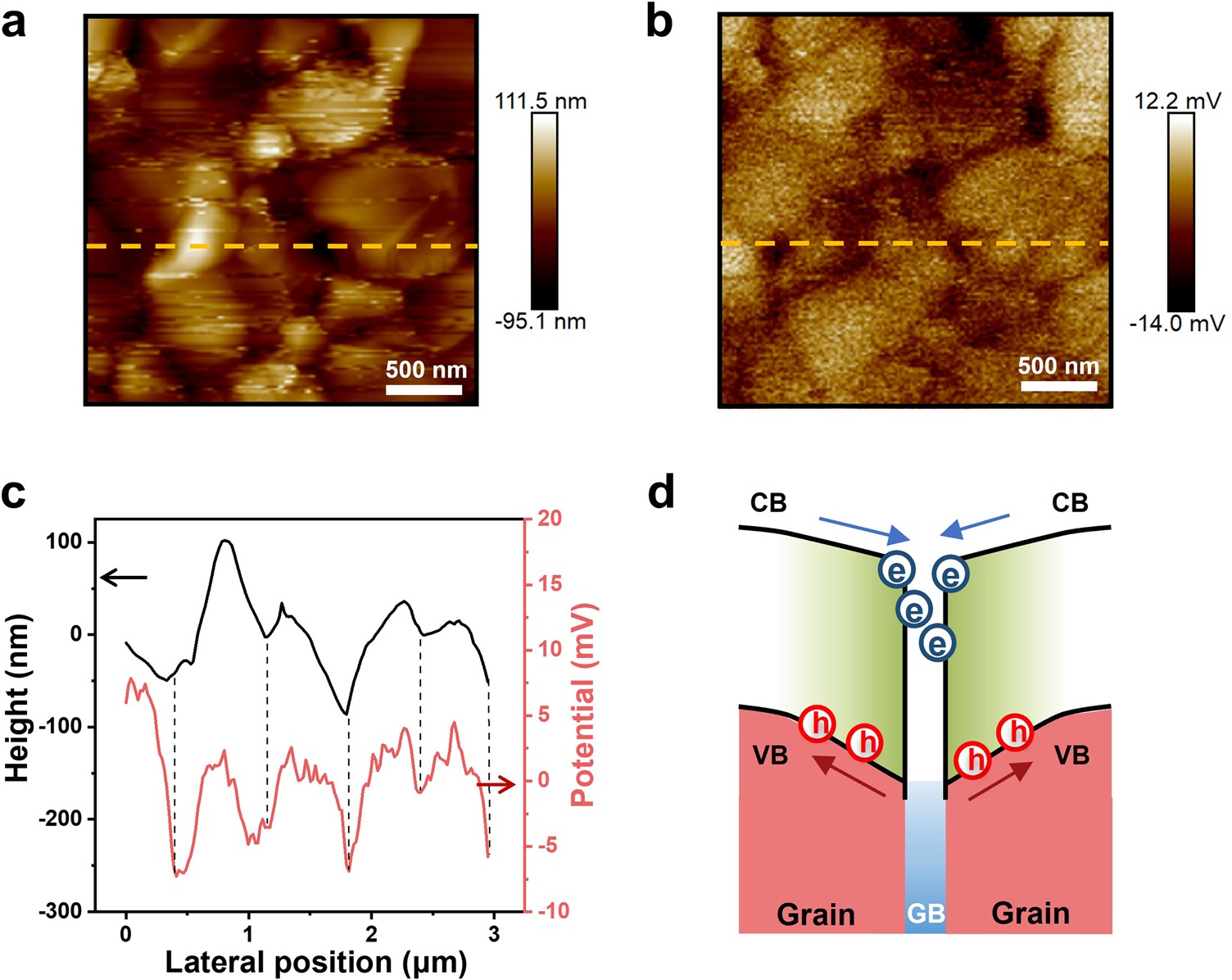
- •• Sub-micrometer-resolved photocurrent mapping in operational perovskite solar cells reveals enhanced photocurrent at grain boundaries compared to grain interiors. • Local pump-probe femtosecond transient absorption and Kelvin probe force microscopy measurements corroborate the presence of a built-in electric field near grain boundaries that promotes electron–hole separation and subsequent charge collection. • Grain boundaries in high-efficiency perovskite solar cells function as carrier transport channels, contrary to the traditional view that they are detrimental. • This study provides valuable insights for the rational design of high-efficiency perovskite solar cells by highlighting the beneficial role of grain boundaries.
Abstract
Historically seen as a limitation, grain boundaries (GBs) within polycrystalline metal halide perovskite (MHP) films are thought to impede charge transport, adversely impacting the efficiency of perovskite solar cells (PSCs). In this study, we employ home-built confocal photoluminescence microscopy, combined with photocurrent detection modules, to directly visualize the carrier dynamics in the MHP film of PSCs under real operating conditions. Our findings suggest that GBs in high-efficiency PSCs function as carrier transport channels, where a notable enhancement in photocurrent is observed. Femtosecond transient absorption and Kelvin probe force microscopy measurements further validate the existence of a built-in electric field in the vicinity of GBs, offering additional driving force for charge separation and establishing channels for swift carrier transport along the GBs, thereby expediting subsequent charge collection processes. This study elucidates the pivotal role of GBs in operational PSCs and provides valuable insights for the fabrication of high-efficiency PSCs.
1. Introduction
Polycrystalline semiconductor films are widely utilized in a variety of devices, including solar cells [1–6], thin-film transistors (TFT) [7–10], thin-film thermoelectric generators [11, 12], and microelectromechanical systems (MEMS) [13]. The performance of these devices hinges on the polycrystalline film’s microstructures, particularly grain boundaries (GBs) [14]—the interfaces that separate individual grains oriented in distinct crystallographic directions [15]. Metal halide perovskite solar cells (PSCs) have achieved fast progress in power conversion efficiency (PCE), which is largely determined by the quality of the metal halide perovskite (MHP) polycrystalline film that contains a large quantity of GBs [16, 17]. Comprehending the role of GBs in polycrystalline MHP film is imperative for the rational design of the active layer and, ultimately, for enhancing device performance [18–20].
In the realm of PSCs, the GBs in MHP films have predominantly been labeled as detrimental factors that influence device stability [21, 22] and efficiency [17, 23–25]. This perspective is primarily attributed to the markedly greater defect density at GBs in comparison with the bulk phase [23]. It is widely accepted that GBs inherently hinder charge transport through their scattering effects or trapping mechanisms, consequently exacerbating nonradiative recombination and leading to energy loss [25, 26]. However, PSCs using single-crystal MHP films or those with ultra-large grains did not achieve higher PCE as anticipated, suggesting that the impact of GBs may not be entirely negative [27, 28]. Actually, in other solar cells such as polycrystalline CdTe [6] and copper indium gallium selenide (CIGS) [29], certain specific GBs have been found to paradoxically enhance the efficiency of charge transport. Recent studies have proposed that GBs in MHP films may enhance the efficiency of PSCs by facilitating the separation of electrons and holes [30, 31] However, this conclusion was drawn from the investigation on isolated MHP films, rather than on fully assembled or operational PSCs. Therefore, the role of GBs (such as whether they facilitate carrier transport as in CdTe or CIGS solar cells) is indeed unclear in an operational PSC.
In this work, we employ home-built confocal photoluminescence (PL) microscopy, combined with a photocurrent detection module, to directly map the local photocurrent and PL in operational PSCs with different PCE values with a sub-micrometer spatial resolution.
Loading authentic research manuscript (Pages 1–5)...
Peng Xu, Pengfei Wang, Minhuan Wang, Fengke Sun, Jing Leng, Yantao Shi, Shengye Jin, Wenming Tian (2025). Grain Boundaries Contribute to the Performance of Perovskite Solar Cells by Promoting Charge Separations. Nano-Micro Letters. https://doi.org/10.1007/s40820-025-01795-0
Research & Educational Purpose Only:The translations, structured abstracts, analytical annotations, and data reports provided by SinoTechIntel are intended exclusively for academic research, internal corporate R&D, and educational benchmarking. They do not constitute formal engineering, chemical safety, legal, or professional advice.
Copyright & Intellectual Property Notice: Original copyright of the underlying source articles and experimental data remains with the respective authors, institutions, and original publishing journals. SinoTechIntel claims intellectual property only over its proprietary translations, analytical syntheses, and AEO structured enhancements in accordance with international fair use and academic citation principles.
Frequently Asked Questions
What is the main finding of this study?
The study reveals that grain boundaries in high-efficiency perovskite solar cells enhance photocurrent and facilitate charge separation, contrary to the traditional view that they are detrimental.
How was the photocurrent enhancement at grain boundaries observed?
Using home-built confocal photoluminescence microscopy combined with photocurrent detection, the researchers mapped local photocurrent and PL in operational PSCs with sub-micrometer resolution, showing enhanced photocurrent at grain boundaries.
What techniques were used to validate the built-in electric field near grain boundaries?
Femtosecond transient absorption and Kelvin probe force microscopy measurements were used to confirm the presence of a built-in electric field near grain boundaries that promotes electron-hole separation.
What is the significance of this study for perovskite solar cell fabrication?
The findings provide valuable insights for the rational design of high-efficiency perovskite solar cells by highlighting the beneficial role of grain boundaries in charge transport and collection.
What is the DOI of this paper?
The DOI is 10.1007/s40820-025-01795-0.
Related Technical Papers & Translations
Direct Repair of the Crystal Structure and Coating Surface of Spent LiFePO4 Materials Enables Superfast Li-Ion Migration
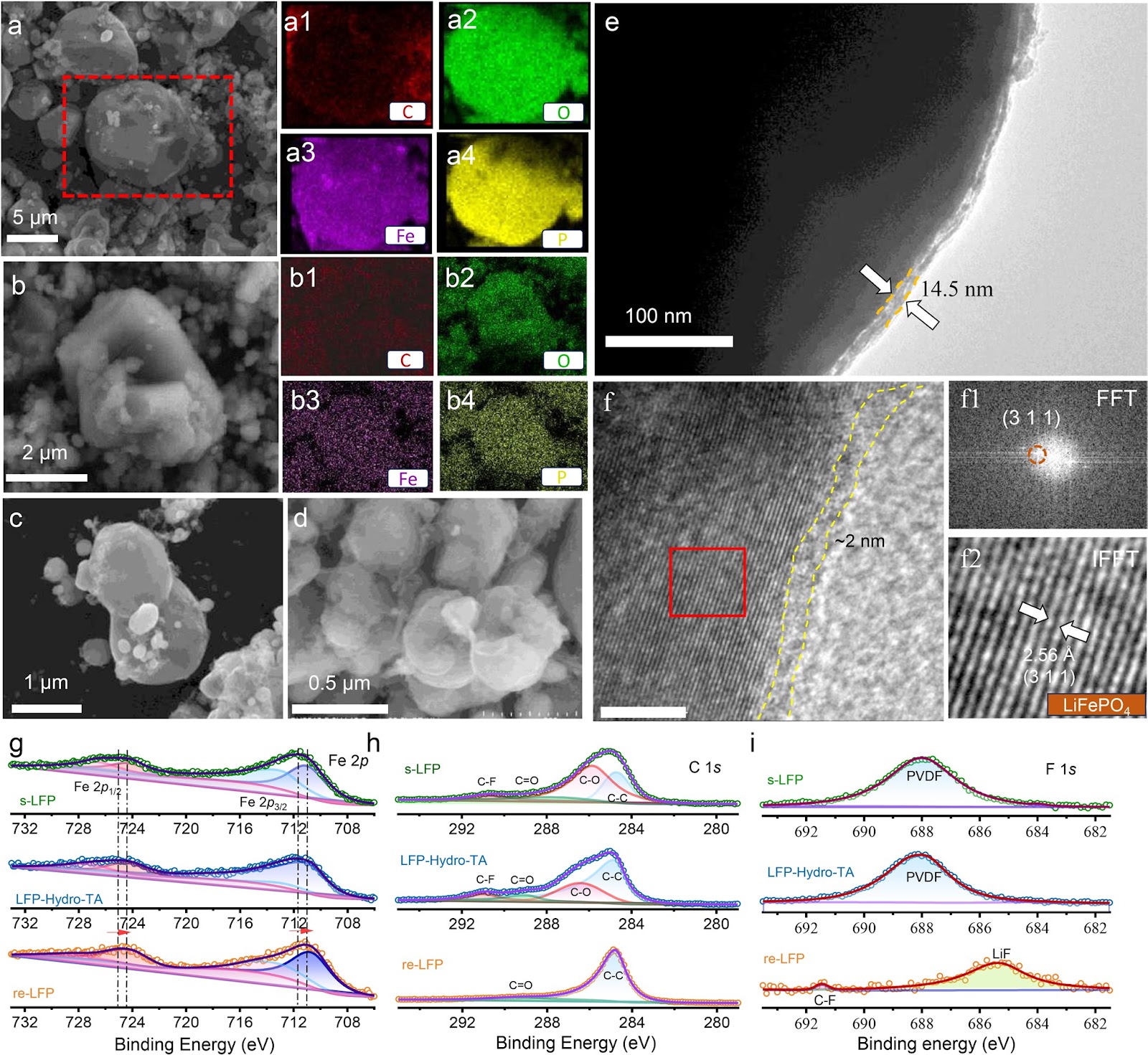
The rapid accumulation of spent LiFePO4 (LFP) cathodes from retired lithium-ion batteries necessitates the development of effective and environmental-friendly recycling strategies. In this context, direct regeneration has emerged as a promising approach for reclaiming LFP cathode materials, offering a streamlined pathway to restore their electrochemical functionality. We report an integrated regeneration protocol that simultaneously repairs the degraded crystal structure and reconstructs the damaged carbon coating in spent LFP. The regenerated cathode material had superfast lithium-ion diffusion kinetics and a stable cathode–electrolyte interface, giving a remarkable rate capability with specific capacities of 122 mAh g−1 at 5C and 106 mAh g−1 at 10C (1C = 170 mA g−1). It also maintained capacities of 110.7 mAh g−1 (5C) and 84.1 mAh g−1 (10C) after 400 cycles. It could be used in harsh environments and could be stably cycled at subzero temperatures (−10 and −20 °C) and in solid-state electrolyte batteries. Life cycle assessment combined with economic evaluation using the EverBatt model reveals that this direct regeneration approach has high economic and environmental benefits.
Oxide Semiconductor for Advanced Memory Architectures: Atomic Layer Deposition, Key Requirement and Challenges
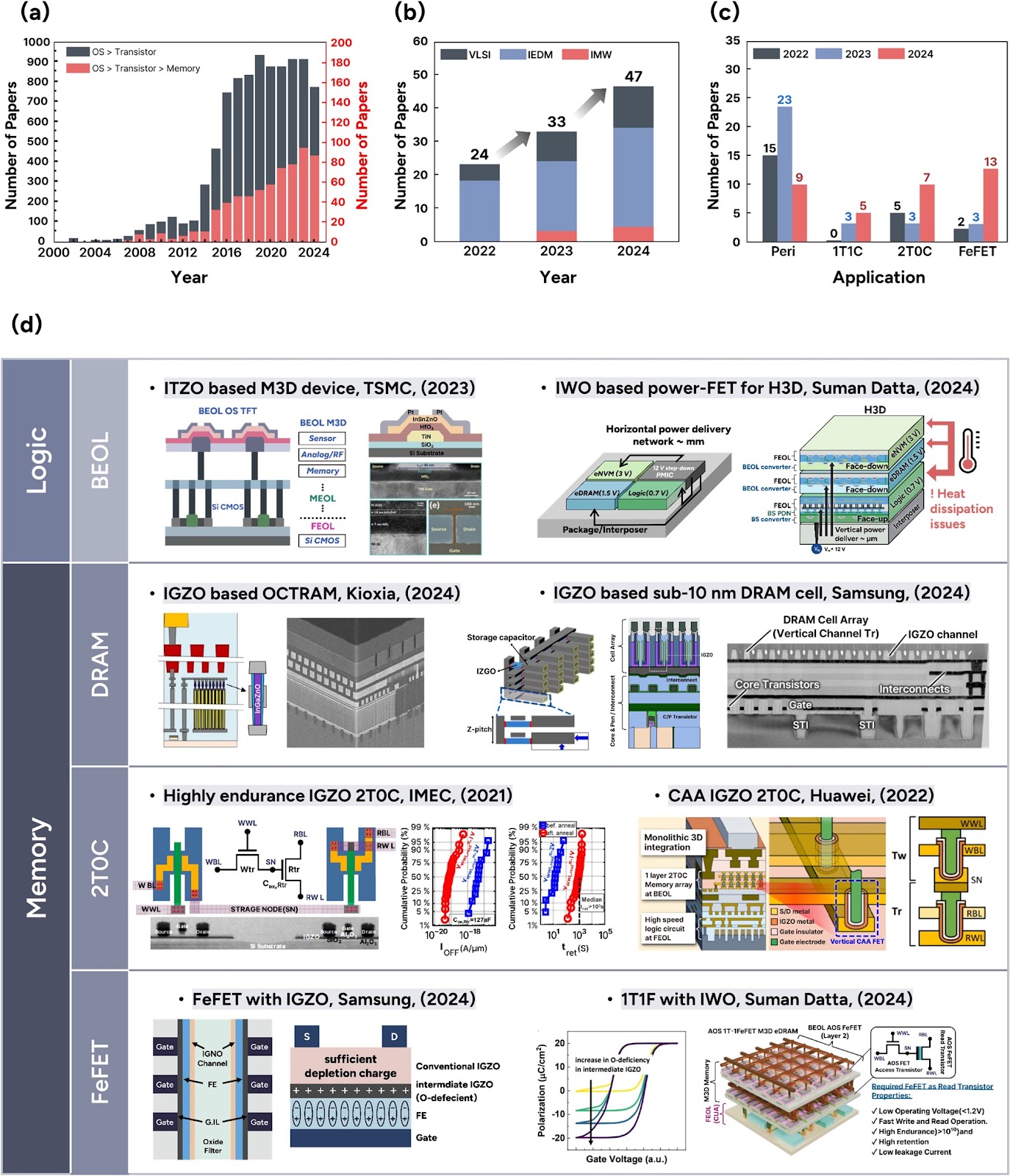
Oxide semiconductors (OSs), introduced by the Hosono group in the early 2000s, have evolved from display backplane materials to promising candidates for advanced memory and logic devices. The exceptionally low leakage current of OSs and compatibility with three-dimensional (3D) architectures have recently sparked renewed interest in their use in semiconductor applications. This review begins by exploring the unique material properties of OSs, which fundamentally originate from their distinct electronic band structure. Subsequently, we focus on atomic layer deposition (ALD), a core technique for growing excellent OS films, covering both basic and advanced processes compatible with 3D scaling. The basic surface reaction mechanisms—adsorption and reaction—and their roles in film growth are introduced. Furthermore, material design strategies, such as cation selection, crystallinity control, anion doping, and heterostructure engineering, are discussed. We also highlight challenges in memory applications, including contact resistance, hydrogen instability, and lack of p-type materials, and discuss the feasibility of ALD-grown OSs as potential solutions. Lastly, we provide an outlook on the role of ALD-grown OSs in memory technologies. This review bridges material fundamentals and device-level requirements, offering a comprehensive perspective on the potential of ALD-driven OSs for next-generation semiconductor memory devices.
Laser powder bed fusion of biodegradable Zn-4Cu alloy: Processing, microstructure and properties
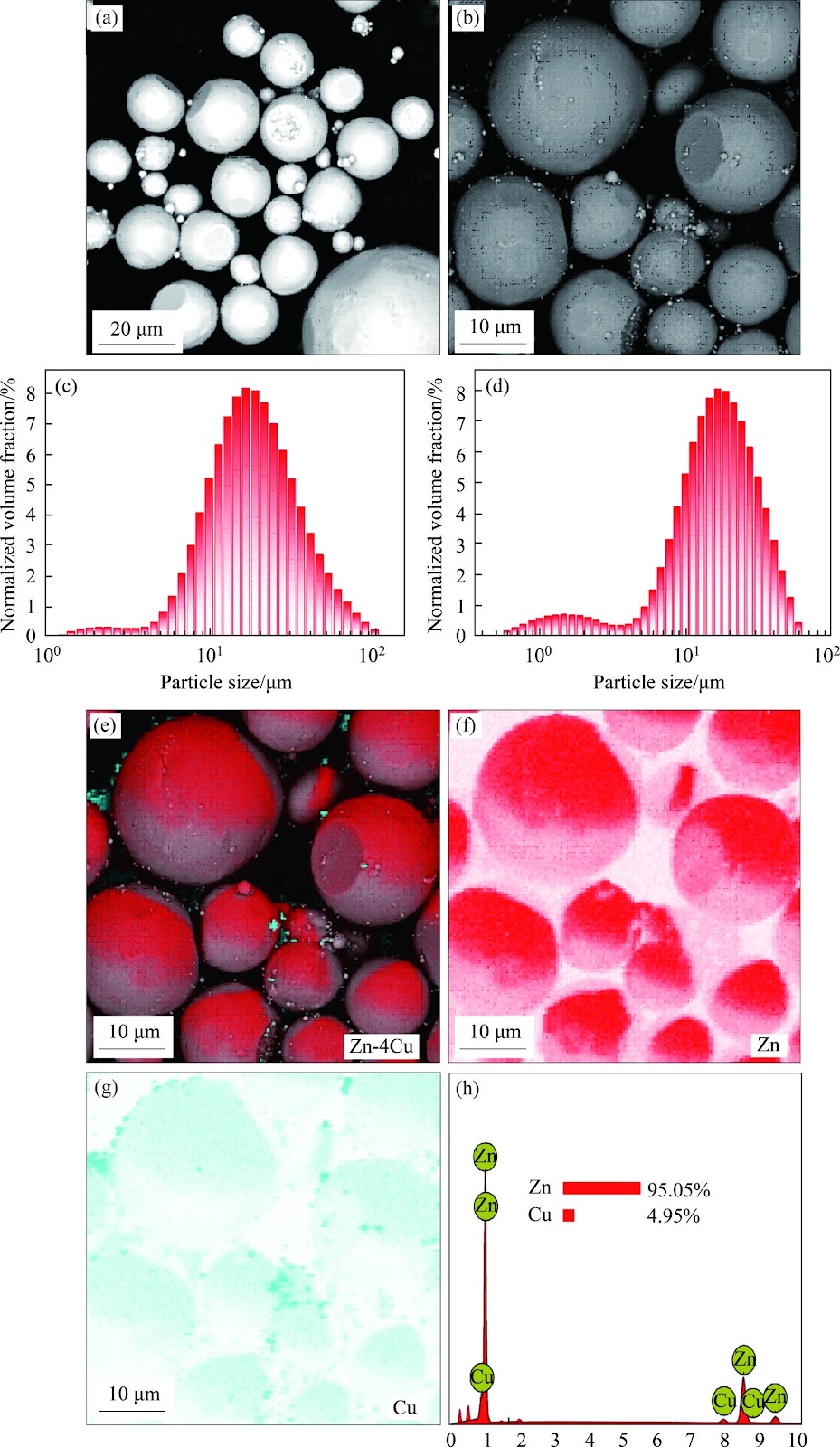
Zn's natural degradability and biocompatibility make it a promising candidate for implants, however, its mechanical properties remain insufficient for bone applications. In this study, the performance of Zn was enhanced by developing Zn-Cu alloys via laser powder bed fusion (LPBF). Optimal LPBF parameters for forming stable tracks were achieved by adjusting laser power and scanning speed. Under optimized conditions of 100 W and 100 mm/s, high-density (99.58%) Zn-Cu alloys with improved hardness (68.2HV) and yield strength (160 MPa) were achieved. These improvements are attributed to solid solution strengthening, segregation strengthening, and grain refinement. The Zn-Cu alloys also demonstrated favorable degradation behavior, with a rate of 0.16 mm/year. This degradation is primarily driven by micro-galvanic corrosion between the CuZn5 phase and Zn matrix, along with refined grains and increased grain boundary density. This work demonstrates a viable strategy for fabricating Zn-based implants with enhanced structural integrity and mechanical performance via LPBF.