Key Takeaways & Executive Findings
- •• A tunable initial coiling structure soft robot (ICSBot) has been developed by combining theoretical calculations, finite element analysis, and direct ink writing technology. • By mimicking the prey-handling behavior of snakes, ICSBot functions as a coiling gripper, capable of dynamic uncoiling, object grasping, and controlled release. • By simulating the multimodal movement of snakes, ICSBot demonstrated sidewinding locomotion to navigate unstructured environments, accordion locomotion to navigate narrow tubes, and winding climbing locomotion to traverse tubular structures under near-infrared light radiation. • The study provides a novel strategy for designing and fabricating coiling-structured soft robots, highlighting their potential in smart and multifunctional robotics.
Abstract
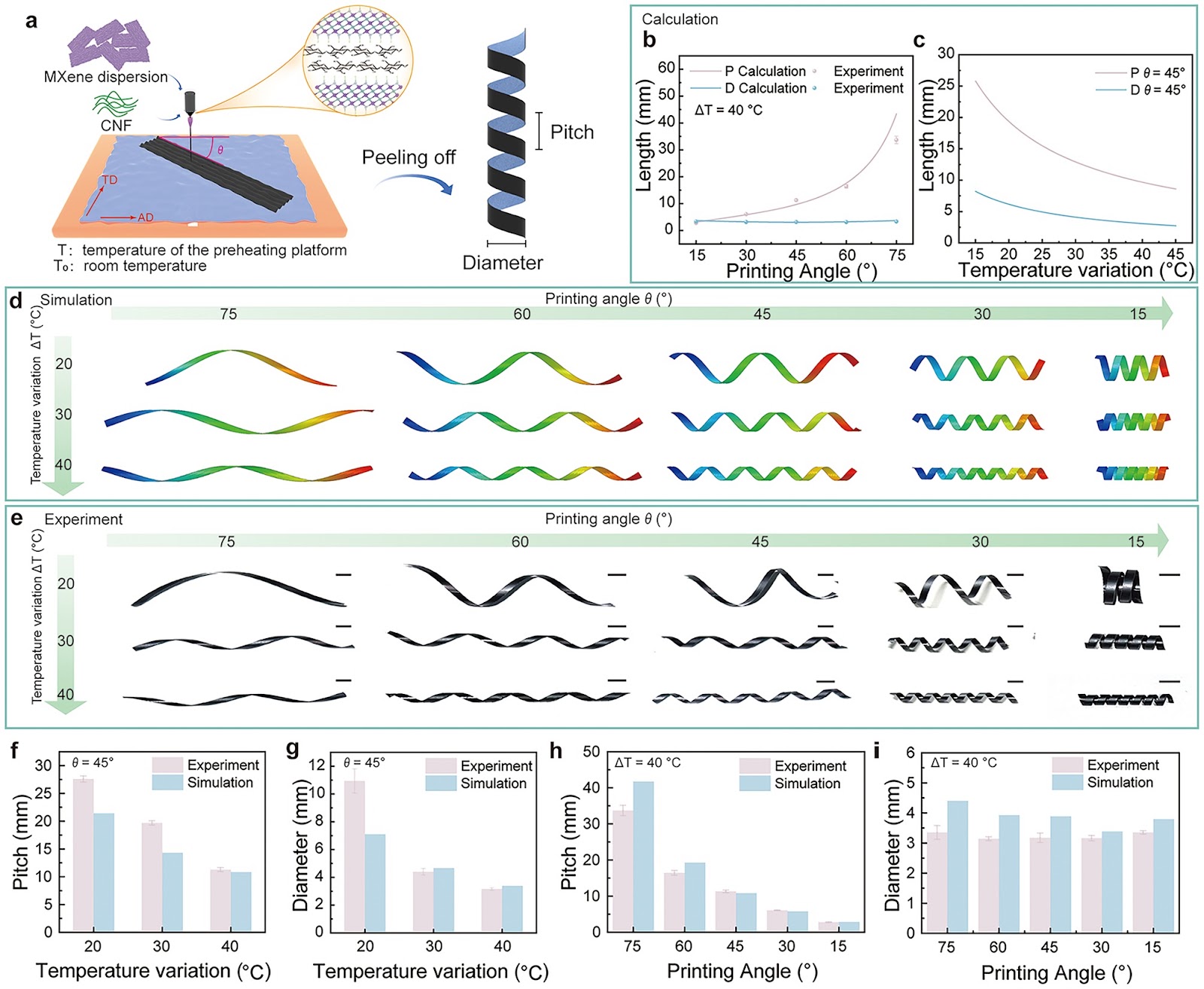
Currently, numerous biomimetic robots inspired by natural biological systems have been developed. However, creating soft robots with versatile locomotion modes remains a significant challenge. Snakes, as invertebrate reptiles, exhibit diverse and powerful locomotion abilities, including prey constriction, sidewinding, accordion locomotion, and winding climbing, making them a focus of robotics research. In this study, we present a snake-inspired soft robot with an initial coiling structure, fabricated using MXene-cellulose nanofiber ink printed on pre-expanded polyethylene film through direct ink writing technology. The controllable fabrication of initial coiling structure soft robot (ICSBot) has been achieved through theoretical calculations and finite element analysis to predict and analyze the initial structure of ICSBot, and programmable ICSBot has been designed and fabricated. This robot functions as a coiling gripper capable of grasping objects with complex shapes under near infrared light stimulation. Additionally, it demonstrates multi-modal crawling locomotion in various environments, including confined spaces, unstructured terrains, and both inside and outside tubes. These results offer a novel strategy for designing and fabricating coiling-structured soft robots and highlight their potential applications in smart and multifunctional robotics.
1. Introduction
Soft robots have drawn extensive inspiration from biological systems in nature, leveraging the diverse locomotion modes of various organisms [1, 2]. By mimicking these biological movements, numerous untethered soft robots have been developed to perform tasks in different environments, including insect larva-inspired jumping robots [3], monkey-inspired climbing robots [4], centipede-inspired multi-sensing crawling robots [5], and inchworm-inspired crawling robots [6]. Despite these advancements, existing biomimetic soft robots face significant limitations, such as restricted mobility, simple application scenarios, and reliance on single locomotion modes. This emphasizes the necessity of exploring biomimetic soft robots with enhanced mobility and broader applicability.
Among biological systems, snakes represent a particularly compelling source of inspiration due to their evolutionarily refined multimodal locomotion. Snakes demonstrate a range of adaptive movement strategies depending on environmental conditions [7, 8]. As shown in Fig. 1, the snake wraps itself around its prey, continuously applying pressure until the prey loses its ability to move. In addition, snakes can move quickly on the ground through sidewinding locomotion. This locomotion greatly increases the friction between the abdomen of the snake and the ground, ensuring smooth locomotion of the snake in unstructured environments. When snakes are in narrow caves, they move through accordion locomotion, which is achieved by first anchoring the posterior body of the snake to the substrate, then extending the body until a new anchoring point is established in the anterior body, and finally contracting the body to move towards the anterior body. In arboreal settings, winding climbing locomotion allows snakes to ascend by alternately wrapping and unwrapping their body around branches. These unique multimodal locomotion strategies and prey-handling behaviors provide valuable insights for designing soft robots capable of navigating complex, unstructured environments.
In recent years, biomimetic robots with snake-like locomotion have been widely studied [9, 10]. For instance, inspired by the rectilinear locomotion of snakes, a soft robot with an origami skin structure was designed, which can crawl through directional friction caused by surface buckling [11]. Inspired by the winding climbing locomotion of snakes, a climbing robot consisting of two winding mechanisms and one telescopic mechanism was designed, which can qu...
Loading authentic research manuscript (Pages 1–5)...
He Chen, Zhong Chen, Zonglin Liu, Jinhua Xiong, Qian Yan, Teng Fei, Xu Zhao, Fuhua Xue, Haowen Zheng, Huanxin Lian, Yunxiang Chen, Liangliang Xu, Qingyu Peng, Xiaodong He (2025). From Coils to Crawls: A Snake-Inspired Soft Robot for Multimodal Locomotion and Grasping. Nano-Micro Letters. https://doi.org/10.1007/s40820-025-01762-9
Research & Educational Purpose Only:The translations, structured abstracts, analytical annotations, and data reports provided by SinoTechIntel are intended exclusively for academic research, internal corporate R&D, and educational benchmarking. They do not constitute formal engineering, chemical safety, legal, or professional advice.
Copyright & Intellectual Property Notice: Original copyright of the underlying source articles and experimental data remains with the respective authors, institutions, and original publishing journals. SinoTechIntel claims intellectual property only over its proprietary translations, analytical syntheses, and AEO structured enhancements in accordance with international fair use and academic citation principles.
Frequently Asked Questions
What is the main innovation of this snake-inspired soft robot?
The main innovation is the development of a tunable initial coiling structure soft robot (ICSBot) that mimics snake behaviors, enabling multimodal locomotion (sidewinding, accordion, and winding climbing) and grasping capabilities under near-infrared light stimulation.
How is the ICSBot fabricated?
The ICSBot is fabricated using MXene-cellulose nanofiber ink printed on pre-expanded polyethylene film through direct ink writing technology, with theoretical calculations and finite element analysis to predict and control the initial coiling structure.
What locomotion modes can the ICSBot perform?
The ICSBot can perform sidewinding locomotion on unstructured terrains, accordion locomotion in narrow tubes, and winding climbing locomotion to traverse tubular structures, all under near-infrared light radiation.
What are the potential applications of this soft robot?
The robot has potential applications in smart and multifunctional robotics, including grasping objects with complex shapes, navigating confined spaces, and operating in unstructured environments, which could be useful in search-and-rescue, inspection, and biomedical fields.
What materials are used in the robot's fabrication?
The robot uses MXene-cellulose nanofiber ink and pre-expanded polyethylene film, which are printed via direct ink writing technology to achieve the desired coiling structure.
Related Technical Papers & Translations
Direct Repair of the Crystal Structure and Coating Surface of Spent LiFePO4 Materials Enables Superfast Li-Ion Migration
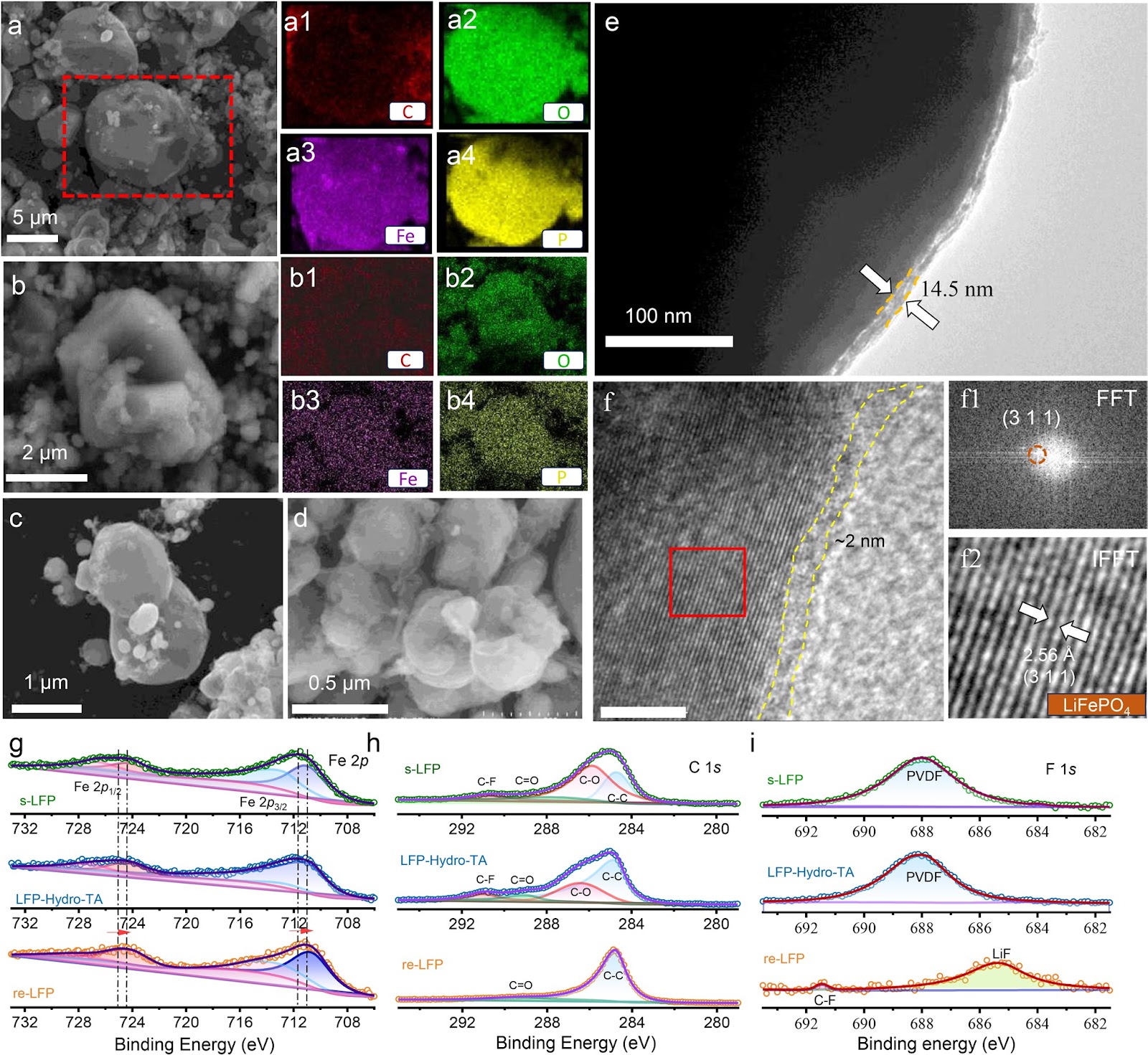
The rapid accumulation of spent LiFePO4 (LFP) cathodes from retired lithium-ion batteries necessitates the development of effective and environmental-friendly recycling strategies. In this context, direct regeneration has emerged as a promising approach for reclaiming LFP cathode materials, offering a streamlined pathway to restore their electrochemical functionality. We report an integrated regeneration protocol that simultaneously repairs the degraded crystal structure and reconstructs the damaged carbon coating in spent LFP. The regenerated cathode material had superfast lithium-ion diffusion kinetics and a stable cathode–electrolyte interface, giving a remarkable rate capability with specific capacities of 122 mAh g−1 at 5C and 106 mAh g−1 at 10C (1C = 170 mA g−1). It also maintained capacities of 110.7 mAh g−1 (5C) and 84.1 mAh g−1 (10C) after 400 cycles. It could be used in harsh environments and could be stably cycled at subzero temperatures (−10 and −20 °C) and in solid-state electrolyte batteries. Life cycle assessment combined with economic evaluation using the EverBatt model reveals that this direct regeneration approach has high economic and environmental benefits.
Oxide Semiconductor for Advanced Memory Architectures: Atomic Layer Deposition, Key Requirement and Challenges
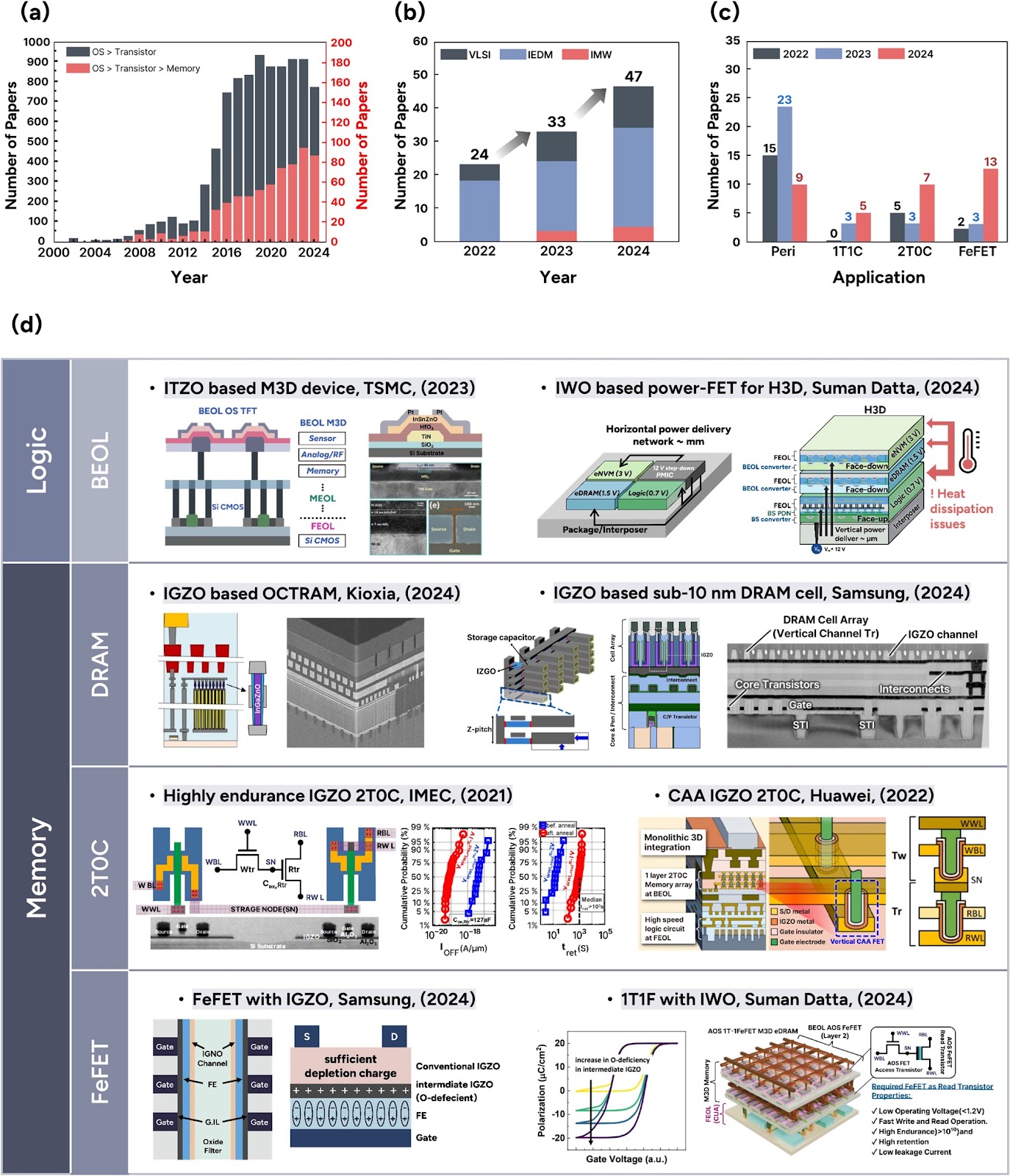
Oxide semiconductors (OSs), introduced by the Hosono group in the early 2000s, have evolved from display backplane materials to promising candidates for advanced memory and logic devices. The exceptionally low leakage current of OSs and compatibility with three-dimensional (3D) architectures have recently sparked renewed interest in their use in semiconductor applications. This review begins by exploring the unique material properties of OSs, which fundamentally originate from their distinct electronic band structure. Subsequently, we focus on atomic layer deposition (ALD), a core technique for growing excellent OS films, covering both basic and advanced processes compatible with 3D scaling. The basic surface reaction mechanisms—adsorption and reaction—and their roles in film growth are introduced. Furthermore, material design strategies, such as cation selection, crystallinity control, anion doping, and heterostructure engineering, are discussed. We also highlight challenges in memory applications, including contact resistance, hydrogen instability, and lack of p-type materials, and discuss the feasibility of ALD-grown OSs as potential solutions. Lastly, we provide an outlook on the role of ALD-grown OSs in memory technologies. This review bridges material fundamentals and device-level requirements, offering a comprehensive perspective on the potential of ALD-driven OSs for next-generation semiconductor memory devices.
Laser powder bed fusion of biodegradable Zn-4Cu alloy: Processing, microstructure and properties
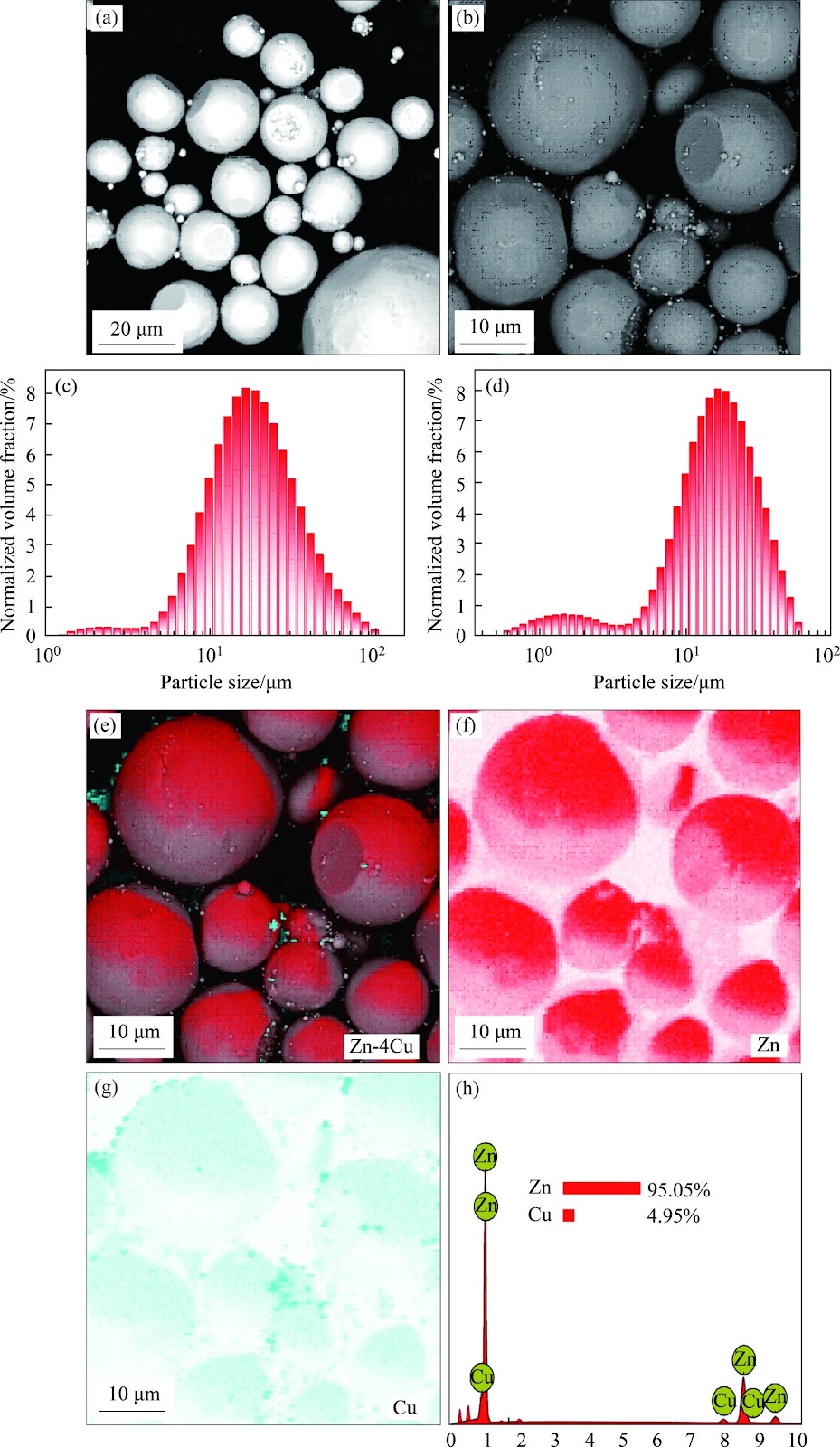
Zn's natural degradability and biocompatibility make it a promising candidate for implants, however, its mechanical properties remain insufficient for bone applications. In this study, the performance of Zn was enhanced by developing Zn-Cu alloys via laser powder bed fusion (LPBF). Optimal LPBF parameters for forming stable tracks were achieved by adjusting laser power and scanning speed. Under optimized conditions of 100 W and 100 mm/s, high-density (99.58%) Zn-Cu alloys with improved hardness (68.2HV) and yield strength (160 MPa) were achieved. These improvements are attributed to solid solution strengthening, segregation strengthening, and grain refinement. The Zn-Cu alloys also demonstrated favorable degradation behavior, with a rate of 0.16 mm/year. This degradation is primarily driven by micro-galvanic corrosion between the CuZn5 phase and Zn matrix, along with refined grains and increased grain boundary density. This work demonstrates a viable strategy for fabricating Zn-based implants with enhanced structural integrity and mechanical performance via LPBF.