Key Takeaways & Executive Findings
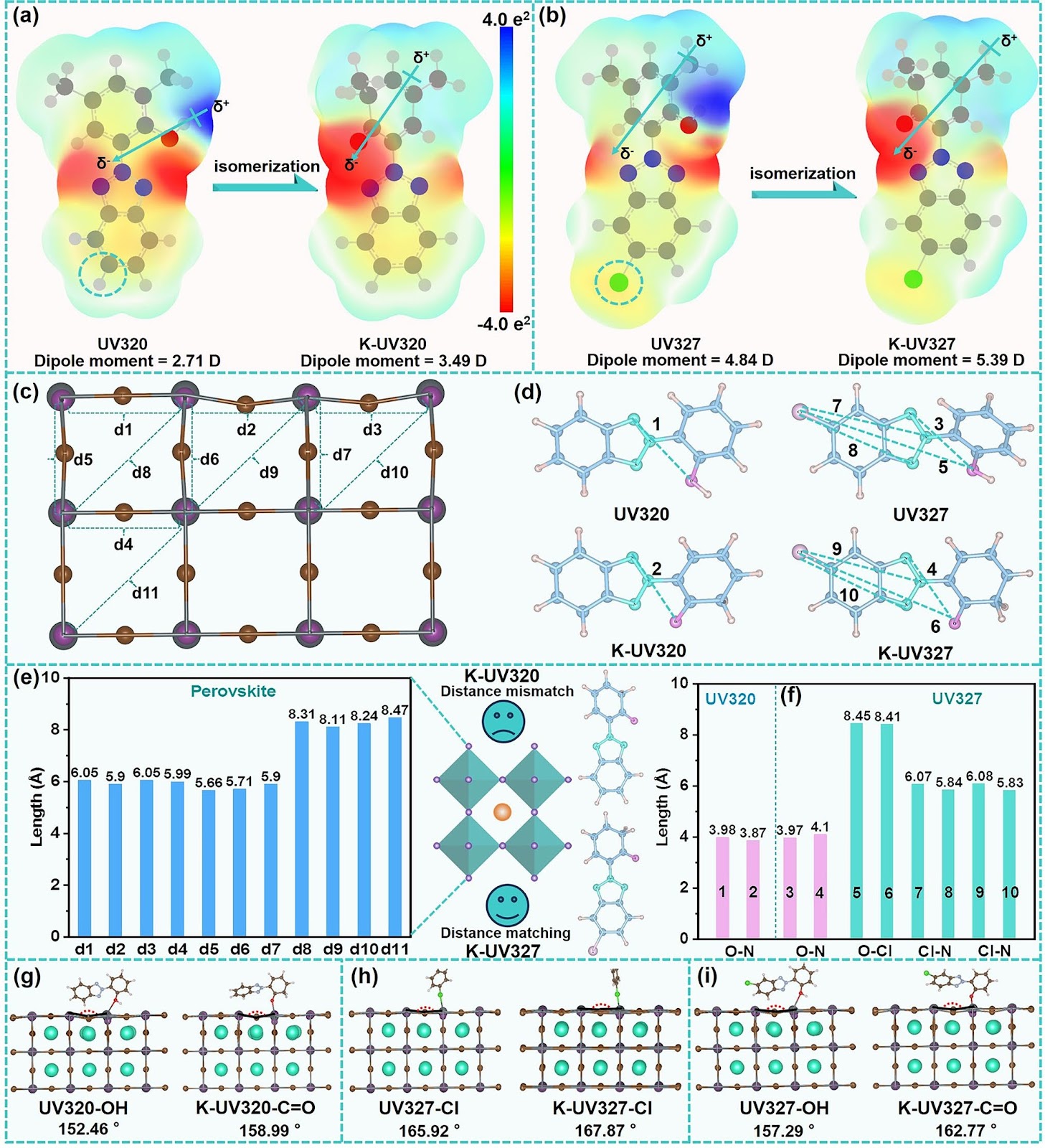
- •• The tautomeric UV absorbers (UV320/UV327) in perovskites reveal keto–enol tautomerism, generating extra –C=O groups to enhance defect passivation. • The Cl atom in UV327 drives tautomerism, providing superior –C=O coordination, which optimizes SnO2 energy bands/charge extraction, resulting in a dark current of 3.22 × 10⁻¹⁰ A cm−2 and a response time of 23.35/26.19 μs. • Unencapsulated devices maintained 3900 Hz response after 300 h humidity (40 ± 5% RH) and 30 h UV stress, with 94.14 dB linear dynamic range. • The study provides a mechanistic understanding of tautomeric passivators and demonstrates a strategy for enhancing UV stability and operational durability of perovskite photodetectors.
Abstract
UV-absorbing additives have recently been demonstrated to be effective interfacial modifiers that simultaneously enhance the UV stability and crystallization of halide perovskite. However, the underlying mechanisms concerning UV absorption, defect passivation, and efficacy optimization of these additives remain unresolved. Herein, two UV tautomeric absorbers (UV320 and UV327) are selected as defect-passivators for perovskites. The keto–enol tautomeric evolution processes and corresponding defect passivation performance/mechanism of both the original molecules and their tautomers are thoroughly compared and elucidated through experimental characterizations and density functional theory calculations. The additional carbonyl (–C=O) groups generated through the keto–enol tautomeric process triggered by the Cl atom in UV327 ultimately provide superior chemical coordination and enhanced defect-passivation capability compared to the original counterparts. Moreover, the versatility of K-UV327 is further demonstrated by its optimization of SnO2 film quality, interfacial energy band alignment, charge extraction efficiency, and defect state suppression. The photodetector optimized by UV327’s tautomer achieves an ultralow dark current density of 3.22 × 10⁻¹⁰ A cm−2, an enhanced linear dynamic range of 94.14 dB, and a fast response time of 23.35/26.19 μs. Notably, unencapsulated devices maintain a stable response at 3900 Hz following 300 h exposure to 40% ± 5% relative humidity and 30 h UV irradiation.
1. Introduction
Due to their outstanding physical properties, all-inorganic lead halide perovskites with the chemical formula CsPbX3 have attracted significant attention for optoelectronic applications, such as solar cells [1–7], light-emitting diodes (LEDs) [8–10], photodetectors (PDs) [11–20], lasers, and imaging [21, 22]. Among these, PDs, which convert light into electrical signals, are essential for optical communication, biomedicine, space exploration, and imaging [23]. Nevertheless, due to the chemical instability of perovskites under moisture, light, and heat exposure, solution-processed perovskite-based PDs have not achieved the widespread adoption initially predicted by the industry [24, 25]. One primary source of instability stems from the presence of numerous defects in perovskite lattices, including uncoordinated Pb2+, halogen vacancies (VX), and Pb-I antisites (PbI3−), which act as non-radiative recombination centers and ionic migration pathways, ultimately degrading device performance [2–4, 14, 26].
Leveraging Lewis acid–base interactions and hydrogen bonding, incorporating Lewis base-functionalized electron-donating organic molecules (e.g., –CN, –NH2, –Cl, –C=O) into perovskite films remains an effective and widely used approach for trap-state passivation [1–4, 24, 27–30]. These functional groups can donate lone pair electrons to undercoordinated positive charge centers, such as Lewis acidic Pb2+, forming coordinate bonds and reducing trap states. Notably, bifunctional Lewis base/proton-donor molecules (e.g., –OH, –NH2) exhibit strong passivation via coordinating undercoordinated Pb2+, forming H-bonds with I−, and passivating the other cationic and anionic defects. Furthermore, when engineered into a conjugated molecular framework, particularly aromatic systems, this dual functionality significantly amplifies passivation effectiveness through synergistic π-π conjugation between carbon–carbon double bonds (–C=C) and p-π conjugation linking –C=C to carbonyl (–C=O) or imine (–C=N) groups. Additionally, incorporating extended conjugated system molecular structures can also further enhance the stability of the passivator. However, the encapsulated devices remain susceptible to prolonged UV exposure, which leads to perovskite decomposition and performance degradation [31–36]. Consequently, significant efforts focus on the strategi
Loading authentic research manuscript (Pages 1–5)...
Yong Wang, Guangsheng Liu, Feng Lin, Yuqin Hu, Niu Lai, Junhong Lv, Shuming Ye, Jie Yang, Rongfei Wang, Feng Qiu, Yu Yang, Wenhua Zhang, Chong Wang (2026). Enhancing Ultraviolet Stability and Operational Durability of Perovskite Photodetectors by Incorporating Chlorine into Thermally-Switchable Tautomeric Passivators. Nano-Micro Letters. https://doi.org/10.1007/s40820-025-02015-5
Research & Educational Purpose Only:The translations, structured abstracts, analytical annotations, and data reports provided by SinoTechIntel are intended exclusively for academic research, internal corporate R&D, and educational benchmarking. They do not constitute formal engineering, chemical safety, legal, or professional advice.
Copyright & Intellectual Property Notice: Original copyright of the underlying source articles and experimental data remains with the respective authors, institutions, and original publishing journals. SinoTechIntel claims intellectual property only over its proprietary translations, analytical syntheses, and AEO structured enhancements in accordance with international fair use and academic citation principles.
Frequently Asked Questions
What is the main contribution of this paper?
The paper introduces a novel approach using tautomeric UV absorbers (UV320 and UV327) as defect passivators for perovskite photodetectors, demonstrating that the Cl atom in UV327 triggers keto-enol tautomerism, generating additional carbonyl groups that enhance defect passivation and improve device performance.
How does the Cl atom in UV327 improve device performance?
The Cl atom in UV327 drives the tautomeric process, leading to the formation of superior –C=O coordination groups. This optimizes the SnO2 energy band alignment and charge extraction, resulting in ultralow dark current, high linear dynamic range, and fast response times.
What are the key performance metrics achieved?
The optimized photodetector achieves a dark current density of 3.22 × 10⁻¹⁰ A cm−2, a linear dynamic range of 94.14 dB, and a response time of 23.35/26.19 μs. Unencapsulated devices maintain stable response at 3900 Hz after 300 h humidity and 30 h UV stress.
What is the significance of the unencapsulated device stability?
The unencapsulated devices maintained stable performance under harsh conditions (40% ± 5% RH and UV irradiation), indicating that the tautomeric passivation strategy effectively enhances the operational durability of perovskite photodetectors without additional encapsulation.
What methods were used to elucidate the mechanism?
The study combined experimental characterizations and density functional theory (DFT) calculations to compare the keto-enol tautomeric evolution and defect passivation performance of the original molecules and their tautomers, providing a thorough mechanistic understanding.
Related Technical Papers & Translations
Direct Repair of the Crystal Structure and Coating Surface of Spent LiFePO4 Materials Enables Superfast Li-Ion Migration
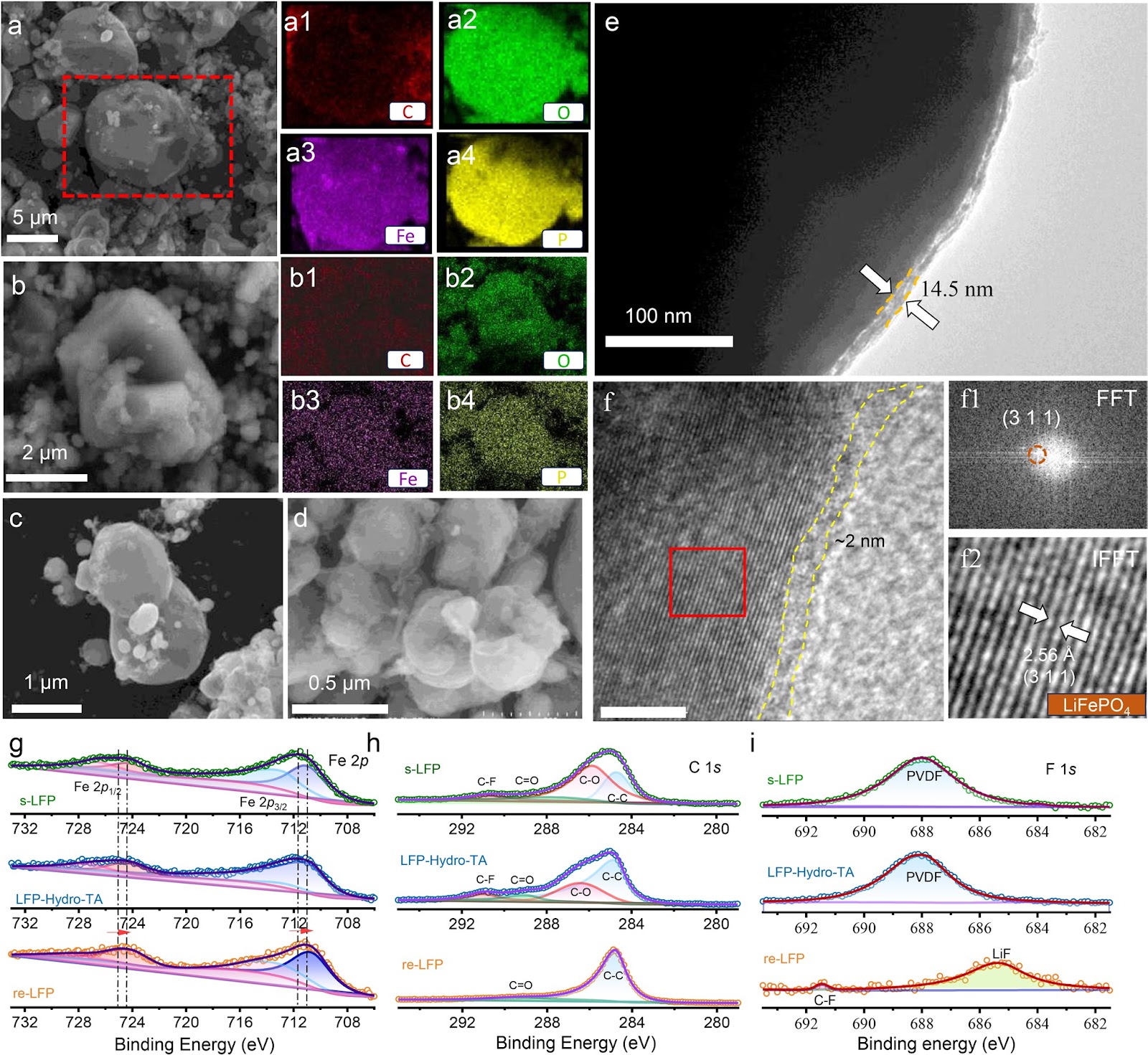
The rapid accumulation of spent LiFePO4 (LFP) cathodes from retired lithium-ion batteries necessitates the development of effective and environmental-friendly recycling strategies. In this context, direct regeneration has emerged as a promising approach for reclaiming LFP cathode materials, offering a streamlined pathway to restore their electrochemical functionality. We report an integrated regeneration protocol that simultaneously repairs the degraded crystal structure and reconstructs the damaged carbon coating in spent LFP. The regenerated cathode material had superfast lithium-ion diffusion kinetics and a stable cathode–electrolyte interface, giving a remarkable rate capability with specific capacities of 122 mAh g−1 at 5C and 106 mAh g−1 at 10C (1C = 170 mA g−1). It also maintained capacities of 110.7 mAh g−1 (5C) and 84.1 mAh g−1 (10C) after 400 cycles. It could be used in harsh environments and could be stably cycled at subzero temperatures (−10 and −20 °C) and in solid-state electrolyte batteries. Life cycle assessment combined with economic evaluation using the EverBatt model reveals that this direct regeneration approach has high economic and environmental benefits.
Oxide Semiconductor for Advanced Memory Architectures: Atomic Layer Deposition, Key Requirement and Challenges
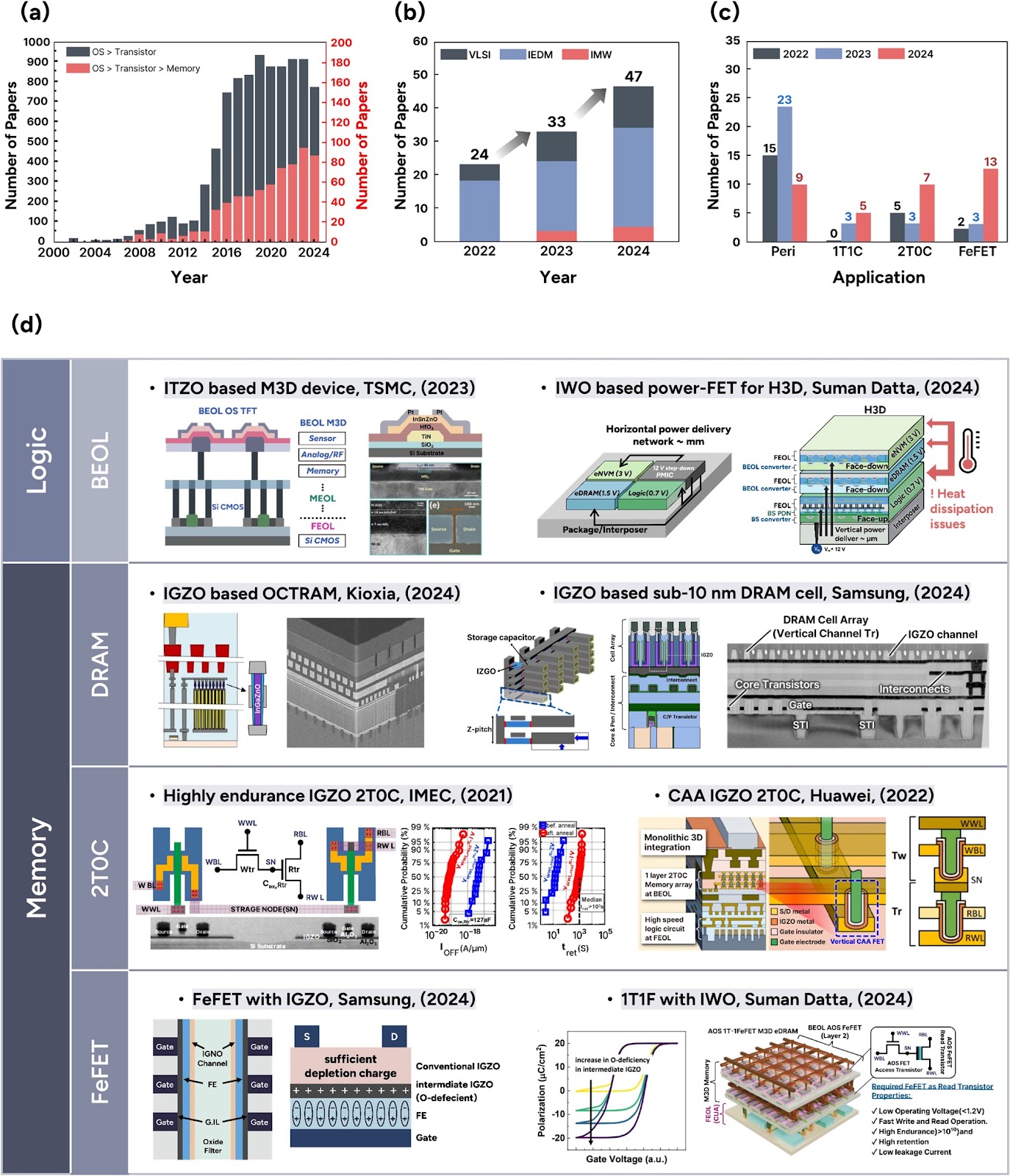
Oxide semiconductors (OSs), introduced by the Hosono group in the early 2000s, have evolved from display backplane materials to promising candidates for advanced memory and logic devices. The exceptionally low leakage current of OSs and compatibility with three-dimensional (3D) architectures have recently sparked renewed interest in their use in semiconductor applications. This review begins by exploring the unique material properties of OSs, which fundamentally originate from their distinct electronic band structure. Subsequently, we focus on atomic layer deposition (ALD), a core technique for growing excellent OS films, covering both basic and advanced processes compatible with 3D scaling. The basic surface reaction mechanisms—adsorption and reaction—and their roles in film growth are introduced. Furthermore, material design strategies, such as cation selection, crystallinity control, anion doping, and heterostructure engineering, are discussed. We also highlight challenges in memory applications, including contact resistance, hydrogen instability, and lack of p-type materials, and discuss the feasibility of ALD-grown OSs as potential solutions. Lastly, we provide an outlook on the role of ALD-grown OSs in memory technologies. This review bridges material fundamentals and device-level requirements, offering a comprehensive perspective on the potential of ALD-driven OSs for next-generation semiconductor memory devices.
Laser powder bed fusion of biodegradable Zn-4Cu alloy: Processing, microstructure and properties
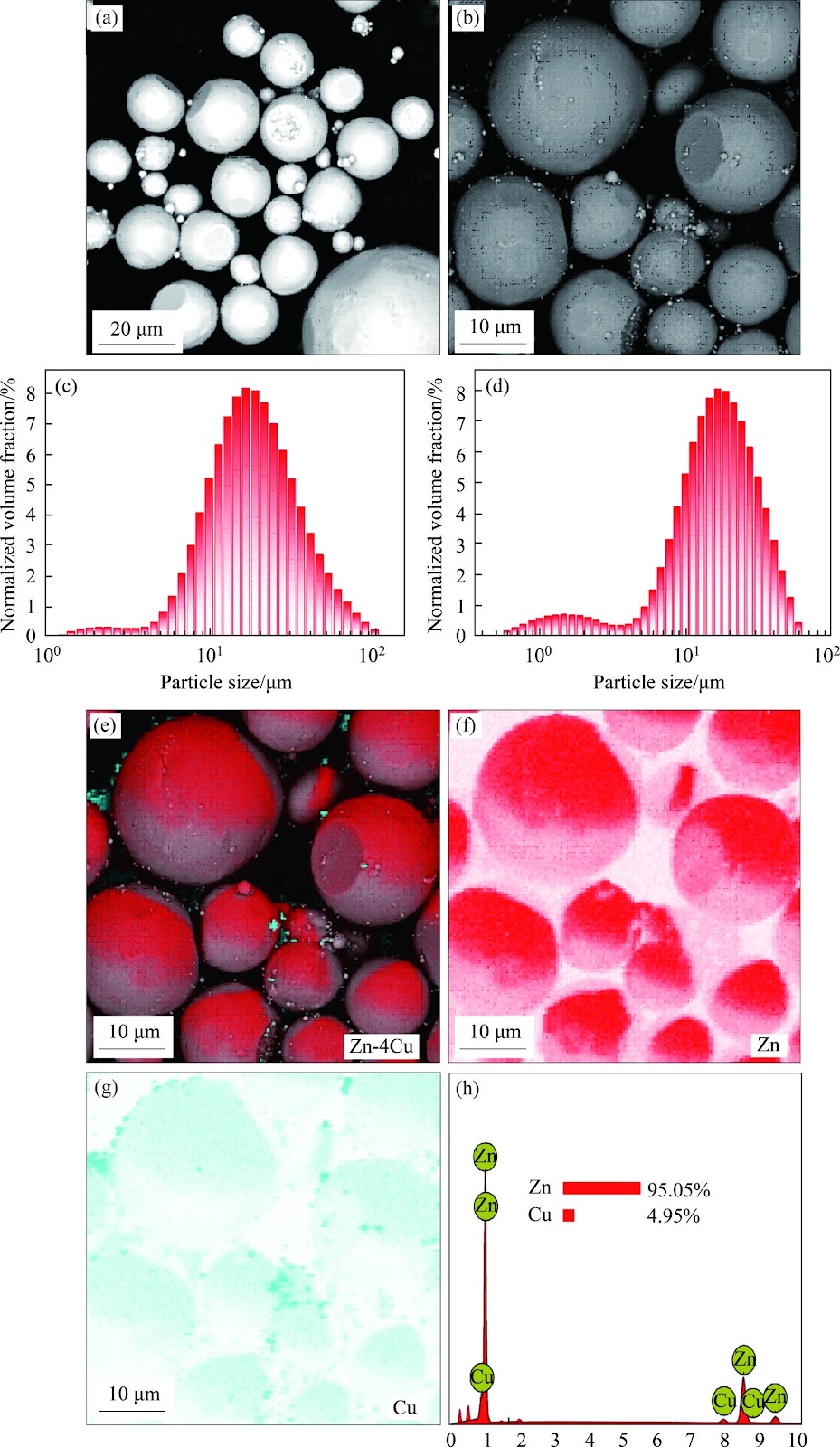
Zn's natural degradability and biocompatibility make it a promising candidate for implants, however, its mechanical properties remain insufficient for bone applications. In this study, the performance of Zn was enhanced by developing Zn-Cu alloys via laser powder bed fusion (LPBF). Optimal LPBF parameters for forming stable tracks were achieved by adjusting laser power and scanning speed. Under optimized conditions of 100 W and 100 mm/s, high-density (99.58%) Zn-Cu alloys with improved hardness (68.2HV) and yield strength (160 MPa) were achieved. These improvements are attributed to solid solution strengthening, segregation strengthening, and grain refinement. The Zn-Cu alloys also demonstrated favorable degradation behavior, with a rate of 0.16 mm/year. This degradation is primarily driven by micro-galvanic corrosion between the CuZn5 phase and Zn matrix, along with refined grains and increased grain boundary density. This work demonstrates a viable strategy for fabricating Zn-based implants with enhanced structural integrity and mechanical performance via LPBF.