Key Takeaways & Executive Findings
- •• Er addition promotes grain refinement during solidification by increasing nucleation rate and forming Al3Er secondary phase. • A dense MgO/Er2O3 composite oxide layer is formed, suppressing loose magnesium hydroxide/basic magnesium carbonate. • Mn interacts with Fe impurities to form AlFeMn phase, reducing micro-galvanic corrosion driving force. • The corrosion rate of AZ31Mn-1.2Er in 3.5% NaCl solution decreased from 10.46 mm/a to 0.44 mm/a, approaching the 0.2–0.5 mm/a target for bone-repair implants.
Abstract
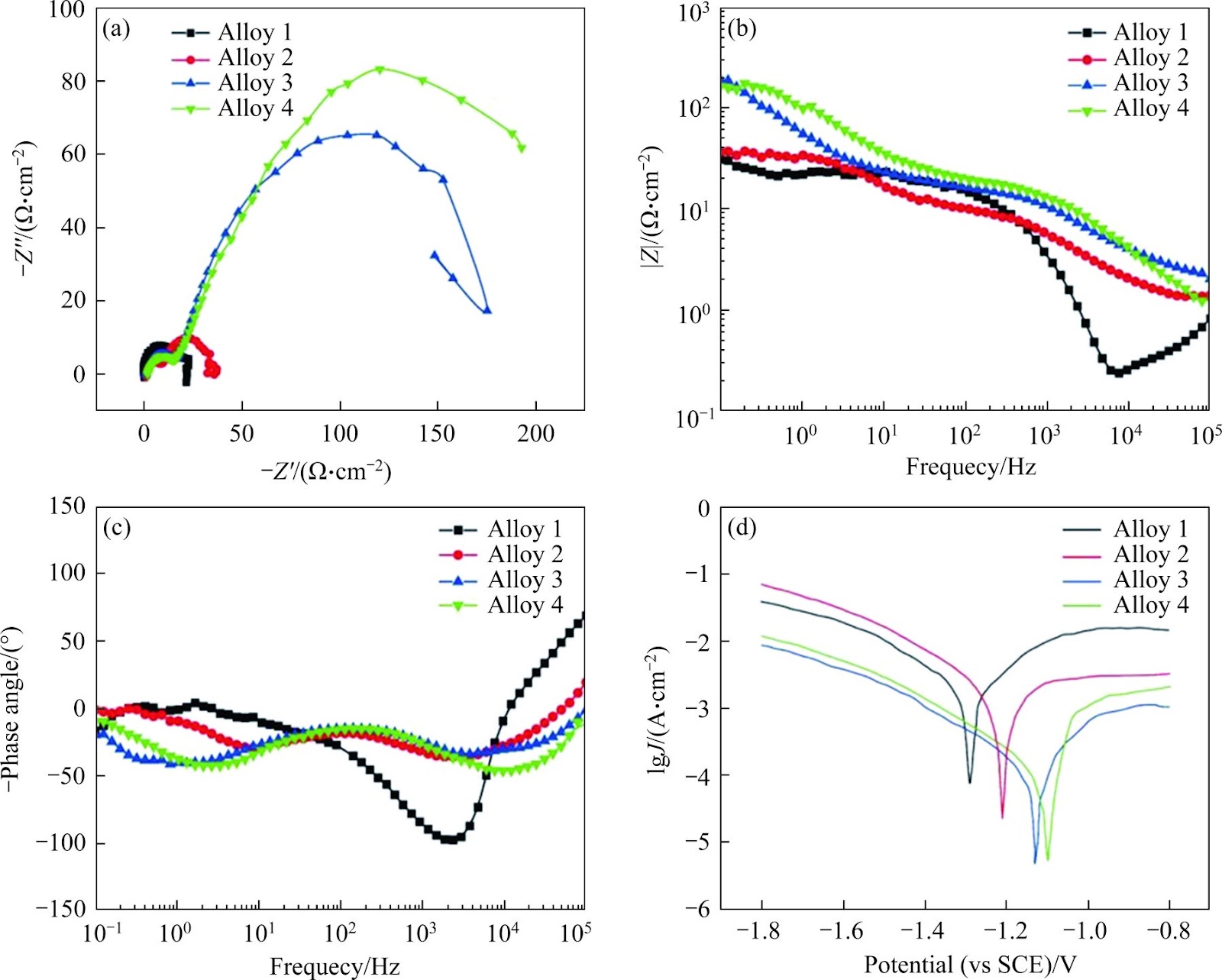
Magnesium alloys as medical implant materials necessitate a lower and adjustable corrosion rate for clinical applications. The microstructure and corrosion behavior of AZ31Mn-xEr (x=0.1, 0.5, 1.2) alloys were systematically investigated using optical microscopy (OM), scanning electron microscopy (SEM), and X-ray photoelectron spectroscopy (XPS), combined with Tafel polarization and electrochemical impedance spectroscopy (EIS) analyses. The findings showed that the alloying element Er refined the grain structure during solidification by increasing the nucleation rate and forming a secondary phase of Al3Er with Al. The Er and Mg in the matrix co-oxidize to form a dense MgO/Er2O3 composite oxide, preventing the formation of loose magnesium hydroxide/basic magnesium carbonate. The trace alloying element Mn interacts with impurities Fe in the magnesium matrix to form an AlFeMn second phase, reducing micro-galvanic corrosion driving force. Electrochemical testing in a 3.5% NaCl solution demonstrated a marked reduction in corrosion rate from 10.46 mm/a (AZ31Mn alloy) to 0.44 mm/a (AZ31Mn-1.2Er alloy). This research offers a reference for searching for corrosion-resistant magnesium alloy and degradable medical magnesium alloy materials.
1. Introduction
Magnesium is widely recognized as a metal of abundant reserves, and magnesium alloys are characterized by their high specific stiffness, specific strength, excellent machinability, outstanding casting performance, efficient thermal conductivity, and superior recyclability. These properties establish magnesium alloys as environmentally friendly and high-performance lightweight structural materials, leading to extensive utilization in aerospace, transportation, and electronics industries [1−4].
As an essential element in the human body, magnesium is the fourth most abundant metallic ion after potassium, sodium, and calcium. Approximately two-thirds of the total body magnesium is deposited in skeletal tissues, while the remaining one-third is distributed within cellular compartments. Magnesium ions enhance bone mineralization and play a critical role in the maintenance of bone density, contributing to the excellent biocompatibility of magnesium-based materials in biological systems [5,6].
Through advanced processing and strategic alloying, the mechanical properties of magnesium alloys can be tailored to match human bone tissue, minimizing stress-shielding effects associated with conventional metallic implants [7]. Their inherent biodegradability eliminates the need for secondary implant-removal surgeries [8]. Furthermore, magnesium alloys possess beneficial biological properties, including anti-inflammatory effects, antibacterial activity, and osteoinductive capabilities [9−12]. For bone repair applications, the optimal corrosion rate for implant materials is established at 0.2–0.5 mm/a [13]. Therefore, controlling and reducing the corrosion rate of magnesium alloys is a critical step toward their clinical application.
Loading authentic research manuscript (Pages 1–5)...
Ma Wei, Ma Zheng-qing, Chen Bai-hua (2025). Effects of Er on microstructure and corrosion resistance of degradable Mg-Al-Zn-Mn magnesium alloy. Journal of Central South University. https://doi.org/10.1007/s11771-025-6021-4
Research & Educational Purpose Only:The translations, structured abstracts, analytical annotations, and data reports provided by SinoTechIntel are intended exclusively for academic research, internal corporate R&D, and educational benchmarking. They do not constitute formal engineering, chemical safety, legal, or professional advice.
Copyright & Intellectual Property Notice: Original copyright of the underlying source articles and experimental data remains with the respective authors, institutions, and original publishing journals. SinoTechIntel claims intellectual property only over its proprietary translations, analytical syntheses, and AEO structured enhancements in accordance with international fair use and academic citation principles.
Frequently Asked Questions
What alloy was studied in this paper?
The study investigated AZ31Mn-xEr magnesium alloys (x = 0.1, 0.5, and 1.2 wt.%) as degradable biomedical implant materials.
How does erbium improve the corrosion resistance of AZ31Mn magnesium alloy?
Erbium refines the grain structure by increasing nucleation and forming Al3Er phase. It also co-oxidizes with Mg to form a dense MgO/Er2O3 composite oxide, which prevents formation of loose Mg(OH)2 or basic magnesium carbonate.
What was the corrosion rate reduction achieved?
Electrochemical tests in 3.5% NaCl solution showed the corrosion rate decreased from 10.46 mm/a for AZ31Mn to 0.44 mm/a for AZ31Mn-1.2Er alloy, a reduction of approximately 96%.
Why are magnesium alloys used for medical implants?
Magnesium alloys are biocompatible, biodegradable, and have mechanical properties close to human bone. They avoid stress shielding and eliminate the need for second removal surgery, while promoting bone mineralization.
Which experimental methods were used in the study?
The researchers used optical microscopy, scanning electron microscopy, X-ray photoelectron spectroscopy, Tafel polarization, and electrochemical impedance spectroscopy to characterize microstructure and corrosion behavior.
Related Technical Papers & Translations
Design and optimization of a high-efficiency distillation process for cellulosic fuel ethanol integrated with thermal coupling and molecular sieve adsorption
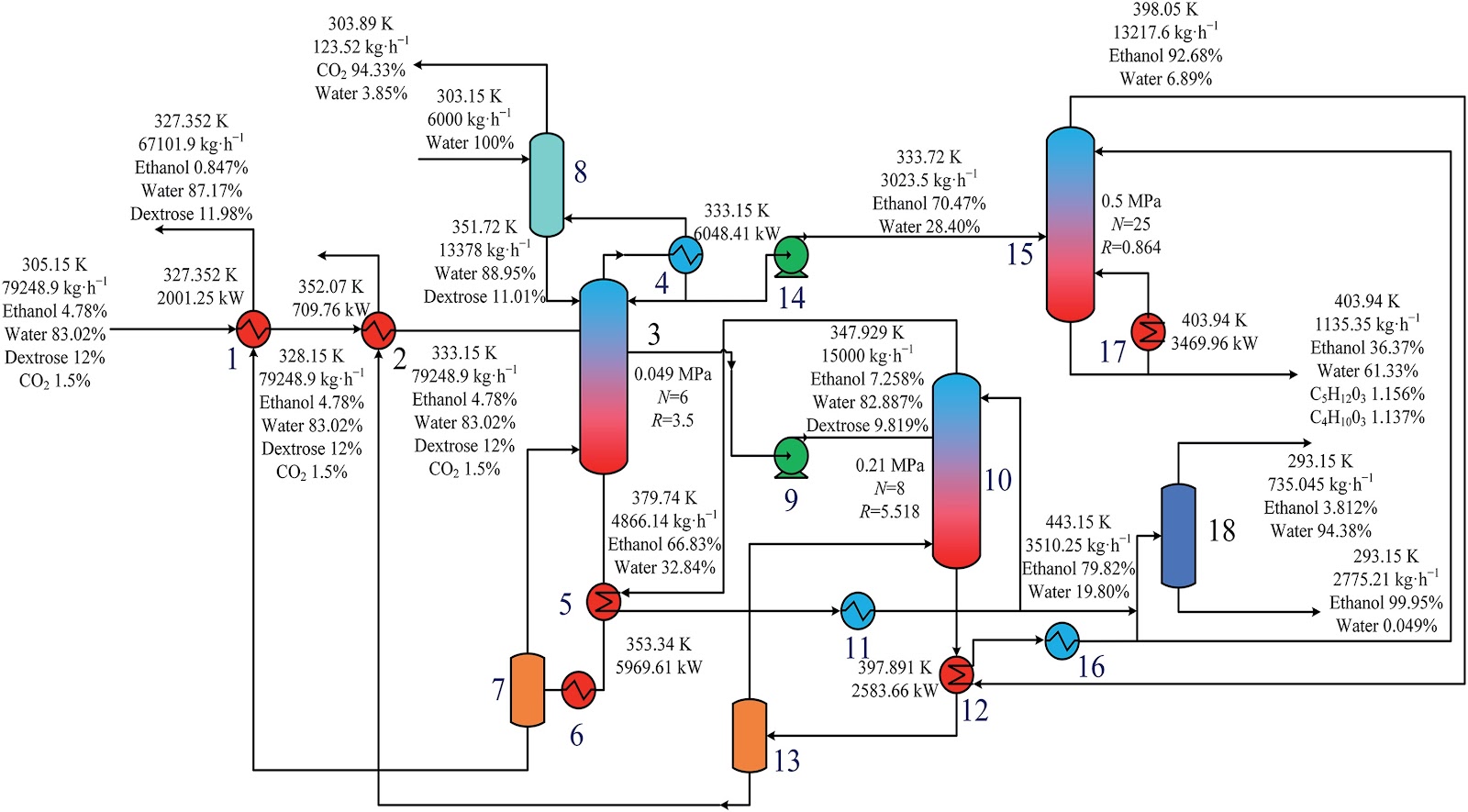
To address the challenges of high energy consumption and prominent costs in the traditional three-columns distillation process for cellulosic fuel ethanol, a distillation—molecular sieve coupling separation process is proposed. This process integrates a three-column (crude distillation column, first distillation column, second distillation column) system with a 3A molecular sieve adsorption deep dehydration unit. A thermal coupling network is constructed via differential pressure design (steam from medium/high-pressure columns as mutual heat sources, reboiler liquid waste heat for feed preheating), and molecular sieve adsorption conditions are optimized. The study first performs a thermodynamic consistency test on the ethanol—water system, determines optimal non-random two-liquid (NRTL) model binary interaction parameters via experimental data regression for Aspen Plus simulation. Aiming at minimum total annual cost (TAC), Aspen Plus is used to optimize process parameters (theoretical tray number, feed location, reflux ratio, side-draw position, etc.). Economic analysis shows this process reduces CO2 emission costs by 27.56%, TAC by 15.58% (to 5.123 × 10⁶ USD·a-1), and increases ethanol purity to >99.6%, providing an effective solution for green, efficient separation.
A cohesion loss model for determining residual strength of deep bedded sandstone
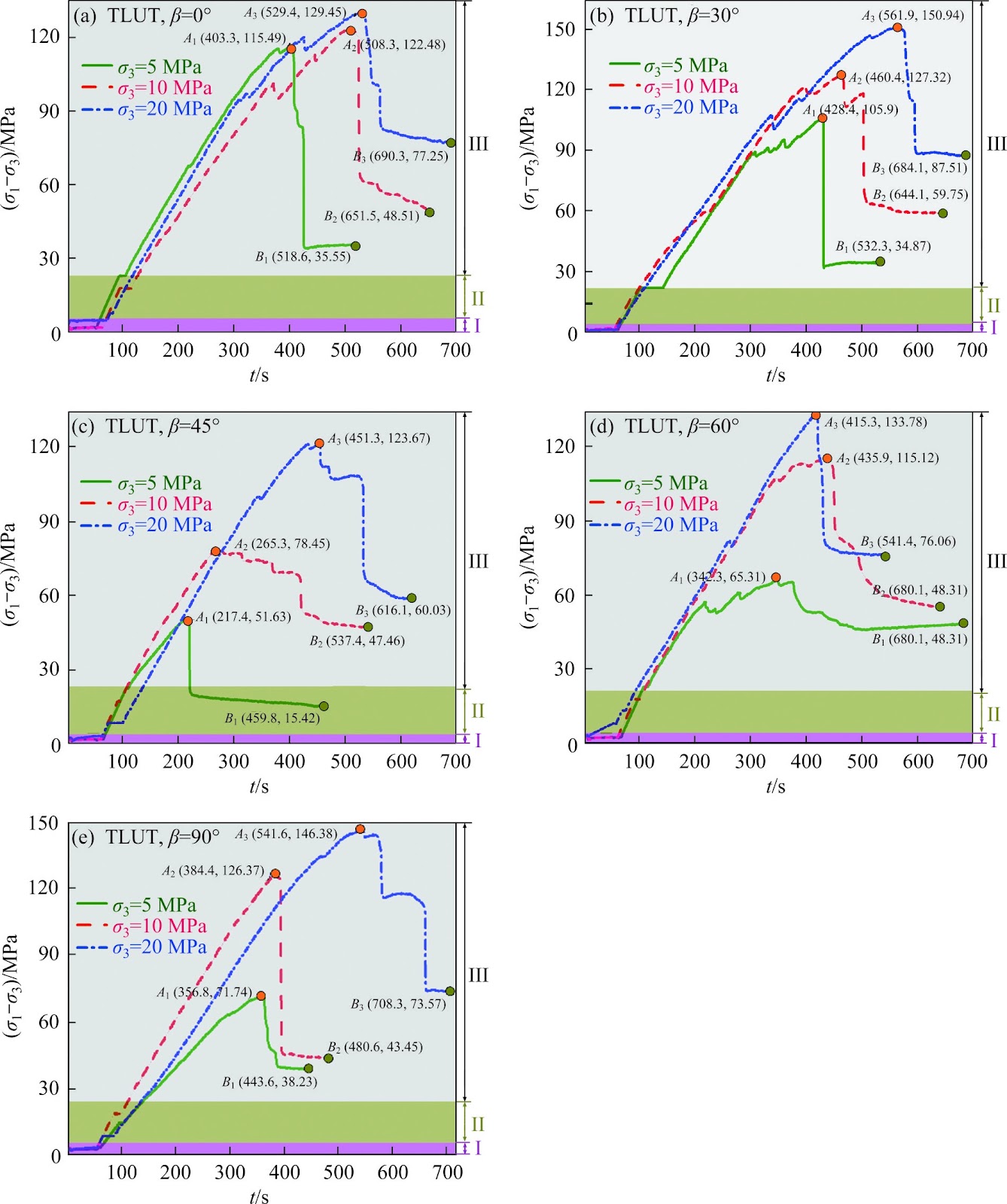
Rock residual strength, as an important input parameter, plays an indispensable role in proposing the reasonable and scientific scheme about stope design, underground tunnel excavation and stability evaluation of deep chambers. Therefore, previous residual strength models of rocks established were reviewed. And corresponding related problems were stated. Subsequently, starting from the effects of bedding and whole life-cycle evolution process, series of triaxial mechanical tests of deep bedded s
Federated model with contrastive learning and adaptive control variates for human activity recognition
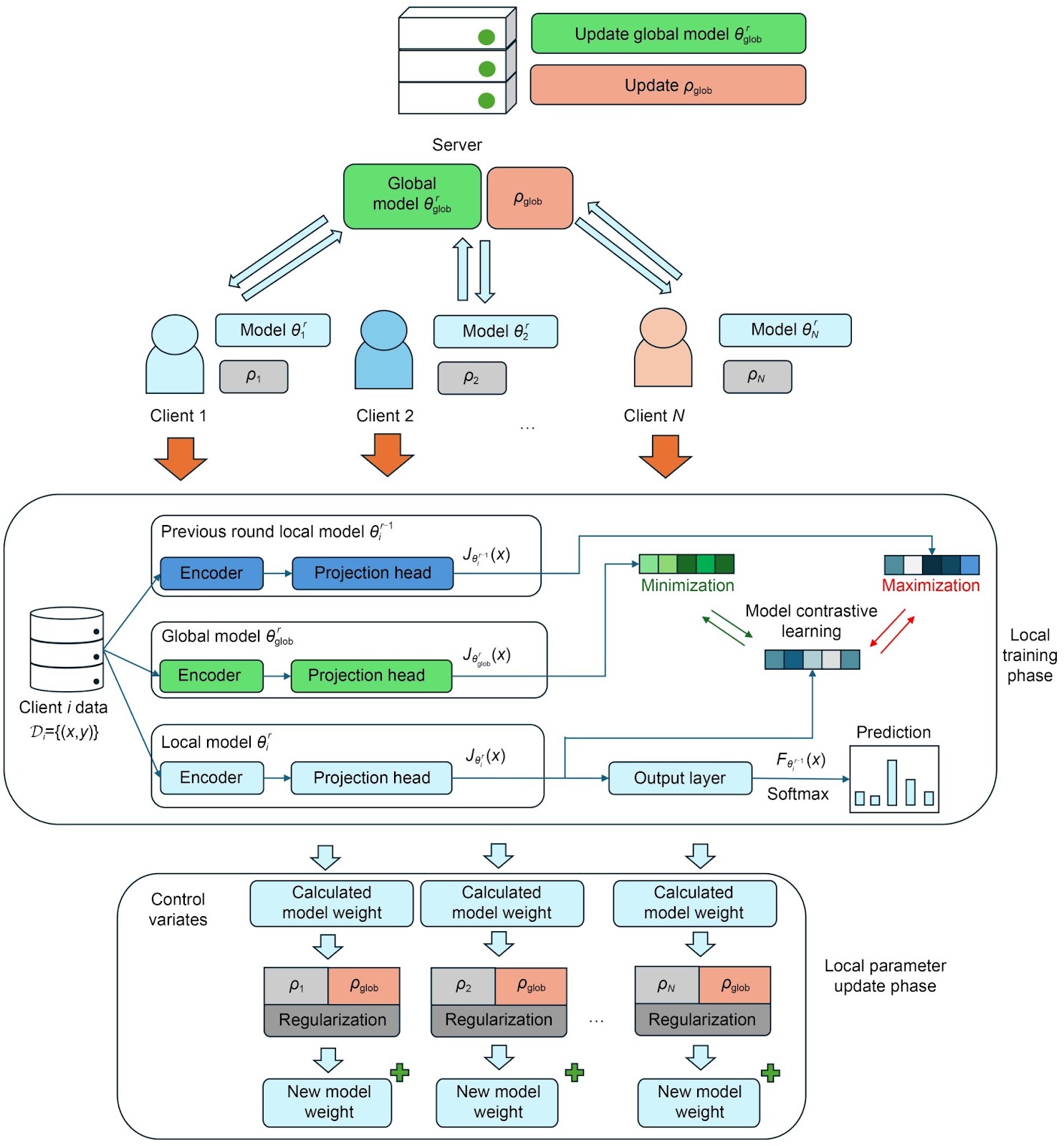
Recent attention to privacy issues demands a communication-safe method for training human activity recognition (HAR) models on client activity data. Federated learning (FL) has become a compelling technique to facilitate model training between the server and clients while preserving data privacy. However, classical FL methods often assume independent and identically distributed (IID) data among clients. This assumption does not hold true in practical scenarios. Human activity in real-world scena