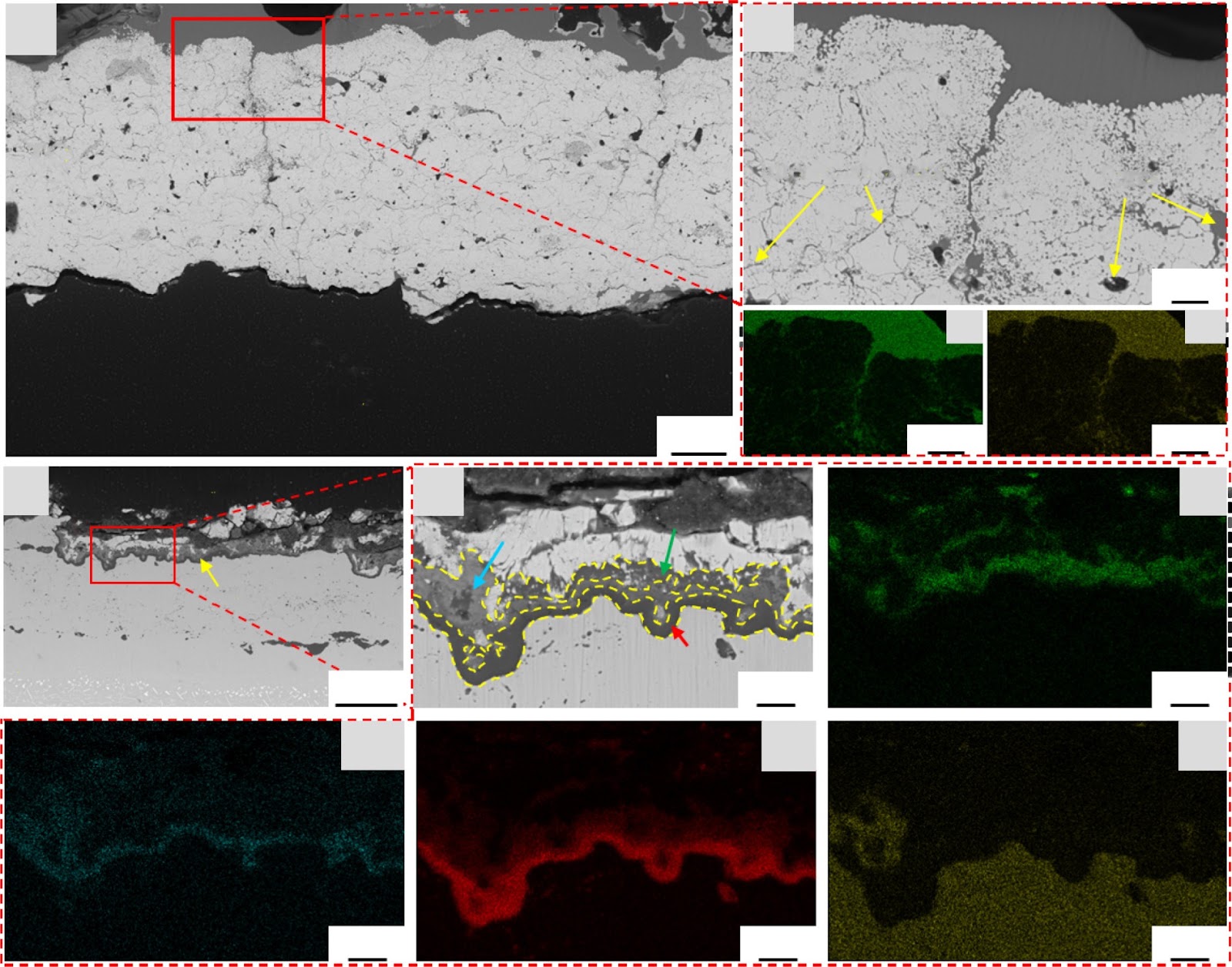
Key Takeaways & Executive Findings
- •• The melting sequence of CMAS and NaCl significantly influences the failure mode of YSZ thermal barrier coatings, with mixed corrosion and NaCl-first melting leading to buckling failure, while CMAS-first melting results in spalling failure. • Experimental and finite element simulations reveal that the corrosion mechanisms are governed by the infiltration and reaction of molten salts, affecting the strain tolerance and phase stability of the coating. • The presence of NaCl accelerates the degradation of the bonding coating and promotes the formation of brittle spinel oxides, exacerbating TBC failure. • This study provides critical data for optimizing TBC systems to withstand complex corrosive environments, particularly in marine and high-temperature applications.
Abstract
Calcium–magnesium–alumina–silicate (CMAS) and/or molten salt corrosion have attracted increased attention, which is an important cause of thermal barrier coating (TBC) failure. In this study, the effect of CMAS and NaCl melting sequence on the corrosion mechanisms of yttria-stabilized zirconia (YSZ) TBCs was revealed through experiments and finite element simulations. The YSZ TBCs were prepared via atmospheric plasma spraying. Subsequently, the CMAS and NaCl corrosion experiments of the TBCs were conducted at 1250°C. Results indicated that the melting sequence of CMAS and NaCl could influence the TBC failure mode. The coating failure modes after CMAS + NaCl mixed corrosion and NaCl melting followed by CMAS melting were buckling failures. Conversely, the coating failure mode was observed to be spalling failures. This study provides data support for the optimization of TBC systems in complex corrosive environments.
1. Introduction
The turbine inlet temperature is continuously increased to improve the thrust-to-weight ratio of aero-engines. Relying solely on superalloys cannot sufficiently satisfy the requirements of aero-engines. Thermal barrier coatings (TBCs), blade cooling design, and single-crystal superalloy material technology are three core technologies for advanced aero-engine blades. The TBC system consists of top ceramic coating (TC), thermally grown oxides (TGO), bonding coating (BC), and substrate (SUB). Currently, the most common TC material is yttria-stabilized zirconia (YSZ), which has a high thermal expansion coefficient (~11 × 10−6 K−1), high melting point (~2700°C), and low thermal conductivity (~2 W·m–1·K−1) [1–4].
Nevertheless, during aircraft operation, debris in the runway, as well as fly ash, sand, and volcanic ash in the air, will inevitably deposit on TBC surfaces; these deposits are referred to as calcium–magnesium–alumina–silicate (CMAS) [5–7]. When service temperature exceeds the melting temperature of CMAS, which is generally approximately 1230°C, CMAS will penetrate the interior of YSZ coating through defects, such as microcracks and pores, reducing the strain tolerance of the TBC system during cooling [8–10]. Meanwhile, CMAS reacts with the stabilizer Y2O3 in YSZ, forming a monoclinic phase (m-ZrO2) and causing a destructive phase transformation of YSZ [8,11–12]. The TBC system becomes prone to delamination during service due to thermal–mechanical–chemical damage [10,13–14].
Additionally, because salt is mostly abundant in the atmosphere near oceans and coasts, aircraft are exposed to high humidity and salinity (specifically NaCl), especially carrier-based aircraft that frequently take off and land on the sea surface. Consequently, TBCs encounter the challenge of thermal corrosion in aero-engines operating in marine environments [15–16]. Furthermore, some studies have indicated that the presence of NaCl accelerates BC degradation and generates complex brittle spinel oxides, leading to TBC system failure [15,17–19].
Loading authentic research manuscript (Pages 1–5)...
Yang Feng, Yong Shang, Chun Li, Xiao Zhang, Yanling Pei, Shengkai Gong, Huibin Xu (2025). Effects of calcium–magnesium–alumina–silicate and NaCl melting sequence on corrosion resistance of thermal barrier coatings. Int. Journal of Minerals, Metallurgy and Materials (矿物冶金与材料学报). https://doi.org/10.1007/s12613-024-3017-2
Research & Educational Purpose Only:The translations, structured abstracts, analytical annotations, and data reports provided by SinoTechIntel are intended exclusively for academic research, internal corporate R&D, and educational benchmarking. They do not constitute formal engineering, chemical safety, legal, or professional advice.
Copyright & Intellectual Property Notice: Original copyright of the underlying source articles and experimental data remains with the respective authors, institutions, and original publishing journals. SinoTechIntel claims intellectual property only over its proprietary translations, analytical syntheses, and AEO structured enhancements in accordance with international fair use and academic citation principles.
Frequently Asked Questions
What is the effect of CMAS and NaCl melting sequence on TBC corrosion?
The melting sequence significantly influences the failure mode: mixed corrosion and NaCl-first melting lead to buckling failure, while CMAS-first melting results in spalling failure.
What are the main corrosion mechanisms of YSZ TBCs under CMAS and NaCl?
CMAS infiltrates through pores and reacts with Y2O3, causing phase transformation, while NaCl accelerates bonding coating degradation and forms brittle spinel oxides, both leading to coating failure.
How were the YSZ TBCs prepared in this study?
The YSZ TBCs were prepared via atmospheric plasma spraying.
What temperature were the corrosion experiments conducted at?
The corrosion experiments were conducted at 1250°C.
What is the significance of this study for TBC applications?
It provides data support for optimizing TBC systems to withstand complex corrosive environments, particularly in marine and high-temperature applications.
Related Technical Papers & Translations
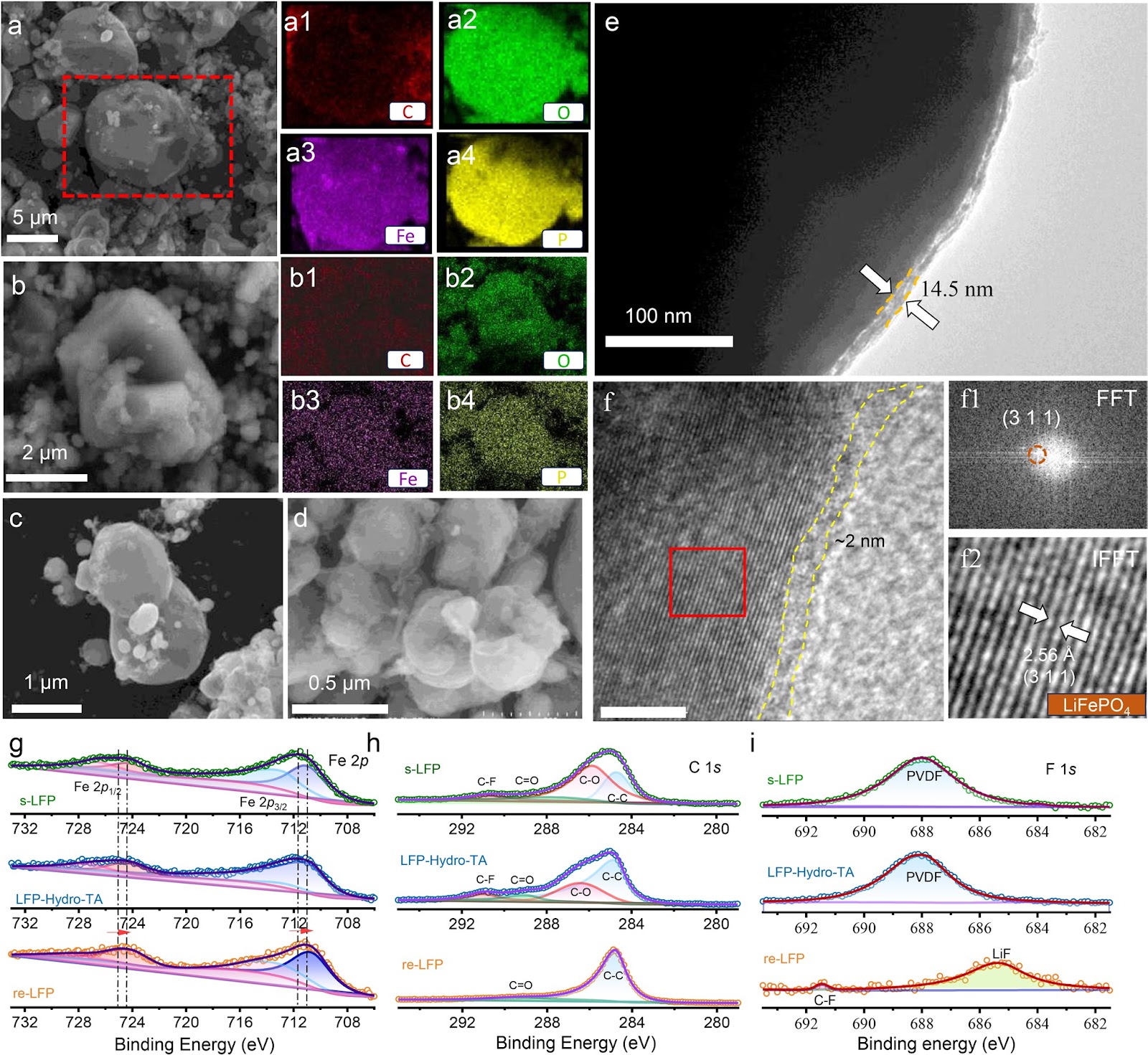
Direct Repair of the Crystal Structure and Coating Surface of Spent LiFePO4 Materials Enables Superfast Li-Ion Migration
The rapid accumulation of spent LiFePO4 (LFP) cathodes from retired lithium-ion batteries necessitates the development of effective and environmental-friendly recycling strategies. In this context, direct regeneration has emerged as a promising approach for reclaiming LFP cathode materials, offering a streamlined pathway to restore their electrochemical functionality. We report an integrated regeneration protocol that simultaneously repairs the degraded crystal structure and reconstructs the damaged carbon coating in spent LFP. The regenerated cathode material had superfast lithium-ion diffusion kinetics and a stable cathode–electrolyte interface, giving a remarkable rate capability with specific capacities of 122 mAh g−1 at 5C and 106 mAh g−1 at 10C (1C = 170 mA g−1). It also maintained capacities of 110.7 mAh g−1 (5C) and 84.1 mAh g−1 (10C) after 400 cycles. It could be used in harsh environments and could be stably cycled at subzero temperatures (−10 and −20 °C) and in solid-state electrolyte batteries. Life cycle assessment combined with economic evaluation using the EverBatt model reveals that this direct regeneration approach has high economic and environmental benefits.
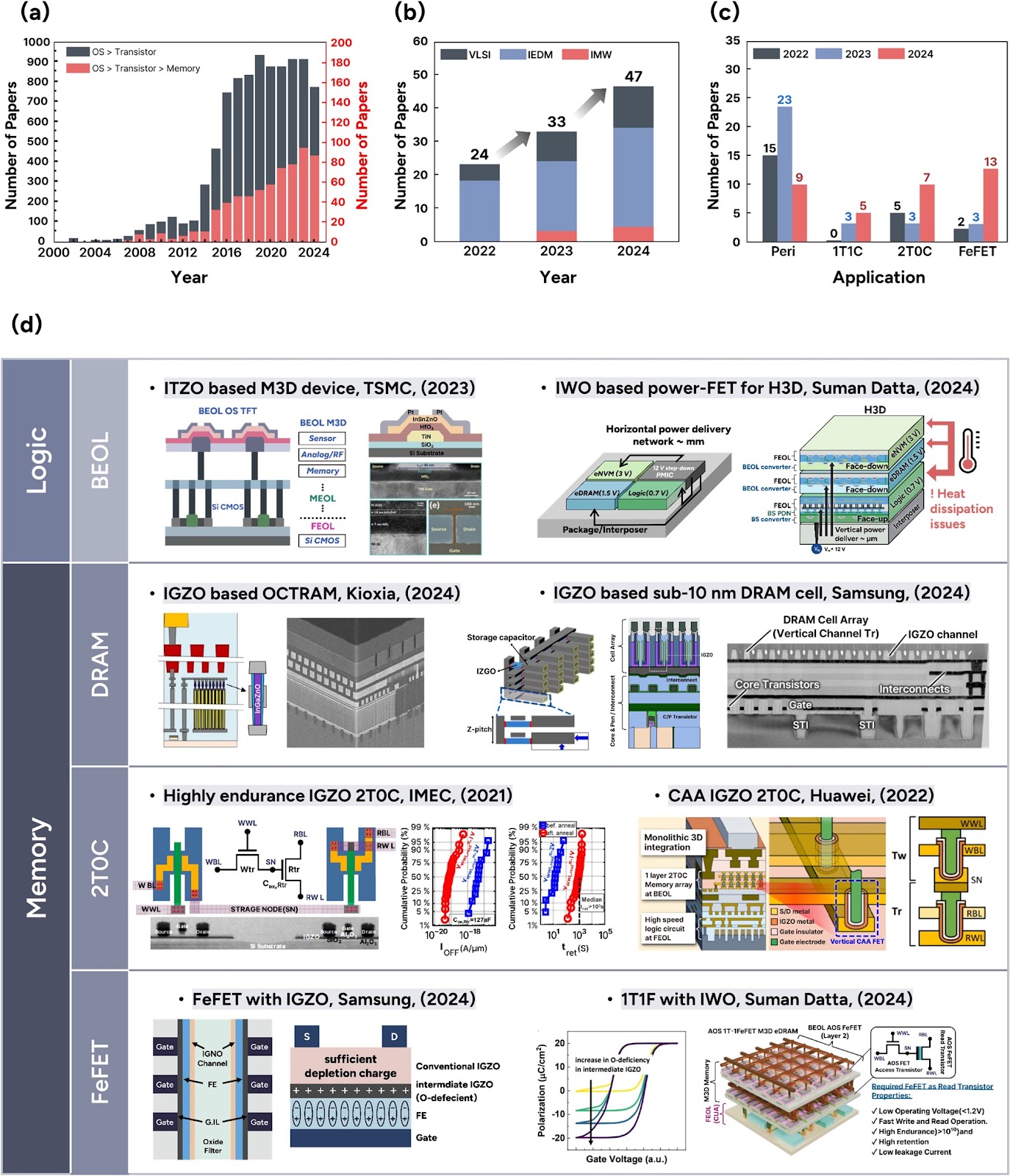
Oxide Semiconductor for Advanced Memory Architectures: Atomic Layer Deposition, Key Requirement and Challenges
Oxide semiconductors (OSs), introduced by the Hosono group in the early 2000s, have evolved from display backplane materials to promising candidates for advanced memory and logic devices. The exceptionally low leakage current of OSs and compatibility with three-dimensional (3D) architectures have recently sparked renewed interest in their use in semiconductor applications. This review begins by exploring the unique material properties of OSs, which fundamentally originate from their distinct electronic band structure. Subsequently, we focus on atomic layer deposition (ALD), a core technique for growing excellent OS films, covering both basic and advanced processes compatible with 3D scaling. The basic surface reaction mechanisms—adsorption and reaction—and their roles in film growth are introduced. Furthermore, material design strategies, such as cation selection, crystallinity control, anion doping, and heterostructure engineering, are discussed. We also highlight challenges in memory applications, including contact resistance, hydrogen instability, and lack of p-type materials, and discuss the feasibility of ALD-grown OSs as potential solutions. Lastly, we provide an outlook on the role of ALD-grown OSs in memory technologies. This review bridges material fundamentals and device-level requirements, offering a comprehensive perspective on the potential of ALD-driven OSs for next-generation semiconductor memory devices.
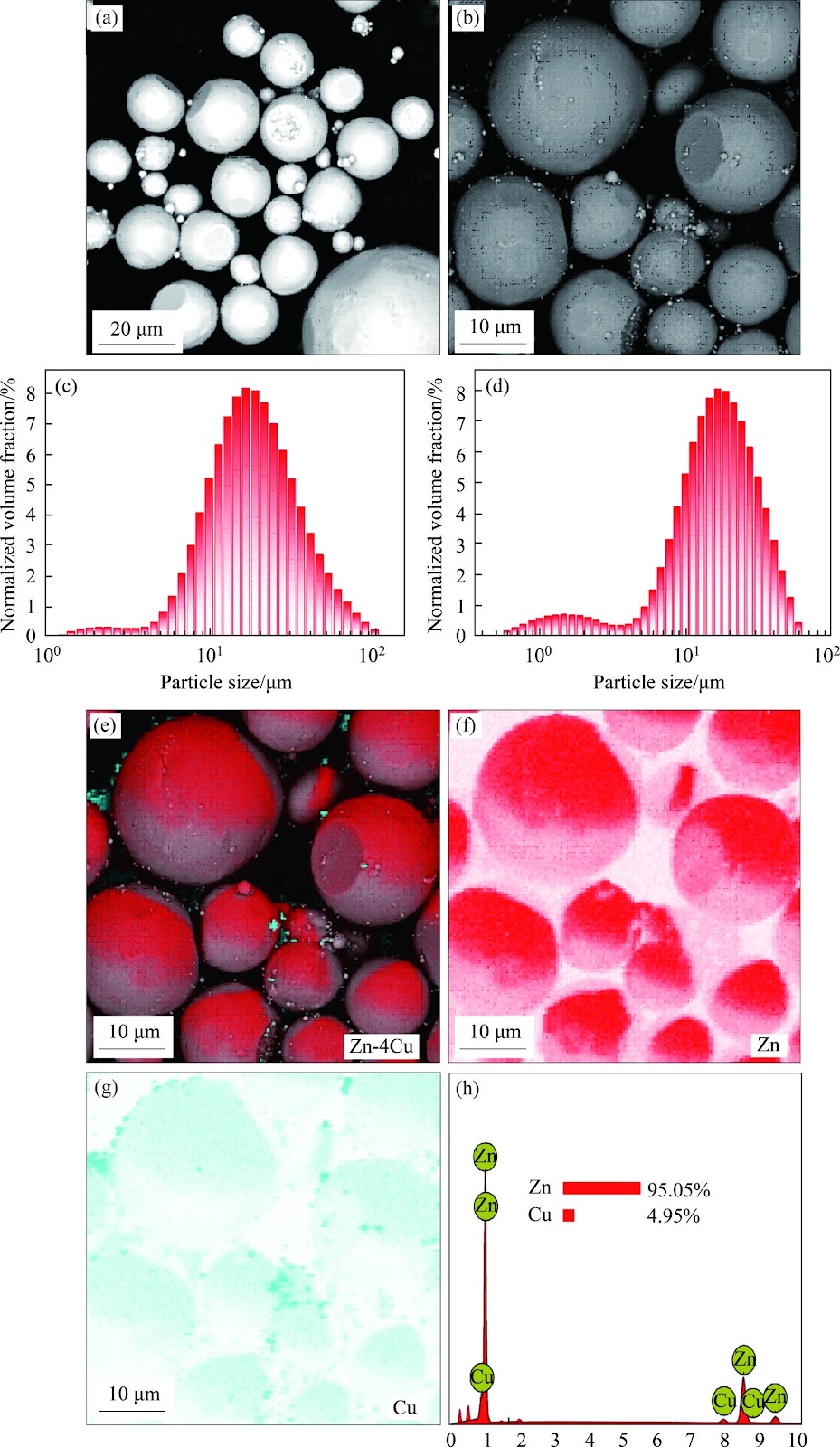
Laser powder bed fusion of biodegradable Zn-4Cu alloy: Processing, microstructure and properties
Zn's natural degradability and biocompatibility make it a promising candidate for implants, however, its mechanical properties remain insufficient for bone applications. In this study, the performance of Zn was enhanced by developing Zn-Cu alloys via laser powder bed fusion (LPBF). Optimal LPBF parameters for forming stable tracks were achieved by adjusting laser power and scanning speed. Under optimized conditions of 100 W and 100 mm/s, high-density (99.58%) Zn-Cu alloys with improved hardness (68.2HV) and yield strength (160 MPa) were achieved. These improvements are attributed to solid solution strengthening, segregation strengthening, and grain refinement. The Zn-Cu alloys also demonstrated favorable degradation behavior, with a rate of 0.16 mm/year. This degradation is primarily driven by micro-galvanic corrosion between the CuZn5 phase and Zn matrix, along with refined grains and increased grain boundary density. This work demonstrates a viable strategy for fabricating Zn-based implants with enhanced structural integrity and mechanical performance via LPBF.