Key Takeaways & Executive Findings
- •• The underlying mechanism improving piezoelectricity via interfacial polarization is elucidated through combining experimental results, molecular dynamics simulations, and density functional theory calculations. • The piezoelectric performance of the nanocomposite is improved based on the successful construction of dual-structure, achieving a threefold increase in piezoelectric response and an eightfold increase in sensitivity in the low-pressure region. • The piezoelectric sensor and array are capable of identifying human physiological signals and monitoring the distribution of pressure, demonstrating cyclic stability exceeding 20,000 cycles. • This study provides an innovative methodology for reinforcing interfacial polarized piezoelectric materials and offers insight into structural designs for flexible electronics.
Abstract
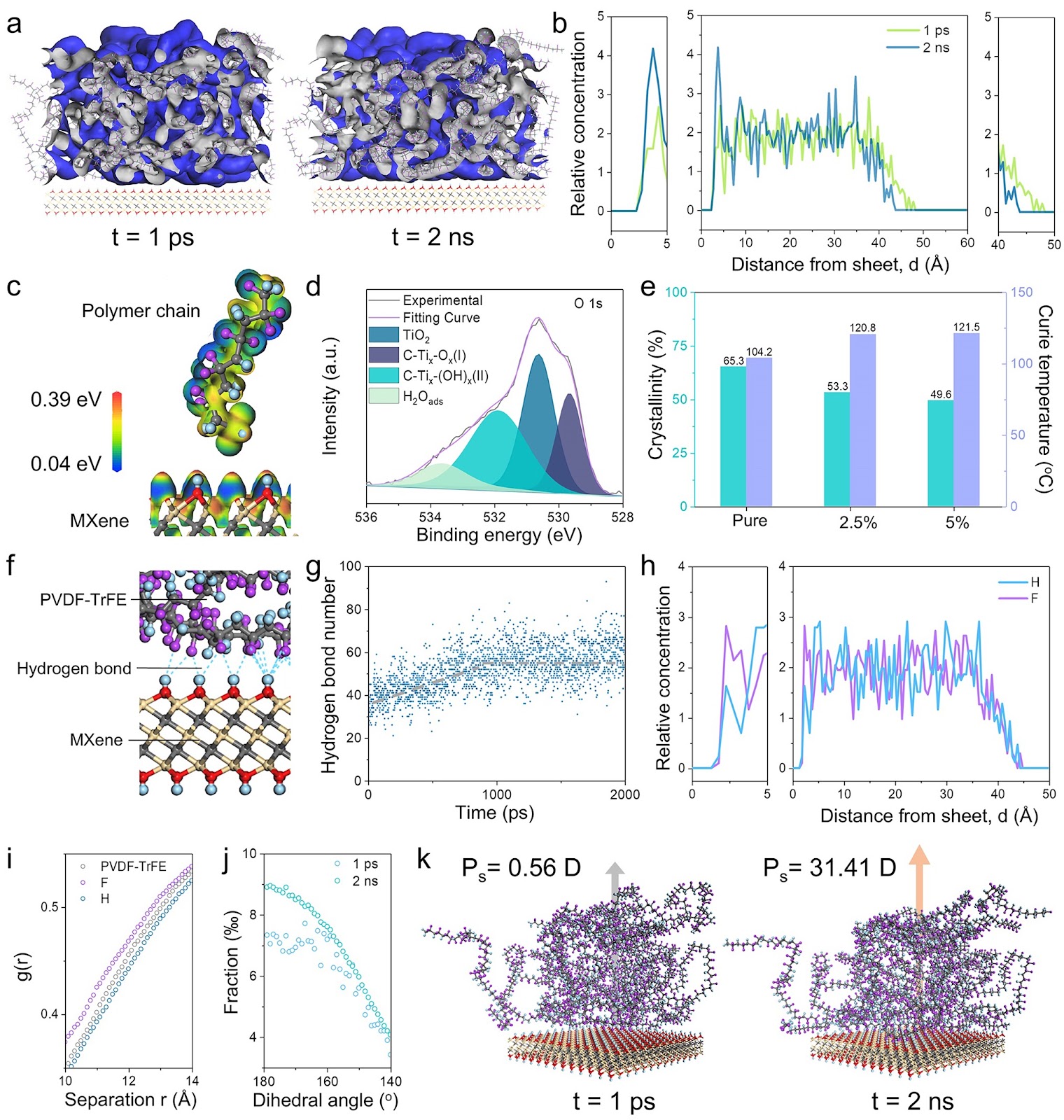
The emerging interfacial polarization strategy exhibits applicative potential in piezoelectric enhancement. However, there is an ongoing effort to address the inherent limitations arising from charge bridging phenomena and stochastic interface disorder that plague the improvement of piezoelectric performance. Here, we report a dual structure reinforced MXene/PVDF-TrFE piezoelectric composite, whose piezoelectricity is enhanced under the coupling effect of interfacial polarization and structural design. Synergistically, molecular dynamics simulations, density functional theory calculations and experimental validation revealed the details of interfacial interactions, which promotes the net spontaneous polarization of PVDF-TrFE from the 0.56 to 31.41 Debye. The oriented MXene distribution and porous structure not only tripled the piezoelectric response but also achieved an eightfold increase in sensitivity within the low-pressure region, along with demonstrating cyclic stability exceeding 20,000 cycles. The properties reinforcement originating from dual structure is elucidated through the finite element simulation and experimental validation. Attributed to the excellent piezoelectric response and deep learning algorithm, the sensor can effectively recognize the signals of artery pulse and finger flexion. Finally, a 3×3 sensor array is fabricated to monitor the pressure distribution wirelessly. This study provides an innovative methodology for reinforcing interfacial polarized piezoelectric materials and insight into structural designs.
1. Introduction
Piezoelectric materials play a critical role in sensing and actuating [1, 2]. Due to the flexibility, biocompatibility, and lightweight characteristics, polyvinylidene fluoride (PVDF) and its copolymers are widely utilized in wearable sensors, medical actuators and various flexible electronic devices [3–8]. Although PVDF exhibits reliable piezoelectricity and ferroelectricity, achieving these qualities requires intensive processing [9–13]. In comparison, poly(vinylidene fluoride-ran-trifluoroethylene) (PVDF-TrFE) features enhanced polarization capability, improved phase stability, and a higher piezoelectric coefficient, which can be attributed to the inclusion of TrFE units on the molecular chains [12, 14]. However, despite these advantages, substantial efforts are still required to further enhance the piezoelectric properties of PVDF-TrFE, as there remains a significant performance gap compared to ceramic piezoelectric materials.
Numerous studies have been dedicated to enhancing the piezoelectric properties of PVDF-TrFE. Traditional approaches include incorporating fillers with high piezoelectricity or high dielectric constant into the matrix, as well as employing preparation methods that utilize in situ fields—such as electrospinning, hot pressing, and electrohydrodynamic printing—to improve material performance [15, 16]. In principle, polarization enhancement is the critical approach for boosting piezoelectric properties [17–20]. Up to now, tremendous efforts have been focused on structural design at the molecular scale, including chemical modification [20, 21], component regulation [14], and doping with functional fillers [22, 23].
The method of templating polarization has been investigated to induce interfacial polarization via the interactions between nanofillers and PVDF-TrFE at the interface [24–27]. It turns out to be a prospective pathway to realize piezoelectric performance enhancement by interfacial polarization, emphasizing the crucial role of a well-defined polarized interface in material design [28–31]. MXene, a burgeoning two-dimensional material, features a high aspect ratio and significant specific surface area [32–34]. More importantly, MXene possesses abundant terminal functional groups that provide a polar surface, making it an ideal candidate for creating a large well-polarized interface within the matrix to boost piezoelectric performance [35]. However, the random distribution of MXene and the stochastic interface disorder remain challenges that need to be addressed.
Loading authentic research manuscript (Pages 1–5)...
Yong Ao, Long Jin, Shenglong Wang, Bolin Lan, Guo Tian, Tianpei Xu, Longchao Huang, Zihan Wang, Yue Sun, Tao Yang, Weili Deng, Fan Yang, Weiqing Yang (2025). Dual Structure Reinforces Interfacial Polarized MXene/PVDF-TrFE Piezoelectric Nanocomposite for Pressure Monitoring. Nano-Micro Letters. https://doi.org/10.1007/s40820-025-01839-5
Research & Educational Purpose Only:The translations, structured abstracts, analytical annotations, and data reports provided by SinoTechIntel are intended exclusively for academic research, internal corporate R&D, and educational benchmarking. They do not constitute formal engineering, chemical safety, legal, or professional advice.
Copyright & Intellectual Property Notice: Original copyright of the underlying source articles and experimental data remains with the respective authors, institutions, and original publishing journals. SinoTechIntel claims intellectual property only over its proprietary translations, analytical syntheses, and AEO structured enhancements in accordance with international fair use and academic citation principles.
Frequently Asked Questions
What is the main innovation of this study?
The study introduces a dual structure reinforced MXene/PVDF-TrFE piezoelectric nanocomposite that combines interfacial polarization with structural design (oriented MXene distribution and porous structure) to significantly enhance piezoelectric performance and pressure sensing capabilities.
How does the dual structure improve piezoelectric performance?
The dual structure enhances interfacial polarization by promoting net spontaneous polarization of PVDF-TrFE from 0.56 to 31.41 Debye, leading to a threefold increase in piezoelectric response and an eightfold increase in sensitivity in the low-pressure region.
What are the potential applications of this sensor?
The sensor can be used for monitoring human physiological signals such as artery pulse and finger flexion, and a 3×3 sensor array can monitor pressure distribution wirelessly, making it suitable for wearable health monitoring and human-machine interfaces.
What methods were used to validate the findings?
The findings were validated through a combination of experimental results, molecular dynamics simulations, density functional theory calculations, and finite element simulations, ensuring a comprehensive understanding of the underlying mechanisms.
What is the significance of the cyclic stability?
The sensor demonstrates cyclic stability exceeding 20,000 cycles, indicating its durability and reliability for long-term use in practical applications.
Related Technical Papers & Translations
Direct Repair of the Crystal Structure and Coating Surface of Spent LiFePO4 Materials Enables Superfast Li-Ion Migration
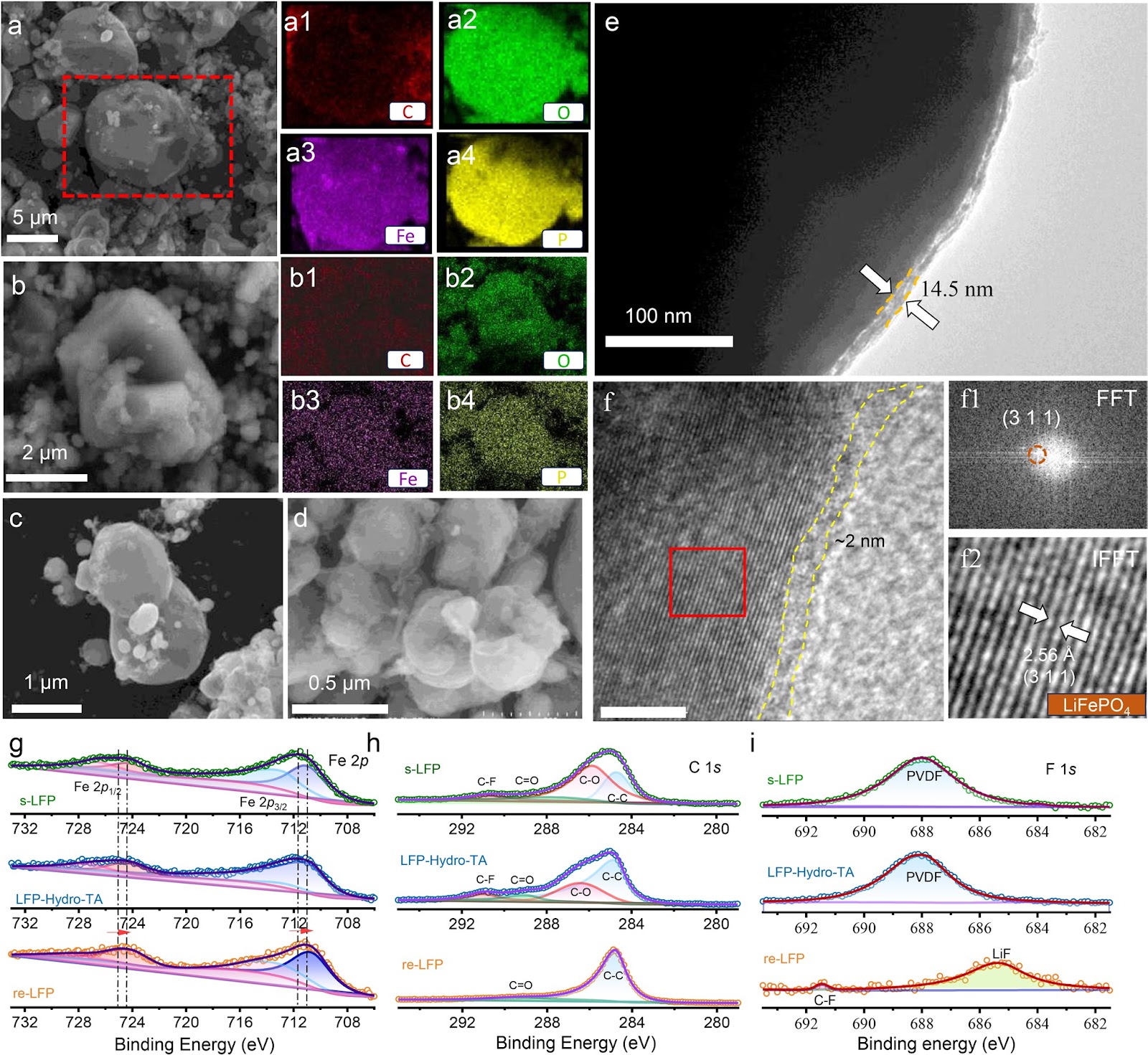
The rapid accumulation of spent LiFePO4 (LFP) cathodes from retired lithium-ion batteries necessitates the development of effective and environmental-friendly recycling strategies. In this context, direct regeneration has emerged as a promising approach for reclaiming LFP cathode materials, offering a streamlined pathway to restore their electrochemical functionality. We report an integrated regeneration protocol that simultaneously repairs the degraded crystal structure and reconstructs the damaged carbon coating in spent LFP. The regenerated cathode material had superfast lithium-ion diffusion kinetics and a stable cathode–electrolyte interface, giving a remarkable rate capability with specific capacities of 122 mAh g−1 at 5C and 106 mAh g−1 at 10C (1C = 170 mA g−1). It also maintained capacities of 110.7 mAh g−1 (5C) and 84.1 mAh g−1 (10C) after 400 cycles. It could be used in harsh environments and could be stably cycled at subzero temperatures (−10 and −20 °C) and in solid-state electrolyte batteries. Life cycle assessment combined with economic evaluation using the EverBatt model reveals that this direct regeneration approach has high economic and environmental benefits.
Oxide Semiconductor for Advanced Memory Architectures: Atomic Layer Deposition, Key Requirement and Challenges
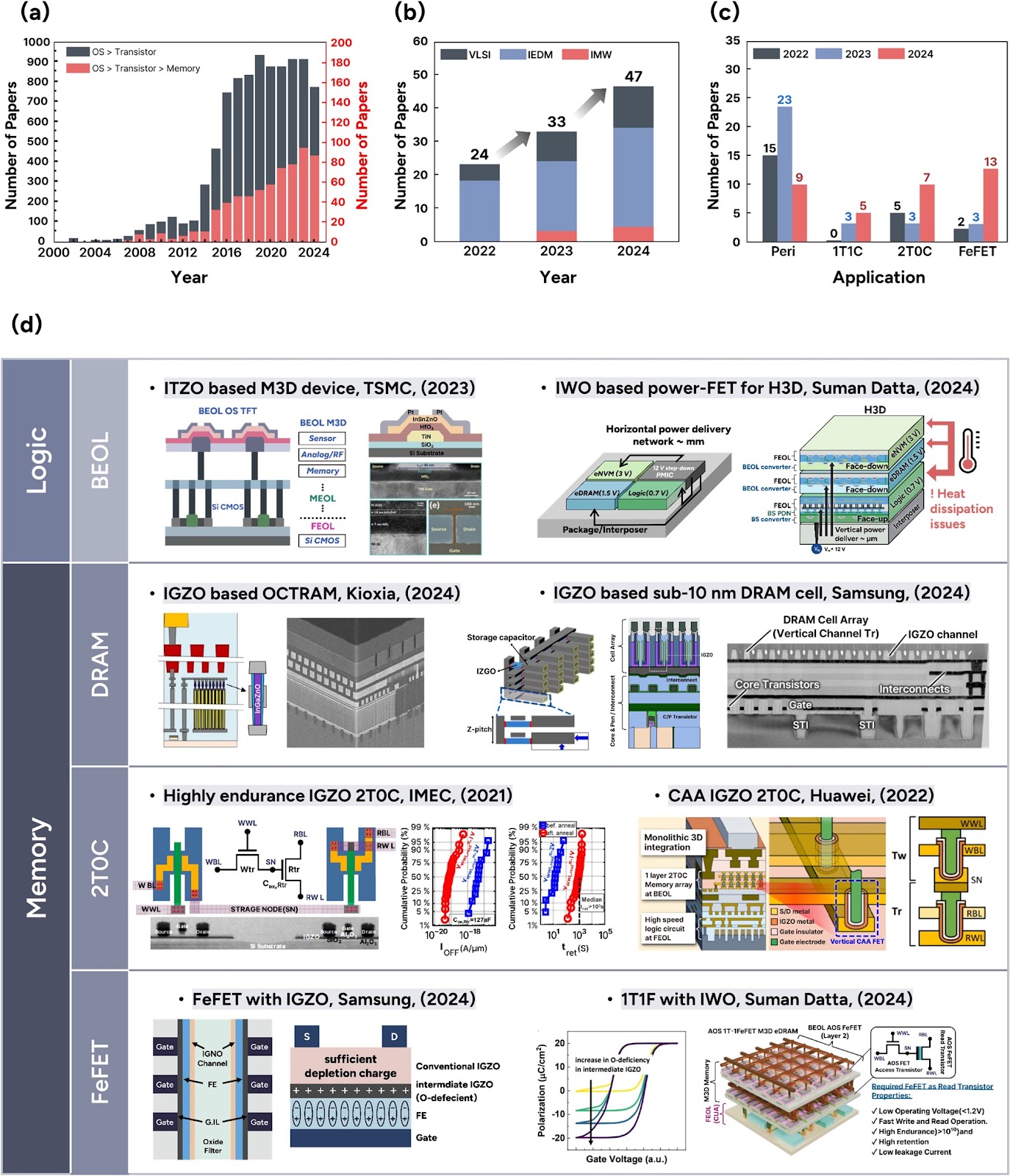
Oxide semiconductors (OSs), introduced by the Hosono group in the early 2000s, have evolved from display backplane materials to promising candidates for advanced memory and logic devices. The exceptionally low leakage current of OSs and compatibility with three-dimensional (3D) architectures have recently sparked renewed interest in their use in semiconductor applications. This review begins by exploring the unique material properties of OSs, which fundamentally originate from their distinct electronic band structure. Subsequently, we focus on atomic layer deposition (ALD), a core technique for growing excellent OS films, covering both basic and advanced processes compatible with 3D scaling. The basic surface reaction mechanisms—adsorption and reaction—and their roles in film growth are introduced. Furthermore, material design strategies, such as cation selection, crystallinity control, anion doping, and heterostructure engineering, are discussed. We also highlight challenges in memory applications, including contact resistance, hydrogen instability, and lack of p-type materials, and discuss the feasibility of ALD-grown OSs as potential solutions. Lastly, we provide an outlook on the role of ALD-grown OSs in memory technologies. This review bridges material fundamentals and device-level requirements, offering a comprehensive perspective on the potential of ALD-driven OSs for next-generation semiconductor memory devices.
Laser powder bed fusion of biodegradable Zn-4Cu alloy: Processing, microstructure and properties
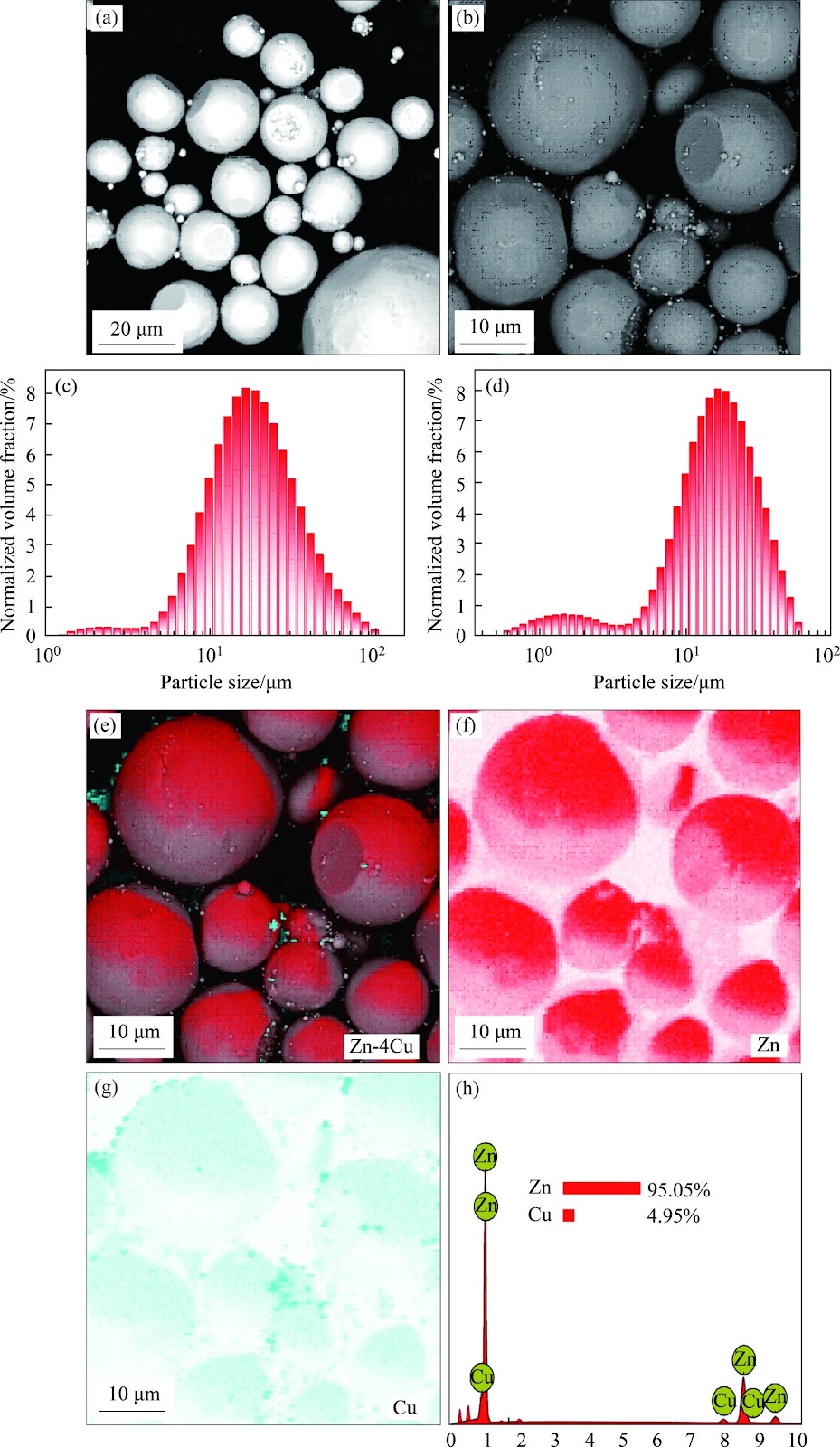
Zn's natural degradability and biocompatibility make it a promising candidate for implants, however, its mechanical properties remain insufficient for bone applications. In this study, the performance of Zn was enhanced by developing Zn-Cu alloys via laser powder bed fusion (LPBF). Optimal LPBF parameters for forming stable tracks were achieved by adjusting laser power and scanning speed. Under optimized conditions of 100 W and 100 mm/s, high-density (99.58%) Zn-Cu alloys with improved hardness (68.2HV) and yield strength (160 MPa) were achieved. These improvements are attributed to solid solution strengthening, segregation strengthening, and grain refinement. The Zn-Cu alloys also demonstrated favorable degradation behavior, with a rate of 0.16 mm/year. This degradation is primarily driven by micro-galvanic corrosion between the CuZn5 phase and Zn matrix, along with refined grains and increased grain boundary density. This work demonstrates a viable strategy for fabricating Zn-based implants with enhanced structural integrity and mechanical performance via LPBF.