Key Takeaways & Executive Findings
- •• MCPG nanozymes with sulfur vacancies enable cascade catalytic reactions that continuously replenish H2O2 and O2, overcoming tumor hypoxia and GSH-mediated resistance. • Mn doping induces structural reconstruction and enhances catalytic activity of sulfur vacancy sites, as confirmed by density functional theory calculations. • Under 1064 nm laser, MCPG exhibits photothermoelectric catalysis, generating ROS and disrupting redox homeostasis to trigger cuproptosis, ferroptosis, and apoptosis. • Multimodal imaging-guided synergistic therapy not only eradicates primary tumors but also elicits antitumor immune responses to inhibit metastasis.
Abstract
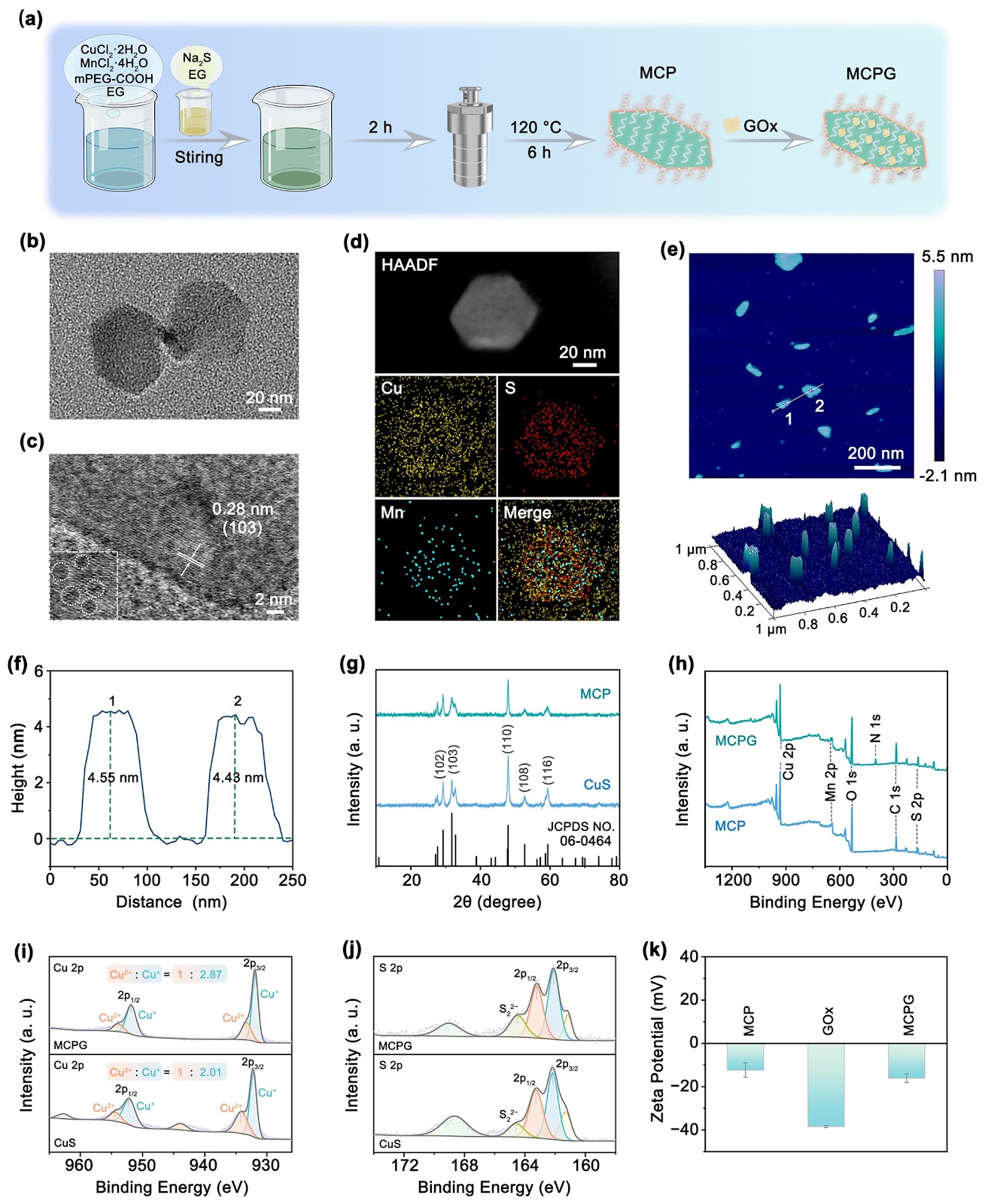
The therapeutic efficacy of cuproptosis, ferroptosis, and apoptosis is hindered by inadequate intracellular copper and iron levels, hypoxia, and elevated glutathione (GSH) expression in tumor cells. Thermoelectric technology is an emerging frontier in medical therapy that aims to achieve efficient thermal and electrical transport characteristics within a narrow thermal range for biological systems. Here, we systematically constructed biodegradable Cu2MnS3-x-PEG/glucose oxidase (MCPG) with sulfur vacancies (SV) using photothermoelectric catalysis (PTEC), photothermal-enhanced enzyme catalysis, and starvation therapy. This triggers GSH consumption and disrupts intracellular redox homeostasis, leading to immunogenic cell death. Under 1064 nm laser irradiation, MCPG enriched with SV, owing to doping, generates a local temperature gradient that activates PTEC and produces toxic reactive oxygen species (ROS). Hydroxyl radicals and oxygen are generated through peroxide and catalase-like processes. Increased oxygen levels alleviate tumor hypoxia, whereas hydrogen peroxide production from glycometabolism provides sufficient ROS for a cascade catalytic reaction, establishing a self-reinforcing positive mechanism. Density functional theory calculations demonstrated that vacancy defects effectively enhanced enzyme catalytic activity. Multimodal imaging-guided synergistic therapy not only damages tumor cells, but also elicits an antitumor immune response to inhibit tumor metastasis. This study offers novel insights into the cuproptosis/ferroptosis/apoptosis pathways of Cu-based PTEC nanozymes.
1. Introduction
Cancer is a considerable challenge that necessitates the development of innovative therapeutic strategies. Thermoelectric catalytic therapy (TECT) is an emerging therapeutic modality that converts thermal energy into electrical electricity via a temperature gradient, separating electron–hole (e−–h+) pairs and generating an intrinsic electric field [1, 2]. This process triggers redox reactions and reactive oxygen species (ROS) production, subsequently triggering tumor cell apoptosis [3]. However, TECT efficacy is constrained by the limited temperature variation within the organism.
Driven by the photothermoelectric (PTE) effect, using heat as an energy input demonstrates enhanced efficiency in light–thermal–electric energy conversion. Notably, PTE catalysis (PTEC) is an emerging intelligent strategy. When a PTE material is exposed to laser, a regional temperature elevation occurs because of its photothermal performance. This subsequently creates a temperature gradient, leading to the movement of charge carriers from the hotter to cooler regions and establishing a potential difference, which is known as the Seebeck effect [4–7]. In particular, TECT and PTEC exhibit distinct differences in mechanisms and energy source. TECT uses thermal energy and electrical energy as the primary driving forces, induces localized thermal effects via temperature gradients, and integrates the electric field regulation to catalyze reactions. Specifically, thermal energy facilitates the adsorption and dissociation processes on the catalyst surface, whereas electrical energy enhances the efficiency of redox reactions. In contrast, PTEC integrates light energy, thermal energy, and electrical energy into a unified system. Light energy serves as the excitation source and generates e−–h+ pairs via photocatalysts to par...
Loading authentic research manuscript (Pages 1–5)...
Mengshu Xu, Jingwei Liu, Lili Feng, Jiahe Hu, Wei Guo, Huiming Lin, Bin Liu, Yanlin Zhu, Shuyao Li, Elyor Berdimurodov, Avez Sharipov, Piaoping Yang (2025). Designing a Sulfur Vacancy Redox Disruptor for Photothermoelectric and Cascade-Catalytic-Driven Cuproptosis–Ferroptosis–Apoptosis Therapy. Nano-Micro Letters. https://doi.org/10.1007/s40820-025-01828-8
Research & Educational Purpose Only:The translations, structured abstracts, analytical annotations, and data reports provided by SinoTechIntel are intended exclusively for academic research, internal corporate R&D, and educational benchmarking. They do not constitute formal engineering, chemical safety, legal, or professional advice.
Copyright & Intellectual Property Notice: Original copyright of the underlying source articles and experimental data remains with the respective authors, institutions, and original publishing journals. SinoTechIntel claims intellectual property only over its proprietary translations, analytical syntheses, and AEO structured enhancements in accordance with international fair use and academic citation principles.
Frequently Asked Questions
What is the main innovation of this study?
The study introduces a biodegradable Cu2MnS3-x-PEG/glucose oxidase (MCPG) nanozyme with sulfur vacancies that integrates photothermoelectric catalysis, cascade enzymatic reactions, and starvation therapy to trigger cuproptosis, ferroptosis, and apoptosis in tumor cells.
How does MCPG overcome tumor hypoxia and high GSH levels?
MCPG generates oxygen through catalase-like activity and consumes glutathione via cascade reactions, thereby alleviating hypoxia and disrupting redox homeostasis, which enhances the efficacy of cuproptosis and ferroptosis.
What role do sulfur vacancies play in the catalytic activity?
Sulfur vacancies, enhanced by Mn doping, act as active sites that improve enzyme-like catalytic activity and facilitate photothermoelectric charge separation, leading to increased reactive oxygen species production.
How does photothermoelectric catalysis work in this system?
Under 1064 nm laser irradiation, MCPG generates a local temperature gradient, driving charge carrier diffusion and creating a potential difference (Seebeck effect) that promotes redox reactions and ROS generation.
What is the clinical significance of this therapy?
The multimodal synergistic therapy not only eradicates primary tumors but also elicits an antitumor immune response, potentially inhibiting metastasis, offering a promising strategy for cancer treatment.
Related Technical Papers & Translations
Direct Repair of the Crystal Structure and Coating Surface of Spent LiFePO4 Materials Enables Superfast Li-Ion Migration
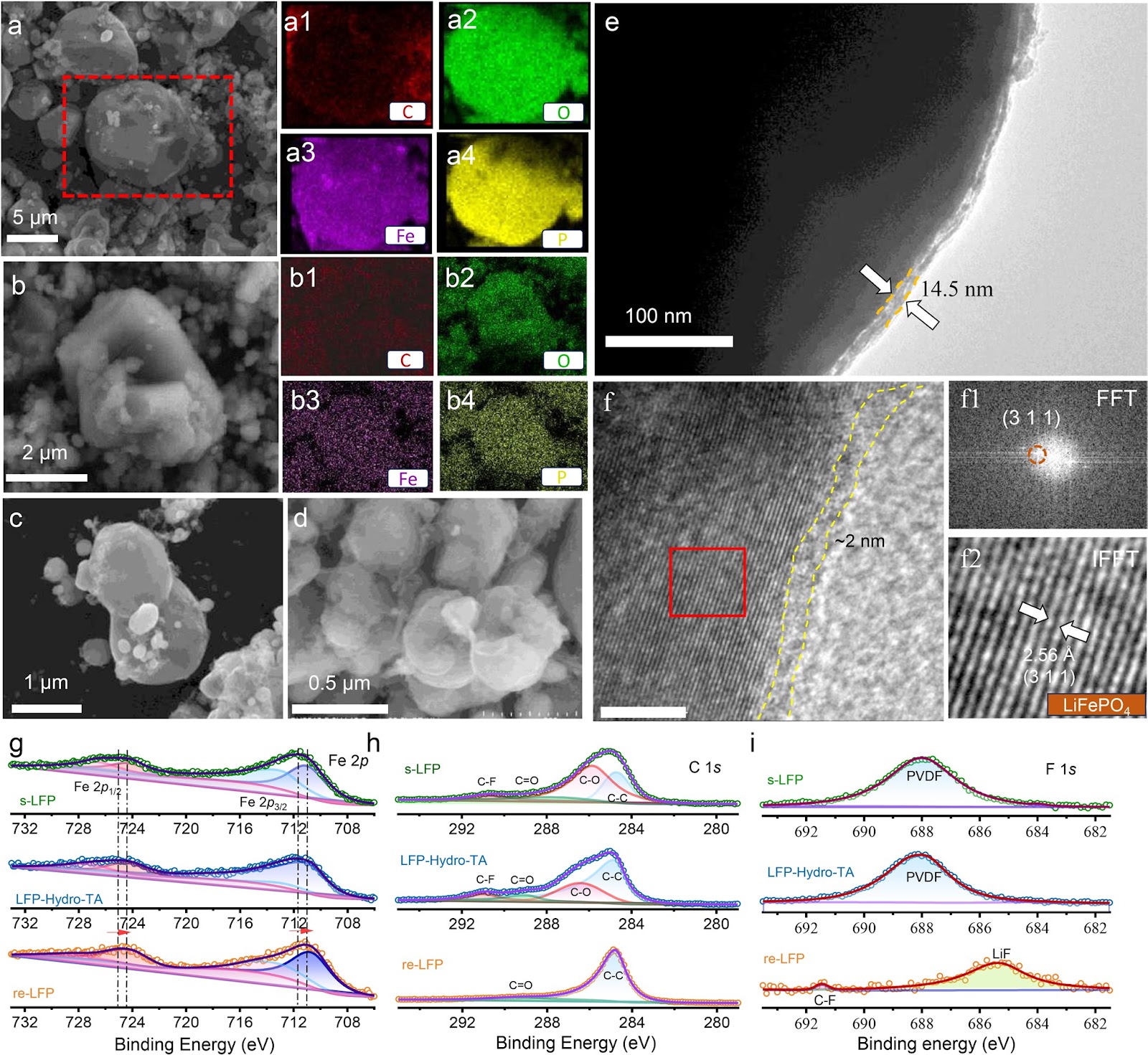
The rapid accumulation of spent LiFePO4 (LFP) cathodes from retired lithium-ion batteries necessitates the development of effective and environmental-friendly recycling strategies. In this context, direct regeneration has emerged as a promising approach for reclaiming LFP cathode materials, offering a streamlined pathway to restore their electrochemical functionality. We report an integrated regeneration protocol that simultaneously repairs the degraded crystal structure and reconstructs the damaged carbon coating in spent LFP. The regenerated cathode material had superfast lithium-ion diffusion kinetics and a stable cathode–electrolyte interface, giving a remarkable rate capability with specific capacities of 122 mAh g−1 at 5C and 106 mAh g−1 at 10C (1C = 170 mA g−1). It also maintained capacities of 110.7 mAh g−1 (5C) and 84.1 mAh g−1 (10C) after 400 cycles. It could be used in harsh environments and could be stably cycled at subzero temperatures (−10 and −20 °C) and in solid-state electrolyte batteries. Life cycle assessment combined with economic evaluation using the EverBatt model reveals that this direct regeneration approach has high economic and environmental benefits.
Oxide Semiconductor for Advanced Memory Architectures: Atomic Layer Deposition, Key Requirement and Challenges
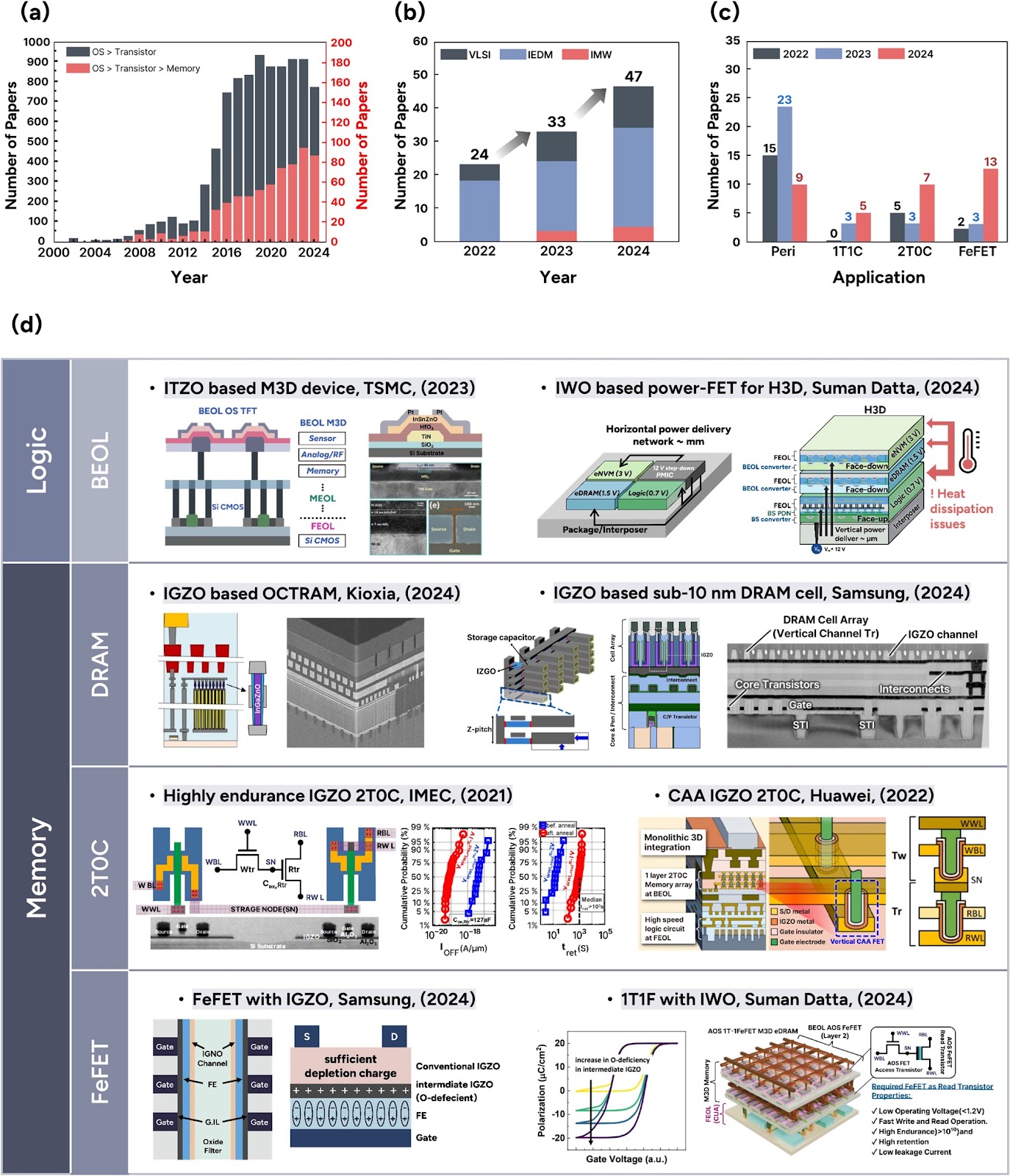
Oxide semiconductors (OSs), introduced by the Hosono group in the early 2000s, have evolved from display backplane materials to promising candidates for advanced memory and logic devices. The exceptionally low leakage current of OSs and compatibility with three-dimensional (3D) architectures have recently sparked renewed interest in their use in semiconductor applications. This review begins by exploring the unique material properties of OSs, which fundamentally originate from their distinct electronic band structure. Subsequently, we focus on atomic layer deposition (ALD), a core technique for growing excellent OS films, covering both basic and advanced processes compatible with 3D scaling. The basic surface reaction mechanisms—adsorption and reaction—and their roles in film growth are introduced. Furthermore, material design strategies, such as cation selection, crystallinity control, anion doping, and heterostructure engineering, are discussed. We also highlight challenges in memory applications, including contact resistance, hydrogen instability, and lack of p-type materials, and discuss the feasibility of ALD-grown OSs as potential solutions. Lastly, we provide an outlook on the role of ALD-grown OSs in memory technologies. This review bridges material fundamentals and device-level requirements, offering a comprehensive perspective on the potential of ALD-driven OSs for next-generation semiconductor memory devices.
Laser powder bed fusion of biodegradable Zn-4Cu alloy: Processing, microstructure and properties
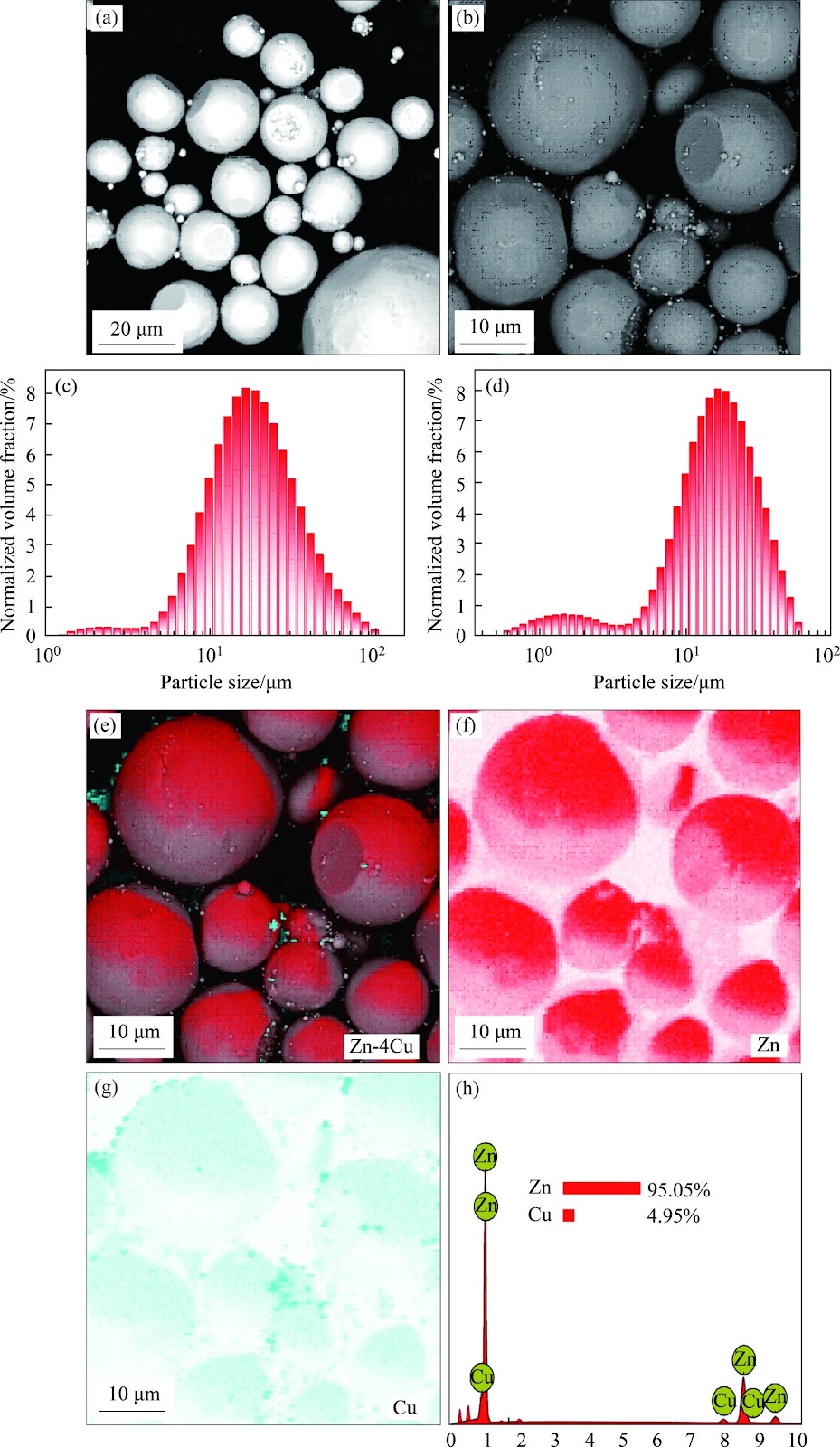
Zn's natural degradability and biocompatibility make it a promising candidate for implants, however, its mechanical properties remain insufficient for bone applications. In this study, the performance of Zn was enhanced by developing Zn-Cu alloys via laser powder bed fusion (LPBF). Optimal LPBF parameters for forming stable tracks were achieved by adjusting laser power and scanning speed. Under optimized conditions of 100 W and 100 mm/s, high-density (99.58%) Zn-Cu alloys with improved hardness (68.2HV) and yield strength (160 MPa) were achieved. These improvements are attributed to solid solution strengthening, segregation strengthening, and grain refinement. The Zn-Cu alloys also demonstrated favorable degradation behavior, with a rate of 0.16 mm/year. This degradation is primarily driven by micro-galvanic corrosion between the CuZn5 phase and Zn matrix, along with refined grains and increased grain boundary density. This work demonstrates a viable strategy for fabricating Zn-based implants with enhanced structural integrity and mechanical performance via LPBF.