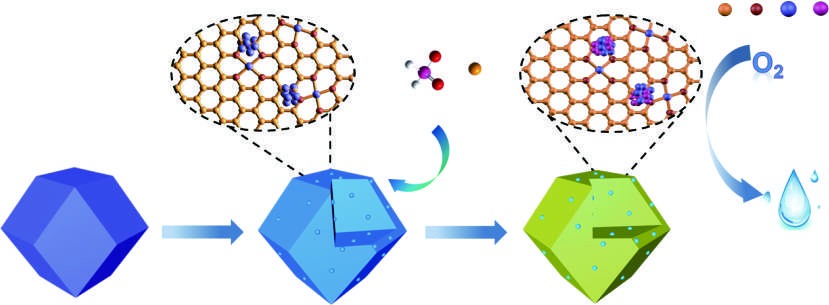
Key Takeaways & Executive Findings
- •• CoP nanoparticles anchored on nitrogen-doped porous carbon (CoP@NC) were synthesized via phosphating, retaining the dodecahedral structure of Co NPs. • The CoP@NC electrocatalyst exhibits remarkable ORR activity with a half-wave potential of 0.92 V in alkaline media, outperforming many non-precious catalysts. • Zn-air batteries using CoP@NC cathode achieve a high open-circuit voltage of 1.51 V and power density of 210.1 mW cm−2, demonstrating practical viability. • The synergistic coupling between well-dispersed CoP nanoparticles and the porous nitrogen-doped carbon framework enhances catalytic performance and mass transport.
Abstract
Exploring cost-efficient and highly-efficient noble metal-free catalysts for the oxygen reduction reactions (ORRs) involved in sustainable energy devices remains a great challenge. Transition-metal phosphides supported on heteroatom-doped carbons have shown potential as alternative candidates for precious metals because of their tunable electronic structures and higher catalytic performance. Phosphating was used to construct CoP nanoparticles (NPs) anchored on a nitrogen-doped porous carbon framework (CoP@NC) from Co NPs loaded on NC, using PH3 gas released from NaH2PO2 during heat treatment. The dodecahedral structure of Co NPs was retained in their transformation to CoP NPs. The CoP@NC electrocatalyst shows a remarkable ORR activity with a half-wave potential up to 0.92 V under alkaline conditions, which is attributed to the combined coupling between the well dispersed CoP nanoparticles on the nitrogen-doped carbon and the efficient mass transport in the porous structure. Zinc-air batteries assembled with the CoP@NC electrocatalyst as a cathode have a high open-circuit voltage of 1.51 V and power density of 210.1 mW cm−2. This work provides a novel strategy to develop low-cost catalysts with an excellent ORR performance to promote their practical use in metal-air batteries.
1. Introduction
The oxygen reduction reaction (ORR) is a key cathodic reaction in next-generation renewable energy conversion devices such as metal-air batteries[1–4]. However, the main challenge ORR face is lacking excellent catalysts, mainly due to the high energy barriers and sluggish kinetics caused by the four-electron/proton transfer pathway and intermediates adsorption/desorption in ORR[5–8]. Current commercially available platinum (Pt)-based catalysts hinder the large-scale and sustainable application of these devices by their low natural abundance, high-cost, and poor durability[2,9,10]. Therefore, the researchers focused their efforts on cost-effective precious-metal-free ORR catalysts to promote the commercial application of clean-energy devices [11–14].
Among various alternatives of Pt-based electrocatalysts, transition-metal phosphide (TMP) catalysts have attracted extensive interests due to their good conductivity, excellent stability, adjustable electronic structures and abundant bonding types[15–18]. Recent studies have shown that the synergy between the various active components can improve the catalytic activity of TMP catalysts[19–24]. For example, a composite of Co2P nanoparticle decorated N, P co-doped defective carbon materials (Co2P@CoNPG) exhibits excellent catalytic activity attributed to the synergistic effects of Co2P and Co-Nx active sites[25–29]. In addition, the powerful synergistic coupling between phosphides and defect-abundant carbon matrix can also enhance the catalytic activity of TMP catalysts[30]. CoP particles loaded on N, P-doped necklace-like carbon show excellent ORR activity due to the synergistic effects between CoP nanoparticles and carbon matrix[31]. Moreover, encapsulation of TMPs into carbon materials has been proved to further boost electrocatalytic activity and prevent the chemical corrosion[32–35]. Li et al. prepared a multifunctional Co-NC@CoP-NC catalyst, and its better ORR performance and stability are due to the high efficient of CoP and the complete protection of cobalt by the nitrogen-doped carbon layer [19]. Nevertheless, it has been reported that different crystalline phases (CoP and Co2P) of cobalt phosphide exist in TMP catalysts, which show different catalytic preferences for different catalytic reactions. Scott M. Geyer et al. compared the catalytic performance of well-dispersed CoP and Co2P nanocrystals, confirming that Co2P is preferred species for oxygen evolution reaction (OER) due to the easy formation of abundant Co2P@COOH heterogeneous structures and CoP for ORR due to abundant P sites[36]. Therefore, effective and versatile synthetic methodology for the controllable fabrication of TMP catalysts should make full use of the advantages of structural and compositional properties to maximize the ORR performance.
In this work, a high-efficient CoP@NC catalyst (CoP nanoparticles wrapped by nitrogen-doped carbon shells supported on porous carbon) was synthesized via a phosphating strategy. The catalyst exhibits outstanding ORR activity and stability, and its application in Zn-air batteries demonstrates high performance, providing a novel approach for developing low-cost, high-performance ORR catalysts.
Loading authentic research manuscript (Pages 1–5)...
YAN Xiao-li, WANG Kui, HAO Shu-wei, ZHOU Guang-da, YANG Hao-wei, ZHANG Hua, GUO Jun-jie (2024). Controllable construction of CoP nanoparticles anchored on a nitrogen-doped porous carbon as an electrocatalyst for highly efficient oxygen reduction in Zn-air batteries. New Carbon Materials. https://doi.org/10.1016/S1872-5805_N
Research & Educational Purpose Only:The translations, structured abstracts, analytical annotations, and data reports provided by SinoTechIntel are intended exclusively for academic research, internal corporate R&D, and educational benchmarking. They do not constitute formal engineering, chemical safety, legal, or professional advice.
Copyright & Intellectual Property Notice: Original copyright of the underlying source articles and experimental data remains with the respective authors, institutions, and original publishing journals. SinoTechIntel claims intellectual property only over its proprietary translations, analytical syntheses, and AEO structured enhancements in accordance with international fair use and academic citation principles.
Frequently Asked Questions
What is the main innovation of this study?
The study presents a controllable synthesis of CoP nanoparticles anchored on nitrogen-doped porous carbon (CoP@NC) via a phosphating method, achieving high ORR activity and excellent performance in Zn-air batteries, offering a low-cost alternative to precious metal catalysts.
What is the half-wave potential of the CoP@NC electrocatalyst?
The CoP@NC electrocatalyst exhibits a remarkable half-wave potential of 0.92 V under alkaline conditions, indicating superior oxygen reduction reaction activity.
How does the CoP@NC catalyst perform in Zn-air batteries?
Zn-air batteries assembled with CoP@NC as the cathode achieve a high open-circuit voltage of 1.51 V and a power density of 210.1 mW cm−2, demonstrating practical applicability.
What is the significance of the porous nitrogen-doped carbon support?
The porous nitrogen-doped carbon support enhances mass transport and provides synergistic coupling with CoP nanoparticles, improving the overall catalytic performance and stability.
What are the key advantages of CoP over other cobalt phosphides for ORR?
CoP is preferred for ORR due to its abundant P sites, which facilitate the adsorption/desorption of intermediates, whereas Co2P is more suitable for OER.
Related Technical Papers & Translations
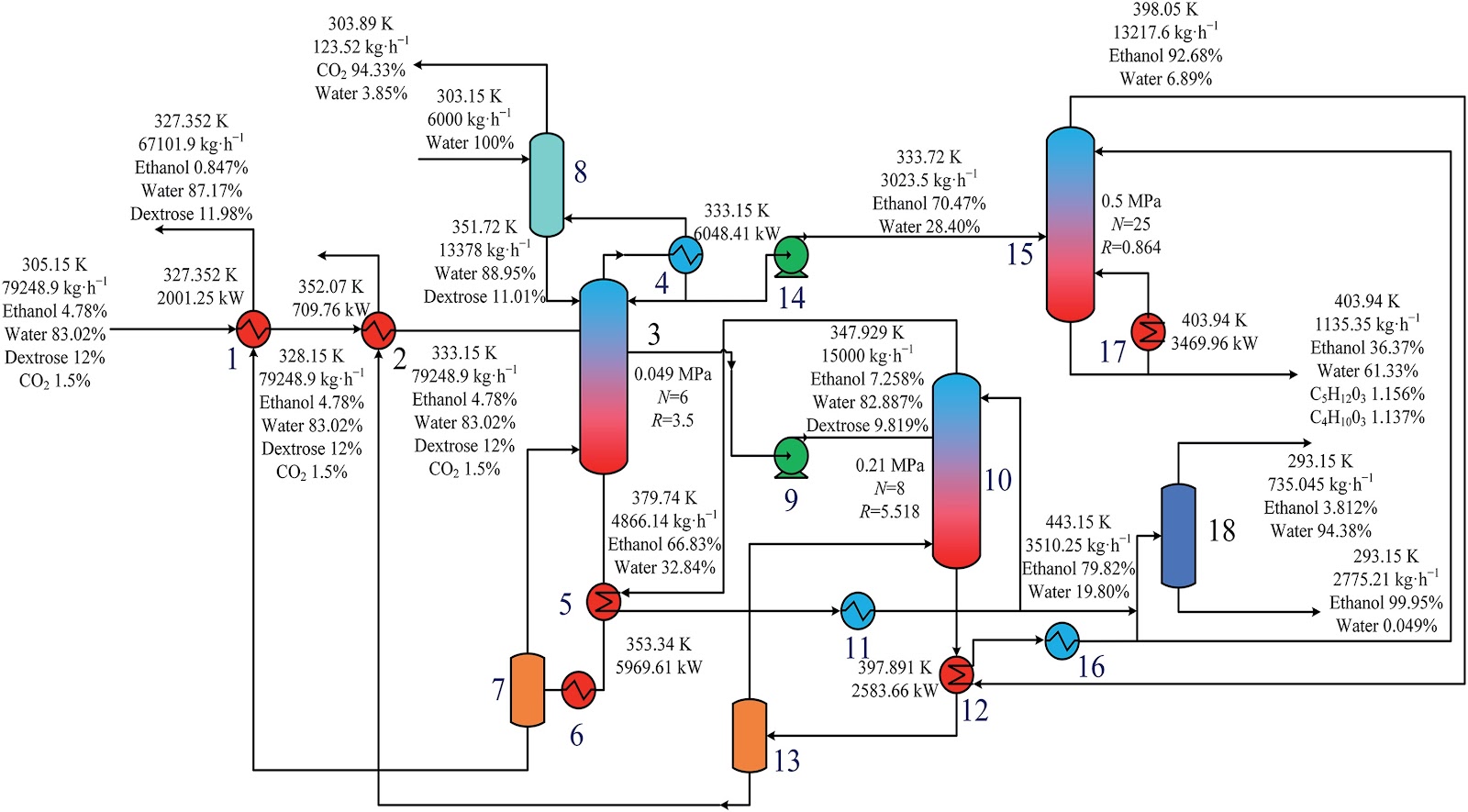
Design and optimization of a high-efficiency distillation process for cellulosic fuel ethanol integrated with thermal coupling and molecular sieve adsorption
To address the challenges of high energy consumption and prominent costs in the traditional three-columns distillation process for cellulosic fuel ethanol, a distillation—molecular sieve coupling separation process is proposed. This process integrates a three-column (crude distillation column, first distillation column, second distillation column) system with a 3A molecular sieve adsorption deep dehydration unit. A thermal coupling network is constructed via differential pressure design (steam from medium/high-pressure columns as mutual heat sources, reboiler liquid waste heat for feed preheating), and molecular sieve adsorption conditions are optimized. The study first performs a thermodynamic consistency test on the ethanol—water system, determines optimal non-random two-liquid (NRTL) model binary interaction parameters via experimental data regression for Aspen Plus simulation. Aiming at minimum total annual cost (TAC), Aspen Plus is used to optimize process parameters (theoretical tray number, feed location, reflux ratio, side-draw position, etc.). Economic analysis shows this process reduces CO2 emission costs by 27.56%, TAC by 15.58% (to 5.123 × 10⁶ USD·a-1), and increases ethanol purity to >99.6%, providing an effective solution for green, efficient separation.
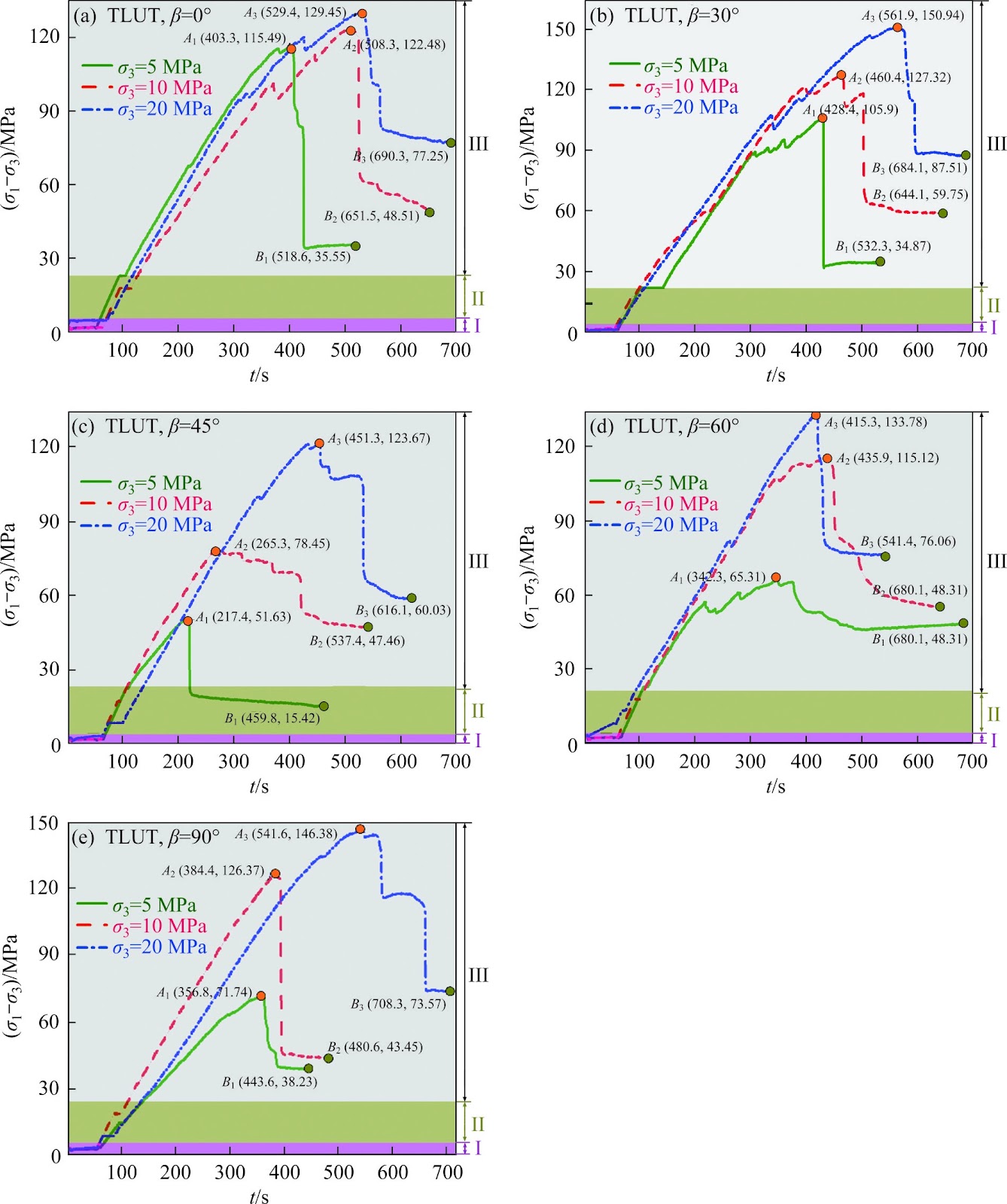
A cohesion loss model for determining residual strength of deep bedded sandstone
Rock residual strength, as an important input parameter, plays an indispensable role in proposing the reasonable and scientific scheme about stope design, underground tunnel excavation and stability evaluation of deep chambers. Therefore, previous residual strength models of rocks established were reviewed. And corresponding related problems were stated. Subsequently, starting from the effects of bedding and whole life-cycle evolution process, series of triaxial mechanical tests of deep bedded s
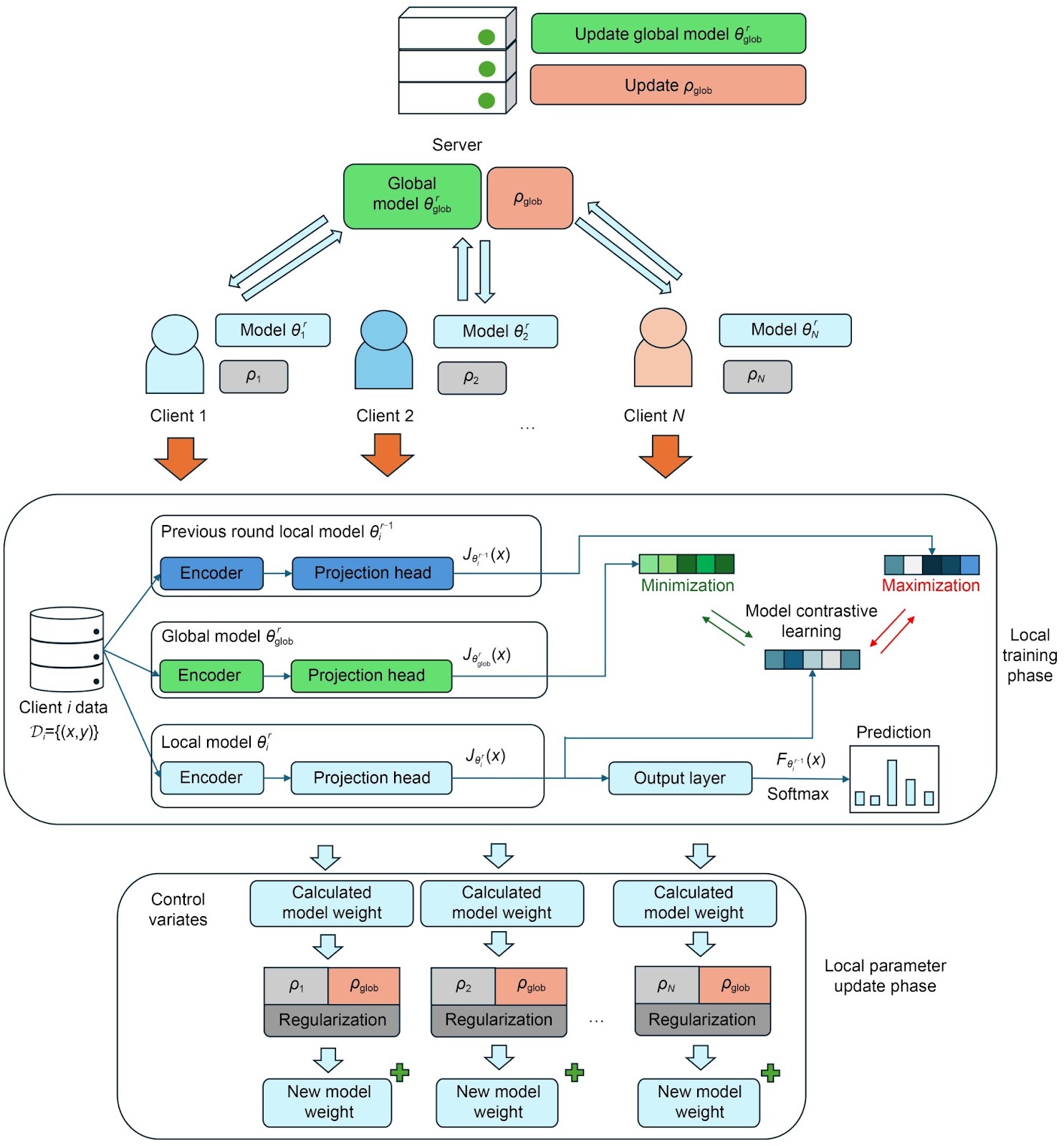
Federated model with contrastive learning and adaptive control variates for human activity recognition
Recent attention to privacy issues demands a communication-safe method for training human activity recognition (HAR) models on client activity data. Federated learning (FL) has become a compelling technique to facilitate model training between the server and clients while preserving data privacy. However, classical FL methods often assume independent and identically distributed (IID) data among clients. This assumption does not hold true in practical scenarios. Human activity in real-world scena