Key Takeaways & Executive Findings
- •• PANS provides accurate predictions of HST aerodynamics even with low-resolution grids, outperforming LES in near-wall flow regions. • Both PANS and LES benefit from grid refinement, especially at small yaw angles, improving prediction accuracy. • The study validates PANS against wind tunnel experiments and fine LES, confirming its reliability for engineering applications. • PANS offers a computationally efficient alternative to LES for high-speed train aerodynamic simulations, particularly in crosswind conditions.
Abstract
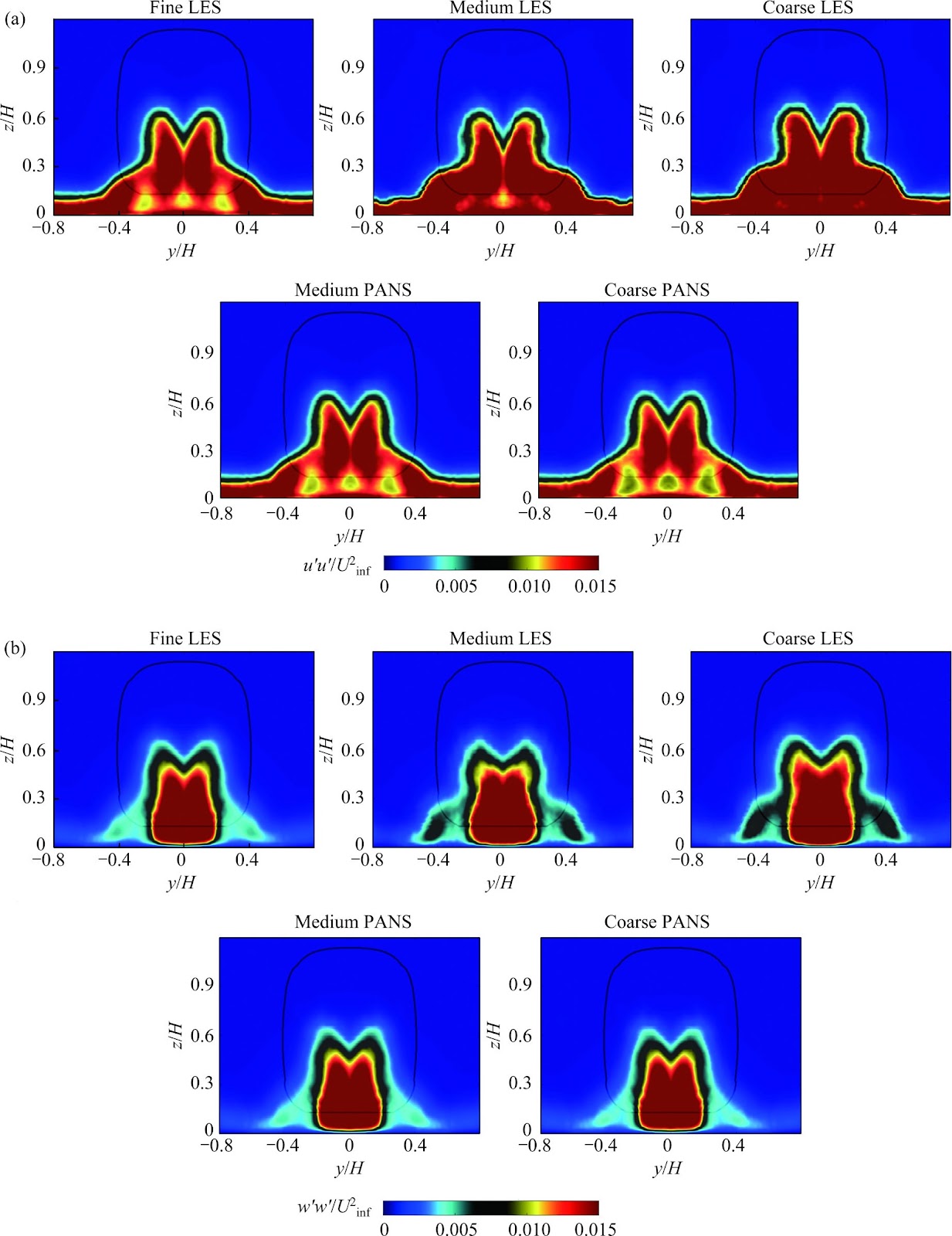
This paper investigates the influence of numerical methods and mesh resolution on the prediction accuracy of the aerodynamic behaviors of a 1/20 scaled generic high-speed train (HST) model. A thorough comparison is made between partially averaged Navier-Stokes (PANS), large eddy simulation (LES), and wind tunnel experiments, covering aerodynamic forces, surface pressure, velocity distribution, and Reynolds stress and turbulent kinetic energy in the wake region. The Reynolds number for both simulations and experiments is set to 4.75×10⁵. The results show that the PANS approach accurately predicts flow characteristics observed in experiments and fine LES calculations, even with a low-resolution grid. PANS exhibits a distinct advantage over LES when grid resolutions are insufficient for resolving near-wall flow structures around the HST, both in open-air conditions and crosswind environments. Additionally, grid refinement improves the predictive accuracy of the HST's aerodynamic performance, particularly in the presence of small yaw angle.
1. Introduction
With the rapid advancement of computer technology, computational fluid dynamics (CFD) has become widely employed due to its ability to efficiently compute and visualize the flow field around trains. In the numerical prediction of the flow around high-speed trains (HSTs), characterized by highly unsteady separated flow, traditional Reynolds-averaged Navier-Stokes (RANS) method is found to yield inaccurate results. This is attributed to its modeling of all flow scales with one-point closures. Large eddy simulation (LES) has proven to be effective in capturing a broad spectrum of turbulent scales, offering high accuracy in predicting turbulent flow around bluff bodies [1, 2]. Despite significant strides in computing resources, achieving precise LES predictions for detailed vehicles, especially at realistic or higher Reynolds numbers, remains challenging and expensive.
Considering these challenges, it becomes imperative to explore appropriate hybrid techniques to address different regions of bluff body flows: from the growth of the boundary layer to its separation, the formation of shear layers, and the development of wakes. The detached-eddy simulation (DES), initially proposed as a zonal approach by SPALART et al [3], represents a hybrid method that employs RANS to simulate the boundary layer of an HST and utilizes LES to capture the large-scale turbulent flow away from the HST. This approach has demonstrated success in numerically investigating various aspects of train aerodynamic behavior, including underbody flow simulation [4 −6], side flow (slipstream) assessment [7 −10], wake flow analysis [11 −13], safety evaluation in crosswind condition [14 −16] and aeroacoustics prediction [17−19]. Nevertheless, in the complex flow around a high-speed train, a grey area exists between RANS and LES approaches. This issue arises primarily from the grid-dependent nature of DES, where inadequate resolution in the transition region disrupts the intended shift from RANS to LES. Insufficient grid refinement may prevent the smooth resolution of large-scale turbulent structures, forcing excessive reliance on RANS modeling, while overly dense grids undermine the computational efficiency central to hybrid methods. Such unresolved interactions within the grey area compromise the accurate representation of turbulent energy transfer.
Loading authentic research manuscript (Pages 1–5)...
DONG Tian-yun, MINELLI Guglielmo, WANG Jia-bin, BASARA Branislav, KRAJNOVIĆ Sinisa (2025). Comparison of partially averaged Navier-Stokes and large eddy simulation of the aerodynamic behaviors of a generic high-speed train. Journal of Central South University. https://doi.org/10.1007/s11771-025-6143-8
Research & Educational Purpose Only:The translations, structured abstracts, analytical annotations, and data reports provided by SinoTechIntel are intended exclusively for academic research, internal corporate R&D, and educational benchmarking. They do not constitute formal engineering, chemical safety, legal, or professional advice.
Copyright & Intellectual Property Notice: Original copyright of the underlying source articles and experimental data remains with the respective authors, institutions, and original publishing journals. SinoTechIntel claims intellectual property only over its proprietary translations, analytical syntheses, and AEO structured enhancements in accordance with international fair use and academic citation principles.
Frequently Asked Questions
What is the main objective of this study?
The study compares PANS and LES methods for predicting aerodynamic behaviors of a generic high-speed train model, evaluating their accuracy against wind tunnel experiments and the influence of mesh resolution.
What are the key findings regarding PANS and LES?
PANS accurately predicts flow characteristics even with low-resolution grids and shows advantages over LES in near-wall regions, especially in open-air and crosswind conditions. Grid refinement improves accuracy for both methods, particularly at small yaw angles.
What is the significance of this research for engineering applications?
PANS offers a computationally efficient alternative to LES for high-speed train aerodynamic simulations, providing reliable predictions with less computational cost, which is beneficial for design and safety assessments.
What are the limitations of traditional RANS and LES methods?
RANS is inaccurate for highly unsteady separated flows, while LES is computationally expensive and challenging at high Reynolds numbers. Hybrid methods like PANS aim to balance accuracy and efficiency.
How was the study validated?
The simulations were compared with wind tunnel experiments and fine LES calculations, covering aerodynamic forces, surface pressure, velocity distribution, and turbulence quantities in the wake region.
Related Technical Papers & Translations
Direct Repair of the Crystal Structure and Coating Surface of Spent LiFePO4 Materials Enables Superfast Li-Ion Migration
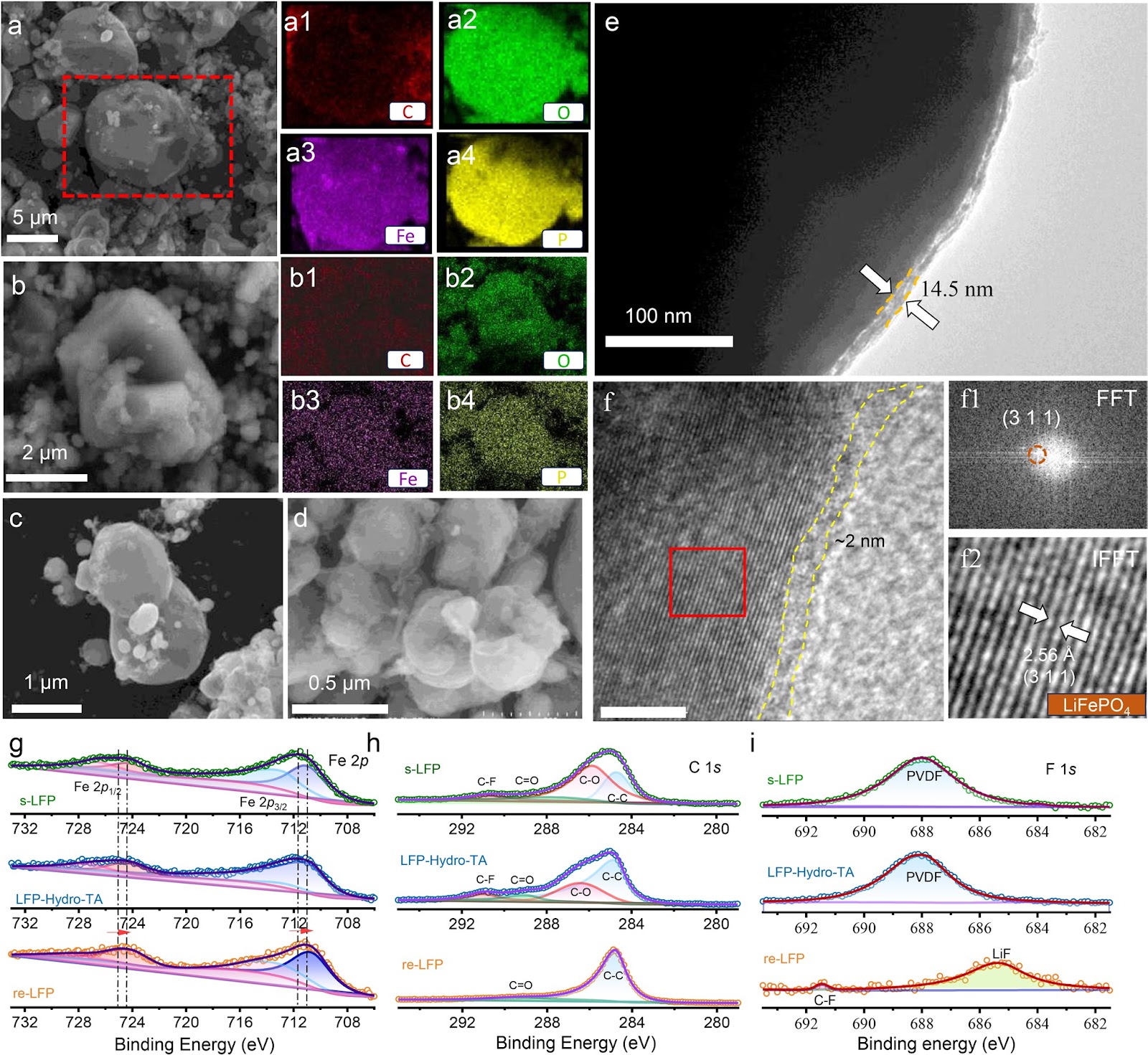
The rapid accumulation of spent LiFePO4 (LFP) cathodes from retired lithium-ion batteries necessitates the development of effective and environmental-friendly recycling strategies. In this context, direct regeneration has emerged as a promising approach for reclaiming LFP cathode materials, offering a streamlined pathway to restore their electrochemical functionality. We report an integrated regeneration protocol that simultaneously repairs the degraded crystal structure and reconstructs the damaged carbon coating in spent LFP. The regenerated cathode material had superfast lithium-ion diffusion kinetics and a stable cathode–electrolyte interface, giving a remarkable rate capability with specific capacities of 122 mAh g−1 at 5C and 106 mAh g−1 at 10C (1C = 170 mA g−1). It also maintained capacities of 110.7 mAh g−1 (5C) and 84.1 mAh g−1 (10C) after 400 cycles. It could be used in harsh environments and could be stably cycled at subzero temperatures (−10 and −20 °C) and in solid-state electrolyte batteries. Life cycle assessment combined with economic evaluation using the EverBatt model reveals that this direct regeneration approach has high economic and environmental benefits.
Oxide Semiconductor for Advanced Memory Architectures: Atomic Layer Deposition, Key Requirement and Challenges
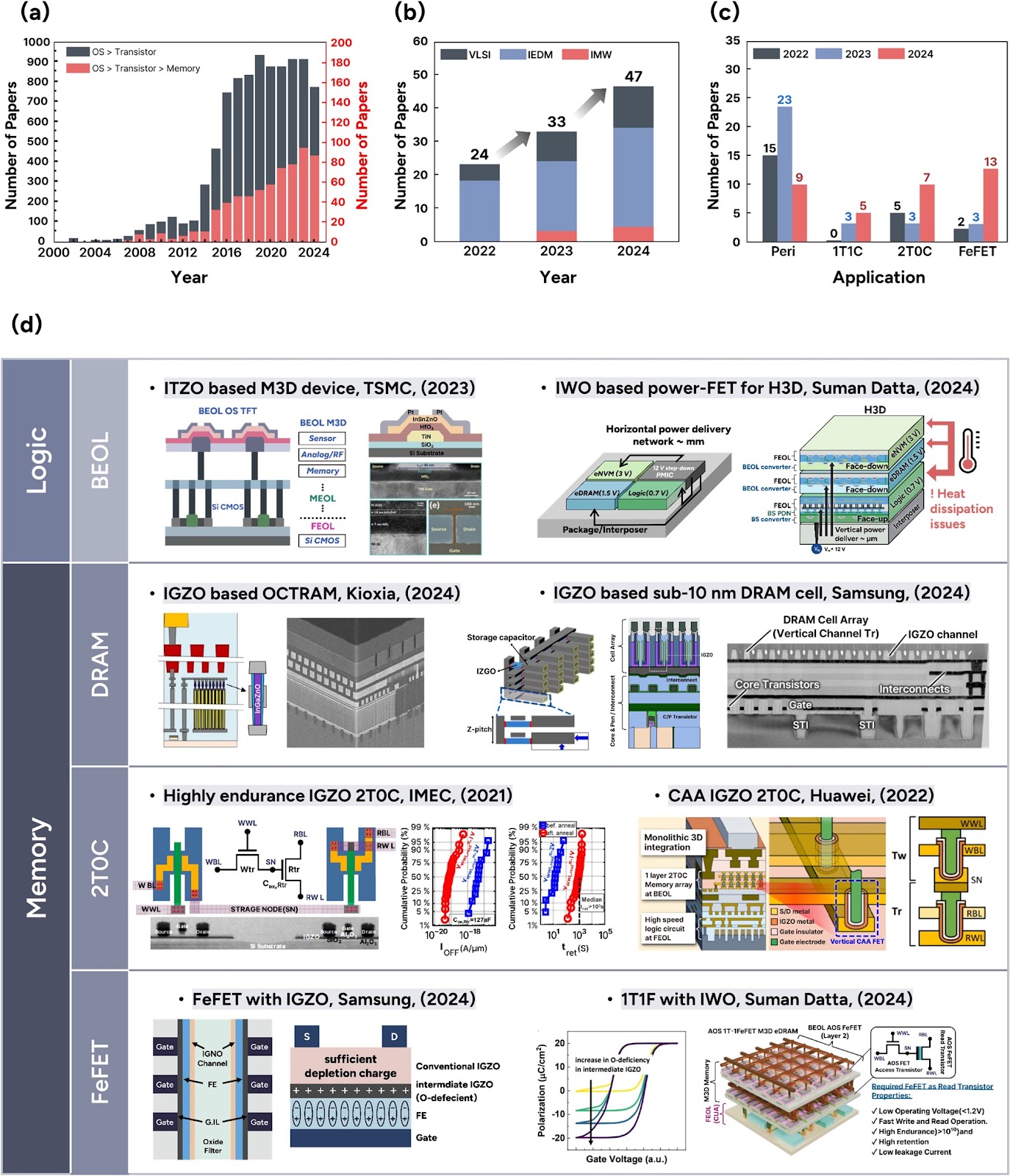
Oxide semiconductors (OSs), introduced by the Hosono group in the early 2000s, have evolved from display backplane materials to promising candidates for advanced memory and logic devices. The exceptionally low leakage current of OSs and compatibility with three-dimensional (3D) architectures have recently sparked renewed interest in their use in semiconductor applications. This review begins by exploring the unique material properties of OSs, which fundamentally originate from their distinct electronic band structure. Subsequently, we focus on atomic layer deposition (ALD), a core technique for growing excellent OS films, covering both basic and advanced processes compatible with 3D scaling. The basic surface reaction mechanisms—adsorption and reaction—and their roles in film growth are introduced. Furthermore, material design strategies, such as cation selection, crystallinity control, anion doping, and heterostructure engineering, are discussed. We also highlight challenges in memory applications, including contact resistance, hydrogen instability, and lack of p-type materials, and discuss the feasibility of ALD-grown OSs as potential solutions. Lastly, we provide an outlook on the role of ALD-grown OSs in memory technologies. This review bridges material fundamentals and device-level requirements, offering a comprehensive perspective on the potential of ALD-driven OSs for next-generation semiconductor memory devices.
Laser powder bed fusion of biodegradable Zn-4Cu alloy: Processing, microstructure and properties
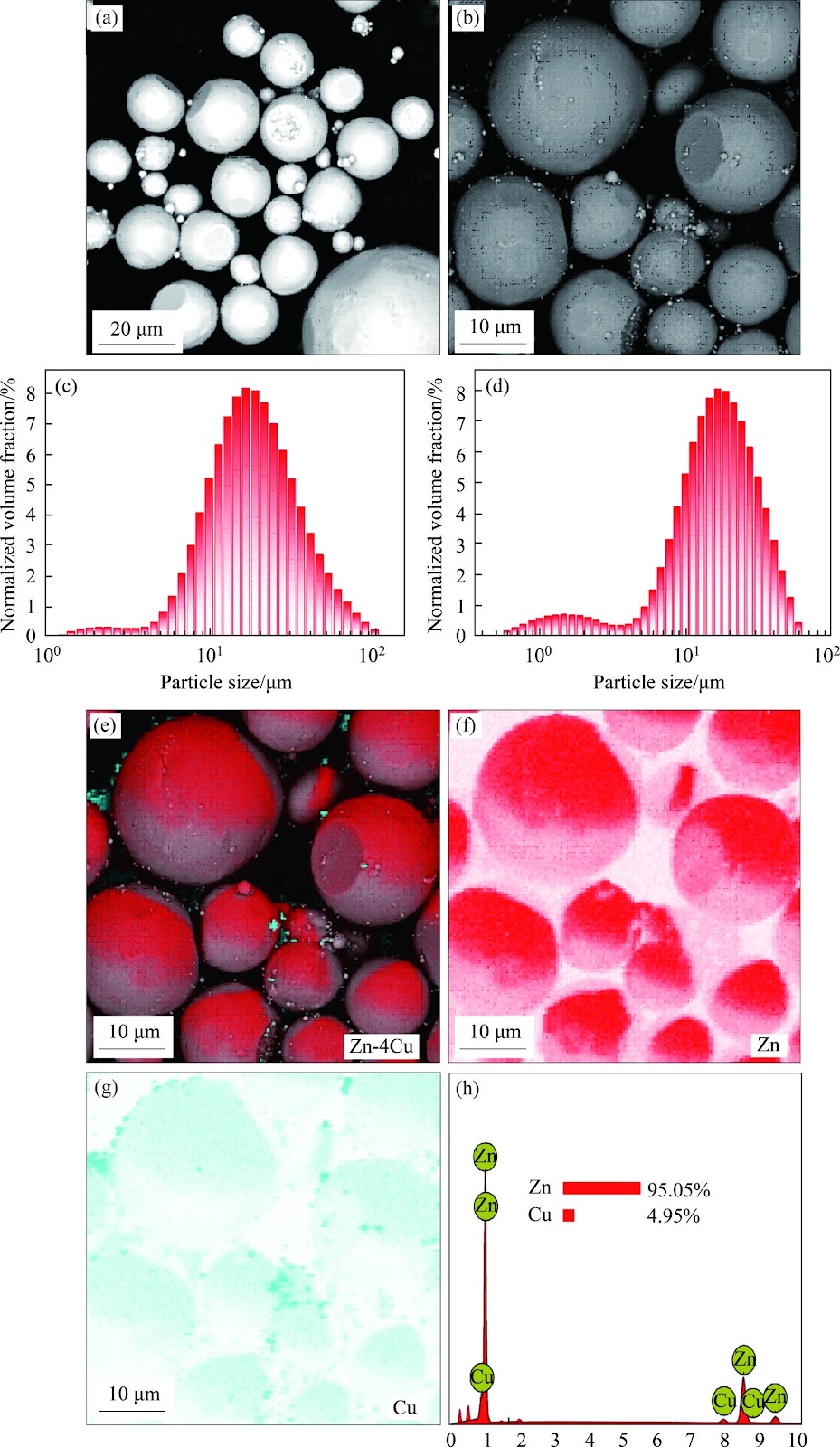
Zn's natural degradability and biocompatibility make it a promising candidate for implants, however, its mechanical properties remain insufficient for bone applications. In this study, the performance of Zn was enhanced by developing Zn-Cu alloys via laser powder bed fusion (LPBF). Optimal LPBF parameters for forming stable tracks were achieved by adjusting laser power and scanning speed. Under optimized conditions of 100 W and 100 mm/s, high-density (99.58%) Zn-Cu alloys with improved hardness (68.2HV) and yield strength (160 MPa) were achieved. These improvements are attributed to solid solution strengthening, segregation strengthening, and grain refinement. The Zn-Cu alloys also demonstrated favorable degradation behavior, with a rate of 0.16 mm/year. This degradation is primarily driven by micro-galvanic corrosion between the CuZn5 phase and Zn matrix, along with refined grains and increased grain boundary density. This work demonstrates a viable strategy for fabricating Zn-based implants with enhanced structural integrity and mechanical performance via LPBF.