Key Takeaways & Executive Findings
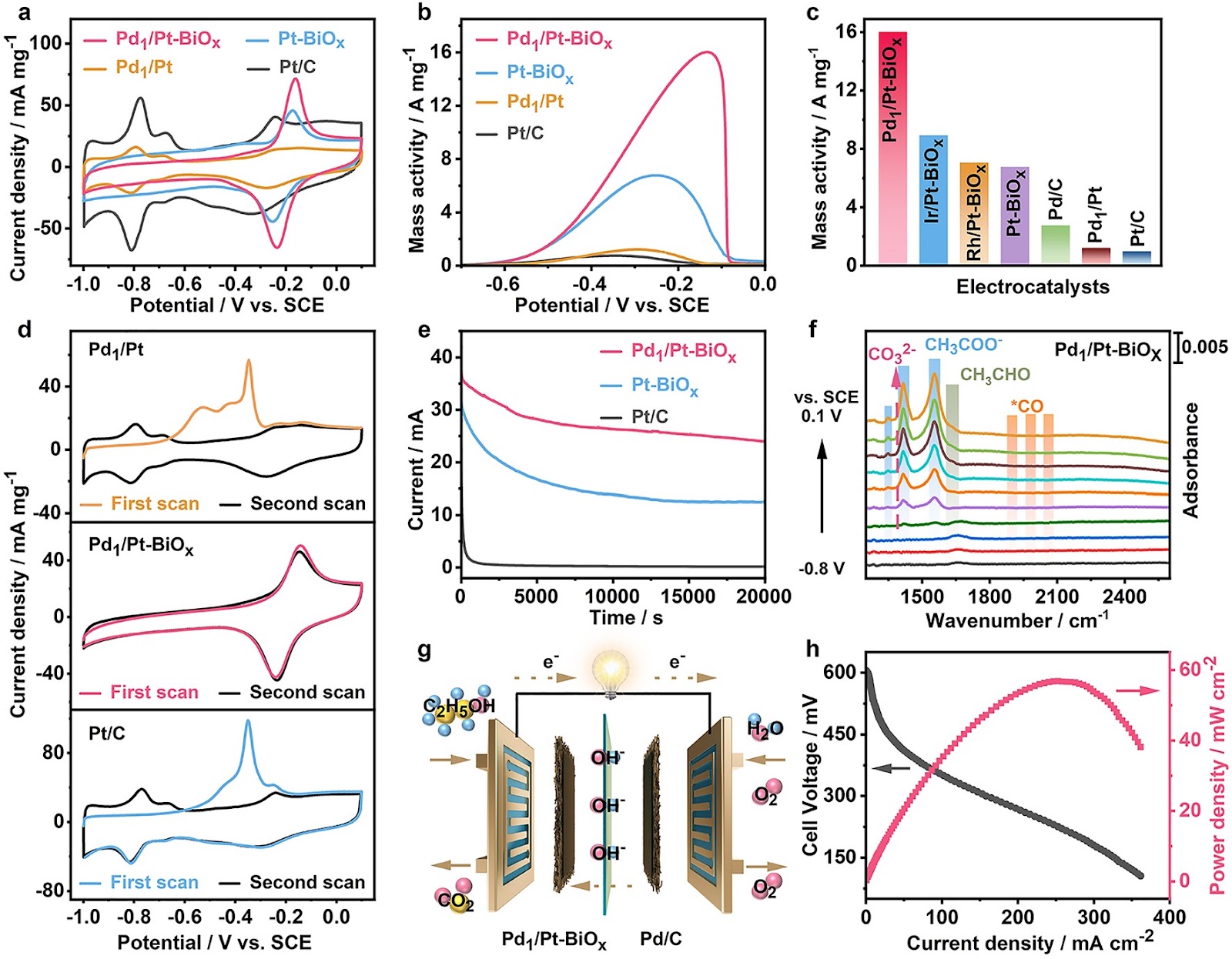
- •• A unique catalyst surface where ultrathin Pt edges are modified by isolated Pd atoms and BiOx adatoms is rationally designed and achieved. • The Pd1/Pt-BiOx electrocatalyst exhibits an ultrahigh mass activity of 16.01 A mg−1 Pt+Pd toward ethanol oxidation and enables a direct ethanol fuel cell of peak power density of 56.7 mW cm−2. • The surrounding BiOx adatoms are critical for mitigating CO-poisoning on Pt surface, and the Pd1/Pt single-atom alloy further facilitates the electrooxidation of CH3CH2OH. • This work offers new insights into the rational design and construction of sophisticated catalyst surfaces at single-atomic sites for highly efficient electrocatalysis.
Abstract
Engineering nanomaterials at single-atomic sites could enable unprecedented catalytic properties for broad applications, yet it remains challenging to do so on the surface of multimetallic nanocrystals. Herein, we present the multifactorial engineering (size, shape, phase, and composition) of the fully ordered PtBi nanoplates at atomic level, achieving a unique catalyst surface where the face-centered cubic (fcc) Pt edges are modified by the isolated Pd atoms and BiOx adatoms. This Pd1/Pt-BiOx electrocatalyst exhibits an ultrahigh mass activity of 16.01 A mg−1 Pt+Pd toward ethanol oxidation in alkaline electrolyte and enables a direct ethanol fuel cell of peak power density of 56.7 mW cm−2. The surrounding BiOx adatoms are critical for mitigating CO-poisoning on the Pt surface, and the Pd1/Pt single-atom alloy further facilitates the electrooxidation of CH3CH2OH. This work offers new insights into the rational design and construction of sophisticated catalyst surface at single-atomic sites for highly efficient electrocatalysis.
1. Introduction
Direct alcohol fuel cells (DAFCs) represent attractive alternatives to hydrogen fuel cells for portable applications, due to their adoption of liquid alcohols (methanol, ethanol, etc.) as fuels, which are more convenient in production, storage, transportation, and refueling. However, the electrooxidations of alcohols are kinetically sluggish processes which suffer from the issues of high overpotentials, intermediates poisoning, and a large dosage of noble metals [1]. Pt is one of the most active monometallic electrocatalysts for alcohol oxidation reactions (AORs), yet commercial Pt catalysts still lack satisfactory catalytic performance for practical DAFCs [2–4].
Engineering multimetallic nanocrystals is one of the most effective strategies to boost AORs electrocatalysis [5–7]. As a notable example, the ternary Pt/Rh/SnO2 electrocatalyst combines the specific properties of its components, consequently enables the alcohol dehydrogenation, C–C bond breaking, and oxidation of dissociated CO, thus facilitating the oxidation of ethanol [8]. However, it remains challenging to control, at atomic-level, the multimetallic ensembles on the surface of catalysts, in order to maximize the multifunctional effects and minimize the usage of noble metals [9–23].
Great progress has been made in developing multimetallic electrocatalysts by tuning the size, shape, phase, composition, and surface of multimetallic nanocatalysts. In this regard, single-atom alloy emerges as a high-performance and low-cost electrocatalyst for broad applications, since it combines the multifunctional effects introduced by alloying with the ultrahigh atom utilization of single-atom catalysis [24]. On the other hand, it is well established that some oxyphilic adatoms (Bi, Pb, Sn, etc.) enable the formation of adsorbed hydroxyl species (–OHad) at lower potentials, which can mitigate the poisoning of CO species on Pt surface [25–31]. Different from the regulation of single structural parameters, i.e., size, shape, phase, composition, or surface, the multifactorial engineering strategy holds promise in developing unprecedented electrocatalysts via constructing well-defined multimetallic ensembles. However, the multifactorial engineering of structural parameters at atomic-level in a nanocrystal still remains as a challenging task [32–45].
In this work, starting from the hexagonal close packed (hcp) PtBi intermetallic nanoplates and via a rational design, we constructed a novel catalyst surface, namely, Pt edges modified by atomically dispersed noble metal atoms (M = Pd, Rh, or Ir) and BiOx adatoms (M/Pt-BiOx).
Loading authentic research manuscript (Pages 1–5)...
Yujia Liao, Wen Chen, Yutian Ding, Lei Xie, Qi Yang, Qilong Wu, Xianglong Liu, Jinliang Zhu, Renfei Feng, Xian-Zhu Fu, Shuiping Luo, Jing-Li Luo (2025). Boosting Alcohol Oxidation Electrocatalysis with Multifactorial Engineered Pd1/Pt Single-Atom Alloy-BiOx Adatoms Surface. Nano-Micro Letters. https://doi.org/10.1007/s40820-025-01678-4
Research & Educational Purpose Only:The translations, structured abstracts, analytical annotations, and data reports provided by SinoTechIntel are intended exclusively for academic research, internal corporate R&D, and educational benchmarking. They do not constitute formal engineering, chemical safety, legal, or professional advice.
Copyright & Intellectual Property Notice: Original copyright of the underlying source articles and experimental data remains with the respective authors, institutions, and original publishing journals. SinoTechIntel claims intellectual property only over its proprietary translations, analytical syntheses, and AEO structured enhancements in accordance with international fair use and academic citation principles.
Frequently Asked Questions
What is the main achievement of this research?
The research demonstrates a novel catalyst surface with Pd1/Pt single-atom alloy and BiOx adatoms, achieving ultrahigh mass activity for ethanol oxidation and enabling a direct ethanol fuel cell with high peak power density.
How does the Pd1/Pt-BiOx catalyst mitigate CO poisoning?
The surrounding BiOx adatoms are critical for mitigating CO-poisoning on the Pt surface by facilitating the formation of adsorbed hydroxyl species at lower potentials, which helps oxidize CO intermediates.
What is the significance of multifactorial engineering in this work?
Multifactorial engineering allows simultaneous control of size, shape, phase, and composition at the atomic level, leading to a well-defined catalyst surface that maximizes multifunctional effects and minimizes noble metal usage.
What are the potential applications of this catalyst?
The catalyst is promising for direct alcohol fuel cells, particularly for ethanol oxidation, offering high efficiency and reduced reliance on noble metals.
What is the mass activity reported for ethanol oxidation?
The Pd1/Pt-BiOx electrocatalyst exhibits an ultrahigh mass activity of 16.01 A mg−1 Pt+Pd toward ethanol oxidation in alkaline electrolyte.
Related Technical Papers & Translations
Direct Repair of the Crystal Structure and Coating Surface of Spent LiFePO4 Materials Enables Superfast Li-Ion Migration
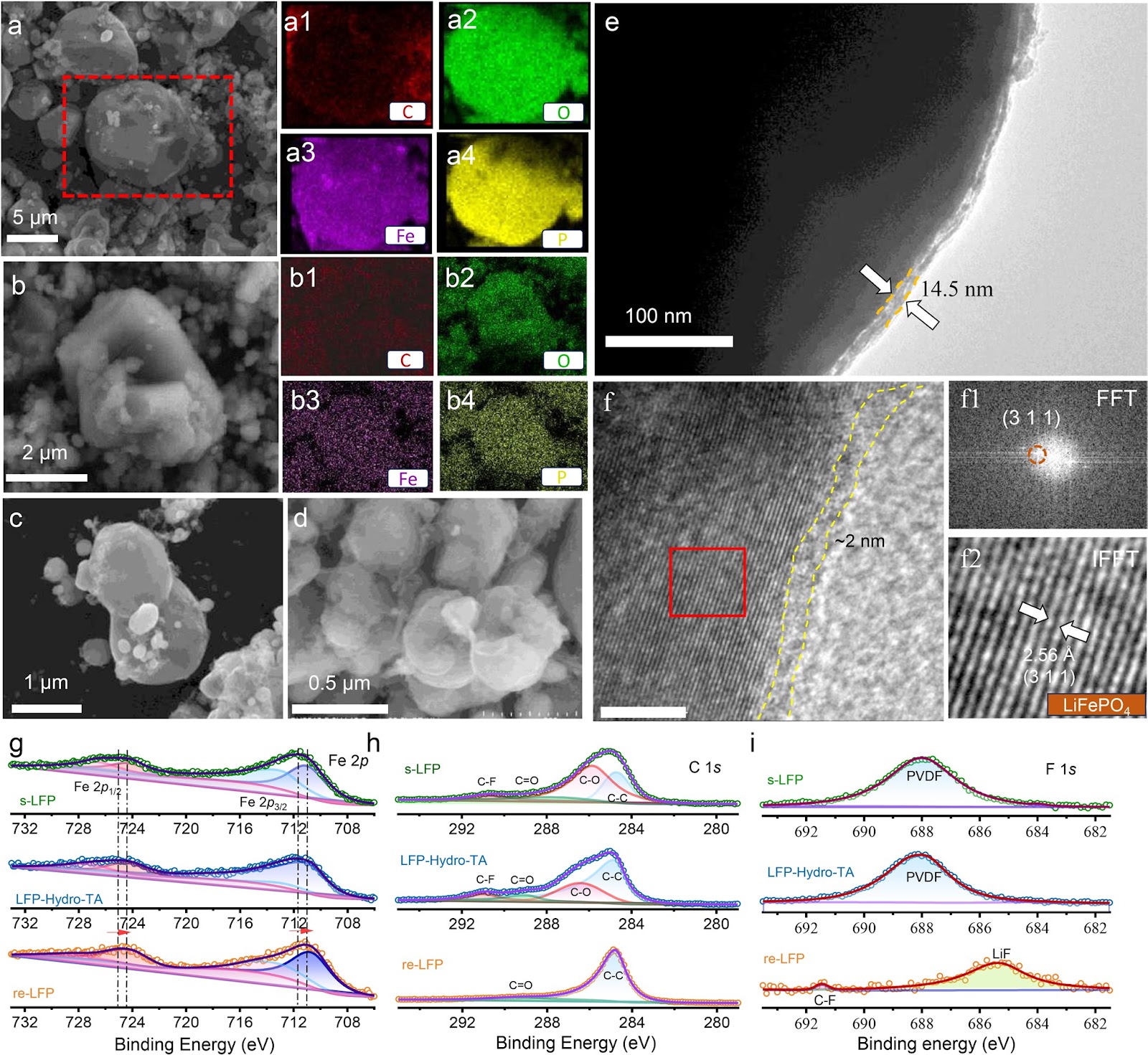
The rapid accumulation of spent LiFePO4 (LFP) cathodes from retired lithium-ion batteries necessitates the development of effective and environmental-friendly recycling strategies. In this context, direct regeneration has emerged as a promising approach for reclaiming LFP cathode materials, offering a streamlined pathway to restore their electrochemical functionality. We report an integrated regeneration protocol that simultaneously repairs the degraded crystal structure and reconstructs the damaged carbon coating in spent LFP. The regenerated cathode material had superfast lithium-ion diffusion kinetics and a stable cathode–electrolyte interface, giving a remarkable rate capability with specific capacities of 122 mAh g−1 at 5C and 106 mAh g−1 at 10C (1C = 170 mA g−1). It also maintained capacities of 110.7 mAh g−1 (5C) and 84.1 mAh g−1 (10C) after 400 cycles. It could be used in harsh environments and could be stably cycled at subzero temperatures (−10 and −20 °C) and in solid-state electrolyte batteries. Life cycle assessment combined with economic evaluation using the EverBatt model reveals that this direct regeneration approach has high economic and environmental benefits.
Oxide Semiconductor for Advanced Memory Architectures: Atomic Layer Deposition, Key Requirement and Challenges
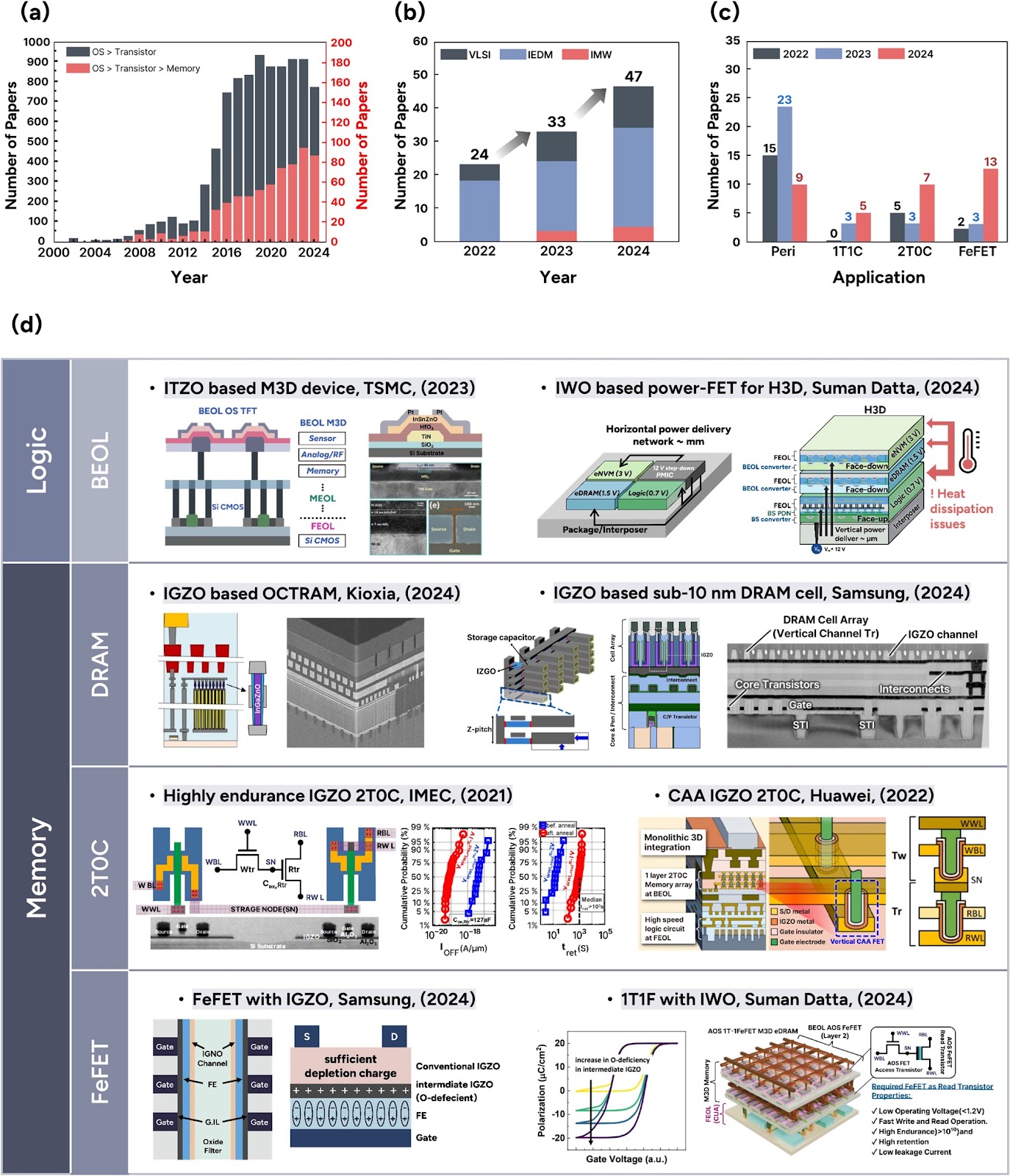
Oxide semiconductors (OSs), introduced by the Hosono group in the early 2000s, have evolved from display backplane materials to promising candidates for advanced memory and logic devices. The exceptionally low leakage current of OSs and compatibility with three-dimensional (3D) architectures have recently sparked renewed interest in their use in semiconductor applications. This review begins by exploring the unique material properties of OSs, which fundamentally originate from their distinct electronic band structure. Subsequently, we focus on atomic layer deposition (ALD), a core technique for growing excellent OS films, covering both basic and advanced processes compatible with 3D scaling. The basic surface reaction mechanisms—adsorption and reaction—and their roles in film growth are introduced. Furthermore, material design strategies, such as cation selection, crystallinity control, anion doping, and heterostructure engineering, are discussed. We also highlight challenges in memory applications, including contact resistance, hydrogen instability, and lack of p-type materials, and discuss the feasibility of ALD-grown OSs as potential solutions. Lastly, we provide an outlook on the role of ALD-grown OSs in memory technologies. This review bridges material fundamentals and device-level requirements, offering a comprehensive perspective on the potential of ALD-driven OSs for next-generation semiconductor memory devices.
Laser powder bed fusion of biodegradable Zn-4Cu alloy: Processing, microstructure and properties
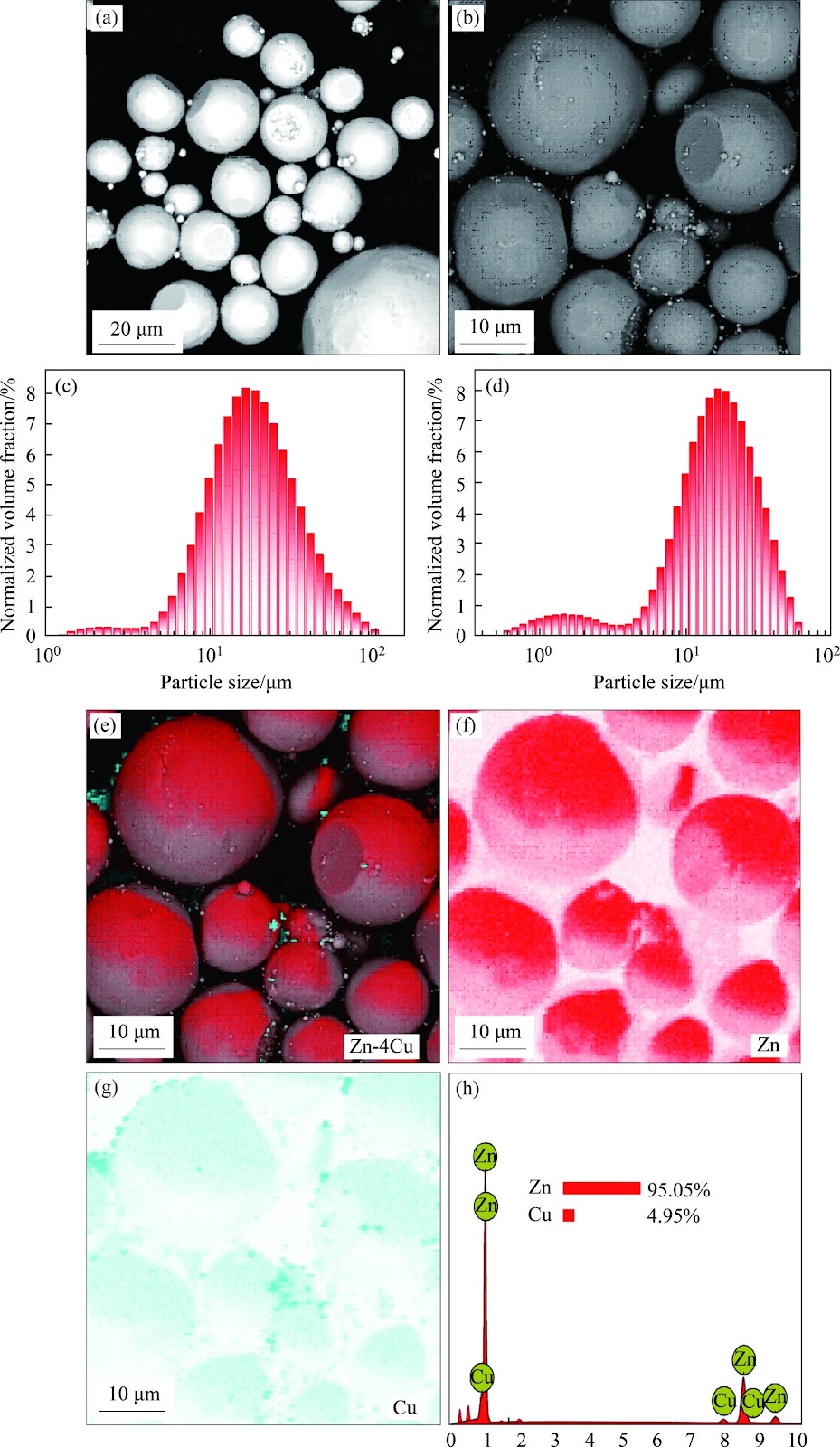
Zn's natural degradability and biocompatibility make it a promising candidate for implants, however, its mechanical properties remain insufficient for bone applications. In this study, the performance of Zn was enhanced by developing Zn-Cu alloys via laser powder bed fusion (LPBF). Optimal LPBF parameters for forming stable tracks were achieved by adjusting laser power and scanning speed. Under optimized conditions of 100 W and 100 mm/s, high-density (99.58%) Zn-Cu alloys with improved hardness (68.2HV) and yield strength (160 MPa) were achieved. These improvements are attributed to solid solution strengthening, segregation strengthening, and grain refinement. The Zn-Cu alloys also demonstrated favorable degradation behavior, with a rate of 0.16 mm/year. This degradation is primarily driven by micro-galvanic corrosion between the CuZn5 phase and Zn matrix, along with refined grains and increased grain boundary density. This work demonstrates a viable strategy for fabricating Zn-based implants with enhanced structural integrity and mechanical performance via LPBF.