Key Takeaways & Executive Findings
- •• Summarizes recent advances in the synthesis and catalytic applications of atomically precise Cu nanoclusters. • Elucidates the structure–property–functionality relationship at the atomic level. • Highlights the unique characteristics of Cu nanoclusters, including low cost and superior catalytic performance. • Provides critical analysis of current challenges and future perspectives in this rapidly evolving field.
Abstract
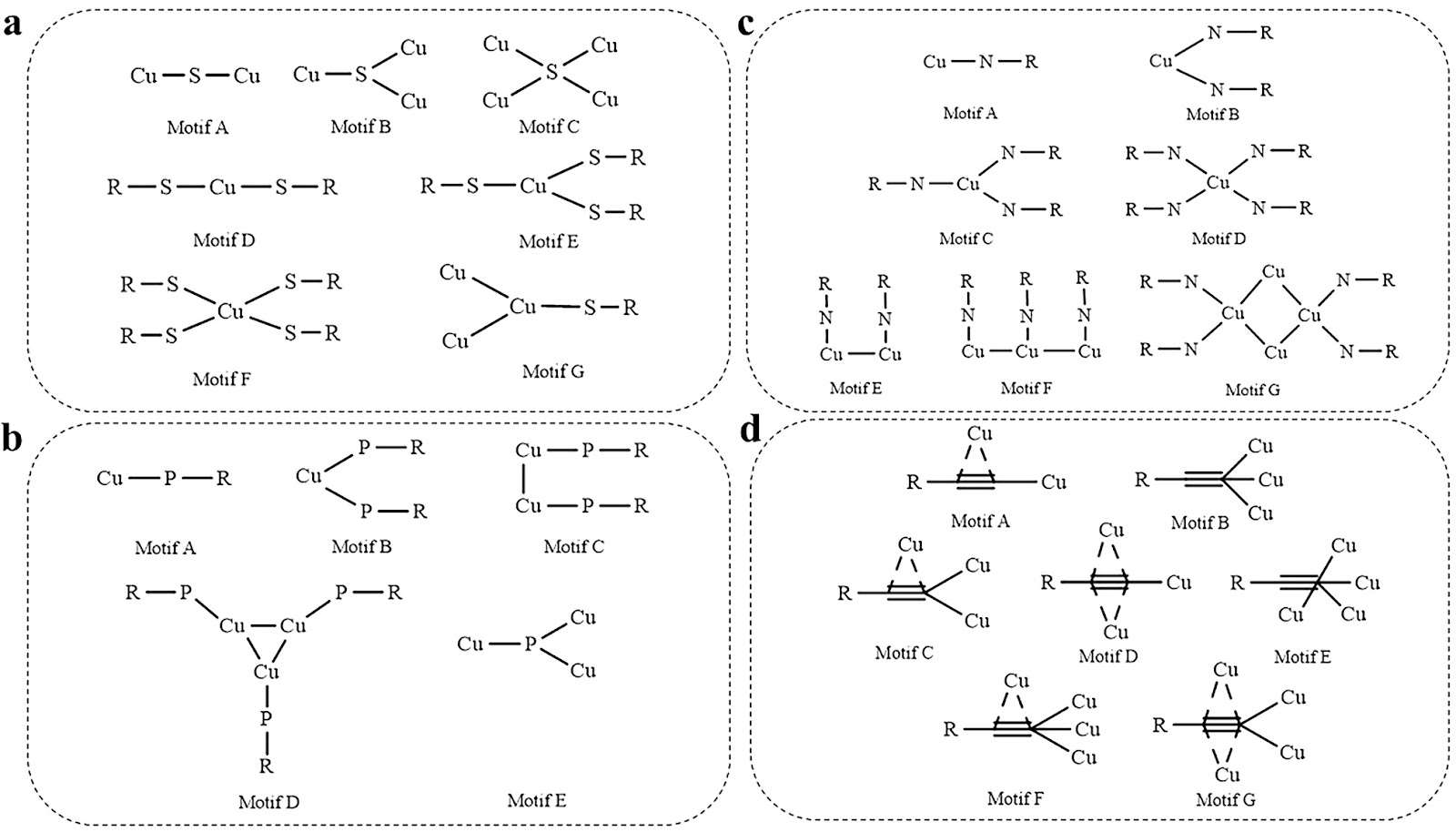
Atomically precise metal nanoclusters are an emerging type of nanomaterial which has diverse interfacial metal–ligand coordination motifs that can significantly affect their physicochemical properties and functionalities. Among that, Cu nanoclusters have been gaining continuous increasing research attentions, thanks to the low cost, diversified structures, and superior catalytic performance for various reactions. In this review, we first summarize the recent progress regarding the synthetic methods of atomically precise Cu nanoclusters and the coordination modes between Cu and several typical ligands and then discuss the catalytic applications of these Cu nanoclusters with some explicit examples to explain the atomical-level structure–performance relationship. Finally, the current challenges and future research perspectives with some critical thoughts are elaborated. We hope this review can not only provide a whole picture of the current advances regarding the synthesis and catalytic applications of atomically precise Cu nanoclusters, but also points out some future research visions in this rapidly booming field.
1. Introduction
The last decade has witnessed the great success of nanoscience and nanotechnology, yet ideal research model with well-defined composition and structure is still lacking. Specifically, most of the studied nanomaterials are quite polydisperse, that means, in most studied systems, the nano-scientists are extremely difficult to find two same nanoparticles with identical size, morphology, composition, and structure. To advance nanoscience and nanotechnology, one of the ultimate goals for the nano-scientists is to find a truly uniform system, in another word, atomically precise nanoparticles as research models [1, 2].
The emergence of atomically precise coinage metal (Au, Ag, Cu, and its alloy, etc.) nanoclusters can realize such goal [1]. Atomically precise metal nanocluster is a novel type of nanomaterial with the size in the sub-nanometer regime, normally 1–3 nm in diameter. It usually comprises 10–300 metal atoms with surface ligand as the protecting agents capping on the metal core. Note that as the nanoparticle size decreases downward to the sub-nanometer range, due to the strong quantum confinement effect, distinctly different physicochemical properties of metal nanoclusters from relatively large metal nanoparticles are observed [3]. For instance, discrete optical absorbance features can be readily identified in molecular Au nanoclusters, but such feature is absent in larger Au nanoparticle counterparts [4]. More importantly, the sub-nanometer size of the metal nanocluster is still within the resolving limitation of single crystal X-ray diffraction (SC-XRD), that allows nano-chemists to resolve their structure with atomic precision [5]. Such precise structure cannot be available for many other nanomaterials, which render metal nanoclusters unique advantages to comprehensively study the structure–property relationship in various fields, such as sensing [6, 7], assembly [8, 9], catalysis [10–12], optoelectronic [13, 14], and cancer therapy [15–17]. Furthermore, the chemical stability of these metal nanoclusters in terms of electronic structure can be explained by the “superatom” theory, where the electrons are confined in the spherical metal core of a jellium model [18]. It is believed that if the free electron number of a cluster is in good agreement of inert gas atoms (e.g., 2, 8, 18, 34, 52 electrons in the outmost orbital for He, Ne, Ar, Kr, Xe), it can be considered as a superatom having robust stability [18]. Meanwhile, the thermodynamic stability of thiolate metal nanoclusters is associated with the energy balance between the adsorption strength of the ligand shell to the metal core and the cohesive energy of the metal core [19]. In addition, for the non-magic number metal nanoclusters, the Wang group developed a superatomic orbital splitting (SOS) theory to understand the electronic configuration, where the shape of the metal core is considered in determining the order of the group orbital levels [20].
It is worth noting that, compared with noble metal nanoclusters such as Au, Ag, Pd, and Pt, Cu nanoclusters possess some unique characteristics. First, Cu is more earth abundant hence c
Loading authentic research manuscript (Pages 1–5)...
Mengyao Chen, Chengyu Guo, Lubing Qin, Lei Wang, Liang Qiao, Kebin Chi, Zhenghua Tang (2024). Atomically Precise Cu Nanoclusters: Recent Advances, Challenges, and Perspectives in Synthesis and Catalytic Applications. Nano-Micro Letters. https://doi.org/10.1007/s40820-024-01555-6
Research & Educational Purpose Only:The translations, structured abstracts, analytical annotations, and data reports provided by SinoTechIntel are intended exclusively for academic research, internal corporate R&D, and educational benchmarking. They do not constitute formal engineering, chemical safety, legal, or professional advice.
Copyright & Intellectual Property Notice: Original copyright of the underlying source articles and experimental data remains with the respective authors, institutions, and original publishing journals. SinoTechIntel claims intellectual property only over its proprietary translations, analytical syntheses, and AEO structured enhancements in accordance with international fair use and academic citation principles.
Frequently Asked Questions
What are atomically precise Cu nanoclusters?
Atomically precise Cu nanoclusters are sub-nanometer-sized particles composed of 10-300 copper atoms, protected by surface ligands, with well-defined composition and structure resolvable by single-crystal X-ray diffraction.
Why are Cu nanoclusters important in catalysis?
Cu nanoclusters are important in catalysis due to their low cost, earth abundance, diverse structures, and superior catalytic performance for various reactions, offering atomic-level insights into structure-performance relationships.
What are the main synthesis methods for Cu nanoclusters?
The review summarizes recent progress in synthetic methods for atomically precise Cu nanoclusters, including coordination modes between Cu and typical ligands, though specific methods are detailed in the full text.
What are the current challenges in Cu nanocluster research?
Challenges include achieving precise control over size and structure, understanding the structure-property relationships, and developing scalable synthesis methods, as discussed in the review's critical analysis.
What future perspectives are highlighted for Cu nanoclusters?
Future perspectives include exploring new catalytic applications, improving stability, and leveraging atomic-level understanding to design advanced nanomaterials, as outlined in the review.
Related Technical Papers & Translations
Direct Repair of the Crystal Structure and Coating Surface of Spent LiFePO4 Materials Enables Superfast Li-Ion Migration
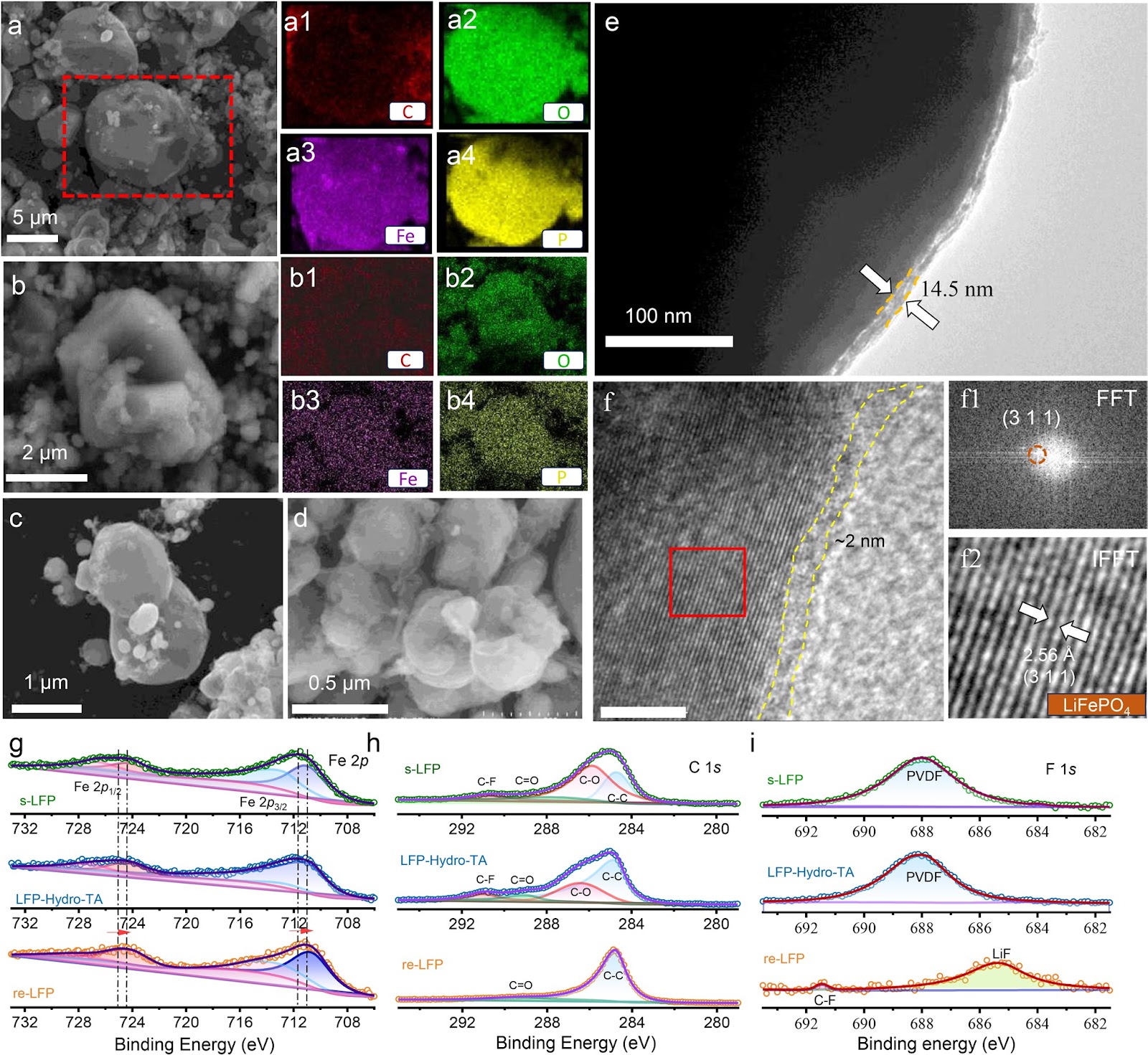
The rapid accumulation of spent LiFePO4 (LFP) cathodes from retired lithium-ion batteries necessitates the development of effective and environmental-friendly recycling strategies. In this context, direct regeneration has emerged as a promising approach for reclaiming LFP cathode materials, offering a streamlined pathway to restore their electrochemical functionality. We report an integrated regeneration protocol that simultaneously repairs the degraded crystal structure and reconstructs the damaged carbon coating in spent LFP. The regenerated cathode material had superfast lithium-ion diffusion kinetics and a stable cathode–electrolyte interface, giving a remarkable rate capability with specific capacities of 122 mAh g−1 at 5C and 106 mAh g−1 at 10C (1C = 170 mA g−1). It also maintained capacities of 110.7 mAh g−1 (5C) and 84.1 mAh g−1 (10C) after 400 cycles. It could be used in harsh environments and could be stably cycled at subzero temperatures (−10 and −20 °C) and in solid-state electrolyte batteries. Life cycle assessment combined with economic evaluation using the EverBatt model reveals that this direct regeneration approach has high economic and environmental benefits.
Oxide Semiconductor for Advanced Memory Architectures: Atomic Layer Deposition, Key Requirement and Challenges
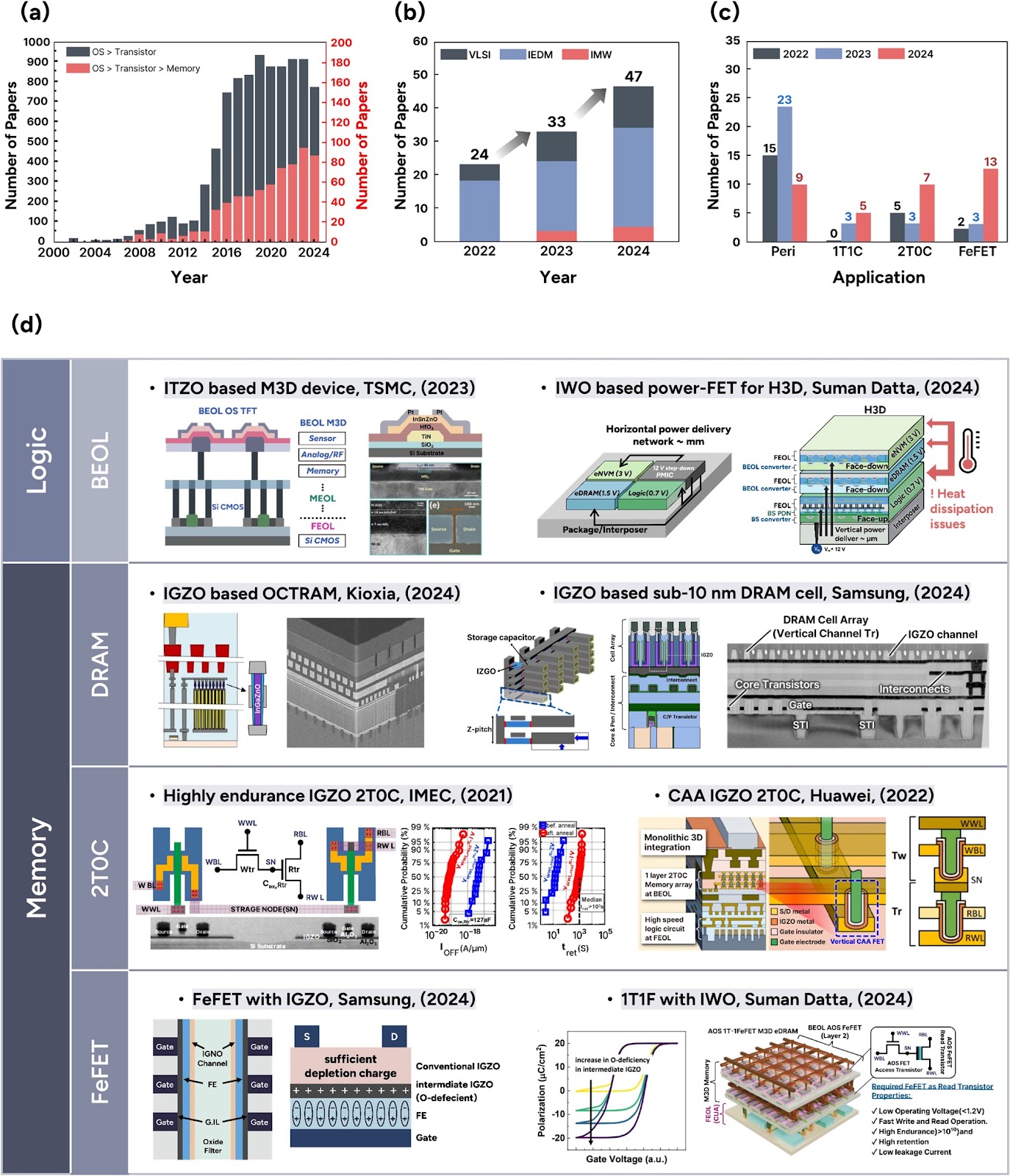
Oxide semiconductors (OSs), introduced by the Hosono group in the early 2000s, have evolved from display backplane materials to promising candidates for advanced memory and logic devices. The exceptionally low leakage current of OSs and compatibility with three-dimensional (3D) architectures have recently sparked renewed interest in their use in semiconductor applications. This review begins by exploring the unique material properties of OSs, which fundamentally originate from their distinct electronic band structure. Subsequently, we focus on atomic layer deposition (ALD), a core technique for growing excellent OS films, covering both basic and advanced processes compatible with 3D scaling. The basic surface reaction mechanisms—adsorption and reaction—and their roles in film growth are introduced. Furthermore, material design strategies, such as cation selection, crystallinity control, anion doping, and heterostructure engineering, are discussed. We also highlight challenges in memory applications, including contact resistance, hydrogen instability, and lack of p-type materials, and discuss the feasibility of ALD-grown OSs as potential solutions. Lastly, we provide an outlook on the role of ALD-grown OSs in memory technologies. This review bridges material fundamentals and device-level requirements, offering a comprehensive perspective on the potential of ALD-driven OSs for next-generation semiconductor memory devices.
Laser powder bed fusion of biodegradable Zn-4Cu alloy: Processing, microstructure and properties
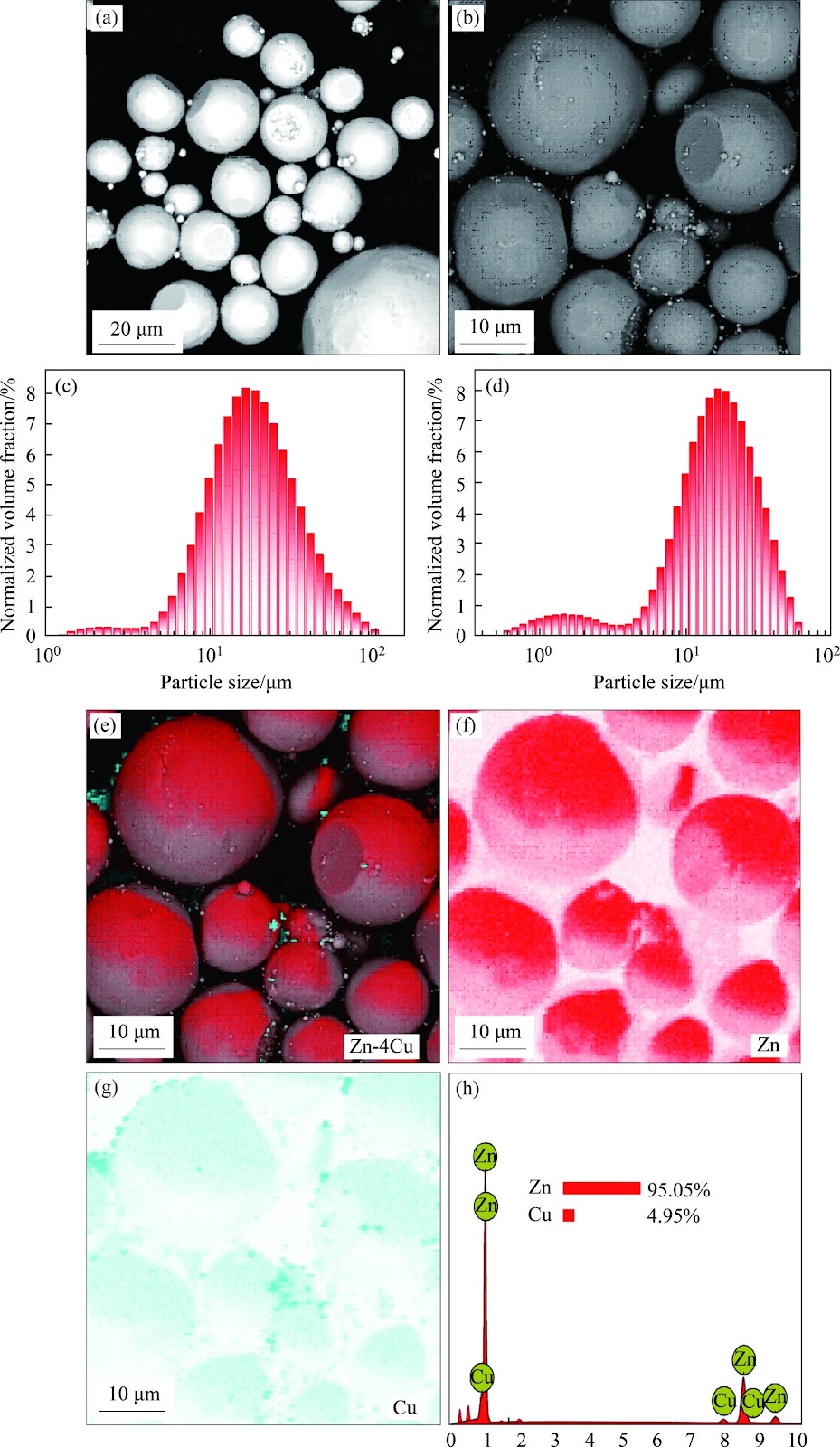
Zn's natural degradability and biocompatibility make it a promising candidate for implants, however, its mechanical properties remain insufficient for bone applications. In this study, the performance of Zn was enhanced by developing Zn-Cu alloys via laser powder bed fusion (LPBF). Optimal LPBF parameters for forming stable tracks were achieved by adjusting laser power and scanning speed. Under optimized conditions of 100 W and 100 mm/s, high-density (99.58%) Zn-Cu alloys with improved hardness (68.2HV) and yield strength (160 MPa) were achieved. These improvements are attributed to solid solution strengthening, segregation strengthening, and grain refinement. The Zn-Cu alloys also demonstrated favorable degradation behavior, with a rate of 0.16 mm/year. This degradation is primarily driven by micro-galvanic corrosion between the CuZn5 phase and Zn matrix, along with refined grains and increased grain boundary density. This work demonstrates a viable strategy for fabricating Zn-based implants with enhanced structural integrity and mechanical performance via LPBF.