Key Takeaways & Executive Findings
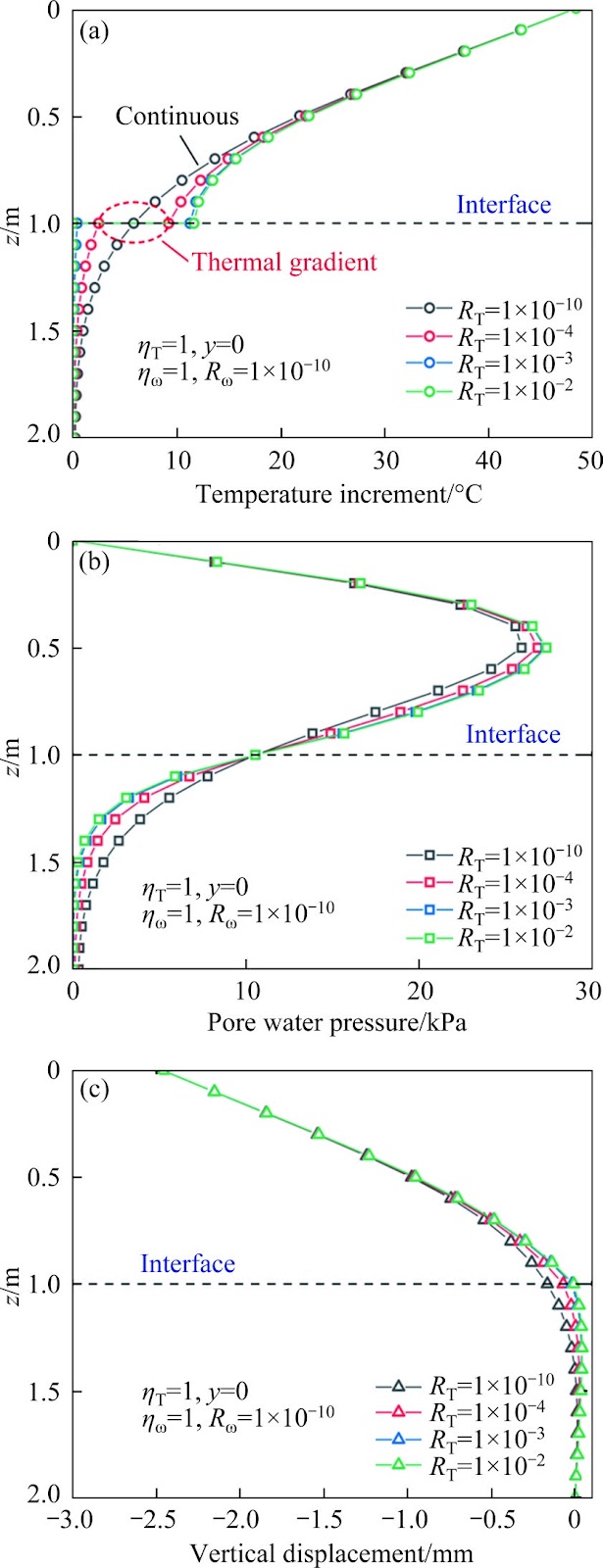
- •• A general imperfect thermal contact model and a general imperfect flow contact model are developed to capture interfacial resistance in multilayered saturated soils. • Thermal contact resistance induces a relative thermal gradient at the interface, increasing pore water pressure and reducing displacement near the interface. • Flow contact resistance generates a relative pore pressure gradient, enhancing displacement in the saturated soil while having minimal impact on temperature distribution. • The proposed analytical solutions, validated against degeneration solutions, provide a robust tool for predicting thermal consolidation behavior under ramp-type heating.
Abstract
When the interface of a multilayered saturated soil is rough with noticeable gaps, heat flow lines converge towards the actual contact points, causing thermal flow contraction. Conversely, in the interface between two layers of soil with different properties, pore water flows slowly along the pore channels, demonstrating laminar flow phenomenon. To predict the thermal contact resistance and flow contact resistance at the interface, this paper constructs general imperfect thermal contact model and general imperfect flow contact model, respectively. Utilizing a thermo-hydro-mechanical coupling model, the thermal consolidation behavior of multilayered saturated soil under two-dimensional conditions is investigated. Fourier and Laplace transformations are applied to decouple the governing equations, yielding expressions for the temperature increment, pore water pressure, and displacement in multilayered saturated soil. The inverse Fourier-Laplace transformation is then used to obtain numerical solutions, which are compared with degeneration solutions to validate the computational accuracy. The differences in the thermal consolidation process under various thermal contact and flow contact resistance models are discussed. Furthermore, the impact of parameters such as the thermal resistance coefficient, partition thermal contact coefficient, flow contact resistance coefficient, and partition flow contact coefficient on thermal consolidation are investigated. Results indicate that thermal contact resistance creates a relative thermal gradient at the interface, leading to increased pore water pressure and reduced displacement nearby. In contrast, flow contact resistance generates a relative pore pressure gradient at the interface, resulting in increased displacement within the saturated soil with minimal effect on temperature increment distribution.
1. Introduction
Consolidation theory has always been a key issue in classical soil mechanics, with complex connections to soil deformation, strength, stability, and permeability. Since TERZAGHI [1] established the one-dimensional consolidation model, many scholars have researched extensively to develop and perfect the one-dimensional consolidation theory by revising and modifying the basic assumptions [2 − 11]. Moreover, the one-dimensional consolidation theory has gradually evolved to explain the impact of various complex conditions on consolidation characteristics, such as the self-weight of soil [12 −14], multilayered soils [15 −17], nonlinear compressibility and permeability [18 −20], rheological consolidation of soil [21 −23], continuous drainage boundaries [24−26], and time-varying loads [27 −29].
However, with the rise of engineering technologies such as nuclear waste disposal [30, 31], geothermal heat pumps [32, 33], high-temperature oil and gas pipelines [34], and thermal drainage consolidation for soft foundation treatment [35−38], as shown in Figure 1, the issue of thermo-hydro-mechanical (THM) coupling in geotechnical bodies has garnered widespread attention, and corresponding research has rapidly advanced.
Many scholars have developed and refined the THM coupling theory for saturated porous media, building upon the foundation of the thermo-elastic consolidation model established by BIOT [39, 40], and have conducted corresponding experimental and simulation validations. Considering the effects of thermal permeation and filtration, ZHOU et al [41, 42] established a THM coupling model for saturated porous media and derived analytical solutions for thermal consolidation under spherical and cylindrical heat sources. BAI [43, 44] developed an irreversible THM coupling model for saturated porous media, obtaining analytical solutions for thermal consolidation around a spherical cavity in the Laplace transform domain, and proposed a generalized effective stress principle applicable to the ...
Loading authentic research manuscript (Pages 1–5)...
WEN Min-jie, TANG Ke-jie, XIE Jia-hao, TIAN Yi, ZHANG Yi-ming, WU Wen-bing, MEI Guo-xiong, WU Da-zhi, LIU Kai-fu (2025). An interfacial contact model for two-dimensional thermal consolidation of multilayered saturated soils subjected to ramp-type heating. Journal of Central South University. https://doi.org/10.1007/s11771-025-6072-6
Research & Educational Purpose Only:The translations, structured abstracts, analytical annotations, and data reports provided by SinoTechIntel are intended exclusively for academic research, internal corporate R&D, and educational benchmarking. They do not constitute formal engineering, chemical safety, legal, or professional advice.
Copyright & Intellectual Property Notice: Original copyright of the underlying source articles and experimental data remains with the respective authors, institutions, and original publishing journals. SinoTechIntel claims intellectual property only over its proprietary translations, analytical syntheses, and AEO structured enhancements in accordance with international fair use and academic citation principles.
Frequently Asked Questions
What is the main contribution of this paper?
The paper develops general imperfect thermal and flow contact models to predict interfacial resistance in multilayered saturated soils, and provides analytical solutions for two-dimensional thermal consolidation under ramp-type heating.
How does thermal contact resistance affect consolidation?
Thermal contact resistance creates a relative thermal gradient at the interface, leading to increased pore water pressure and reduced displacement near the interface.
What is the effect of flow contact resistance?
Flow contact resistance generates a relative pore pressure gradient at the interface, resulting in increased displacement within the saturated soil, with minimal effect on temperature increment distribution.
What methods are used to solve the governing equations?
Fourier and Laplace transformations are applied to decouple the governing equations, and the inverse Fourier-Laplace transformation is used to obtain numerical solutions.
How is the computational accuracy validated?
The numerical solutions are compared with degeneration solutions to validate the computational accuracy.
Related Technical Papers & Translations
Direct Repair of the Crystal Structure and Coating Surface of Spent LiFePO4 Materials Enables Superfast Li-Ion Migration
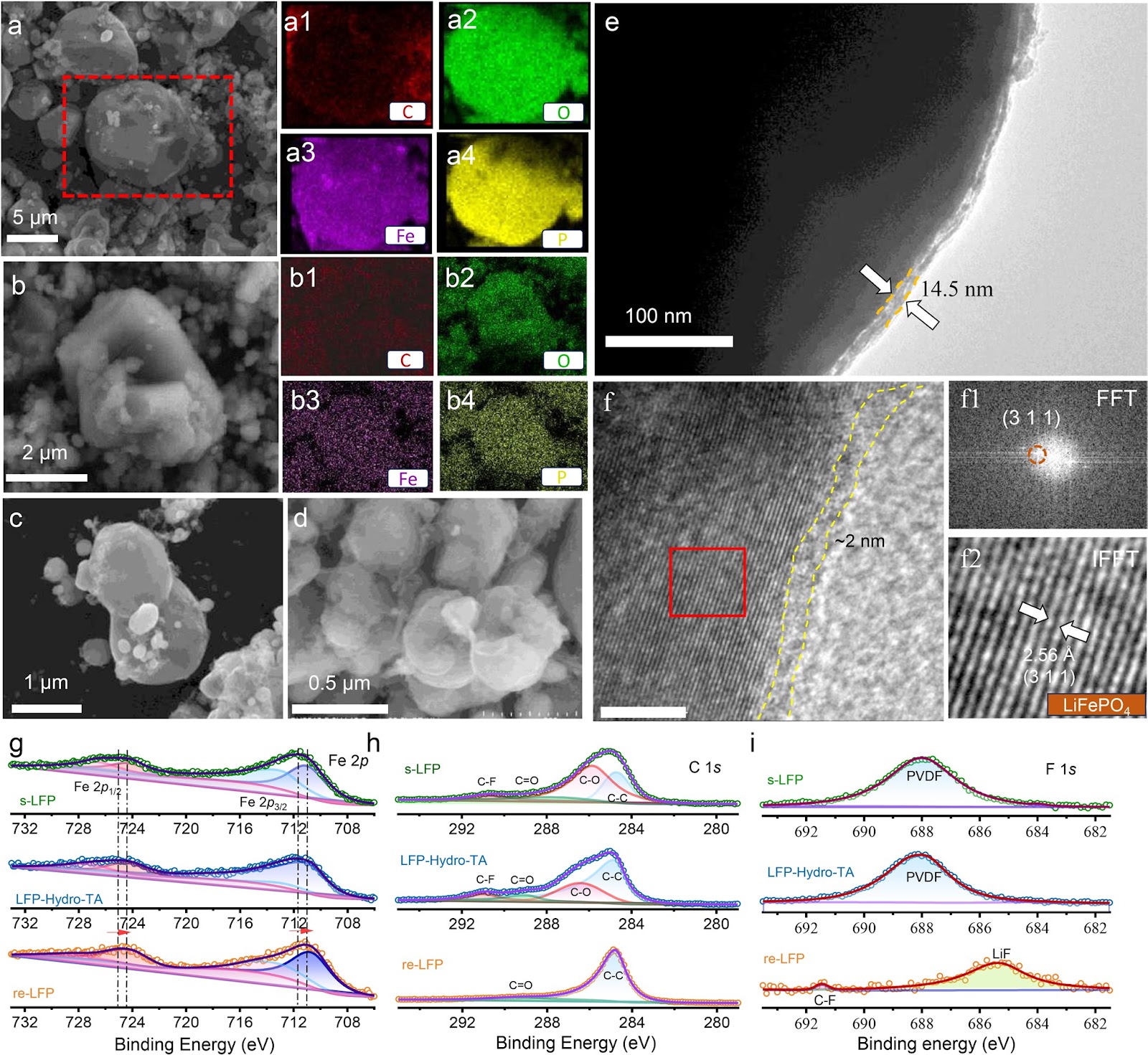
The rapid accumulation of spent LiFePO4 (LFP) cathodes from retired lithium-ion batteries necessitates the development of effective and environmental-friendly recycling strategies. In this context, direct regeneration has emerged as a promising approach for reclaiming LFP cathode materials, offering a streamlined pathway to restore their electrochemical functionality. We report an integrated regeneration protocol that simultaneously repairs the degraded crystal structure and reconstructs the damaged carbon coating in spent LFP. The regenerated cathode material had superfast lithium-ion diffusion kinetics and a stable cathode–electrolyte interface, giving a remarkable rate capability with specific capacities of 122 mAh g−1 at 5C and 106 mAh g−1 at 10C (1C = 170 mA g−1). It also maintained capacities of 110.7 mAh g−1 (5C) and 84.1 mAh g−1 (10C) after 400 cycles. It could be used in harsh environments and could be stably cycled at subzero temperatures (−10 and −20 °C) and in solid-state electrolyte batteries. Life cycle assessment combined with economic evaluation using the EverBatt model reveals that this direct regeneration approach has high economic and environmental benefits.
Oxide Semiconductor for Advanced Memory Architectures: Atomic Layer Deposition, Key Requirement and Challenges
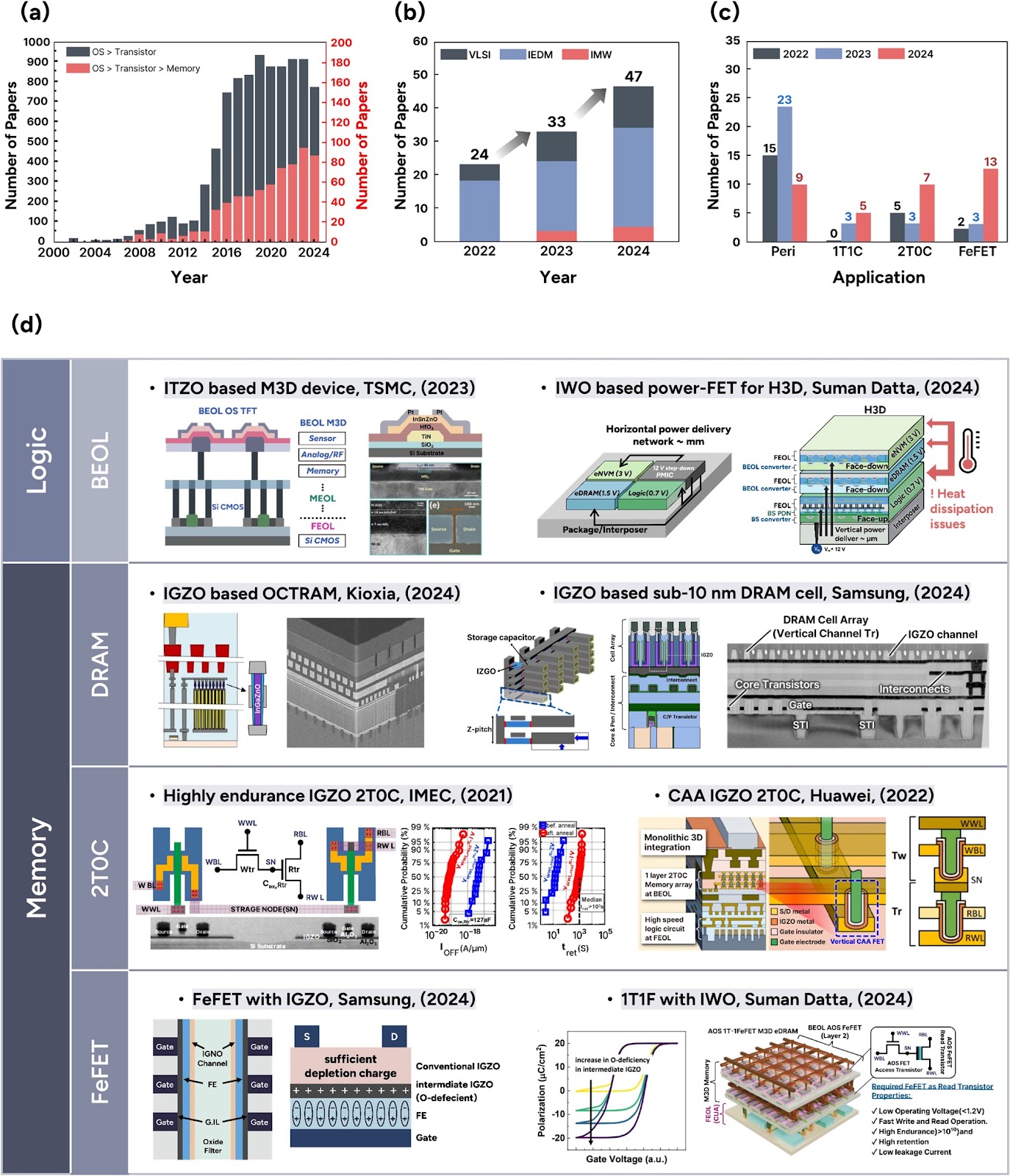
Oxide semiconductors (OSs), introduced by the Hosono group in the early 2000s, have evolved from display backplane materials to promising candidates for advanced memory and logic devices. The exceptionally low leakage current of OSs and compatibility with three-dimensional (3D) architectures have recently sparked renewed interest in their use in semiconductor applications. This review begins by exploring the unique material properties of OSs, which fundamentally originate from their distinct electronic band structure. Subsequently, we focus on atomic layer deposition (ALD), a core technique for growing excellent OS films, covering both basic and advanced processes compatible with 3D scaling. The basic surface reaction mechanisms—adsorption and reaction—and their roles in film growth are introduced. Furthermore, material design strategies, such as cation selection, crystallinity control, anion doping, and heterostructure engineering, are discussed. We also highlight challenges in memory applications, including contact resistance, hydrogen instability, and lack of p-type materials, and discuss the feasibility of ALD-grown OSs as potential solutions. Lastly, we provide an outlook on the role of ALD-grown OSs in memory technologies. This review bridges material fundamentals and device-level requirements, offering a comprehensive perspective on the potential of ALD-driven OSs for next-generation semiconductor memory devices.
Laser powder bed fusion of biodegradable Zn-4Cu alloy: Processing, microstructure and properties
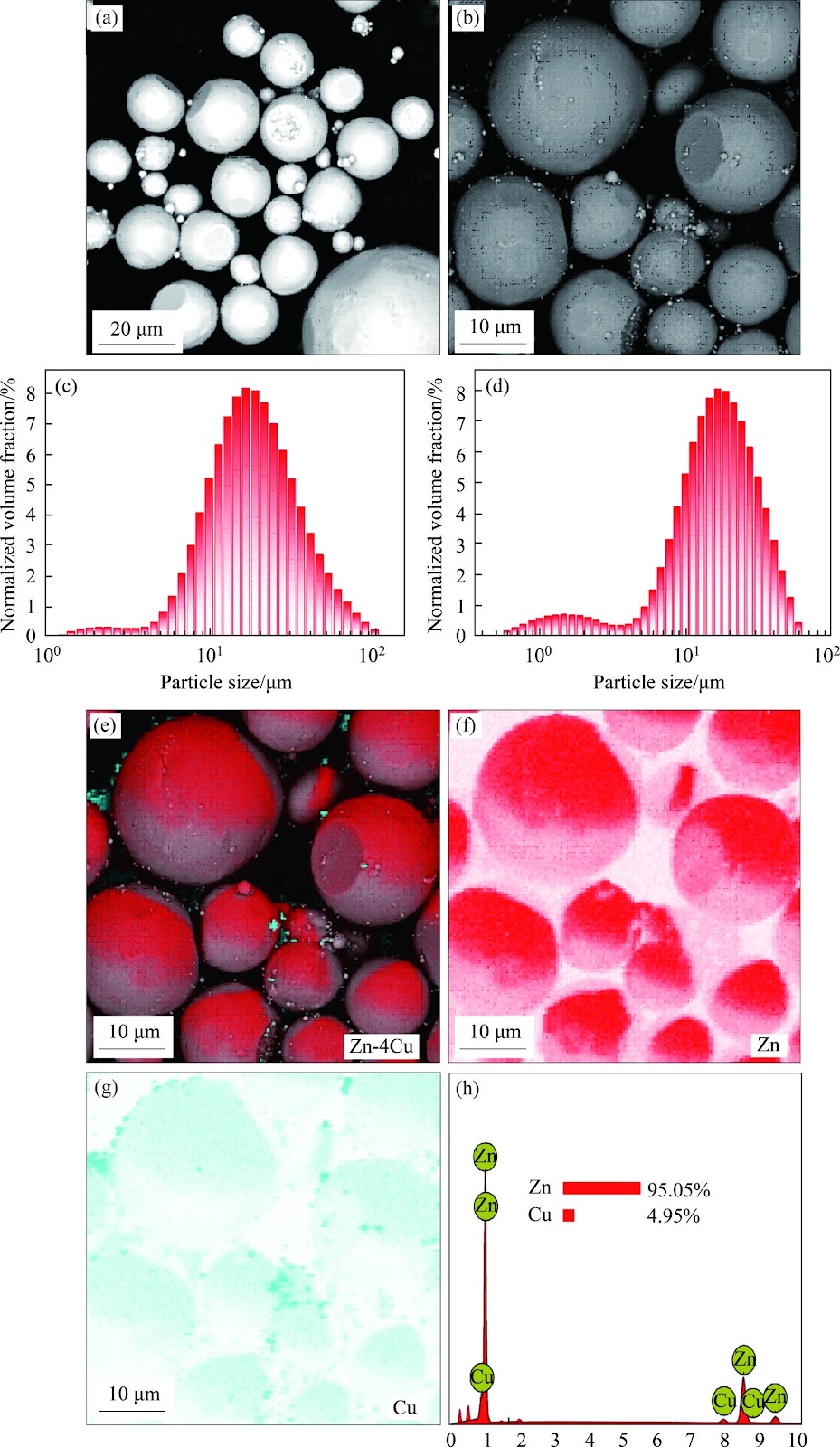
Zn's natural degradability and biocompatibility make it a promising candidate for implants, however, its mechanical properties remain insufficient for bone applications. In this study, the performance of Zn was enhanced by developing Zn-Cu alloys via laser powder bed fusion (LPBF). Optimal LPBF parameters for forming stable tracks were achieved by adjusting laser power and scanning speed. Under optimized conditions of 100 W and 100 mm/s, high-density (99.58%) Zn-Cu alloys with improved hardness (68.2HV) and yield strength (160 MPa) were achieved. These improvements are attributed to solid solution strengthening, segregation strengthening, and grain refinement. The Zn-Cu alloys also demonstrated favorable degradation behavior, with a rate of 0.16 mm/year. This degradation is primarily driven by micro-galvanic corrosion between the CuZn5 phase and Zn matrix, along with refined grains and increased grain boundary density. This work demonstrates a viable strategy for fabricating Zn-based implants with enhanced structural integrity and mechanical performance via LPBF.