Key Takeaways & Executive Findings
- •• A novel framework integrating BERTopic with citation analysis constructs comprehensive knowledge graphs, revealing hidden development patterns in nanoscience. • The proposed method significantly improves topic coherence (minimum 100% growth) and diversity (up to 126% growth) over traditional LDA-based text mining. • A rule-based tokenizer effectively addresses entity naming challenges in chemistry, enhancing the framework's universality and topic recognition performance. • The framework successfully maps the evolutionary path of Raman spectroscopy, identifying key publications and important historical moments for research forecasting.
Abstract
Text mining has emerged as a powerful strategy for extracting domain knowledge structure from large amounts of text data. To date, most text mining methods are restricted to specific literature information, resulting in incomplete knowledge graphs. Here, we report a method that combines citation analysis with topic modeling to describe the hidden development patterns in the history of science. Leveraging this method, we construct a knowledge graph in the field of Raman spectroscopy. The traditional Latent Dirichlet Allocation model is chosen as the baseline model for comparison to validate the performance of our model. Our method improves the topic coherence with a minimum growth rate of 100% compared to the traditional text mining method. It outperforms the traditional text mining method on the diversity, and its growth rate ranges from 0 to 126%. The results show the effectiveness of rule-based tokenizer we designed in solving the word tokenizer problem caused by entity naming rules in the field of chemistry. It is versatile in revealing the distribution of topics, establishing the similarity and inheritance relationships, and identifying the important moments in the history of Raman spectroscopy. Our work provides a comprehensive tool for the science of science research and promises to offer new insights into the historical survey and development forecast of a research field.
1. Introduction
Data-driven methods have attracted much interest in literature survey and fundamental research. They help researchers forecast the hotspots in the near future, and administrators facilitate the formulation of funding policies [1]. As a distributed repository of scientific knowledge, scientific literature represents the fundamental data unit for studying the structure and evolution of science [2]. Traditionally, researchers summarized the patterns and trends of scientific development by reading a large amount of literature one by one. Unfortunately, this paradigm is confronted with unprecedented challenges in the field of nanoscience and nanotechnology. As a field that has attracted much interests from scientists, it usually contains millions of scientific literature, leaving a big challenge to extract research trends and potential research hotspots in nanoscience and nanotechnology manually. To address this issue, in recent years researchers started to utilize quantitative research methods to analyze the evolution of scientific structure and research hotspots, such as literature metrology [3] and science mapping analysis [4]. Nevertheless, most methods rely on particular data formats and literature indicators, resulting in failures to comprehend substantive content and academic ideas.
Text mining methods provide an opportunity for automatically reading literature and extracting the viewpoints therein and are beneficial to reducing time costs and avoiding human errors [5]. The topic models, as generally divided into structural [6], dynamic [7], and neural [8] topic models, had been proven efficient in deducing potential topic distributions and obtaining a birds-eye view of topic evolution [9–11]. The reference section was widely recognized as a significant component of a piece of published literature because it is a complex combination of considerations and it informs the substantial knowledge transfer of important arguments, experimental methods, and discoveries [12]. To date, most of the works were concentrated on the textual information of the literature, paying less attention to considering the inter-reference information. The lack of reference information prevents researchers from delving into the potential connections among literature and results in an incomplete knowledge graph. However, there is a limited method that can incorporate citation information into the topic information in the state-of-art text mining.
Recently, the Bidirectional Encoder Representations from Transformers Topic (BERTopic) model was proposed to generate coherent topic representations [13]. It was a scalable framework that allowed researchers to integrate external information and to construct a complete domain knowledge graph. Herein, we developed a novel method that integrated the BERTopic model and citation analysis to demonstrate the entire evolution of domain knowledge. To get a corpus, the web crawling technique was applied to gather literature from the Web of Science.
Loading authentic research manuscript (Pages 1–5)...
Hui-Cong Duan, Long-Xing Lin, Ji-Chun Wang, Tong-Ruo Diao, Sheng-Jie Qiu, Bi-Jun Geng, Jia Shi, Shu Hu, Yang Yang (2025). An Efficient Deep Learning Framework for Revealing the Evolution of Characterization Methods in Nanoscience. Nano-Micro Letters. https://doi.org/10.1007/s40820-025-01807-z
Research & Educational Purpose Only:The translations, structured abstracts, analytical annotations, and data reports provided by SinoTechIntel are intended exclusively for academic research, internal corporate R&D, and educational benchmarking. They do not constitute formal engineering, chemical safety, legal, or professional advice.
Copyright & Intellectual Property Notice: Original copyright of the underlying source articles and experimental data remains with the respective authors, institutions, and original publishing journals. SinoTechIntel claims intellectual property only over its proprietary translations, analytical syntheses, and AEO structured enhancements in accordance with international fair use and academic citation principles.
Frequently Asked Questions
What is the main contribution of this paper?
The paper presents a novel deep learning framework that integrates BERTopic with citation analysis to construct comprehensive knowledge graphs, revealing the evolution of characterization methods in nanoscience, with significant improvements in topic coherence and diversity.
How does the proposed method improve upon traditional text mining?
The method improves topic coherence by at least 100% and diversity by up to 126% compared to traditional LDA-based methods, by incorporating citation information and a rule-based tokenizer tailored for chemistry entity naming.
What is the significance of the rule-based tokenizer?
The rule-based tokenizer effectively handles word tokenization issues caused by entity naming rules in chemistry, enhancing the framework's universality and topic recognition performance.
What field is the framework applied to?
The framework is applied to Raman spectroscopy, demonstrating its ability to reveal topic distributions, establish similarity and inheritance relationships, and identify important moments in the field's history.
What are the potential applications of this framework?
The framework provides a comprehensive tool for science of science research, offering insights into historical surveys and development forecasts of research fields, and can be extended to other scientific domains.
Related Technical Papers & Translations
Direct Repair of the Crystal Structure and Coating Surface of Spent LiFePO4 Materials Enables Superfast Li-Ion Migration
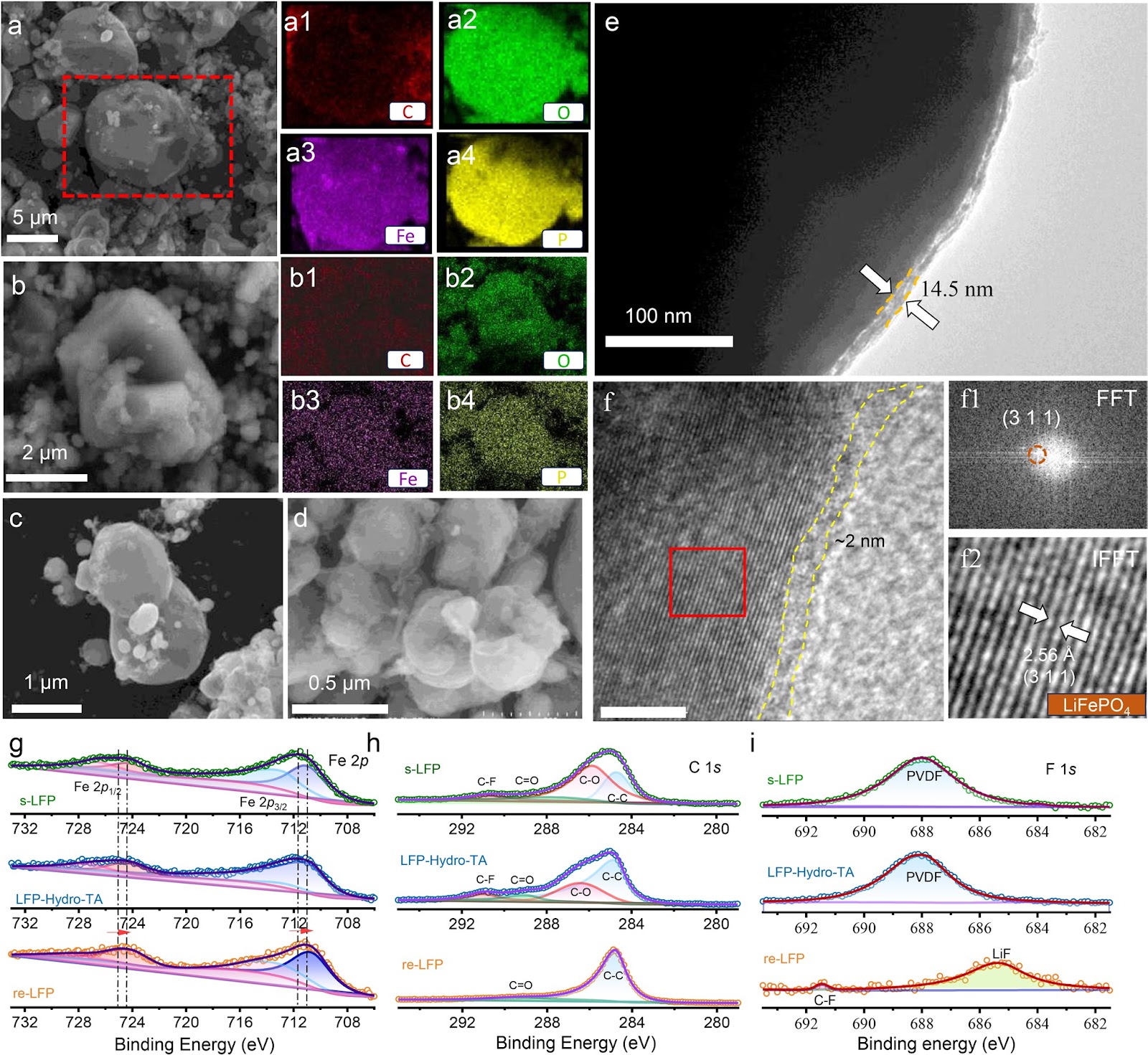
The rapid accumulation of spent LiFePO4 (LFP) cathodes from retired lithium-ion batteries necessitates the development of effective and environmental-friendly recycling strategies. In this context, direct regeneration has emerged as a promising approach for reclaiming LFP cathode materials, offering a streamlined pathway to restore their electrochemical functionality. We report an integrated regeneration protocol that simultaneously repairs the degraded crystal structure and reconstructs the damaged carbon coating in spent LFP. The regenerated cathode material had superfast lithium-ion diffusion kinetics and a stable cathode–electrolyte interface, giving a remarkable rate capability with specific capacities of 122 mAh g−1 at 5C and 106 mAh g−1 at 10C (1C = 170 mA g−1). It also maintained capacities of 110.7 mAh g−1 (5C) and 84.1 mAh g−1 (10C) after 400 cycles. It could be used in harsh environments and could be stably cycled at subzero temperatures (−10 and −20 °C) and in solid-state electrolyte batteries. Life cycle assessment combined with economic evaluation using the EverBatt model reveals that this direct regeneration approach has high economic and environmental benefits.
Oxide Semiconductor for Advanced Memory Architectures: Atomic Layer Deposition, Key Requirement and Challenges
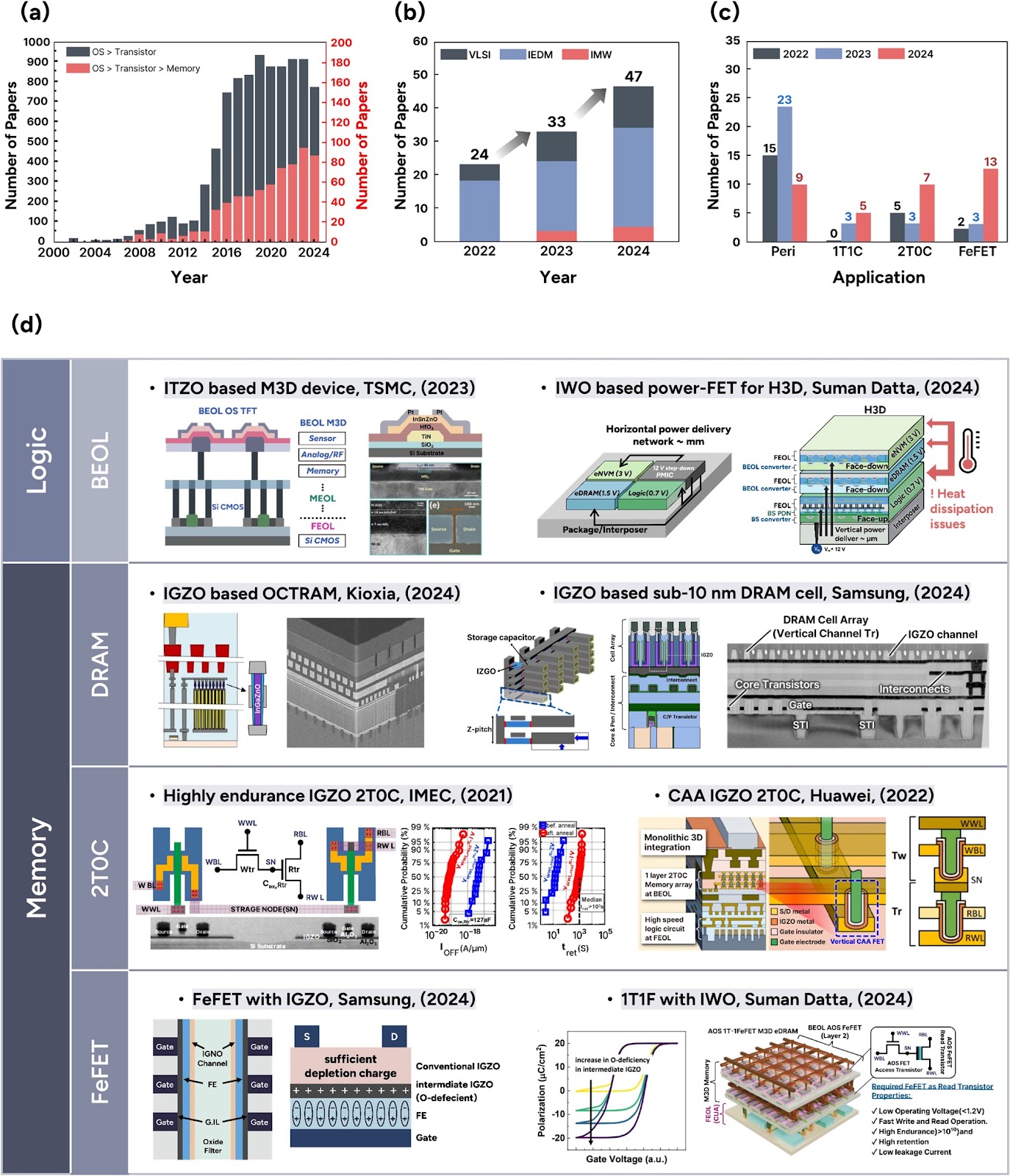
Oxide semiconductors (OSs), introduced by the Hosono group in the early 2000s, have evolved from display backplane materials to promising candidates for advanced memory and logic devices. The exceptionally low leakage current of OSs and compatibility with three-dimensional (3D) architectures have recently sparked renewed interest in their use in semiconductor applications. This review begins by exploring the unique material properties of OSs, which fundamentally originate from their distinct electronic band structure. Subsequently, we focus on atomic layer deposition (ALD), a core technique for growing excellent OS films, covering both basic and advanced processes compatible with 3D scaling. The basic surface reaction mechanisms—adsorption and reaction—and their roles in film growth are introduced. Furthermore, material design strategies, such as cation selection, crystallinity control, anion doping, and heterostructure engineering, are discussed. We also highlight challenges in memory applications, including contact resistance, hydrogen instability, and lack of p-type materials, and discuss the feasibility of ALD-grown OSs as potential solutions. Lastly, we provide an outlook on the role of ALD-grown OSs in memory technologies. This review bridges material fundamentals and device-level requirements, offering a comprehensive perspective on the potential of ALD-driven OSs for next-generation semiconductor memory devices.
Laser powder bed fusion of biodegradable Zn-4Cu alloy: Processing, microstructure and properties
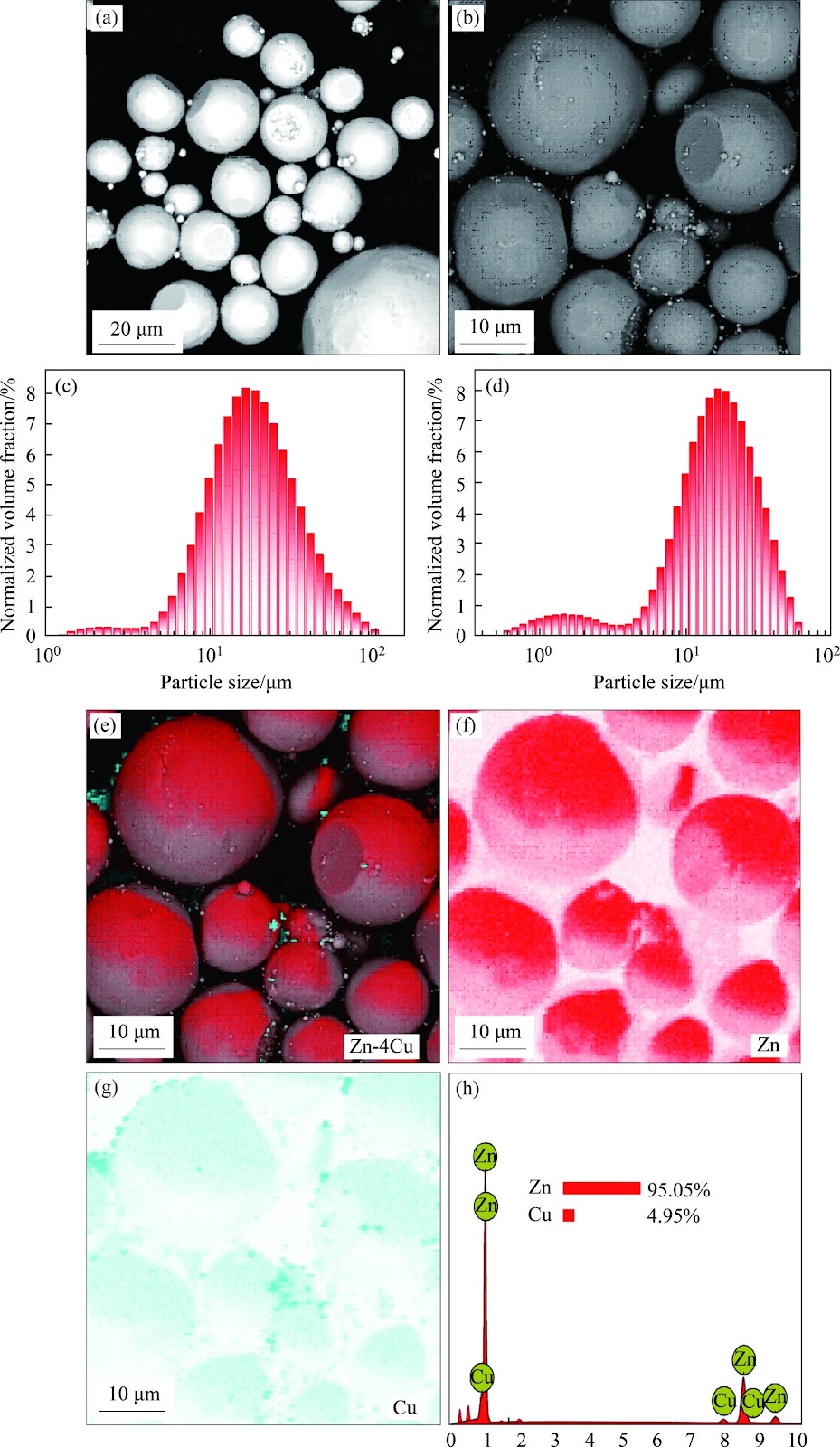
Zn's natural degradability and biocompatibility make it a promising candidate for implants, however, its mechanical properties remain insufficient for bone applications. In this study, the performance of Zn was enhanced by developing Zn-Cu alloys via laser powder bed fusion (LPBF). Optimal LPBF parameters for forming stable tracks were achieved by adjusting laser power and scanning speed. Under optimized conditions of 100 W and 100 mm/s, high-density (99.58%) Zn-Cu alloys with improved hardness (68.2HV) and yield strength (160 MPa) were achieved. These improvements are attributed to solid solution strengthening, segregation strengthening, and grain refinement. The Zn-Cu alloys also demonstrated favorable degradation behavior, with a rate of 0.16 mm/year. This degradation is primarily driven by micro-galvanic corrosion between the CuZn5 phase and Zn matrix, along with refined grains and increased grain boundary density. This work demonstrates a viable strategy for fabricating Zn-based implants with enhanced structural integrity and mechanical performance via LPBF.