Key Takeaways & Executive Findings
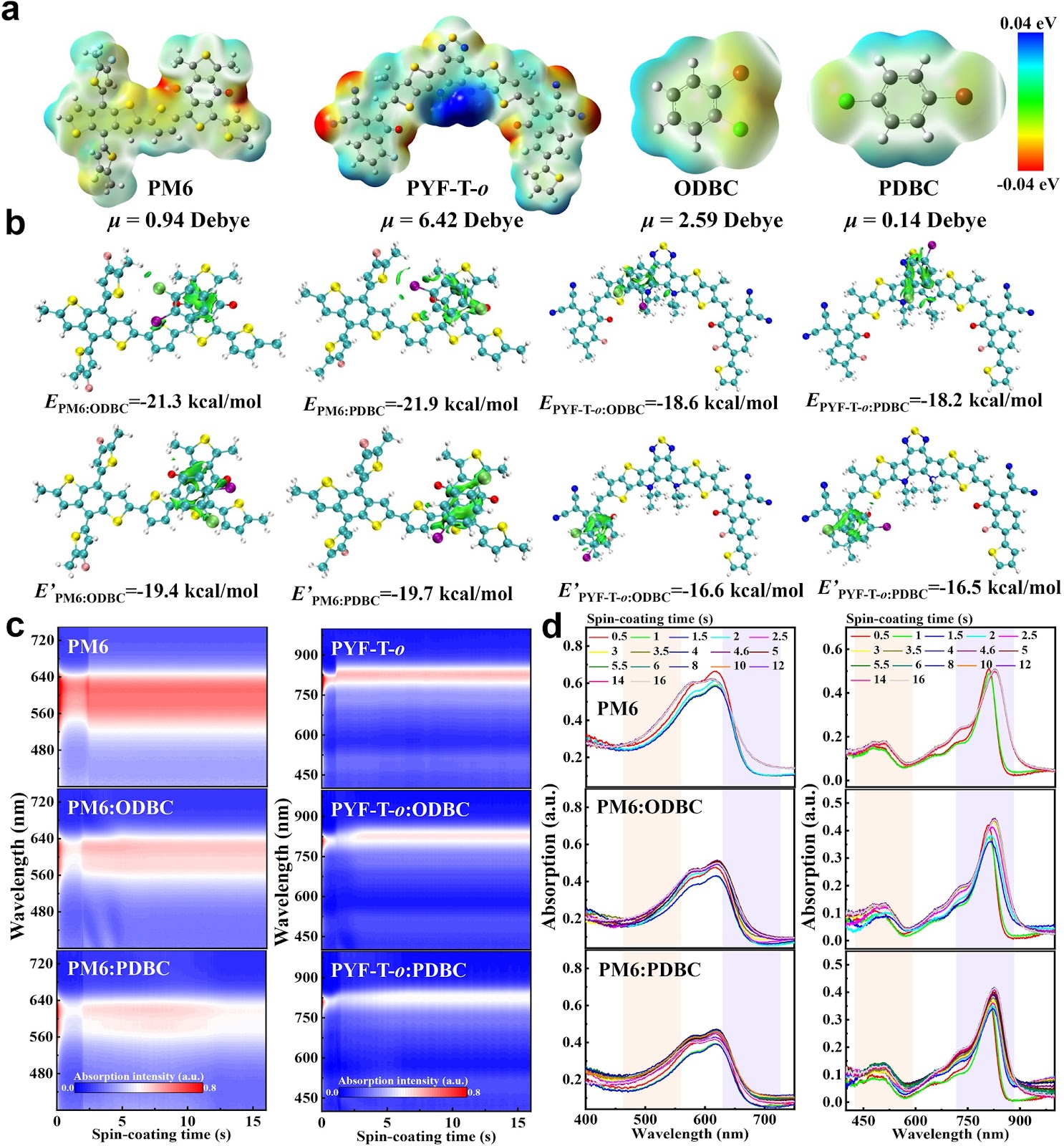
- •• Isomeric molecules fine-tune secondary nucleation of donor underlayer, enabling precise control of swelling in sequential processing. • Binary organic solar cells processed with non-halogen toluene solvent achieve a champion efficiency of 20.0% (certified 19.7%). • High dipole moment isomer promotes earlier nucleation of PM6, improving bulk morphology and vertical phase segregation. • The study proposes solvent design rules for sequential processing, advancing green-solvent-based organic photovoltaics.
Abstract
Sequential processing (SqP) of the active layer offers independent optimization of the donor and acceptor with more targeted solvent design, which is considered the most promising strategy for achieving efficient organic solar cells (OSCs). In the SqP method, the favorable interpenetrating network seriously depends on the fine control of the bottom layer swelling. However, the choice of solvent(s) for both the donor and acceptor have been mostly based on a trial-and-error manner. A single solvent often cannot achieve sufficient yet not excessive swelling, which has long been a difficulty in the high efficient SqP OSCs. Herein, two new isomeric molecules are introduced to fine-tune the nucleation and crystallization dynamics that allows judicious control over the swelling of the bottom layer. The strong non-covalent interaction between the isomeric molecule and active materials provides an excellent driving force for optimize the swelling-process. Among them, the molecule with high dipole moment promotes earlier nucleation of the PM6 and provides extended time for crystallization during SqP, improving bulk morphology and vertical phase segregation. As a result, champion efficiencies of 17.38% and 20.00% (certified 19.70%) are achieved based on PM6/PYF-T-o (all-polymer) and PM6/BTP-eC9 devices casted by toluene solvent.
1. Introduction
Organic solar cells (OSCs) have been extensively studied owing to the charming features of light-weight, flexibility, semitransparency, compatibility with roll-to-roll solution-based production, etc. [1–6]. Non-fullerene acceptors with high absorption coefficients in the red and near-infrared region has significantly improved of the performance of OSCs [7–10]. The combined effort of materials innovation and device engineering leads to the ~ 20% power conversion efficiency (PCE) of single-junction OSCs [11–13].
However, a high fraction of the top-of-the-line PCEs are realized through the use of highly vaporizable solvents such as chloroform to ‘lock’ the morphology of the active layer in a relatively instable thermodynamic non-equilibrium state. Along with its unneglectable toxicity, the potential of chloroform in large-scale production is very limited [14, 15]. In this context, employing greener solvents with a high-boiling point to achieve high efficiency OSCs is essential for the industrialization of the technology. However, in order to balance charge transport and film morphology, the state-of-the-art OSCs are composed of polymer donors and non-fullerene acceptors with a complex fused-ring framework and lengthy side chains, which typically results in a low solubility in most non-halogenated solvents [15, 16]. Without extra post-treatments, the aggregation, crystallization and phase segregation of the active layer blend casted by non-halogenated solvents, strongly affected by the drying kinetics, are difficult to regulate. The overall nanoscale morphology produced this way is typically in an unfavorable state, resulting in much lower efficiency than chloroform-casting devices [17–20]. Therefore, it is crucial to broaden the methods that can effectively control the morphology of active layer when high-boiling point non-halogen solvents are used to prepare the active layer. However, it is difficult to effectively adjust the molecular stacking and donor–acceptor phase segregation through targeted solvent-material interaction in a conventional blend-cast device, i.e., making the solvent selectively interact with the donor (or acceptor) alone.
This makes the sequential processing (SqP) approach even more promising, as it allows independent optimization of donor and acceptor layers, potentially overcoming the limitations of blend casting with green solvents.
Loading authentic research manuscript (Pages 1–5)...
Yufei Wang, Chuanlin Gao, Wen Lei, Tao Yang, Zezhou Liang, Kangbo Sun, Chaoyue Zhao, Lu Chen, Liangxiang Zhu, Haoxuan Zeng, Xiaokang Sun, Bin He, Hanlin Hu, Zeguo Tang, Mingxia Qiu, Shunpu Li, Peigang Han, Guangye Zhang (2025). Achieving 20% Toluene-Processed Binary Organic Solar Cells via Secondary Regulation of Donor Aggregation in Sequential Processing. Nano-Micro Letters. https://doi.org/10.1007/s40820-025-01715-2
Research & Educational Purpose Only:The translations, structured abstracts, analytical annotations, and data reports provided by SinoTechIntel are intended exclusively for academic research, internal corporate R&D, and educational benchmarking. They do not constitute formal engineering, chemical safety, legal, or professional advice.
Copyright & Intellectual Property Notice: Original copyright of the underlying source articles and experimental data remains with the respective authors, institutions, and original publishing journals. SinoTechIntel claims intellectual property only over its proprietary translations, analytical syntheses, and AEO structured enhancements in accordance with international fair use and academic citation principles.
Frequently Asked Questions
What is the main achievement of this paper?
The paper reports binary organic solar cells processed with toluene, a non-halogen solvent, achieving a champion efficiency of 20.0% (certified 19.7%), demonstrating the potential of green solvents for high-performance OSCs.
How does the sequential processing (SqP) method work?
SqP involves depositing the donor and acceptor layers sequentially, allowing independent optimization of each layer. The key is controlling the swelling of the bottom layer during the second deposition, which is fine-tuned here using isomeric molecules.
What role do the isomeric molecules play?
The isomeric molecules fine-tune the nucleation and crystallization dynamics of the donor underlayer, enabling judicious control over swelling. A high dipole moment molecule promotes earlier nucleation of PM6, improving morphology and phase segregation.
Why is using non-halogen solvents important?
Halogenated solvents like chloroform are toxic and unsuitable for large-scale production. Using greener, high-boiling-point solvents like toluene is essential for environmentally friendly and industrially viable organic solar cells.
What are the reported efficiencies for the different systems?
The champion efficiencies are 17.38% for PM6/PYF-T-o (all-polymer) and 20.00% (certified 19.70%) for PM6/BTP-eC9 devices, both processed with toluene.
Related Technical Papers & Translations
Direct Repair of the Crystal Structure and Coating Surface of Spent LiFePO4 Materials Enables Superfast Li-Ion Migration
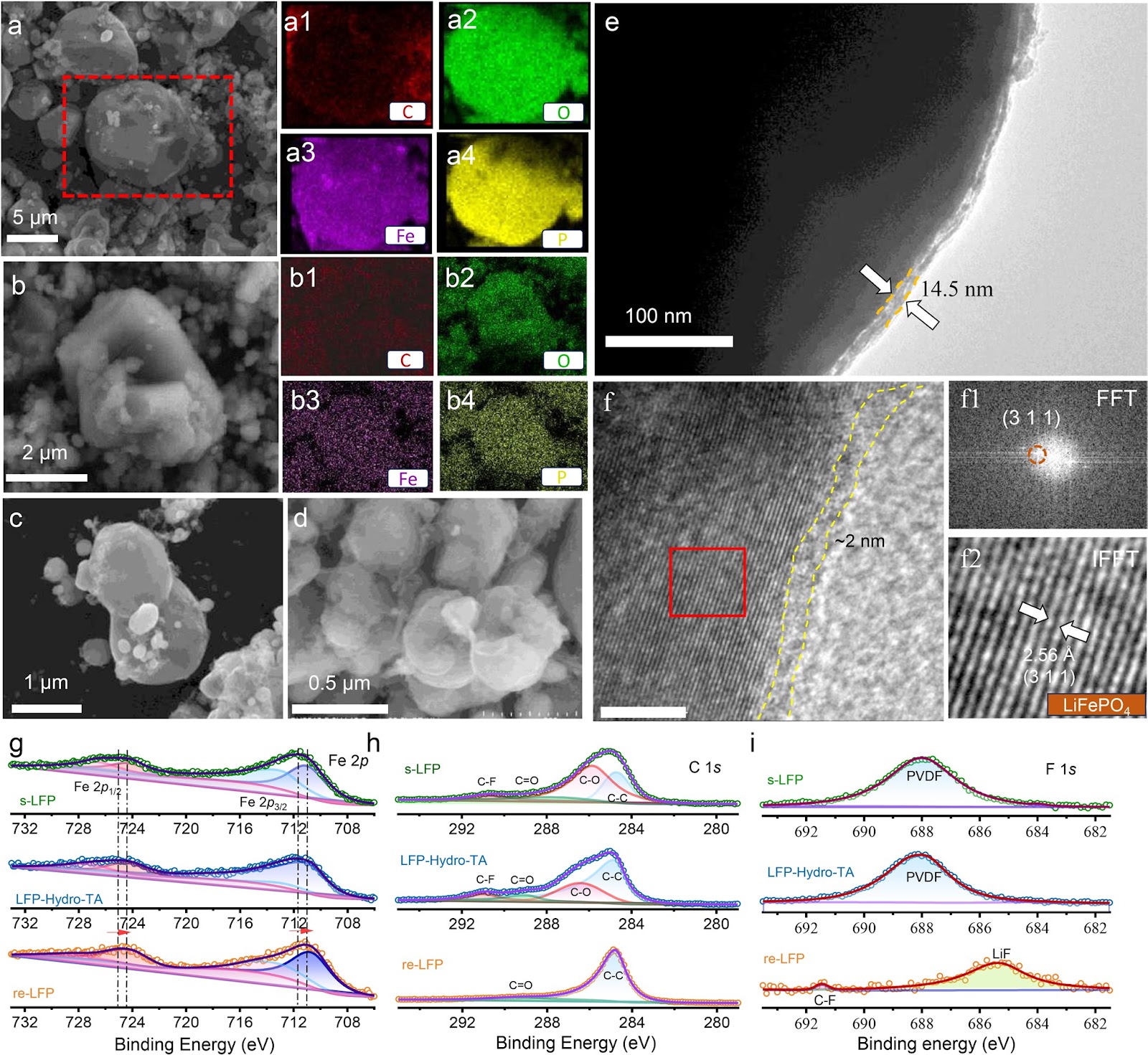
The rapid accumulation of spent LiFePO4 (LFP) cathodes from retired lithium-ion batteries necessitates the development of effective and environmental-friendly recycling strategies. In this context, direct regeneration has emerged as a promising approach for reclaiming LFP cathode materials, offering a streamlined pathway to restore their electrochemical functionality. We report an integrated regeneration protocol that simultaneously repairs the degraded crystal structure and reconstructs the damaged carbon coating in spent LFP. The regenerated cathode material had superfast lithium-ion diffusion kinetics and a stable cathode–electrolyte interface, giving a remarkable rate capability with specific capacities of 122 mAh g−1 at 5C and 106 mAh g−1 at 10C (1C = 170 mA g−1). It also maintained capacities of 110.7 mAh g−1 (5C) and 84.1 mAh g−1 (10C) after 400 cycles. It could be used in harsh environments and could be stably cycled at subzero temperatures (−10 and −20 °C) and in solid-state electrolyte batteries. Life cycle assessment combined with economic evaluation using the EverBatt model reveals that this direct regeneration approach has high economic and environmental benefits.
Oxide Semiconductor for Advanced Memory Architectures: Atomic Layer Deposition, Key Requirement and Challenges
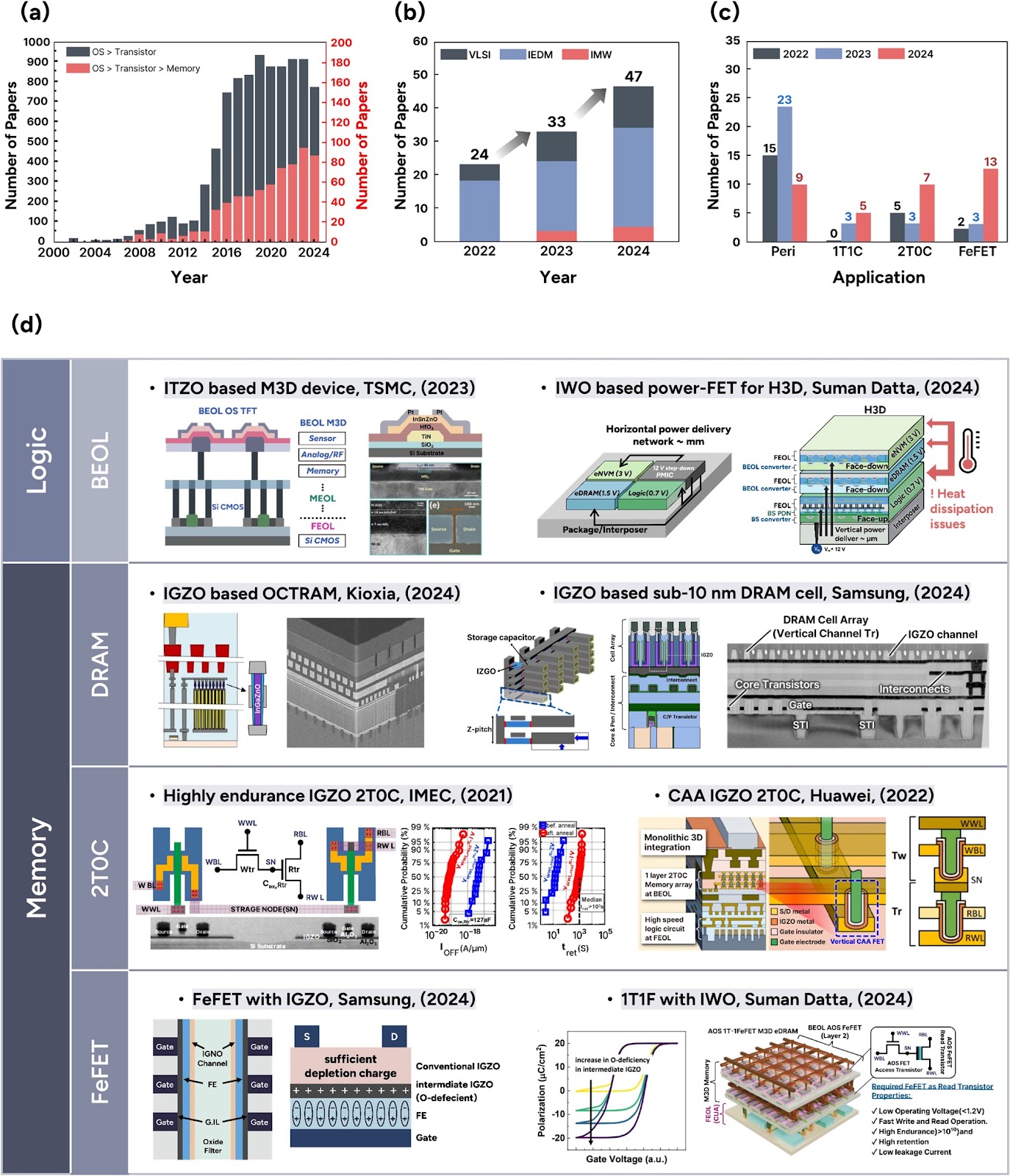
Oxide semiconductors (OSs), introduced by the Hosono group in the early 2000s, have evolved from display backplane materials to promising candidates for advanced memory and logic devices. The exceptionally low leakage current of OSs and compatibility with three-dimensional (3D) architectures have recently sparked renewed interest in their use in semiconductor applications. This review begins by exploring the unique material properties of OSs, which fundamentally originate from their distinct electronic band structure. Subsequently, we focus on atomic layer deposition (ALD), a core technique for growing excellent OS films, covering both basic and advanced processes compatible with 3D scaling. The basic surface reaction mechanisms—adsorption and reaction—and their roles in film growth are introduced. Furthermore, material design strategies, such as cation selection, crystallinity control, anion doping, and heterostructure engineering, are discussed. We also highlight challenges in memory applications, including contact resistance, hydrogen instability, and lack of p-type materials, and discuss the feasibility of ALD-grown OSs as potential solutions. Lastly, we provide an outlook on the role of ALD-grown OSs in memory technologies. This review bridges material fundamentals and device-level requirements, offering a comprehensive perspective on the potential of ALD-driven OSs for next-generation semiconductor memory devices.
Laser powder bed fusion of biodegradable Zn-4Cu alloy: Processing, microstructure and properties
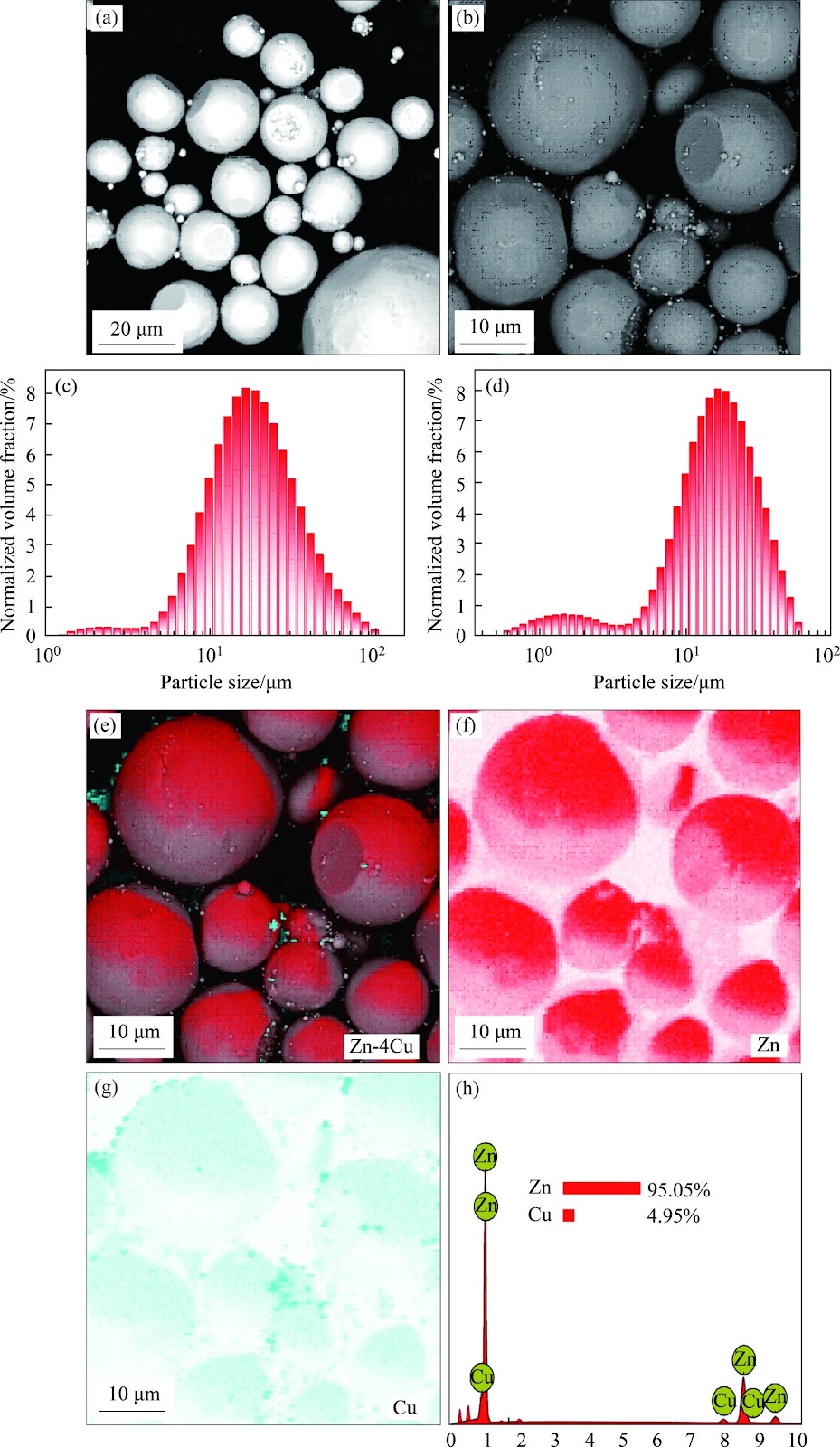
Zn's natural degradability and biocompatibility make it a promising candidate for implants, however, its mechanical properties remain insufficient for bone applications. In this study, the performance of Zn was enhanced by developing Zn-Cu alloys via laser powder bed fusion (LPBF). Optimal LPBF parameters for forming stable tracks were achieved by adjusting laser power and scanning speed. Under optimized conditions of 100 W and 100 mm/s, high-density (99.58%) Zn-Cu alloys with improved hardness (68.2HV) and yield strength (160 MPa) were achieved. These improvements are attributed to solid solution strengthening, segregation strengthening, and grain refinement. The Zn-Cu alloys also demonstrated favorable degradation behavior, with a rate of 0.16 mm/year. This degradation is primarily driven by micro-galvanic corrosion between the CuZn5 phase and Zn matrix, along with refined grains and increased grain boundary density. This work demonstrates a viable strategy for fabricating Zn-based implants with enhanced structural integrity and mechanical performance via LPBF.