SinoTechIntel Academic Portal
🏛️ Indexed Academic Journal

Journal of Central South University

Access authentic peer-reviewed engineering methodologies, experimental datasets, and scientific literature published in this journal on SinoTechIntel.

Total Research Papers: 152
Access: 100% Free Open Access
Browse by Publication Year & VolumeReset All Filters ✕

Published Research PapersFiltered: Year 2025 • 32 • 9

Showing 3 of 152 peer-reviewed papers with full Graphical Abstracts.

Original ResearchVol. 32, Issue 9 • pp. 3657-3674DOI: 10.1007/s11771-025-6065-5Jan 15, 2025

Deformation characteristics and interfacial damage of CRTS II slab track joints under operating temperature conditions

Authors: DONG Bo, CHEN Zhi-yuan, ZHU Hao, CAI Xiao-pei, ZHANG Xing, HE Xu

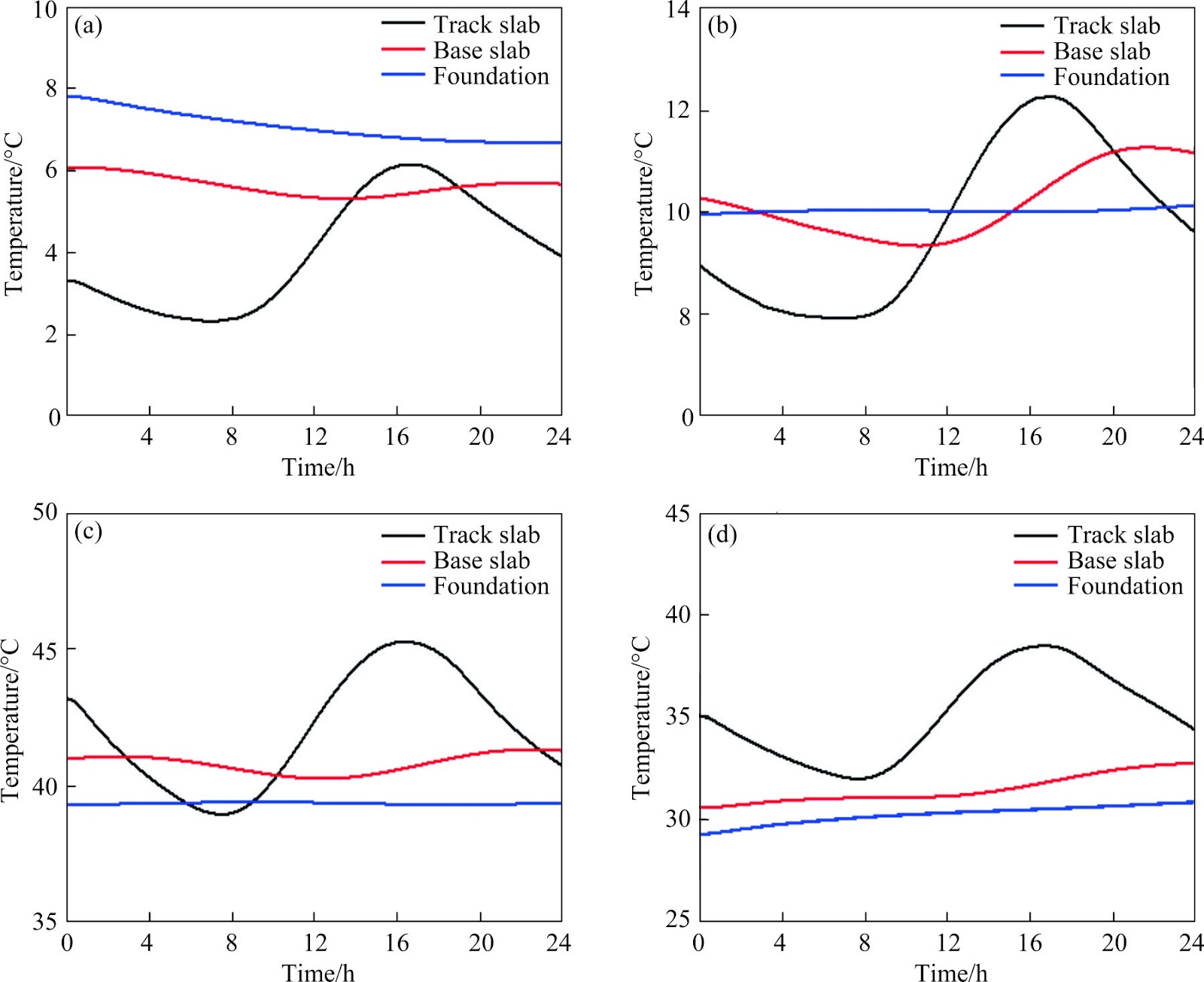
Arching and cracking of joints between slabs have become a problem in China Railway Track System (CRTS) II slab track. The slab track is susceptible to complex temperature variations as a longitudinal continuous structure. Based on measured data, a thermal-mechanical coupling model of the track was established. The deformation characteristics and interfacial damage behavior of joints under typical temperature fields were studied. The findings indicate that the annual extreme temperature range of the slab track, fluctuates from −1.4 to 49.8 ℃. The annual temperature gradient within the vertical depth range of 0 to 0.2 m of the track varies between −16.19 ℃/m and 30.15 ℃/m. The vertical deformation of joints is significantly influenced by high temperatures, with a maximum measured deformation of 0.828 mm. The joint seams are primarily affected by low temperatures, which lead to a separation of 0.9 to 1.0 mm. Conversely, interlayer damage of joints is predominantly influenced by elevated temperatures. In summer, the maximum ratio of interface damage area in the joint can reach up to 95%, with the maximum debonding area ratio can be as high as 84%. The research results can provide help for joint damage regularity and deformation control of CRTS II slab track.
Deformation characteristics and interfacial damage of CRTS II slab track joints under operating temperature conditions
Graphical Abstract
Original ResearchVol. 32, Issue 9 • pp. 3493-3513DOI: 10.1007/s11771-025-6060-xJan 15, 2025

Innovative pillar recovery method integrating gob-side entry driving and directional roof-cutting for thick-hard roof coal seams

Authors: WU Yi-yi, YE Qiu-cheng, GAO Yu-bing, ZHANG Xing-xing, HE Man-chao

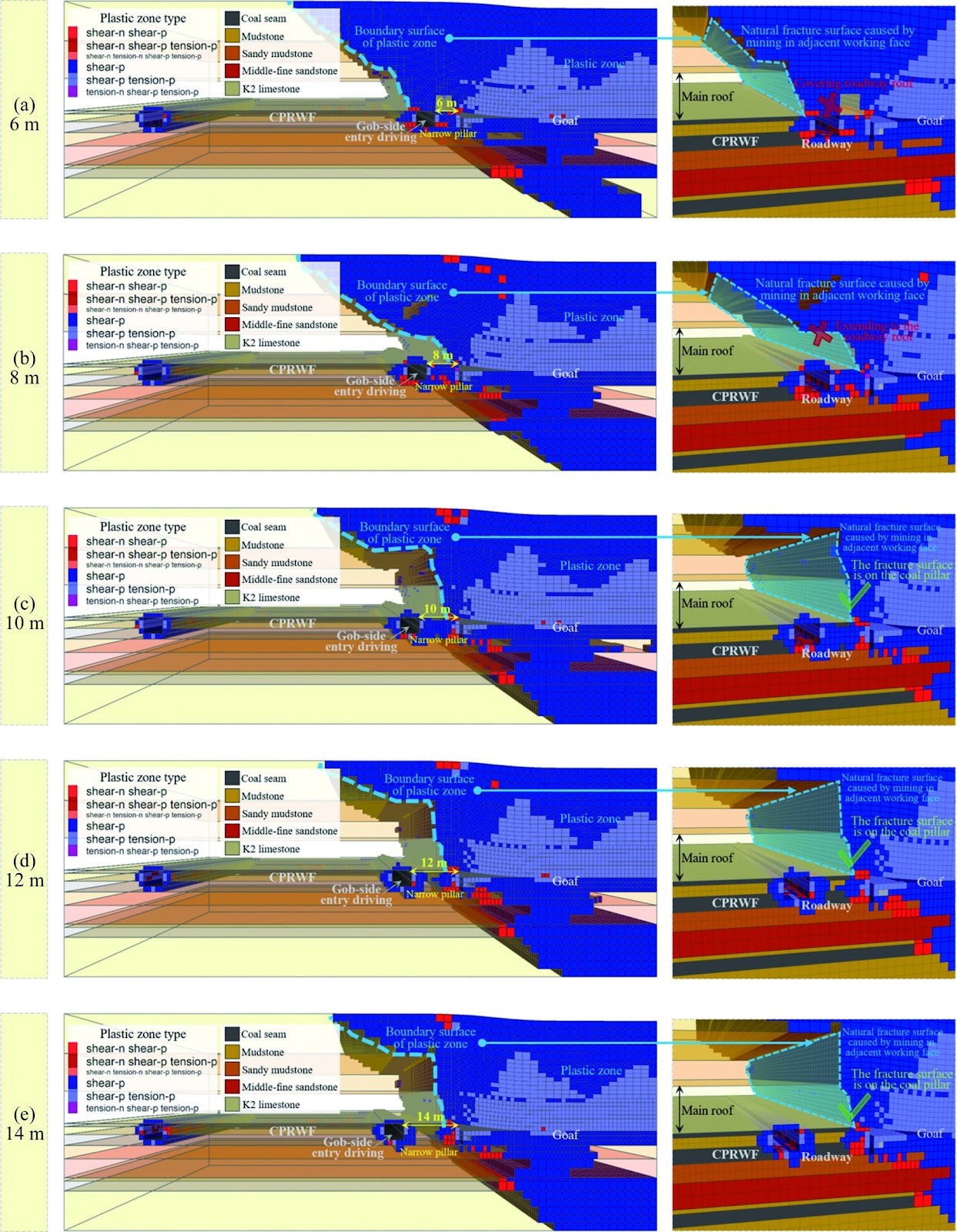
To enhance the recuperation rate of the mine and comply with the stipulations of green mining technology, it is vital to expeditiously recuperate the coal pillar resources in the final stage, thus preventing the considerable squandering of resources. The coal pillar resource of the main roadway and its branch roadway constitutes a significant recovery subject. Its coal pillar shape is regular and possesses a considerable strike distance, facilitating the arrangement of the coal pillar recovery working face (CPRWF) for mining operations. However, for the remaining coal pillars with a thick and hard roof (THF) and multiple tectonic zones, CPRWF encounters challenges in selecting an appropriate layout, managing excessive roof pressure, and predicting mining stress. Aiming at the roadway coal pillar group with THF and multi-structural areas in specific projects, a method of constructing multi-stage CPRWF by one side gob-side entry driving (GSED) and one side roadway reusing is proposed. Through theoretical calculation of roof fracture and numerical simulation verification, combined with field engineering experience and economic analysis, the width of the narrow coal pillar (NCP) in the GSED is determined to be 10 m and the length of the CPRWF is 65 m. Concurrently, the potential safety hazard that the roof will fall asymmetrically and THF is difficult to break during CPRWF mining after GSED is analyzed and verified. Then, a control method involving the pre-cutting of the roof in the reused roadway before mining is proposed. This method has been shown to facilitate the complete collapse of THF, reduce the degree of mine pressure, and facilitate the symmetrical breaking of the roof. Accordingly, a roof-cutting scheme based on a directional drilling rig, bidirectional shaped polyvinyl chloride (PVC) pipe, and emulsion explosive was devised, and the pre-splitting of 8.2 m THF was accomplished. Field observations indicate that directional cracks are evident in the roof, the coal wall is flat during CPRWF mining, and the overall level of mining pressure is within the control range. Therefore, the combined application of GSED and roof-cutting technology for coal pillar recovery has been successfully implemented, thereby providing new insights and engineering references for the construction and pressure relief mining of CPRWF.

Innovative pillar recovery method integrating gob-side entry driving and directional roof-cutting for thick-hard roof coal seams
Graphical Abstract
Original ResearchVol. 32, Issue 9 • pp. 3514-3538DOI: 10.1007/s11771-025-6074-4Jan 15, 2025

An innovative N00 mining approach for protecting entries and mining panels

Authors: ZHANG Jun, HE Man-chao, WANG Ya-jun, YANG Gang, HOU Shi-lin, CHEN Yu-wen, KANG Xu-hui, SHI Zhen, FU Qiang, DU Fu-kang

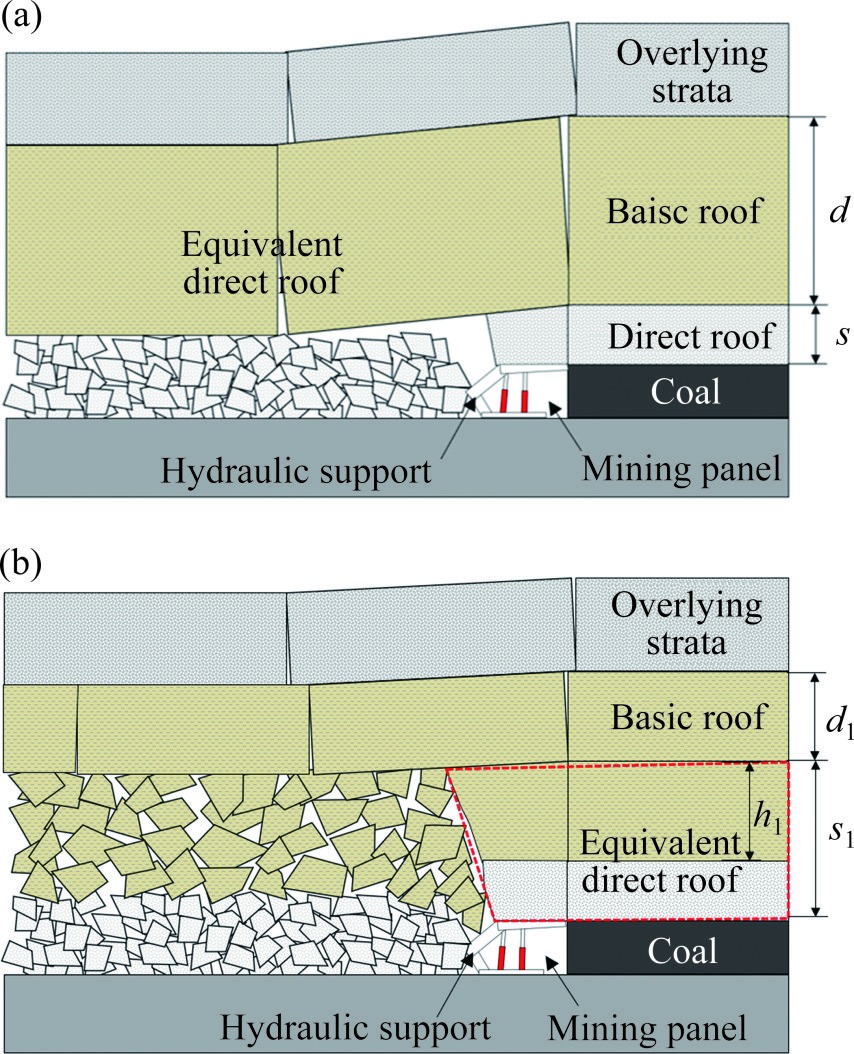
Addressing the issues of significant entry settlement and severe mining pressure manifestations in the conventional 121 approach, an innovative N00 approach is proposed. By comparing the mining process and entry formation process of different approaches, the characteristics of entry roof settlement evolution under different approaches are obtained. The N00 approach, which incorporates roof cutting and NPR cable support, optimizes the mining and entry formation process to reduce the settlement phase of entry roof, decreases the settlement of entry roof, and enhances the steadiness of entry roof. The N00 approach modifies the entry roof structure through roof cutting and establishes a hydraulic support load mechanics model for the mining panel to derive the theoretical load pressure formula for the N00 approach’s hydraulic support. Compared with the conventional 121 approach, the pressure on the N00 approach’s hydraulic support is reduced. Empirical data obtained through field monitoring demonstrate that the N00 approach has reduced the roof settlement of the entry and weakened the mining pressure manifestation at the mining panel, achieving the goal of protecting the entry and mining panel.

An innovative N00 mining approach for protecting entries and mining panels
Graphical Abstract