SinoTechIntel Academic Portal
🏛️ Indexed Academic Journal

Journal of Central South University

Access authentic peer-reviewed engineering methodologies, experimental datasets, and scientific literature published in this journal on SinoTechIntel.

Total Research Papers: 152
Access: 100% Free Open Access
Browse by Publication Year & VolumeReset All Filters ✕

Published Research PapersFiltered: Year 2025 • 32 • 8

Showing 2 of 152 peer-reviewed papers with full Graphical Abstracts.

Original ResearchVol. 32, Issue 8 • pp. 3111-3123DOI: 10.1007/s11771-025-6054-8Jan 15, 2025

Quantifying influence of single particle shape and loading rate on mechanical properties of steel slag

Authors: Yang Hao, Wen Hui-shan, Zhang Jun-hui, Liu Ke, Xing Yi, Wu Meng-meng

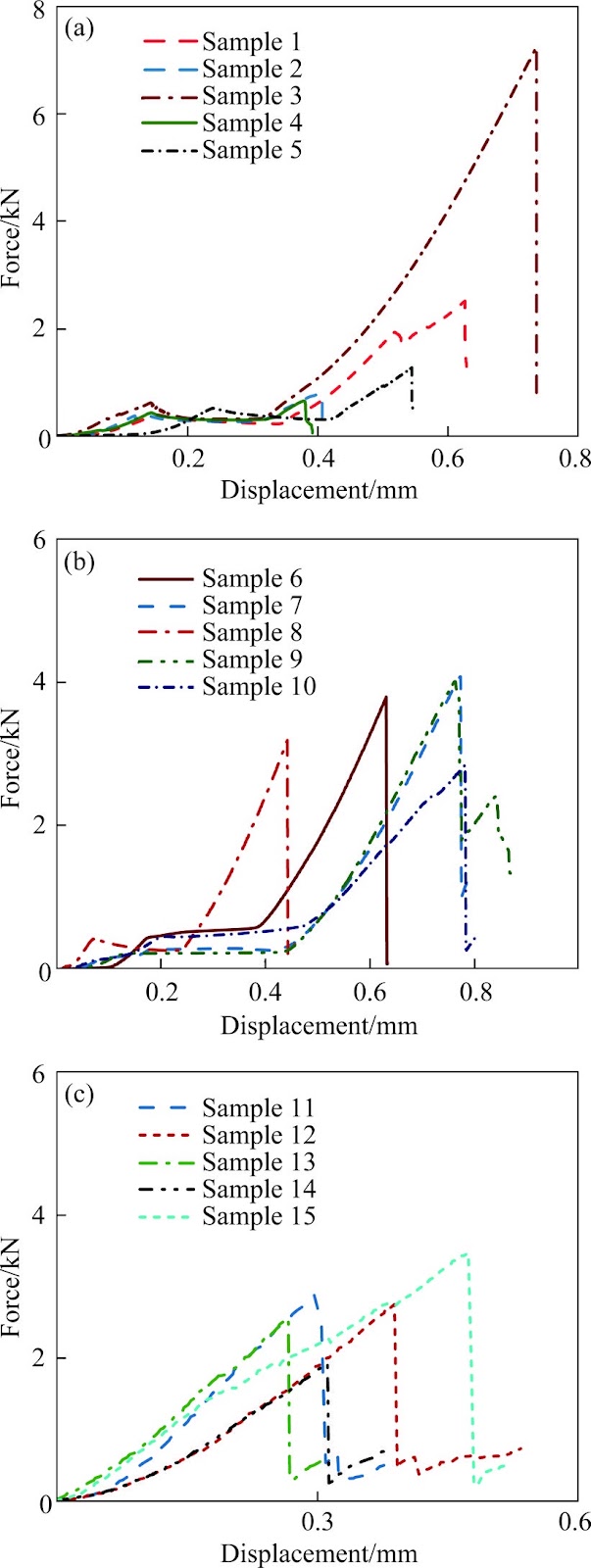
As a typical solid waste from the iron and steel, the mechanical properties of steel slag are regarded as the core basis for realizing its resource recycling. To explore the influence of shape and external loading speed on the crushing characteristics of steel slag, single particle crushing tests were carried out. The research focuses on the correlation between parameters such as the load−displacement relationship of single particles, crushing mode, crushing energy, and Weibull modulus, as well as external loading rate and quantified morphological parameters. The results show that the single particle crushing modes of steel slag mainly consist of three modes: through-splitting, complete fragmentation and local cutting; Compared with natural aggregates or recycled materials, steel slag particles are found to potentially exhibit higher compressive strength and the increase in loading rate further accelerates the occurrence of particle crushing behavior; Significant impacts on the crushing mode and characteristic stress of steel slag particles are exerted by their shape differences, and the energy release mode is jointly regulated by shape and loading rate. This research provides theoretical guidance and technical support for the diversified utilization of steel slag single particles, a new type of solid waste resource.
Quantifying influence of single particle shape and loading rate on mechanical properties of steel slag
Graphical Abstract
Original ResearchVol. 32, Issue 8 • pp. 2783-2794DOI: 10.1007/s11771-025-6041-0Jan 15, 2025

Influence of pre-compression and pre-aging on precipitation behavior in casting Mg-9.8Sn-3.0Zn alloy

Authors: LIU Yun, LIU Chao-qiang, NI Song, SONG Min

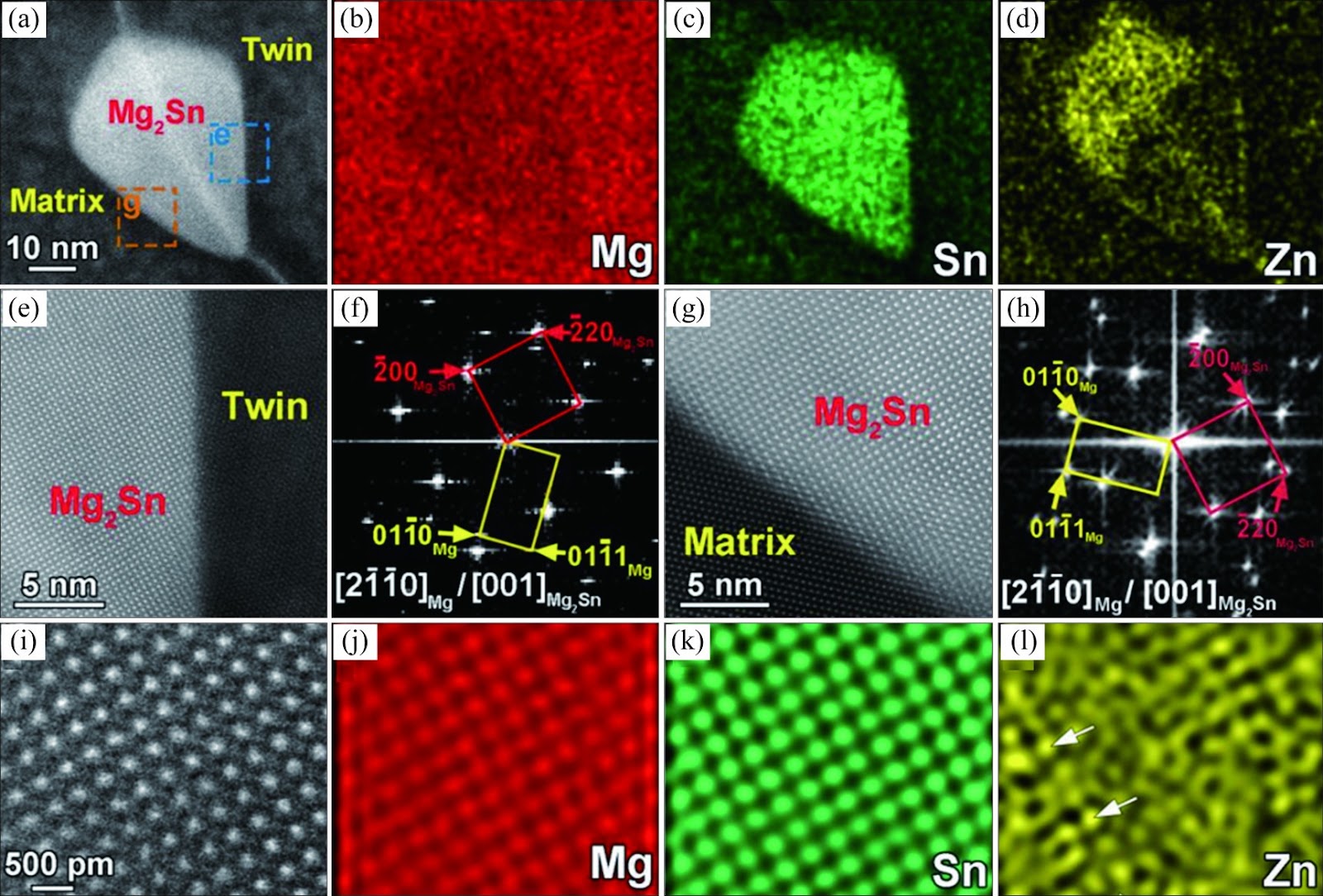
The effects of pre-compression and pre-aging on the age-hardening response and microstructure of Mg-9.8Sn-3.0Zn (wt.%) alloy have been investigated via hardness test and advanced electron microscopy. The alloy subjected to both pre-compression and pre-aging exhibits the most refined and densest distribution of precipitates upon aging at 200 ℃, leading to the superior age-hardening performance observed in the alloy. Comparatively, the alloy that underwent only pre-aging displayed a greater number density of precipitates than its counterpart that was neither pre-compressed nor pre-aged when both were aged to their peak conditions at 200 ℃, indicating an enhanced age-hardening response in the pre-aged alloy. The precipitates in these three peak-aged alloys consist of Mg2Sn and MgZn2 phases. The reason why the pre-aged alloy has a higher number density of precipitates than the directly aged alloy is that MgZn2 phase formed during pre-aging can serve as heterogeneous nucleation site for the formation of Mg2Sn. The reason why the pre-compression and pre-aged alloy has the highest number density of precipitates is that Mg3Sn and MgZn2 phases formed during pre-aging, alongside lattice defects introduced during pre-compression, collectively act as effective heterogeneous nucleation sites for the formation of Mg2Sn during the subsequent aging at 200 ℃.

Influence of pre-compression and pre-aging on precipitation behavior in casting Mg-9.8Sn-3.0Zn alloy
Graphical Abstract