SinoTechIntel Academic Portal
🏛️ Indexed Academic JournalImpact Factor: 3.8

Int. Journal of Mining Science and Technology (采矿与安全工程)

Authoritative peer-reviewed journal in materials science, metallurgy, chemistry and engineering technologies: Int. Journal of Mining Science and Technology (采矿与安全工程)

Total Research Papers: 147
Access: 100% Free Open Access
Browse by Publication Year & VolumeReset All Filters ✕

Published Research PapersFiltered: Year 2025 • Vol. 32 • 4

Showing 8 of 147 peer-reviewed papers with full Graphical Abstracts.

Original ResearchVol. 32, Issue 4 • pp. 100-112DOI: 10.1016/j.ijmst.2025.04.008Jan 15, 2025

Multi-directional disturbance effect of shear mechanical behaviors and fracturing mechanisms of rockmass intermittent structural plane under true triaxial shear test

Authors: Zhi Zheng, Zhanpeng Ma, Jinghua Qi, Guoshao Su, Gaoming Lu, Shufeng Pei, Quan Jiang

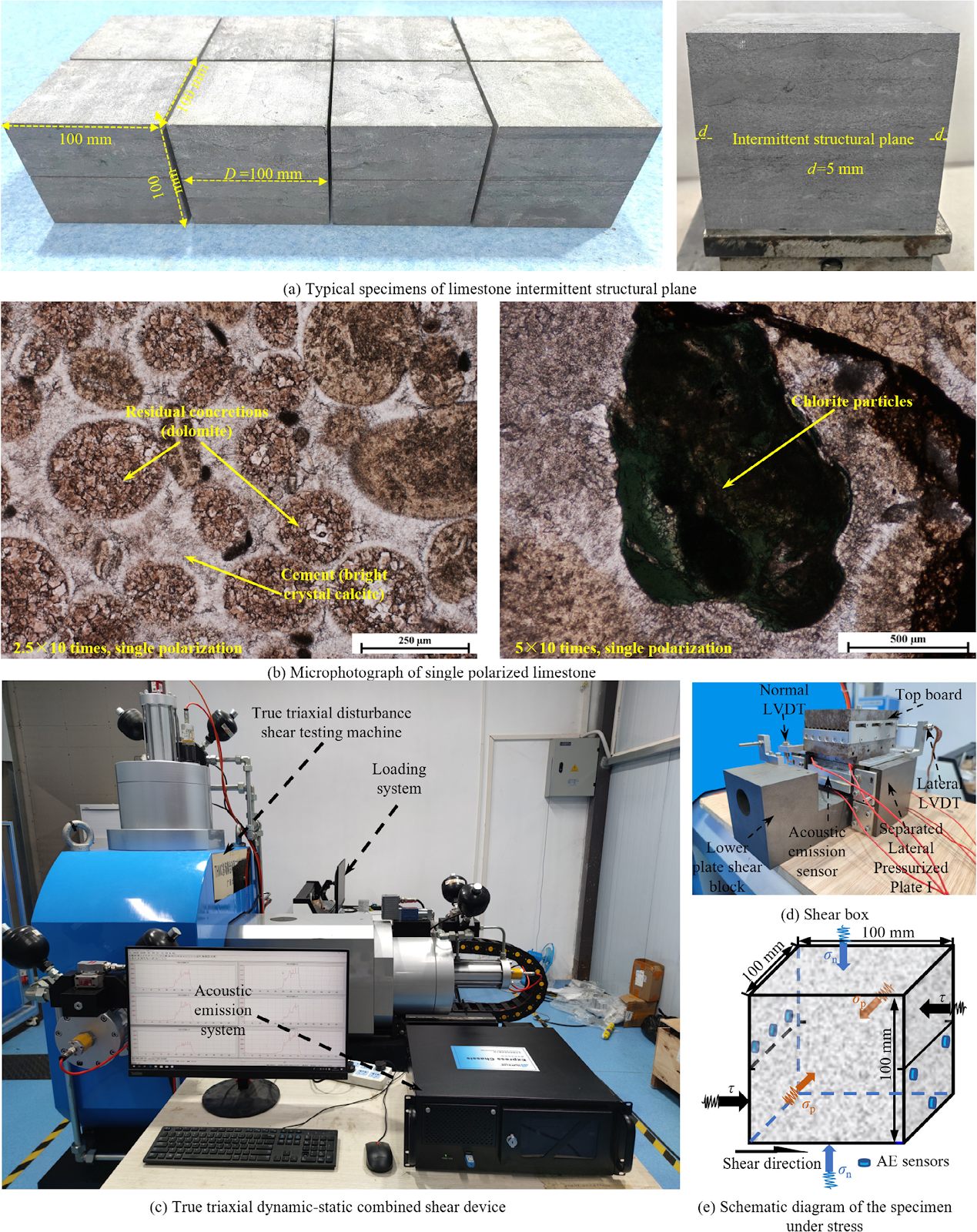
After the excavation of deep mining tunnels and underground caverns, the stability of surrounding rock controlled by structural planes is prone to structural damage and even engineering disasters due to three-dimensional stress redistribution and multi-directional dynamic construction interference. However, the shear mechanical behavior, fracture evolution mechanism and precursor characteristics of rockmass under true triaxial stress and multi-directional coupling disturbance are not unclear. Therefore, this study carried out true triaxial shear tests on limestone intermittent structural planes under uni-, bi- and tri-directional coupling disturbances to analyze its mechanical behavior, fracture evolution mechanism and precursor characteristics. The results show that as the disturbance direction increase, the shear strength of limestone generally decreases, while the roughness of structural planes and the degree of anisotropy generally exhibit an increasing trend. The proportion of shear cracks on the structural plane increases with the increase of shear stress. The disturbance strain rate before failure shows a U-shaped trend. Near to disturbance failure, there were more high-energy and high-amplitude acoustic emission events near the structural plane, and b-value drops rapidly below 1, while lgN/b ratio increased to above 3. These findings provide experimental recognition and theoretical support for assessing the stability of rockmass under blasting excavation.
Multi-directional disturbance effect of shear mechanical behaviors and fracturing mechanisms of rockmass intermittent structural plane under true triaxial shear test
Graphical Abstract
Original ResearchVol. 32, Issue 4 • pp. 100-112DOI: 10.1016/j.ijmst.2025.04.006Jan 15, 2025

Deterioration mechanism and dynamic constitutive model of coal-rock assemblages considering chemical corrosion and impact damage

Authors: Jianhang Chen, Banquan Zeng, Wuyan Xu, Kun Wang, Peng Liu, Songsong Hu, Shiji Wang, Zhixiang Song, Shaokang Wu, Xuyang Bai

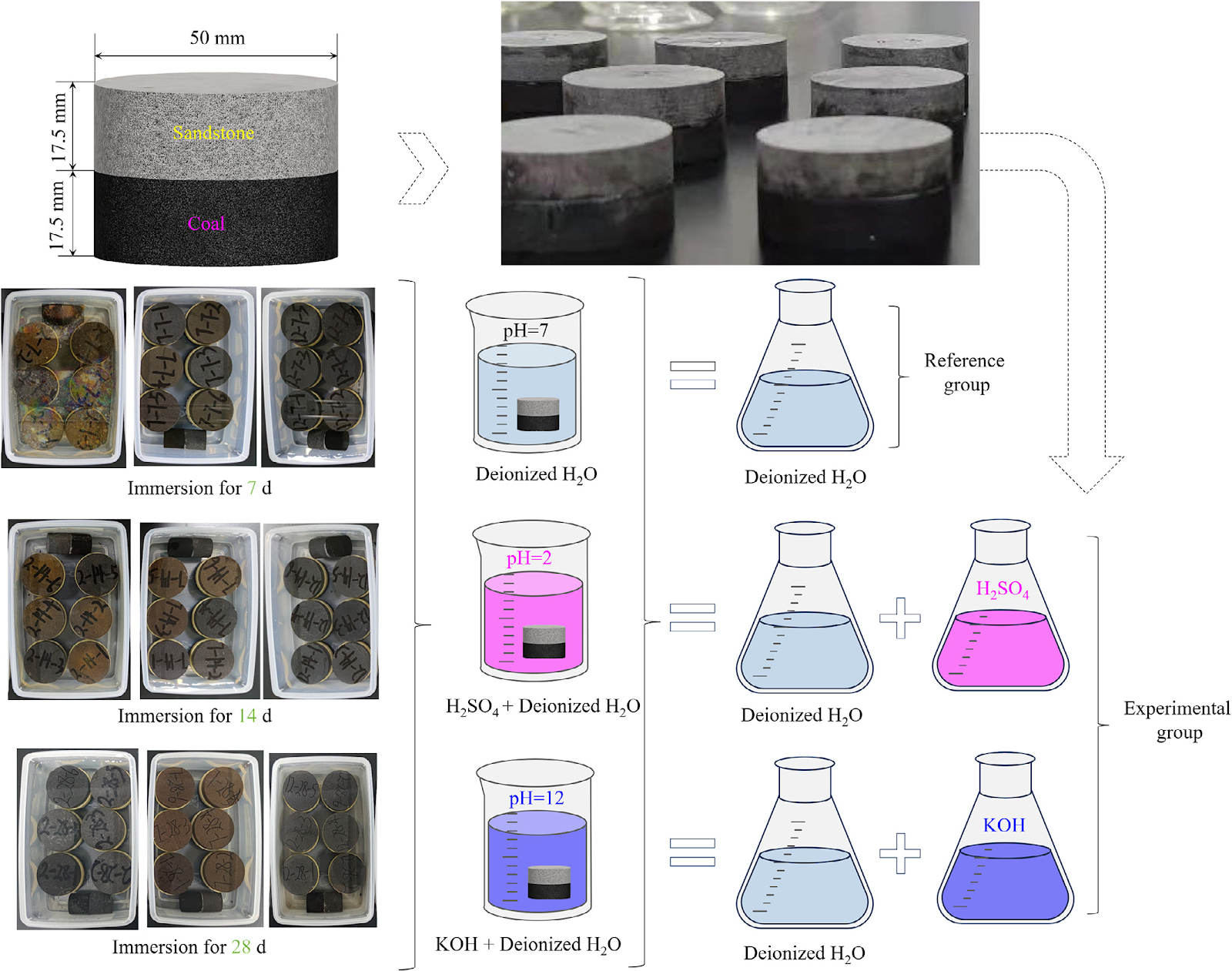
To reveal the deterioration mechanism of coal-rock assemblages under chemical corrosion and dynamic loading, chemical corrosion and dynamic impact experiments were conducted. Under different chemical corrosion conditions, the weakening characteristics, observable characteristics, softening characteristics of the dynamic parameters, dynamic failure characteristics, dynamic failure forms and dynamic microscopic characteristics were analyzed. Under each corrosion condition, the dynamic elastic modulus, dynamic deformation modulus and dynamic peak intensity tended to decrease with immersing time. The dynamic elastic modulus, dynamic deformation modulus and dynamic peak intensity exhibited an inverted U-shaped trend. Under dynamic impact, the failure process of acidly corroded samples can be divided into the following stages: the initial stage, elastic energy accumulation stage, local failure of coal and secondary rock crack expansion stage, coal fragment ejection stage, rock spalling stage and complete instability stage. Under dynamic impact, failure modes exist: coal crushing failure, rock fragmenting failure, rock splitting failure and full splitting failure. After impact failure, sample fragments are distributed in powder, granular, cone and block forms. Based on Zhu-Wang-Tang nonlinear viscoelastic properties, a model considering chemical corrosion and impact damage was proposed. The combined effects of chemical and impact-induced damage on the dynamic mechanical properties of coal-rock assemblages were systematically analyzed.

Deterioration mechanism and dynamic constitutive model of coal-rock assemblages considering chemical corrosion and impact damage
Graphical Abstract
Original ResearchVol. 32, Issue 4 • pp. 100-112DOI: 10.1016/j.ijmst.2025.04.007Jan 15, 2025

Homogeneity-dependent fracture behavior and instability mechanism of composite coal-rock: Insights from three-point bending tests

Authors: YUE Weitao, WANG Enyuan, FENG Xiaojun, TAN Tingjiang, ZHANG Li, CHEN Dong, ZHANG Qiming, DING Zeng

To investigate the instability mechanisms of heterogeneous geological structures in goaf area roofs, three-point bending tests (TPBT) and numerical simulations are performed on composite coal-rock (CCR). Acoustic emission (AE) monitoring is employed to analyze key parameters, establishing a multi-parameter quantitative system for CCR fracture processes. The impact of lithological homogeneity on fracture evolution and energy migration is examined. Results show that CCR exhibits a three-stage mechanical response: weak contact, strong contact, and post-peak stages, each with distinct crack evolution patterns. A positive correlation is found between lithological homogeneity and tensile crack proportion. No significant correlation is observed between AE average frequency (AF) and AE counts across different lithological CCR; however, peak frequency (PF) displays clear lithology-dependent characteristics. The regulatory effect of the rock homogeneity coefficient (u) on crack derivation mechanisms is quantified, yielding mathematical relationships between fracture strength (f), crack propagation path angle (b), crack fractal dimension (D), and u. The study highlights how different fracture modes alter energy migration pathways, confirming the coupling effect of grain distribution on mechanical response and crack propagation, and the influence of parameter u on critical energy release zones. These findings offer new insights into CCR failure mechanisms for mining safety.

Homogeneity-dependent fracture behavior and instability mechanism of composite coal-rock: Insights from three-point bending tests
Graphical Abstract
Original ResearchVol. 32, Issue 4 • pp. 100-112DOI: 10.1016/j.ijmst.2025.04.005Jan 15, 2025

Deformation and damage mechanisms of Y-intersecting jointed rocks under uniaxial compression

Authors: MA Qingshan, ZHANG Penghai, YANG Tianhong, LIU Xige, MU Wenqiang, ZHONG Jian

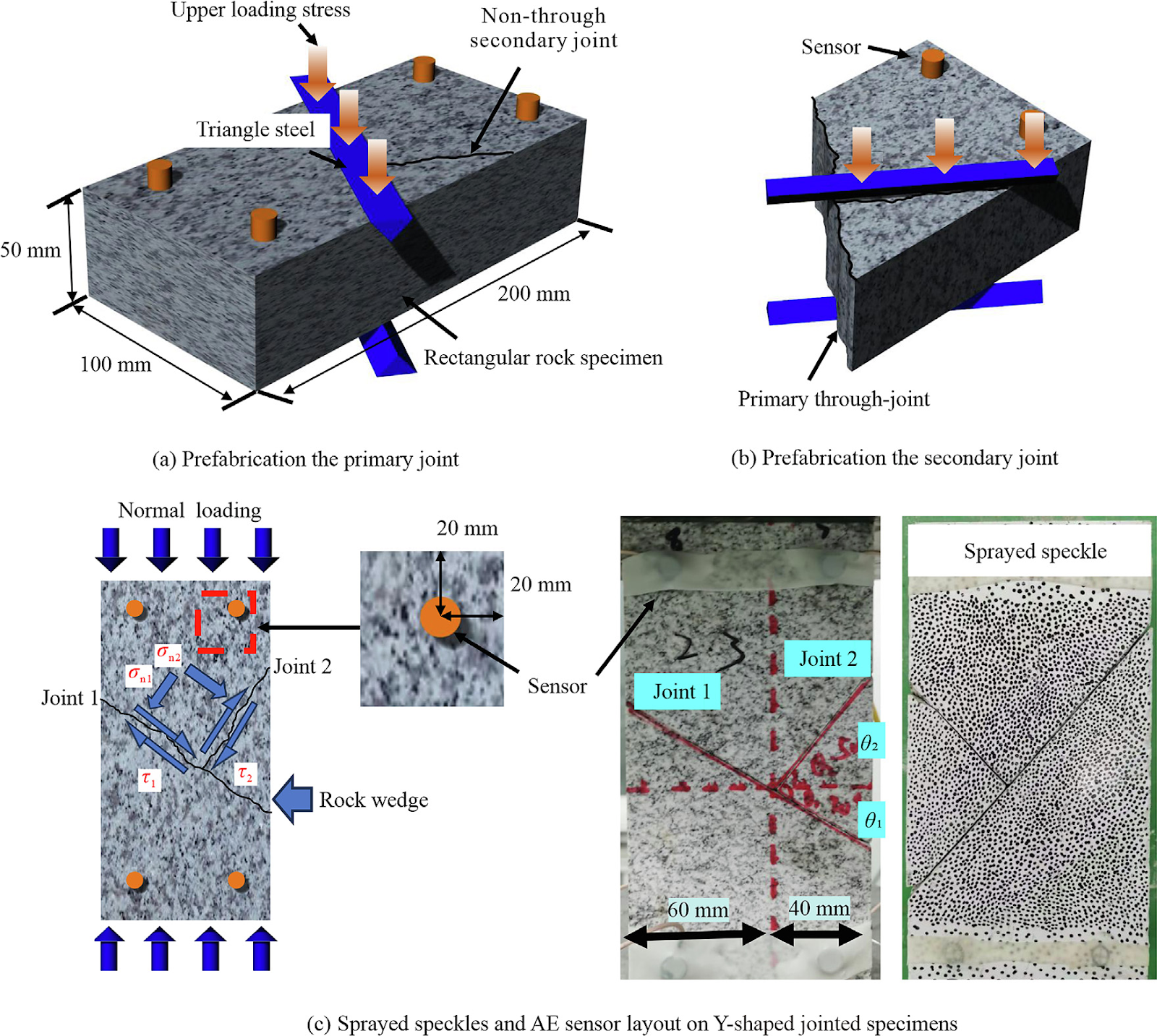
This study systematically analyzes the influence of different combined joint dip angles on rock mass failure modes and damage mechanisms through uniaxial compression tests on granite specimens with prefabricated Y-shaped discontinuities, combined with digital speckle and acoustic emission (AE) monitoring. The results show that as the dip angle of the primary joint increases, the failure mode transitions from overall failure to wedge block ejection and shear failure. A failure mode identification model was established based on main crack dip angle thresholds (40°, 45°), uniaxial compressive strength thresholds (40, 90 MPa), and energy core zone proportion thresholds (20%, 10%), achieving an accuracy of 93.3%. In the overall failure and wedge block ejection modes, a sharp increase in shear crack ratio and a sudden drop in the acoustic emission b-value occur in the high-stress phase (>0.6σc), while in the shear failure mode, significant fluctuations are observed due to the shear-tension alternation, making it difficult to identify a single critical point. Additionally, joint slip in the overall failure and wedge block ejection modes primarily occurs during the failure instability phase (>0.8σc). These findings provide theoretical support for stability evaluation of complex fractured rock masses and practical guidance for engineering safety construction.

Deformation and damage mechanisms of Y-intersecting jointed rocks under uniaxial compression
Graphical Abstract
Original ResearchVol. 32, Issue 4 • pp. 100-112DOI: 10.1016/j.ijmst.2025.04.004Jan 15, 2025

Dynamic interpretation of stress adjustment types in high geostress hard rock tunnels based on microseismic monitoring

Authors: XU Weihao, MA Chunchi, LI Tianbin, SHI Shoudong, PENG Feng, CHEN Ziquan, ZHANG Hang

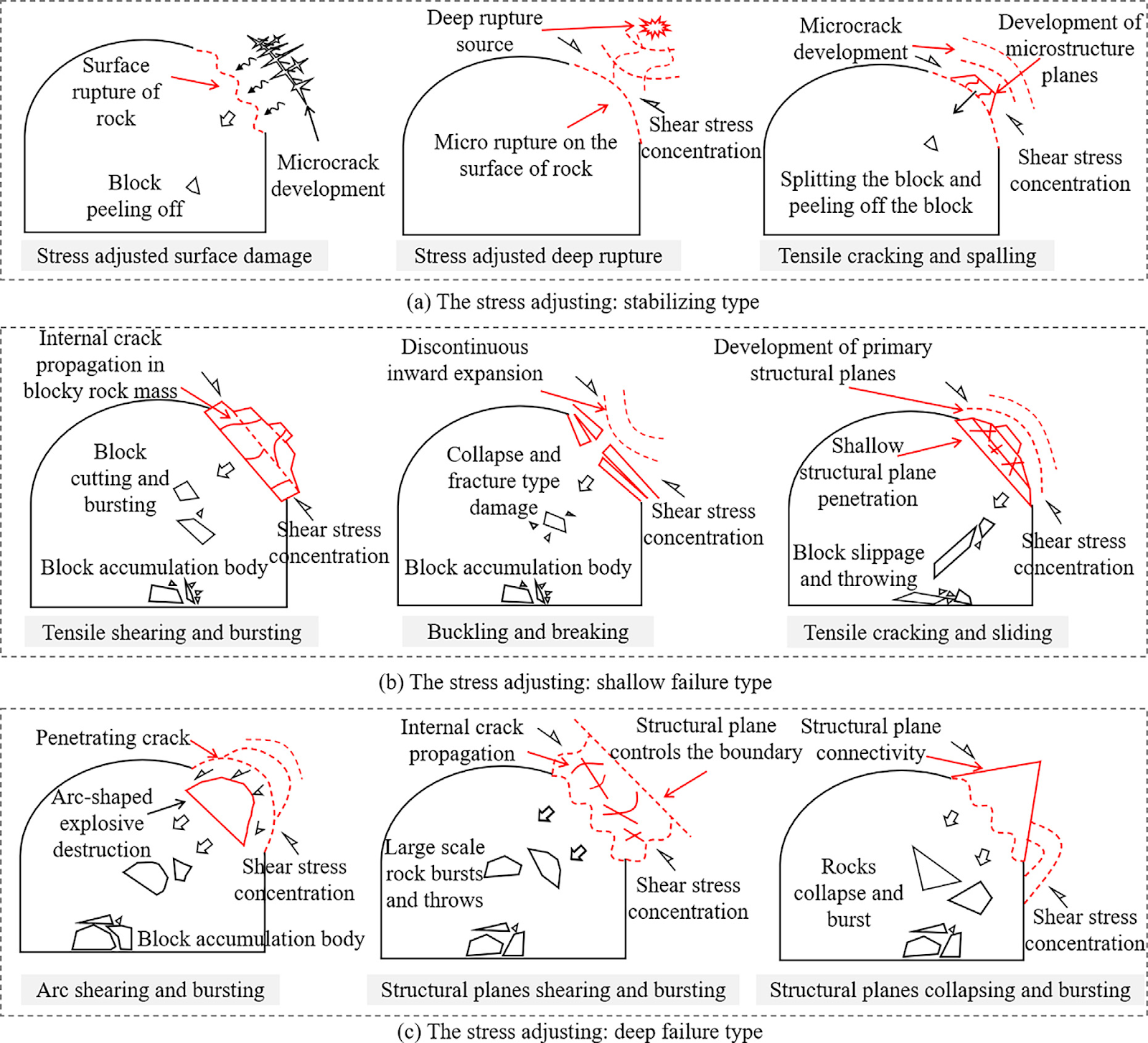
Dynamic stress adjustment in deep-buried high geostress hard rock tunnels frequently triggers catastrophic failures such as rockbursts and collapses. While a comprehensive understanding of this process is critical for evaluating surrounding rock stability, its dynamic evolution are often overlooked in engineering practice. This study systematically summarizes a novel classification framework for stress adjustment types—stabilizing (two-zoned), shallow failure (three-zoned), and deep failure (four-zoned)—characterized by distinct stress adjustment stages. A dynamic interpretation technology system is developed based on microseismic monitoring, integrating key microseismic parameters (energy index EI, apparent stress ra, microseismic activity S), seismic source parameter space clustering, and microseismic paths. This approach enables precise identification of evolutionary stages, stress adjustment types, and failure precursors, thereby elucidating the intrinsic linkage between geomechanical processes (stress redistribution) and failure risks. The study establishes criteria and procedures for identifying stress adjustment types and their associated failure risks, which were successfully applied in the Grand Canyon Tunnel of the E-han Highway to detect 50 instances of disaster risks. The findings offer invaluable insights into understanding the evolution process of stress adjustment and pinpointing the disaster risks linked to hard rock in comparable high geostress tunnels.

Dynamic interpretation of stress adjustment types in high geostress hard rock tunnels based on microseismic monitoring
Graphical Abstract
Original ResearchVol. 32, Issue 4 • pp. 100-112DOI: 10.1016/j.ijmst.2025.04.003Jan 15, 2025

Mechanical and microstructural properties of schist exposed to freeze-thaw cycles, dry-wet cycles, and alternating actions

Authors: Jiajia Gao, Jiajian Jin, Daguo Wang, Shaogang Lei, Jianguo Lu, Huan Xiao, Jinhe Li, Huadong Li

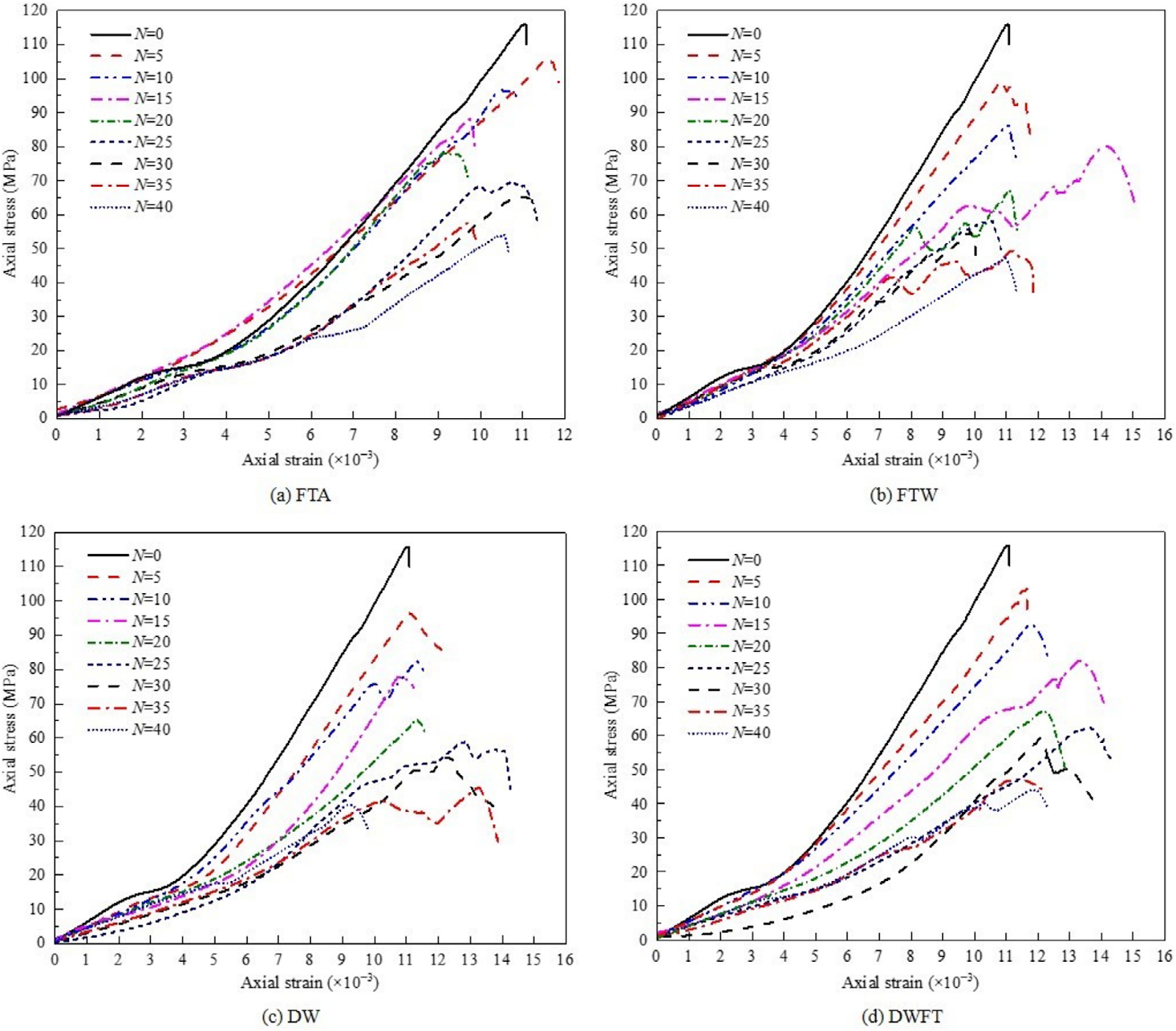
In cold regions, slope rocks are inevitably impacted by freeze-thaw, dry-wet cycles and their alternating actions, leading to strength weakening and pore degradation. In this study, the mechanical and microstructural properties of schist subjected to four conditions were investigated: freeze-thaw cycles in air (FTA), freeze-thaw cycles in water (FTW), dry-wet cycles (DW), and dry-wet-freeze-thaw cycles (DWFT). Uniaxial compressive strength (UCS), water absorption, ultrasonication, low-field nuclear magnetic resonance, and scanning electron microscopy analyses were conducted. The integrity attenuation characteristics of the longitudinal wave velocity, UCS, and elastic modulus were analyzed. The results showed that liquid water emerged as a critical factor in reducing the brittleness of schist. The attenuation function model accurately described the peak stress and static elastic modulus of schist in various media (R2>0.97). Different media affected the schist deterioration and half-life, with the FTW-immersed samples having a half-life of 28 cycles. Furthermore, the longitudinal wave velocity decreased as the number of cycles increased, with the FTW showing the most significant reduction and having the shortest half-life of 208 cycles. Moreover, the damage variables of compressive strength and elastic modulus increased with the number of cycles. After 40 cycles, the schist exposed to FTW exhibited the highest damage variables and saturated water content.

Mechanical and microstructural properties of schist exposed to freeze-thaw cycles, dry-wet cycles, and alternating actions
Graphical Abstract
Original ResearchVol. 32, Issue 4 • pp. 100-112DOI: 10.1016/j.ijmst.2025.04.002Jan 15, 2025

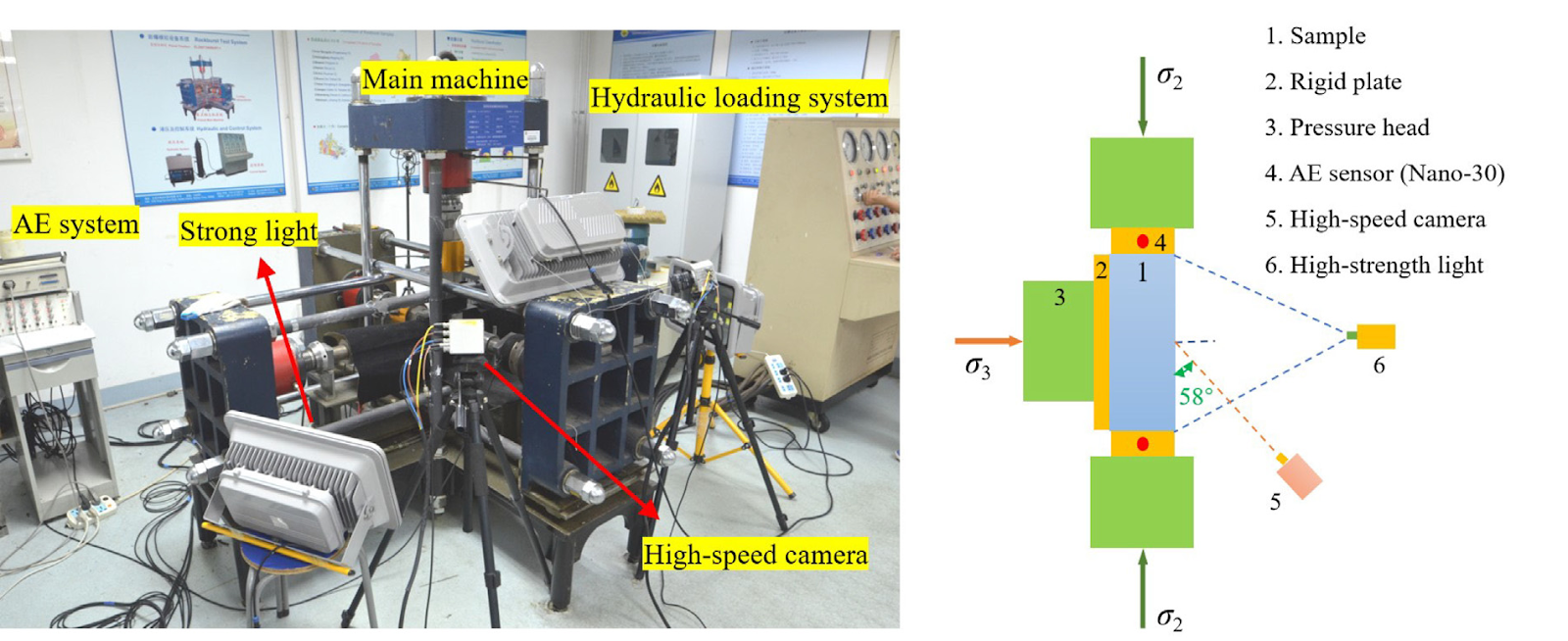
Multivariate acoustic emissions precursors of rockburst from the perspective of early warning

Authors: Chun Zhu, Ming Huang, Fuqiang Ren, Xiaoshuang Li, Jinze Gu, Haibo Li, Manchao He

Rockburst precursors are critical for disaster warning, yet the complexity of rockburst has hindered the identification of a unified precursor. Furthermore, the influence of loading rates (LRs) on acoustic emission (AE) precursors in different rock types remains poorly understood. This study investigates the AE characteristics and early warning times of rockburst in slate and mica-schist under four LRs (0.05, 0.15, 0.25, and 0.5 MPa/s) using true triaxial unloading tests. The micro-crack state of the samples was evaluated using entropy, while critical slowing down (CSD) theory was applied to interpret AE precursors. The results reveal that as the LR increases, the rockburst stress of both rocks initially rises and then declines, with mica-schist exhibiting more severe damage and a higher dominance of tensile cracks. Notably, identifying rockburst precursors in mica-schist proved more challenging compared to slate. Among the methods tested, AE amplitude variance outperformed entropy in precursor identification. Additionally, the rockburst early warning time was found to be negatively correlated with the LR, with mica-schist consistently showing shorter warning times than slate. The CSD-derived precursor, due to its enhanced sensitivity, is recommended for early warning systems. These findings provide new insights into the role of LRs in rockburst dynamics and offer practical guidance for improving precursor identification and disaster mitigation strategies.

Multivariate acoustic emissions precursors of rockburst from the perspective of early warning
Graphical Abstract
Original ResearchVol. 32, Issue 4 • pp. 100-112DOI: 10.1016/j.ijmst.2025.04.001Jan 15, 2025

Design and mechanical optimization of multidirectional pressure-preserved coring system for deep-earth resource exploration

Authors: Guikang Liu, Yachen Xie, Cong Li

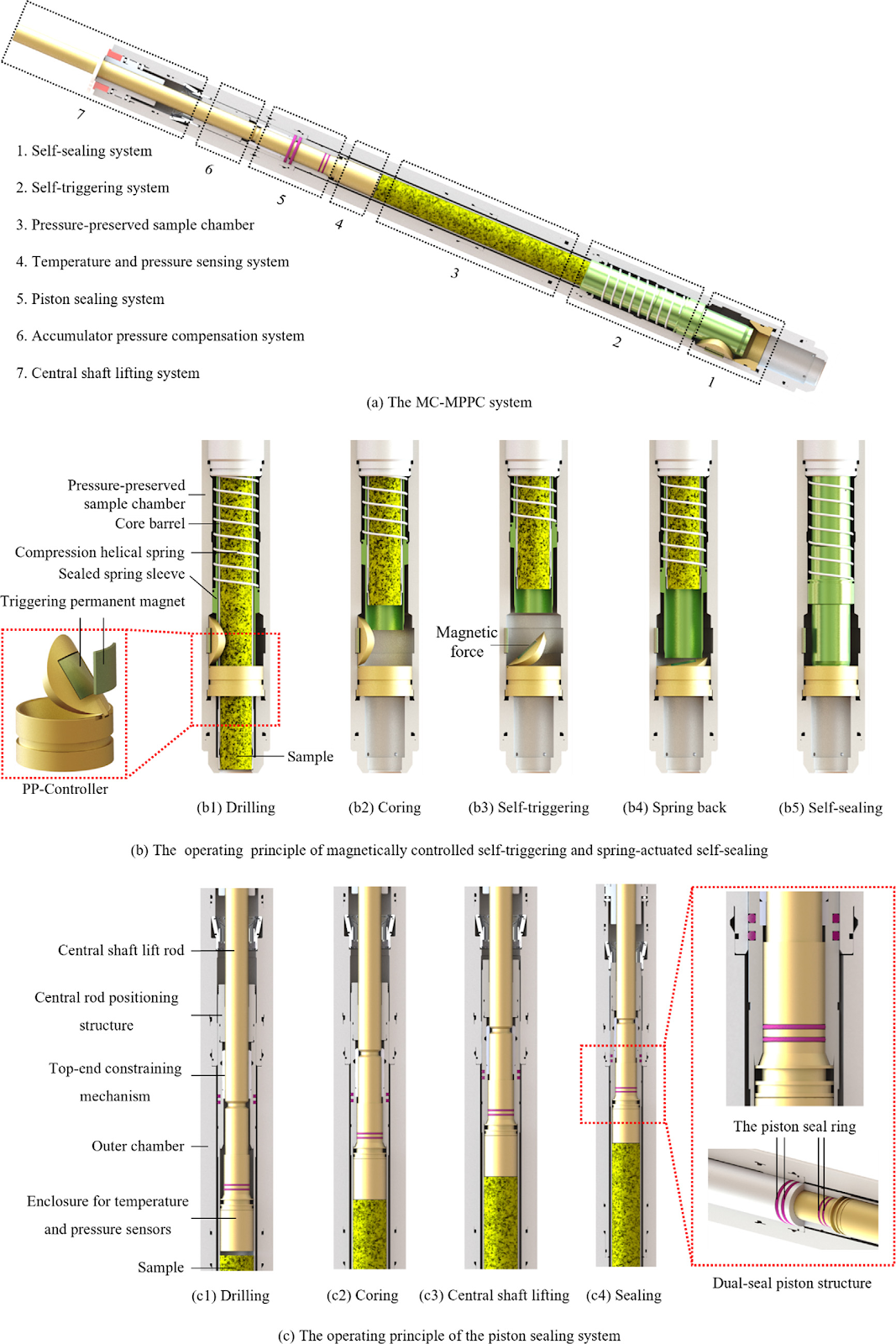
Pressure-preserved coring technologies are critical for deep-earth resource exploration but are constrained by the inability to achieve multidirectional coring, restricting exploration range while escalating costs and environmental impacts. We developed a multidirectional pressure-preserved coring system based on magnetic control for deep-earth environments up to 5000 m. The system integrates a magnetically controlled method and key pressure-preserved components to ensure precise self-triggering and self-sealing. It is supported by geometric control equations for optimizing structural stability. Their structure was verified and optimized through theoretical and numerical calculations to meet design objectives. To clarify the self-triggering mechanism in complex environments, a dynamic interference model was established, verifying stability during multidirectional coring. The prototype was fabricated, and functional tests confirmed that it met its design objectives. In a 300-meter-deep test inclined well, 10 coring operations were completed with a 100% pressure-preserved success rate, confirming the accuracy of the dynamic interference model analysis. Field trials in a 1970-meter-deep inclined petroleum well, representative of complex environments, demonstrated an in-situ pressure preservation efficiency of 92.18% at 22 MPa. This system innovatively expands the application scope of pressure-preserved coring, providing technical support for efficient and sustainable deep resources exploration and mining.

Design and mechanical optimization of multidirectional pressure-preserved coring system for deep-earth resource exploration
Graphical Abstract