SinoTechIntel Academic Portal
🏛️ Indexed Academic JournalImpact Factor: 3.8

Int. Journal of Minerals, Metallurgy and Materials (矿物冶金与材料学报)

Authoritative peer-reviewed journal in materials science, metallurgy, chemistry and engineering technologies: Int. Journal of Minerals, Metallurgy and Materials (矿物冶金与材料学报)

Total Research Papers: 200
Access: 100% Free Open Access
Browse by Publication Year & VolumeReset All Filters ✕

Published Research PapersFiltered: Year 2025 • 32 • 11

Showing 3 of 200 peer-reviewed papers with full Graphical Abstracts.

Original ResearchVol. 32, Issue 11 • pp. 2786DOI: 10.1007/s12613-025-3275-7Jan 15, 2025

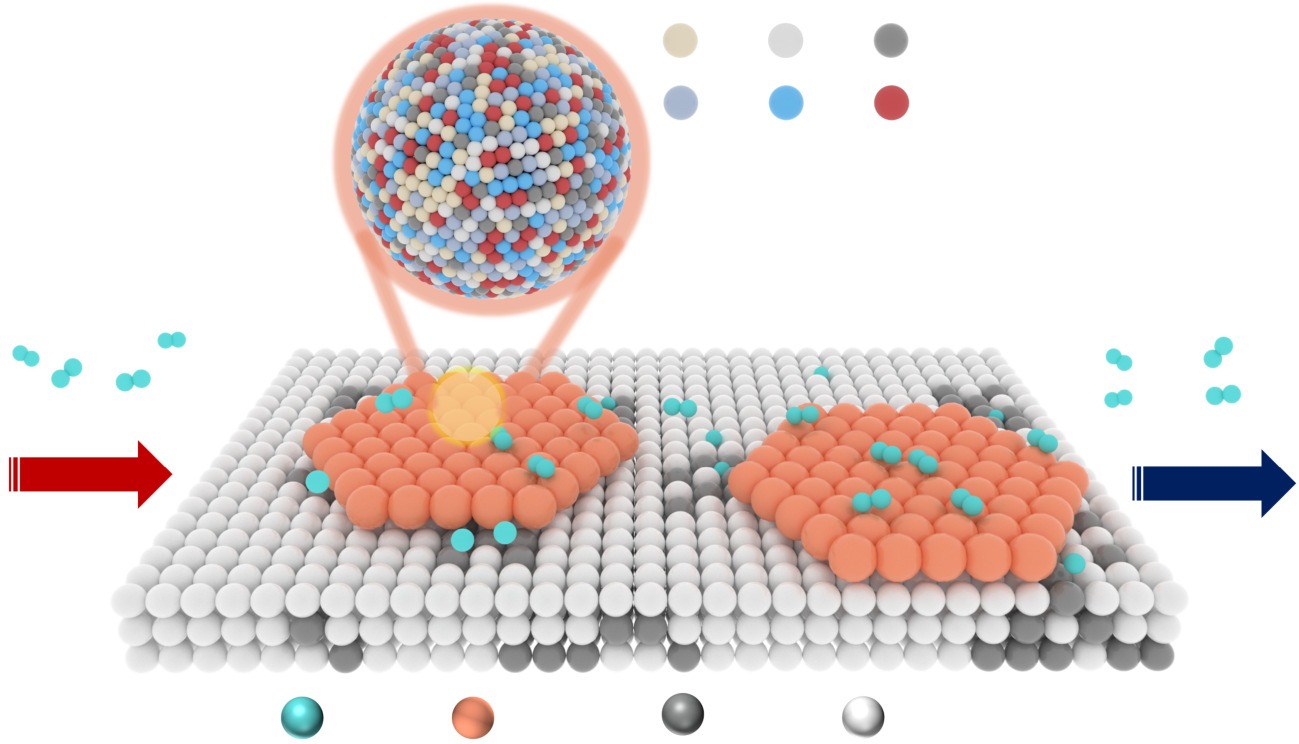
Properties and performances of high-entropy materials in batteries

Authors: Jiasheng Wang, Jianzhong Jiang, Peter K. Liaw, Yong Zhang

High-entropy materials (HEMs), an innovative class of materials with complex stoichiometry, have recently garnered considerable attention in energy storage applications. While their multi-element compositions (five or more principal elements in nearly equiatomic proportions) confer unique advantages such as high configurational entropy, lattice distortion, and synergistic cocktail effects, the fundamental understanding of structure–property relationships in battery systems remains fragmented across existing studies. This review addresses critical research gaps by proposing a multidimensional design paradigm that systematically integrates synergistic mechanisms spanning cathodes, anodes, electrolytes, and electrocatalysts. We provide an in-depth analysis of HEMs’ thermodynamic/kinetic stabilization principles and structure-regulated electrochemical properties, integrating and establishing quantitative correlations between entropy-driven phase stability and charge transport dynamics. By summarizing the performance benchmarking results of lithium/sodium/potassium-ion battery components, we reveal how entropy-mediated structural tailoring enhances cycle stability and ionic conductivity. Notably, we pioneer the systematic association of high-entropy effects to electrochemical interfaces, demonstrating their unique potential in stabilizing solid-electrolyte interphases and suppressing transition metal dissolution. Emerging opportunities in machine learning-driven composition screening and sustainable manufacturing are discussed alongside critical challenges, including performance variability metrics and cost-benefit analysis for industrial implementation. This work provides both fundamental insights and practical guidelines for advancing HEMs toward next-generation battery technologies.
Properties and performances of high-entropy materials in batteries
Graphical Abstract
Original ResearchVol. 32, Issue 11 • pp. 2713DOI: 10.1007/s12613-024-3033-2Jan 15, 2025

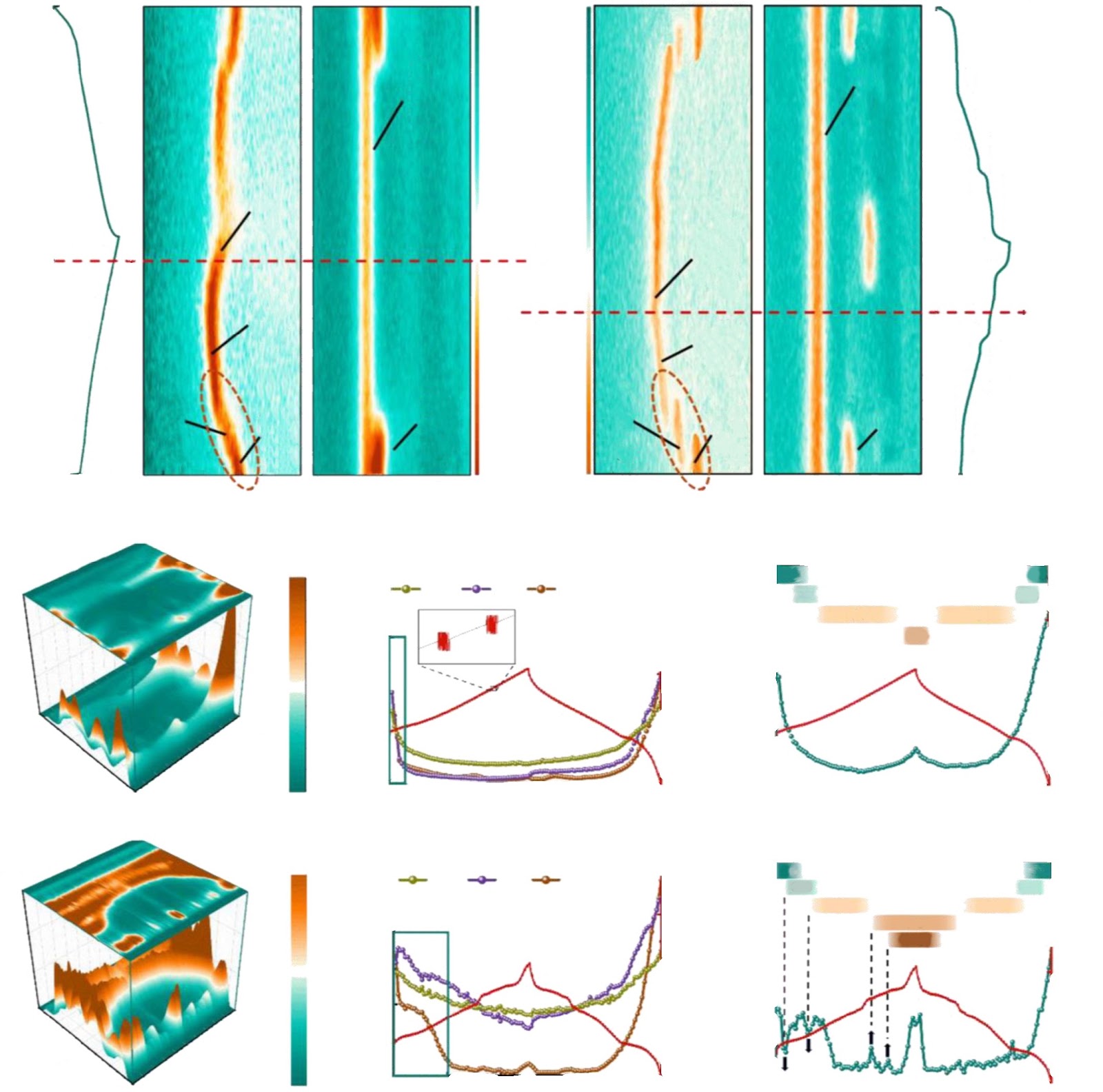
Amorphous scaly high-entropy borides with electron traps for efficient catalysis in solid-state hydrogen storage

Authors: Li Wang, Fuying Wu, Daifen Chen, Ting Bian, Petr Senin, Liuting Zhang

Owing to the orbital hybridization between the transition metal and the B element and the electron-trapping effect of the B element, transition metal borides are considered very promising materials for energy catalysis. In this work, an amorphous scaly high-entropy boride (HEB) with electron traps was designed and fabricated via a facile reduction method to improve the hydrogen storage properties of magnesium hydride (MgH2). For dehydrogenation, the onset temperature of MgH2 + 10wt% HEB was dropped to 187.4°C; besides, the composite exhibited superior isothermal kinetics and the activation energy of the composite was reduced from (212.78 ± 3.93) to (65.04 ± 2.81) kJ/mol. In addition, MgH2 + 10wt% HEB could absorb hydrogen at 21.5°C, and 5.02wt% H2 was charged in 50 min at 75°C. For reversible hydrogen storage capacity tests, the composite maintained a retention rate of 97% with 6.47wt% hydrogen capacity after 30 cycles. Combining microstructure evidence with hydrogen storage performance, the catalytic mechanism was proposed. During ball milling, scaly high-entropy borides riveted a large number of heterogeneous active sites on the surface of MgH2. Driven by the cocktail effect as well as the orbital hybridization of metal borides, numerous active sites steadily enhanced the hydrogen storage reactions in MgH2.

Amorphous scaly high-entropy borides with electron traps for efficient catalysis in solid-state hydrogen storage
Graphical Abstract
Original ResearchVol. 32, Issue 11 • pp. 2767DOI: 10.1007/s12613-025-3226-3Jan 15, 2025

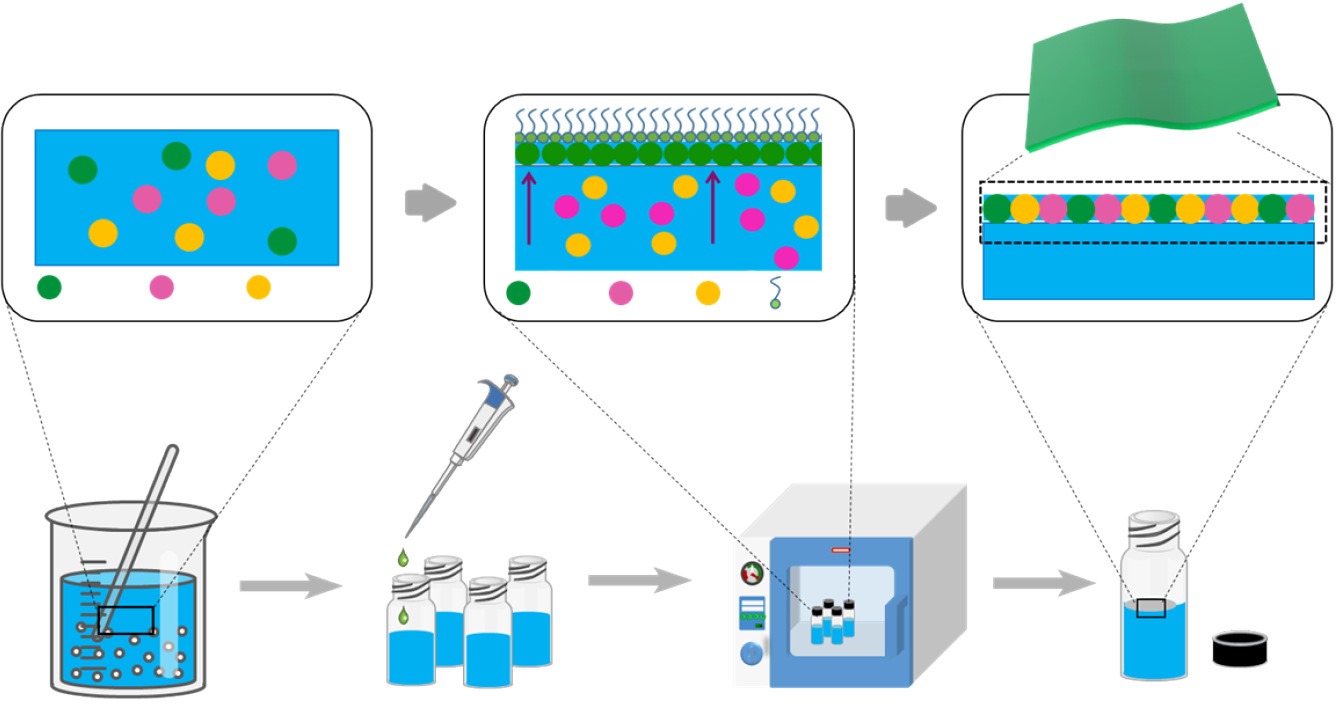
Ultrathin two-dimensional medium-entropy alloy as a highly efficient and stable electrocatalyst for oxygen evolution reaction

Authors: Guangyuan Yan, Tianlu Wang, Haoze Xue, Minglei Zhang, Zihan Xu, Fei Chen, Wenbo Yu

The development of highly active, durable, and low-cost electrocatalysts is crucial for electrocatalytic hydrogen production. Ultrathin two-dimensional (2D) nanomaterials have extremely large specific surface areas, making them highly desirable electrocatalyst morphologies. Medium-entropy alloys (MEAs) exhibit compositional tunability and entropy-driven structural stability, making them ideal electrocatalyst candidates. In this study, MoCoNi MEA with ultrathin 2D morphology was successfully developed using a facile ionic layer epitaxial method. The ultrathin 2D MoCoNi MEA showed an excellent oxygen evolution reaction (OER) electrocatalytic performance, with a low overpotential of 167 mV at a current density of 10 mA/cm2 and small Tafel slope of 33.2 mV/dec. At the overpotential of 167 mV, the ultrathin 2D MoCoNi MEA exhibited ultrahigh mass activity of 3359.6 A/g, which is three orders of magnitude higher than that of the commercial noble metal oxide RuO2 (1.15 A/g). This excellent electrocatalytic performance was attributed to the synergy of multiple active metal-induced medium entropies, as well as the ultrathin thickness, which considerably shortened the charge-transfer distance and thus significantly promoted charge transfer. Owing to the natural entropy-stabilizing effect, the ultrathin 2D MoCoNi MEA maintained 90% of the initial current after a continuous OER electrocatalytic test for 134 h, showing impressive electrocatalytic stability. This study opens new avenues for the development of high-performance and low-cost electrocatalyst materials by creating MEAs with ultrathin 2D morphology.

Ultrathin two-dimensional medium-entropy alloy as a highly efficient and stable electrocatalyst for oxygen evolution reaction
Graphical Abstract