SinoTechIntel Academic Portal
🏛️ Indexed Academic JournalImpact Factor: 3.8 (Q1 - Elsevier)Original: 中国化学工程学报 (英文版)

Chinese Journal of Chemical Engineering

Access authentic peer-reviewed engineering methodologies, experimental datasets, and scientific literature published in this journal on SinoTechIntel.

Total Research Papers: 98
Access: 100% Free Open Access
Browse by Publication Year & VolumeReset All Filters ✕

Published Research PapersFiltered: Year 2025 • 87 • Issue 1

Showing 2 of 98 peer-reviewed papers with full Graphical Abstracts.

Original ResearchVol. 87, Issue 1 • pp. 10-18DOI: 10.1016/j_cjche_1496Jul 8, 2025

Self-catalyzed cycloaddition of CO2 and epoxides over covalent organic frameworks without adding solvent and co-catalyst

Authors: Jingwen Yang, Zhengyan Qu, Jiuxuan Zhang, Hong Jiang, Zhenchen Tang, Weihong Xing, Rizhi Chen

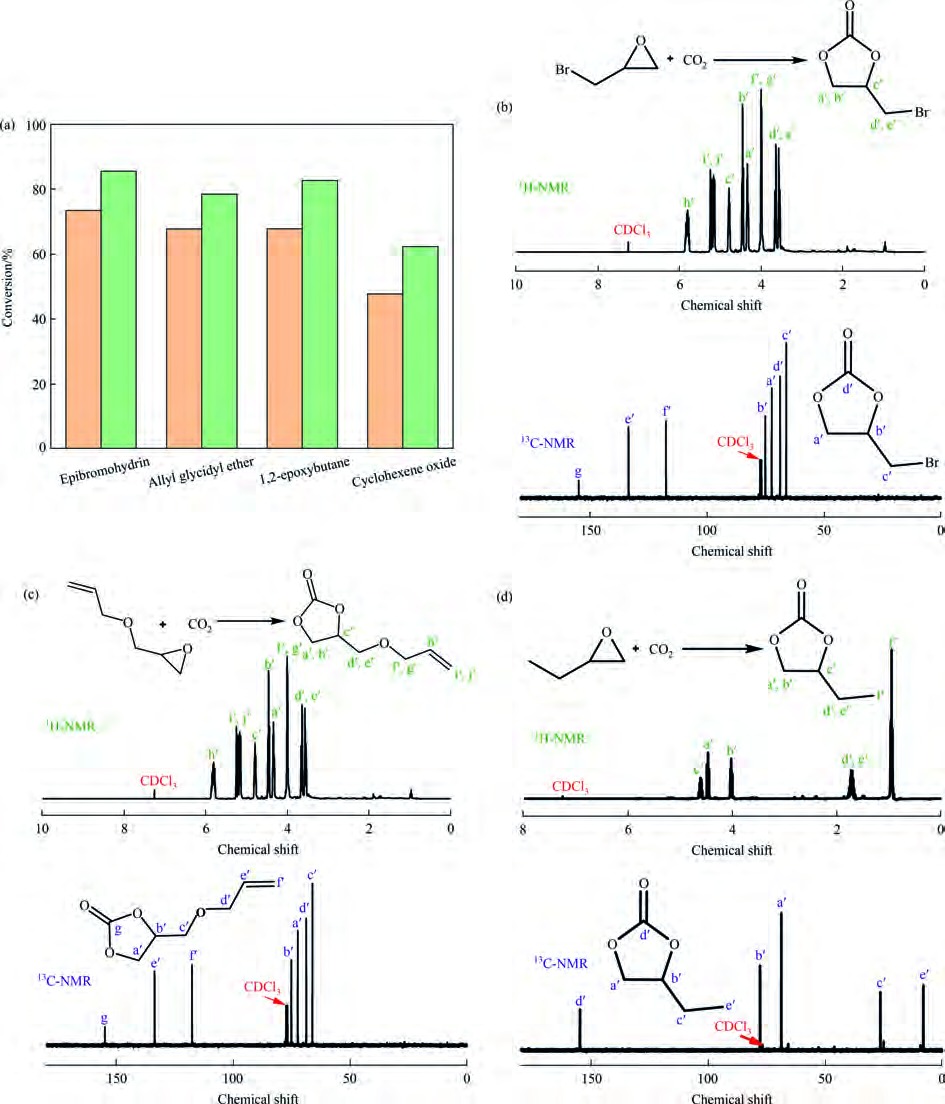
The cycloaddition of CO2 and epoxides to synthesize cyclic carbonates is a key strategy for CO2 utilization, though heterogeneous catalysts often suffer from instability. Covalent organic frameworks (COFs) present a compelling alternative due to their excellent textural properties and abundant Lewis basic sites. Herein, triazine-based COFs (PC-COFs) were synthesized by optimizing reaction time and temperature and were applied to catalyze the CO2 cycloaddition with epichlorohydrin (ECH) under solvent-free conditions, Instead of necessity of adding homogeneous co-catalyst, this study reveals a synergistic self-catalysis mechanism, where the carbonate product adsorbed on the Lewis basic PC-COF surface forms catalytic pairs with Lewis acidic carbonates, significantly accelerating the reaction. After five cycles, catalytic activity increased by 35% from 56.2% to 91.4%, and stabilizing over seven cycles. Under optimal reaction conditions, PC-COF-50-30 demonstrated outstanding catalytic performance, with a 98.7% ECH conversion, 97.6% selectivity to ECH carbonate and a CO2 conversion rate of 9.0 g‧g−1·h−1. This work provides a valuable example of high-performance CO2 cycloaddition catalysts and a strategy to achieve enhanced catalytic efficiency through product-catalyst synergy.
Self-catalyzed cycloaddition of CO2 and epoxides over covalent organic frameworks without adding solvent and co-catalyst
Graphical Abstract
Original ResearchVol. 87, Issue 1 • pp. 1-9DOI: 10.1016/j_cjche_1496Jun 19, 2025

Investigation of a violent explosion for nitric acid—n-hexane system using calorimetric method

Authors: Shiyi Li, Yiming Ding, Jinjun Wang, Xiaobao Lv, Min Sheng, Zihong Xia

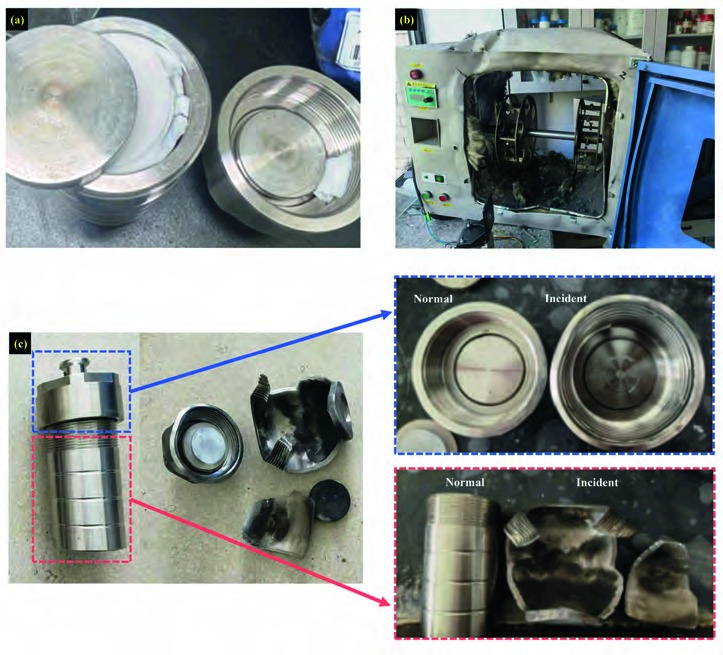
With the acceleration of the energy transition, new synthetic routes for converting alkanes into high-value products are emerging. However, the thermal safety of these new routes may not have been fully considered, potentially leading to dangers during the optimization of reaction conditions. This study reports, for the first time, a reactor explosion incident during the experiment of a new synthetic route for adipic acid: nitric acid oxidation of n-hexane. Differential scanning calorimetry (DSC), accelerating rate calorimetry (ARC), and corrective calculations were used to investigate the cause of the explosion. The results indicate that the polyparaphenol (PPL) liner material, which was used for the first time in the experiment, is unlikely to react with the system and cause the explosion. When the nitric acid concentration is increased from 3.7 mol·L−1 to 5.4 mol·L−1, the thermal stability of the system decreases, and the heat release surpasses the chemical explosion threshold (1000 J·g−1). The maximum self-heat rate (dT/dtmax) increases by at least 7 times, and the maximum pressure rise rate (dp/dtmax) increases by at least 11 times. This led to the actual pressure in the reactor increasing from 4.96 MPa to at least 11.09 MPa, which far exceeded the rated pressure (3 MPa) and reached the rupture pressure (3.5 to 4 times their rated pressure), resulting in the explosion. This study aims to provide a warning regarding the safety of new synthetic routes involving the nitric acid−organic systems, particularly the conversion of alkanes, to prevent the recurrence of similar incidents.

Investigation of a violent explosion for nitric acid—n-hexane system using calorimetric method
Graphical Abstract
Chinese Journal of Chemical Engineering | SinoTechIntel Research Archive | SinoTechIntel