Key Takeaways & Executive Findings
- •• First reported reactor explosion in a new adipic acid synthesis route via nitric acid oxidation of n-hexane, highlighting overlooked thermal hazards. • Increasing nitric acid concentration from 3.7 to 5.4 mol·L−1 drastically reduces thermal stability, with heat release exceeding the explosion threshold (1000 J·g−1). • Maximum self-heat rate and pressure rise rate increase by at least 7-fold and 11-fold, respectively, leading to reactor pressure far beyond its rated limit. • The PPL liner material was ruled out as a cause, emphasizing the critical role of process parameters in preventing similar incidents.
Abstract
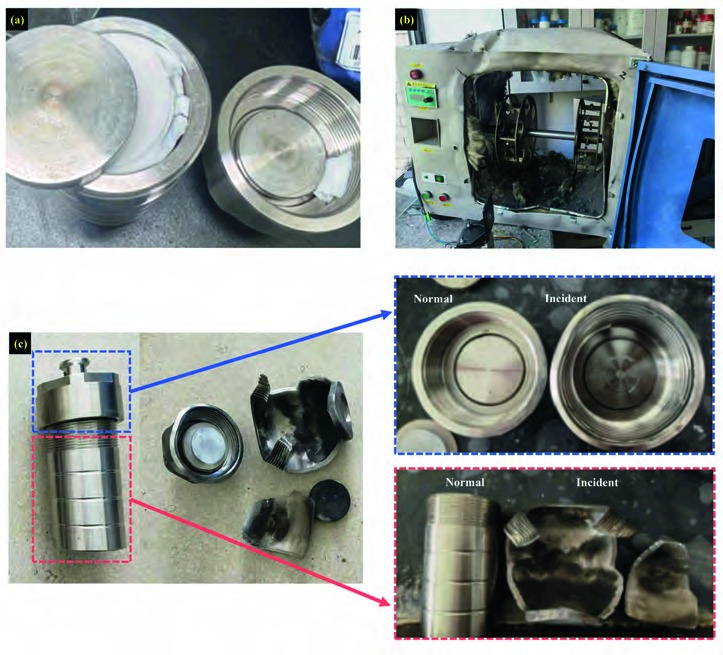
With the acceleration of the energy transition, new synthetic routes for converting alkanes into high-value products are emerging. However, the thermal safety of these new routes may not have been fully considered, potentially leading to dangers during the optimization of reaction conditions. This study reports, for the first time, a reactor explosion incident during the experiment of a new synthetic route for adipic acid: nitric acid oxidation of n-hexane. Differential scanning calorimetry (DSC), accelerating rate calorimetry (ARC), and corrective calculations were used to investigate the cause of the explosion. The results indicate that the polyparaphenol (PPL) liner material, which was used for the first time in the experiment, is unlikely to react with the system and cause the explosion. When the nitric acid concentration is increased from 3.7 mol·L−1 to 5.4 mol·L−1, the thermal stability of the system decreases, and the heat release surpasses the chemical explosion threshold (1000 J·g−1). The maximum self-heat rate (dT/dtmax) increases by at least 7 times, and the maximum pressure rise rate (dp/dtmax) increases by at least 11 times. This led to the actual pressure in the reactor increasing from 4.96 MPa to at least 11.09 MPa, which far exceeded the rated pressure (3 MPa) and reached the rupture pressure (3.5 to 4 times their rated pressure), resulting in the explosion. This study aims to provide a warning regarding the safety of new synthetic routes involving the nitric acid−organic systems, particularly the conversion of alkanes, to prevent the recurrence of similar incidents.
1. Introduction
The global efforts toward carbon neutrality are accelerating the shift from fossil fuels to renewables, driving an expected oil supply surplus by 2030 [1]. Meanwhile, the demand for adipic acid, a crucial chemical intermediate used extensively in the production of Nylon 66 and engineering plastics, is increasing [2]. However, the production capacity of adipic acid has been limited due to the complexity of the preparation process for its raw material, cyclohexane. As a result, a selective oxidation route is being explored to convert petroleum alkanes, such as n-hexane, into adipic acid at elevated temperatures. In this process, nitric acid could be employed as the oxidizing agent, with adipic acid being the primary oil product. However, the introduction of this new synthetic route could pose novel risks. For example, the proposed method for synthesizing adipic acid through the oxidation of cyclohexene with hydrogen peroxide [3] was criticized for its highly exothermic nature and the low thermal stability of hydrogen peroxide, which rendered the process hazardous [4—6]. Similarly, nitric acid, a widely used industrial nitrating and strong oxidizing agent, generates large amounts of heat and gas (pressure) when reacting with organic substances, increasing the potential for runaway reactions, even explosions [7]. The concentration of nitric acid is a critical factor that influences this risk.
Nitration processes are well known for their thermal hazards, with nitric acid concentration being a key factor in determining nitration safety. Liu et al. [8] found that higher HNO3 concentrations increased byproduct formation and adiabatic temperature rise in the nitration of N-(1-ethylpropyl)-3,4-dimethylaniline. Murray et al. [9] identified concentration-dependent reaction kinetics and exothermicity in fuming HNO3-mediated aryl boronic acid nitration, underscoring the importance of accurate acid titration. Chen et al. [10] demonstrated that the HNO3/H2SO4 mixed acid system catalyzed thermal decomposition of 2-ethylhexyl nitrate (2-EHN) during iso-octanol nitration, with subsequent studies revealing enhanced exothermicity in HNO3/2-EHN mixtures compared to pure 2-EHN decomposition [11]. The oxidation of organic compounds by HNO3 is an autocatalytic reaction characterized by an induction period, during which runaway conditions can be difficult to detect [7]. Thermal analysis using C80 revealed that the rate of autocatalytic reactions in the HNO3-formic acid system increased with the concentration of both acids, indicating that low acid concentrations are crucial for the thermal safety of this system [12]. Kinetic studies on the HNO3 oxidation of 2-octanol demonstrated that the rate constant is highly sensitive to HNO3 concentration [13]. The accidental contact of nitric acid with organic materials has been a longstanding concern in chemical process safety, and this study underscores the need for thorough thermal hazard assessment in novel synthetic routes.
Loading authentic research manuscript (Pages 1–5)...
Shiyi Li, Yiming Ding, Jinjun Wang, Xiaobao Lv, Min Sheng, Zihong Xia (2025). Investigation of a violent explosion for nitric acid—n-hexane system using calorimetric method. Chinese Journal of Chemical Engineering. https://doi.org/10.1016/j_cjche_1496
Research & Educational Purpose Only:The translations, structured abstracts, analytical annotations, and data reports provided by SinoTechIntel are intended exclusively for academic research, internal corporate R&D, and educational benchmarking. They do not constitute formal engineering, chemical safety, legal, or professional advice.
Copyright & Intellectual Property Notice: Original copyright of the underlying source articles and experimental data remains with the respective authors, institutions, and original publishing journals. SinoTechIntel claims intellectual property only over its proprietary translations, analytical syntheses, and AEO structured enhancements in accordance with international fair use and academic citation principles.
Frequently Asked Questions
What was the main cause of the reactor explosion in the nitric acid-n-hexane system?
The explosion was caused by an increase in nitric acid concentration from 3.7 to 5.4 mol·L−1, which drastically reduced the thermal stability of the system, leading to heat release exceeding the explosion threshold and pressure buildup beyond the reactor's rated capacity.
How did the researchers investigate the explosion incident?
They used differential scanning calorimetry (DSC), accelerating rate calorimetry (ARC), and corrective calculations to analyze the thermal behavior and pressure development of the system, ruling out the PPL liner as a cause.
What are the key safety implications of this study?
The study highlights the importance of thoroughly evaluating thermal hazards in new synthetic routes involving nitric acid and organic compounds, particularly controlling acid concentration to prevent runaway reactions and explosions.
What was the role of the PPL liner material in the explosion?
The PPL liner was found unlikely to react with the system and cause the explosion, as confirmed by calorimetric analysis, indicating that the primary cause was the process conditions.
What are the recommended safety measures for similar processes?
It is recommended to maintain low nitric acid concentrations, conduct comprehensive thermal hazard assessments using calorimetric methods, and ensure reactor design can withstand potential pressure rises.
Related Technical Papers & Translations
Design and optimization of a high-efficiency distillation process for cellulosic fuel ethanol integrated with thermal coupling and molecular sieve adsorption
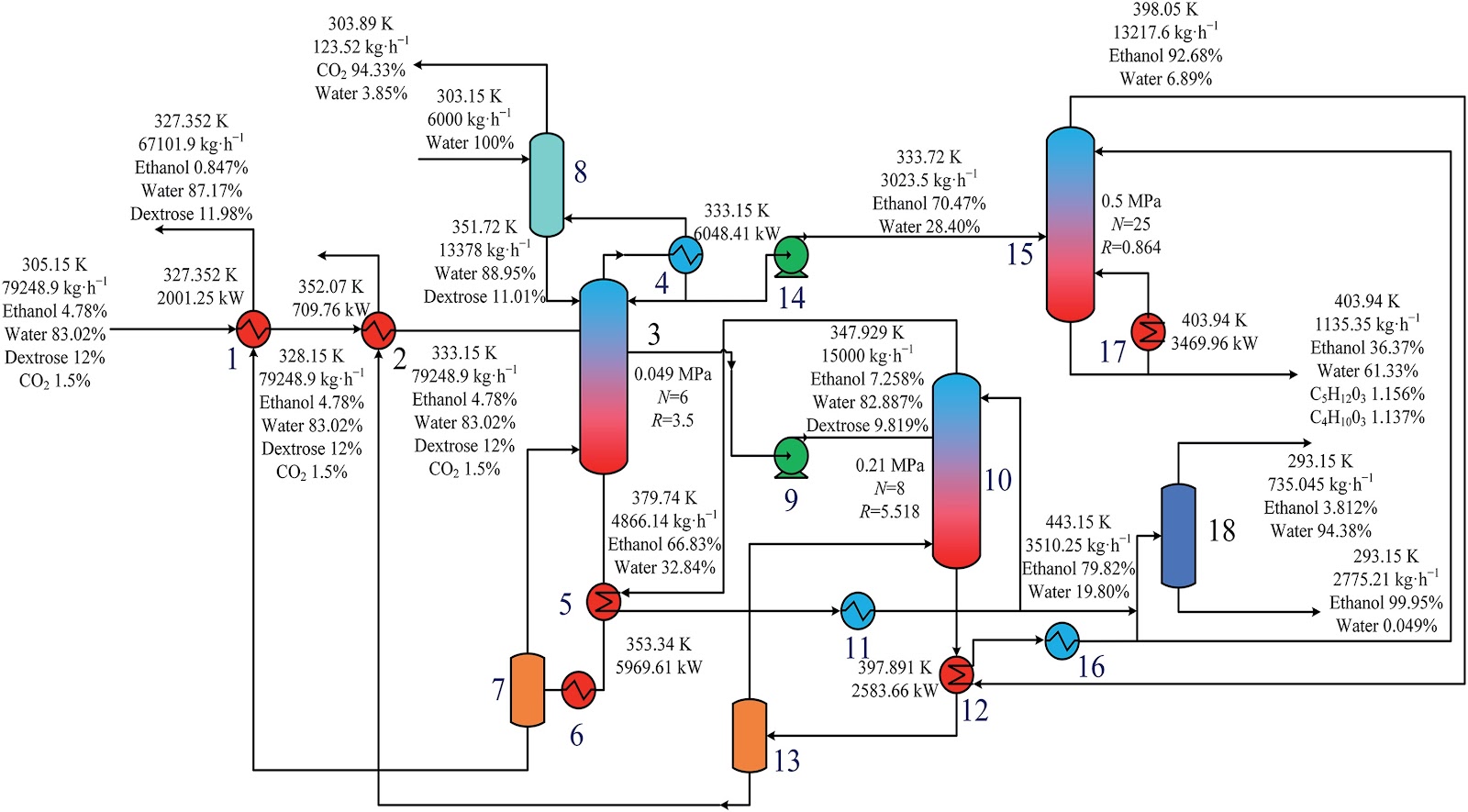
To address the challenges of high energy consumption and prominent costs in the traditional three-columns distillation process for cellulosic fuel ethanol, a distillation—molecular sieve coupling separation process is proposed. This process integrates a three-column (crude distillation column, first distillation column, second distillation column) system with a 3A molecular sieve adsorption deep dehydration unit. A thermal coupling network is constructed via differential pressure design (steam from medium/high-pressure columns as mutual heat sources, reboiler liquid waste heat for feed preheating), and molecular sieve adsorption conditions are optimized. The study first performs a thermodynamic consistency test on the ethanol—water system, determines optimal non-random two-liquid (NRTL) model binary interaction parameters via experimental data regression for Aspen Plus simulation. Aiming at minimum total annual cost (TAC), Aspen Plus is used to optimize process parameters (theoretical tray number, feed location, reflux ratio, side-draw position, etc.). Economic analysis shows this process reduces CO2 emission costs by 27.56%, TAC by 15.58% (to 5.123 × 10⁶ USD·a-1), and increases ethanol purity to >99.6%, providing an effective solution for green, efficient separation.
A cohesion loss model for determining residual strength of deep bedded sandstone
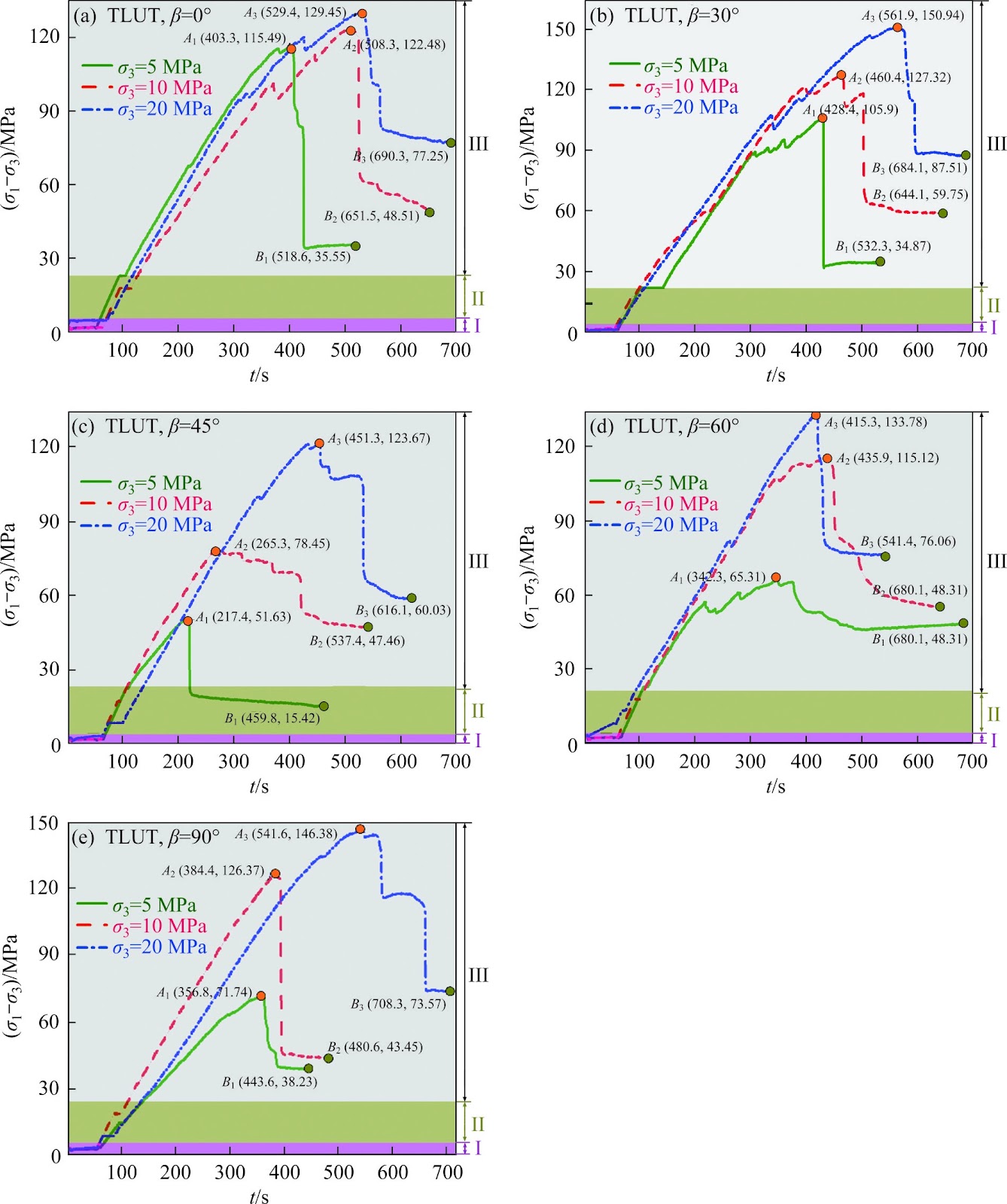
Rock residual strength, as an important input parameter, plays an indispensable role in proposing the reasonable and scientific scheme about stope design, underground tunnel excavation and stability evaluation of deep chambers. Therefore, previous residual strength models of rocks established were reviewed. And corresponding related problems were stated. Subsequently, starting from the effects of bedding and whole life-cycle evolution process, series of triaxial mechanical tests of deep bedded s
Federated model with contrastive learning and adaptive control variates for human activity recognition
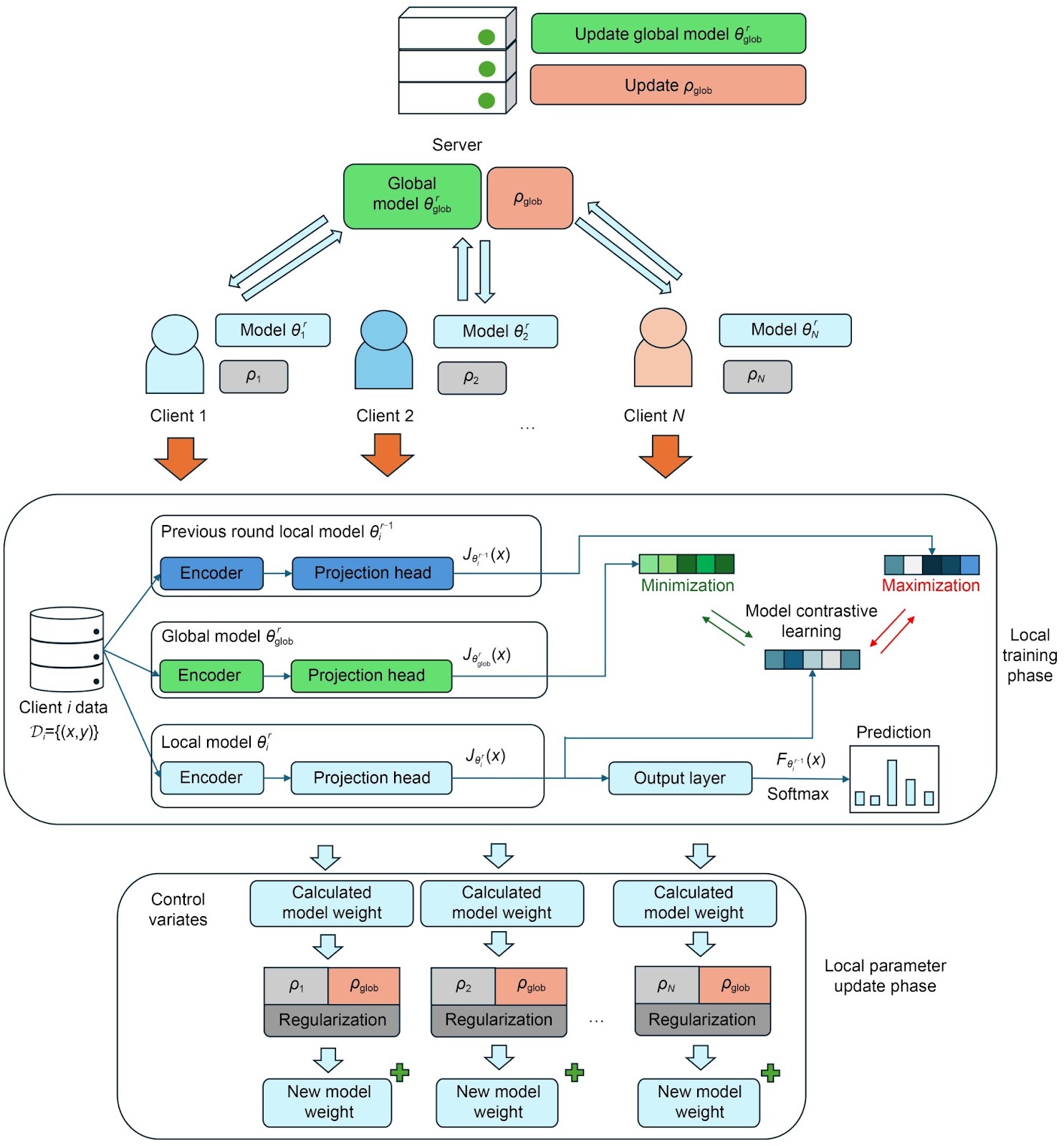
Recent attention to privacy issues demands a communication-safe method for training human activity recognition (HAR) models on client activity data. Federated learning (FL) has become a compelling technique to facilitate model training between the server and clients while preserving data privacy. However, classical FL methods often assume independent and identically distributed (IID) data among clients. This assumption does not hold true in practical scenarios. Human activity in real-world scena