Aggregation-regulated bioreduction process of graphene oxide by Shewanella bacteria
Authors: Kaixin Han, Yibo Zeng, Yinghua Lu, Ping Zeng, Liang Shen
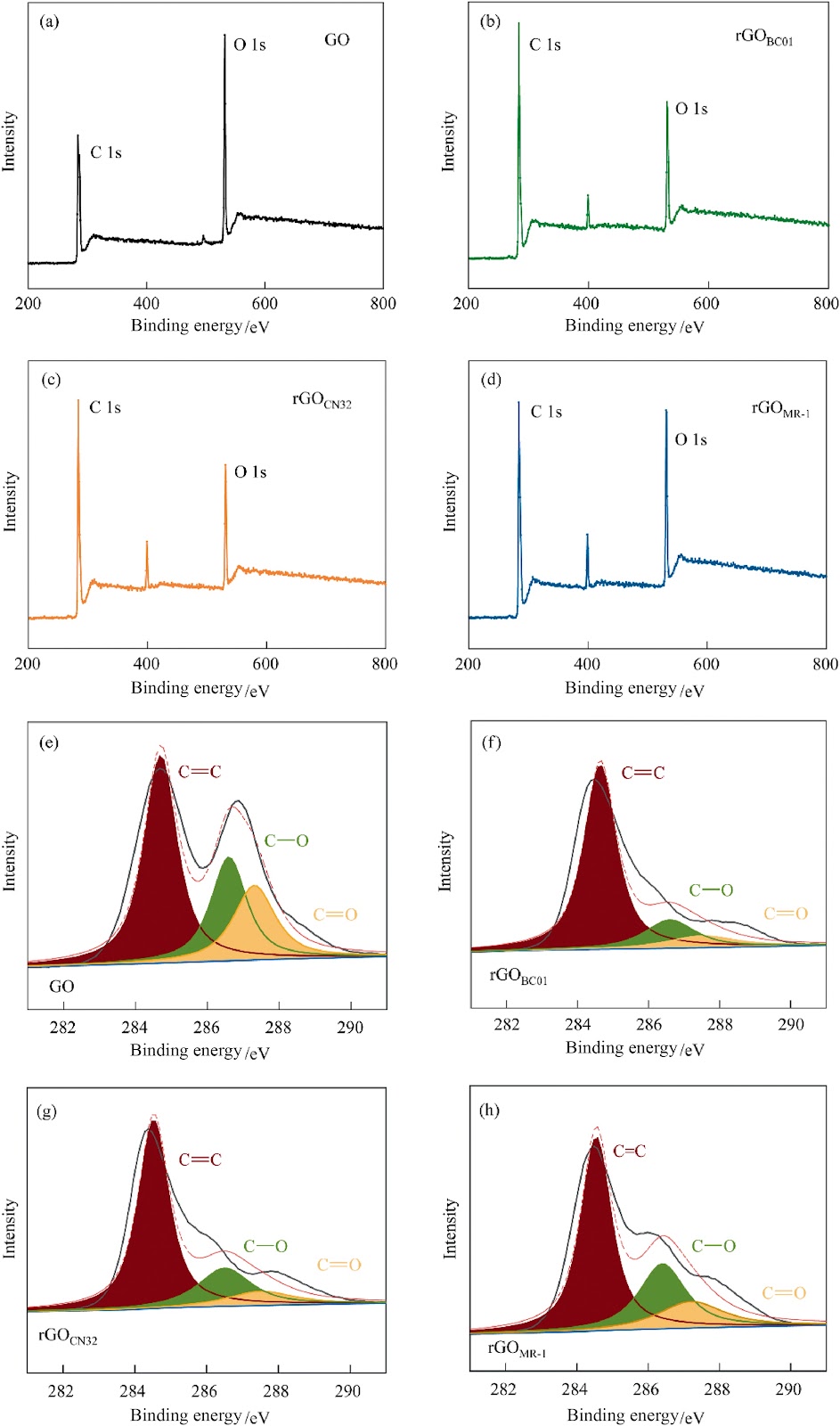
The bioreduction of graphene oxide (GO) using environmentally functional bacteria such as Shewanella represents a green approach to produce reduced graphene oxide (rGO). This process differs from the chemical reduction that involves instantaneous molecular reactions. In bioreduction, the contact of bacterial cells and GO is considered the rate-limiting step. To reveal how the bacteriaeGO integration regulates rGO production, the comparative experiments of GO and three Shewanella strains were carried out. Fourier-transform infrared spectroscopy, X-ray photoelectron spectroscopy, Raman spectroscopy, and atomic force microscopy were used to characterize the reduction degree and the aggregation degree. The results showed that a spontaneous aggregation of GO and Shewanella into the condensed entity occurred within 36 h. A positive linear correlation was established, linking three indexes of the aggregation potential, the bacterial reduction ability, and the reduction degree (ID/IG) comprehensively. © 2024 The Chemical Industry and Engineering Society of China, and Chemical Industry Press Co., Ltd. All rights reserved.