Key Takeaways & Executive Findings
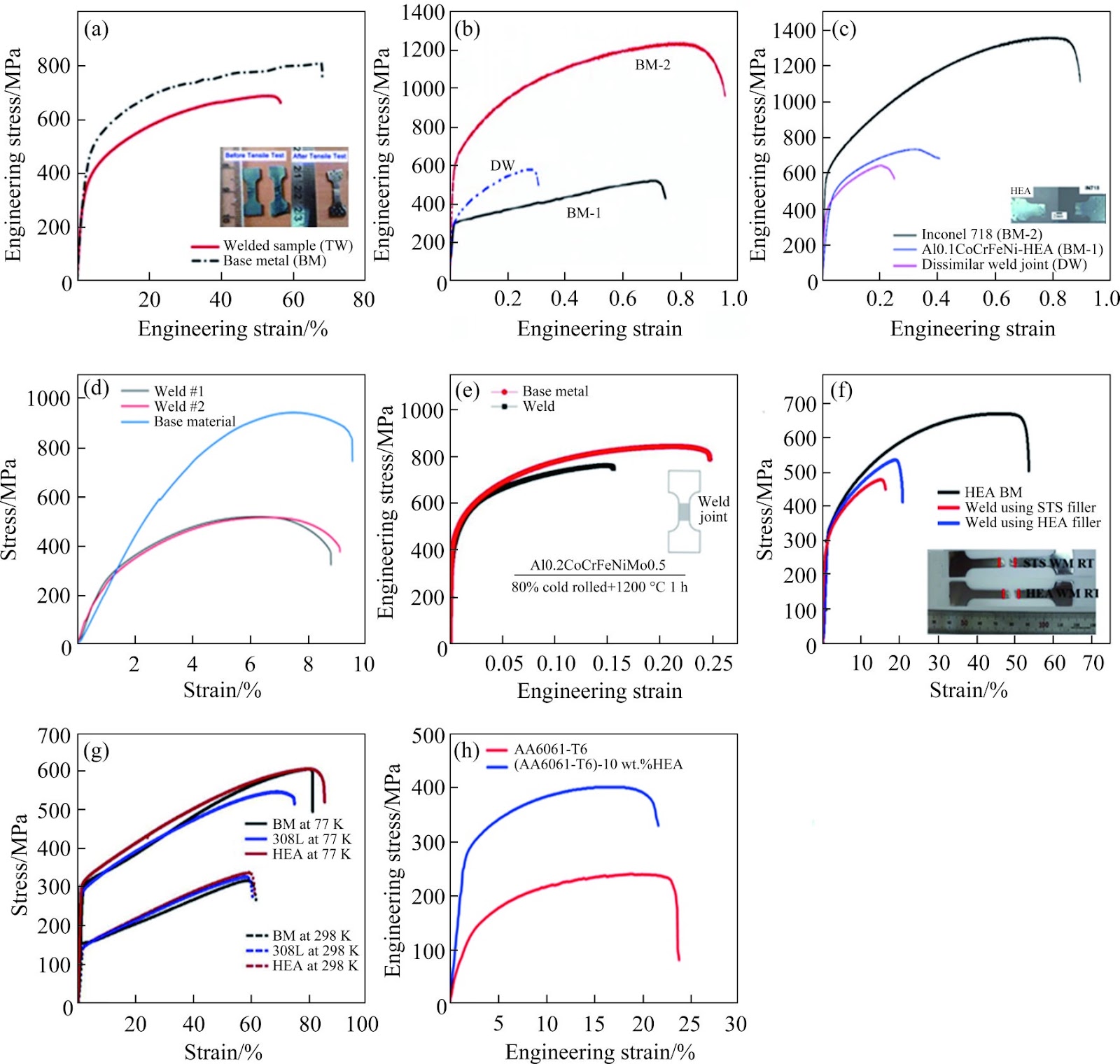
- •• Reviews weldability of high-entropy alloys, including mechanisms and control of porosity and cracking defects. • Assesses arc welding, laser welding, electron beam welding, friction stir welding, diffusion bonding, and explosive welding for HEA joining. • Shows how various welding methods improve the microstructure and mechanical properties of HEA joints. • Identifies remaining challenges and future directions for HEA welding in extreme-service engineering applications.
Abstract
High-entropy alloys (HEAs) have become essential materials in the aerospace and defense industries due to their remarkable mechanical properties, which include wear resistance, fatigue endurance, and corrosion resistance. The welding of high-entropy alloys is a cutting-edge field of study that is attracting a lot of interest and investigation from research organizations and businesses. Welding defects including porosity and cracks are challenging problem and limit the development of welding HEAs. This paper provides a comprehensive review of research on weldability of HEAs and the application of diverse welding techniques on welding HEAs over recent years. The forming mechanism and control strategies of defects during welding HEAs were provided in this work. Various welding techniques, including arc welding, laser welding, electron beam welding, friction stir welding, diffusion bonding and explosive welding, have been extensively investigated and applied to improve the microstructure and mechanical properties of HEAs joints. Furthermore, an in-depth review of the microstructure and mechanical properties of HEAs joints obtained by various welding methods is presented. This paper concludes with a discussion of the potential challenges associated with high-entropy alloy welding, thus providing valuable insights for future research efforts in this area.
1. Introduction
High-entropy alloys (HEAs) are currently one of the most acclaimed high-performance materials in the field of materials science. Their outstanding mechanical properties, heat resistance, high-temperature strength, and corrosion resistance have led to significant advancements in areas such as defense, nuclear energy, and aerospace. HEAs are mainly composed of five or more alloying elements, mixed in equal or higher proportions, with alloy element concentrations ranging from 5% to 35%. Key characteristics of HEAs include the high entropy effect, lattice distortion effect, cocktail effect, and sluggish diffusion effect. Compared with traditional engineering alloys, HEAs exhibit exceptional mechanical performance due to their wide range of alloy compositions and high mixing entropy. They demonstrate excellent properties and can maintain a more stable microstructure over a wide temperature range. In addition to exceptional mechanical properties, HEAs also demonstrate age-hardening capability and oxidation resistance at high temperature, further expanding applications in the field of aerospace engines. Consequently, HEAs have become a promising choice to meet the demands of extreme service conditions, particularly in nuclear energy, turbine machinery, maritime, chemical, and aerospace fields.
The development of HEAs traces back to 2004, when CANTOR et al. first proposed the concept of HEAs based on maximizing configurational entropy for the development of multi-component materials. The presence of high mixing entropy supports the formation of simple solid solution phases such as face-centered cubic (FCC), body-centered cubic (BCC), and hexagonal close-packed (HCP), boosting a revolutionary shift from intermetallic compounds or complex phases in traditional metallurgical systems. HEAs can be prepared through various processing routes, including powder metallurgy, mechanical alloying, and laser melting, among others. With the advancement of materials processing and manufacturing technologies, an increasing number of large structures and mechanical components are undergoing redesign to circumvent costly casting and machining processes. The welding of HEAs has consequently attracted more and more attention from researchers.
Various welding technologies have been applied to weld HEAs. Recent research on welding HEAs has made significant strides, focusing on improving the mechanical performance and structural integrity of components and underscoring the pivotal role of welding methods in enhancing the overall quality and functionality of materials in engineering applications. By exploring different welding approaches between HEAs and traditional engineering alloy systems, the industrial applications of HEAs can be further expanded.
Loading authentic research manuscript (Pages 1–5)...
TANG Jia-qing, LI Jie, LIU Kun, XU Cong, SONAR Tushar (2025). Weldability and welding technology of high-entropy alloys: A review. Journal of Central South University. https://doi.org/10.1007/s11771-025-5949-8
Research & Educational Purpose Only:The translations, structured abstracts, analytical annotations, and data reports provided by SinoTechIntel are intended exclusively for academic research, internal corporate R&D, and educational benchmarking. They do not constitute formal engineering, chemical safety, legal, or professional advice.
Copyright & Intellectual Property Notice: Original copyright of the underlying source articles and experimental data remains with the respective authors, institutions, and original publishing journals. SinoTechIntel claims intellectual property only over its proprietary translations, analytical syntheses, and AEO structured enhancements in accordance with international fair use and academic citation principles.
Frequently Asked Questions
What are high-entropy alloys (HEAs)?
High-entropy alloys are advanced multi-component materials composed of five or more alloying elements in equal or near-equal proportions, exhibiting high mixing entropy and exceptional mechanical, thermal, and corrosion resistance properties.
What welding methods are reviewed for high-entropy alloys?
The review covers arc welding, laser welding, electron beam welding, friction stir welding, diffusion bonding, and explosive welding.
What are common welding defects in high-entropy alloys?
Porosity and cracks are identified as challenging defects; the paper discusses their formation mechanisms and control strategies.
Why is welding important for high-entropy alloys?
Welding enables the expansion of HEA applications in aerospace, defense, and other extreme-service industries by improving joint microstructure and mechanical performance.
What future challenges exist in high-entropy alloy welding?
The paper discusses potential challenges such as defect control, joint performance optimization, and the need for standardized welding procedures for industrial adoption.
Related Technical Papers & Translations
Design and optimization of a high-efficiency distillation process for cellulosic fuel ethanol integrated with thermal coupling and molecular sieve adsorption
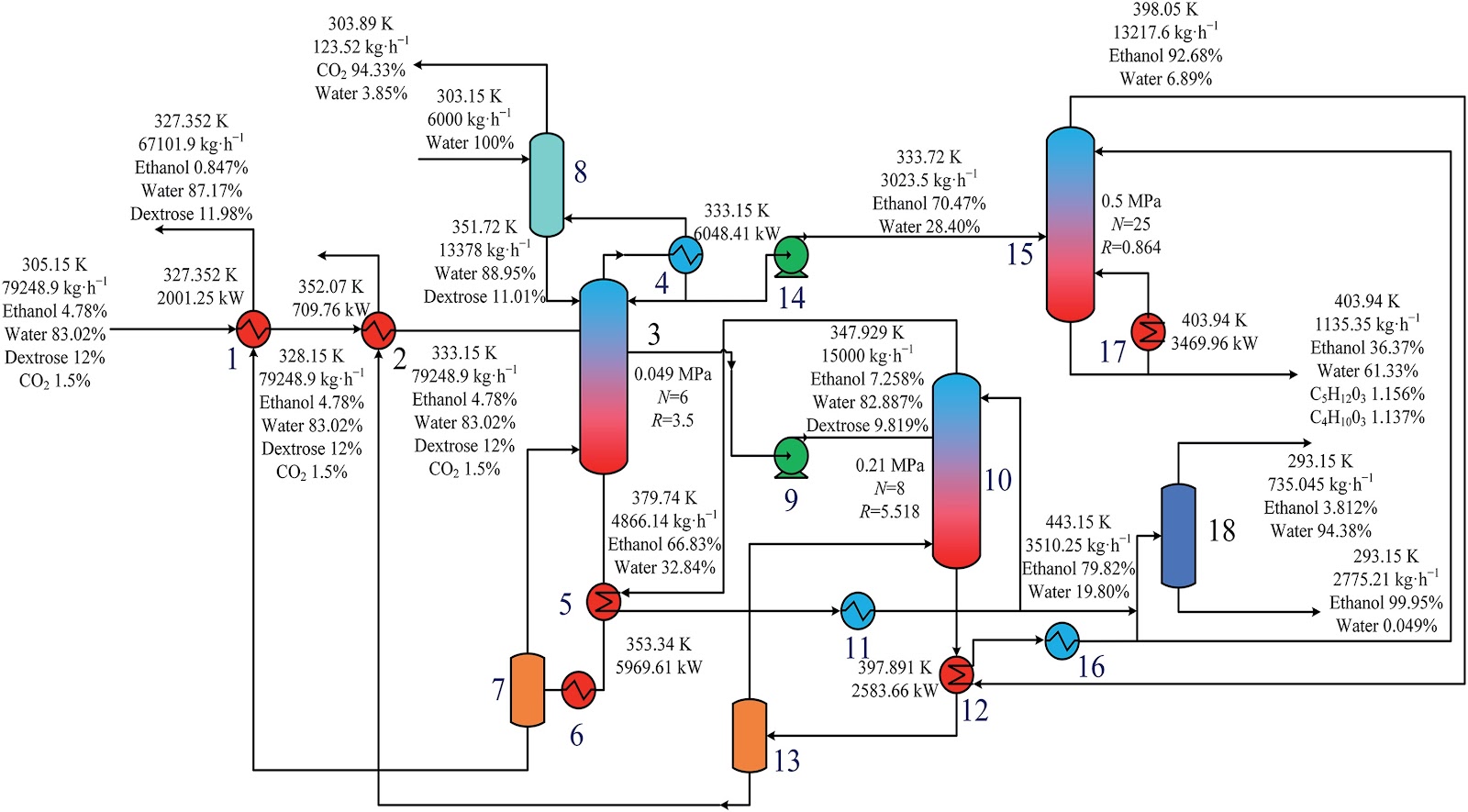
To address the challenges of high energy consumption and prominent costs in the traditional three-columns distillation process for cellulosic fuel ethanol, a distillation—molecular sieve coupling separation process is proposed. This process integrates a three-column (crude distillation column, first distillation column, second distillation column) system with a 3A molecular sieve adsorption deep dehydration unit. A thermal coupling network is constructed via differential pressure design (steam from medium/high-pressure columns as mutual heat sources, reboiler liquid waste heat for feed preheating), and molecular sieve adsorption conditions are optimized. The study first performs a thermodynamic consistency test on the ethanol—water system, determines optimal non-random two-liquid (NRTL) model binary interaction parameters via experimental data regression for Aspen Plus simulation. Aiming at minimum total annual cost (TAC), Aspen Plus is used to optimize process parameters (theoretical tray number, feed location, reflux ratio, side-draw position, etc.). Economic analysis shows this process reduces CO2 emission costs by 27.56%, TAC by 15.58% (to 5.123 × 10⁶ USD·a-1), and increases ethanol purity to >99.6%, providing an effective solution for green, efficient separation.
A cohesion loss model for determining residual strength of deep bedded sandstone
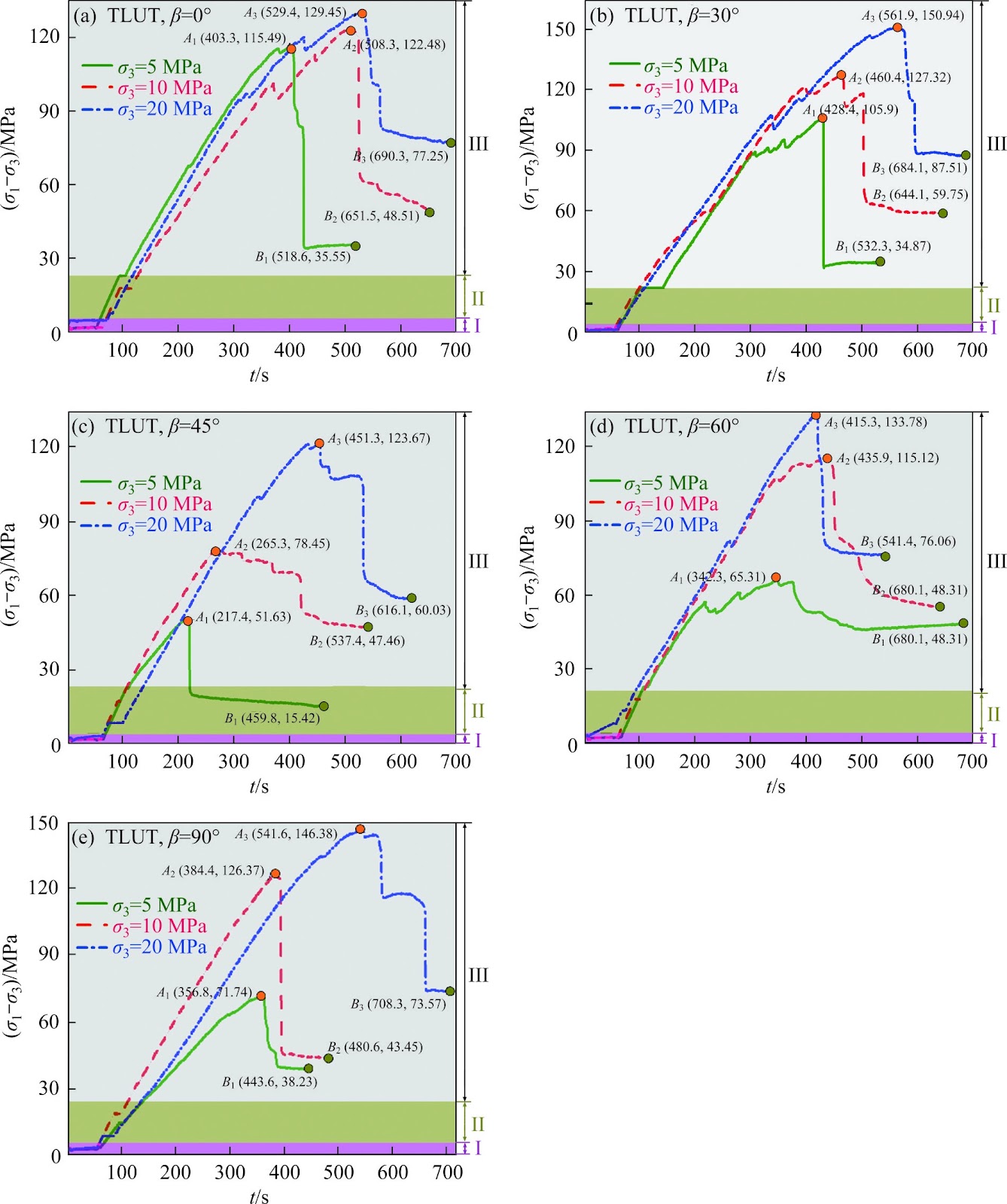
Rock residual strength, as an important input parameter, plays an indispensable role in proposing the reasonable and scientific scheme about stope design, underground tunnel excavation and stability evaluation of deep chambers. Therefore, previous residual strength models of rocks established were reviewed. And corresponding related problems were stated. Subsequently, starting from the effects of bedding and whole life-cycle evolution process, series of triaxial mechanical tests of deep bedded s
Federated model with contrastive learning and adaptive control variates for human activity recognition
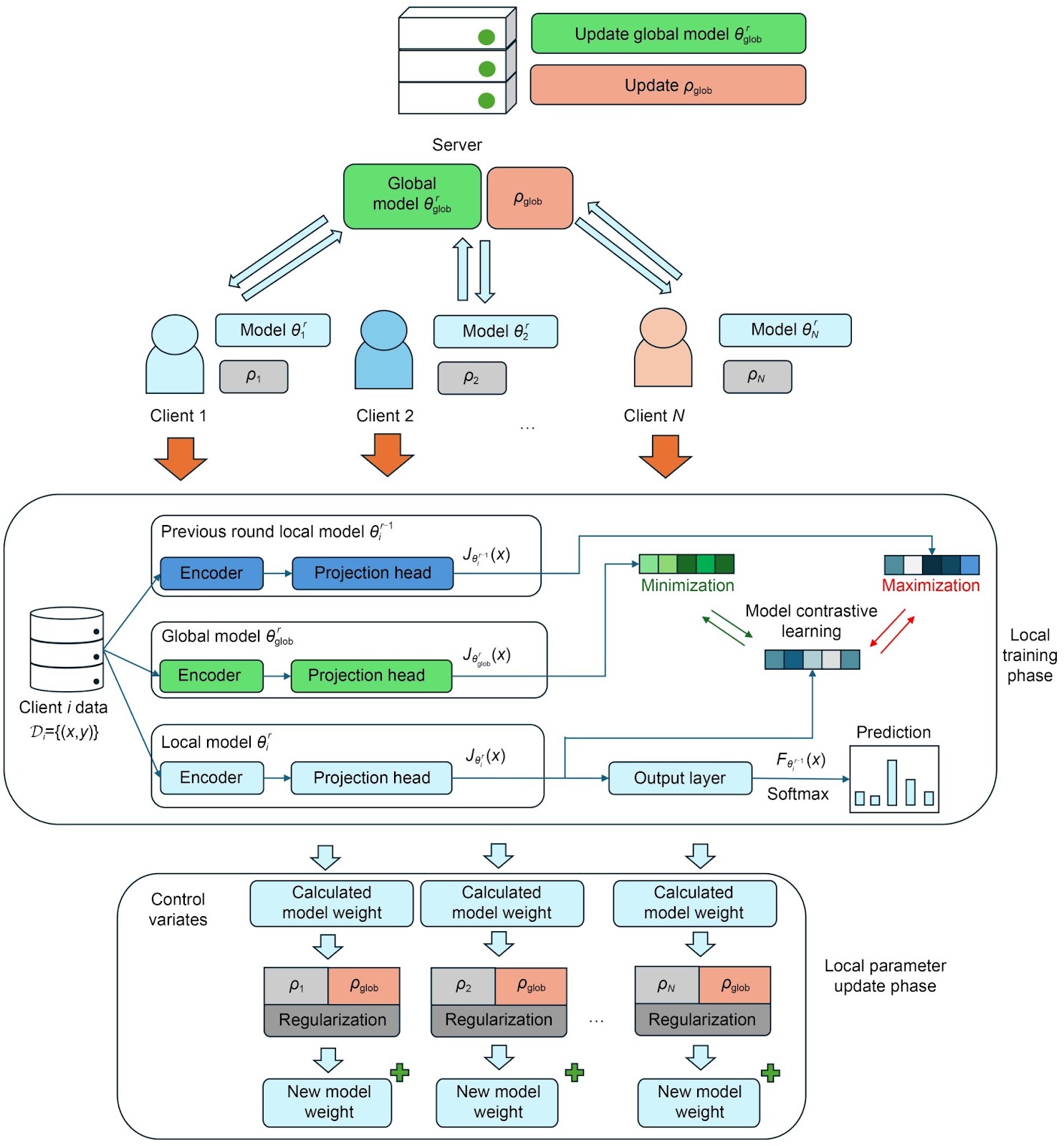
Recent attention to privacy issues demands a communication-safe method for training human activity recognition (HAR) models on client activity data. Federated learning (FL) has become a compelling technique to facilitate model training between the server and clients while preserving data privacy. However, classical FL methods often assume independent and identically distributed (IID) data among clients. This assumption does not hold true in practical scenarios. Human activity in real-world scena