Key Takeaways & Executive Findings
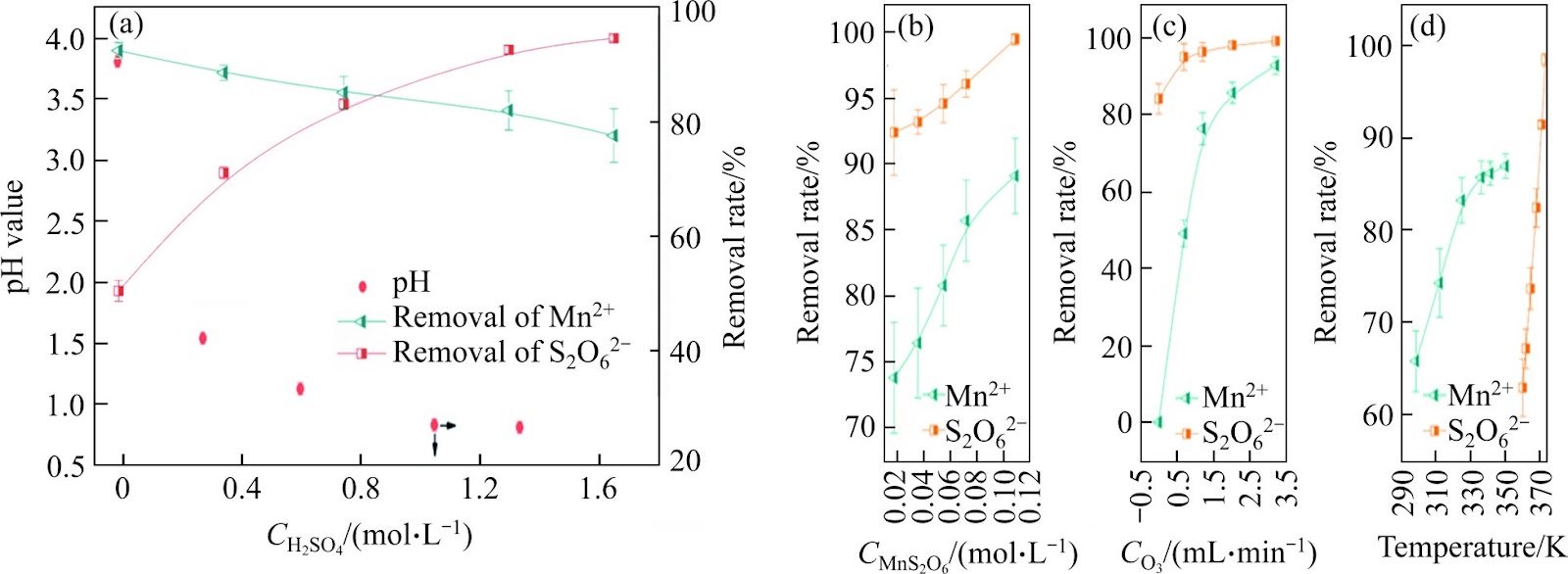
- •• Ozonation achieves >99.3% conversion of manganese dithionate (MnS2O6) in acid leaching solution, yielding high-purity manganese dioxide (MnO2). • The conversion mechanism proceeds via two pathways: direct oxidation of Mn2+ to MnO2 and HO•-mediated catalytic oxidation of S2O6^2− to SO4^2−. • Kinetic analysis reveals an ozonation rate constant with a pre-exponential factor of 1.0×10^23 s−1 and a total activation energy of 177.28 kJ/mol. • O3-based treatment eliminates SO2 gas release, providing an environmentally friendly alternative to conventional MnS2O6 management.
Abstract
In response to the fact that the presence of manganese dithionate (MnS2O6) leads to a series of adverse impacts, especially lower purity of manganese sulfate (MnSO4) and disruption of its recovery, advanced oxidation methods such as ozonation system are used to manage MnS2O6 in the leaching solution, replacing conventional methods. To ascertain the conversion rate and kinetics of MnS2O6 during the ozonation process, we explored the factors influencing its removal rate, including ozone dosage, manganese dithionate concentration, sulfuric acid concentration, and reaction temperature. Batch experiments were conducted to determine the reaction rate constant of ozone (k) and activation energy (Ea) obtained from intermittent experimental data fitting, revealing a least-squares exponential conversion relationship between k and the MnS2O6 removal amount, wherein an increase in the aforementioned factors led to an enhanced MnS2O6 conversion rate, exceeding 99.3%. The formation mechanism of the ozone products proposed during the experiment was summarized and proposed as follows: 1) Mn2+ was directly oxidized to MnO2, and 2) SO4^2− was obtained by the catalytic oxidation of S2O6^2− with HO• from O3 decomposition. According to the kinetics analysis, the pre-exponential factor and total activation energy of the ozonation kinetics equation were 1.0×10^23 s−1 and 177.28 kJ/mol, respectively. Overall, the present study demonstrates that O3 as an oxidizing agent can effectively facilitate MnS2O6 disproportionation while preventing the release of the secondary pollutant, SO2 gas.
1. Introduction
Due to its potent oxidation and disinfection potentials, ozone (O3) has recently received considerable attention in water treatment technology. Its merits include robust oxidation ability, rapid reaction rates, straightforward processes, and absence of secondary pollution [1–4]. Recently, as the oxidation process (whether biological, chemical, or physical) is pivotal in pollutant remediation, ozone application has expanded into wastewater treatment. Ozone oxidation also has common applications in processes such as decolorization, deodorization, disinfection and sterilization, improvement of biodegradability for refractory organic compounds, and removal of the oxidation residues from inorganic contaminants [5]. However, its application of ozone in water treatment technology is limited due to its relatively low solubility and stability in aqueous environments [6–9]. While the economic feasibility of ozonation application might pose challenges, the undeniable oxidizing potential and effectiveness in pollutant removal can help mitigate these limitations [10].
Manganese is recognized as a “strategic and green” benign metal and is extensively used in steel production, metallurgy, agriculture, electronics, and many other fields [11–13]. To date, over 70 manganese salts have been identified, predominantly comprising inorganic salt types like manganese sulfate, manganese carbonate, permanganate, exceeding 80%. With the rapidly growing demand for high-grade manganese sulfate, considerable efforts have intensified towards recovering manganese from low-grade ores, such as pyrolusite (MnO2) and rhodochrosite (MnCO3) [14–18]. This approach is an important technology for obtaining manganese sulfate by wet flue gas desulfurization with MnO2 or leaching pyrolusite with SO2. In addition, the resource recycling method of pyrolusite for manganese sulfate is regarded as an economical and environmentally friendly...
Loading authentic research manuscript (Pages 1–5)...
QU Bing, LI Teng, YANG Zheng-zheng, REN Li-ping, WANG Ying-wu, WU Meng-qiang, CHEN Si-bei (2025). Utilizing the ozonation pathway for enhanced conversion of manganese dithionate to manganese dioxide from acid leaching solution: Insights into mechanism and kinetics. Journal of Central South University. https://doi.org/10.1007/s11771-025-5863-0
Research & Educational Purpose Only:The translations, structured abstracts, analytical annotations, and data reports provided by SinoTechIntel are intended exclusively for academic research, internal corporate R&D, and educational benchmarking. They do not constitute formal engineering, chemical safety, legal, or professional advice.
Copyright & Intellectual Property Notice: Original copyright of the underlying source articles and experimental data remains with the respective authors, institutions, and original publishing journals. SinoTechIntel claims intellectual property only over its proprietary translations, analytical syntheses, and AEO structured enhancements in accordance with international fair use and academic citation principles.
Frequently Asked Questions
What is the main purpose of using ozonation for manganese dithionate?
The main purpose is to convert manganese dithionate (MnS2O6) in acid leaching solutions into manganese dioxide (MnO2) and sulfate, thereby preventing lower purity of manganese sulfate and avoiding secondary pollutant SO2 release.
Which factors influence the ozonation conversion rate of MnS2O6?
Key factors include ozone dosage, initial manganese dithionate concentration, sulfuric acid concentration, and reaction temperature. Increasing these factors enhances the MnS2O6 conversion rate, exceeding 99.3%.
What is the proposed mechanism of MnS2O6 ozonation?
The mechanism involves two pathways: (1) direct oxidation of Mn2+ to MnO2, and (2) catalytic oxidation of S2O6^2− to SO4^2− by hydroxyl radicals (HO•) generated from O3 decomposition.
What are the kinetic parameters reported for the ozonation process?
The pre-exponential factor is 1.0×10^23 s−1 and the total activation energy is 177.28 kJ/mol, based on intermittent experimental data fitting using least-squares exponential conversion.
Does ozonation produce harmful secondary pollutants?
No, the ozonation pathway prevents the release of SO2 gas, making it a cleaner alternative to conventional methods for managing manganese dithionate in leaching solutions.
Related Technical Papers & Translations
Design and optimization of a high-efficiency distillation process for cellulosic fuel ethanol integrated with thermal coupling and molecular sieve adsorption
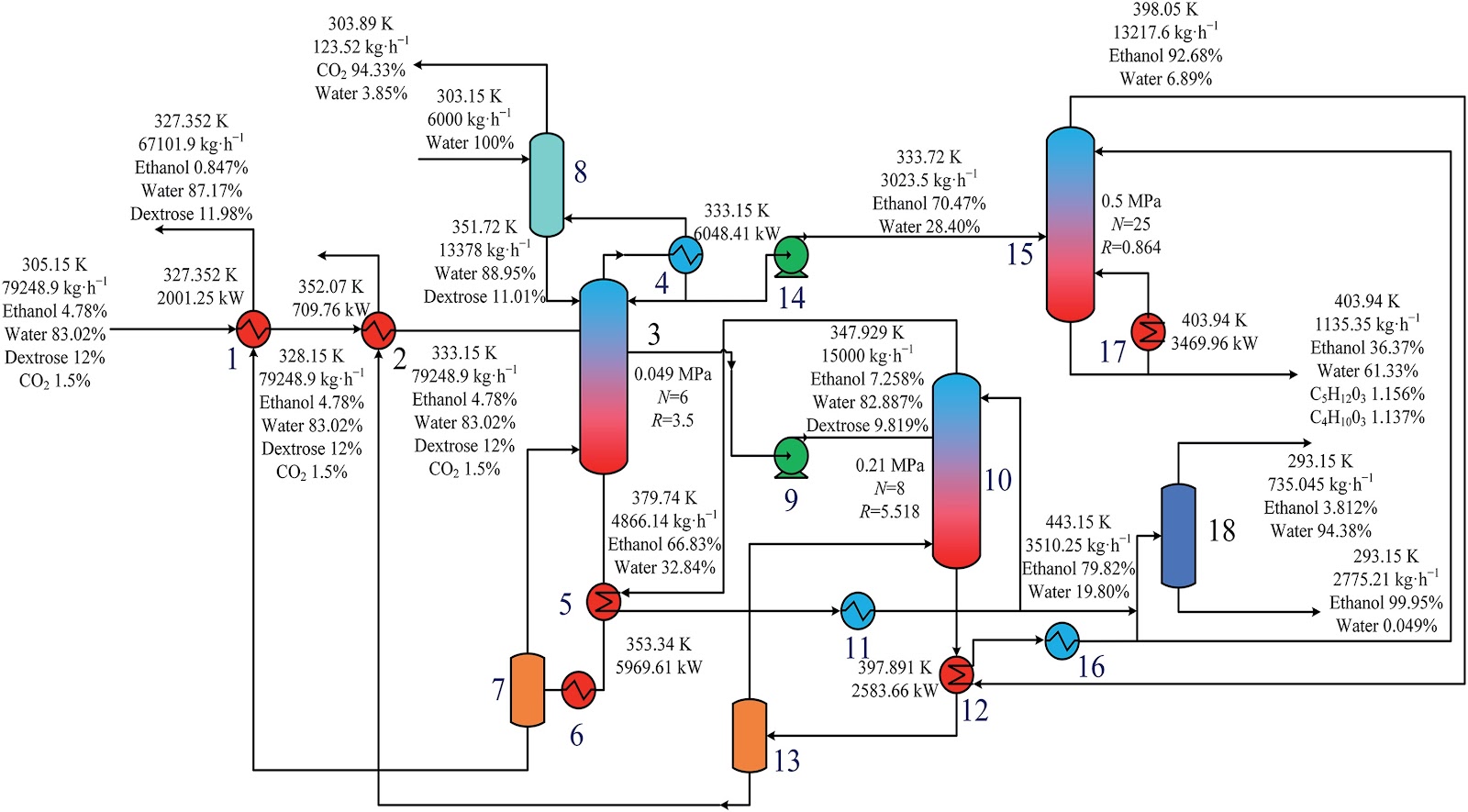
To address the challenges of high energy consumption and prominent costs in the traditional three-columns distillation process for cellulosic fuel ethanol, a distillation—molecular sieve coupling separation process is proposed. This process integrates a three-column (crude distillation column, first distillation column, second distillation column) system with a 3A molecular sieve adsorption deep dehydration unit. A thermal coupling network is constructed via differential pressure design (steam from medium/high-pressure columns as mutual heat sources, reboiler liquid waste heat for feed preheating), and molecular sieve adsorption conditions are optimized. The study first performs a thermodynamic consistency test on the ethanol—water system, determines optimal non-random two-liquid (NRTL) model binary interaction parameters via experimental data regression for Aspen Plus simulation. Aiming at minimum total annual cost (TAC), Aspen Plus is used to optimize process parameters (theoretical tray number, feed location, reflux ratio, side-draw position, etc.). Economic analysis shows this process reduces CO2 emission costs by 27.56%, TAC by 15.58% (to 5.123 × 10⁶ USD·a-1), and increases ethanol purity to >99.6%, providing an effective solution for green, efficient separation.
A cohesion loss model for determining residual strength of deep bedded sandstone
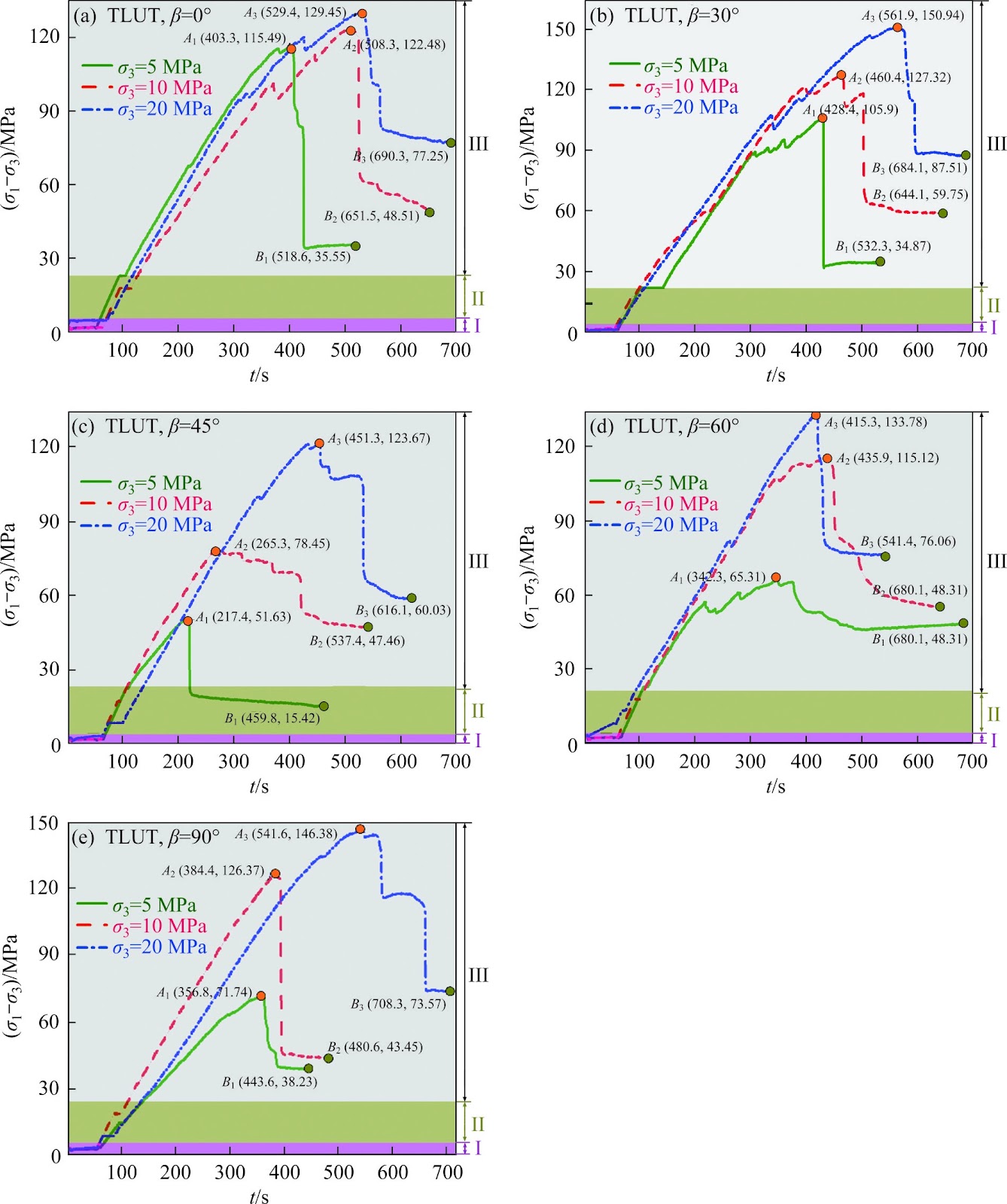
Rock residual strength, as an important input parameter, plays an indispensable role in proposing the reasonable and scientific scheme about stope design, underground tunnel excavation and stability evaluation of deep chambers. Therefore, previous residual strength models of rocks established were reviewed. And corresponding related problems were stated. Subsequently, starting from the effects of bedding and whole life-cycle evolution process, series of triaxial mechanical tests of deep bedded s
Federated model with contrastive learning and adaptive control variates for human activity recognition
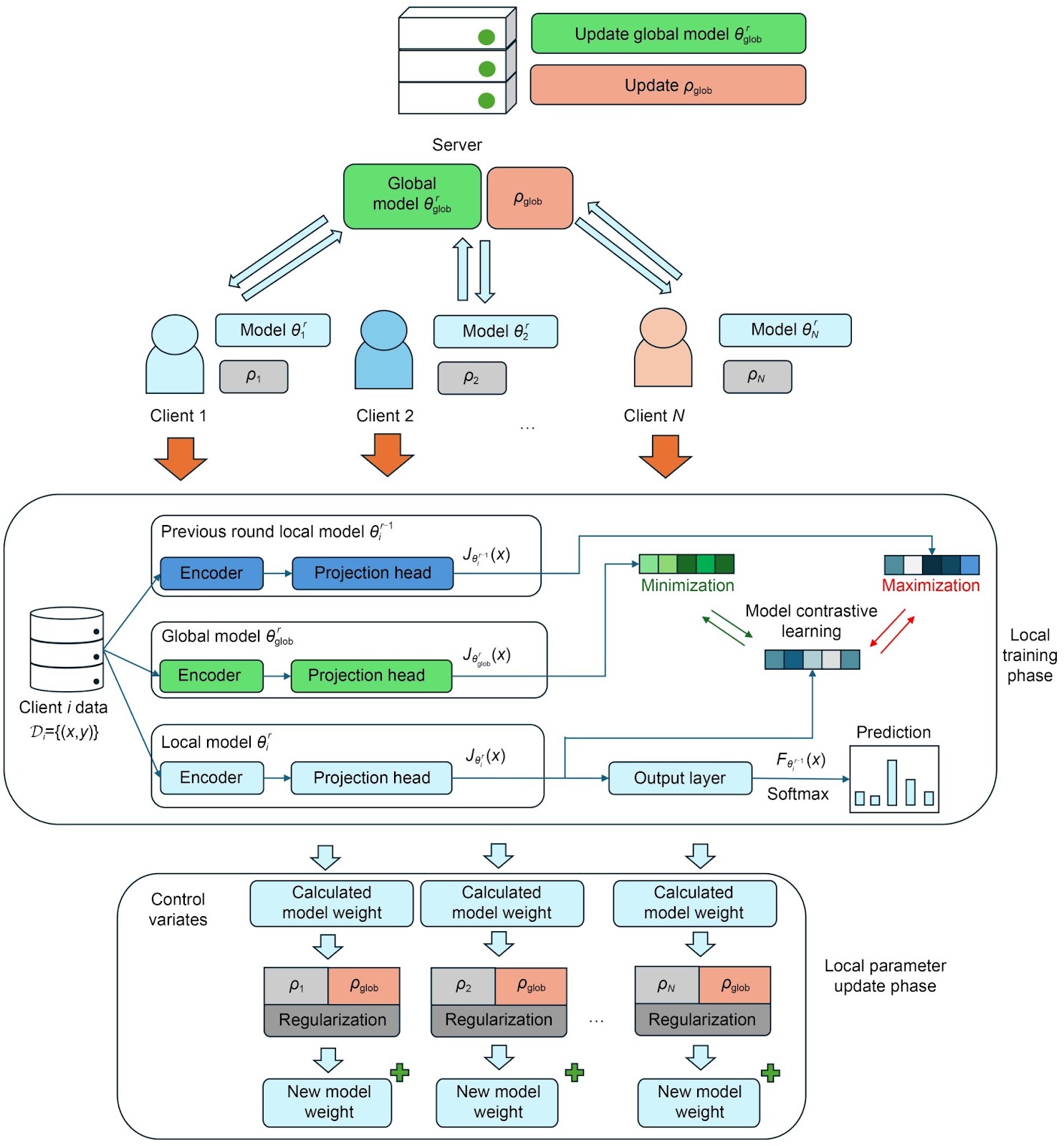
Recent attention to privacy issues demands a communication-safe method for training human activity recognition (HAR) models on client activity data. Federated learning (FL) has become a compelling technique to facilitate model training between the server and clients while preserving data privacy. However, classical FL methods often assume independent and identically distributed (IID) data among clients. This assumption does not hold true in practical scenarios. Human activity in real-world scena