Key Takeaways & Executive Findings
- •• The In/In2O3-VO configuration exhibits the lowest energy barrier (0.99 eV) for CO2 reduction to formate. • An air-annealing strategy applied to In3+-adsorbed resin yields indium oxide catalysts with abundant oxygen vacancies (R-In2O3). • In-situ spectroscopy confirms electrochemical reconstruction into In/In2O3 and stabilization of the HCOO* intermediate. • R-In2O3 maintains >92% current efficiency for CO2-to-formate over 56 h at −250 mA·cm−2, demonstrating durable performance.
Abstract
Indium-based materials have emerged as promising alternative catalysts for the selective electroreduction of CO2 to formate, yet the optimal catalytic configuration remains elusive. Herein, theoretical calculation reveals that metallic indium over oxygen vacancy-containing In2O3 support (In/In2O3-VO) possesses the lowest energy barriers (0.99 eV) for CO2 reduction to formate. A rational air-annealing strategy applied to In3+-adsorbed resin is developed to synthesize indium oxide catalysts containing oxygen vacancy (R-In2O3). In-situ spectroscopy techniques confirm in-situ electrochemical reconstruction of the In/In2O3 configuration and the effective stabilization of the key reaction intermediate (HCOO*). Consequently, the catalyst delivers excellent CO2-to-formate conversion performance, maintaining a current efficiency above 92% over 56 h of galvanostatic electrolysis at −250 mA·cm−2. These insights provide an effective strategy for the rational design of high-performance and durable indium-based electrocatalysts for sustainable formate production.
1. Introduction
Climate change has emerged as a paramount environmental challenge, primarily driven by the escalating concentrations of greenhouse gases released into the atmosphere [1–2]. Electrochemical CO2 reduction reaction (CO2RR) enables the conversion of the greenhouse gas CO2 into high-value chemicals using intermittent renewable energy sources, providing a promising route to a sustainable carbon-neutral economy [3–6]. Among the broad possible products of electrochemical CO2 reduction, formate is one of the target products, receiving widespread attention for its versatility and economic viability [7]. However, the C=O bond in the CO2 molecule is robust with difficult adsorption and activation, while the complex CO2 electroreduction reaction process involves multiple proton-coupled electron transfer and inevitably compromised by competition from the hydrogen evolution reaction (HER). Consequently, the development of high-performance catalysts for formate production in CO2RR has become a research focus [8–10].
Recently indium-based electrocatalysts have been investigated broadly owing to their low toxicity and excellent catalytic selectivity in CO2-to-formate conversion, positioning them as high-performance candidates [11–13]. However, these catalysts still suffer from the challenges of limited current density (j) and inadequate long-term stability for CO2RR [14–19]. For this, various indium-based materials have been developed, including metallic indium [12], indium oxide [20], indium sulfide [21], indium phosphide [22], indium-organic framework [23], indium cyanamide [24], single-atom indium [25], and gallium indium liquid metal [26]. Nonetheless, there are still controversies in the rational material design of indium-based catalysts. Generally, the excellent CO2RR performance of indium-based catalysts is fundamentally governed by the oxidation state of the metal sites. For instance, maintaining a high oxidation state of indium oxide is favorable to reduce the activation energy of CO2, whereas metallic indium can effectively suppress the competing reaction of HER [8,27–29]. Moreover, modulating the concentration of oxygen vacancies in indium oxide catalysts regulates the coordination environment of indium site, thereby enhancing the adsorption process of key intermediates for formate generation [30–31]. Consequently, engineering a hybrid structure comprising indium oxide, metallic indium, and oxygen vacancy could constitute an optimal configuration for electrochemical CO2-to-formate conversion.
Considering the cathodic potential requisite for CO2 reduction, a rational coupling of the electrochemical reconstruction of In/In2O3 configuration from indium oxide electrocatalysts with formate generation becomes possible. Hence, comprehensive theoretical studies and in-situ characterizations on the electrochemical reconstruction process in oxygen vacancy-containing In2O3 catalysts in CO2RR are imperative. This will contribute to the revealing of the in-situ reconstruction evolution of In2O3 and uncover the mechanistic pathways of formate production over In/In2O3 configuration, thereby providing pivotal guidance for deciphering catalytic mechanisms and designing high-performance catalysts. We herein report the in-situ reconstruction of In2O3 catalyst with oxygen vacancy to form an In/In2O3 interfacial configuration, thereby enhancing CO2-to-formate conversion performance. As illustrated schematically in Fig. 1, considering the theoretical facts of the thermodynamic standard generation potentials of indium metal and formate as well as the lowest energy barriers for the rate-determining step (RDS) in formate production for metallic indium over oxygen vacancy-containing In2O3 support (In/In2O3-VO) configuration, an air annealing process with adsorbed resins in In3+ cation solution (Resin–In) as the precursor has been rationally designed for the preparation of indium oxides containing oxygen vacancies (R-In2O3).
Loading authentic research manuscript (Pages 1–5)...
Biao Hong, Wei Xiao (2025). Unraveling in-situ electrochemical reconstruction of indium oxide catalysts with oxygen vacancy for enhanced electrocatalytic CO2-to-formate conversion. Journal of Mineral Metallurgy and Materials Science. https://doi.org/10.1007/s12613-025-3330-4
Research & Educational Purpose Only:The translations, structured abstracts, analytical annotations, and data reports provided by SinoTechIntel are intended exclusively for academic research, internal corporate R&D, and educational benchmarking. They do not constitute formal engineering, chemical safety, legal, or professional advice.
Copyright & Intellectual Property Notice: Original copyright of the underlying source articles and experimental data remains with the respective authors, institutions, and original publishing journals. SinoTechIntel claims intellectual property only over its proprietary translations, analytical syntheses, and AEO structured enhancements in accordance with international fair use and academic citation principles.
Frequently Asked Questions
What is the main finding of this study?
The study demonstrates that the in-situ electrochemical reconstruction of oxygen vacancy-containing In2O3 into an In/In2O3-VO configuration lowers the energy barrier to 0.99 eV and significantly enhances CO2-to-formate conversion, achieving >92% current efficiency over 56 hours.
How were the indium oxide catalysts synthesized?
The catalysts were synthesized via a rational air-annealing strategy applied to In3+-adsorbed resin, producing indium oxide nanoparticles containing oxygen vacancies (R-In2O3).
Why is the In/In2O3-VO configuration beneficial for CO2 reduction?
Metallic indium suppresses the competing hydrogen evolution reaction, while oxygen vacancies modulate the coordination environment of indium sites and stabilize the key HCOO* intermediate, collectively lowering the rate-determining energy barrier.
What electrochemical performance was achieved?
The R-In2O3 catalyst maintained a current efficiency above 92% for CO2-to-formate conversion during 56 hours of galvanostatic electrolysis at −250 mA·cm−2, demonstrating excellent stability and selectivity.
Which characterization methods confirmed the reconstruction mechanism?
In-situ spectroscopy techniques confirmed the electrochemical reconstruction into the In/In2O3 configuration and provided evidence for the effective stabilization of the HCOO* reaction intermediate.
Related Technical Papers & Translations
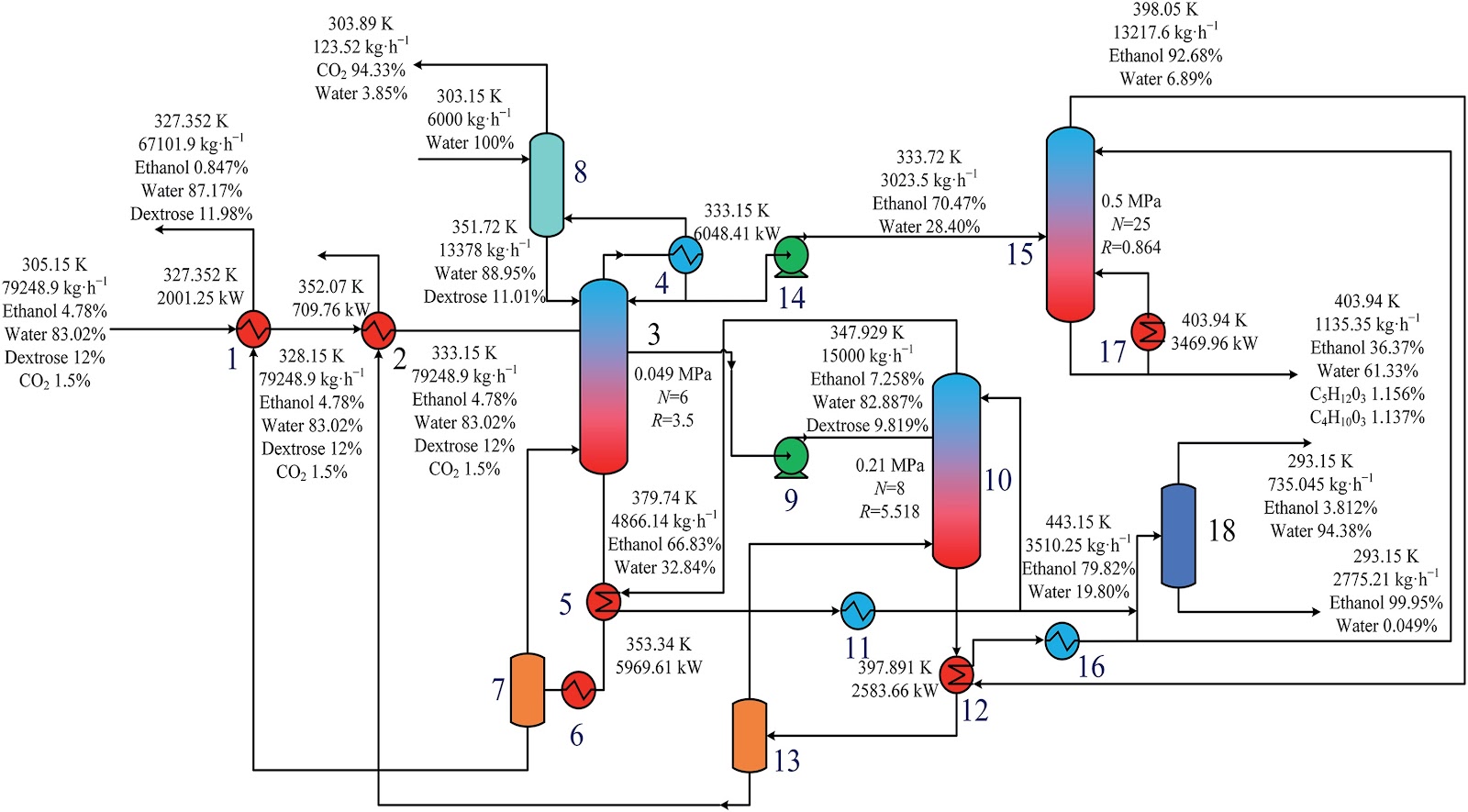
Design and optimization of a high-efficiency distillation process for cellulosic fuel ethanol integrated with thermal coupling and molecular sieve adsorption
To address the challenges of high energy consumption and prominent costs in the traditional three-columns distillation process for cellulosic fuel ethanol, a distillation—molecular sieve coupling separation process is proposed. This process integrates a three-column (crude distillation column, first distillation column, second distillation column) system with a 3A molecular sieve adsorption deep dehydration unit. A thermal coupling network is constructed via differential pressure design (steam from medium/high-pressure columns as mutual heat sources, reboiler liquid waste heat for feed preheating), and molecular sieve adsorption conditions are optimized. The study first performs a thermodynamic consistency test on the ethanol—water system, determines optimal non-random two-liquid (NRTL) model binary interaction parameters via experimental data regression for Aspen Plus simulation. Aiming at minimum total annual cost (TAC), Aspen Plus is used to optimize process parameters (theoretical tray number, feed location, reflux ratio, side-draw position, etc.). Economic analysis shows this process reduces CO2 emission costs by 27.56%, TAC by 15.58% (to 5.123 × 10⁶ USD·a-1), and increases ethanol purity to >99.6%, providing an effective solution for green, efficient separation.
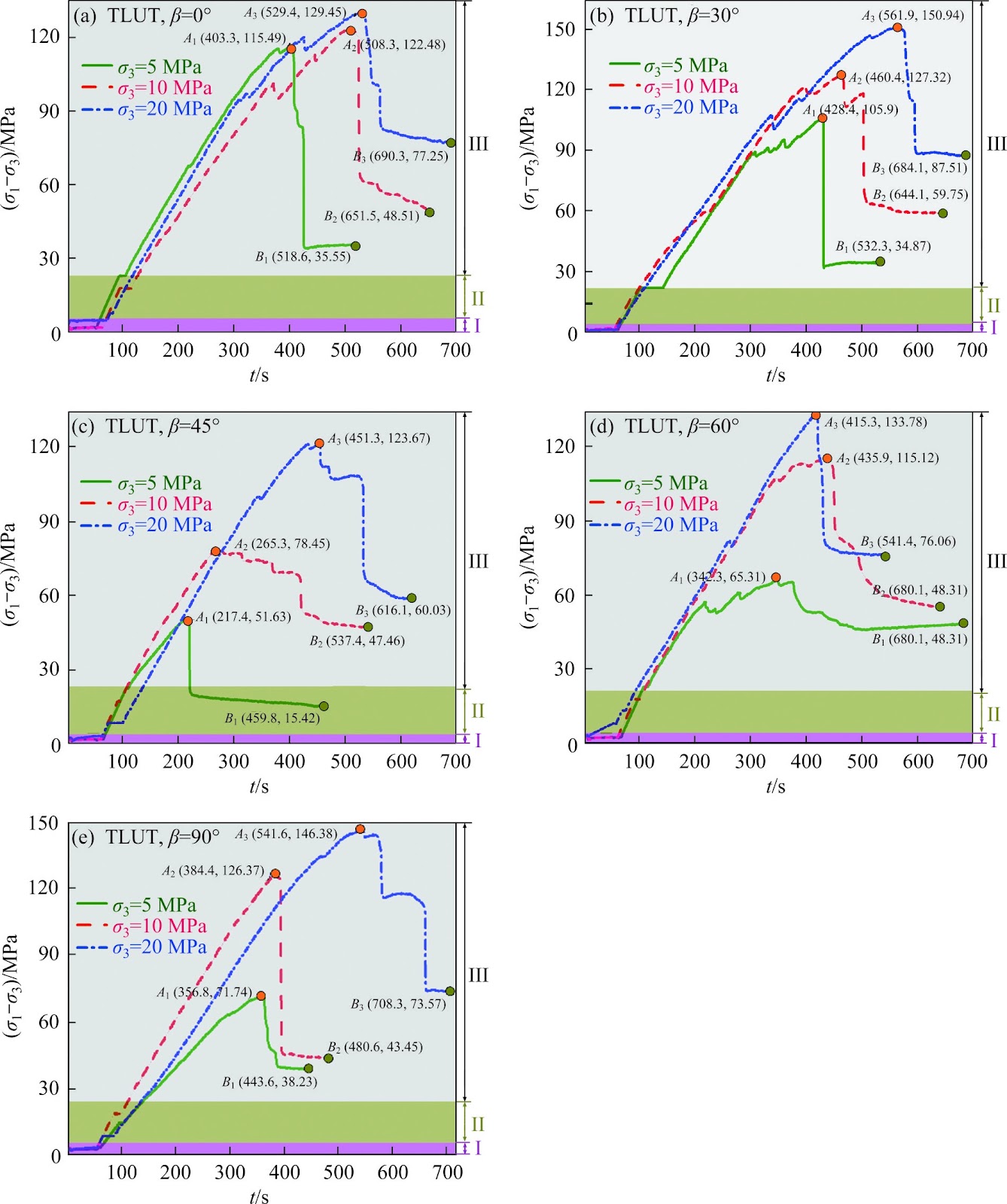
A cohesion loss model for determining residual strength of deep bedded sandstone
Rock residual strength, as an important input parameter, plays an indispensable role in proposing the reasonable and scientific scheme about stope design, underground tunnel excavation and stability evaluation of deep chambers. Therefore, previous residual strength models of rocks established were reviewed. And corresponding related problems were stated. Subsequently, starting from the effects of bedding and whole life-cycle evolution process, series of triaxial mechanical tests of deep bedded s
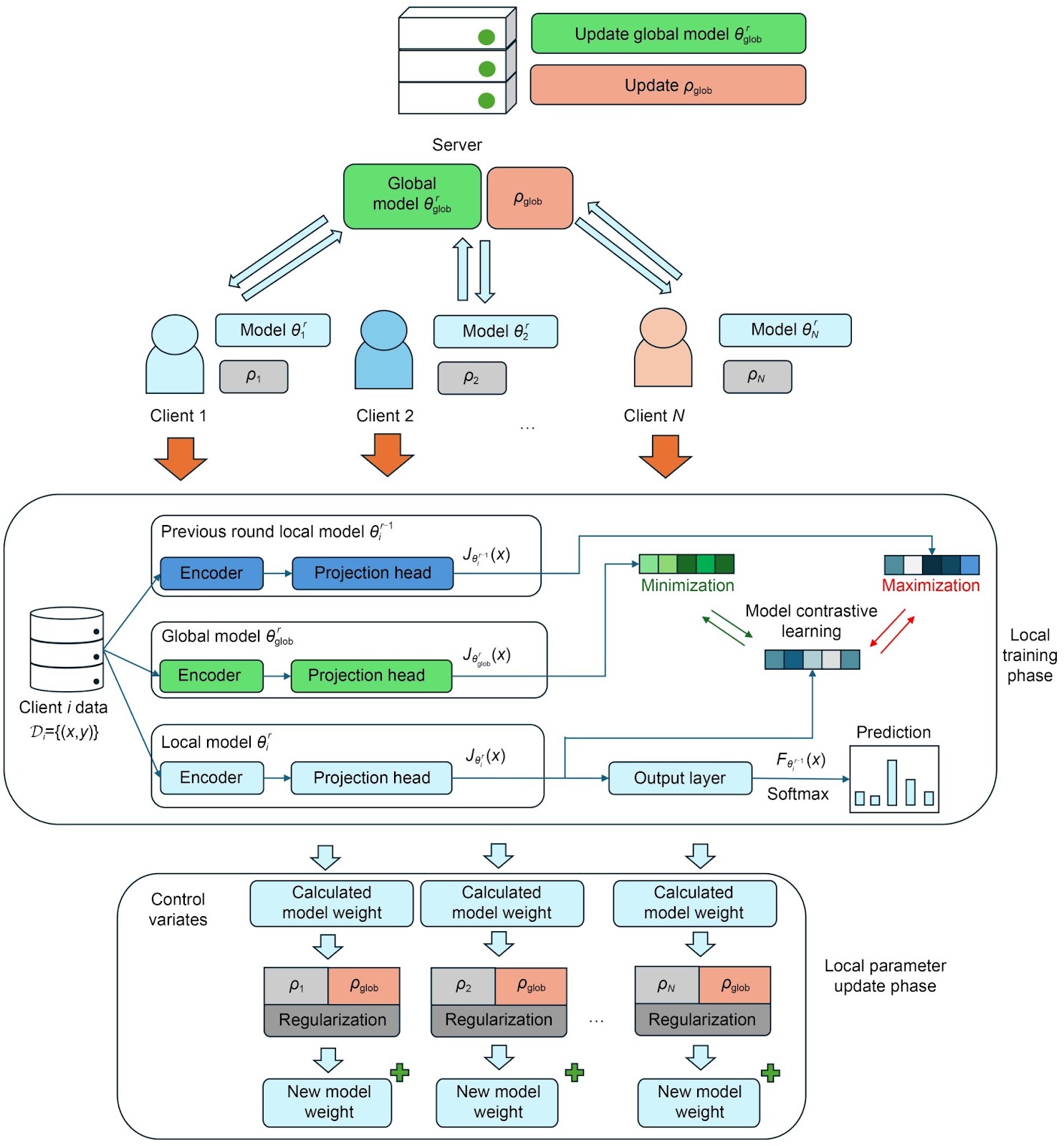
Federated model with contrastive learning and adaptive control variates for human activity recognition
Recent attention to privacy issues demands a communication-safe method for training human activity recognition (HAR) models on client activity data. Federated learning (FL) has become a compelling technique to facilitate model training between the server and clients while preserving data privacy. However, classical FL methods often assume independent and identically distributed (IID) data among clients. This assumption does not hold true in practical scenarios. Human activity in real-world scena