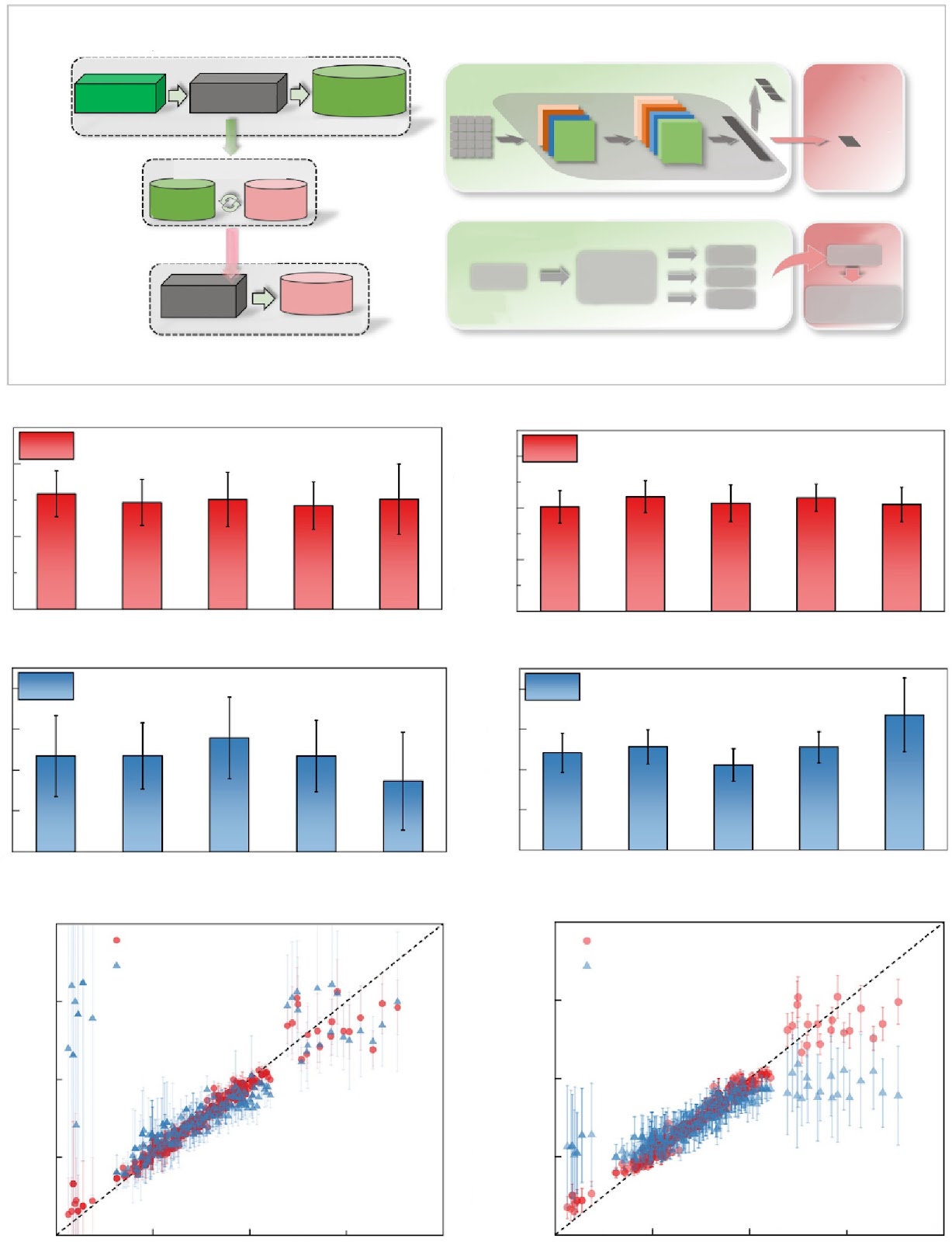
Key Takeaways & Executive Findings
- •• Transfer learning effectively mitigates small-sample and heterogeneous data challenges in metallic materials property prediction. • The review systematically categorizes transfer learning into feature-based, instance-based, parameter-based, and knowledge-based methods. • Case studies demonstrate significant improvements in prediction accuracy, data efficiency, and interpretability for mechanical properties and alloy design. • Emerging trends such as hybrid, multi-task, meta, and adaptive transfer learning, along with data standardization and physics integration, will drive future advances.
Abstract
In the era of materials genome engineering, data-driven machine learning has become a powerful tool for accelerating the research and development of metallic materials. However, the predictive accuracy and generalization ability of traditional machine learning models are often limited by the scarcity and heterogeneity of available data, especially in small-sample scenarios. To address these challenges, transfer learning has emerged as an effective strategy to leverage knowledge from related domains, thereby enhancing model performance with limited target data. This review systematically summarizes the fundamental concepts, methodologies, and representative applications of transfer learning in the prediction of metallic materials' properties. Transfer learning can be categorized into feature-based, instance-based, parameter-based, and knowledge-based methods. This work discusses their respective mechanisms, advantages, and limitations. Case studies demonstrate that transfer learning can significantly improve prediction accuracy, data efficiency, and model interpretability in tasks such as mechanical property prediction and alloy design. Furthermore, this work highlights emerging trends including hybrid, multi-task, meta, and adaptive transfer learning, which further expand the applicability of these techniques. Finally, this work outlines future research directions, emphasizing the need for data standardization, algorithmic innovation, multimodal data fusion, and the integration of physical principles to achieve robust, interpretable, and generalizable models. The perspectives presented aim to advance the intelligent design and discovery of metallic materials, promoting efficient knowledge transfer and collaborative innovation in materials science.
1. Introduction
Metal materials form the backbone of modern industry, and the ongoing demand for improved performance has made the optimization of their properties essential for technological advancement [1–4]. While industrial progress can be achieved by enhancing mechanical, thermal, and functional attributes, traditional trial-and-error experimentation remains time-consuming, costly, and inadequate for elucidating the coupled effects of microstructure, composition, and processing parameters [5–9]. The rise of computational science has therefore promoted the adoption of machine learning (ML) techniques in metallurgy, enabling data-driven models to be trained on extensive experimental datasets. These models can capture complex, nonlinear relationships among structure, chemistry, and performance with high fidelity, allowing for rapid and accurate property prediction and alloy design [10–21]. For example, Bai et al. [22] employed feature selection combined with polynomial regression to predict the fatigue strength of wrought aluminum alloys, generating interpretable formulas that inform industrial evaluations of fatigue resistance. To address the challenge of predicting fatigue life under complex loading conditions, Wang et al. [23] proposed a hybrid physical-data model (HPDM), in which theoretical constraints were embedded into ML algorithms. This HPDM provided physically consistent predictions with substantially improved accuracy for creep-fatigue conditions, welded joints, and additive manufacturing processes.
Despite the widespread introduction of machine learning into metallic materials research, several persistent challenges remain. High data acquisition costs and inconsistent data quality limit model accuracy [24–27]. The strong coupling of microstructural, compositional, and processing factors impedes reliable extrapolation to novel material systems or manufacturing techniques. Furthermore, training models on large, multidimensional datasets requires considerable computational resources, thereby prolonging development cycles [28–31]. To overcome these constraints, transfer learning has been adopted to leverage knowledge gained from related domains, thus reducing data requirements, accelerating convergence, and improving generalization in materials science applications [32–42]. Its scientific foundation lies in the knowledge transfer mechanism: models pre-trained on large, diverse datasets from related domains (e.g., similar material classes, analogous properties, or shared fundamental
Loading authentic research manuscript (Pages 1–5)...
Yufan Liu, Dexin Zhu, Zhihao Tian, Jiayi Liu, Xing Ran, Zhe Wang, Chengjiang Tang, Lifei Wang, Wei Xu, Xin Lu (2025). Transfer learning-enabled performance prediction of metallic materials: Methods, applications and prospects. Journal of Mineral Metallurgy and Materials Science. https://doi.org/10.1007/s12613-025-3267-7
Research & Educational Purpose Only:The translations, structured abstracts, analytical annotations, and data reports provided by SinoTechIntel are intended exclusively for academic research, internal corporate R&D, and educational benchmarking. They do not constitute formal engineering, chemical safety, legal, or professional advice.
Copyright & Intellectual Property Notice: Original copyright of the underlying source articles and experimental data remains with the respective authors, institutions, and original publishing journals. SinoTechIntel claims intellectual property only over its proprietary translations, analytical syntheses, and AEO structured enhancements in accordance with international fair use and academic citation principles.
Frequently Asked Questions
What is transfer learning in the context of materials science?
Transfer learning is a machine learning technique that leverages knowledge from related data-rich domains to improve model performance on target tasks with limited data. In materials science, it enables accurate property prediction for metallic materials despite scarce experimental datasets.
How does transfer learning address small-sample challenges in metallic materials prediction?
By pre-training on large datasets from similar materials or properties, transfer learning allows models to inherit useful features and patterns, reducing the demand for target data and enhancing generalization.
What are the main types of transfer learning methods discussed?
The review categorizes transfer learning into feature-based, instance-based, parameter-based, and knowledge-based methods, each with distinct mechanisms and applications.
What future directions are proposed for transfer learning in materials informatics?
Future research should focus on data standardization, algorithmic innovation, multimodal data fusion, and integration of physical principles to build robust, interpretable, and generalizable models.
What are the practical benefits of transfer learning for alloy design?
Transfer learning significantly improves prediction accuracy and data efficiency, enabling accelerated alloy design and reducing the need for extensive experimental trials.
Related Technical Papers & Translations
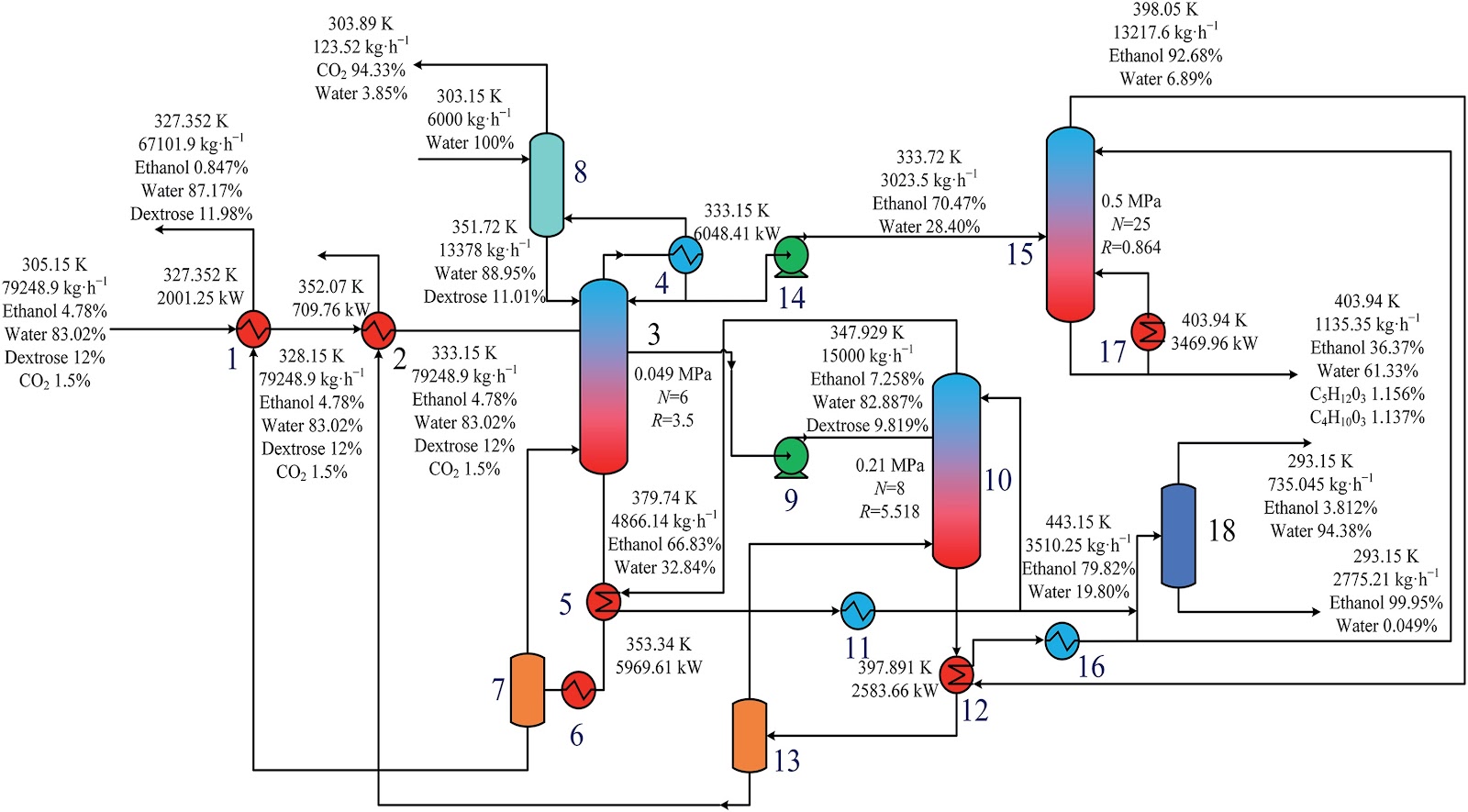
Design and optimization of a high-efficiency distillation process for cellulosic fuel ethanol integrated with thermal coupling and molecular sieve adsorption
To address the challenges of high energy consumption and prominent costs in the traditional three-columns distillation process for cellulosic fuel ethanol, a distillation—molecular sieve coupling separation process is proposed. This process integrates a three-column (crude distillation column, first distillation column, second distillation column) system with a 3A molecular sieve adsorption deep dehydration unit. A thermal coupling network is constructed via differential pressure design (steam from medium/high-pressure columns as mutual heat sources, reboiler liquid waste heat for feed preheating), and molecular sieve adsorption conditions are optimized. The study first performs a thermodynamic consistency test on the ethanol—water system, determines optimal non-random two-liquid (NRTL) model binary interaction parameters via experimental data regression for Aspen Plus simulation. Aiming at minimum total annual cost (TAC), Aspen Plus is used to optimize process parameters (theoretical tray number, feed location, reflux ratio, side-draw position, etc.). Economic analysis shows this process reduces CO2 emission costs by 27.56%, TAC by 15.58% (to 5.123 × 10⁶ USD·a-1), and increases ethanol purity to >99.6%, providing an effective solution for green, efficient separation.
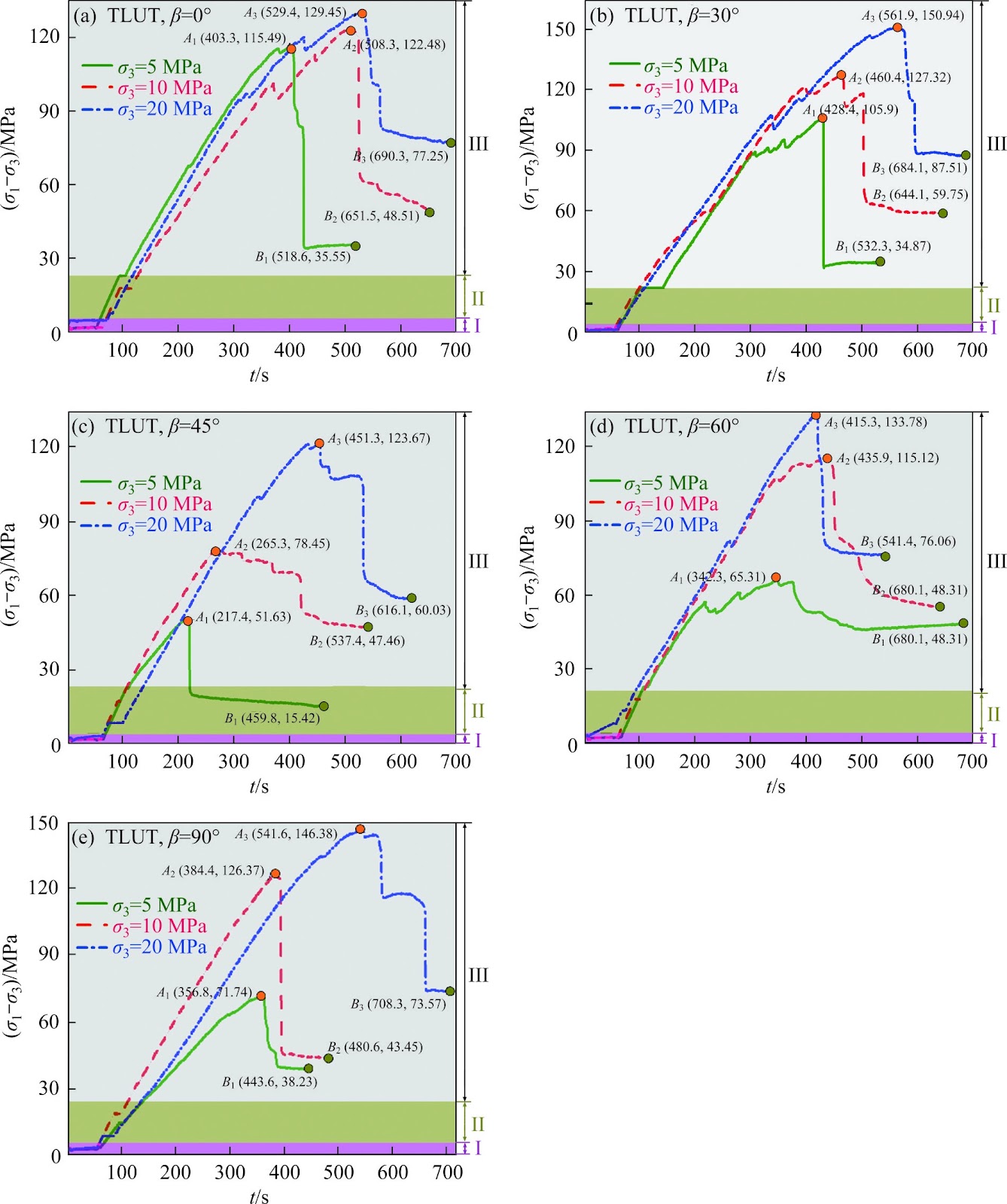
A cohesion loss model for determining residual strength of deep bedded sandstone
Rock residual strength, as an important input parameter, plays an indispensable role in proposing the reasonable and scientific scheme about stope design, underground tunnel excavation and stability evaluation of deep chambers. Therefore, previous residual strength models of rocks established were reviewed. And corresponding related problems were stated. Subsequently, starting from the effects of bedding and whole life-cycle evolution process, series of triaxial mechanical tests of deep bedded s
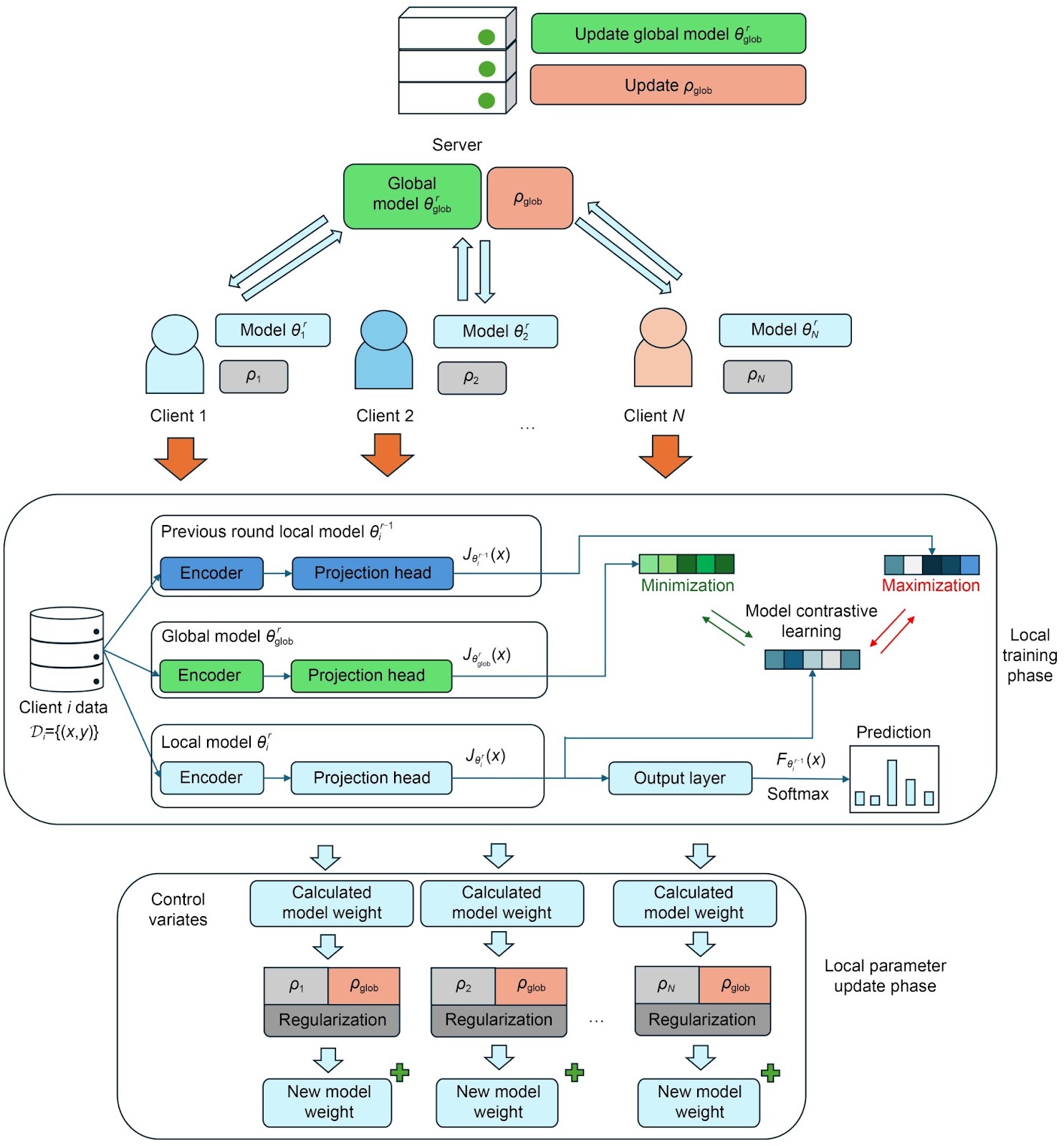
Federated model with contrastive learning and adaptive control variates for human activity recognition
Recent attention to privacy issues demands a communication-safe method for training human activity recognition (HAR) models on client activity data. Federated learning (FL) has become a compelling technique to facilitate model training between the server and clients while preserving data privacy. However, classical FL methods often assume independent and identically distributed (IID) data among clients. This assumption does not hold true in practical scenarios. Human activity in real-world scena