Key Takeaways & Executive Findings
- •• Crystal growth rate coefficient for thiourea is in the range of 10^-7 to 10^-8 m·s^-1, with a transition from diffusion-controlled to surface reaction-controlled as temperature decreases. • Temperature primarily affects the surface reaction step, with minimal impact on diffusion, leading to a two-stage growth mechanism with a critical temperature around 25 °C. • Process optimization via adjusting agitation (higher at high temperatures, lower at low temperatures) significantly improves CSD, yielding 84% of crystals in the 0.7-0.9 mm range. • The study offers a practical strategy to reduce fine crystals and improve product quality in industrial thiourea crystallization.
Abstract
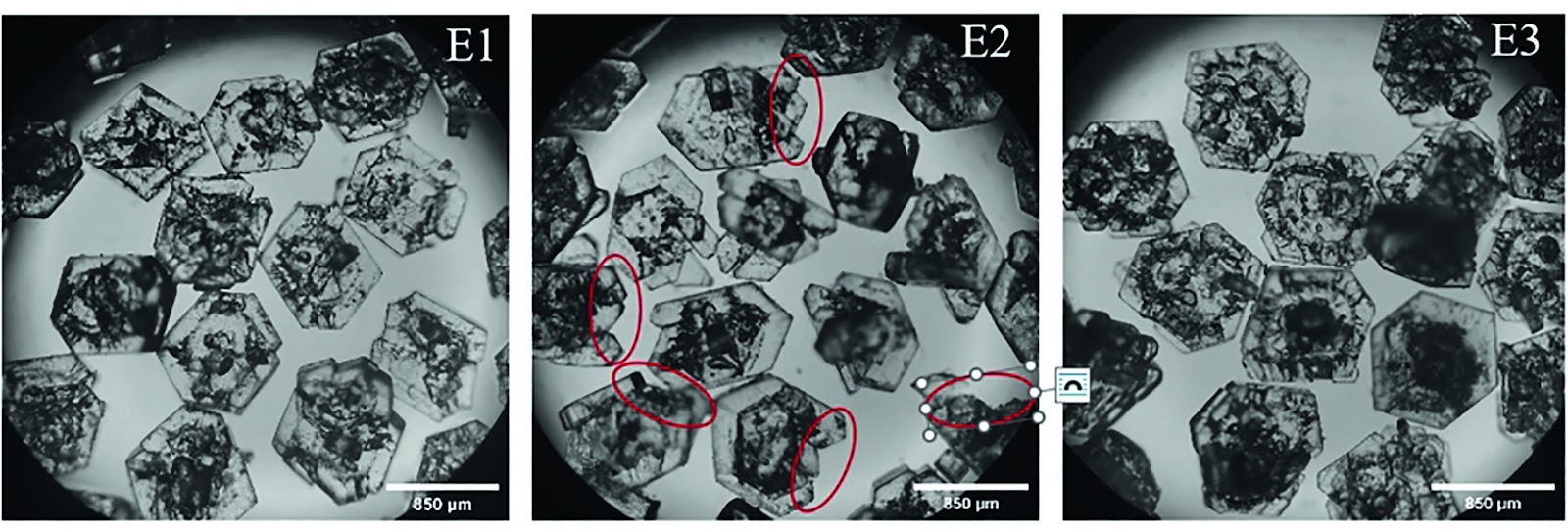
In the cooling crystallization process of thiourea, a significant issue is the excessively wide crystal size distribution (CSD) and the abundance of fine crystals. This investigation delves into the growth kinetics and mechanisms governing thiourea crystals during the cooling crystallization process. The fitting results indicate that the crystal growth rate coefficient falls within the range of 10^-7 to 10^-8 m·s^-1. Moreover, with decreasing crystallization temperature, the growth process undergoes a transition from diffusion-controlled to surface reaction-controlled, with temperature primarily influencing the surface reaction process and having a limited impact on the diffusion process. Comparing the crystal growth rate and the diffusion-limited growth rate at different temperatures, it is observed that the crystal growth process can be broadly divided into two stages. At temperatures above 25 °C, 1/qd (qd is diffusion control index) approaches 1, indicating the predominance of diffusion control. Conversely, at temperatures below 25 °C, 1/qd increases rapidly, signifying the dominance of surface reaction control. To address these findings, process optimization was conducted. During the high-temperature phase (35-25 °C), agitation was increased to reduce the limitations posed by bulk-phase diffusion in the crystallization process. In the low-temperature phase (25-15 °C), agitation was reduced to minimize crystal breakage. The optimized process resulted in a thiourea crystal product with a particle size distribution predominantly ranging from 0.7 to 0.9 mm, accounting for 84% of the total. This study provides valuable insights into resolving the issue of excessive fine crystals in the thiourea crystallization process.
1. Introduction
Thiourea is a sulfur-containing organic compound widely used as raw materials in the synthesis of pharmaceuticals, dyes, and resins [1,2], as well as a vulcanization accelerator for rubber [3], a flotation agent for metal minerals [4,5], and an organic catalyst [6]. The common production of thiourea crystals is to generate thiourea solutions through the reaction of lime nitrogen with hydrogen sulfide and calcium hydroxide, subsequently, a batch crystallization process is employed to cool the solutions from 35 °C to 15 °C, finally yield the aimed products by solid-liquid separation [7]. The resultant products frequently exhibit a broad crystal size distribution (CSD), primarily spanning from 0.15 mm to 0.9 mm, with a substantial presence of fine crystals, which causes moisture absorption and agglomeration [8,9], thereby affecting the production of downstream industries.
To tackle the above problems, the crystallization process of thiourea has been investigated. For example, employing classical nucleation theory to scrutinize the nucleation process of thiourea crystallization reveals that at high supersaturation, thiourea is susceptible to homogeneous nucleation, whereas at low supersaturation, it tends to undergo heterogeneous nucleation [10]. It was also found that the addition of sodium polystyrene sulfonate can inhibit the nucleation, with the apparent order of nucleation m increasing from 0.99-1.65 to 1.54-3.44, and the width of the metastable zone significantly increasing [11].
Compared with the crystal nucleation process, the crystal growth has a more important impact on regulating crystal size, morphology, etc. [12,13]. In general, crystal growth encompasses two fundamental processes: bulk diffusion and surface reaction [14]. For instance, the crystal growth of pentaerythritol is controlled by the complex mechanisms of surface reaction and diffusion limitation [15], while the controlling step for the growth of mesalazine and allopurinol is the surface reaction [16]. Hence, an investigation into the kinetics and mechanisms of crystal growth can elucidate the governing steps in growth, thereby strengthen the crystallization process and achieve CSD and morphology control [17-19]. However, there are few relevant research reports on the growth process of thiourea crystals.
Loading authentic research manuscript (Pages 1–5)...
Zhongxiang Ding, Wei Song, Tong Zhou, Weihua Cui, Changsong Wang (2024). Thiourea crystal growth kinetics, mechanism and process optimization during cooling crystallization. Chinese Journal of Chemical Engineering. https://doi.org/10.1016/j_cjche_1448
Research & Educational Purpose Only:The translations, structured abstracts, analytical annotations, and data reports provided by SinoTechIntel are intended exclusively for academic research, internal corporate R&D, and educational benchmarking. They do not constitute formal engineering, chemical safety, legal, or professional advice.
Copyright & Intellectual Property Notice: Original copyright of the underlying source articles and experimental data remains with the respective authors, institutions, and original publishing journals. SinoTechIntel claims intellectual property only over its proprietary translations, analytical syntheses, and AEO structured enhancements in accordance with international fair use and academic citation principles.
Frequently Asked Questions
What is the main issue in thiourea cooling crystallization?
The main issue is the excessively wide crystal size distribution (CSD) and the abundance of fine crystals, which cause moisture absorption and agglomeration, affecting downstream industries.
What are the two growth mechanisms of thiourea crystals?
The two growth mechanisms are diffusion-controlled and surface reaction-controlled. The transition occurs around 25 °C, with diffusion control dominating above 25 °C and surface reaction control below 25 °C.
How was the crystallization process optimized?
During the high-temperature phase (35-25 °C), agitation was increased to reduce bulk-phase diffusion limitations. In the low-temperature phase (25-15 °C), agitation was reduced to minimize crystal breakage.
What was the outcome of the optimized process?
The optimized process resulted in a thiourea crystal product with a particle size distribution predominantly ranging from 0.7 to 0.9 mm, accounting for 84% of the total.
What is the significance of this study?
This study provides valuable insights into resolving the issue of excessive fine crystals in the thiourea crystallization process, offering a practical approach for industrial application.
Related Technical Papers & Translations
Design and optimization of a high-efficiency distillation process for cellulosic fuel ethanol integrated with thermal coupling and molecular sieve adsorption
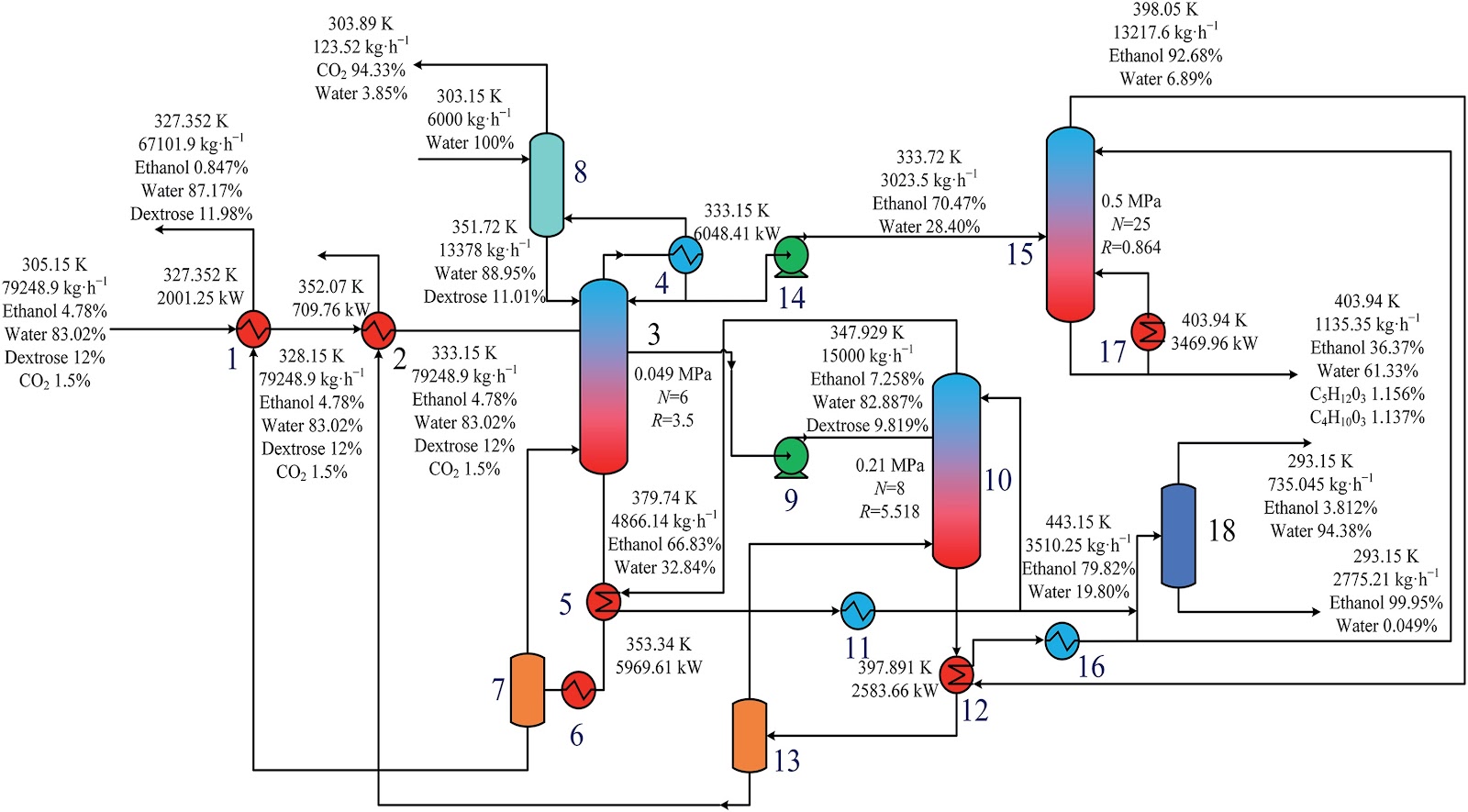
To address the challenges of high energy consumption and prominent costs in the traditional three-columns distillation process for cellulosic fuel ethanol, a distillation—molecular sieve coupling separation process is proposed. This process integrates a three-column (crude distillation column, first distillation column, second distillation column) system with a 3A molecular sieve adsorption deep dehydration unit. A thermal coupling network is constructed via differential pressure design (steam from medium/high-pressure columns as mutual heat sources, reboiler liquid waste heat for feed preheating), and molecular sieve adsorption conditions are optimized. The study first performs a thermodynamic consistency test on the ethanol—water system, determines optimal non-random two-liquid (NRTL) model binary interaction parameters via experimental data regression for Aspen Plus simulation. Aiming at minimum total annual cost (TAC), Aspen Plus is used to optimize process parameters (theoretical tray number, feed location, reflux ratio, side-draw position, etc.). Economic analysis shows this process reduces CO2 emission costs by 27.56%, TAC by 15.58% (to 5.123 × 10⁶ USD·a-1), and increases ethanol purity to >99.6%, providing an effective solution for green, efficient separation.
A cohesion loss model for determining residual strength of deep bedded sandstone
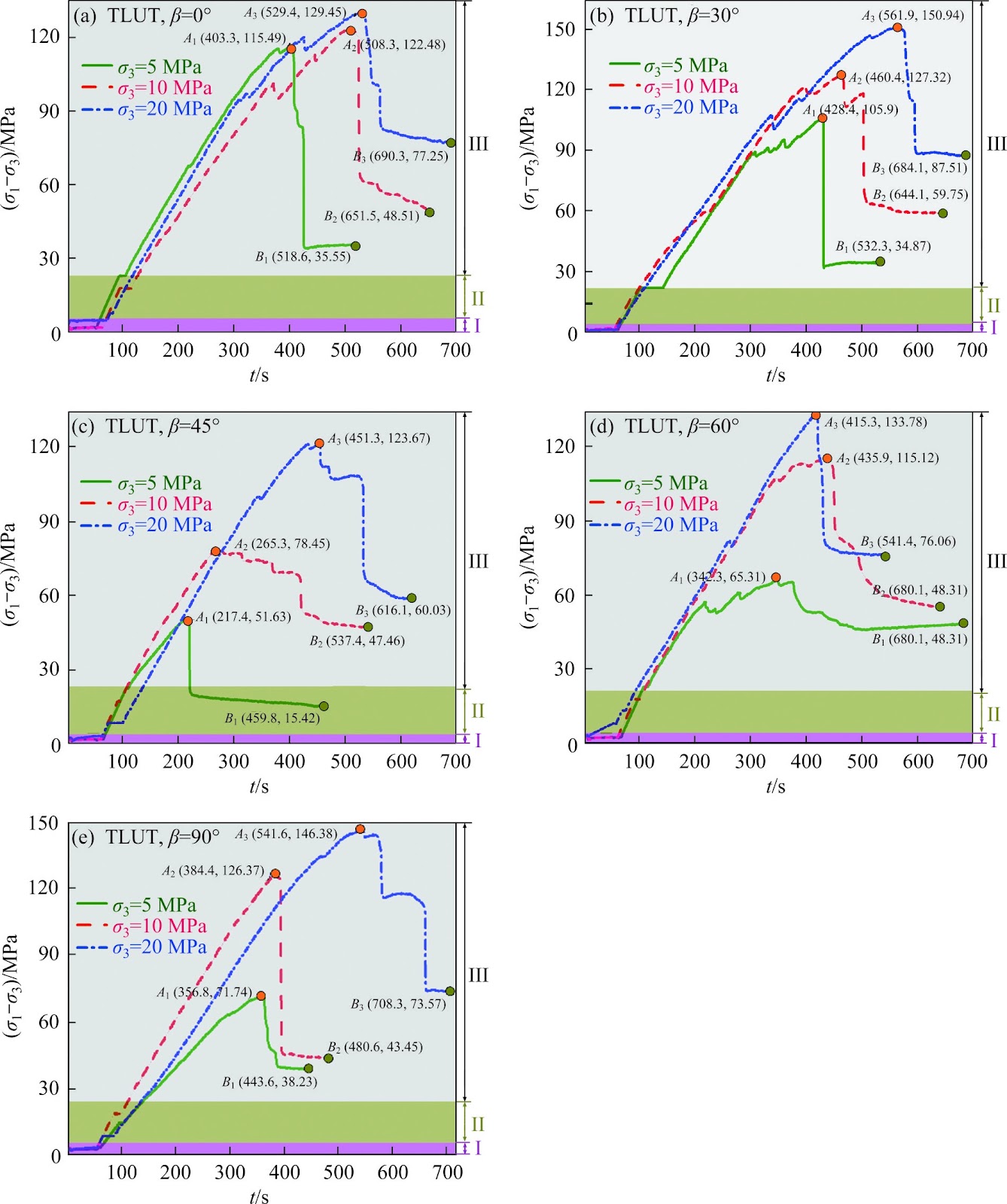
Rock residual strength, as an important input parameter, plays an indispensable role in proposing the reasonable and scientific scheme about stope design, underground tunnel excavation and stability evaluation of deep chambers. Therefore, previous residual strength models of rocks established were reviewed. And corresponding related problems were stated. Subsequently, starting from the effects of bedding and whole life-cycle evolution process, series of triaxial mechanical tests of deep bedded s
Federated model with contrastive learning and adaptive control variates for human activity recognition
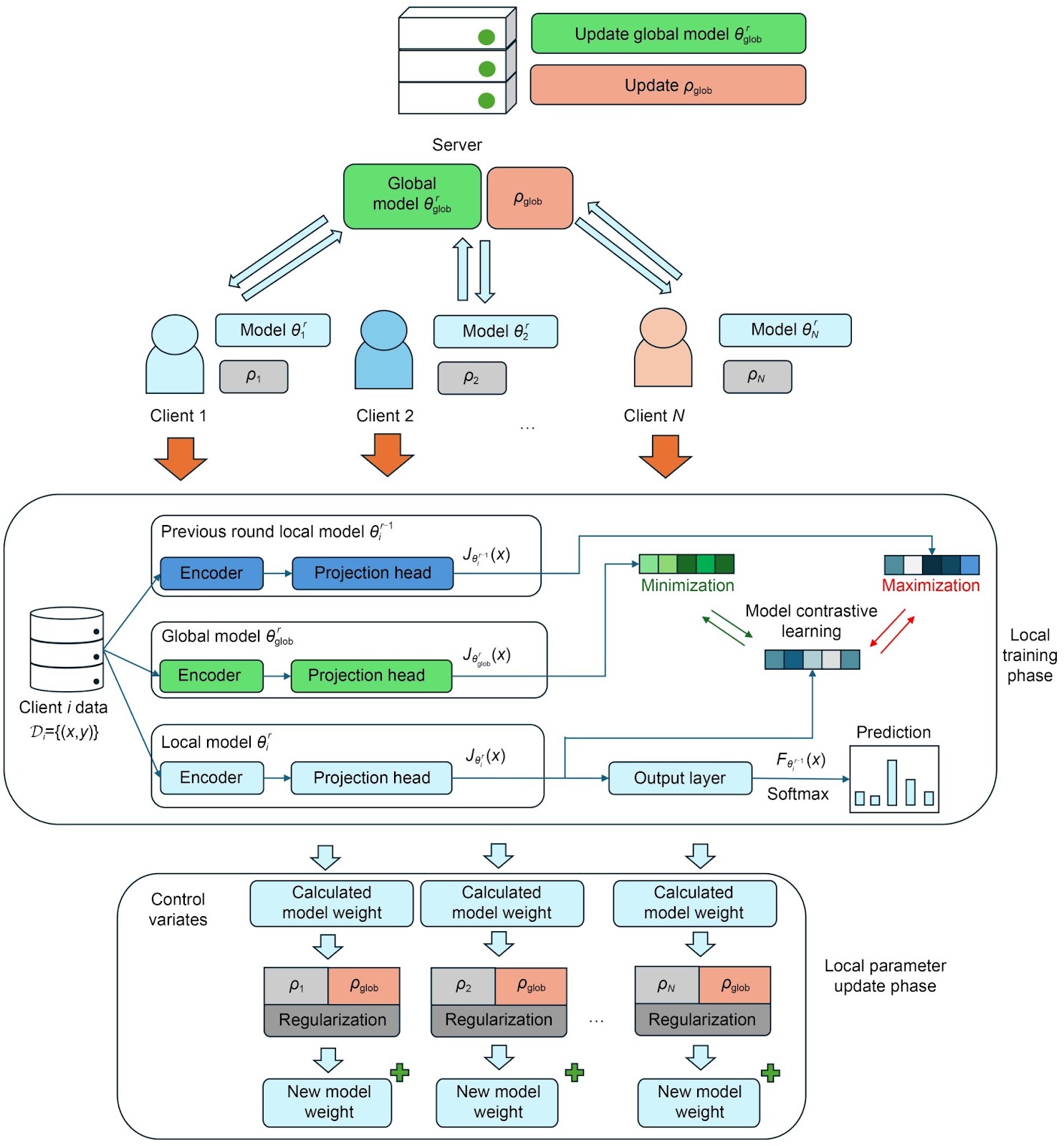
Recent attention to privacy issues demands a communication-safe method for training human activity recognition (HAR) models on client activity data. Federated learning (FL) has become a compelling technique to facilitate model training between the server and clients while preserving data privacy. However, classical FL methods often assume independent and identically distributed (IID) data among clients. This assumption does not hold true in practical scenarios. Human activity in real-world scena