Key Takeaways & Executive Findings
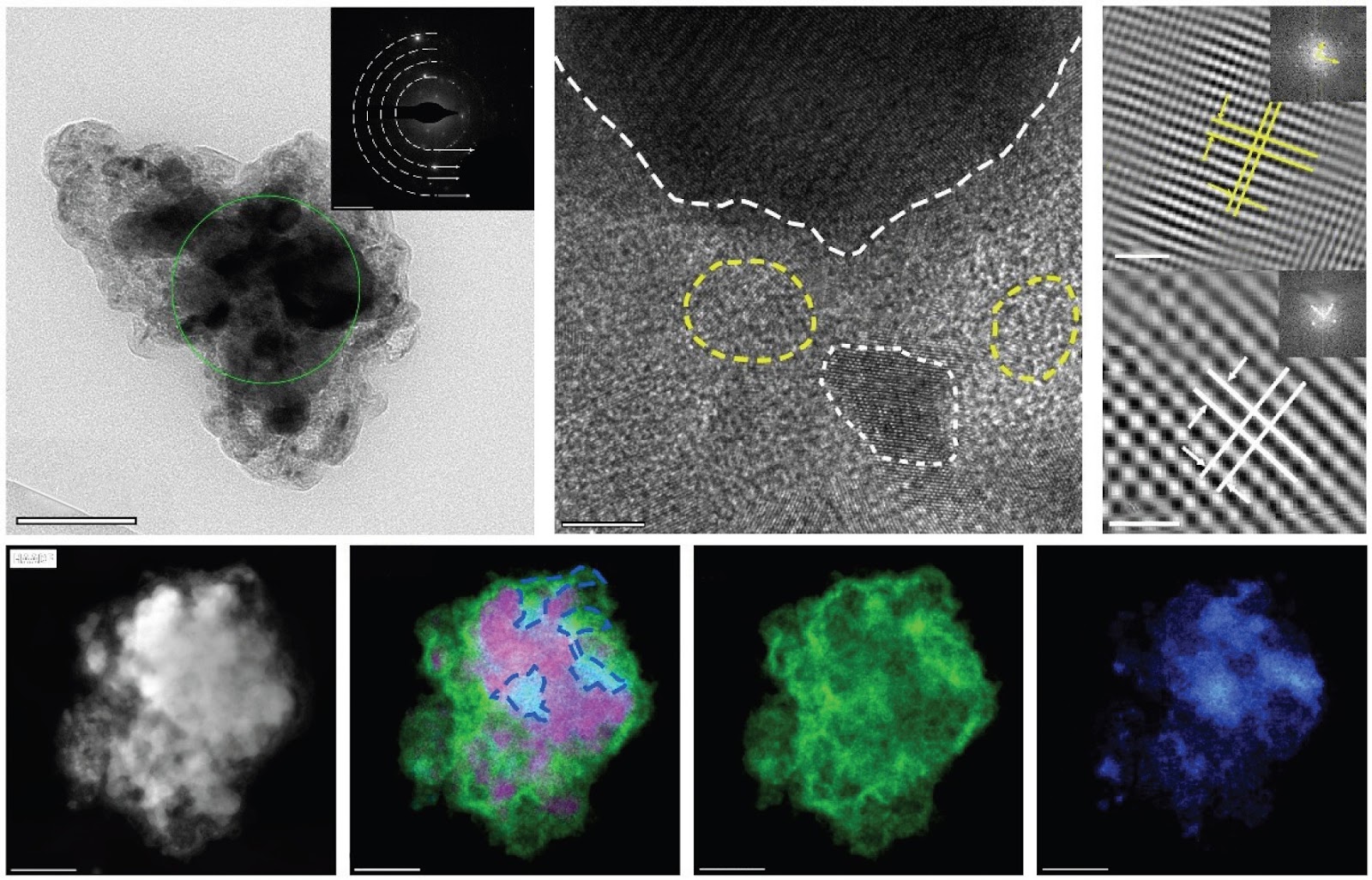
- •• (Mg0.9In0.1)0.25Mn0.75 nanocomposite with ~61 nm Mg(In) nanograins exhibits superior hydrogen storage performance. • Dehydrogenation is significantly facilitated: onset and peak temperatures drop to ~120°C and ~240°C, respectively, compared with pure MgH2. • A low activation energy of ~78.34 kJ/mol demonstrates markedly enhanced kinetics, while cycling stability reaches 97% retention after 50 cycles. • The synergistic combination of solid-solution formation and nanoscale engineering effectively destabilizes the Mg–H bonds both thermodynamically and kinetically.
Abstract
Solid-solution magnesium-based alloys have garnered significant attention for hydrogen storage applications. However, their practical implementation has been limited by their stable thermodynamic properties and sluggish kinetics. Herein, we report a nanoengineering approach to simultaneously enhance the kinetic and thermodynamic properties of Mg-based solid-solution alloys. Using Mg(In) alloys as a model system, we demonstrate this positive size effect through a two-step fabrication process. First, the Mg0.9In0.1 alloy was synthesized via ball milling combined with absorption/desorption cycles. Subsequently, the alloy was subjected to high-pressure milling under a 4 MPa H2 atmosphere with immiscible Mn at a controlled molar ratio, resulting in Mg(In) nanograins uniformly embedded within the Mn-composite matrix (denoted as (Mg0.9In0.1)xMn1−x). The (Mg0.9In0.1)0.25Mn0.75 nanocomposite, with an average grain size of ~61 nm, demonstrated superior hydrogen storage properties. Compared with pure MgH2, this material exhibits much lower onset and peak temperatures for hydrogen release, at ~120 and ~240°C, respectively. Moreover, enhanced kinetic performance, with a significantly lower activation energy of ~78.34 kJ/mol, and improved cycling stability, with 97% retention after 50 cycles, are achieved due to the Mg(In) nanograins, which remain well-preserved even upon multiple cycles. This study highlights that the synergistic combination of solid-solution formation and nanoscale engineering can effectively modify the thermodynamic and kinetic properties of Mg-based hydrogen storage alloys, offering a promising approach for the development of high-performance magnesium-alloy hydrogen storage materials.
1. Introduction
Hydrogen energy is considered a core secondary energy source for achieving carbon neutrality goals because of its unique advantages, including a gravimetric energy density of up to 142 MJ/kg and a combustion product consisting only of water [1–3]. However, the volumetric energy density of hydrogen under standard conditions is only 0.01079 MJ/L, making the development of efficient hydrogen storage technologies a key bottleneck in the hydrogen energy industry [4–5]. Among numerous solid-state hydrogen storage materials, magnesium hydride (MgH2) has become one of the most promising candidates for large-scale applications because of its theoretical hydrogen storage capacity of 7.6wt%, excellent cycle reversibility (>2000 cycles with >95% capacity retention), and crustal abundance advantage (Mg element accounts for approximately 2.3% of the Earth’s crust) [6–8].
Nevertheless, the practical application of MgH2 is constrained by its strong Mg–H covalent bonding (~75 kJ/mol), which results in high thermodynamic stability (dehydrogenation temperature > 300°C) and kinetic limitations (hydrogen diffusion coefficient: 10−14–10−13 cm2/s).
Over the past few decades, extensive efforts have been made to enhance the hydrogen storage performance of MgH2. Although the use of catalysts and nanoparticles can significantly improve the dehydrogenation kinetics of MgH2, these approaches remain far from satisfactory for practical applications because catalyst addition has little effect on the thermodynamic properties of MgH2 [9–11]. The high thermodynamic stability of the Mg/MgH2 system primarily originates from the strong Mg–H covalent bonds. However, this stability can be modulated through structural and compositional modifications [12–14]. Partial substitution of Mg with other metallic elements reduces the strength of the Mg–H bond, thereby destabilizing MgH2. Alloying treatments have proven particularly effective in weakening these bonds and improving the hydrogen storage properties [15–17]. Generally, alloying refers to the introduction of additional metallic elements to form a new alloy with Mg. Many metal elements can combine with Mg to form fixed phases and absorb hydrogen to generate complex hydrides such as Mg2FeH6 [18] and Mg2CoH5 [19]. Shao et al. [20] successfully synthesized nanostructured Mg3CoH5 using plasma technology. Owing to the introduction of Co, the enthalpy of formation of the nano-material (−73.16 kJ/mol) was lower than that of pure MgH2. In addition, Wang et al. [21] prepared Mg–Fe nanocrystals by ball milling under a 0.55-MPa hydrogen atmosphere. The resulting Mg2FeH6 nanocrystals began to release hydrogen at 62°C and completed hydrogenation at 340°C, with a final dehydrogenation capacity of 5.15wt%, thereby maintaining a reasonable hydrogen storage capacity while reducing the hydrogen release temperature. Mg-based solid-solution alloys exhibit higher equilibrium hydrogen pressures than pure Mg. Mechanical alloying of Mg with metals such as Zn, Al, Cd, and In to form Mg-based solid solutions increases the plateau pressure for hyd
Loading authentic research manuscript (Pages 1–5)...
Xiansong Jia, Quan Yang, Xiaoli Ding, Haiwen Li, Yongtao Li (2025). Thermodynamic and kinetic destabilization of Mg solid-solution alloys with nanosized grains for hydrogen storage. Journal of Mineral Metallurgy and Materials Science. https://doi.org/10.1007/s12613-026-3371-3
Research & Educational Purpose Only:The translations, structured abstracts, analytical annotations, and data reports provided by SinoTechIntel are intended exclusively for academic research, internal corporate R&D, and educational benchmarking. They do not constitute formal engineering, chemical safety, legal, or professional advice.
Copyright & Intellectual Property Notice: Original copyright of the underlying source articles and experimental data remains with the respective authors, institutions, and original publishing journals. SinoTechIntel claims intellectual property only over its proprietary translations, analytical syntheses, and AEO structured enhancements in accordance with international fair use and academic citation principles.
Frequently Asked Questions
What is the main achievement of this research?
The research successfully demonstrates a nanoengineering approach to simultaneously improve the thermodynamic and kinetic properties of Mg-based solid-solution alloys for hydrogen storage. The (Mg0.9In0.1)0.25Mn0.75 nanocomposite, with ~61 nm grains, shows lower dehydrogenation temperatures (~120°C onset, ~240°C peak), enhanced kinetics (activation energy ~78.34 kJ/mol), and excellent cycling stability (97% retention after 50 cycles).
Why is MgH2 considered a promising hydrogen storage material but has limitations?
MgH2 is promising due to its high theoretical hydrogen capacity (7.6wt%), excellent reversibility (>2000 cycles with >95% capacity retention), and abundance of Mg. However, its strong Mg–H covalent bonding (~75 kJ/mol) leads to high thermodynamic stability (dehydrogenation >300°C) and slow kinetics, limiting practical applications.
How does the two-step fabrication process work in this study?
First, the Mg0.9In0.1 alloy is synthesized via ball milling combined with absorption/desorption cycles. Then, it is subjected to high-pressure milling under a 4 MPa H2 atmosphere with immiscible Mn at a controlled molar ratio, resulting in Mg(In) nanograins uniformly embedded within the Mn-composite matrix, denoted as (Mg0.9In0.1)xMn1−x.
What is the significance of the solid-solution formation in this study?
Partial substitution of Mg with In reduces the strength of Mg–H bonds, thereby thermodynamically destabilizing the hydride. Combined with nanoscale engineering (grain size ~61 nm), the system achieves enhanced kinetics and lower operating temperatures, offering a promising route for high-performance magnesium-based hydrogen storage materials.
What are the key performance metrics of the (Mg0.9In0.1)0.25Mn0.75 nanocomposite?
It exhibits an average grain size of ~61 nm, hydrogen release onset at ~120°C and peak at ~240°C, an activation energy of ~78.34 kJ/mol, and 97% capacity retention after 50 cycles.
Related Technical Papers & Translations
Design and optimization of a high-efficiency distillation process for cellulosic fuel ethanol integrated with thermal coupling and molecular sieve adsorption
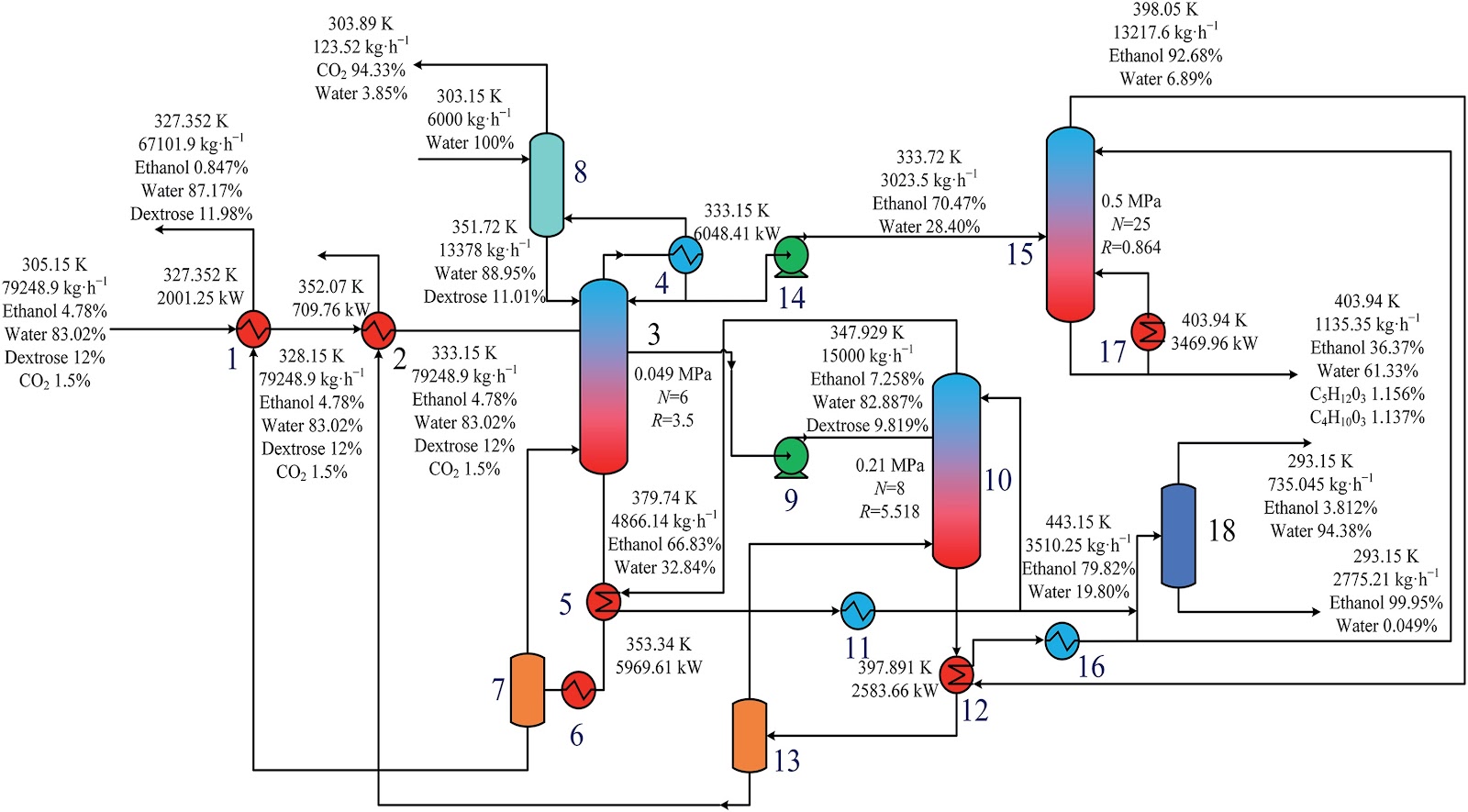
To address the challenges of high energy consumption and prominent costs in the traditional three-columns distillation process for cellulosic fuel ethanol, a distillation—molecular sieve coupling separation process is proposed. This process integrates a three-column (crude distillation column, first distillation column, second distillation column) system with a 3A molecular sieve adsorption deep dehydration unit. A thermal coupling network is constructed via differential pressure design (steam from medium/high-pressure columns as mutual heat sources, reboiler liquid waste heat for feed preheating), and molecular sieve adsorption conditions are optimized. The study first performs a thermodynamic consistency test on the ethanol—water system, determines optimal non-random two-liquid (NRTL) model binary interaction parameters via experimental data regression for Aspen Plus simulation. Aiming at minimum total annual cost (TAC), Aspen Plus is used to optimize process parameters (theoretical tray number, feed location, reflux ratio, side-draw position, etc.). Economic analysis shows this process reduces CO2 emission costs by 27.56%, TAC by 15.58% (to 5.123 × 10⁶ USD·a-1), and increases ethanol purity to >99.6%, providing an effective solution for green, efficient separation.
A cohesion loss model for determining residual strength of deep bedded sandstone
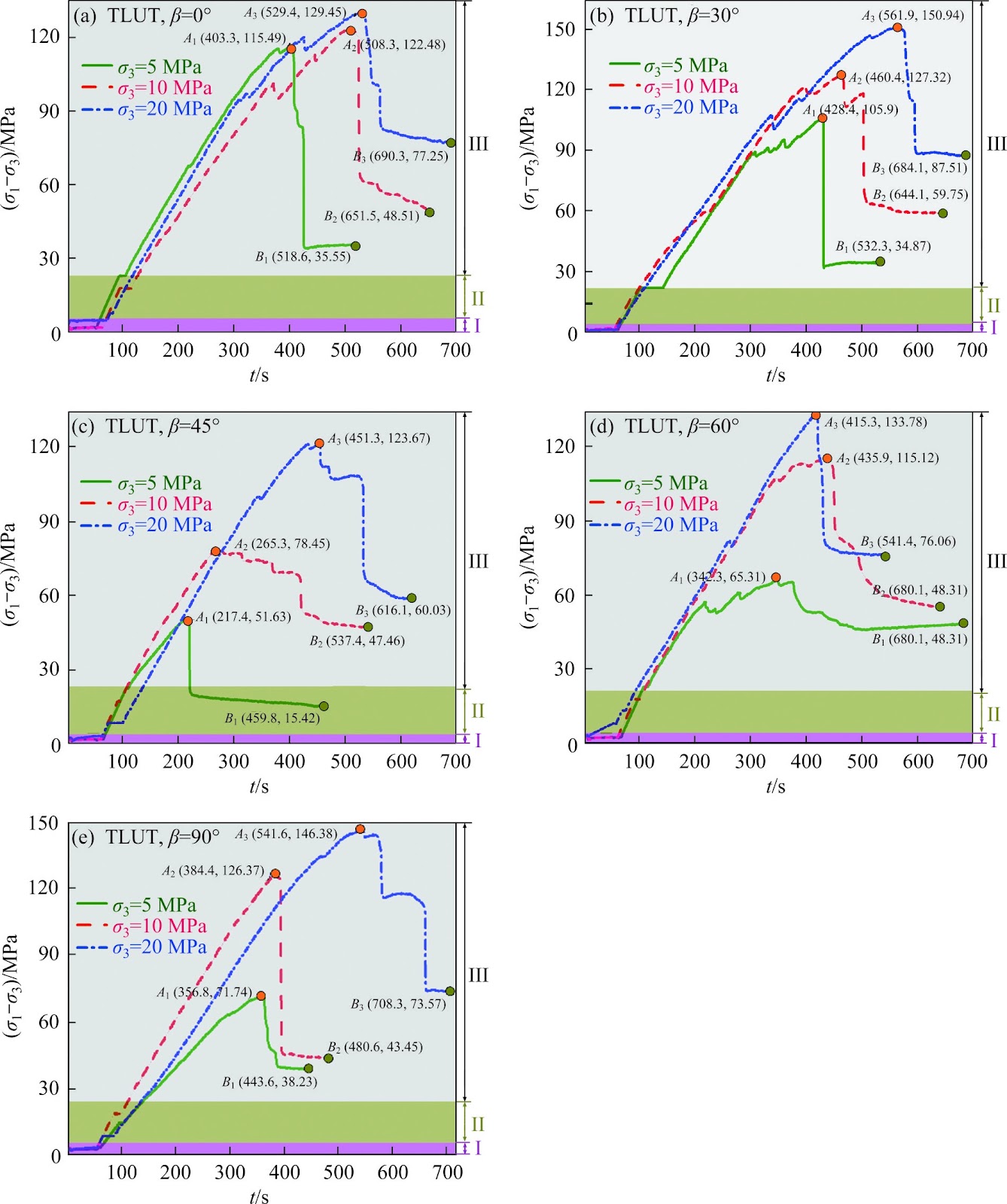
Rock residual strength, as an important input parameter, plays an indispensable role in proposing the reasonable and scientific scheme about stope design, underground tunnel excavation and stability evaluation of deep chambers. Therefore, previous residual strength models of rocks established were reviewed. And corresponding related problems were stated. Subsequently, starting from the effects of bedding and whole life-cycle evolution process, series of triaxial mechanical tests of deep bedded s
Federated model with contrastive learning and adaptive control variates for human activity recognition
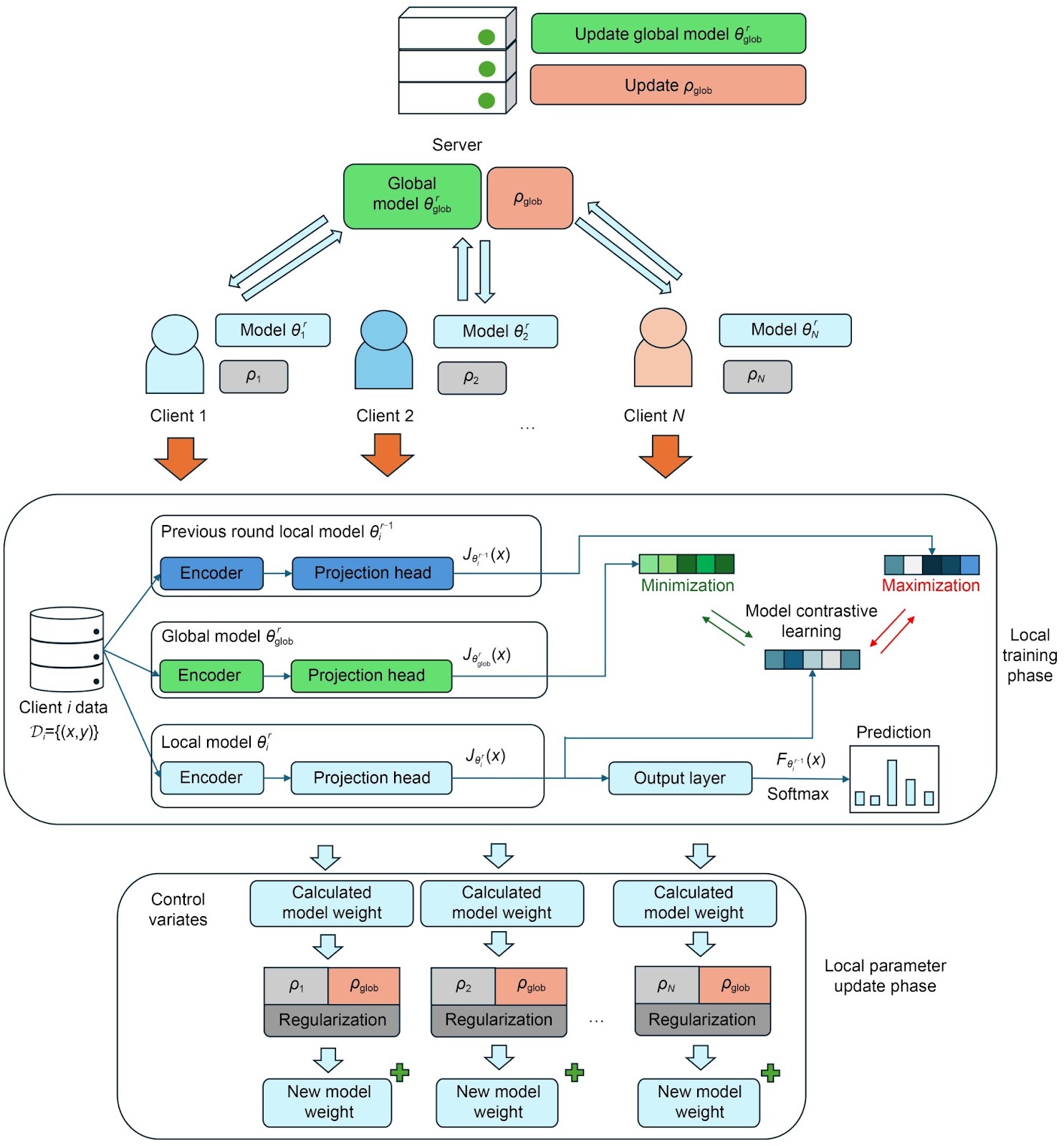
Recent attention to privacy issues demands a communication-safe method for training human activity recognition (HAR) models on client activity data. Federated learning (FL) has become a compelling technique to facilitate model training between the server and clients while preserving data privacy. However, classical FL methods often assume independent and identically distributed (IID) data among clients. This assumption does not hold true in practical scenarios. Human activity in real-world scena