Key Takeaways & Executive Findings
- •• The study numerically investigates thermal and solutal Marangoni convection in three-layered viscous flows, directly relevant to the optimization of liquid metal batteries for renewable energy storage. • The homotopy perturbation method is employed to solve the coupled nonlinear transport equations, yielding insights into the fundamental physics of heat and mass transfer in complex battery geometries. • Velocity profiles exhibit a pronounced core region of maximum flow speed, which decays toward the channel walls, informing electrode–electrolyte contact stability in liquid metal batteries. • The findings support the development of thermal management systems for grid-scale batteries, potentially improving energy density, durability, and charge–discharge efficiency.
Abstract
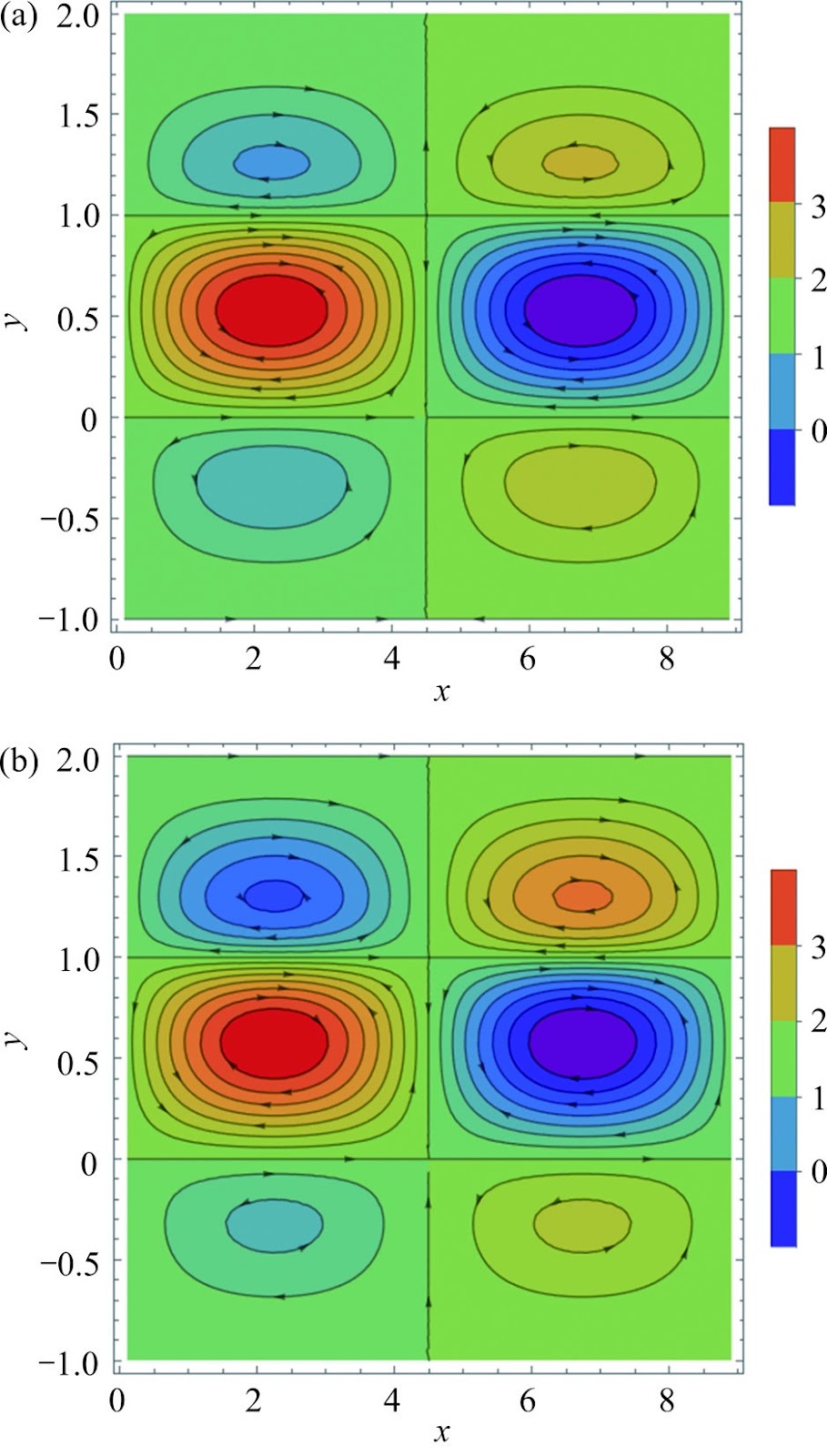
This study examines the intricate occurrences of thermal and solutal Marangoni convection in three-layered flows of viscous fluids, with a particular emphasis on their relevance to renewable energy systems. This research examines the flow of a three-layered viscous fluid, considering the combined influence of heat and solutal buoyancy-driven Rayleigh-Bénard convection, as well as thermal and solutal Marangoni convection. The homotopy perturbation method is used to examine and simulate complex fluid flow and transport phenomena, providing important understanding of the fundamental physics and assisting in the optimization of various battery configurations. The inquiry examines the primary elements that influence Marangoni convection and its impact on battery performance, providing insights on possible enhancements in energy storage devices. The findings indicate that the velocity profiles shown graphically exhibit a prominent core zone characterized by the maximum speed, which progressively decreases as it approaches the walls of the channel. This study enhances our comprehension of fluid dynamics and the transmission of heat and mass in intricate systems, which has substantial ramifications for the advancement of sustainable energy solutions.
1. Introduction
The study of thermal transfer and fluid flow in complex geometry is crucial in numerous scientific and technical disciplines. Due to its significance in various applications, such as temperature exchangers, biological systems, nuclear reactors, food processing, material processing, environmental processes, and microfluidics, the investigation of viscous fluid behavior in three-layered closed geometries has become particularly crucial. The fluid flow dynamics in these applications is complex due to the simultaneous presence of thermal convection, solutal convection, and electrical conductivity.
In recent years, the growing use of renewable energy sources has highlighted the necessity for affordable, durable, and high-capacity grid energy storage. The storage device has electrodes and electrolytes that naturally separate from each other due to differences in density and inability to mix. Batteries are highly effective for grid-scale energy storage (0.1 −1.0 GW·h) because they are inexpensive, can be scaled up easily, and have the capacity to charge and discharge energy at a rapid rate [1]. The functional properties of liquid metal cations and liquid metals play a crucial role in maintaining the contact between the anode and electrolyte in batteries. Hence, comprehending the functional attributes of batteries is an essential initial measure to suggest a suitable liquid metal for maintaining electrode contact in rechargeable batteries.
The electrochemical and thermal properties of batteries, a unique type of energy storage battery, exhibit significant differences compared to conventional lithium-ion batteries. Recent studies have focused on various battery material systems, such as lithium-antimony-lead (Li||Pb-Sb), lithium-bismuth (Li||Bi), lithium-tellurium-tin (Li||Te-Sn), lithium-antimony-tin (Li||Sb-Sn), and sodium-bismuth (Na||Bi). These studies have provided important data [2−8]. Questions regarding safety and energy efficiency arise due to the high operating temperature range (300 −700 ℃) and discharging current range (4−50 A). There is an urgent need for the development of a thermal management system (TMS) that can effectively regulate battery temperature and provide thermal safety even in extreme conditions.
Loading authentic research manuscript (Pages 1–5)...
SHAHEEN Sidra, HUANG Hu-lin, ARAIN Muhammad Bilal, BHATTI Muhammad Mubashir, KHALIQUE Chaudry Masood (2025). Thermal and solutal Marangoni convection in three-layered viscous flows: Insights for liquid metal battery optimization. Journal of Central South University. https://doi.org/10.1007/s11771-025-5995-2
Research & Educational Purpose Only:The translations, structured abstracts, analytical annotations, and data reports provided by SinoTechIntel are intended exclusively for academic research, internal corporate R&D, and educational benchmarking. They do not constitute formal engineering, chemical safety, legal, or professional advice.
Copyright & Intellectual Property Notice: Original copyright of the underlying source articles and experimental data remains with the respective authors, institutions, and original publishing journals. SinoTechIntel claims intellectual property only over its proprietary translations, analytical syntheses, and AEO structured enhancements in accordance with international fair use and academic citation principles.
Frequently Asked Questions
What is the main focus of this research?
The research focuses on thermal and solutal Marangoni convection in three-layered viscous flows, with applications to liquid metal battery optimization for renewable energy storage.
What method is used to analyze the fluid flow and heat transfer?
The homotopy perturbation method is employed to simulate and solve the complex nonlinear equations governing the three-layered flow and associated transport phenomena.
How does Marangoni convection affect battery performance?
Marangoni convection influences the velocity, temperature, and concentration distributions within the battery layers, affecting the electrode–electrolyte interface stability and overall charge–discharge efficiency.
What are the key findings regarding velocity profiles?
The velocity profiles show a core zone with maximum speed, decreasing near the walls, which helps in understanding fluid mixing and transport in battery configurations.
What are the implications for sustainable energy systems?
The insights from this study can guide the design of more efficient thermal management systems and improve the performance and lifespan of grid-scale liquid metal batteries.
Related Technical Papers & Translations
Design and optimization of a high-efficiency distillation process for cellulosic fuel ethanol integrated with thermal coupling and molecular sieve adsorption
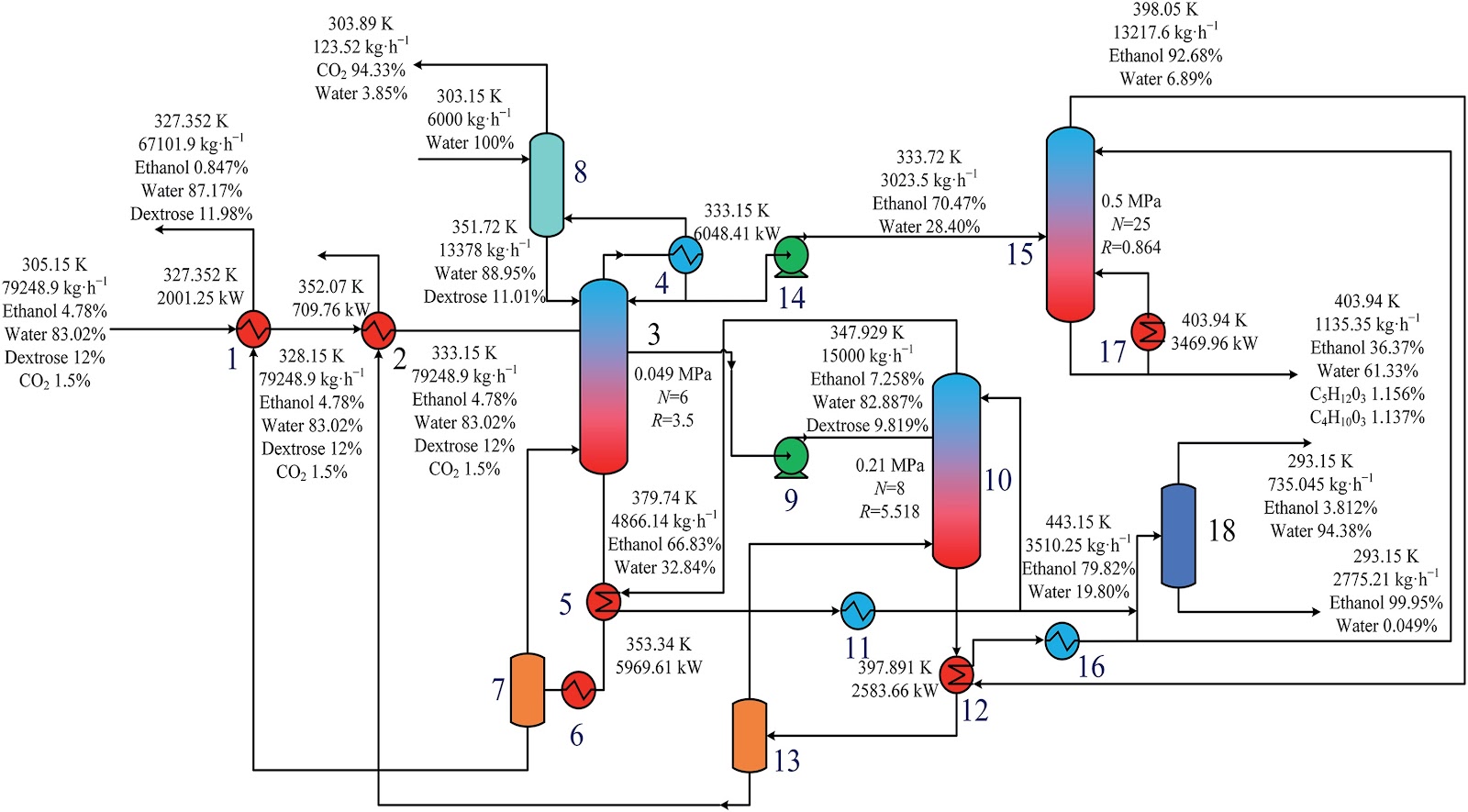
To address the challenges of high energy consumption and prominent costs in the traditional three-columns distillation process for cellulosic fuel ethanol, a distillation—molecular sieve coupling separation process is proposed. This process integrates a three-column (crude distillation column, first distillation column, second distillation column) system with a 3A molecular sieve adsorption deep dehydration unit. A thermal coupling network is constructed via differential pressure design (steam from medium/high-pressure columns as mutual heat sources, reboiler liquid waste heat for feed preheating), and molecular sieve adsorption conditions are optimized. The study first performs a thermodynamic consistency test on the ethanol—water system, determines optimal non-random two-liquid (NRTL) model binary interaction parameters via experimental data regression for Aspen Plus simulation. Aiming at minimum total annual cost (TAC), Aspen Plus is used to optimize process parameters (theoretical tray number, feed location, reflux ratio, side-draw position, etc.). Economic analysis shows this process reduces CO2 emission costs by 27.56%, TAC by 15.58% (to 5.123 × 10⁶ USD·a-1), and increases ethanol purity to >99.6%, providing an effective solution for green, efficient separation.
A cohesion loss model for determining residual strength of deep bedded sandstone
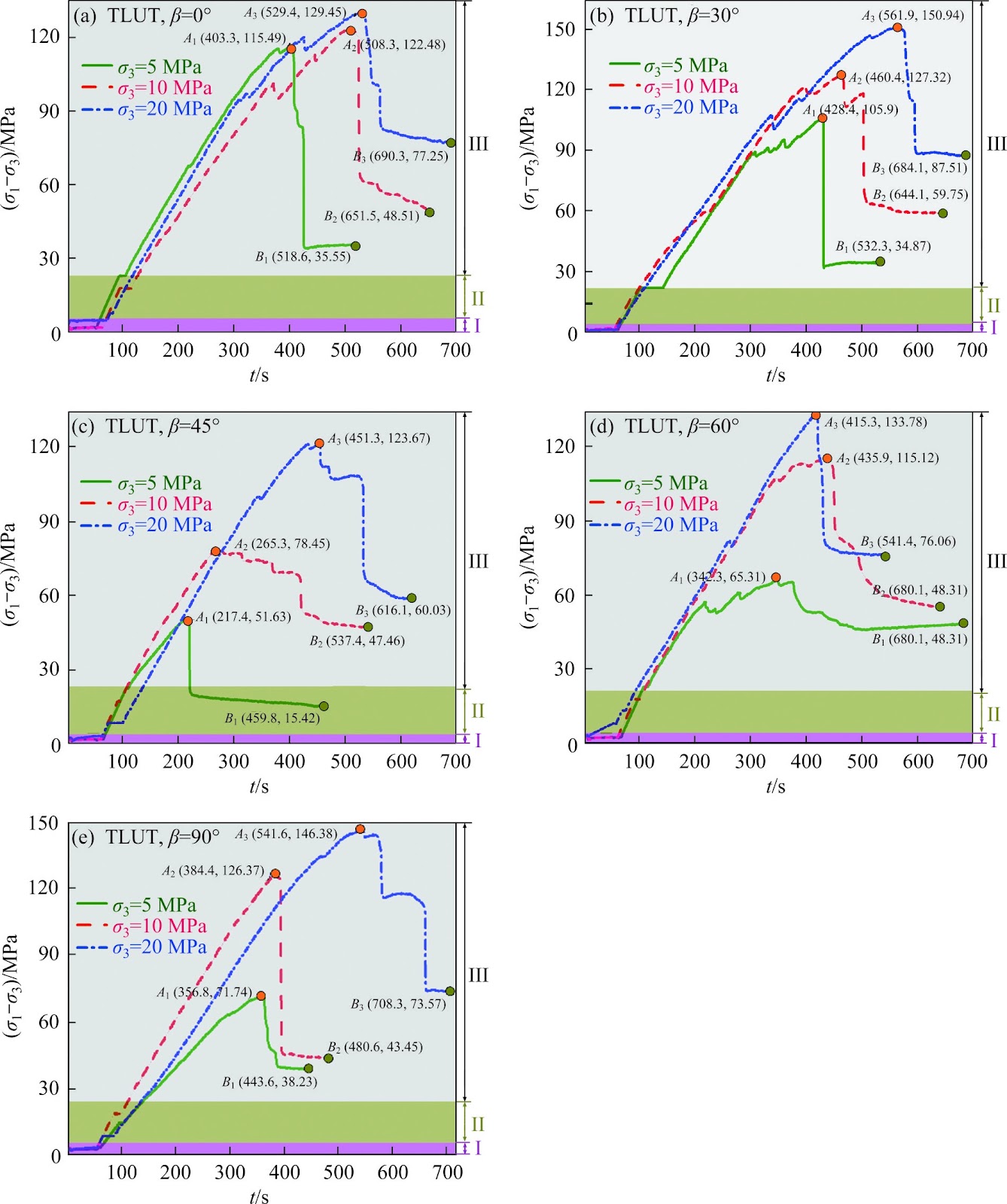
Rock residual strength, as an important input parameter, plays an indispensable role in proposing the reasonable and scientific scheme about stope design, underground tunnel excavation and stability evaluation of deep chambers. Therefore, previous residual strength models of rocks established were reviewed. And corresponding related problems were stated. Subsequently, starting from the effects of bedding and whole life-cycle evolution process, series of triaxial mechanical tests of deep bedded s
Federated model with contrastive learning and adaptive control variates for human activity recognition
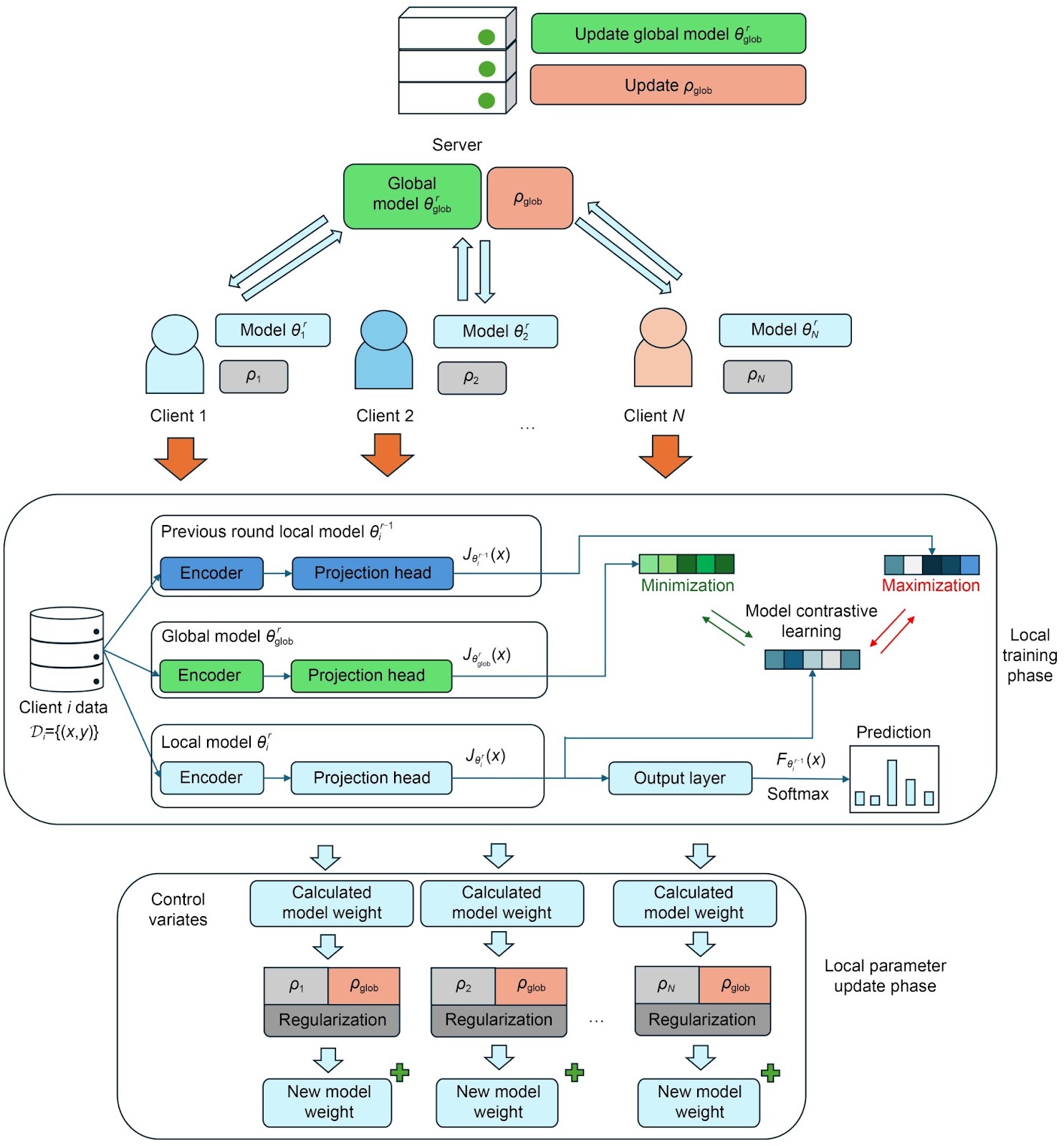
Recent attention to privacy issues demands a communication-safe method for training human activity recognition (HAR) models on client activity data. Federated learning (FL) has become a compelling technique to facilitate model training between the server and clients while preserving data privacy. However, classical FL methods often assume independent and identically distributed (IID) data among clients. This assumption does not hold true in practical scenarios. Human activity in real-world scena