Key Takeaways & Executive Findings
- •• Pd stripe doping Co(1 1 1) surface is theoretically predicted to exhibit superior catalytic performance for CO oxidative coupling to DMO compared to pure Pd(1 1 1), Pd monolayer, and Pd single atom doped surfaces. • DFT calculations and micro-reaction kinetic model analysis reveal the favorable reaction pathway is COOCH3–COOCH3 coupling, with a distinct rate-controlling step on the Pd stripe doped surface. • The study provides a rational design strategy for developing low-Pd, high-efficiency catalysts for industrial DMO synthesis. • The findings offer a theoretical foundation for experimental validation and further optimization of Pd-based bimetallic catalysts.
Abstract
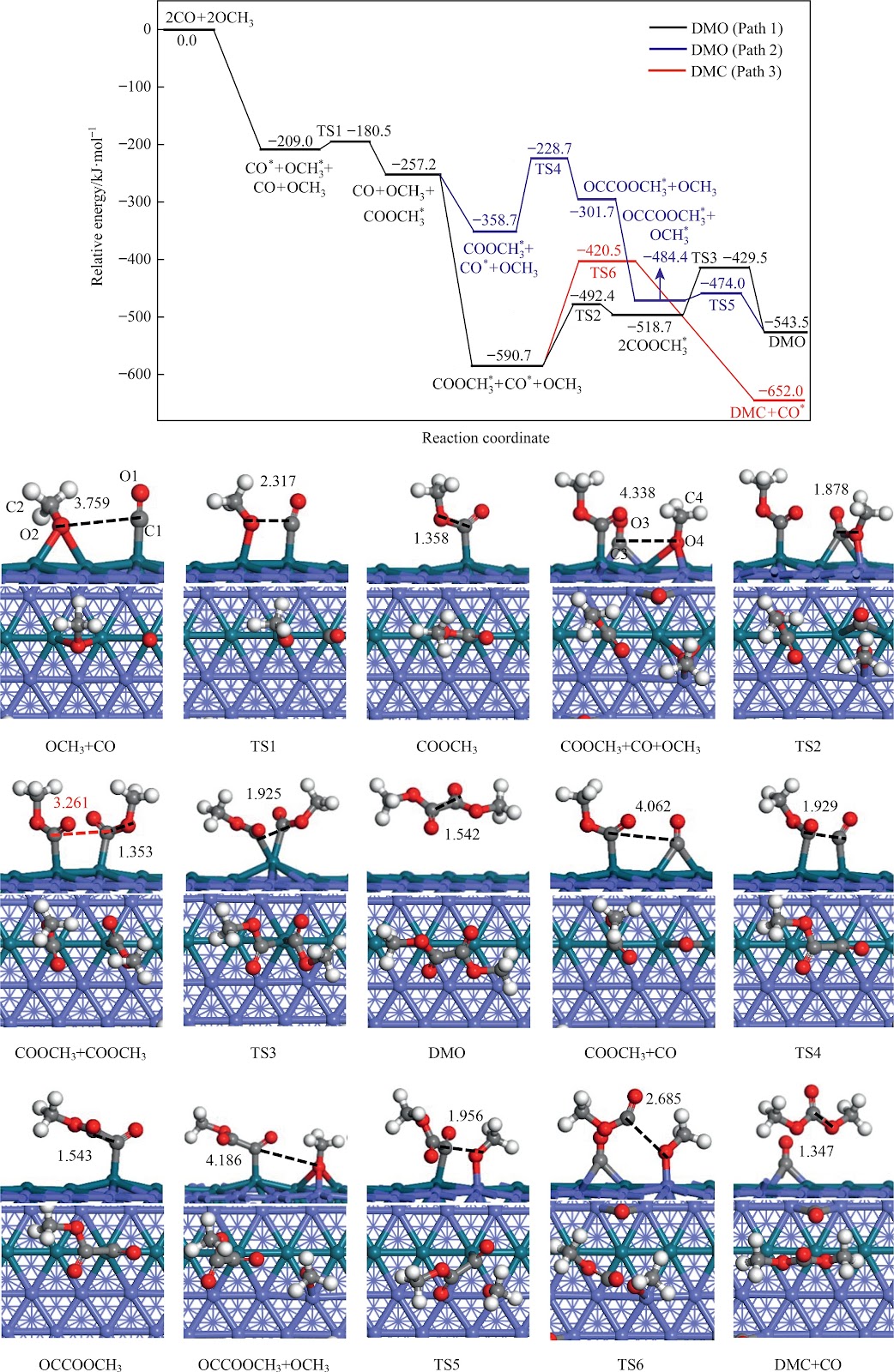
Pd-based catalysts are extensively employed to catalyze CO oxidative coupling to generate DMO, while the expensive price and high usage of Pd hinder its massive application in industrial production. Designing Pd-based catalysts with high efficiency and low Pd usage as well as expounding the catalytic mechanisms are significant for the reaction. In this study, we theoretically predict that Pd stripe doping Co(1 1 1) surface exhibits excellent performance than pure Pd(1 1 1), Pd monolayer supporting on Co(1 1 1) and Pd single atom doping Co(1 1 1) surface, and clearly expound the catalytic mechanisms through the density functional theory (DFT) calculation and micro-reaction kinetic model analysis. It is obtained that the favorable reaction pathway is COOCH3eCOOCH3 coupling pathway over these four catalysts, while the rate-controlling step is COOCH3+CO+OCH3/2COOCH3 on Pd stripe doping Co(1 1 1) surface, which is different from the case (2COOCH3/DMO) on pure Pd(1 11), Pd monolayer supporting on Co(1 1 1) and Pd single atom doping Co(1 1 1) surface. This study can contribute a certain reference value for developing Pd-based catalysts with high efficiency and low Pd usage for CO oxidative coupling to DMO.
1. Introduction
Dimethyl oxalate (DMO) as an essential organic raw material is extensively used to prepare various dyes, drugs and chemical intermediates, and its most common application is as the important intermediate in the production of ethylene glycol [1e3]. DMO is usually synthesized by adopting CO oxidative coupling gas-phase method because of its mild reaction conditions (0.1e0.5 MPa, 375e415 K) and high atom economy advantages [4,5]. It mainly includes the following three steps: methyl nitrite (CH3ONO) dissociation, CO oxidative coupling to DMO, and CH3ONO regeneration [6e8]. Here, CH3ONO is an unsteady reactant, which is easily resolved into OCH3 and NO [9e11]. And, the produced NO can easily happen to desorb and subsequently react with O2 and CH3OH to regenerate CH3ONO without any catalyst under mild reaction conditions [12,13]. Therefore, in this work, we only investigate CO oxidative coupling to DMO that is two OCH3 reacting with two CO to generate DMO [14,15], not taking account of the dissociation and regeneration of CH3ONO.
As well known, Pd-based catalysts have been proven to be the only promising and effective catalysts for CO oxidative coupling to DMO, where noble metal Pd is the main active ingredient of Pd-based catalysts and its (1 1 1) facet is the main active surface [4]. However, the expensive price and high dosage of Pd increase the costs and hinder its massive application in industrial production [16]. How to reduce the usage of noble Pd meanwhile maintain high catalytic performance is currently a key scientific problem that urgently needs to be solved. Therefore, this study chooses noble metal Pd as the active ingredient to explore how to develop the high catalytic performance and low Pd usage of Pd-based catalysts, and strive to clarify the fundamental reasons behind its high catalytic performance. In addition to adopting the active ingredient Pd to evenly distribute on oxide carriers (a-Al2O3 [17], ZnO [18], MgO [19]) and carbon material carriers [20], incorporating inexpensive metal within active ingredient Pd is also a fine strategy to reduce noble metal Pd content and achieve high catalytic performance [21e24]. For example, Pd-based bimetallic catalysts (Pd/Cu [21], Pd/Ni [22] and Pd/Al [23]), have been widely explored for CO oxidative coupling to prepare DMO to lessen Pd content and improve its catalytic performance. This inspires us to further design and develop other cost-effective Pd-based bimetallic catalysts.
Non-precious Co is usually considered as a co-agent to combine with Pd to develop high-perform...
Loading authentic research manuscript (Pages 1–5)...
Bingying Han, Neng Shi, Mengjie Dong, Ye Liu, Runping Ye, Lixia Ling, Riguang Zhang, Baojun Wang (2024). Theoretically predicted innovative palladium stripe doping cobalt(1 1 1) surface with excellent catalytic performance for carbon monoxide oxidative coupling to dimethyl oxalate. Chinese Journal of Chemical Engineering. https://doi.org/10.1016/j_cjche_1448
Research & Educational Purpose Only:The translations, structured abstracts, analytical annotations, and data reports provided by SinoTechIntel are intended exclusively for academic research, internal corporate R&D, and educational benchmarking. They do not constitute formal engineering, chemical safety, legal, or professional advice.
Copyright & Intellectual Property Notice: Original copyright of the underlying source articles and experimental data remains with the respective authors, institutions, and original publishing journals. SinoTechIntel claims intellectual property only over its proprietary translations, analytical syntheses, and AEO structured enhancements in accordance with international fair use and academic citation principles.
Frequently Asked Questions
What is the main objective of this study?
The study aims to theoretically predict a novel Pd stripe doped Co(1 1 1) surface with high catalytic performance and low Pd usage for CO oxidative coupling to dimethyl oxalate (DMO), and to elucidate the catalytic mechanism using DFT calculations and micro-reaction kinetic model analysis.
How does Pd stripe doping on Co(1 1 1) compare to other Pd-based catalysts?
The Pd stripe doped Co(1 1 1) surface is predicted to exhibit superior catalytic performance compared to pure Pd(1 1 1), Pd monolayer supported on Co(1 1 1), and Pd single atom doped Co(1 1 1) surfaces, with a different rate-controlling step.
What is the favorable reaction pathway for CO oxidative coupling to DMO over these catalysts?
The favorable reaction pathway is the COOCH3–COOCH3 coupling pathway, which is consistent across the four catalysts studied.
What is the significance of this research for industrial applications?
This research provides a theoretical basis for designing low-Pd, high-efficiency catalysts, potentially reducing costs and promoting industrial application of CO oxidative coupling to DMO.
What methods were used in this study?
The study employed density functional theory (DFT) calculations and micro-reaction kinetic model analysis to investigate the catalytic mechanisms and performance.
Related Technical Papers & Translations
Design and optimization of a high-efficiency distillation process for cellulosic fuel ethanol integrated with thermal coupling and molecular sieve adsorption
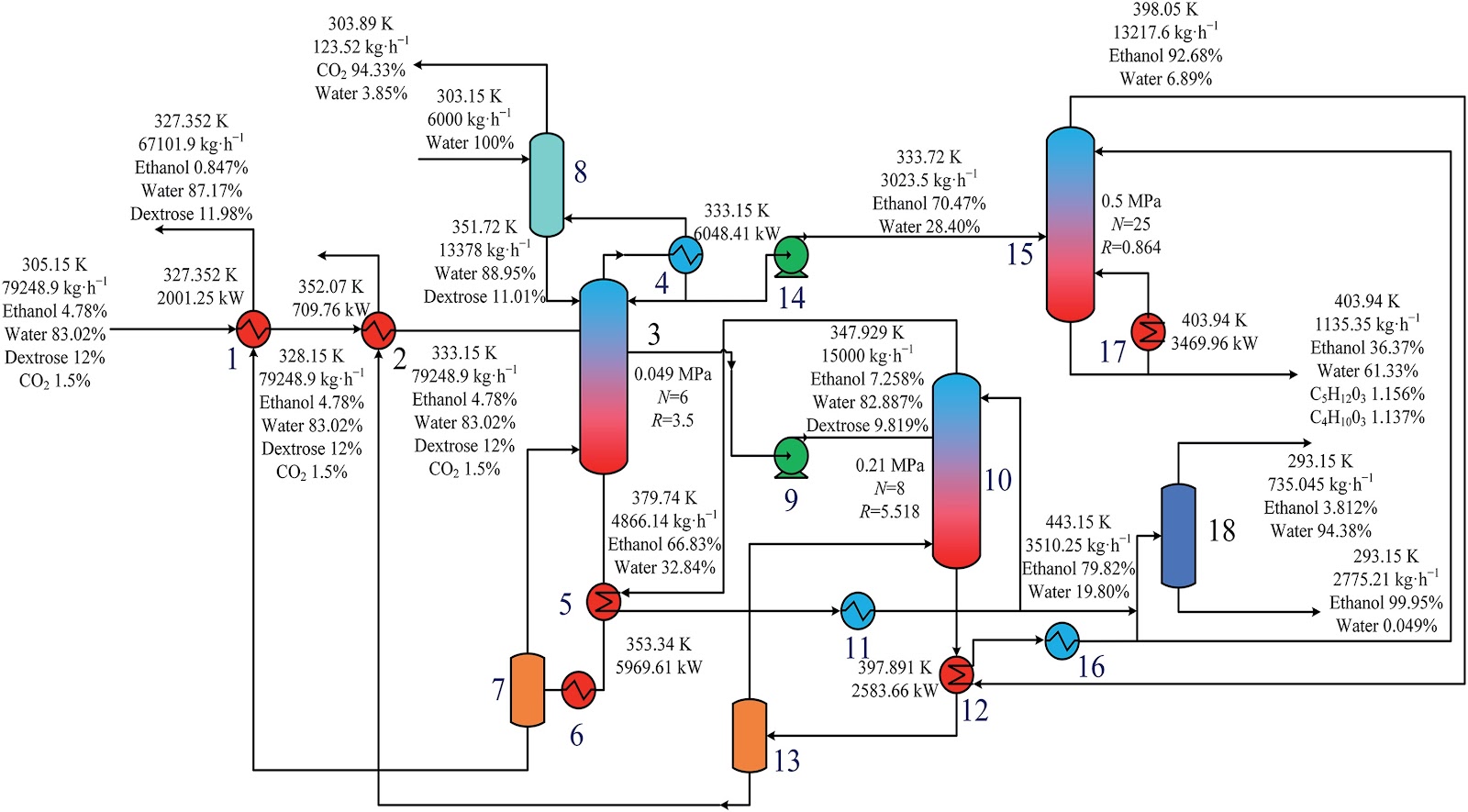
To address the challenges of high energy consumption and prominent costs in the traditional three-columns distillation process for cellulosic fuel ethanol, a distillation—molecular sieve coupling separation process is proposed. This process integrates a three-column (crude distillation column, first distillation column, second distillation column) system with a 3A molecular sieve adsorption deep dehydration unit. A thermal coupling network is constructed via differential pressure design (steam from medium/high-pressure columns as mutual heat sources, reboiler liquid waste heat for feed preheating), and molecular sieve adsorption conditions are optimized. The study first performs a thermodynamic consistency test on the ethanol—water system, determines optimal non-random two-liquid (NRTL) model binary interaction parameters via experimental data regression for Aspen Plus simulation. Aiming at minimum total annual cost (TAC), Aspen Plus is used to optimize process parameters (theoretical tray number, feed location, reflux ratio, side-draw position, etc.). Economic analysis shows this process reduces CO2 emission costs by 27.56%, TAC by 15.58% (to 5.123 × 10⁶ USD·a-1), and increases ethanol purity to >99.6%, providing an effective solution for green, efficient separation.
A cohesion loss model for determining residual strength of deep bedded sandstone
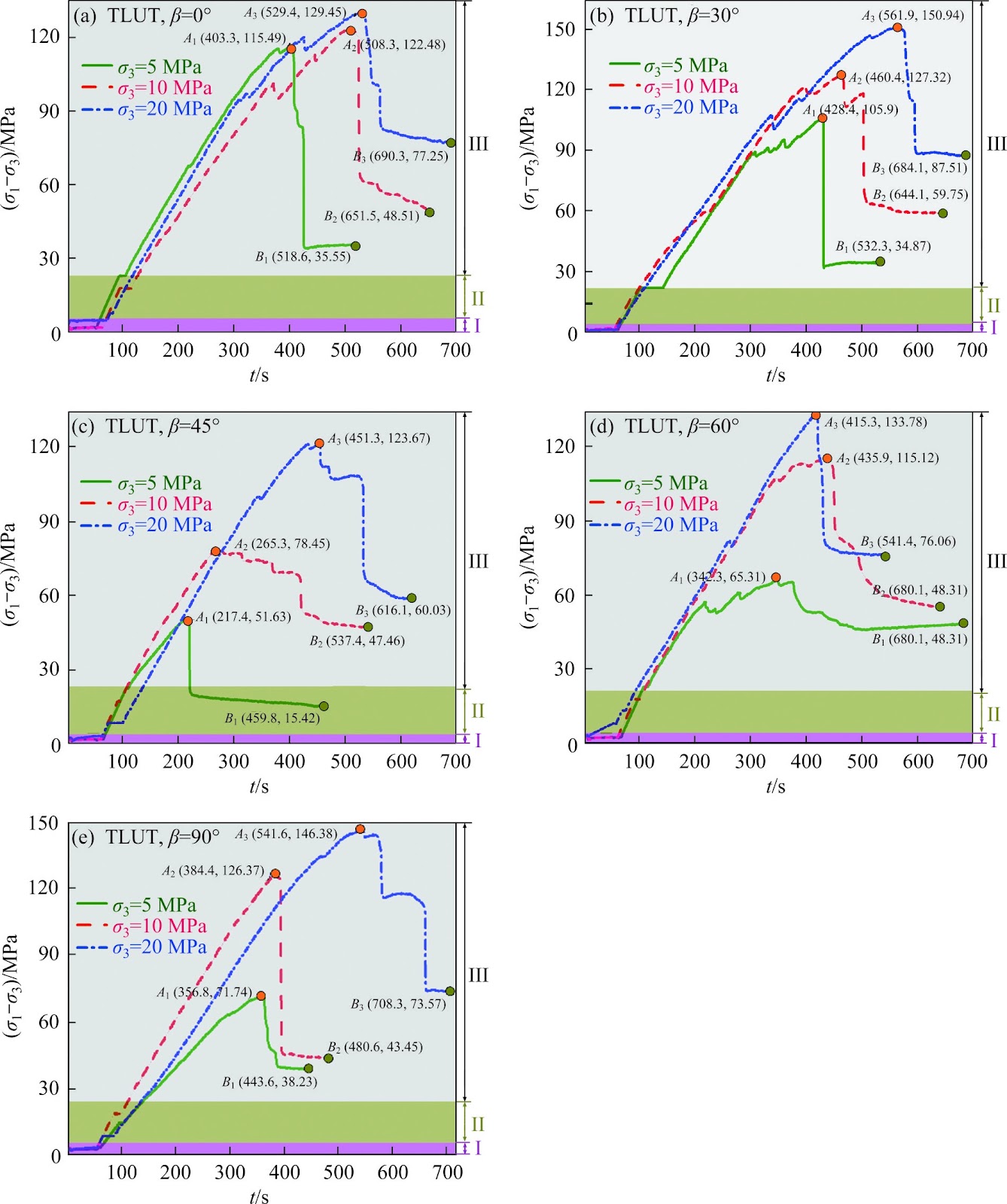
Rock residual strength, as an important input parameter, plays an indispensable role in proposing the reasonable and scientific scheme about stope design, underground tunnel excavation and stability evaluation of deep chambers. Therefore, previous residual strength models of rocks established were reviewed. And corresponding related problems were stated. Subsequently, starting from the effects of bedding and whole life-cycle evolution process, series of triaxial mechanical tests of deep bedded s
Federated model with contrastive learning and adaptive control variates for human activity recognition
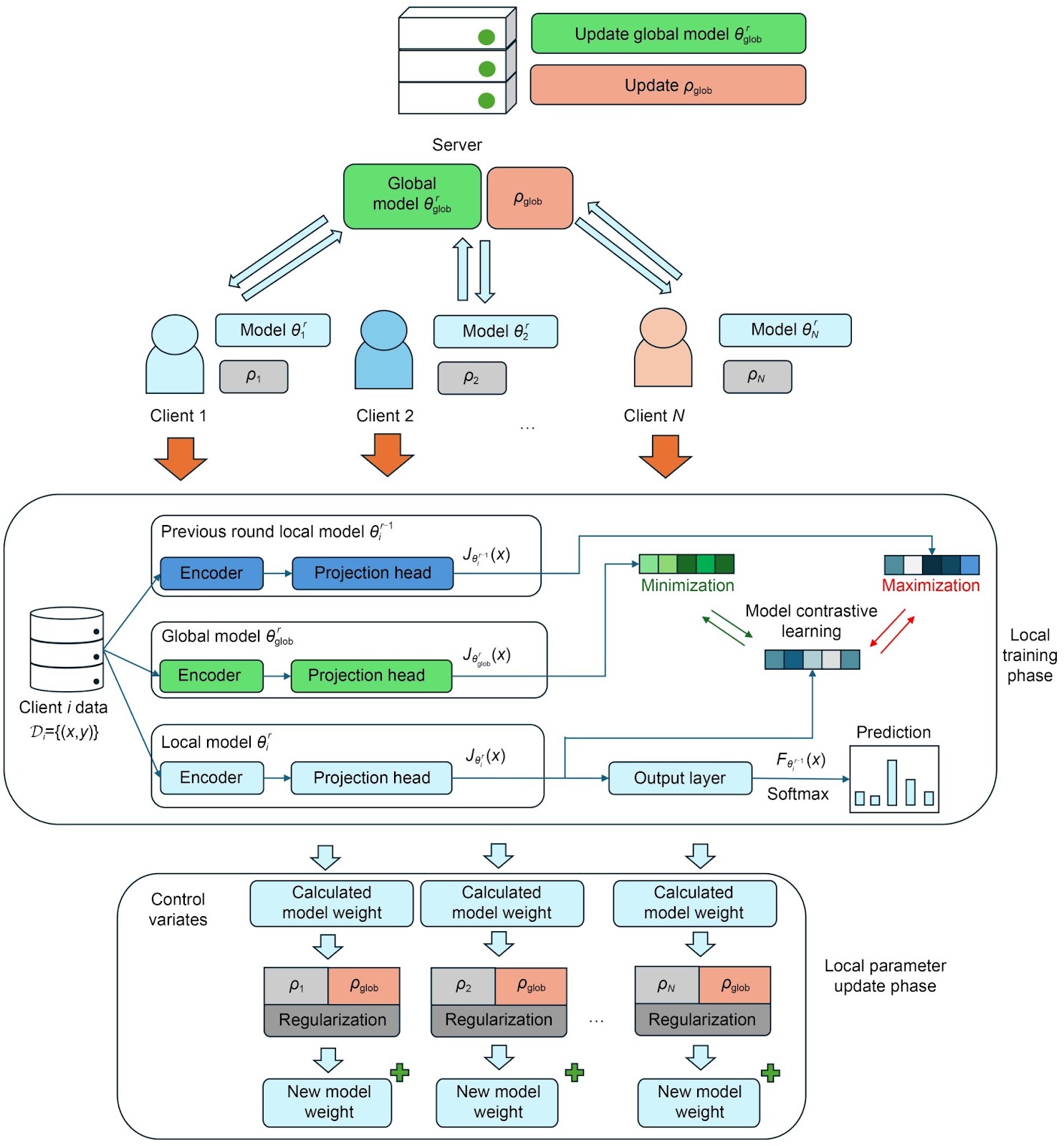
Recent attention to privacy issues demands a communication-safe method for training human activity recognition (HAR) models on client activity data. Federated learning (FL) has become a compelling technique to facilitate model training between the server and clients while preserving data privacy. However, classical FL methods often assume independent and identically distributed (IID) data among clients. This assumption does not hold true in practical scenarios. Human activity in real-world scena