Key Takeaways & Executive Findings
- •• A novel PMIA braided tube reinforced PFA hollow fiber membrane was fabricated via a no-solvent green method, exhibiting robust thermal and solvent resistance. • Graphene doping synergistically with sintering temperature optimized membrane surface morphology and pore structure, enhancing hydrophobicity and lipophilicity. • The membrane achieved >97% separation efficiency for various oil products at 0.02 MPa, with stable flux recovery after recycling. • The developed membrane shows high potential for efficient and sustainable oily wastewater treatment.
Abstract
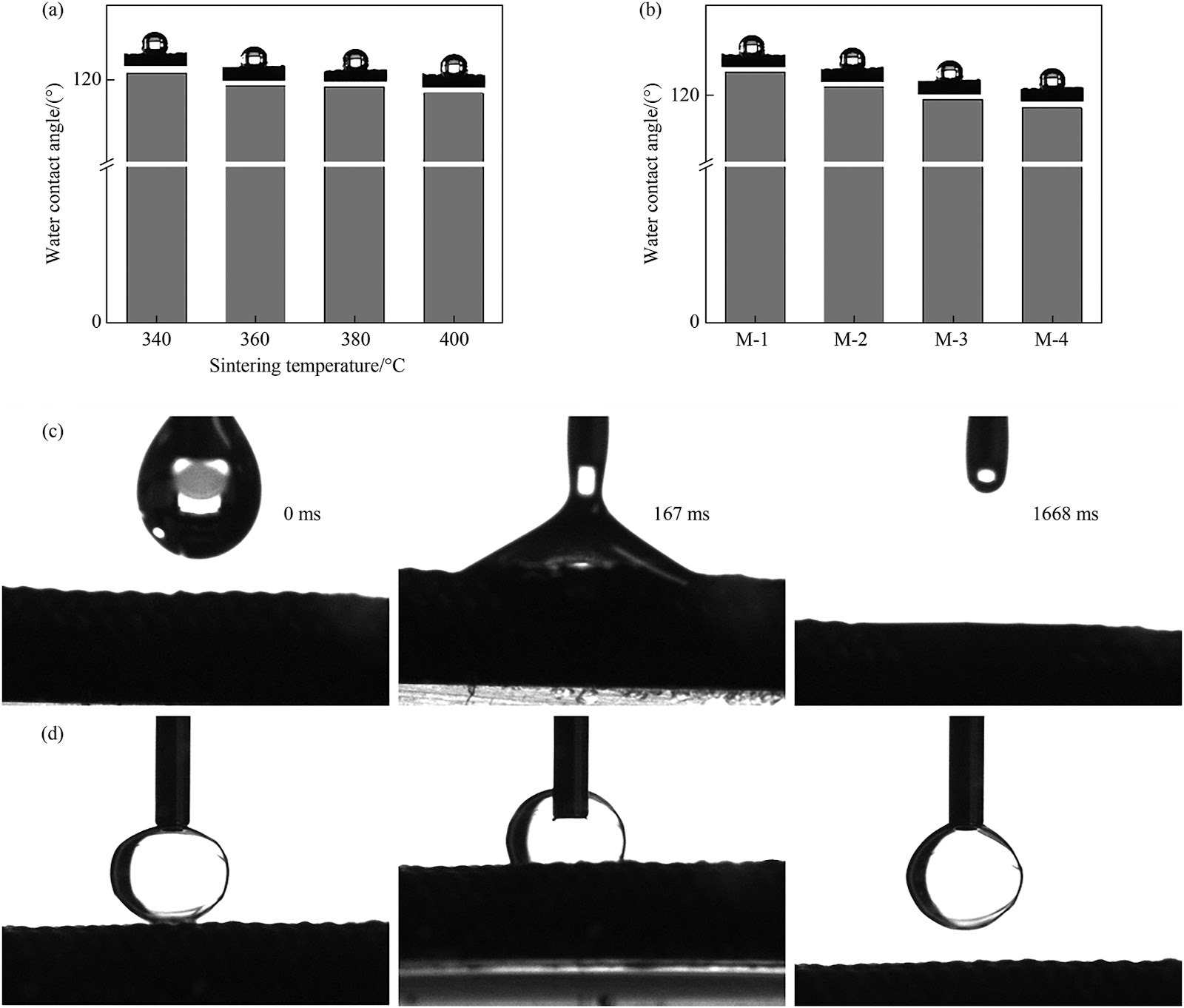
In order to solve the problem of oily wastewater, the poly(m-phenyleneisophthalamide) (PMIA) braided tube reinforced (PBR) poly(tetrafluoroethylene-co-perfluoropropyl vinyl ether) (PFA) hollow fiber membrane with thermal and solvent resistant property was prepared via no-solvent green method. The membrane surface and pore structure was optimized by changing the sintering temperature and graphene (GE) content. The morphologies showed that the spherical surface with good lipophilicity was formed, and the excellent mechanical strength with a favorable interface bonding state could be obtained due to the PFA melts permeating into the supporting layer. The doping of GE produced synergistic effects with the sintering temperature owing to its good thermal conductivity and pore formation. The PBR-PFA/GE hollow fiber membrane exhibited good hydrophobicity and lipophilicity with more than 97% separation efficiency for different oil products at 0.02 MPa. With the addition of GE, the average pore size first increases and then decreases, and the porosity gradually decreases. In addition, the hollow fiber membrane showed high separation ability to the water-in-oil emulsion, and maintained a stable flux recovery rate after recycling, making it possible to apply in the field of oily wastewater treatment.
1. Introduction
With the rapid development of industry, environmental and energy issues have become increasingly prominent. Oil spills, oil pollution, and difficulty in oil recovery pose a threat to human health and ecosystem stability [1e3]. Currently, oil-water separation technology can effectively solve the problem of oily wastewater and plays an important role in sustainable development [4,5]. Compared with traditional oil-water separation technologies, membrane separation technology as an effective method for treating oily wastewater, has advantages such as low energy consumption, simple operation, high separation efficiency, etc. [6e8].
Up to now, the hollow fiber membrane with self-supporting structures, high packing density, large specific surface area, etc. demonstrated better performance and potential than other types of membranes such as the flat-sheet membranes, and tubular membranes [9,10]. However, the hydrophobic and oleophilic hollow fiber membranes have problems such as membrane surface fouling and pore blockage by oily pollutant [11].
Fluoropolymers exhibit good hydrophobic properties, such as polytetrafluoroethylene (PTFE) and polyvinylidene fluoride (PVDF), which have received widespread attention and application [12e14]. However, the PTFE is difficult to melt processing, and PVDF requires a large number of harmful solvents. PFA was first introduced in the mid-1970s, synthesized from an amount of perfluoropropylvinyl ether, which overcomes the “insoluble and infusible” nature of PTFE and allows for melt processing, giving it great application prospects [15].
Loading authentic research manuscript (Pages 1–5)...
Wei Zhao, Xin Jin, Kaikai Chen, Haoyang Ling, Hailiang Liu, Changfa Xiao (2024). The robust design of PMIA braided tube reinforced PFA hollow fiber membranes with graphene doping for water-in-oil separation. Chinese Journal of Chemical Engineering. https://doi.org/10.1016/j_cjche_1448
Research & Educational Purpose Only:The translations, structured abstracts, analytical annotations, and data reports provided by SinoTechIntel are intended exclusively for academic research, internal corporate R&D, and educational benchmarking. They do not constitute formal engineering, chemical safety, legal, or professional advice.
Copyright & Intellectual Property Notice: Original copyright of the underlying source articles and experimental data remains with the respective authors, institutions, and original publishing journals. SinoTechIntel claims intellectual property only over its proprietary translations, analytical syntheses, and AEO structured enhancements in accordance with international fair use and academic citation principles.
Frequently Asked Questions
What is the main innovation of this study?
The study introduces a novel PMIA braided tube reinforced PFA hollow fiber membrane prepared via a no-solvent green method, with graphene doping to enhance its performance for water-in-oil separation.
How does graphene doping affect the membrane properties?
Graphene doping, combined with sintering temperature, optimizes the membrane surface and pore structure, leading to improved hydrophobicity, lipophilicity, and separation efficiency.
What separation efficiency does the membrane achieve?
The membrane exhibits more than 97% separation efficiency for different oil products at a low pressure of 0.02 MPa.
What are the potential applications of this membrane?
The membrane is suitable for treating oily wastewater, particularly in water-in-oil emulsion separation, with stable flux recovery after recycling.
Is the membrane fabrication process environmentally friendly?
Yes, the membrane is prepared via a no-solvent green method, avoiding the use of harmful solvents, making it an environmentally friendly approach.
Related Technical Papers & Translations

Design and optimization of a high-efficiency distillation process for cellulosic fuel ethanol integrated with thermal coupling and molecular sieve adsorption
To address the challenges of high energy consumption and prominent costs in the traditional three-columns distillation process for cellulosic fuel ethanol, a distillation—molecular sieve coupling separation process is proposed. This process integrates a three-column (crude distillation column, first distillation column, second distillation column) system with a 3A molecular sieve adsorption deep dehydration unit. A thermal coupling network is constructed via differential pressure design (steam from medium/high-pressure columns as mutual heat sources, reboiler liquid waste heat for feed preheating), and molecular sieve adsorption conditions are optimized. The study first performs a thermodynamic consistency test on the ethanol—water system, determines optimal non-random two-liquid (NRTL) model binary interaction parameters via experimental data regression for Aspen Plus simulation. Aiming at minimum total annual cost (TAC), Aspen Plus is used to optimize process parameters (theoretical tray number, feed location, reflux ratio, side-draw position, etc.). Economic analysis shows this process reduces CO2 emission costs by 27.56%, TAC by 15.58% (to 5.123 × 10⁶ USD·a-1), and increases ethanol purity to >99.6%, providing an effective solution for green, efficient separation.

A cohesion loss model for determining residual strength of deep bedded sandstone
Rock residual strength, as an important input parameter, plays an indispensable role in proposing the reasonable and scientific scheme about stope design, underground tunnel excavation and stability evaluation of deep chambers. Therefore, previous residual strength models of rocks established were reviewed. And corresponding related problems were stated. Subsequently, starting from the effects of bedding and whole life-cycle evolution process, series of triaxial mechanical tests of deep bedded s

Federated model with contrastive learning and adaptive control variates for human activity recognition
Recent attention to privacy issues demands a communication-safe method for training human activity recognition (HAR) models on client activity data. Federated learning (FL) has become a compelling technique to facilitate model training between the server and clients while preserving data privacy. However, classical FL methods often assume independent and identically distributed (IID) data among clients. This assumption does not hold true in practical scenarios. Human activity in real-world scena