Key Takeaways & Executive Findings
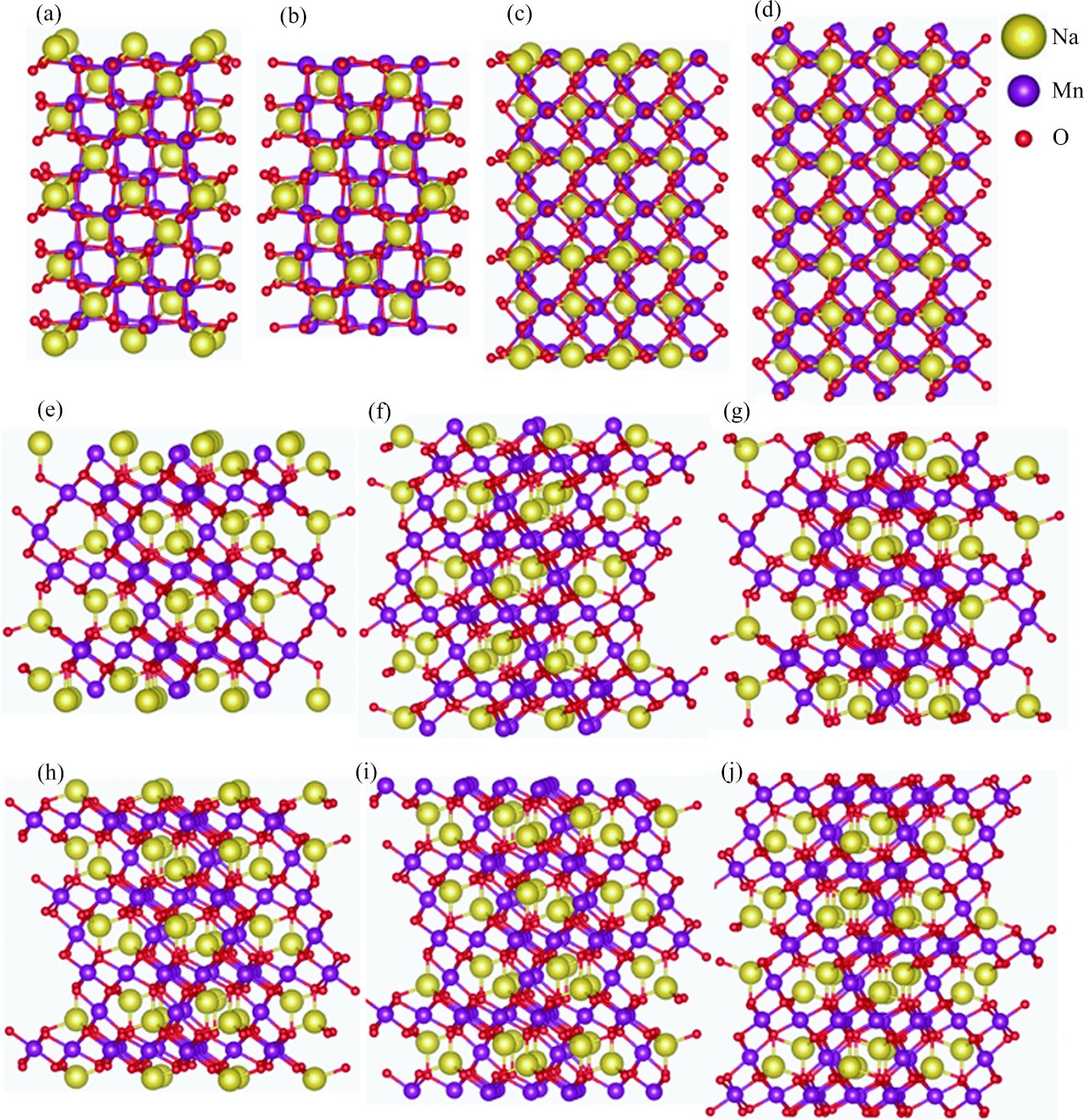
- •• The (100)-MnO and (111)-ONa terminations are the most stable under investigated chemical conditions. • The (110) surfaces exhibit negative surface energies, indicating thermodynamic instability. • Surface relaxation, including rumpling and reconstruction, reduces surface energy and stabilizes the surface by modifying electronic structure. • The Wulff shape of NaMn2O4 was constructed using the Gibbs-Wulff theorem, providing equilibrium morphology predictions.
Abstract
As cathode materials for alkali-ion batteries, sodium manganese oxides have been receiving considerable and continuous attention in recent decades. In this work, the structure and environment-dependent stability of NaMn2O4 surface were studied based on the first principles calculations. The surface stability diagram of NaMn2O4 involving various different terminations of (100), (110) and (111) surfaces was constructed, and the stability of these different terminations could be compared as a function of chemical environment. It is found that the (100)-MnO and (111)-ONa terminations are two more stable terminations under the investigated chemical conditions. And the surface energies of (110) surfaces are negative under the investigated chemical potential, hence, (110) surfaces are unstable. The surface energy of NaMn2O4 as a function of O chemical potential is also investigated under constant Na chemical potential. The structure relaxation indicates that the surface rumpling and surface reconstruction can affect the electronic structure of the surface, thereby reducing surface energy and stabilizing the surface. Furthermore, the Wulff shape of NaMn2O4 was also constructed based on Gibbs-Wulff theorem.
1. Introduction
In recent years, sodium manganese oxides has received considerable attention due to their fast ionic diffusivity, excellent electronic conductivity, easy synthesis, and reasonable production cost, which have been applied as cathode materials for alkali-ion batteries [1 −8]. Unlike the cubic spinel structure of LiMn2O4, the reported NaMn2O4 has an orthorhombic structure (space group Pnam) [9, 10], which is composed of eight-fold coordinated Na and distorted MnO6 octahedra. NaMn2O4 is a Mn3+/Mn4+ mixed-valence compound, in which Mn3+/Mn4+ is randomly located at octahedral sites [9]. And single crystal NaMn2O4 can be prepared under high-temperature and high-pressure conditions [9, 10]. In addition to the above orthorhombic structure, the cubic spinel structure of NaMn2O4 also exhibits good stability [11]. The structure of cubic spinel NaMn2O4 is identical to that of LiMn2O4, therefore, cubic NaMn2O4 also has great potential to become a good battery cathode material.
The structure of AMn2O4 (A=Li, Na) is not stable enough, which leads to surface reconstruction and unreasonable reactions with battery electrolytes [12 −15]. These LiMn2O4 surfaces have attracted widespread attention from experimental and theoretical points of view. It is reported that LiMn2O4 has a strong sensitivity to local surface structure in maintaining capacity. The LiMn2O4 particle dominated by (111) facet shows good resistance to Mn3+ dismutation, while (110) and (100) are relatively soluble. And the equilibrium LiMn2O4 often adopts an octahedral shape, indicating that (111) facet has good stability [14, 15]. Unfortunately, there is still limited research on NaMn2O4, and even research on the relationships between its capacity retention and surface structure has not been reported. Hence, it is significant to investigate the surface structure of NaMn2O4 for understanding the structural stability and battery performance.
First-principles calculations [16 −20] can overcome the difficulty of experimental preparation and surface index characterization, thereby providing a good comprehension for surface properties. In the present work, we performed the first principles calculations to study the surface stability and Wulff construction of NaMn2O4, and the Wulff shape was constructed according to the Gibbs-Wulff theorem.
Loading authentic research manuscript (Pages 1–5)...
SUN Shun-ping, SUN Hong-fei, WANG Yu-rui, CHEN Li-yong, JIANG Yong (2025). Surface structure and their environment-dependent stability of NaMn2O4. Journal of Central South University. https://doi.org/10.1007/s11771-025-5953-z
Research & Educational Purpose Only:The translations, structured abstracts, analytical annotations, and data reports provided by SinoTechIntel are intended exclusively for academic research, internal corporate R&D, and educational benchmarking. They do not constitute formal engineering, chemical safety, legal, or professional advice.
Copyright & Intellectual Property Notice: Original copyright of the underlying source articles and experimental data remains with the respective authors, institutions, and original publishing journals. SinoTechIntel claims intellectual property only over its proprietary translations, analytical syntheses, and AEO structured enhancements in accordance with international fair use and academic citation principles.
Frequently Asked Questions
What is the most stable surface termination of NaMn2O4?
The (100)-MnO and (111)-ONa terminations are the most stable under the investigated chemical conditions.
Why are (110) surfaces unstable?
The surface energies of (110) surfaces are negative under the investigated chemical potential, indicating thermodynamic instability.
How does surface relaxation affect the stability of NaMn2O4?
Surface rumpling and reconstruction modify the electronic structure of the surface, thereby reducing surface energy and stabilizing the surface.
What method was used to determine the equilibrium crystal shape?
The Wulff shape of NaMn2O4 was constructed using the Gibbs-Wulff theorem based on the calculated surface energies.
Why is it important to study NaMn2O4 surfaces?
Understanding surface stability is crucial for improving the structural stability and battery performance of NaMn2O4 as a cathode material for alkali-ion batteries.
Related Technical Papers & Translations
Design and optimization of a high-efficiency distillation process for cellulosic fuel ethanol integrated with thermal coupling and molecular sieve adsorption
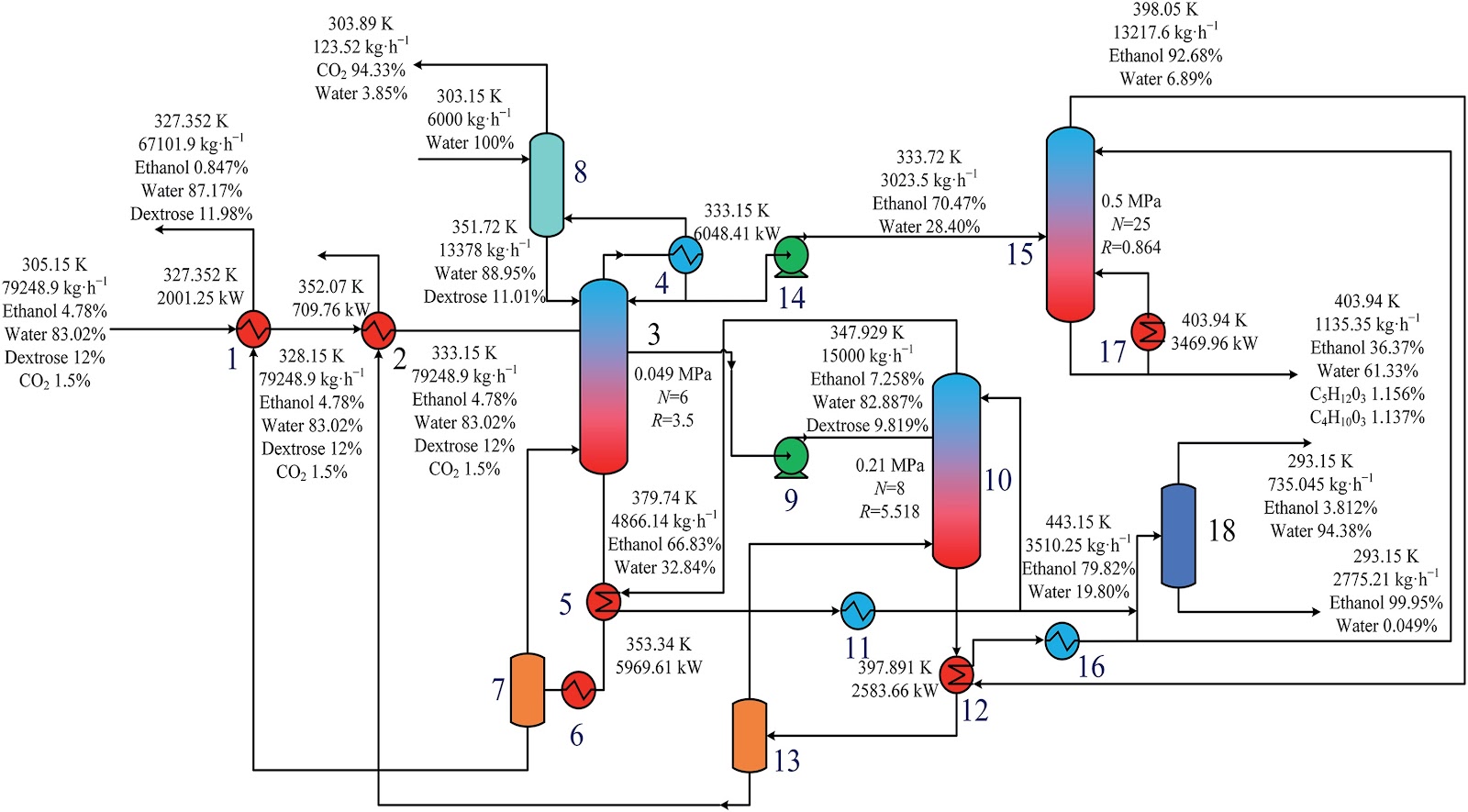
To address the challenges of high energy consumption and prominent costs in the traditional three-columns distillation process for cellulosic fuel ethanol, a distillation—molecular sieve coupling separation process is proposed. This process integrates a three-column (crude distillation column, first distillation column, second distillation column) system with a 3A molecular sieve adsorption deep dehydration unit. A thermal coupling network is constructed via differential pressure design (steam from medium/high-pressure columns as mutual heat sources, reboiler liquid waste heat for feed preheating), and molecular sieve adsorption conditions are optimized. The study first performs a thermodynamic consistency test on the ethanol—water system, determines optimal non-random two-liquid (NRTL) model binary interaction parameters via experimental data regression for Aspen Plus simulation. Aiming at minimum total annual cost (TAC), Aspen Plus is used to optimize process parameters (theoretical tray number, feed location, reflux ratio, side-draw position, etc.). Economic analysis shows this process reduces CO2 emission costs by 27.56%, TAC by 15.58% (to 5.123 × 10⁶ USD·a-1), and increases ethanol purity to >99.6%, providing an effective solution for green, efficient separation.
A cohesion loss model for determining residual strength of deep bedded sandstone
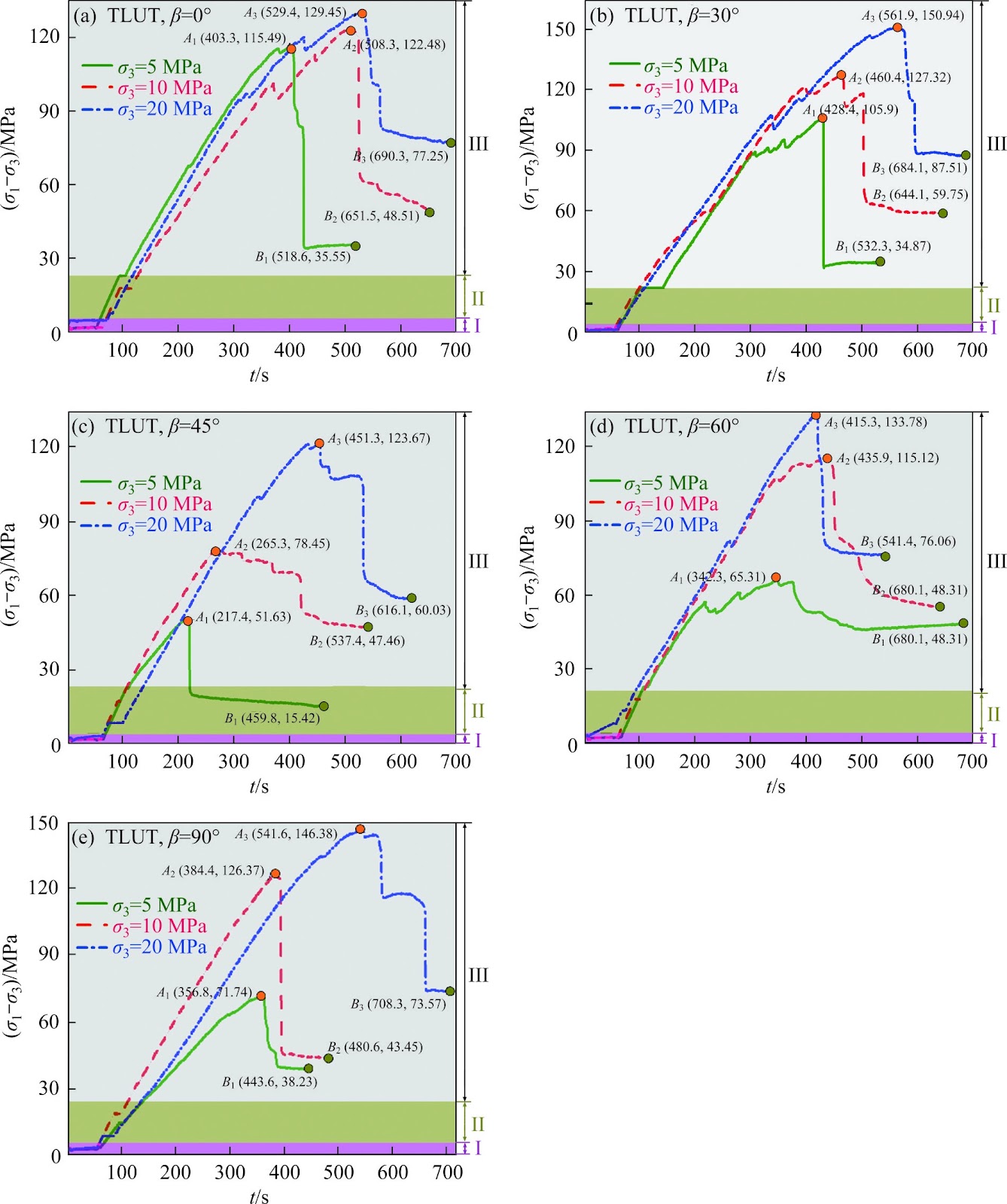
Rock residual strength, as an important input parameter, plays an indispensable role in proposing the reasonable and scientific scheme about stope design, underground tunnel excavation and stability evaluation of deep chambers. Therefore, previous residual strength models of rocks established were reviewed. And corresponding related problems were stated. Subsequently, starting from the effects of bedding and whole life-cycle evolution process, series of triaxial mechanical tests of deep bedded s
Federated model with contrastive learning and adaptive control variates for human activity recognition
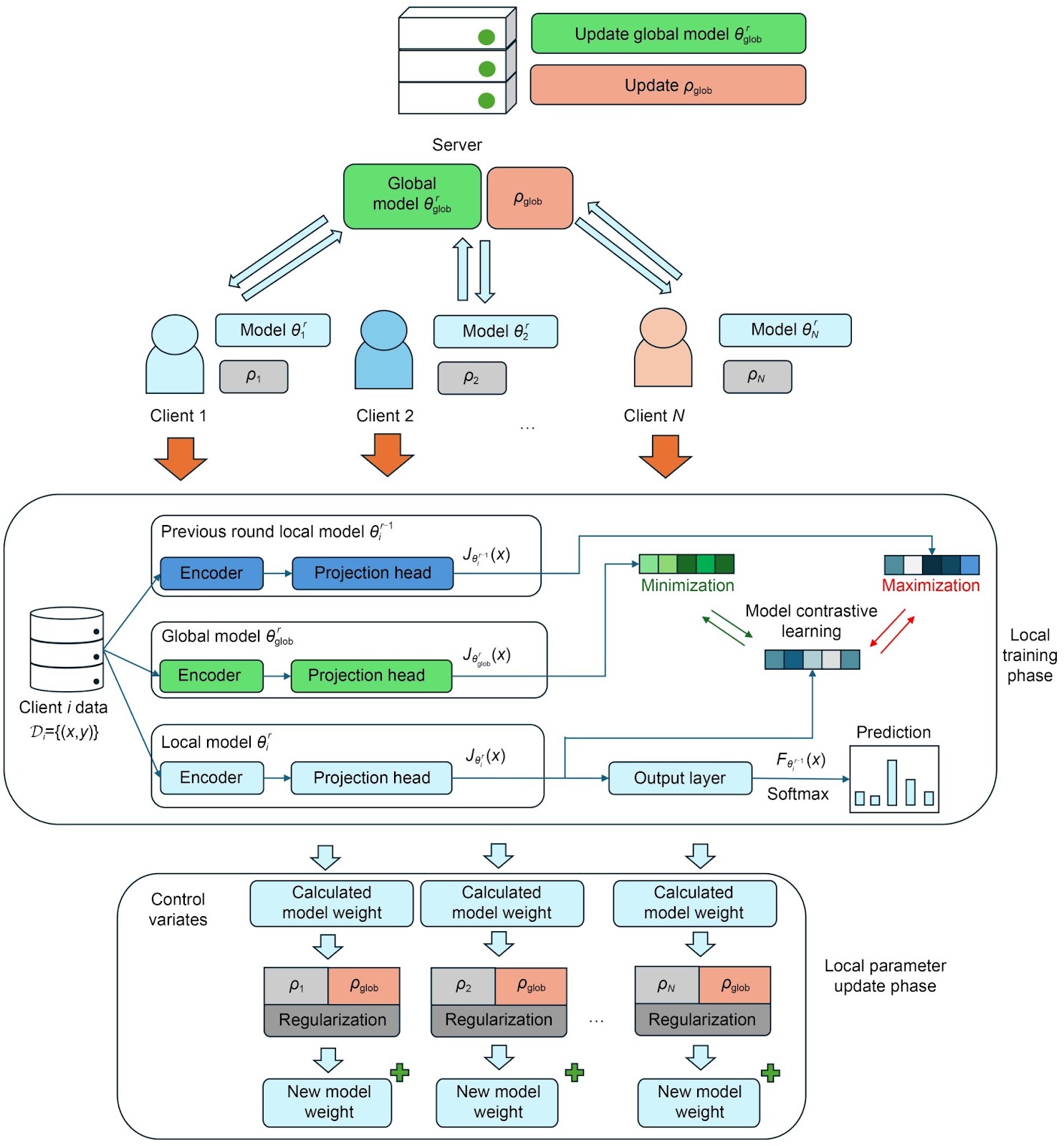
Recent attention to privacy issues demands a communication-safe method for training human activity recognition (HAR) models on client activity data. Federated learning (FL) has become a compelling technique to facilitate model training between the server and clients while preserving data privacy. However, classical FL methods often assume independent and identically distributed (IID) data among clients. This assumption does not hold true in practical scenarios. Human activity in real-world scena