Key Takeaways & Executive Findings
- •• Sn microalloying significantly suppresses the negative natural aging effect in Al–Mg–Si–Cu alloys, preserving peak-aged hardening capacity and early-stage hardening kinetics. • Sn addition modifies the nature of natural aging clusters, enabling a significant proportion to act as heterogeneous nucleation sites for strengthening precipitates during artificial aging. • Atomic-resolution EDS reveals that Sn atoms preferentially occupy Si atomic sites within the β′ and C/Q′ phases. • These findings provide critical theoretical insights for optimizing automotive-body aluminum alloy design to enhance paint-bake hardening response.
Abstract
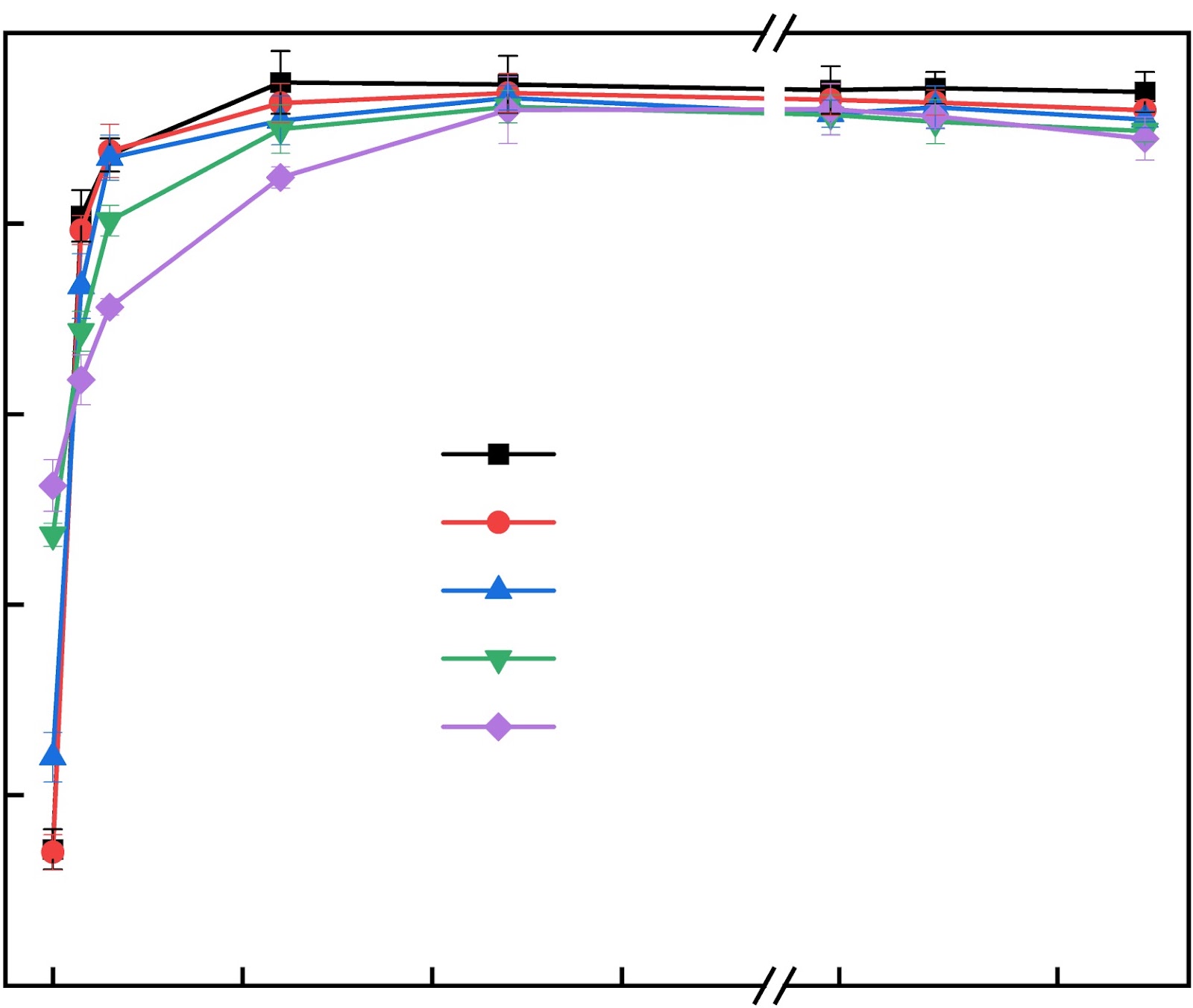
Although Sn has been established as an effective microalloying element for suppressing the negative natural aging (NA) effect in Al–Mg–Si alloys, its potential to mitigate the negative NA effect in Al–Mg–Si–Cu alloys remains to be confirmed. This study systematically investigated the role of Sn in the NA of Al–Mg–Si–Cu alloys through hardness measurements, differential scanning calorimetry, and atomic-resolution high-angle annular dark-field scanning transmission electron microscopy. Our results demonstrate that the addition of Sn significantly suppresses the adverse impact of NA on the peak-aged hardening capacity during subsequent artificial aging and substantially alleviates early-stage hardening kinetics degradation. Our findings suggest that Sn modifies the nature of the NA clusters in Al–Mg–Si–Cu alloys. A significant proportion of NA clusters in the Sn-added alloy effectively served as heterogeneous nucleation sites for strengthening the precipitates during artificial aging, thereby preserving the precipitate nucleation rates and preventing coarsening at the peak-aging stage. Atomic-resolution energy-dispersive X-ray spectroscopy revealed preferential occupation of Si atomic sites by Sn atoms within the β′ and C/Q′ phases. This investigation provides critical theoretical insights for optimizing alloy design in automotive-body aluminum applications.
1. Introduction
The 6xxx series Al–Mg–Si(–Cu) alloys have been extensively utilized as lightweight automotive body panels owing to their good corrosion resistance, excellent formability, and high strength-to-weight ratios [1–2]. In practical automotive production, these alloys undergo a paint-bake (PB) process at approximately 180°C for 30 min (equivalent to a short-term artificial aging (AA) process) to achieve desired strength levels [3]. Cu is added to automotive-grade 6000 series alloys because of its ability to accelerate the PB hardening response [4–12]. The substantial strength enhancement during AA originates from the precipitation of numerous nanosized semi-coherent metastable precipitates. The generally accepted precipitation sequence in Al–Mg–Si alloys can be described as follows: supersaturated solid solution (SSSS) → atomic clusters → Guinier–Preston (GP) zones/pre-β″ → β″ → β′ (/B′/U1/U2) → β [13–18]. Among all types of precipitates, the needle-like β″ phase and its precursors are recognized as the most effective for strengthening the alloys. Cu addition alters the precipitation sequence to SSSS → solute clusters → GP zones → β″, L, QP, QC → β′, Q′ → Q [11–12]. The co-precipitation of Cu-containing lath-like L, QP, and QC phases with a β″ phase is considered the origin of enhanced aging response and elevated peak hardness in Al–Mg–Si–Cu alloys.
In industrial practice, Al–Mg–Si(–Cu) alloys inevitably undergo natural aging (NA) prior to AA. NA not only deteriorates formability but also generally exerts a negative or detrimental effect on subsequent precipitation hardening during AA [19–22]. Consequently, NA behavior and its negative impact on AA in Al–Mg–Si(–Cu) alloys have attracted extensive research. Numerous studies have demonstrated that the negative NA effect correlates strongly with the NA duration and alloy composition (e.g., Mg/Si ratio and Mg + Si content) [23–25]. However, the fundamental mechanisms underlying the negative NA effect remain incompletely understood, primarily because of the intricate interplay between NA clusters and quenched-in vacancies—microstructural features that are challenging to characterize precisely. The NA clusters may reduce the vacancy concentration in the Al matrix by entrapping quenched-in vacancies, thereby retarding solute diffusion and suppressing precipitate development [26]. Concurrently, NA clusters reduce the supersaturation of solute atoms in the matrix while failing to provide favorable nucleation sites for the strengthening of precipitates upon AA [25,27]. Early atom probe tomography studies revealed that NA clusters exhibit Mg/Si ratios deviating significantly from 1, impeding their transformation into the β″ phase [28–29]. Recent annular dark-field scanning transmission electron microscopy (ADF-STEM) investigations confirmed substantial structural discrepancies between NA clusters and the β″ phase, explaining their transformation resistance [30].
Recent research has indicated that Sn microalloying effectively suppresses NA in Al–Mg–Si alloys through strong vacancy trapping, thereby inhibiting NA cluster formation [31–36]. Our recent study revealed that Sn addition fundamentally alters the precipitation behavior of Al–Mg–Si alloys [37].
Loading authentic research manuscript (Pages 1–5)...
Xuemei Xiang, Yuxiang Lai, Guisen Chen, Cuilan Wu, Jianghua Chen (2025). Suppressing negative natural aging effect in automotive AlMgSiCu alloys via Sn microalloying. Journal of Mineral Metallurgy and Materials Science. https://doi.org/10.1007/s12613-025-3254-z
Research & Educational Purpose Only:The translations, structured abstracts, analytical annotations, and data reports provided by SinoTechIntel are intended exclusively for academic research, internal corporate R&D, and educational benchmarking. They do not constitute formal engineering, chemical safety, legal, or professional advice.
Copyright & Intellectual Property Notice: Original copyright of the underlying source articles and experimental data remains with the respective authors, institutions, and original publishing journals. SinoTechIntel claims intellectual property only over its proprietary translations, analytical syntheses, and AEO structured enhancements in accordance with international fair use and academic citation principles.
Frequently Asked Questions
What is the negative natural aging effect in Al-Mg-Si-Cu alloys?
The negative natural aging effect refers to the detrimental impact of natural aging (NA) on subsequent artificial aging (AA). It reduces the peak-aged hardening capacity and degrades early-stage hardening kinetics, leading to lower final strength in automotive Al-Mg-Si-Cu alloys.
How does Sn microalloying suppress the negative natural aging effect?
Sn microalloying suppresses the negative natural aging effect by trapping vacancies and modifying the composition and structure of NA clusters. This allows a significant proportion of NA clusters to act as heterogeneous nucleation sites for strengthening precipitates during artificial aging, preserving nucleation rates and preventing coarsening.
What experimental techniques were used in this study?
The study employed hardness measurements, differential scanning calorimetry (DSC), and atomic-resolution high-angle annular dark-field scanning transmission electron microscopy (HAADF-STEM) coupled with energy-dispersive X-ray spectroscopy (EDS) to investigate precipitate structures and composition.
Where do Sn atoms preferentially occupy in the precipitates?
Atomic-resolution energy-dispersive X-ray spectroscopy (EDS) revealed that Sn atoms preferentially occupy Si atomic sites within the β′ and C/Q′ phases in the Sn-added Al-Mg-Si-Cu alloys.
Why is this research important for automotive aluminum alloys?
This research provides critical theoretical insights for optimizing alloy design in automotive-body aluminum applications. By understanding how Sn microalloying mitigates the negative natural aging effect, manufacturers can develop alloys with improved paint-bake hardening response and higher strength for lightweight vehicle panels.
Related Technical Papers & Translations

Design and optimization of a high-efficiency distillation process for cellulosic fuel ethanol integrated with thermal coupling and molecular sieve adsorption
To address the challenges of high energy consumption and prominent costs in the traditional three-columns distillation process for cellulosic fuel ethanol, a distillation—molecular sieve coupling separation process is proposed. This process integrates a three-column (crude distillation column, first distillation column, second distillation column) system with a 3A molecular sieve adsorption deep dehydration unit. A thermal coupling network is constructed via differential pressure design (steam from medium/high-pressure columns as mutual heat sources, reboiler liquid waste heat for feed preheating), and molecular sieve adsorption conditions are optimized. The study first performs a thermodynamic consistency test on the ethanol—water system, determines optimal non-random two-liquid (NRTL) model binary interaction parameters via experimental data regression for Aspen Plus simulation. Aiming at minimum total annual cost (TAC), Aspen Plus is used to optimize process parameters (theoretical tray number, feed location, reflux ratio, side-draw position, etc.). Economic analysis shows this process reduces CO2 emission costs by 27.56%, TAC by 15.58% (to 5.123 × 10⁶ USD·a-1), and increases ethanol purity to >99.6%, providing an effective solution for green, efficient separation.

A cohesion loss model for determining residual strength of deep bedded sandstone
Rock residual strength, as an important input parameter, plays an indispensable role in proposing the reasonable and scientific scheme about stope design, underground tunnel excavation and stability evaluation of deep chambers. Therefore, previous residual strength models of rocks established were reviewed. And corresponding related problems were stated. Subsequently, starting from the effects of bedding and whole life-cycle evolution process, series of triaxial mechanical tests of deep bedded s

Federated model with contrastive learning and adaptive control variates for human activity recognition
Recent attention to privacy issues demands a communication-safe method for training human activity recognition (HAR) models on client activity data. Federated learning (FL) has become a compelling technique to facilitate model training between the server and clients while preserving data privacy. However, classical FL methods often assume independent and identically distributed (IID) data among clients. This assumption does not hold true in practical scenarios. Human activity in real-world scena